In 1985, Hanatarash frontman Yamantaka Eye drove an excavator into a Tokyo venue, turning a noise performance into an act of real-world destruction and cementing the band’s reputation as the most dangerous force in the Japanese Noise scene.
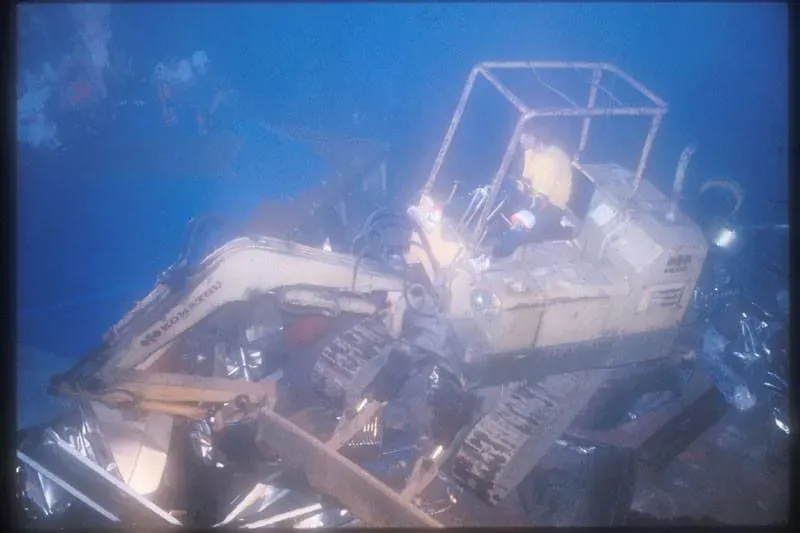
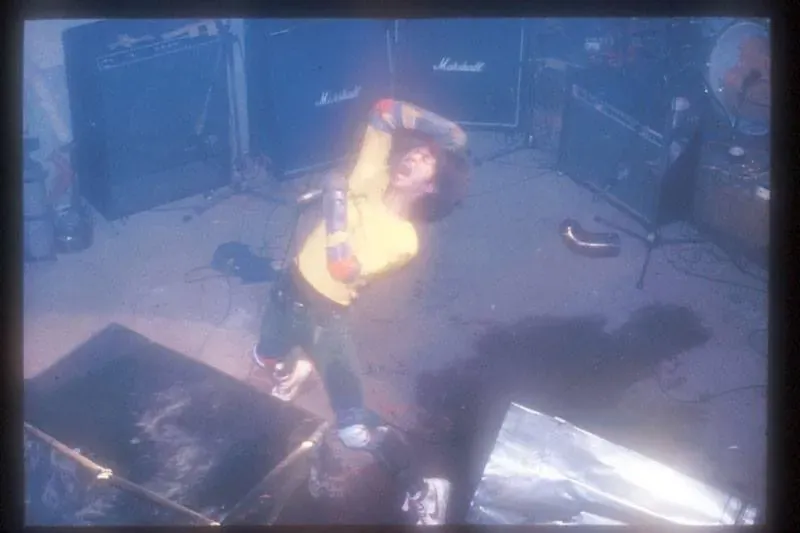
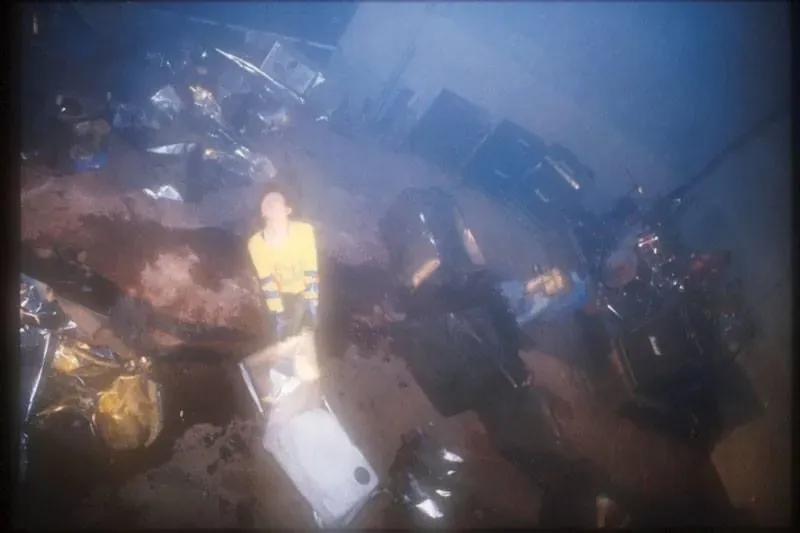
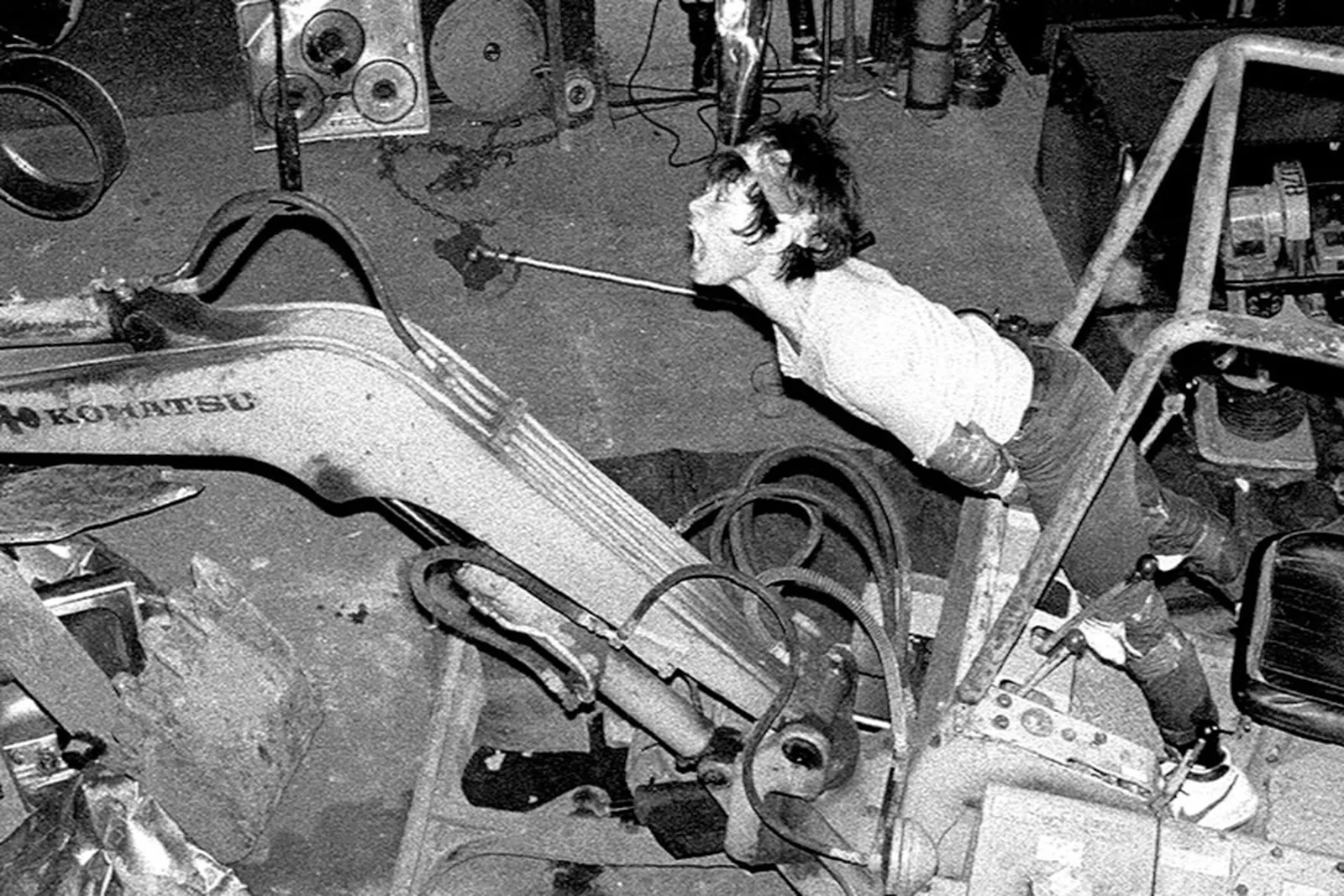
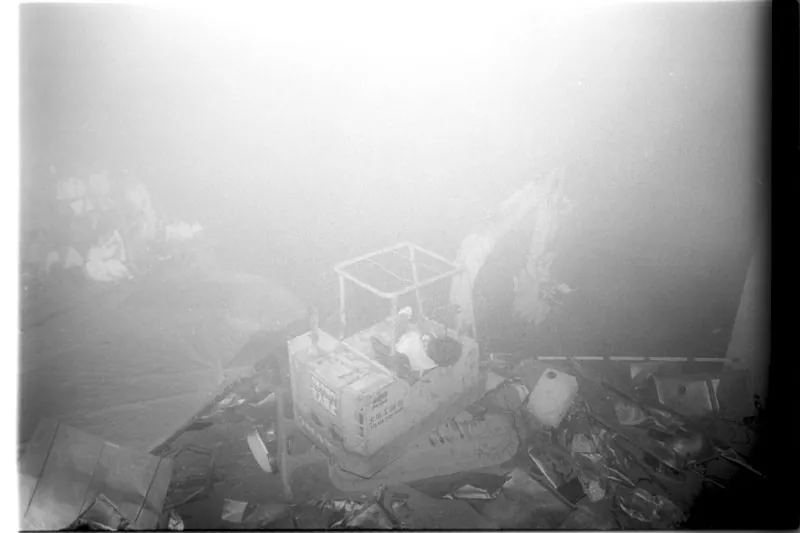
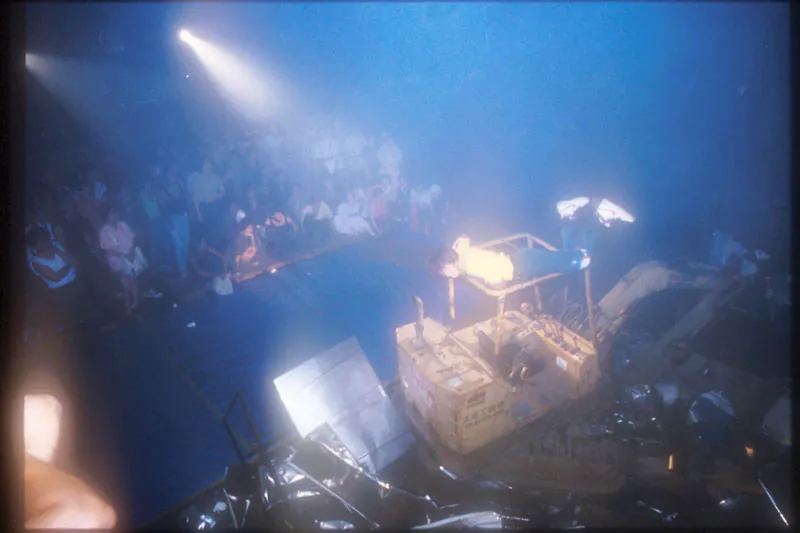
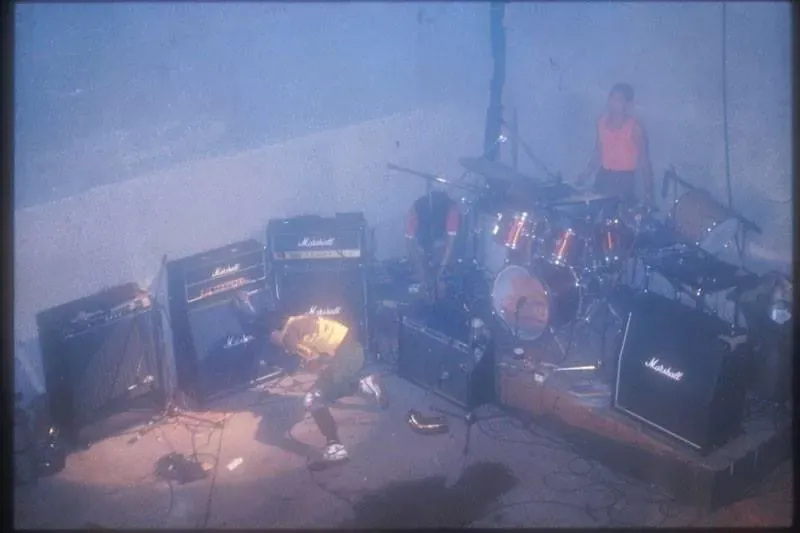
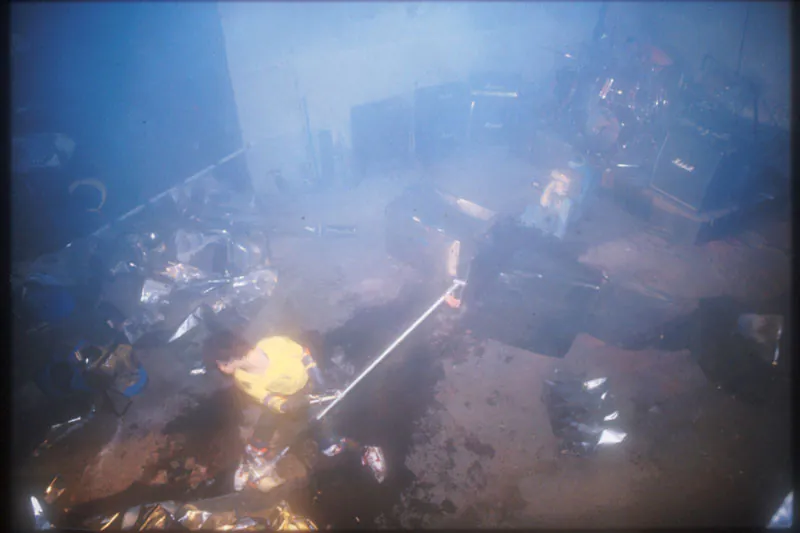
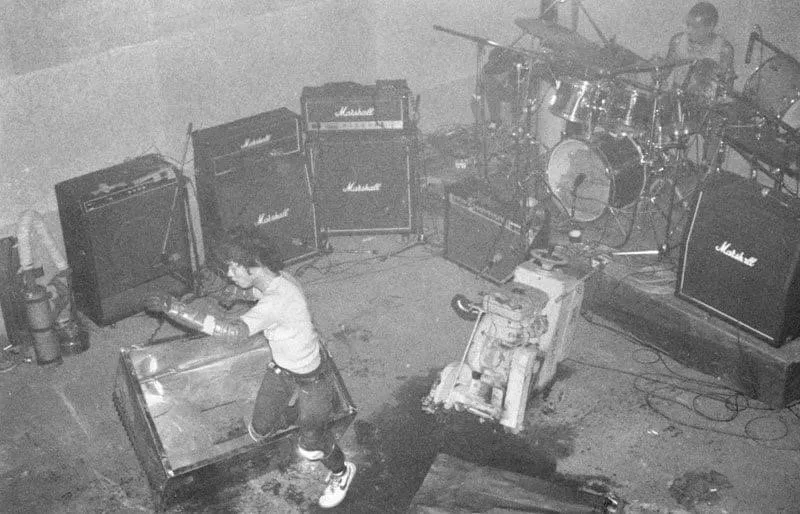
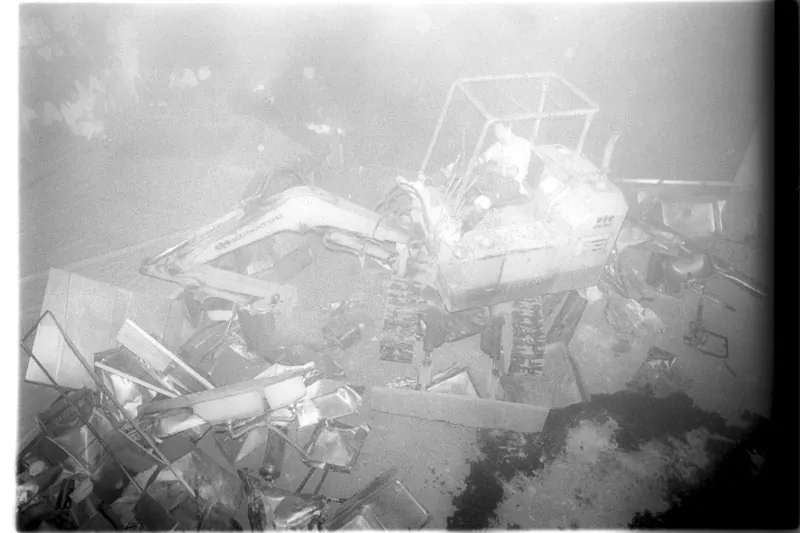
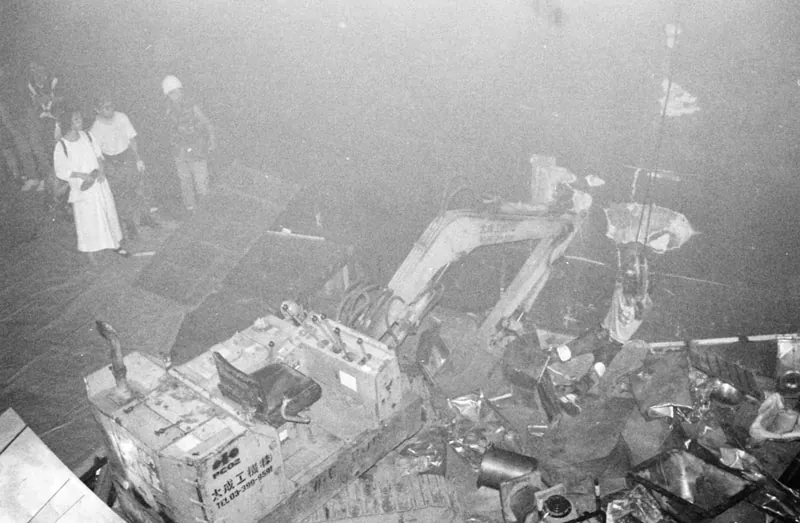
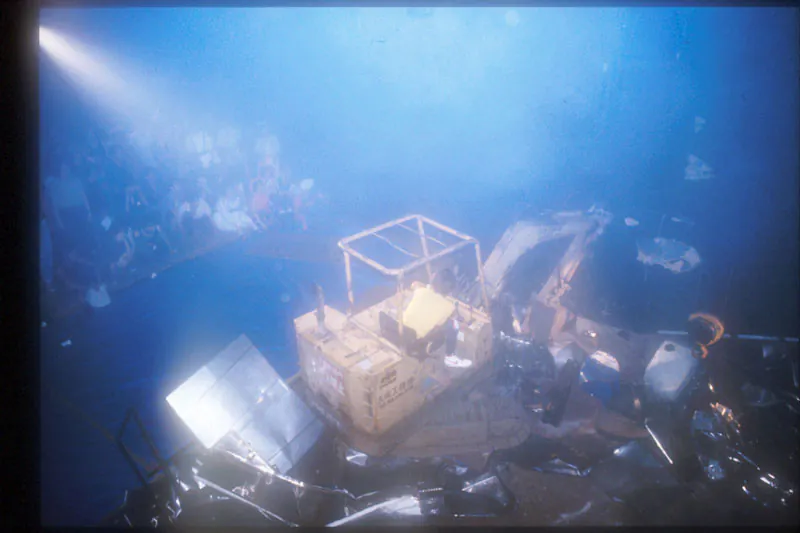
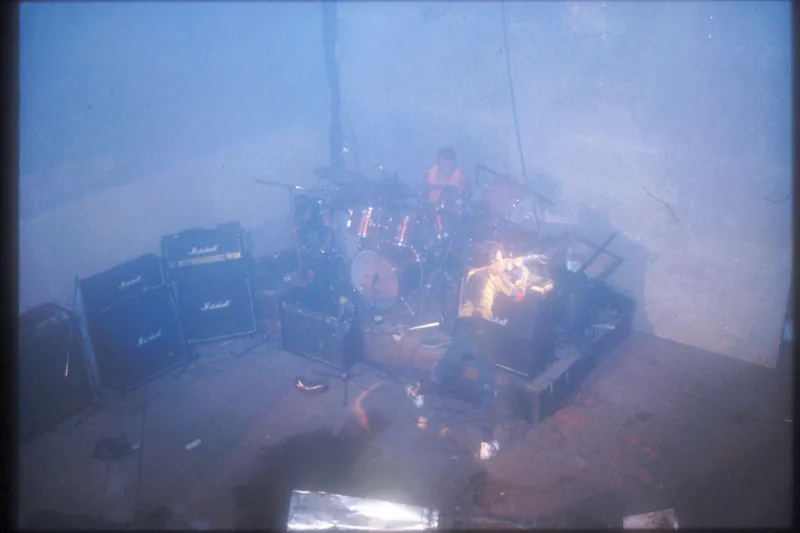
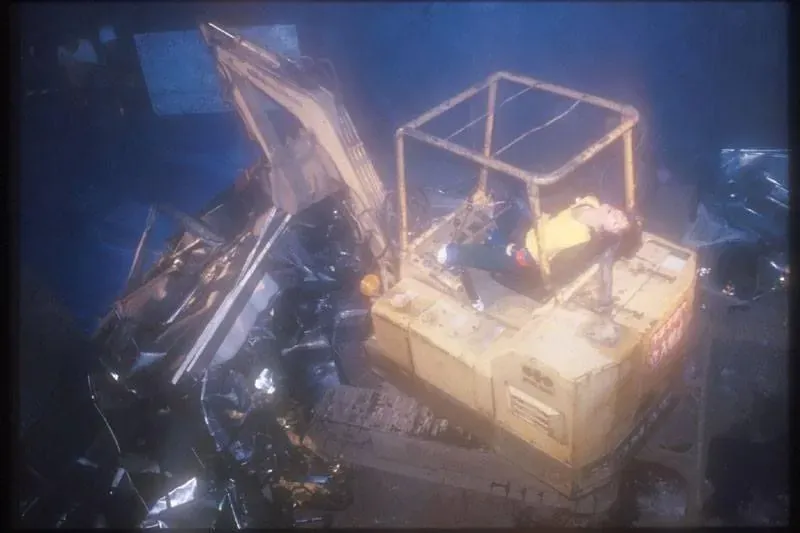
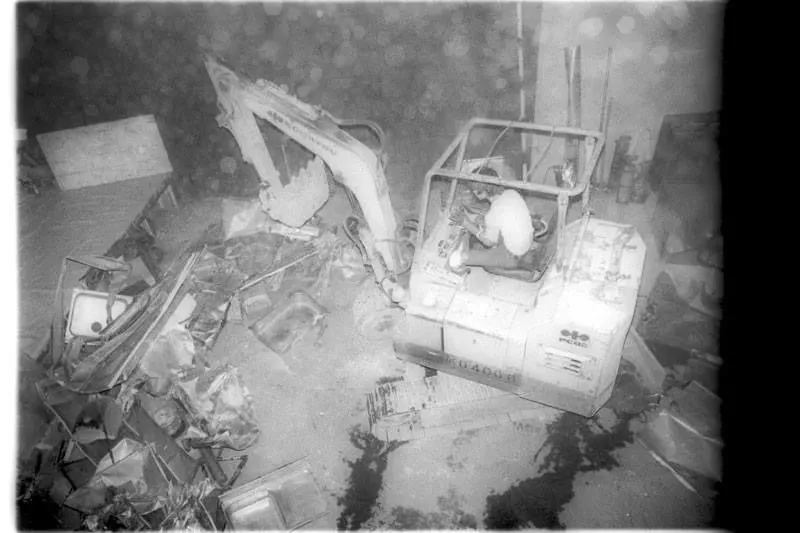
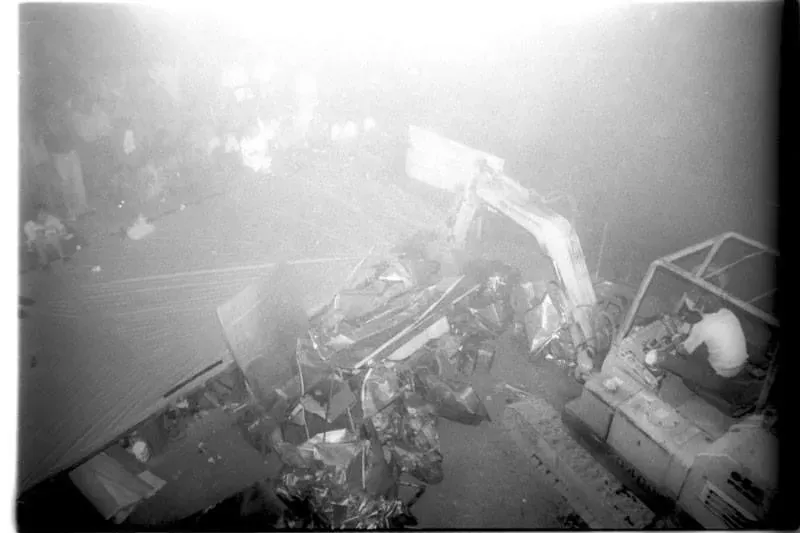
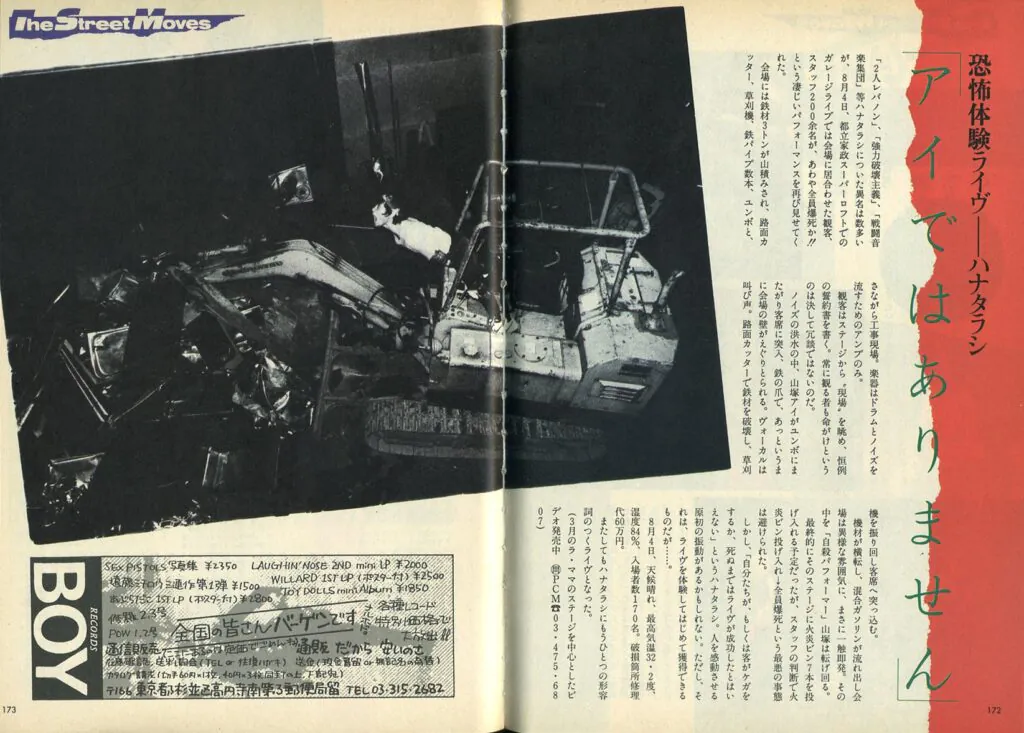
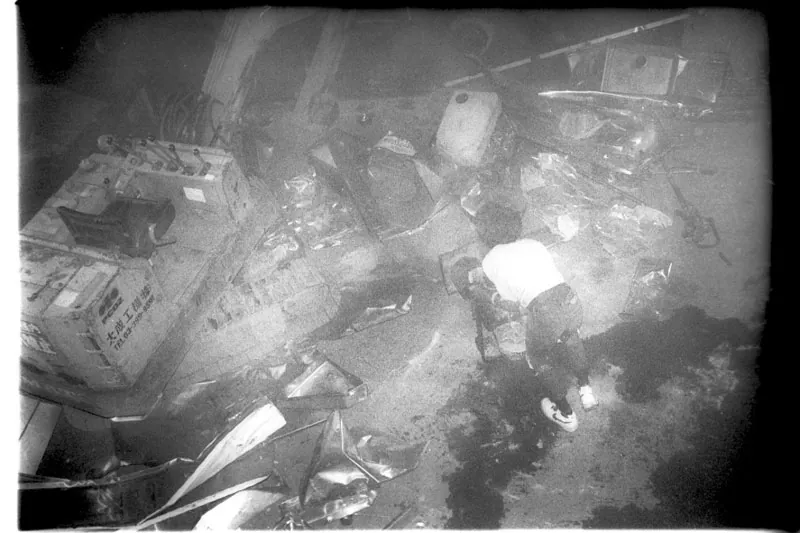
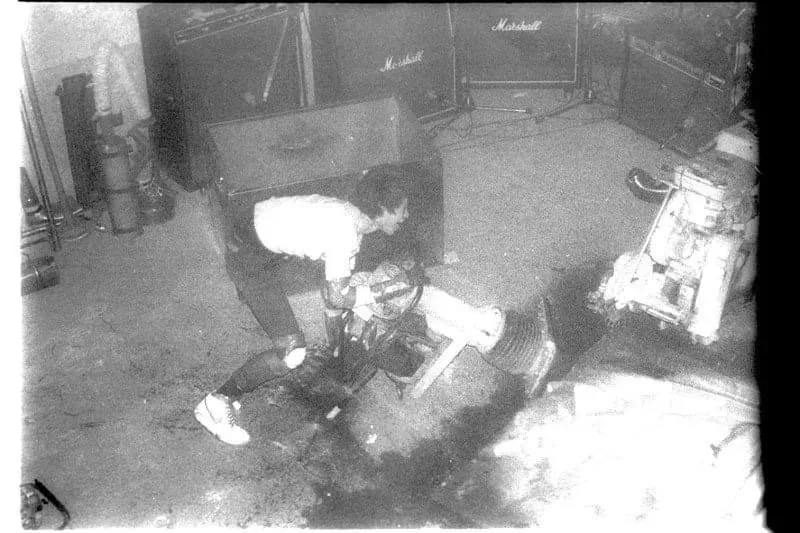
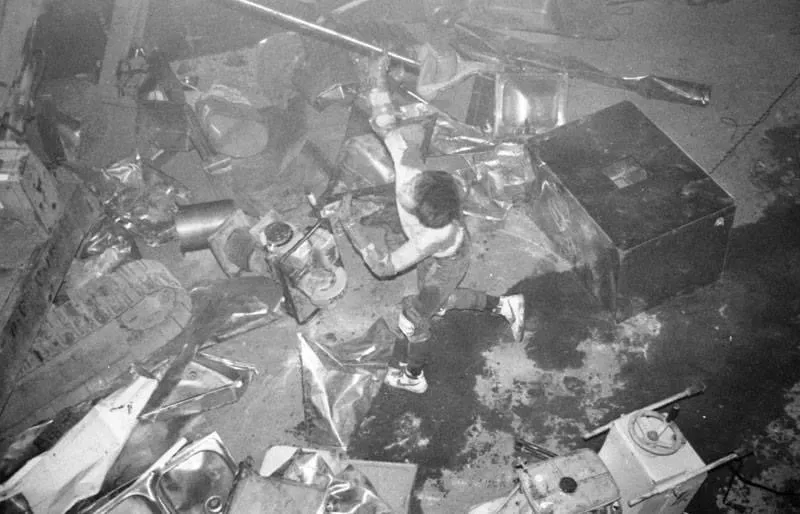
A set of photos by photographer Gin Satoh are the only visual documentation that remains of one of the most infamous performances ever put on by a noise band. They capture the moments and direct aftermath of a 1985 show by Japanese noise group Hanatarash in which frontman Yamantaka Ai (stylized as “Yamantaka Eye”) drove an excavator through the wall of a venue and destroyed the stage, transforming a live concert into an act of mechanical terrorism, with the event nearly turning into catastrophe, had the show’s witnesses themselves not held down the performer from carrying on. Despite knowing what they were likely to see, even they did not expect this level of destruction. This is the story of Japan’s most dangerous band’s most dangerous concert.
Formed by Yamantaka Eye, Hanatarash operated at the extreme edge of Japan’s underground noise scene. In their music, Hanatarash used innovative noise-making techniques including power tools, drills, and heavy machinery. The group became known as Japan’s most dangerous band, and audiences were eventually required to sign waivers before attending shows, a precaution justified by a performance history. Among their most infamous acts were cutting a dead cat in half with a machete, Eye strapping a circular saw to his back and nearly severing his own leg, and of course, driving heavy machinery into the venue, destroying it, and having the show shut down. No one ever knew what they might witness at a Hanatarash performance, and that unpredictability was no doubt part of the excitement.
If, for the average listener, noise music seems to have dulled its edge today, it may be because its textures have spread into the mainstream and into decidedly more domestic contexts: yoga classes taught to Merzbow, gentle long fan-hum sleep videos on YouTube, ASMR white-noise machines, and even noise-cancellation technology functioning as a form of noise itself. Not too long ago, however, noise music was primarily intended to push the boundaries of musical creation. Noise is the art of non-music, or more precisely, of noise as music.
“Ancient life was all silence,” the Italian Futurist painter and composer Luigi Russolo wrote in his manifesto The Art of Noises “In the nineteenth century, with the invention of the machine, Noise was born. Today, Noise triumphs and reigns supreme over the sensibility of men.” He continued: Today music, as it becomes continually more complicated, strives to amalgamate the most dissonant, strange and harsh sounds. In this way we come ever closer to noise-sound. “This musical evolution is paralleled by the multiplication of machines, which collaborate with man on every front.” That was all the way in 1913. While noise as music existed in earlier forms, it would finally find its form many decades later, but as Rossolo notes, machinery was clearly at the forefront of noise music from the very beginning.
Noise bloomed from the 1970s onward. Industrial music encouraged experimentation, leading to genres such as power electronics and power noise, particularly in Europe, where synthesizers, sub-bass pulses, feedback, and high-frequency squeals became the textures of discord and heaviness. In 1975, Lou Reed brought noise into mainstream culture with Metal Machine Music, an album consisting of four long tracks of guitar feedback played at varying speeds. It was not commercially successful, unless success is measured by alienating much of Reed’s audience and provoking critics, in which case it was a total success.
Before turning back to Hanatarash, it is useful to understand the genres surrounding their work. Noise music specifically in Japan, often called Japanoise, is an experimental approach first attributed to Group Ongaku, who in the 1960s recorded Automatism and Object using traditional instruments alongside everyday objects such as a vacuum cleaner, dishes, and an oil drum. Alongside their unsual choice of instruments, their methods of manipulating tape speed during recording produced sounds that were highly novel for the time.
Noise expanded rapidly when Japanese artists absorbed European experimentation. The expression of inner conflict and the absurdity of the modern world resonated with postwar Japanese sensibilities. A range of bands populated the emerging scene: Hijokaidan, Merzbow, Incapacitants, Masonna, The Gerogerigegege, Onkyokei, and of course, Hanatarash.
At the time noise had begun to develop, high-fidelity sound and traditional instrumentation was highly favored in Japanese music culture, with kissa listening rooms becoming the norm, which were spaces where people would gather to silently listen to jazz or classical musical on high-fidelity music systems. But many artists wanted to extend their performances and recordings far beyond what was deemed proper, listenable, and even safe.
Cue the phenomenon of Danger music, a phenomenon developed in the early 1960s primarily through American composer, poet, and artist Dick Higgins, who sought to challenge compositional structure through unusual scores. His best-known piece, Danger Music #17, consisted of Higgins screaming manically at an audience for around ten minutes. This evolved into an understanding that some pieces may be dangerous to the listener whether through their performance or their sound alone, such as a piece that is theoretically so loud it would cause deafness. Still, this attracted many people who embraced the appeal of experiencing the outrageous and unexpected in a space insulated from the safe and ordinary rules of normal life.
Highly inspired by the concept of danger music, the Japanoise movement developed in underground scenes in Osaka and Tokyo in the late 1970s and 1980s, emerging from punk’s mid-1970s explosion as Tokyo Rockers and Kansai No Wave groups rejected mainstream conventions and evolved toward abrasive, non-musical expressions of dissent. Hijokaidan, formed in 1979 by Jojo Hiroshige, shifted toward “pure noise” using feedback, screams, and unconventional objects, setting the stage for Japanoise’s emphasis on physical excess and provocation. Hanatarash represented a second-generation Japanoise act, contributing to the genre’s destructive, performance-driven aesthetic.
At a time when Japan was already at the forefront of noise, Yamantaka Eye, already a year into the project, invited drummer Ikuo Taketani to join Hanatarash around 1984. Meaning “snot-nosed” in Japanese and used in the same way the word “crybaby” would be used in English, the band’s name derived from a derogatory term applied to Eye early in his life, who suffered from sinusitis as a child.
Yamantaka Eye had witnessed noise and other experimental music from Europe during various concerts in Tokyo, which formed a large influence on his own direction. Einstürzende Neubauten, whose members also employed power tools and other unconventional instruments in their performances, were one such group, whom Eye saw live while the group toured Osaka, it was also where he met guitarist Mitsura Tabata, who did not feature in Hanatarash, but would eventually join Eye in future projects.
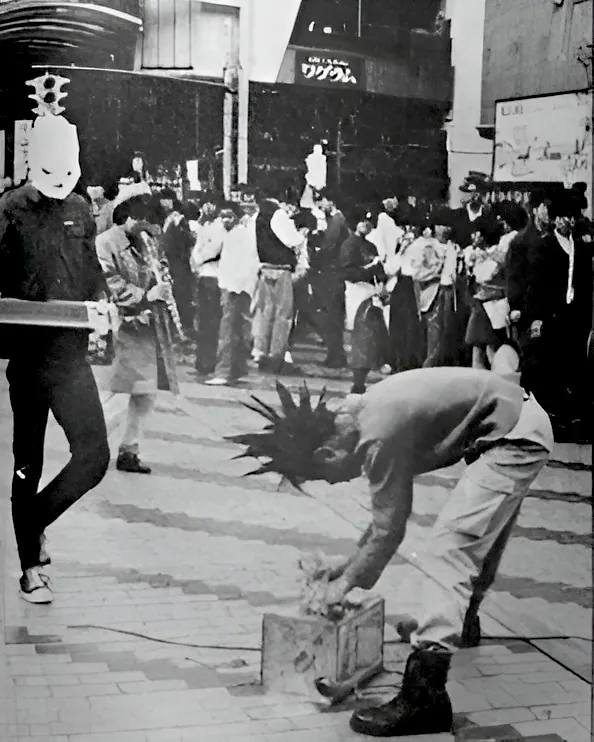
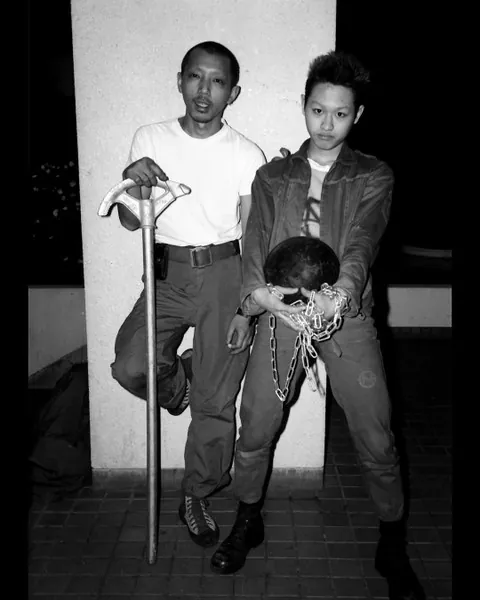
In an interview with Mitsuru Tabata, he recalls the experience: “I think I was a volunteer for a security job at the concert. Organizers could get concert crews easily because a lot of young guys want to see famous artists’ concerts for free even if I was not a tough guy … Most of the artists from overseas have received hospitality like superstars here … Anyway, Eye was the one in the audience. He came with a friend of mine. A friend of mine introduced him to me. That was my first meeting with him. Then we became friends and we hung around sometimes. Somehow we started to live in a cheap apartment called Yasuda-so which has a few tiny rooms in Kyoto. We became roommates.”
Both musicians viewed the current alternative music scenes, particularly punk, as too unoriginal and sanitized for their liking, they set upon making abrasive noise with equally abrasive song and album titles, with Eye’s original release under the project titled Take Back Your Penis!! as Tabata released albums with his group Noizunzuri, which blended noise rock with elements of psychedelic and krautrock. While Tabata’s work found labels willing to release his work, Eye’s first releases came in the form of cassettes self-released under Eye’s personal label Condome Cassex.
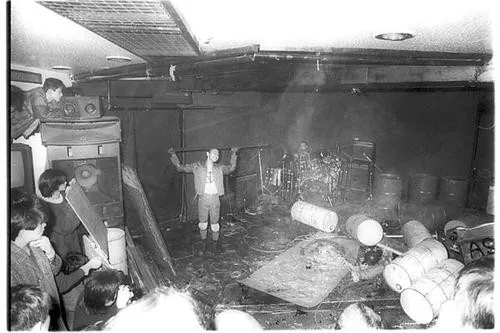
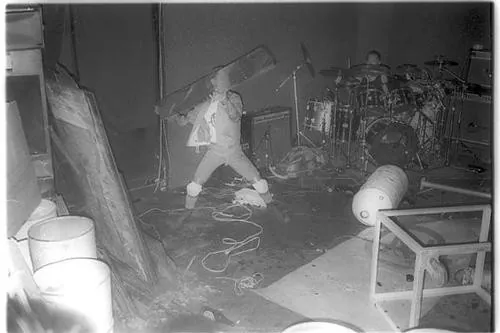
Hanatarash’s live performances, originally performed solo by Eye until he invited Taketani a year into the project, became so notorious that many venues refused to host them, as many acts bordered on criminal. Word spread quickly within the Japanese underground: their shows were perilous affairs in which injury was a real possibility, and many were still interested in witnessing the experience. One early incident involved Eye allegedly bringing a dead cat he found outside on stage and chopping it in half with a machete or chainsaw, which was followed by him throwing the pieces into the crowd.
Eye and Taketani aimed to push noise further, transforming performances into savage works of art. They threw beer bottles, concrete blocks, and debris into the crowd, smashed glass across the stage, and caused numerous injuries to themselves and attendees. At different shows Eye rolled oil drums and created sparks from them with a disc grinder before throwing them into the audience, threw broken bottles and concrete blocks, shattered plate glass, swung an iron ball attached to a chain. and cut scrap metal with a chainsaw before chasing fleeing concert attendees with the same chainsaw. Usually, the doors out of the venues would be locked until the performance was over.
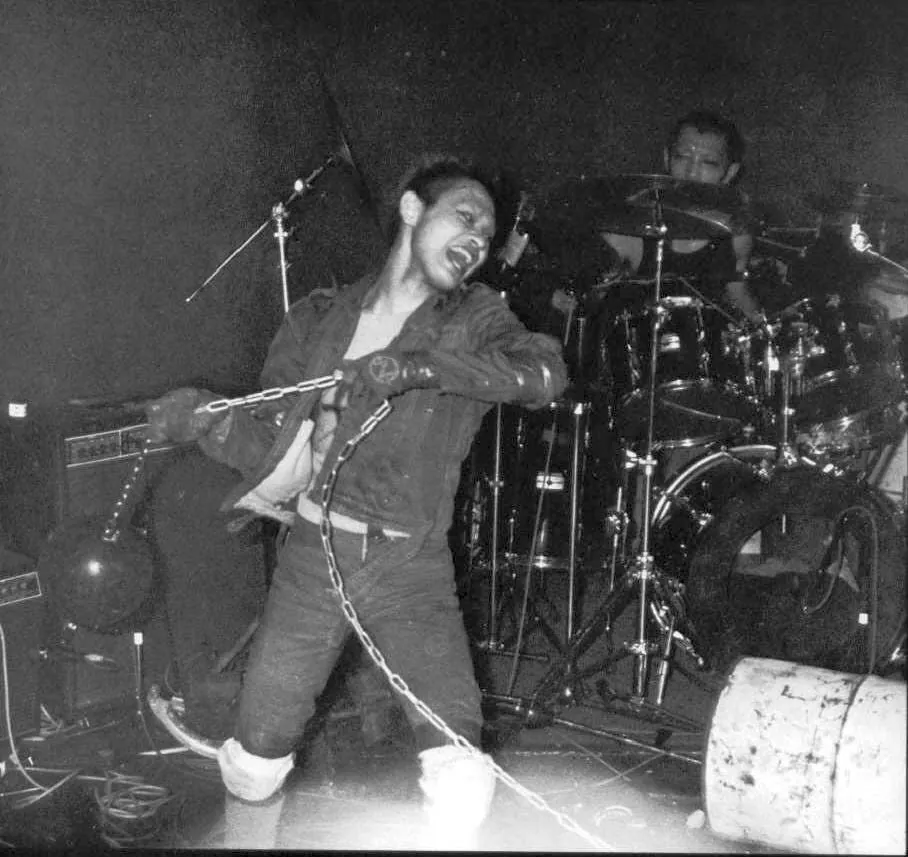
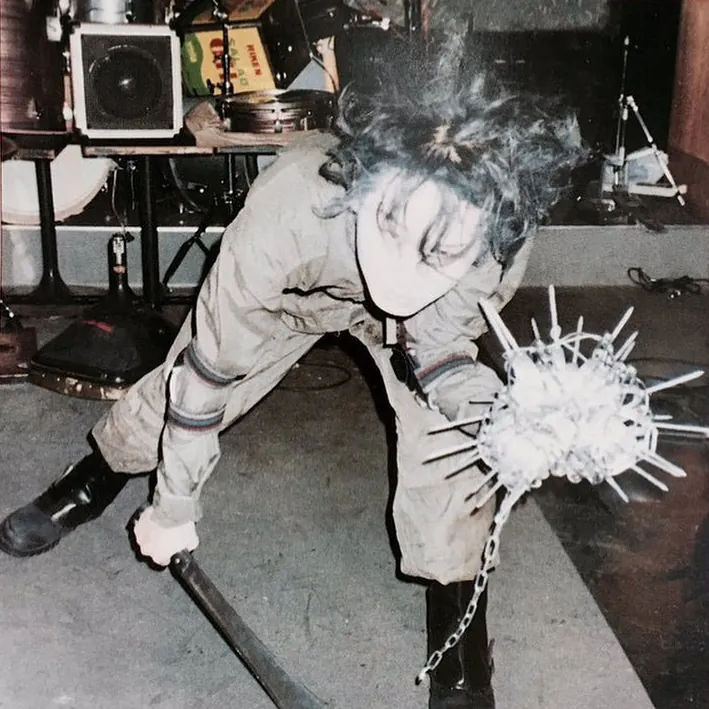
At another concert Eye strapped a circular saw to his back and modified it to keep running as he performed, no matter what happened; when it came loose from its harness, it dangled and cut his thigh, nearly severing his leg. As their notoriety grew and police attention and bans loomed, the band created a loophole: audience members had to sign pledges stating that the organizers will bear no responsibility for any accidents or harm that may occur during the concert. Once signed, Eye hurled broken glass and machinery parts into the crowd.
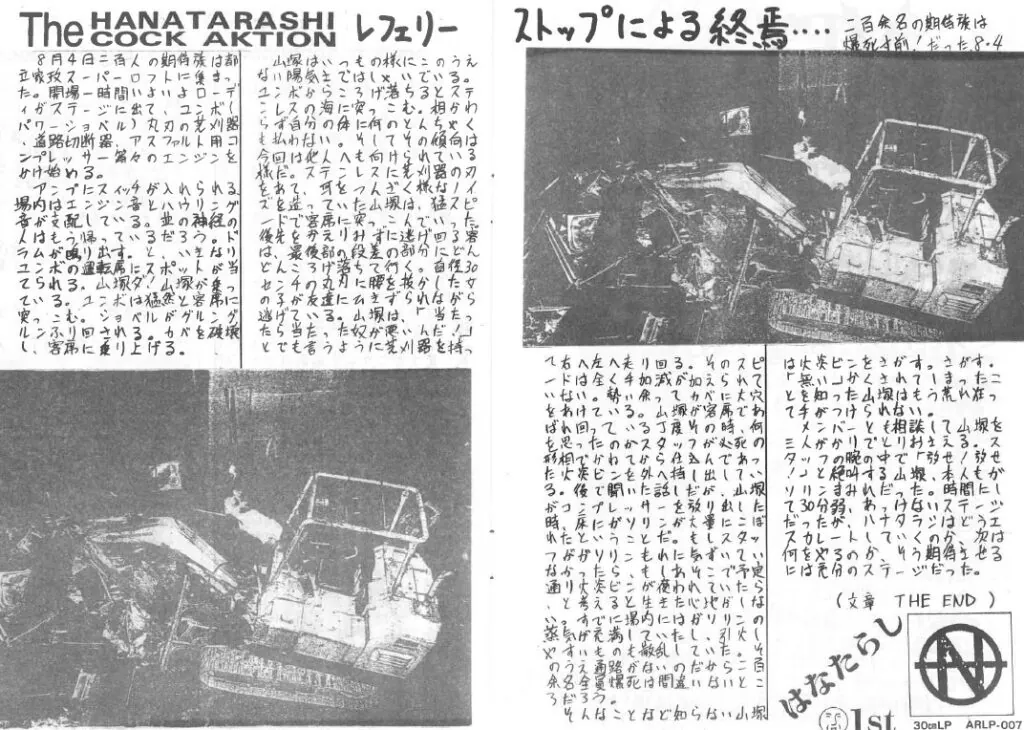
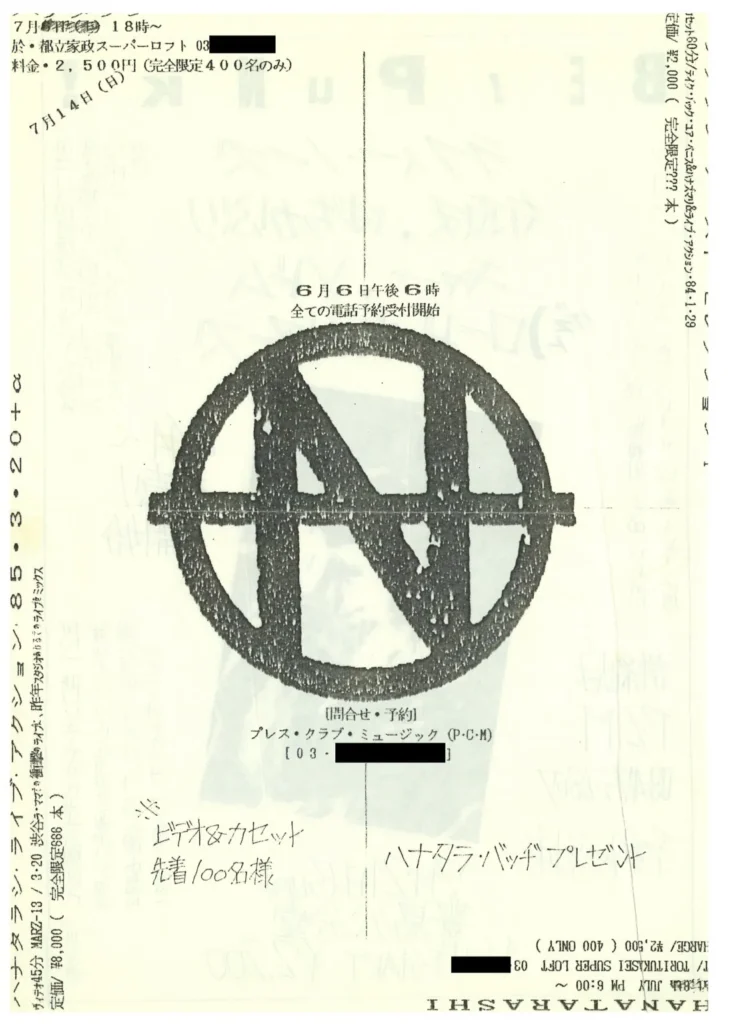
Searching for a new extreme, Hanatarash staged what would be their ultimate escalation. During an infamous performance at the Toritsu Kasei Super Loft in Tokyo on August 4th, 1985, Eye began his usual antics, which included throwing an iron rod into members of the audience standing in the rafters of the venue, including members of the hardcore punk band Sodom and the editor-in-chief of Fool’s Mate magazine, who all mistakenly believed they were safe from the chaos below. Taking the rod, he swung at the audience with it before leaving and returning to the stage with “something like a lawnmower with teeth on the end, making a yelling noise” according to musician and attendee Hiroshi Kawabe, “we all panicked and ran away, thinking we were really going to die. While we were running, a girl couldn’t escape and crouched down … I think she might have wet herself.”
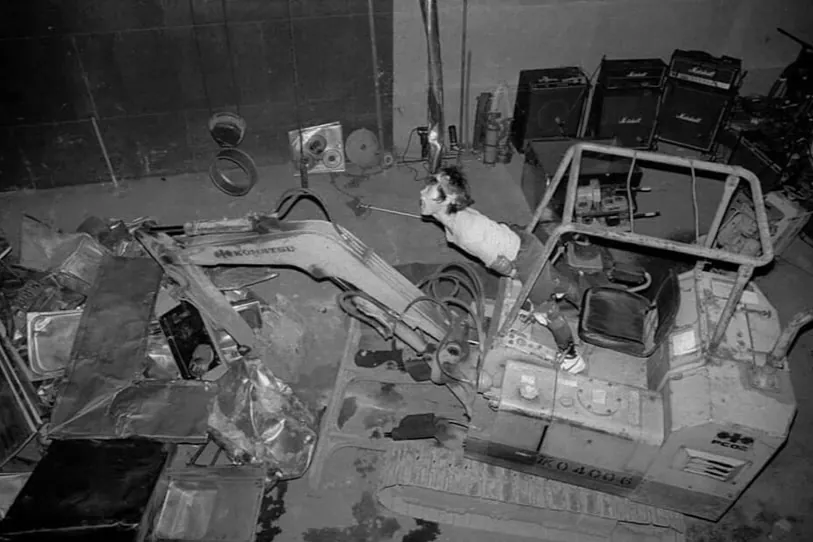
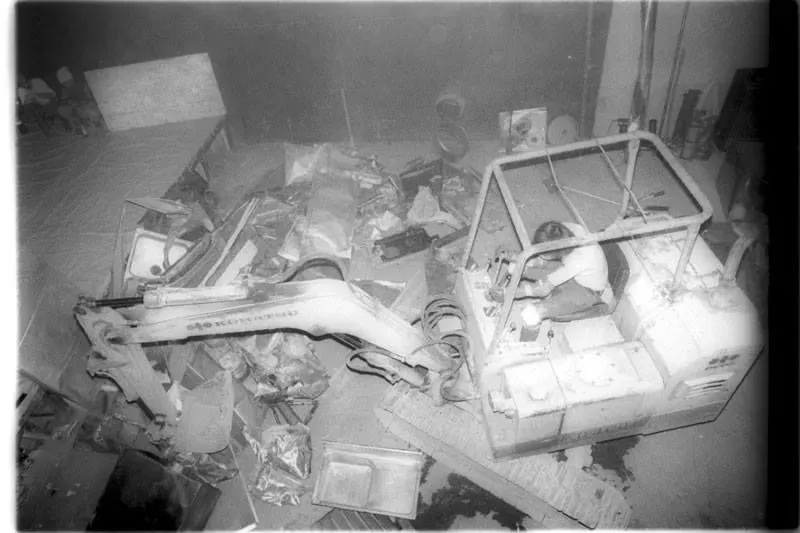
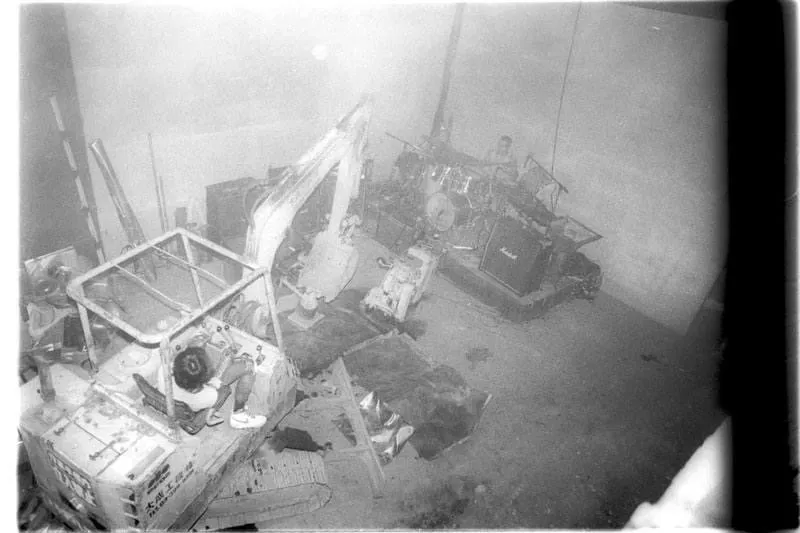
Having left once again, Eye was suspiciously absent from the stage for a longer period of time, confusing the audience. Moments later, what would later report as a “bulldozer” (but was actually an excavator) was driven through the main doors of the performance hall, piloted by none other than Eye himself. Taketani continued attempting to drum in a rhythm that would compliment the sounds of the excavator while Eye haphazardly maneuvered it through the hall, as the crowd hurriedly ran out of its way.
Despite not knowing how to actually drive the machine, he destroyed anything he could find inside the hall, including part of the wall of the building, leaving a gaping hole. As he tried to break free from the hole, Eye left the excavator’s shovel down, which led to it tipping over on its side, destroying its protective cage, and leaking gasoline onto the floor of the venue.
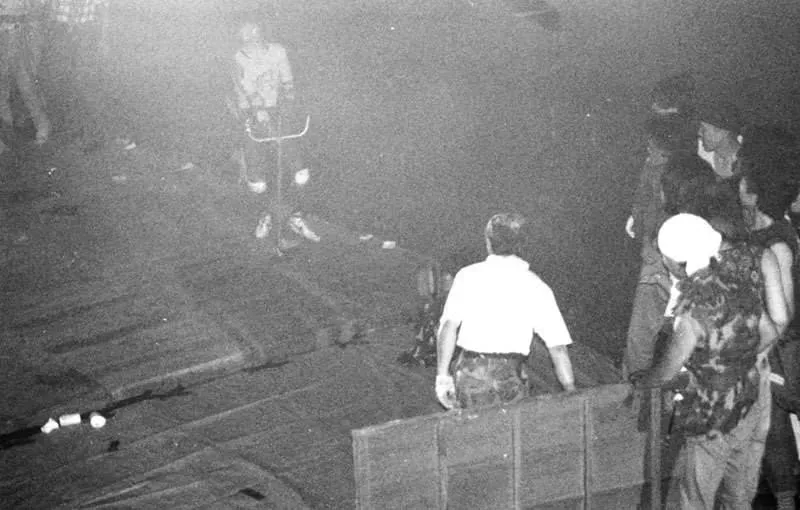
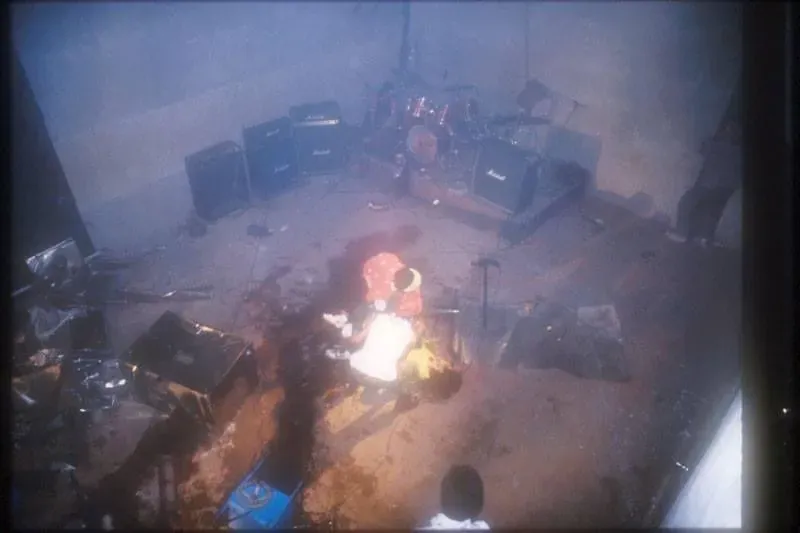
Miraculously unharmed, Eye got off the machine and continued to destroy things as well as use a concrete rammer to produce more noise, before finally attempting to light the gasoline on fire using a Molotov cocktail, at which point the venue staff intervened, restraining him in a sling and effectively ending the show minutes before it potentially turned into disaster and endangered roughly 100 lives.
According to Kawabe, the audience wasn’t even aware of their brush with danger. “It was about 20 minutes in total, and we were like, “What? It’s over?” Like, nothing happened!” he recalled, “We found out later, but none of us had any idea we were on the verge of dying. When the staff told us to get everyone outside, we looked up to the second floor and saw Eye raging. He was yelling, “Next time, I’ll definitely kill you guys!!!””
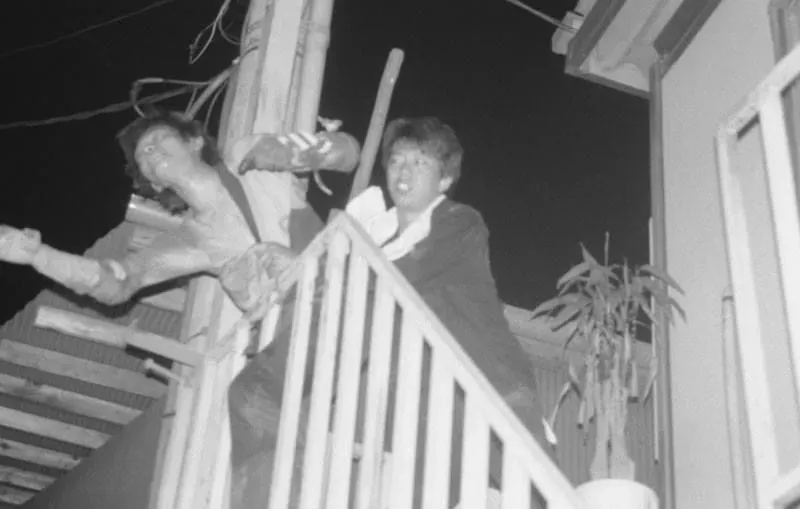
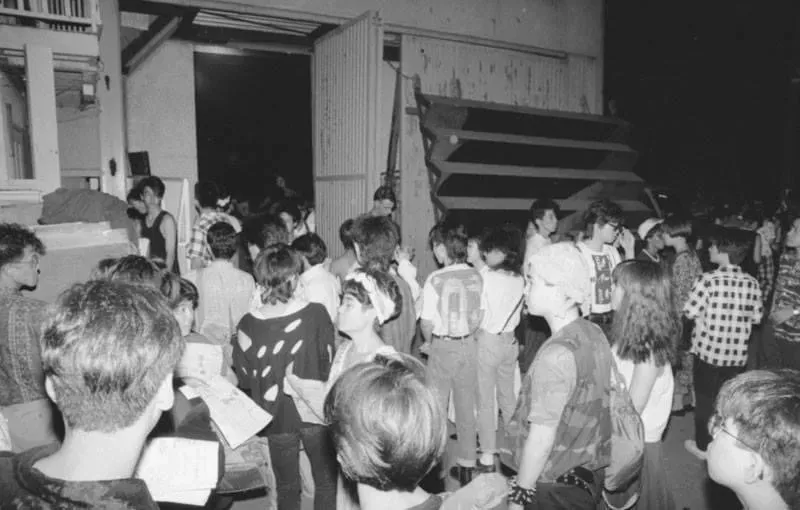
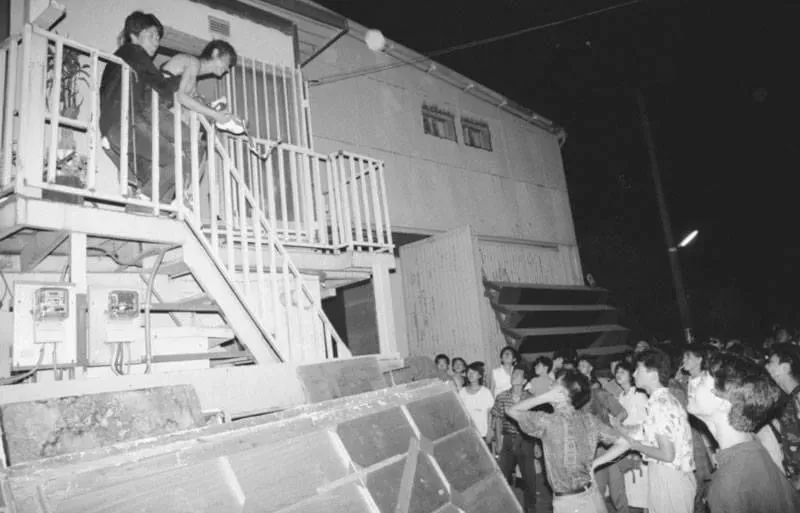
Eye later described the event: “We got on this thing and rode it—bang!—through the doors of the hall. It’ll spin a full 360 degrees, so we were spinning and driving through the audience, chasing them around, when suddenly there was this wall we spun into and opened a rather large hole in. The wind came blowing in. The shovel part got stuck in the hole and, trying to get it out, we pushed a switch that started the tractor tipping up, like it was about to go over backwards … Nobody got hurt there, but it cost us several thousand bucks to pay for all the damage. We’d also broken the backhoe and had to pay for that … the place was all concrete walls and no windows. We smashed everything.”
The damage reportedly exceeded ¥600,000, and according to some reports, Eye admits he was fully prepared to throw the Molotov that would have set the venue ablaze and cause even further damage, supposedly because venue management told him he would be allowed to destroy something in the venue, this something later ended up being a water pipe which burst as a result of the excavator hitting it, which also needed to be paid for.
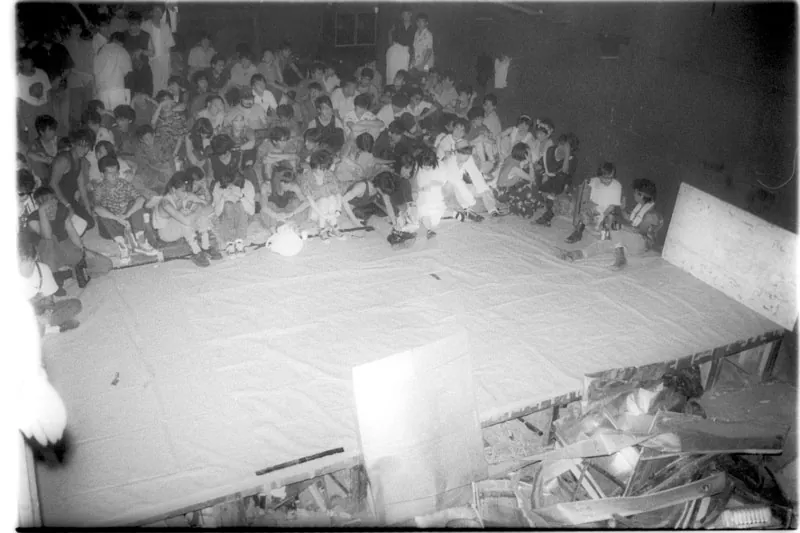
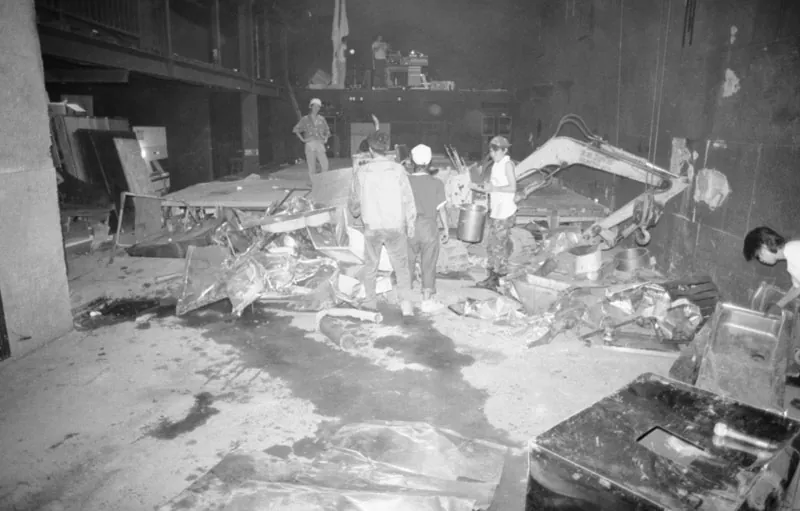
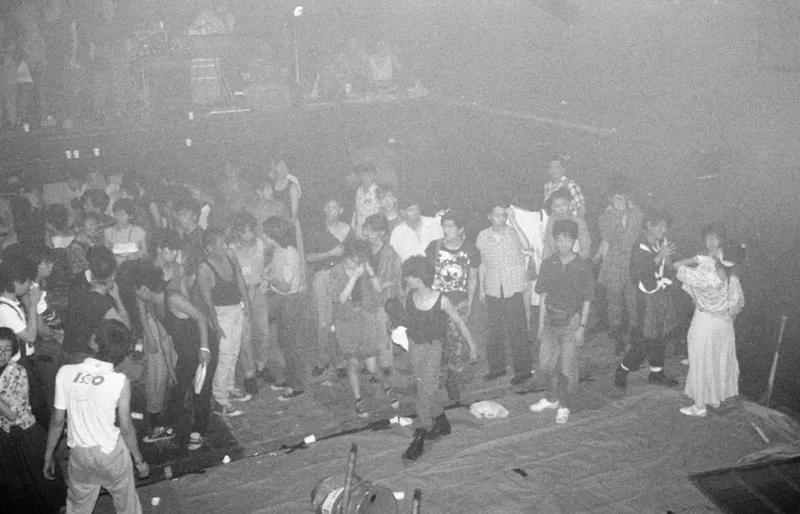
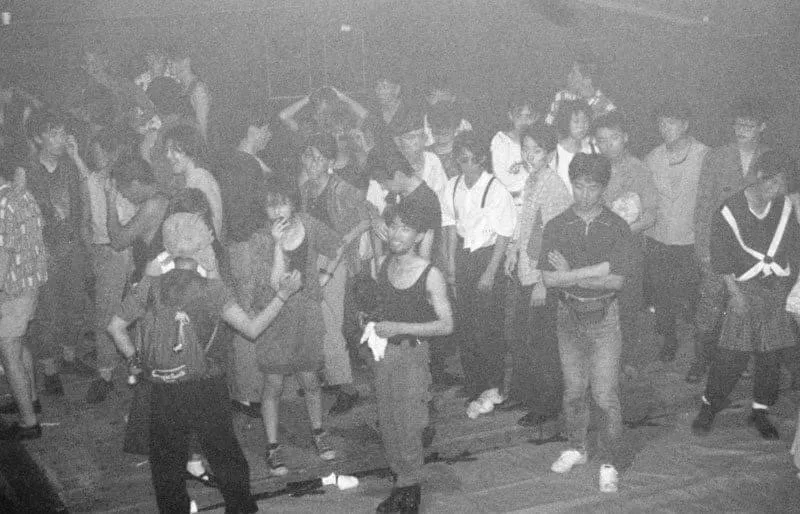
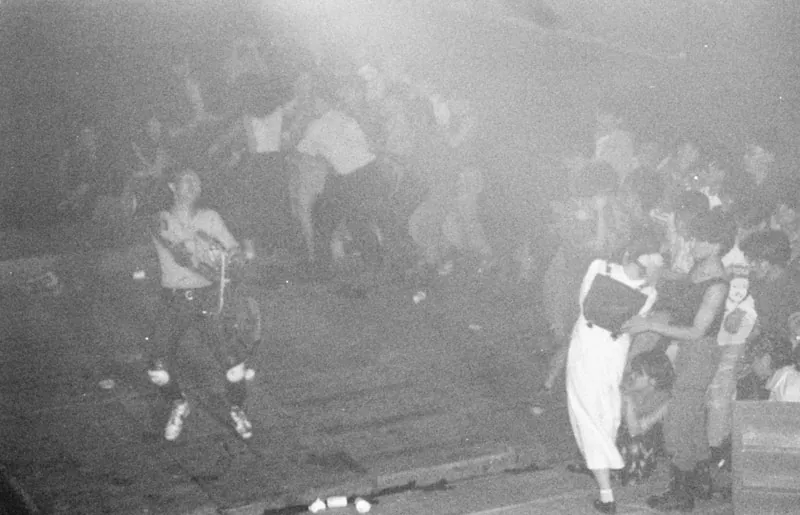
As a result, Eye staged a concert which he advertised as featuring unlimited marijuana smoking with a ¥100,000 admission fee, claiming to be compensation for damages to the last venue, the event reportedly attracted no audience and was likely set up as a joke.
Surprisingly, the events in Tokyo were not enough to limit their provocations and they were still able to find occasional venues for their performances. A later event at a venue in Kyoto saw the performers destroying everything they could find including stage, seating, PA booth, dressing rooms, lockers, and toilets, with repairs estimated at roughly 8 million yen. The steep cost of the damages, which Hanatarash had no intention of paying to fix the damage, ultimately led to the venue’s complete closure.
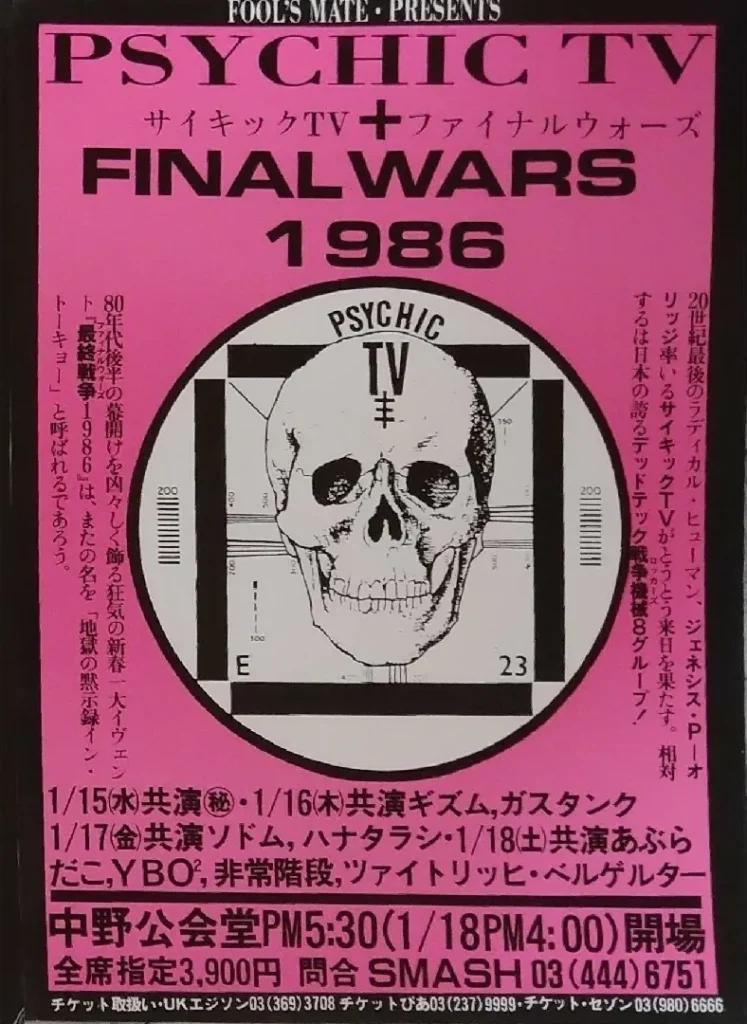
Knowing his free reign of destruction would not continue forever, Eye had planned one truly final act of subversion. By now, word had reached of their outrageous actions to groups in other countries, including Psychic TV, the nearly equally infamous English experimental collective led by Genesis P. Orridge. Hanatarash was hired along with German thrash metal band Sodom as an opening act for a performance by Psychic TV at Nakano Public Hall in Tokyo on January 17th, 1986.
Psychic TV, as part of a four-day run of concerts held at the venue, featured a lineup of several important bands at the forefront of Japanese noise, punk, and experimental music which included GISM, Aburadako, Gastunk, YBO², Hijokaidan, and of course, Hanatarash. Many of these groups were no less provocative than Hanatarash.
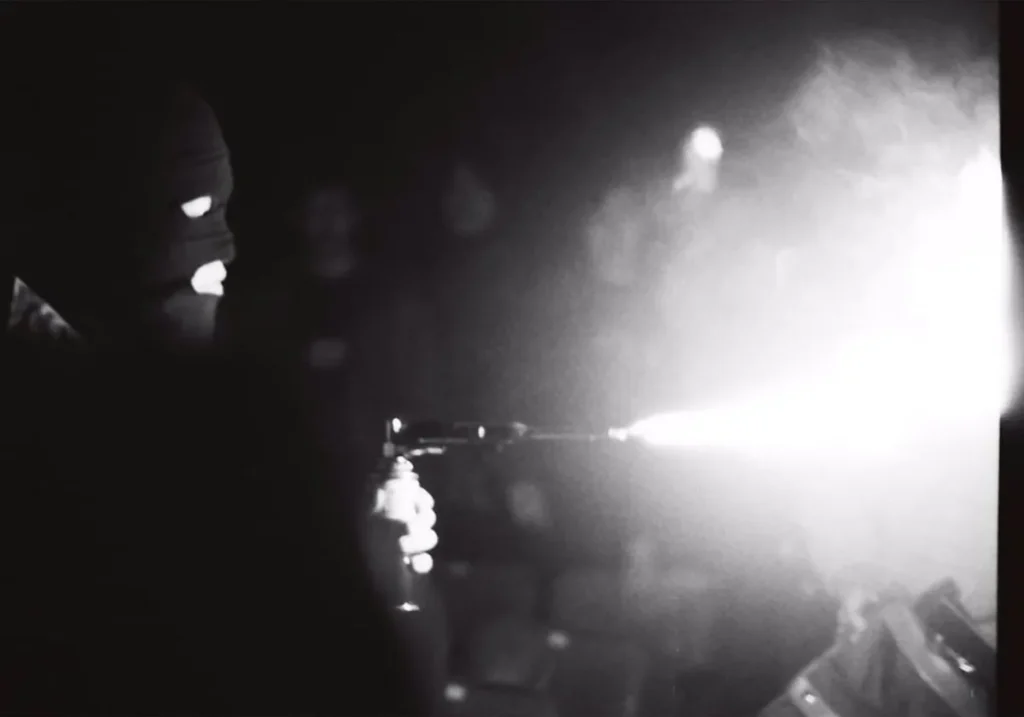
The first day’s performance was opened by heavy metal band Gastunk and punk metal group GISM, which ended up becoming one of the latter’s most infamous performances, dubbed the Gas Burner Panic gig, after the band brought a working improvised flamethrower onstage, eventually going into the crowd and turning it towards the audience, terrorizing them. The controversial performance drew a lot of negative attention towards the band as well as Psychic TV.
GISM having already setting a dangerous precedent, there was intense scrutiny on the concerts. Come the next day, Hanatarash was scheduled to perform and Yamantaka Eye, undeterred, planned to deliver an experience that would surpass even that of GISM’s. However, just before the concert was due to begin, the police arrived. According to Eye, the authorities were reportedly tipped off about a bomb threat through an anonymous call, rumored to be an act of retribution by one of the attendees terrorized by GISM the day before, as a result, the venue was searched and dynamite and Molotov cocktails were discovered in the possession of Eye, who intended to use them to blow up the stage of the venue.
The concert proceeded without Hanatarash, the only sign of their participation in the form of an iron cage they intended to use being left onstage while the concert proceeded without them. Upon learning of the bomb, Genesis P. Orridge was allegedly furious, telling Eye he had “no right to play music” and that he should “stop messing around” and “quit music and become a decent person.”
The police involvement and escalating chaos surrounding their final performances effectively resulted in a nationwide ban on Hanatarash. The group came to be regarded as too dangerous for public consumption, and venues refused to book them for the remainder of the decade. In response, the members pivoted toward a new project, Boredoms, which focused on noise rock and emphasized sound over spectacle. Yet despite their absence from the stage, Hanatarash continued to attract attention internationally.
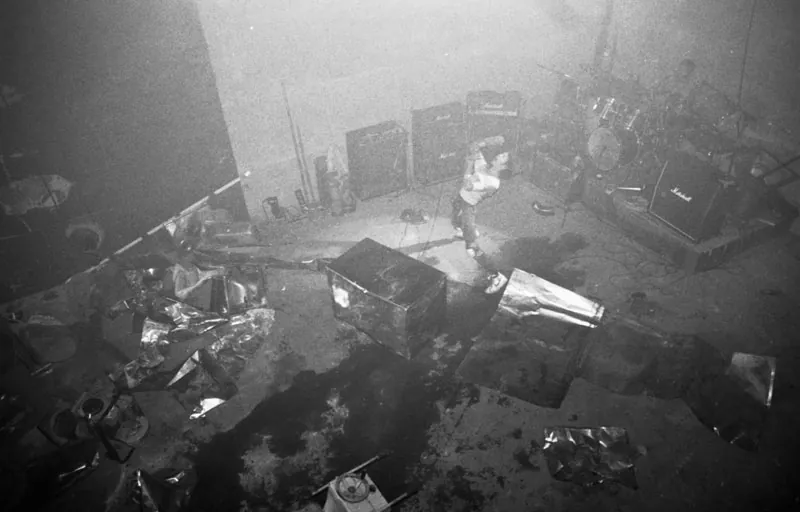
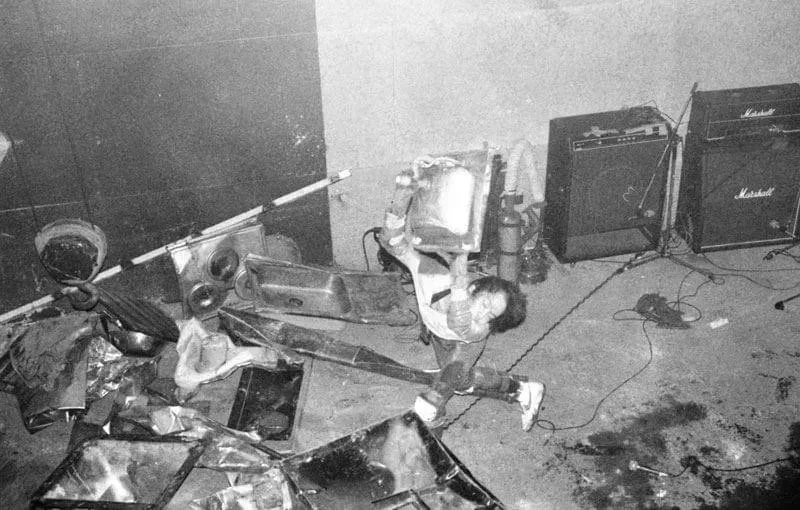
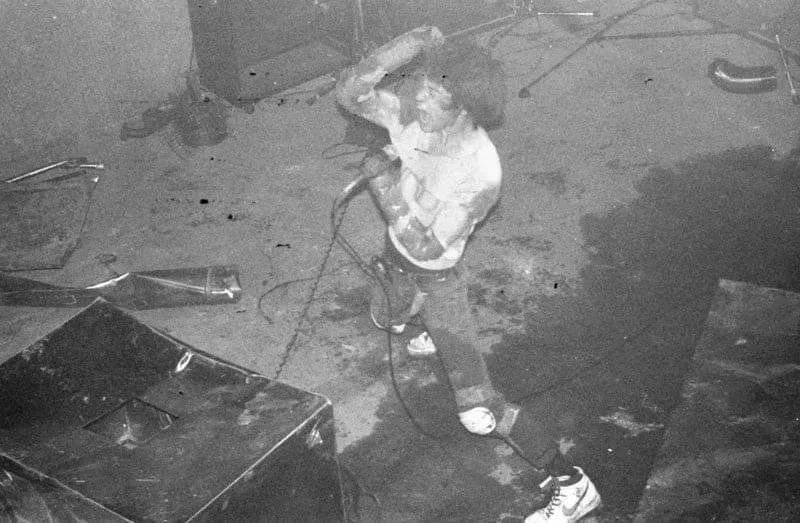
In 1989, a language barrier led to a misunderstanding when American noise musician Ron Lessard released a Hanatarash demo cassette on vinyl without waiting for the master tape Eye had intended to send. The release became legendary among fans and helped introduce the band to new audiences in the West. They briefly returned to the stage in 1990 after Eye promised to behave and ensure that no further incidents would occur.
He kept his word, and Hanatarash continued for several more years before disbanding in 1998. Ironically, a group formed in reaction to what they perceived as punk’s growing softness ultimately moderated its own excesses in order to keep performing.
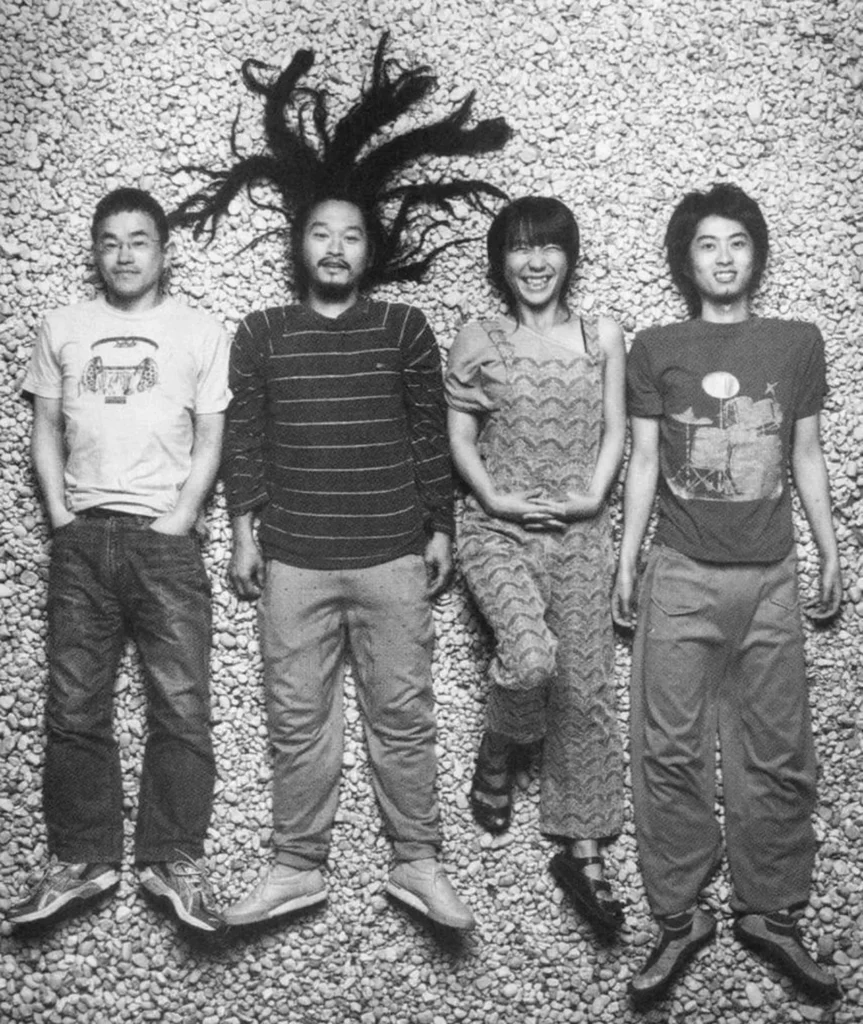
Yamantaka Eye and Taketani Ikuo, along with guitarist Mitsuru Tabata, went on to enjoy broader recognition with Boredoms, a project whose more contained performances brought increased international attention, including a main-stage appearance at Lollapalooza in 1994. Eye later performed with John Zorn, Keiji Haino, and Thurston Moore, and contributed to other projects, including a track with the American experimental duo Battles.
Later, the group traded for provocation for scale, now opting to awe through complexity, one of Boredoms’ later works was the large-scale performance 77 Boa Drums, performed on July 7, 2007 in New York: a 77-minute piece featuring Eye on vocals, electronics, and a specially built instrument called the Sevena, joined by 77 drummers. Naturally, the release went on sale in Japan for ¥7,777, or about $47. On August 8, 2008, the concept expanded into 88 Boa Drums, another performance in Los Angeles and Brooklyn, staged in tandem with Gang Gang Dance.
Although the early antics of Yamantaka Eye and Hanatarash may appear excessive or unnecessary, they reflect a period when musicians were intent on crossing new lines and breaking taboos, perhaps in ways that are unintelligible for many people today. For better or worse (depending on your own outlook towards the purpose of art), at most contemporary concerts the worst outcome might be temporary hearing loss or a bruising in the mosh pit, not the prospect of heavy machinery bearing down on you, the audience member.
More than a century ago, Luigi Russolo lamented that the growing presence of machines in everyday life had dulled their capacity to shock and awe, observing that “machines create today such a large number of varied noises that pure sound, with its littleness and its monotony, now fails to arouse any emotion.” Yet some gestures may never lose their capacity to startle. Should anyone attempt to reprise a performance that employs live construction equipment as an instrument, it is safe to assume it would not go unnoticed.