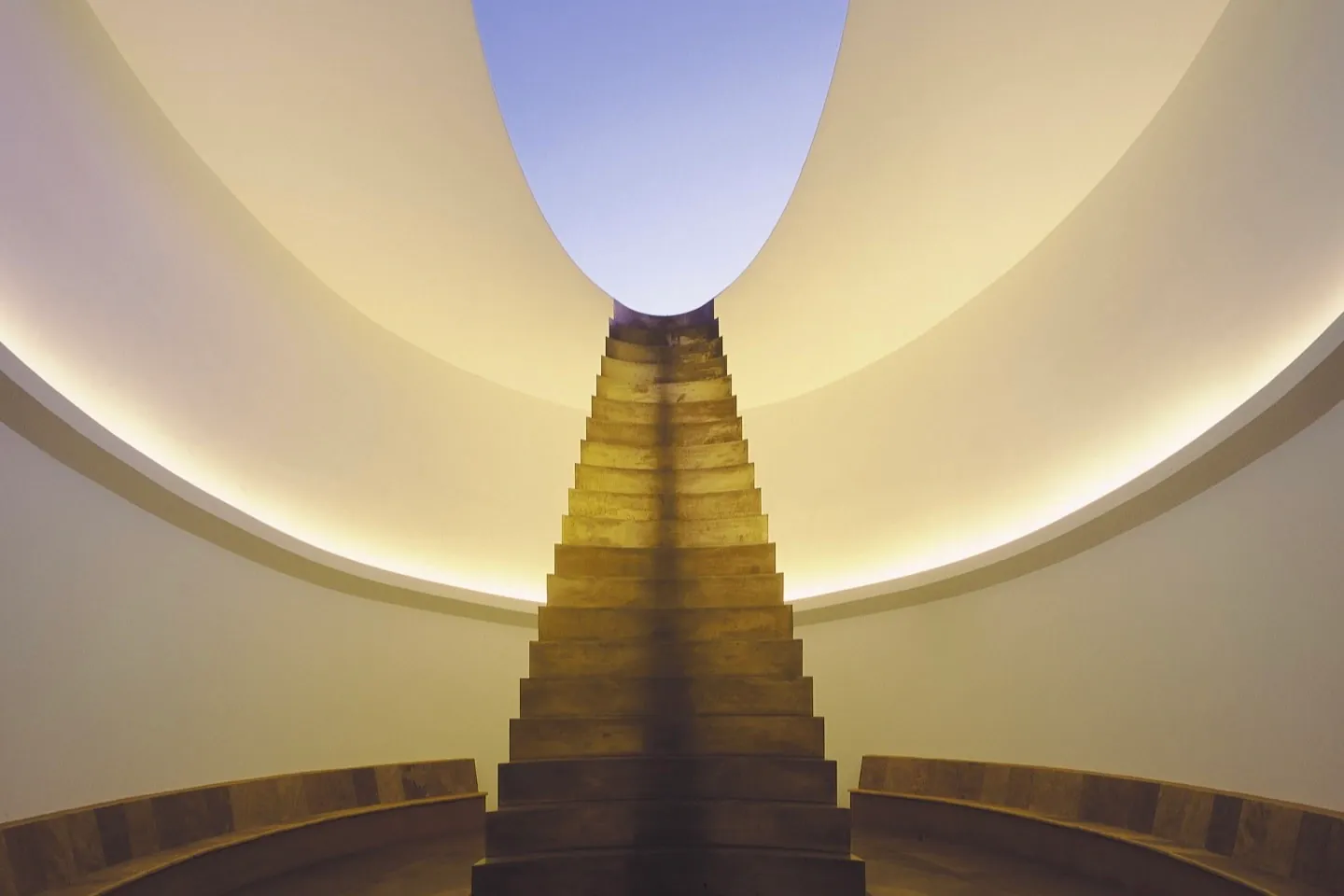
Some projects are built to last centuries. At Roden Crater, James Turrell has spent over fifty years transforming an extinct volcano into a vast instrument for observing light, sky, and the slow movements of the cosmos, creating one of the most ambitious long-duration artworks ever attempted.
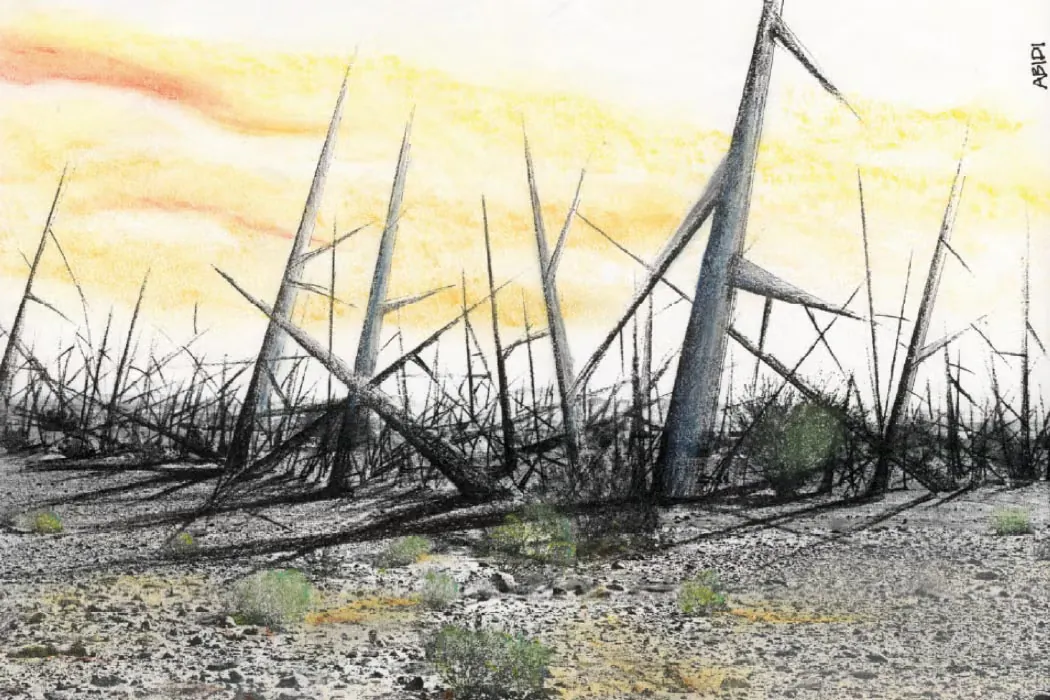
Across the world, a handful of projects are being built with timeframes that stretch far beyond a single human lifetime. In London, composer Jem Finer created Longplayer, a musical composition designed to play continuously for 1,000 years without repeating. Elsewhere, scientists and governments are wrestling with the opposite problem of how to design warnings that will remain intelligible tens of thousands of years in the future to mark the burial sites of nuclear waste. These projects confront the same question from different directions—how to communicate across deep time. The work of James Turrell belongs to this strange category of long-duration thinking. But rather than preserving a message or a warning, Turrell is building an instrument he hopes will remain in use for centuries to come.
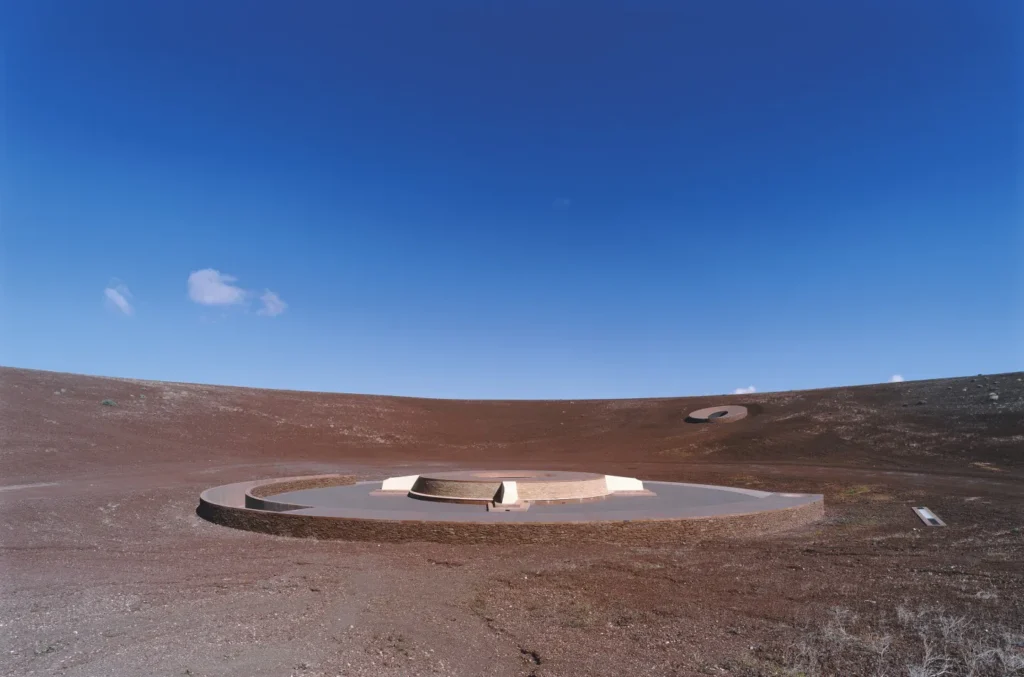
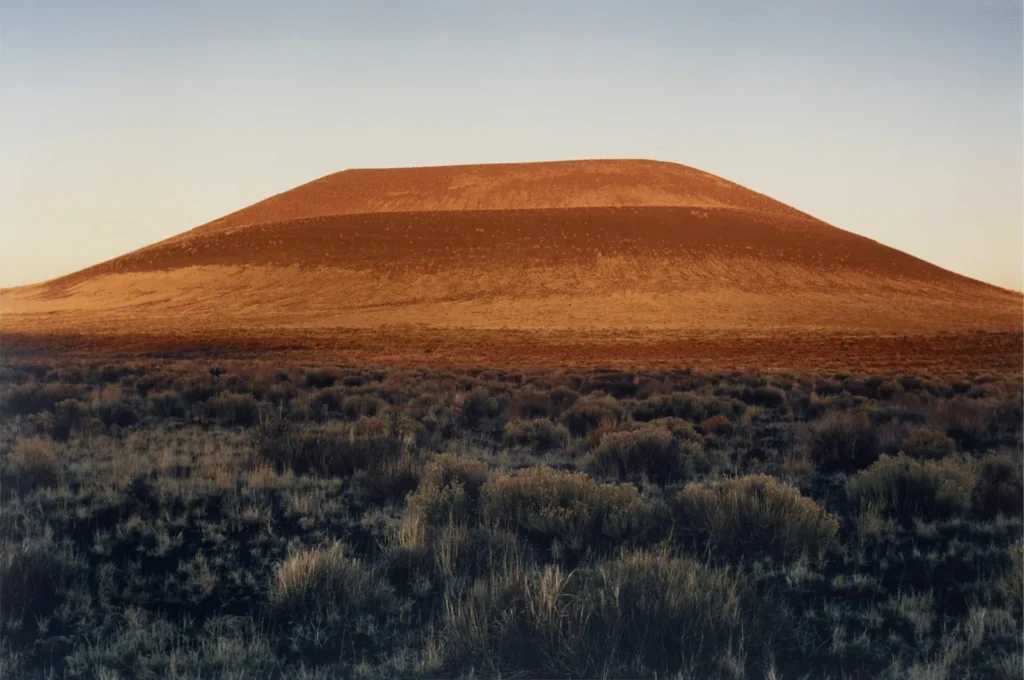
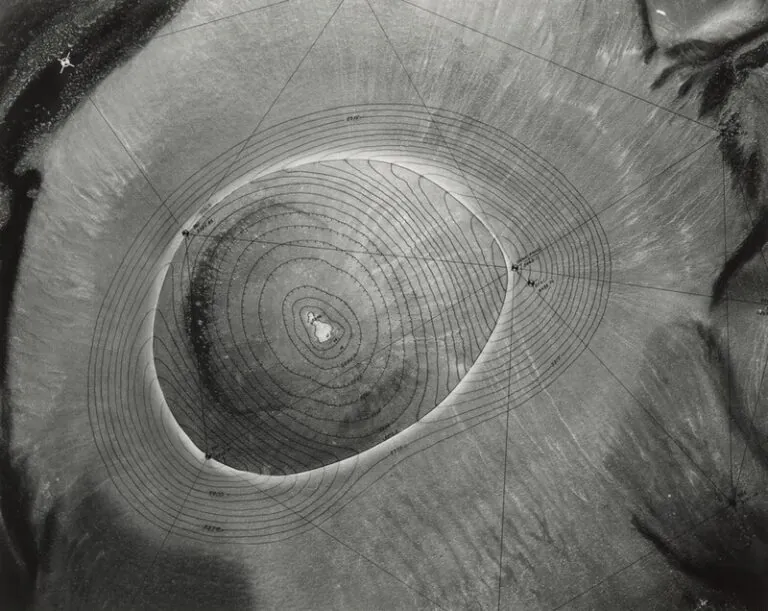
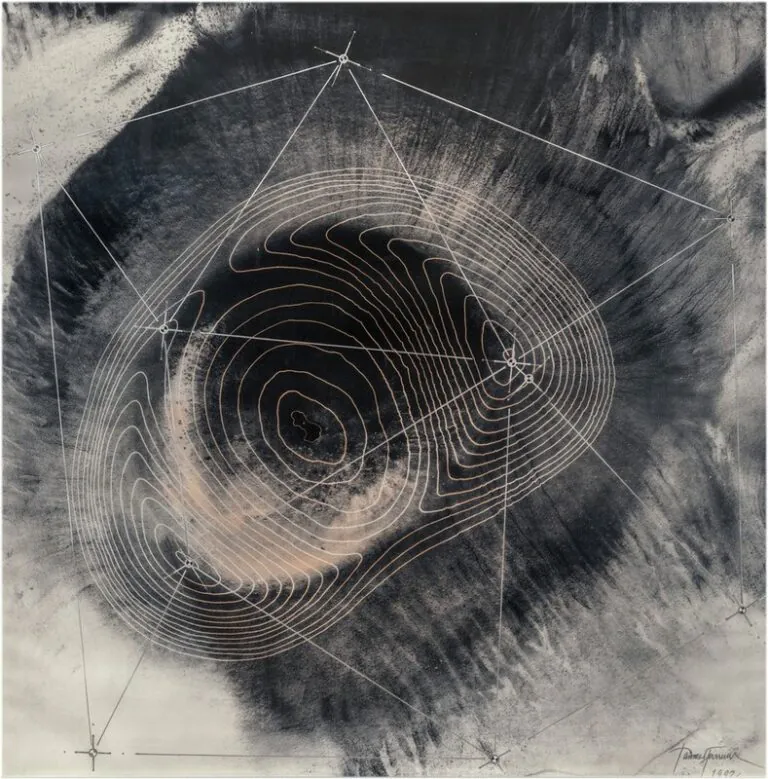
James Turrell has spent more than half a century reshaping a volcano in the high desert of northern Arizona. The site, known as Roden Crater, lies within the stark expanse of the Painted Desert, where Turrell has been gradually transforming a 400,000-year-old cinder cone into a monumental observatory dedicated not to astronomy in the conventional sense, but to the direct perception of light and sky. What began in 1974 as an aerial sighting from a small plane has since become one of the most ambitious artworks ever attempted: a vast network of chambers, tunnels, and apertures carved into the extinct volcano itself.
Turrell discovered the crater while flying over the Arizona desert during a Guggenheim-funded survey of potential sites in the American West. From the air, the cone’s nearly perfect symmetry suggested a natural architecture waiting to be shaped. He purchased the land soon afterward and began a project that would consume decades. Since then, the scale of the undertaking has been immense. More than 1.3 million cubic yards of earth have been moved in order to shape the crater bowl and construct the internal spaces, including an 854-foot tunnel that leads visitors into the mountain. These passageways and chambers are carefully aligned with celestial events including sunrises, sunsets, lunar cycles, and planetary movements, turning the volcano into an instrument for observing the changing qualities of light in the sky above.
The project has demanded not only time but extraordinary personal commitment. Turrell has often joked about the cost of Roden Crater in human terms, remarking that the work has taken “two marriages and a relationship.” Unlike most large-scale artworks, the crater has never functioned as a commercial enterprise. Instead it has remained a long-term experiment in perception: an attempt to create architectural spaces where the sky itself becomes the medium of the work.
Turrell’s fascination with light as a material emerged well before Roden Crater. Born on May 6, 1943 in Los Angeles, James Turrell grew up in a household following the Wilburite Quaker tradition, a religious movement which rejected modern conveniences such as electric appliances and even zippers, similar to the Amish, but also where the concept of an “inner light” was understood as a direct experience of the divine.
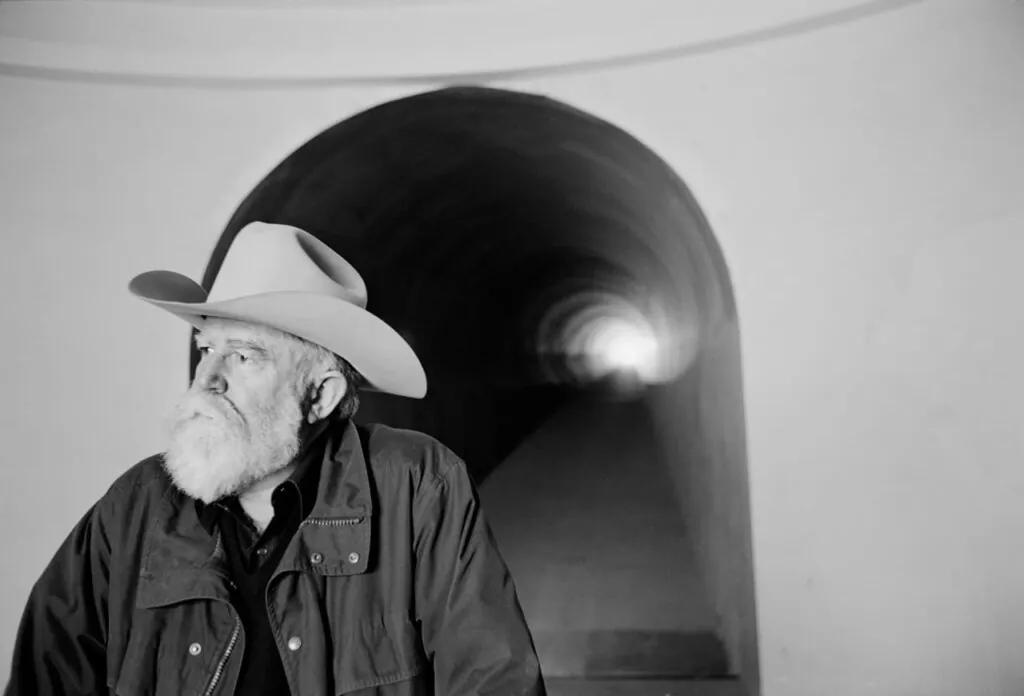
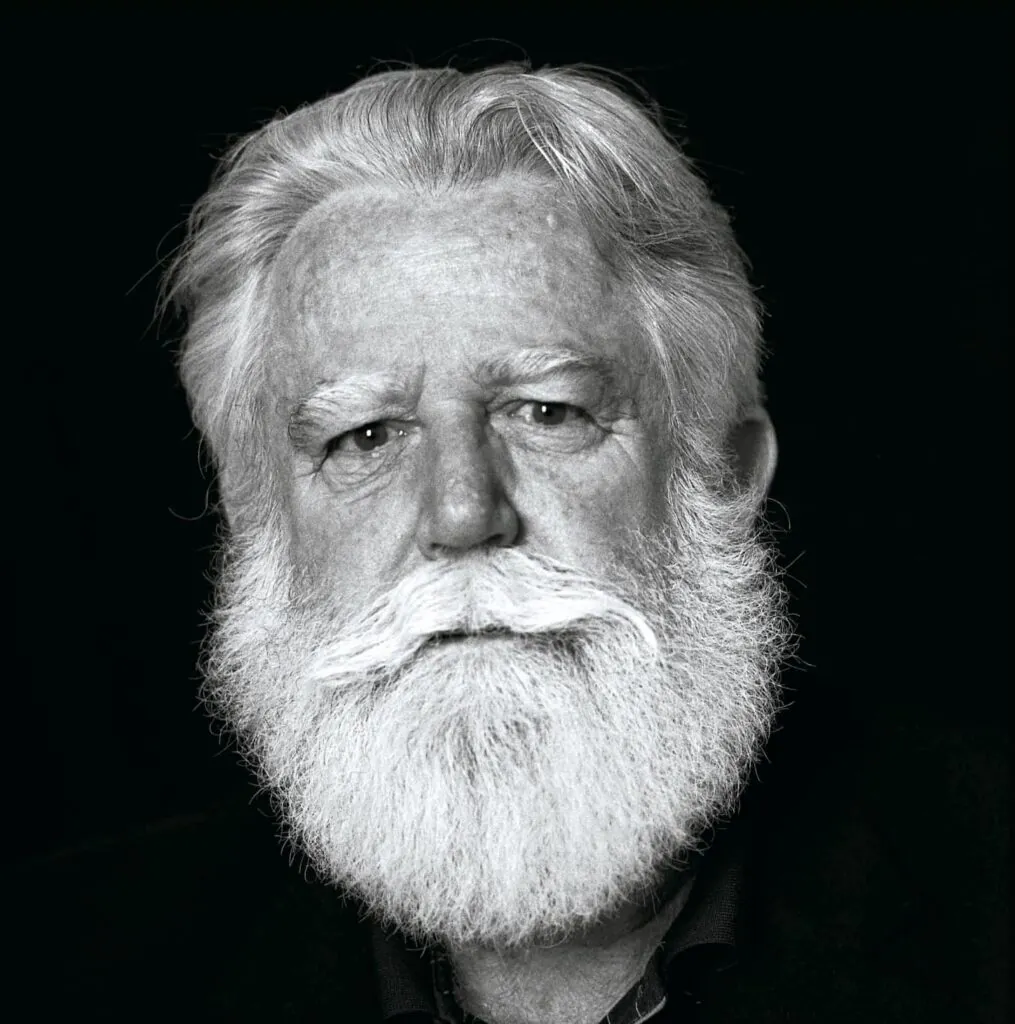
His mother was an active member of the Society of Friends, and family teachings emphasized quiet contemplation and inward attention. Turrell later recalled being taken as a child to a Quaker meeting house by his grandmother and told to “go inside and greet the light,” a moment that crystallized the spiritual dimension that would later run through his work. His father, an aeronautical engineer, introduced him early to aviation, and Turrell obtained his pilot’s license at the age of sixteen, gaining firsthand familiarity with vast skies, shifting atmospheres, and the changing qualities of light seen from altitude.
A formative encounter with modern art came a few years earlier during a visit to New York. At fifteen he stayed with an aunt who worked as a coordinating editor for Seventeen magazine and introduced him to museums. Recalling a visit to Museum of Modern Art, Turrell later described seeing the water lily paintings of Claude Monet, before encountering a luminous instrument created by the Danish-American artist Thomas Wilfred, whose “Lumia” works used projected light as an artistic medium. Turrell remembered the experience vividly: “When I came to see my aunt in New York at age 15… She took me to the Museum of Modern Art to show me the Monet water lily paintings, which I was very impressed by. On the way out, I went by this work by Thomas Wilfred… this box, with just a screen in the front with frosted glass. It looked like the northern lights, slowly changing. I thought: now somebody is really doing this new art. This is our art.”
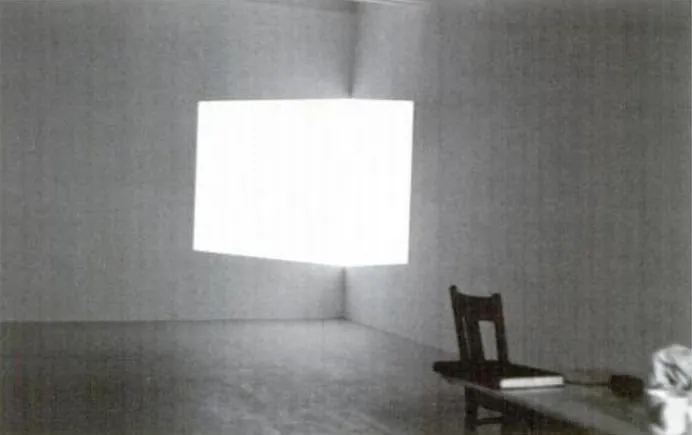
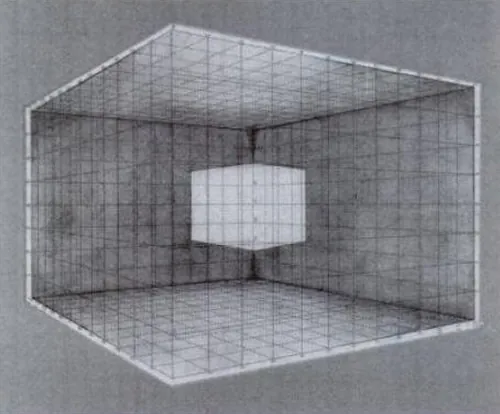
Turrell later pursued these interests academically, earning a BA in perceptual psychology from Pomona College in 1965, where he studied how the human mind interprets sensory information and visual stimuli. The field provided a scientific framework for questions that would later define his artistic practice. He continued graduate work in both art and perceptual psychology at University of California, Irvine, deepening his interest in the boundary between optical illusion and direct perception.
A formative episode occurred during a year he spent in prison after being convicted for assisting young men in avoiding the Vietnam draft. While incarcerated, Turrell deliberately provoked guards until he was placed in solitary confinement, where the absence of visual stimulus sharpened his attention to the smallest traces of light entering the cell. The subtle glow around the doorframe or the faint illumination of the walls became, in his recollection, a kind of perceptual laboratory. After his release, he returned to California and began constructing early installations.
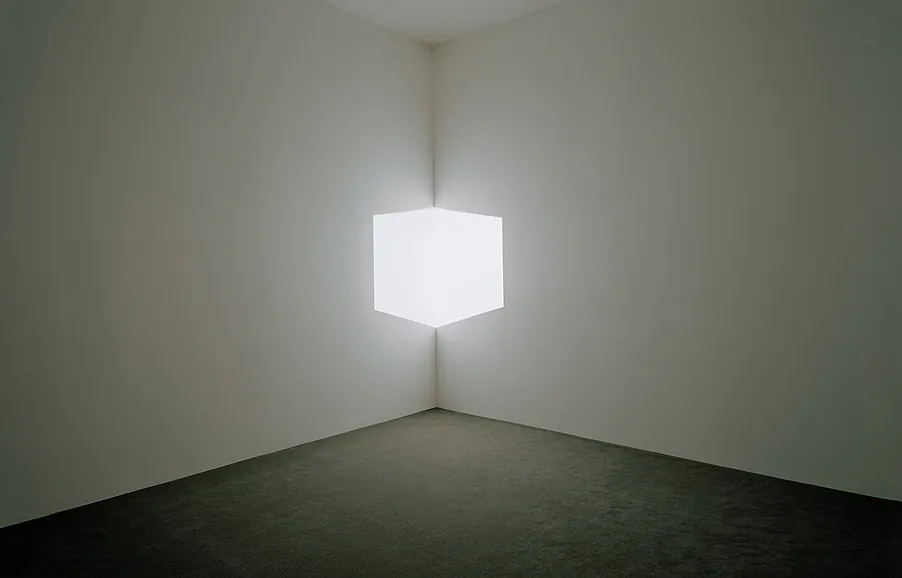
During this time he became associated with the emerging Light and Space movement in Southern California, creating installations that manipulated projected light and altered viewers’ spatial awareness. One of his earliest working environments was the Mendota Hotel building in the Ocean Park district of Santa Monica, where he established what became known as the Mendota Studio in 1967. There he began cutting apertures into the walls of the abandoned structure, using daylight and projected light to reshape how interior spaces were perceived, experimenting with projected light that seemed to dissolve the boundaries between individual rooms, an approach that drew equally from architectural intervention, aviation, and perceptual psychology.
By this point in his life, Turrell was also an experienced pilot, a skill that shaped both his artistic thinking and the eventual discovery of Roden Crater. Before acquiring the volcano, he spent years flying across the American West in a small aircraft, studying landscapes from the air. Turrell has also described earlier flights over the Himalayas in high-altitude reconnaissance aircraft, often rumored to have been connected to CIA operations in flying out Tibetan monks in anticipation of the region’s takeover by the Chinese government, though he has characterized these missions simply as “humanitarian” work that allowed him to see “beautiful places to fly.” The experience of navigating immense spaces at extreme altitudes further reinforced his interest in how light, atmosphere, and landscape interact.
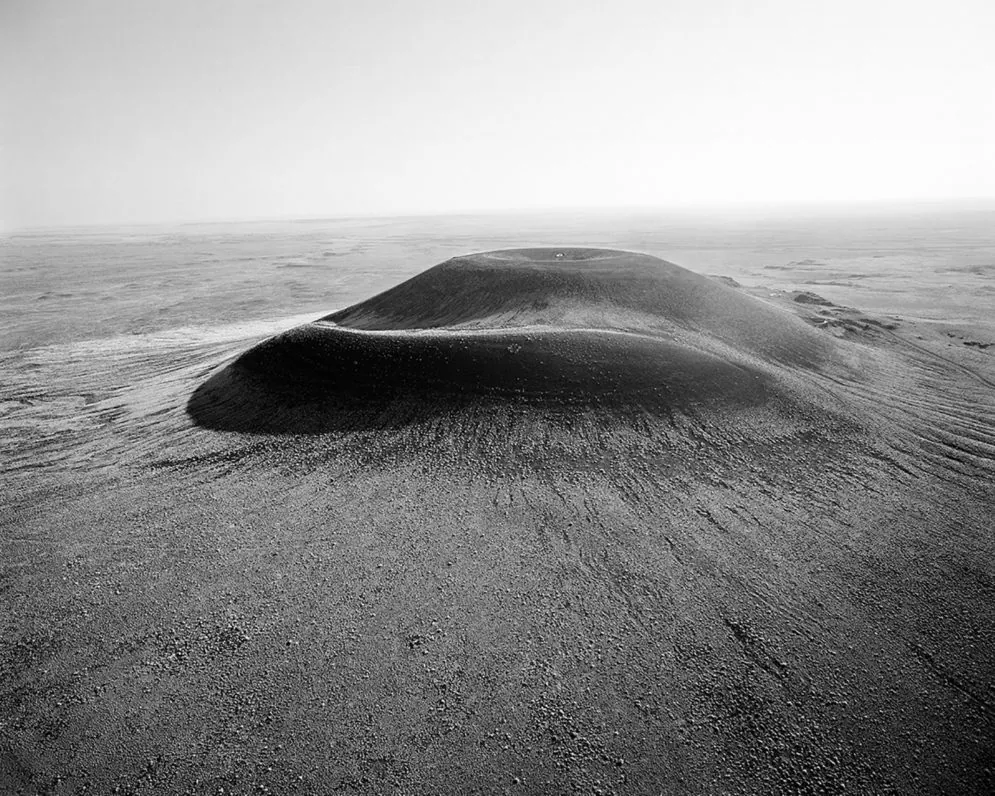
All of these threads, from aviation and perception to architecture and astronomy eventually converged in the desert of northern Arizona. Roden Crater is not a sculpture in the conventional sense but a permanent viewing device embedded within the earth. Visitors who eventually enter its chambers will encounter carefully framed apertures that transform the sky into an optical phenomenon: a ceiling of shifting color, a disk of darkness at noon, or a horizon of light at dawn. For Turrell, the work is less about altering the sky than about altering how we see it.
The crater represents the most monumental expression of James Turrell’s architectural light environments known as Skyspaces. First developed in the 1970s, Skyspaces are carefully constructed chambers that frame the sky as the central subject of perception. Each is typically a quiet, enclosed room with controlled interior illumination and a precisely cut aperture in the ceiling that opens directly to the atmosphere above. Visitors sit along the perimeter while subtle shifts in artificial light recalibrate the eye. At certain moments, the sky appears flattened into a dense, almost solid plane of color; at others, it seems like a tangible surface hovering just beyond reach.
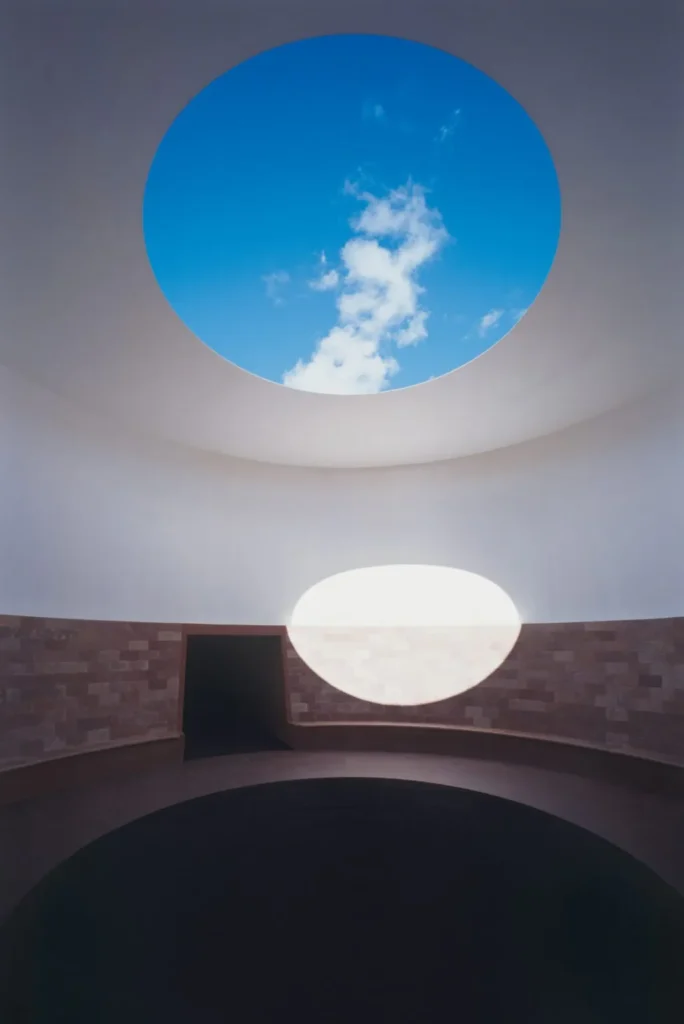
These perceptual reversals are most intense at sunrise and sunset, when natural atmospheric changes interact with the calibrated lighting inside the chamber. Rather than presenting an object to be viewed, Turrell uses architecture to manipulate the act of seeing itself, turning the sky into something that feels sculpted, compressed, and materially present. The resulting atmosphere of the space, described by many visitors as “dreamlike,” is no accident, it is the result of Turrell’s lifelong exploration of human perception and psychology in regards to natural phenomena. “We dream with many more colors than when our eyes are open. It’s no coincidence that those who have near-death experiences put a strong emphasis on light,” Turrell remarked.
Over the past five decades, Turrell has created nearly one hundred Skyspaces across more than thirty countries, forming a dispersed global network of perceptual observatories. Installations appear in locations ranging from Tasmania, China, and Japan to sites across Europe and more than a dozen cities in the United States. In 2010 he completed a pyramid-shaped Skyspace surrounded by reflecting pools in Canberra, Australia; the following year he realized another pyramid on Mexico’s Yucatán Peninsula. In Argentina’s mountains, an 18,000-square-foot museum is devoted exclusively to his work. Ta Khut, the first freestanding Skyspace in South America, is located at the destination hotel Posada Ayana in Uruguay.
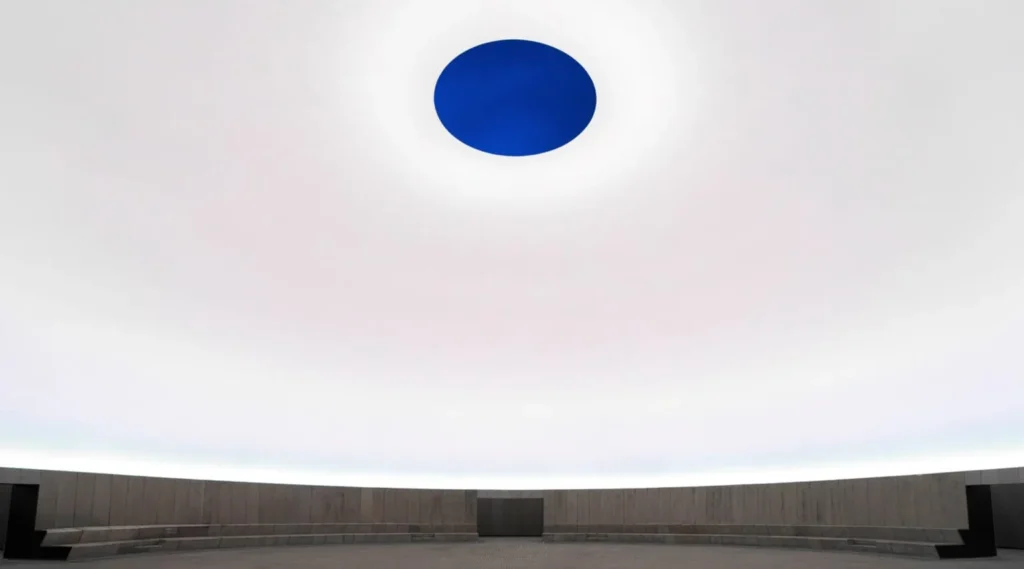
The scale of these works continues to expand. One of the most recent, “As Seen Below,” was unveiled last year at ARoS Aarhus Art Museum in Denmark. Rising more than fifty feet high and stretching approximately 130 feet across, it is the largest Skyspace Turrell has created within a museum setting. The installation features an expansive domed interior bathed in slowly shifting color, punctuated by a circular oculus at its zenith. Through this aperture, the changing sky interacts with the interior illumination, producing different perceptual effects depending on the time of day and weather conditions.
Skyspaces operate as instruments for awareness. Whether embedded in remote landscapes, university campuses, museums, or desert craters, they return persistently to the same inquiry that defines Roden Crater itself: how light and space shape human perception through the medium of land art, and how the simple act of looking upward can be transformed into an encounter with light as a phenomenon in its own right.
But Turrell’s ambitions at Roden Crater extend far beyond the scale of typical land art. The project draws on astronomy, optics, and advanced mathematics as much as sculpture or architecture. Turrell has studied subjects as esoteric as Riemannian geometry and vortex dynamics, using them to think about curvature, perception, and how light moves through space. Astronomers and optical engineers have also been involved in the design of the crater’s internal chambers, which are aligned to capture light from the sun, moon, stars, and planets. The rim of the volcano itself has been subtly reshaped so that the sky appears framed or transformed when viewed from particular points inside the crater.
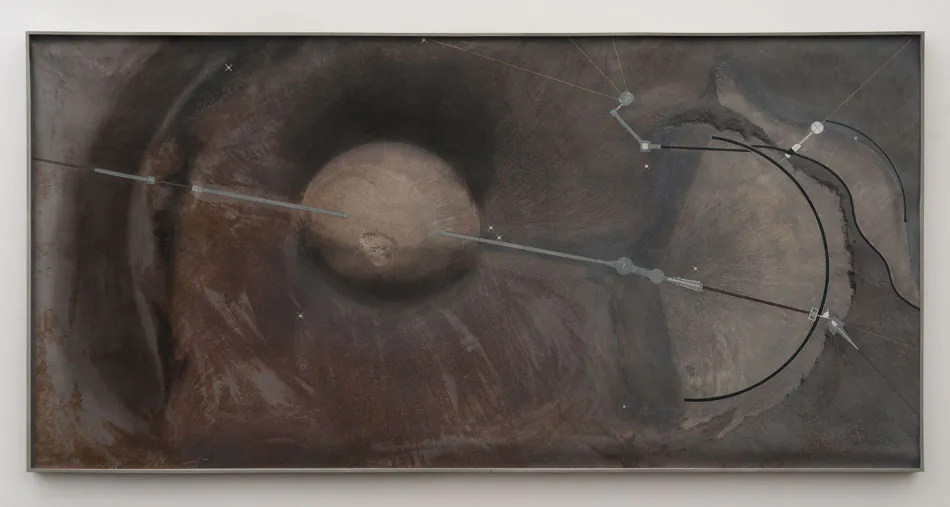
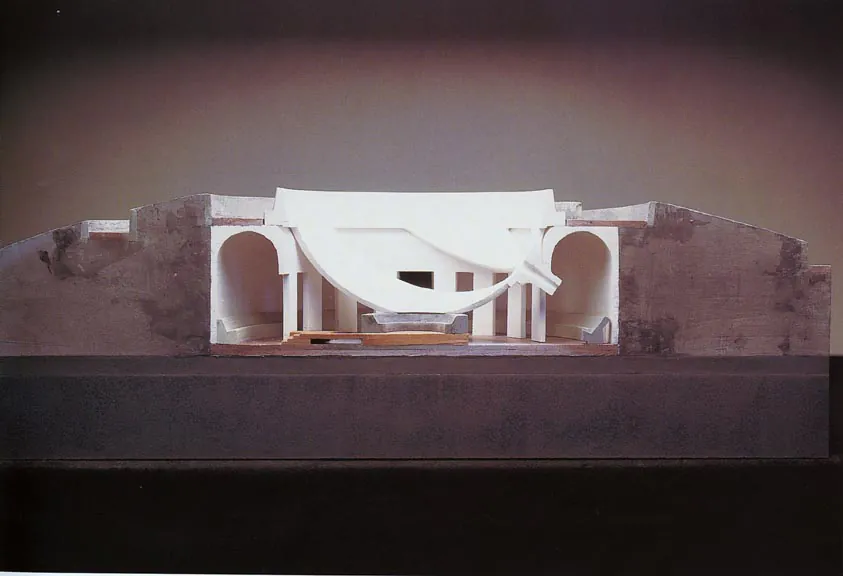
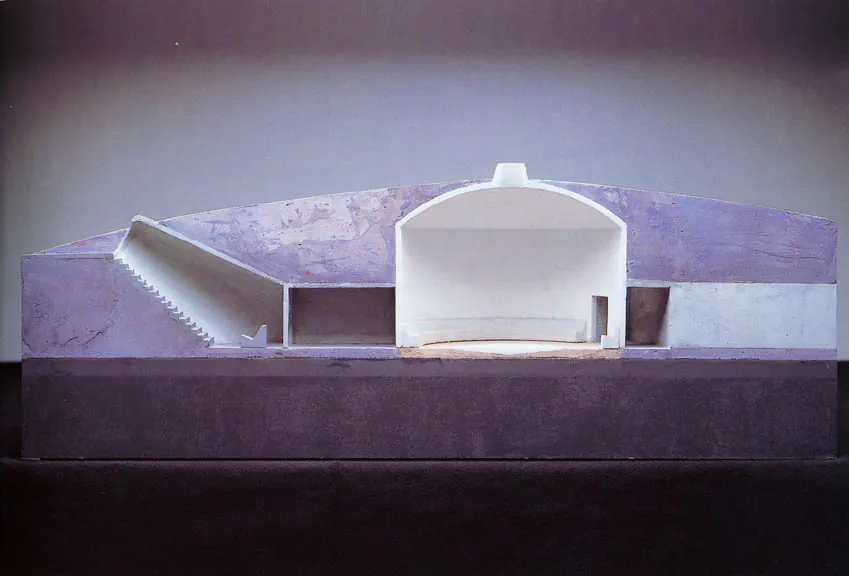
When the site is fully realized, the complex will contain six tunnels and twenty-four viewing spaces, each calibrated to specific celestial events. Turrell’s aim is not simply to provide scenic views but to create controlled perceptual conditions, or in other words architectural instruments that allow visitors to observe the sky as if it were a physical object. His ambition, as he once explained, was to build “an area where you had a sense of standing on the planet.”
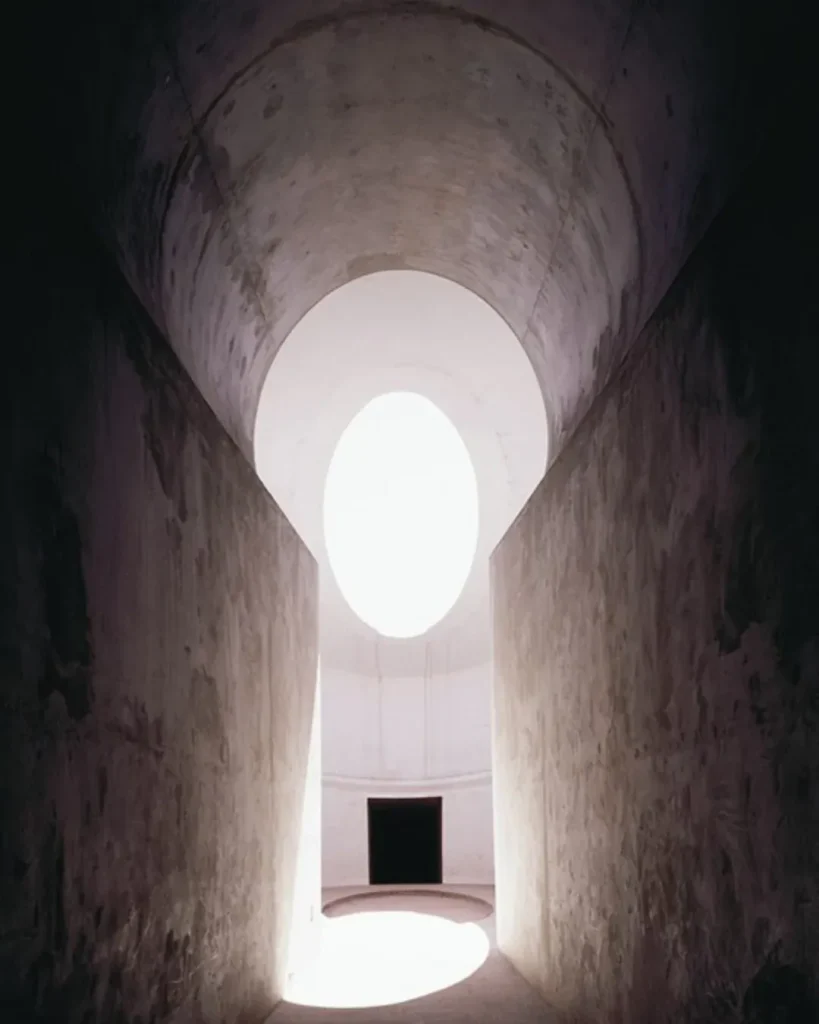
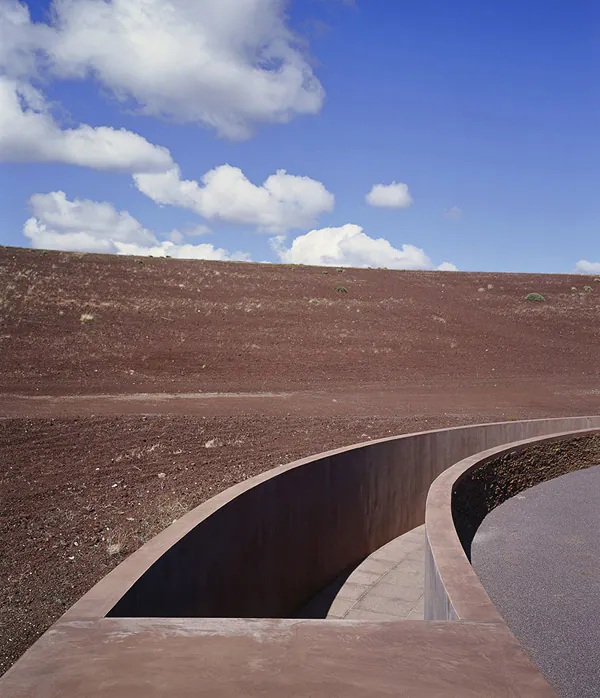
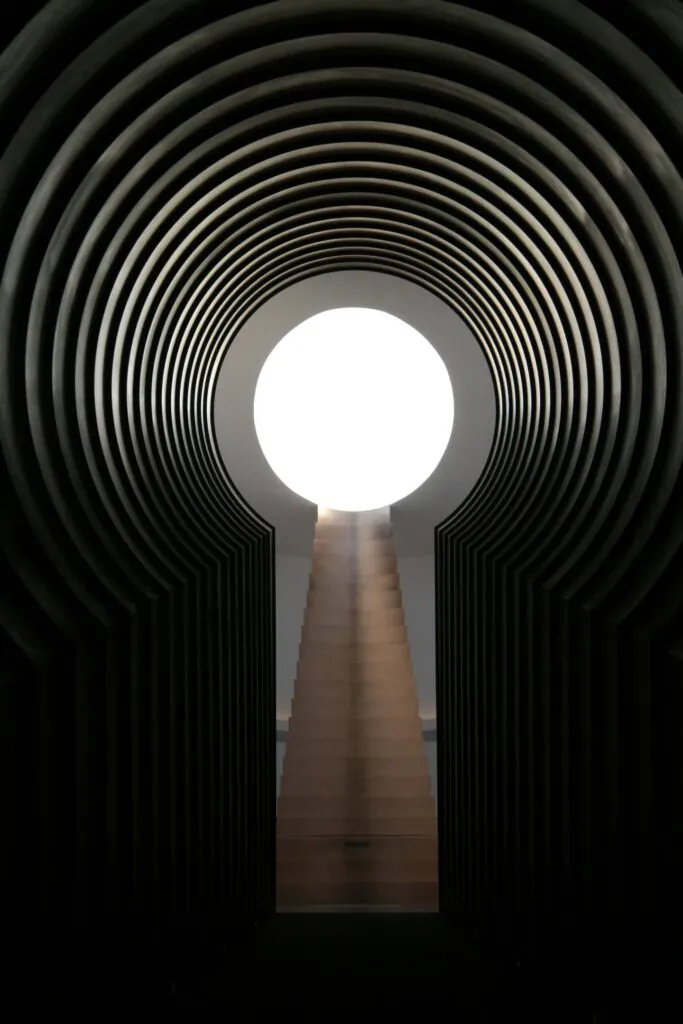
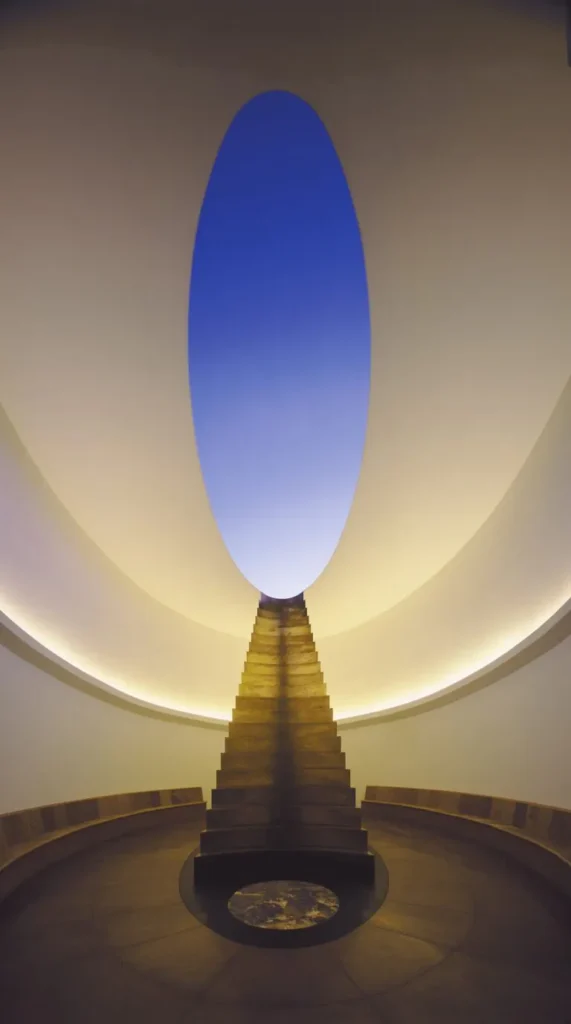
The approach to this chamber begins through the East, or Alpha Tunnel, an 854-foot passage carved deep into the volcanic earth. Excavated directly through the crater’s earthen structure, the tunnel combines reinforced concrete for stability with exposed earth walls, creating the strange perceptual effect of moving through a seemingly endless corridor. Its elongated, keyhole-shaped entrance produces the sensation of walking through a gigantic optical device. At the far end, what initially appears to be a circular opening reveals itself to be an ellipse, a geometric demonstration of how an ellipse can appear perfectly round when viewed from a precise vantage point.
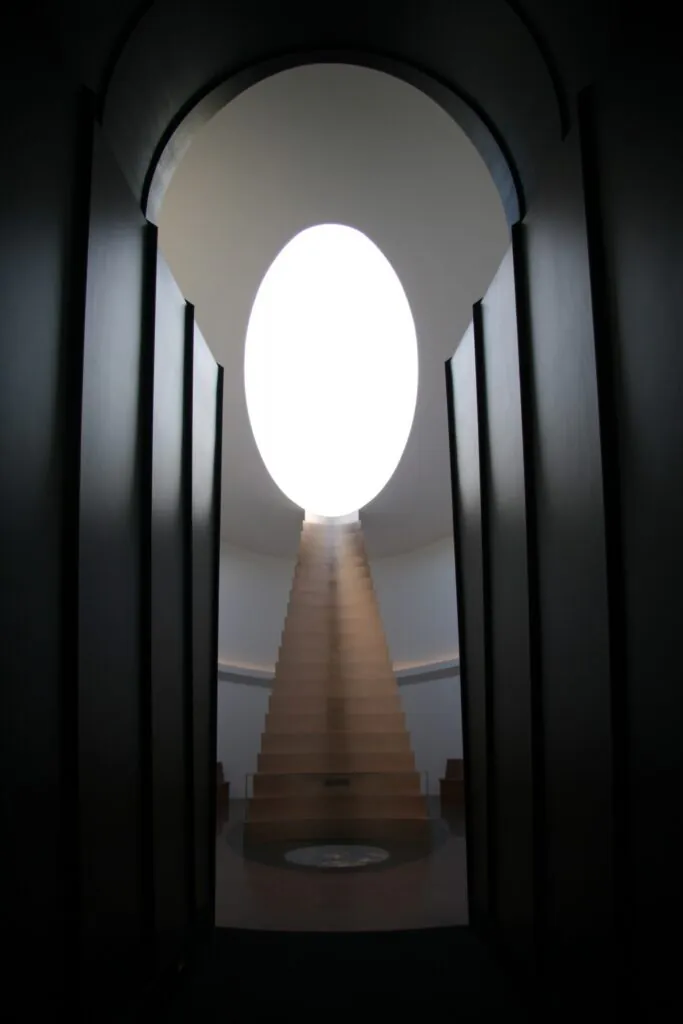
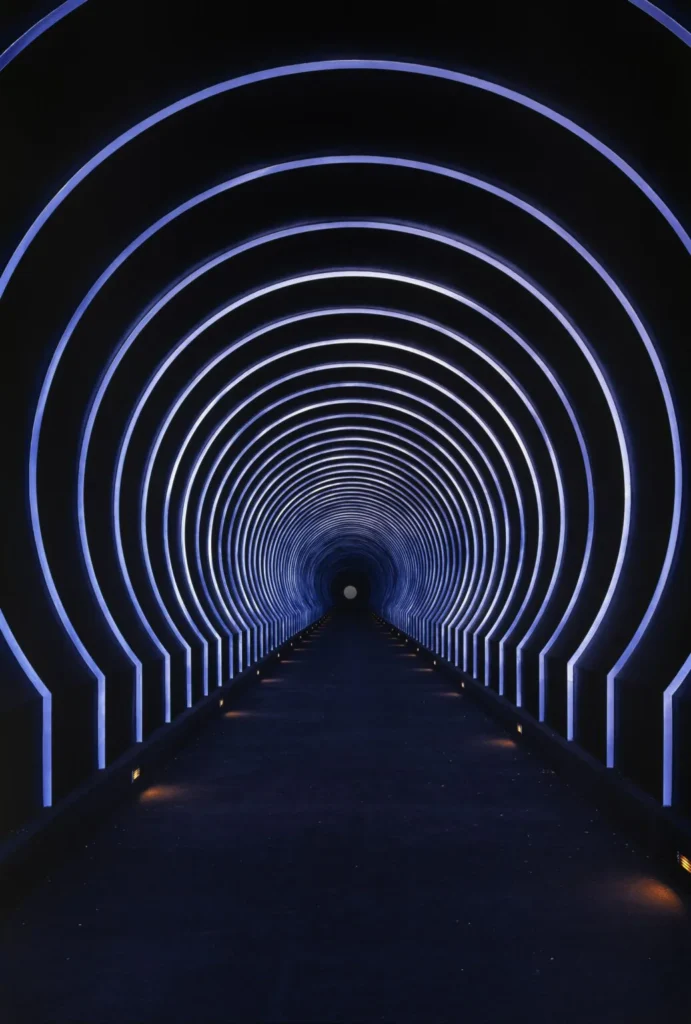
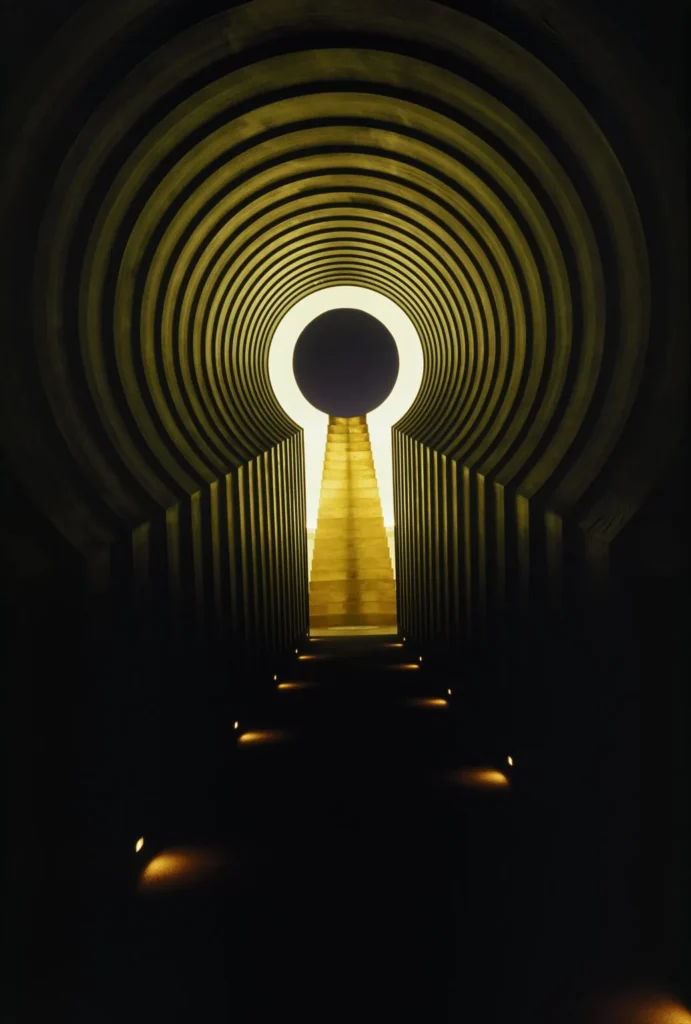
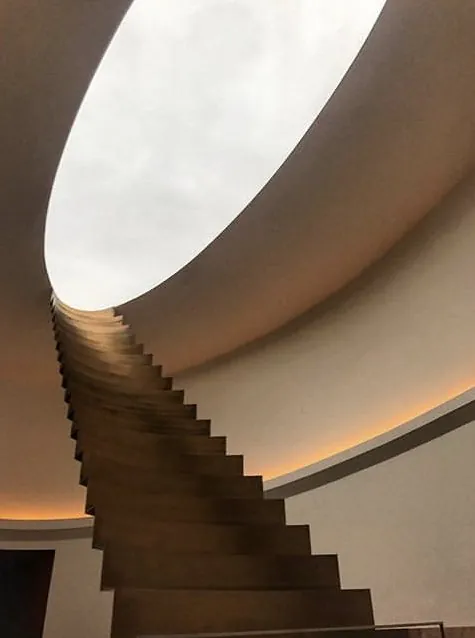
Along the floor, subtle lighting guides visitors deeper toward the chamber. One of the central spaces within the crater is this space, known as the Sun and Moon Chamber, a room that resembles a stripped-down astronomical temple. A dark monolithic structure rises from a base of black silica stone, with an eight-foot-diameter circular disk of white marble positioned at its center. The geometry of the chamber directs attention upward toward the sky, turning the opening above into a precise optical frame.
Suspended above the passage is a massive optical lens produced with assistance from engineers at the Richard F. Caris Mirror Lab at the University of Arizona and the McDonald Observatory in Texas. The six-foot-diameter lens can be deployed during specific celestial events to concentrate light down the length of the tunnel. When properly aligned, sunsets or moonsets are focused into a beam that lands on the disk of white marble known as the “image stone.” Future construction is also planned to align the tunnel with the winter solstice sunrise, directing light onto the eastern side of the stone.
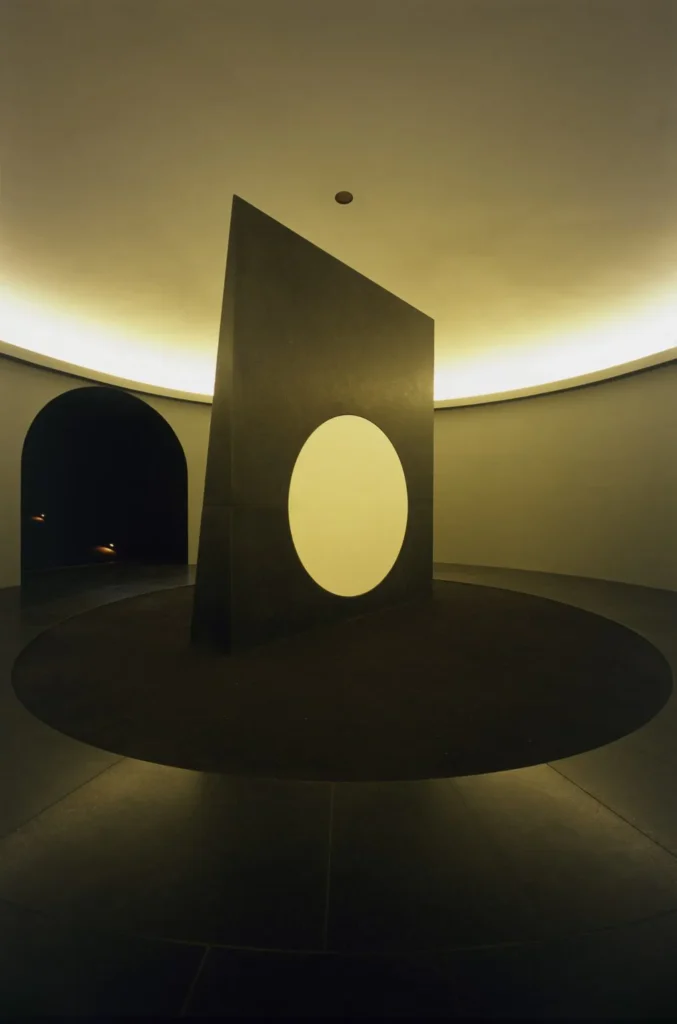
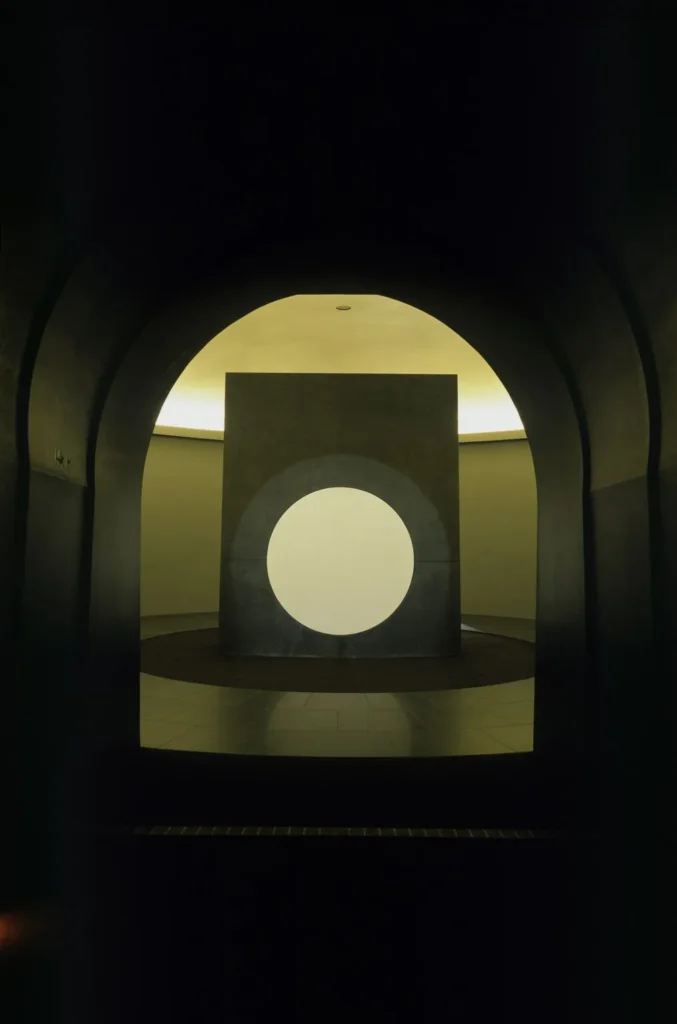
The area is carefully aligned to rare astronomical cycles. One of the most significant is the Major Lunar Standstill, an event that occurs roughly every 18.61 years, when the moon reaches the extreme limits of its rising and setting positions on the horizon. Turrell designed several of the crater’s viewing spaces to synchronize with this cycle, allowing moonlight to enter the structure with particular precision during those periods. The last standstill occurred in April 2025, when the geometry of the crater and the motion of the moon briefly aligned.
The Alpha Tunnel forms part of a broader network of observational structures within the crater. Variations on Turrell’s Skyspaces are embedded throughout the volcano, including chambers such as the East Space and the North Moon Space. These spaces are calibrated to the subtle transitions of dawn and dusk, using angled apertures to isolate bands of light and intensify the shifting colors along the horizon. Together they extend Turrell’s larger ambition for Roden Crater: transforming the volcanic landscape itself into a series of perceptual instruments that frame celestial events and create a meeting ground between earth, sky, and observer.
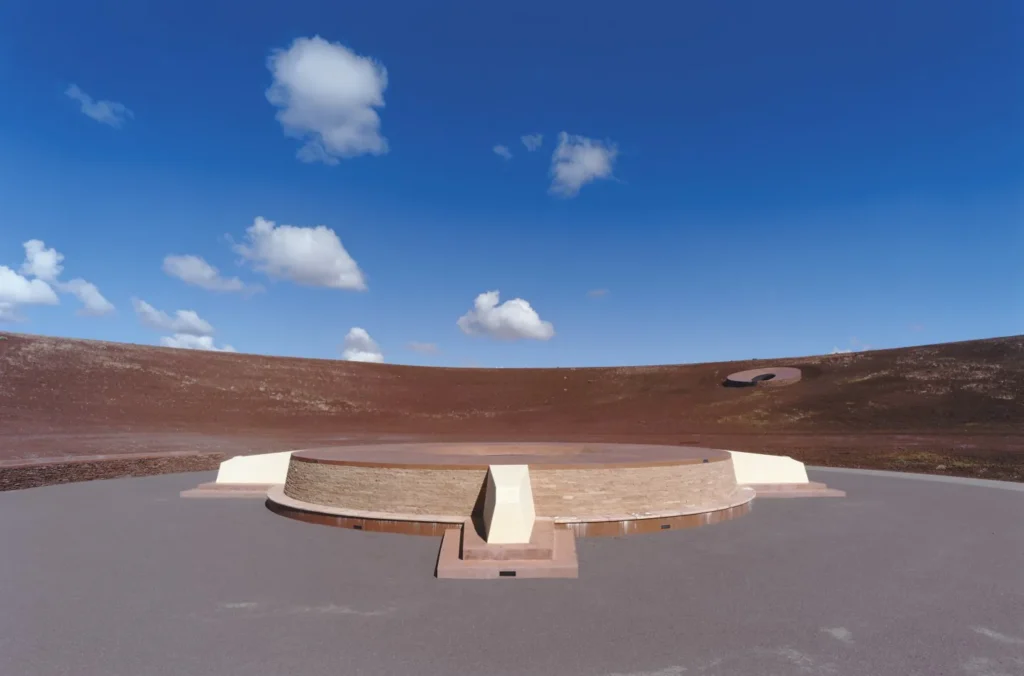
Constructing the observational geometry of Roden Crater required more than intuition about landscape and light. Turrell worked with astronomers and astrophysicists to calculate the precise alignments needed for the chambers and tunnels embedded within the volcano. Among those collaborators were the astronomer Larry Wasserman and the physicist Richard Walker, who helped model the long-term astronomical relationships between the crater’s architecture and the movements of celestial bodies. Because the Earth’s orientation and the positions of stars and planetary bodies shift gradually over time, the alignments had to account for slow astronomical changes as well as present-day observations. Some of the sightlines within the crater have even been calculated so that their precision improves over centuries. Turrell has noted that one of the lunar alignments will reach its most exact configuration in roughly two millennia, a timeframe that has fueled the persistent joke that the project itself may finally be finished around the same time.
Among the more technically elaborate areas of the site is the Fumarole Space, a multi-level installation built deep inside the volcano’s secondary vent. Visitors descend through a sequence of chambers enclosed within a Faraday cage, a structure designed to shield the interior from outside electromagnetic interference. The enclosure allows subtle signals to be isolated and translated into sensory experiences. At the center of the space sits a large glass bowl filled with water, connected to a transducer capable of converting electromagnetic energy into sound.
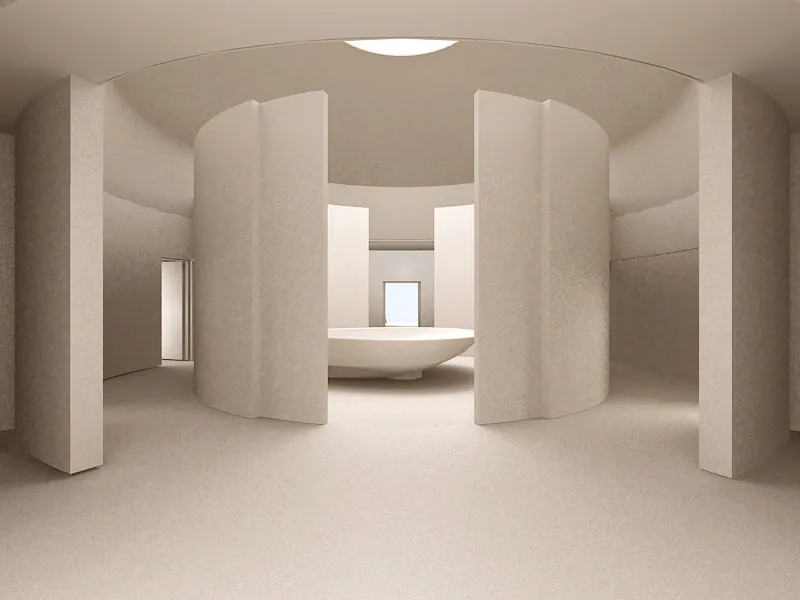
When a visitor submerges their head beneath the water, radio-frequency data gathered from astronomical sources can be heard directly as vibration and tone, signals associated with solar activity, the emissions of planets such as Neptune, Jupiter, and Uranus, or even the broad background radiation of the Milky Way. The bowl also functions as an optical device: light entering from above is focused downward so that an image of the sky appears projected onto a bed of white sand below. From within the spherical chamber, visitors can watch clouds drift across the sand surface, observe the emergence of stars, or track the gradual shifts of twilight. In one part of the space, visitors will occasionally have the opportunity to see their shadow cast by the the light of Venus.
Another observational instrument within the crater complex is the South Space, where Turrell constructed an underground telescope inspired by ancient observational architecture in India. The structure also recalls the monumental stone instruments of the Indian observatory of Jantar Mantar as well as the form of the ancient Scottish mound of Maeshowe, both designed for direct naked-eye astronomy long before electronic telescopes or computerized tracking systems existed. Turrell’s version similarly strips away modern technological mediation, relying instead on geometry and orientation so that planets and stars can be observed through fixed architectural apertures, much as earlier astronomers once did centuries ago.
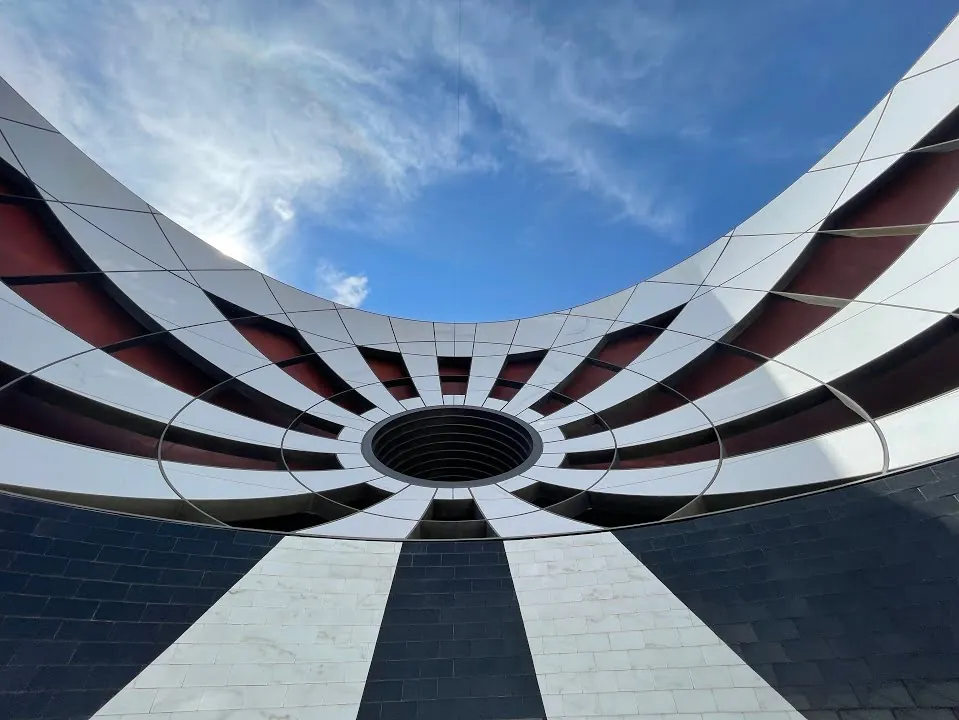
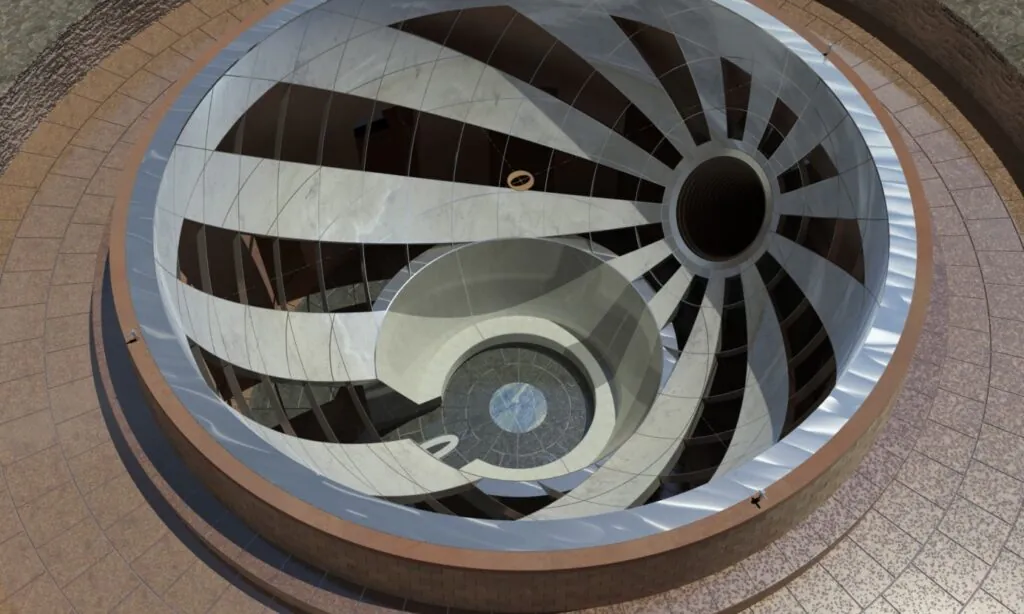
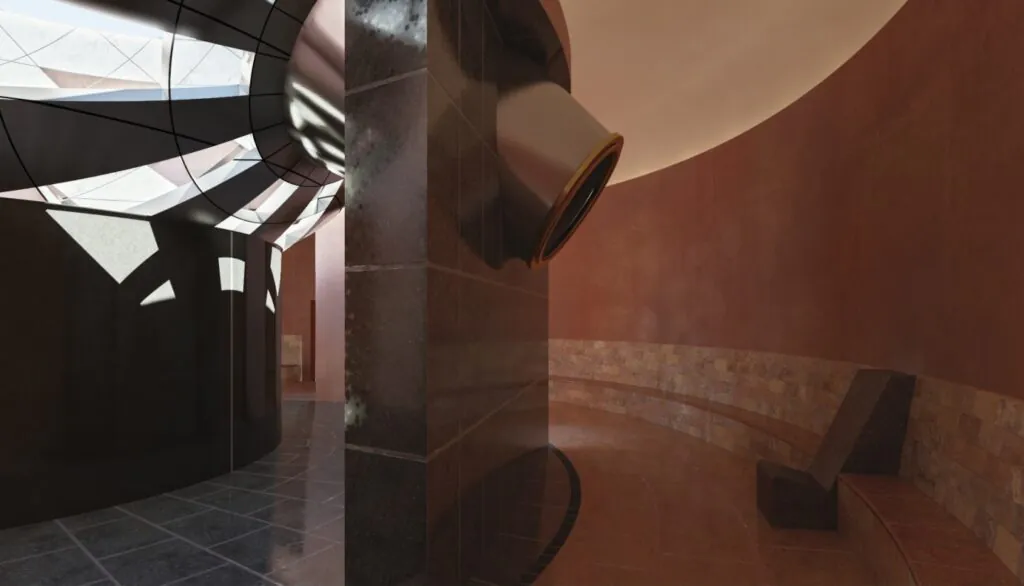
The South Space also forms part of a larger system of chambers and tunnels that function as calibrated instruments for observing celestial cycles. Completed after years of construction and investment estimated at roughly $13 million, the chamber acts as a precise framing device aligned with Polaris, the star that marks Earth’s rotational axis in the night sky. A central inclined structure projects an inverted image of the star onto a viewing surface within the chamber, emphasizing the slow rotation of the heavens around the pole.
The space is also capable of framing solar and lunar eclipses as well as seasonal events such as solstices and equinoxes. Around it, other features within the crater include water-filled chambers designed to refract and reflect light, immersive “light-spa” spaces where color and illumination alter perception, and an amphitheater intended for communal viewing of the sky. All are connected through a network of tunnels that gradually transition visitors from daylight into darkness, heightening sensory awareness before the sky is finally revealed.
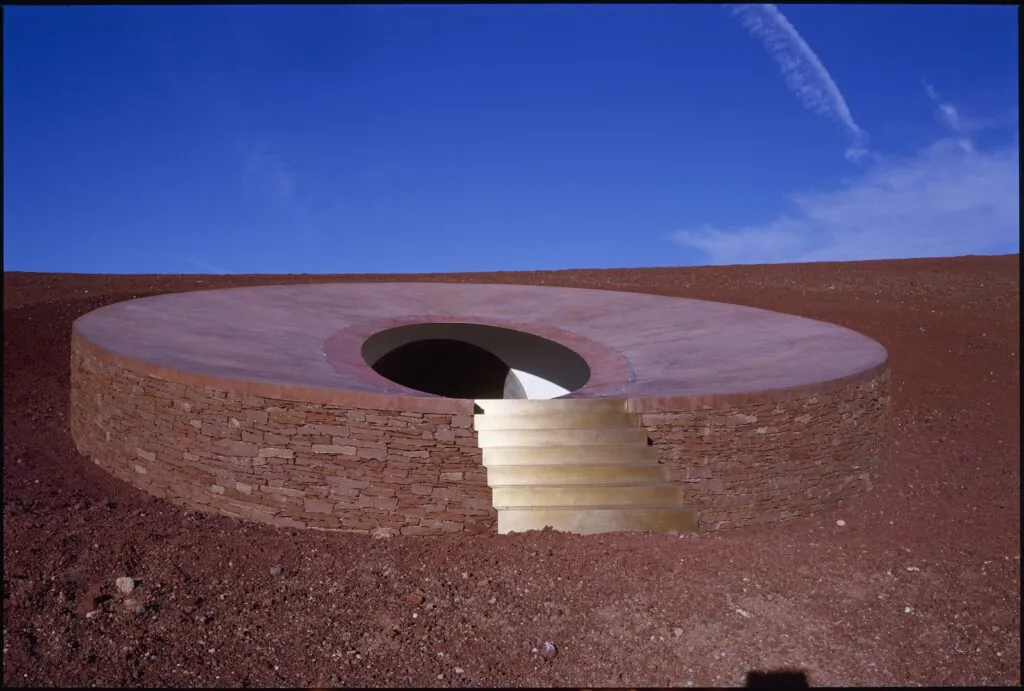
Elsewhere in the crater, smaller spaces explore more subtle optical effects. At the center of the volcanic bowl lies the Crater’s Eye, a monumental open-air chamber functioning as one of Turrell’s largest Skyspaces. Embedded within the reshaped caldera like a kiva, the structure uses the natural curvature of the crater to frame a vast circular aperture of sky. From within the chamber, visitors experience an uninterrupted panoramic view of the heavens from dawn to dusk, with the volcanic walls acting as a natural optical device that softens and diffuses incoming light. The effect is disorienting: the sky appears simultaneously immense and strangely close, removing the usual boundary between landscape and atmosphere.
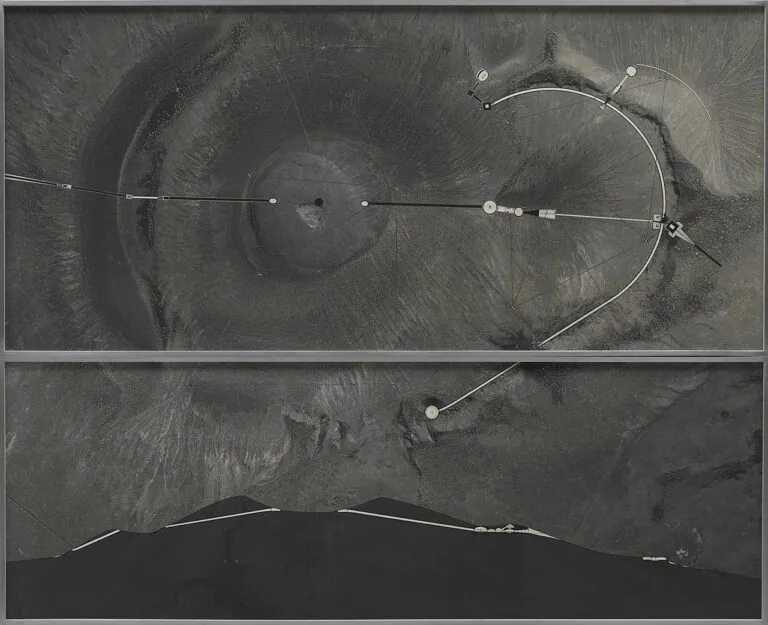
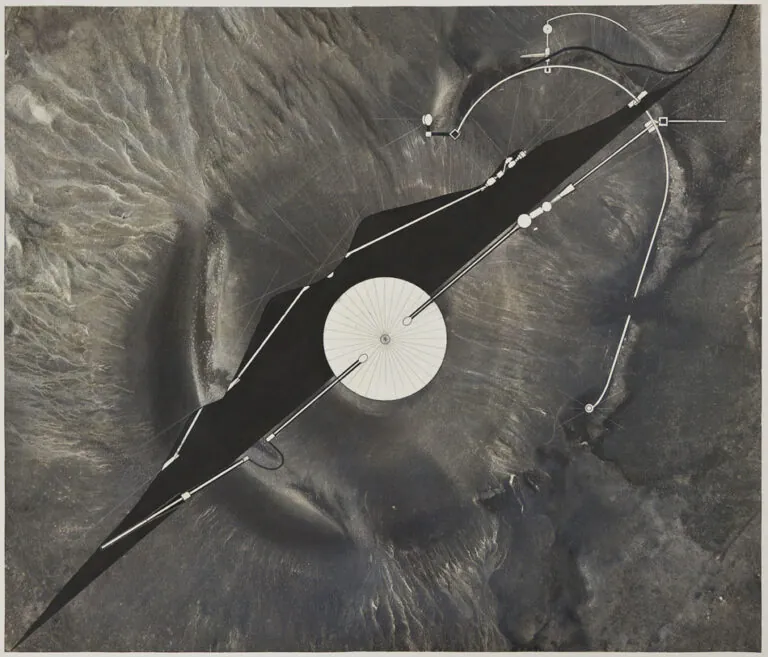
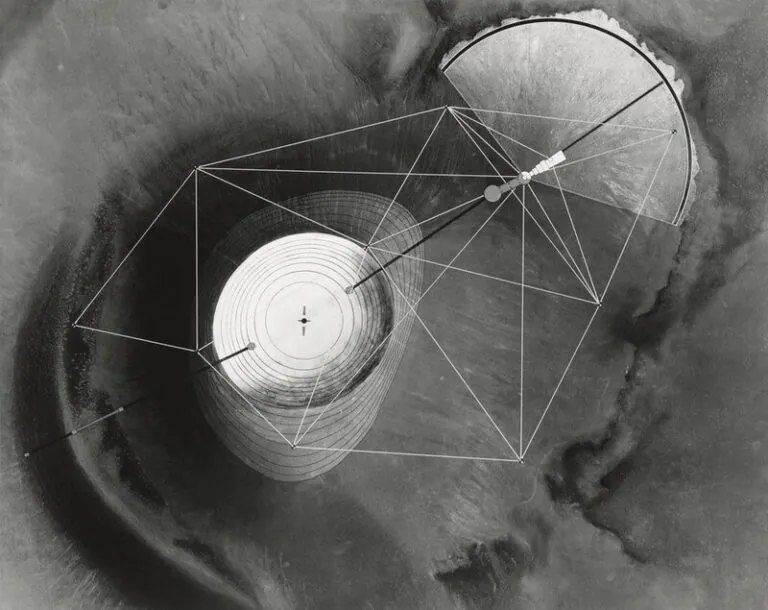
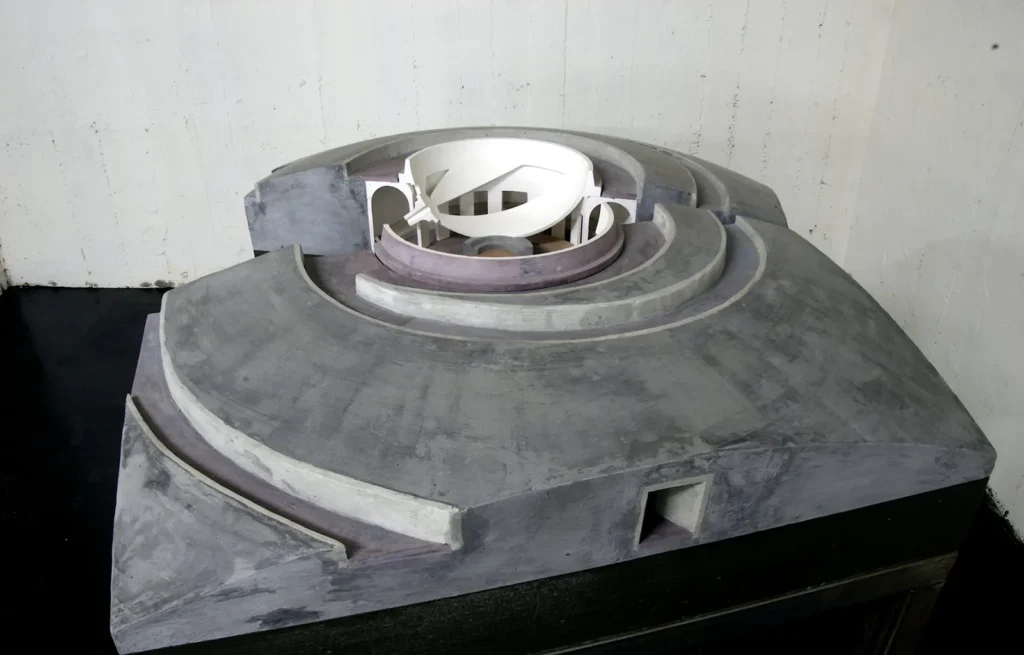
Nearby, Turrell designed a series of smaller architectural experiments, including the Twilight Tea Room. This chamber takes the form of a 24-foot spherical structure that Turrell once described as resembling “a ball rolling down a hill,” partially embedded within the volcanic slope. Inside, a telescope and mirror capture the light of the setting sun and redirect it toward a shallow golden bowl placed within the interior. As sunset progresses, the concentrated light produces dramatic color shifts across the bowl’s surface while visitors prepare tea, an experience Turrell described simply as generating “astonishing color.”
Other chambers scattered throughout the crater continue this theme of architectural astronomy. One space, known as the Stupa Space, draws inspiration from a shrine Turrell encountered while traveling in Afghanistan, while the Arcturus Seat and the Saddle Space are designed to frame specific regions of the sky through carefully positioned apertures. Each space has its own acoustic character and optical behavior, combining light, echo, and enclosure in slightly different ways. Together they form a network of perceptual instruments embedded within the volcano, transforming the geological structure of the crater into a vast observatory where landscape, architecture, and celestial motion become inseparable.
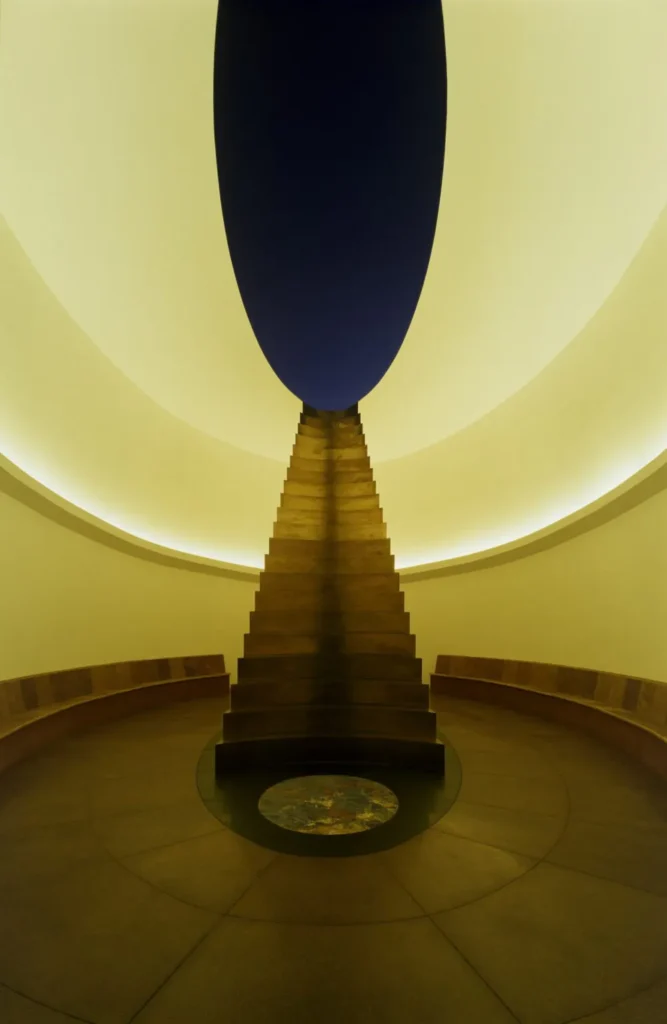
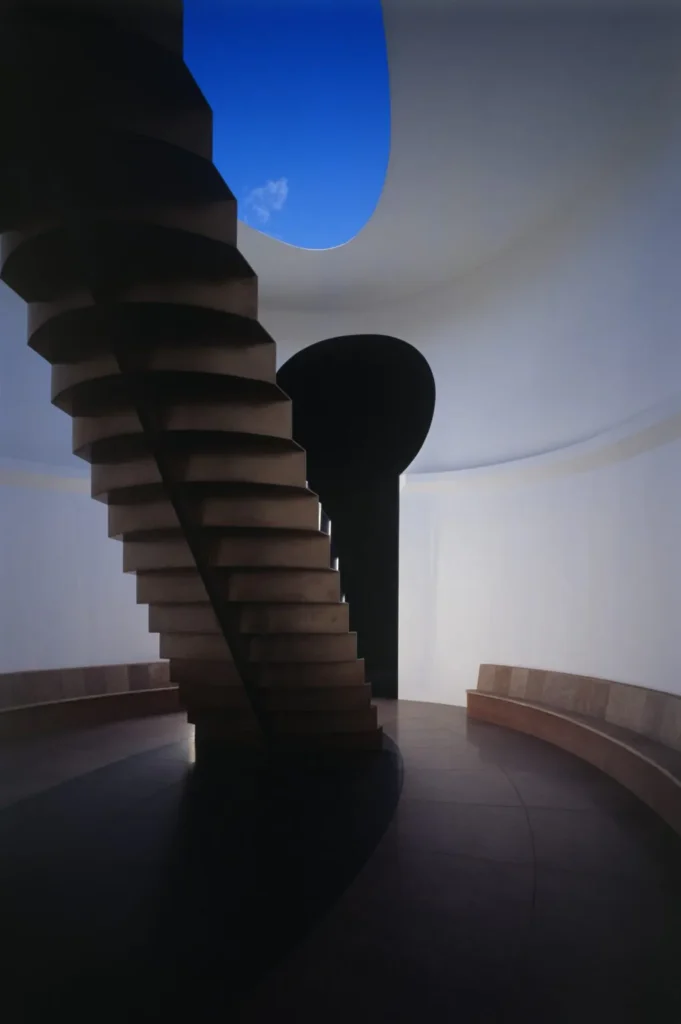
The scale and ambition of Roden Crater naturally raises a question: how did an artist end up committing decades of work to reshaping a volcano in the desert? The origins of the project trace back to a period when Turrell was already exploring the relationship between landscape, aviation, and perception. After receiving a Guggenheim Fellowship in the early 1970s, he began flying across the western United States in a Helio Courier H295, a rugged short-takeoff aircraft well suited to remote terrain. The grant allowed him to conduct an aerial survey of possible sites where large-scale perceptual installations might be constructed directly within the land itself.
In 1974, James Turrell conducted aerial surveys across the American West, spending seven months and logging nearly 500 hours of flight time searching for a site suitable for what would become his defining work. During one of these flights, heading east across northern Arizona, Turrell spotted a nearly symmetrical volcanic cone rising from the desert floor. Curious, he landed nearby and hiked to the summit. That night he camped on the rim of the crater and observed the sky from its interior. The geometry of the cone, combined with the clarity of the desert atmosphere, suggested something extraordinary: a natural structure that could be transformed into a monumental instrument for observing light. The volcano he had stumbled upon was called Roden Crater, and from that moment forward it became the central work of his life.
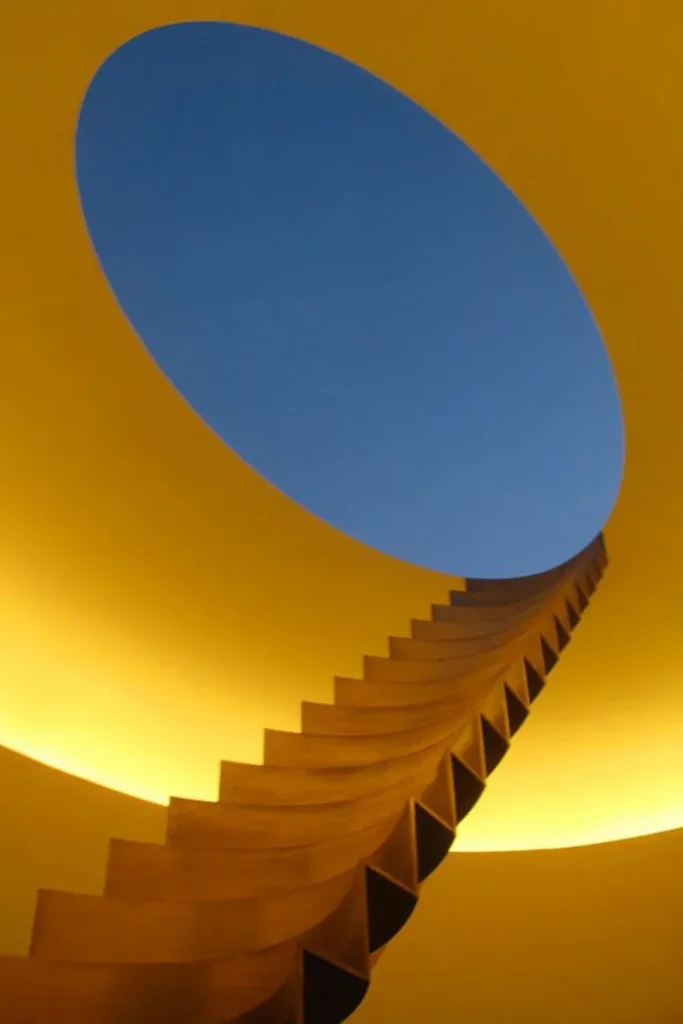
Within three years of discovering Roden Crater, Turrell had begun the practical work required to transform the volcanic cone into an astronomical observatory. He first secured a lease on the land, carried out geological and astronomical surveys, and constructed a modest octagonal house on site that served as both studio and living quarters during the early years of development. A decisive step came when the Dia Art Foundation agreed to support the project. In the late 1970s the foundation purchased the crater and provided Turrell with a stipend so he could concentrate on designing and excavating the complex of tunnels and chambers that would eventually shape the interior of the volcano.
The arrangement allowed the project to move forward at a pace rarely possible for a work of this scale. Turrell later reacquired the property through his own foundation and developed a practical rhythm for sustaining the long-term construction. Each year he scheduled exhibitions and installations of his light works in museums and galleries, projects that generated funding during the autumn and winter months. Those proceeds were then directed back into excavation and construction at the crater through the spring and summer, when work in the desert was most feasible. Roden Crater was not Turrell’s only potential site when he began searching the American West, he evaluated several volcanic formations and even retained a mining lease on one of the alternatives, but the symmetry and geological stability of Roden ultimately made it the most viable location.
Over time the project also came to depend on a wider constellation of patrons, institutions, and technical collaborators beyond the initial institutional backing. Astronomer and engineers provided expertise where Turrell’s own knowledge was lacking while financial stewardship and fundraising have largely been coordinated through Turrell’s Skystone Foundation, which channels support from collectors, museums, and philanthropic donors who have commissioned his installations around the world.
Major attention arrived from outside the traditional art world when the musician Kanye West visited the site during a private tour and, to Turrell’s surprise, later pledged $10 million toward the project’s completion. In West’s words, he wishes for the site to be “experienced and enjoyed for eternity.” Portions of the crater later appeared in West’s 2019 film Jesus Is King, introducing the still-unfinished observatory to a much broader audience. While Roden Crater remains largely closed to the public, the combination of institutional backing, scientific collaboration, and high-profile patronage has ensured that the project continues to advance rather than fade into obscurity, even as Turrell’s other light works maintain strong demand in the international art market.
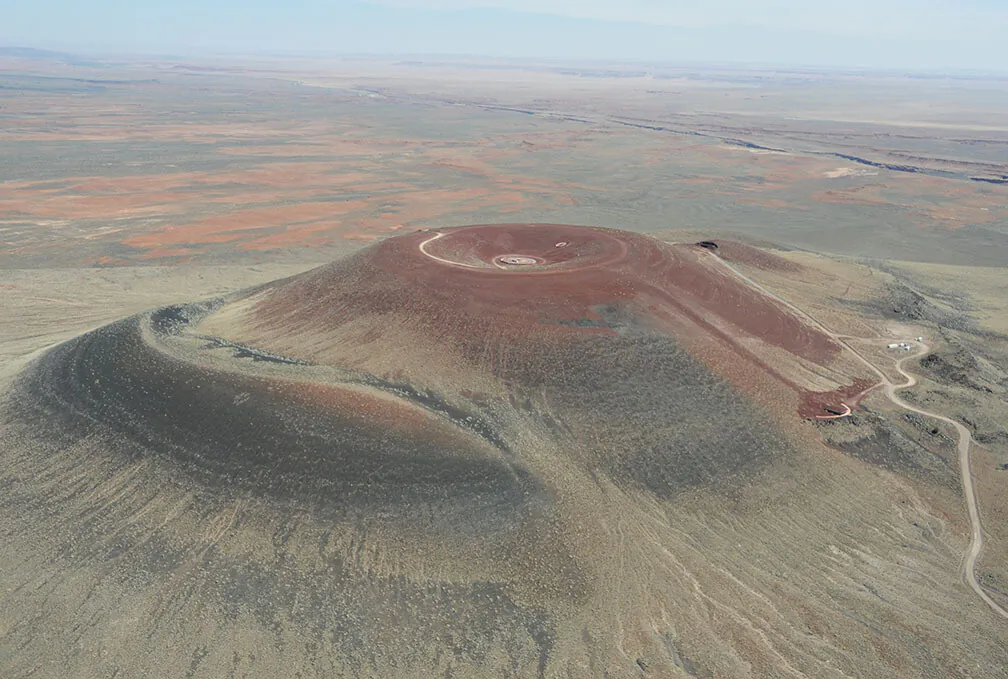
Geographically, the volcano itself is substantial. The cone rises roughly 580 feet above the surrounding desert floor and measures nearly two miles in diameter, forming a natural structure large enough to contain an entire network of architectural spaces. Naturally, the sheer scale of the site means that despite decades of work, the project still remains unfinished. Estimates have suggested that completing the remaining chambers and visitor facilities could require an additional $15–25 million.
Beyond the artwork itself, long-term plans have included modest accommodation for visitors in the form of cabins within the surrounding landscape as well as supporting spaces such as a restaurant, ampitheater, a wine cellar, and subterranean series of water-filled chambers fed by underground wells. The chambers will be comprised of spa and bathing areas connected to an 8‑foot-deep pool that will open towards the desert horizon. These additions are intended less as luxury amenities than as practical infrastructure for a remote site designed to host extended visits and nighttime observation of the sky, although the proposal has been likened to the luxury hotel Amangiri, located in the Utah desert.
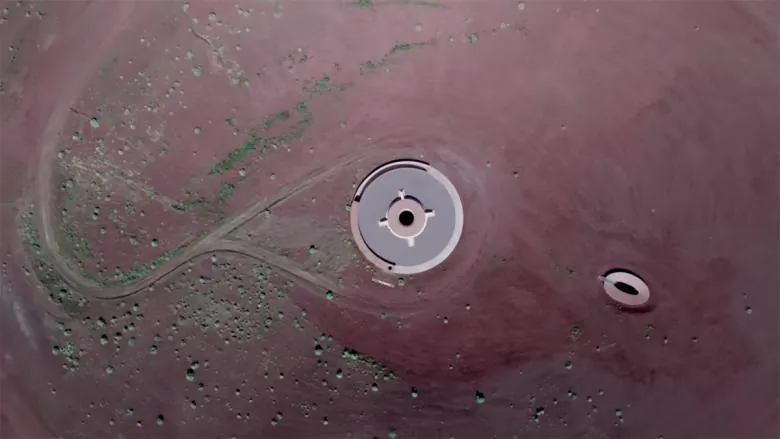
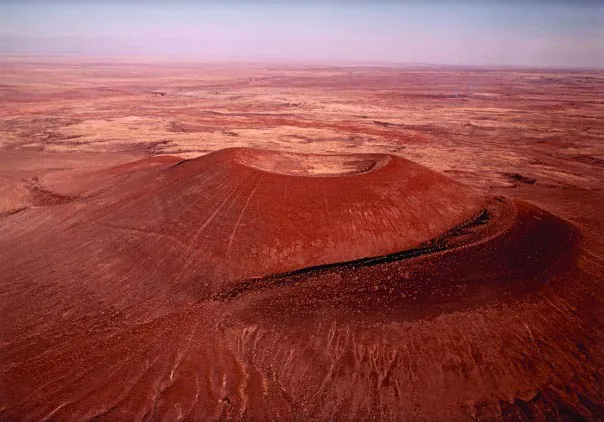
The geological origins of the site extend far deeper in time. Roden Crater formed roughly 380,000 years ago during the Pleistocene epoch as part of the San Francisco Volcanic Field in northern Arizona, a region containing more than six hundred volcanic vents spread across approximately 1,800 square miles. The field itself developed through tectonic extension associated with the Basin and Range Province, producing numerous small volcanoes across the high desert plateau.
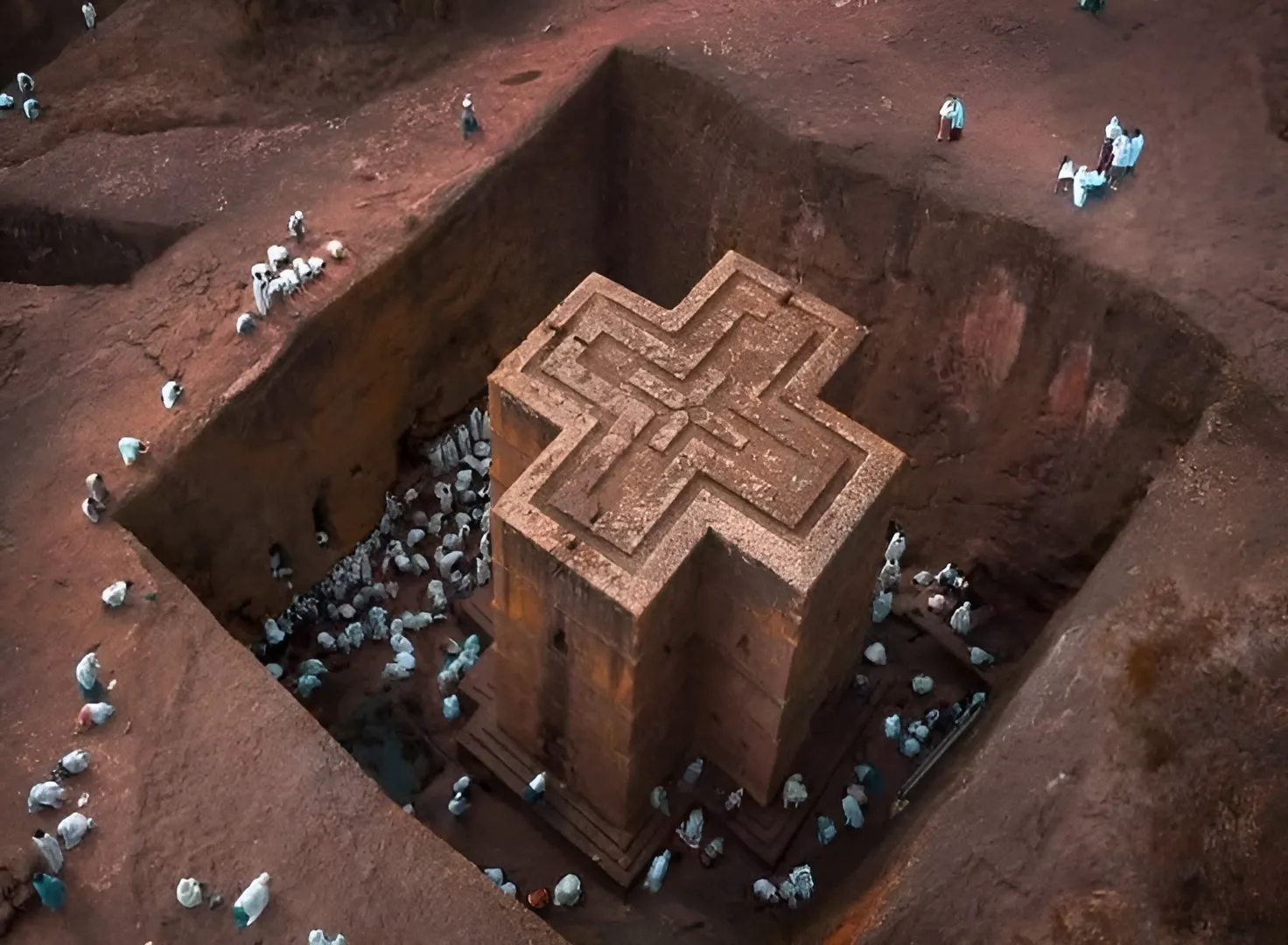
Roden Crater is a classic cinder cone, created through Strombolian-style eruptions in which gas-rich basaltic magma fragments into airborne pyroclasts that accumulate around the volcanic vent, gradually building the steep-sided cone. The rock itself consists primarily of basaltic scoria and ash, including dark gray to black olivine basalt containing phenocrysts of olivine, clinopyroxene, and plagioclase suspended within a fine-grained groundmass. Oxidation of iron-rich minerals has given the surrounding slopes their distinctive red and black coloration. Interestingly, a closely comparable volcanic geology appears in the cliffs of Lalibela in Ethiopia, where roughly nine hundred years ago an earlier form of monumental land sculpture was carved directly into similar iron-rich volcanic rock.
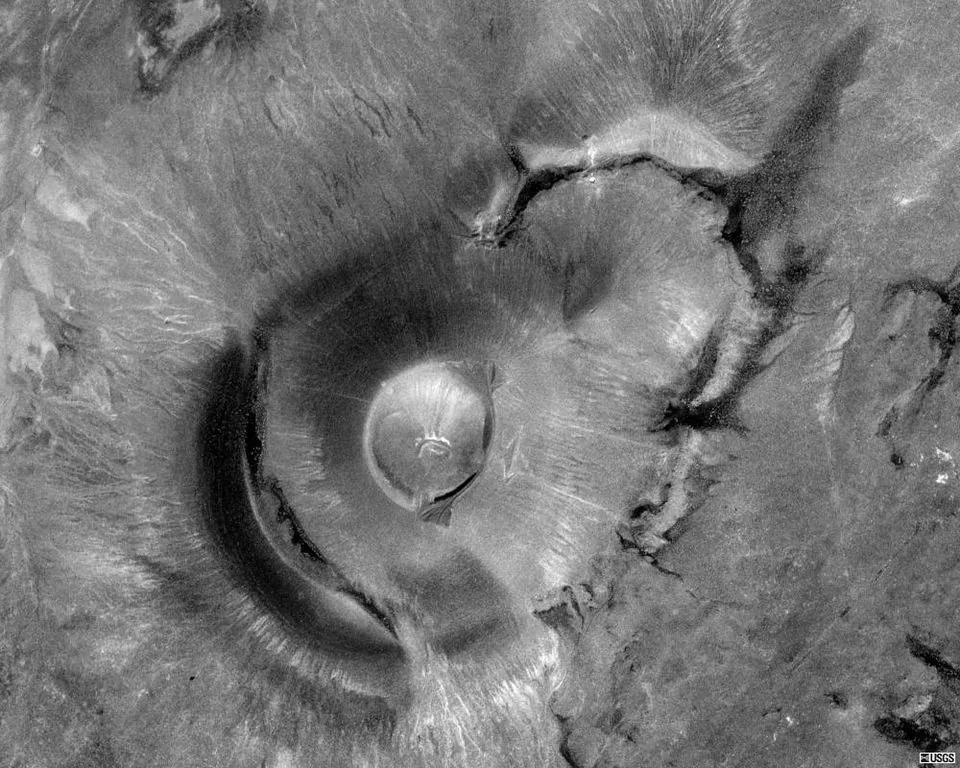
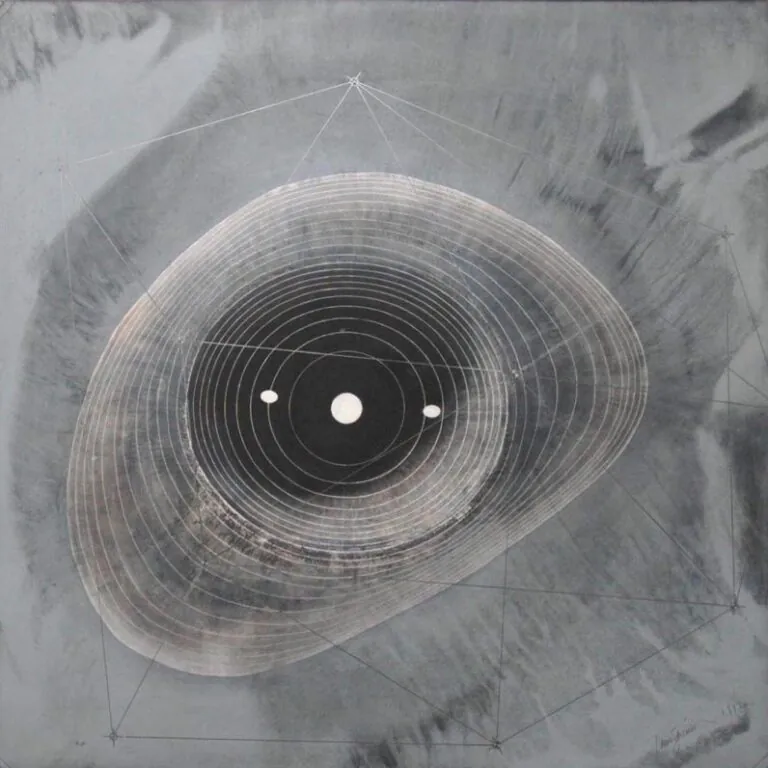
The environment surrounding the crater is also essential to the work. Because the project depends on the clarity and darkness of the night sky, Turrell has been deeply concerned about the impact of artificial lighting. The nearby city of Flagstaff is internationally known for its strict lighting regulations and was designated the world’s first International Dark-Sky Association “dark sky city.” Even so, Turrell has advocated for additional protections to limit light pollution that could interfere with the astronomical alignments built into the crater.
To further protect the landscape, Turrell has gradually acquired large tracts of surrounding land, eventually assembling more than 227 square miles around the site. The buffer prevents nearby development that might obstruct views of the horizon or introduce unwanted lighting into the desert environment. The property is known as Walking Cane Ranch, and alongside the art project it functions as a working cattle operation. The ranch supports a herd of roughly 2,500 Black Angus cattle, supplying beef to restaurants while simultaneously maintaining the open character of the land surrounding the crater.
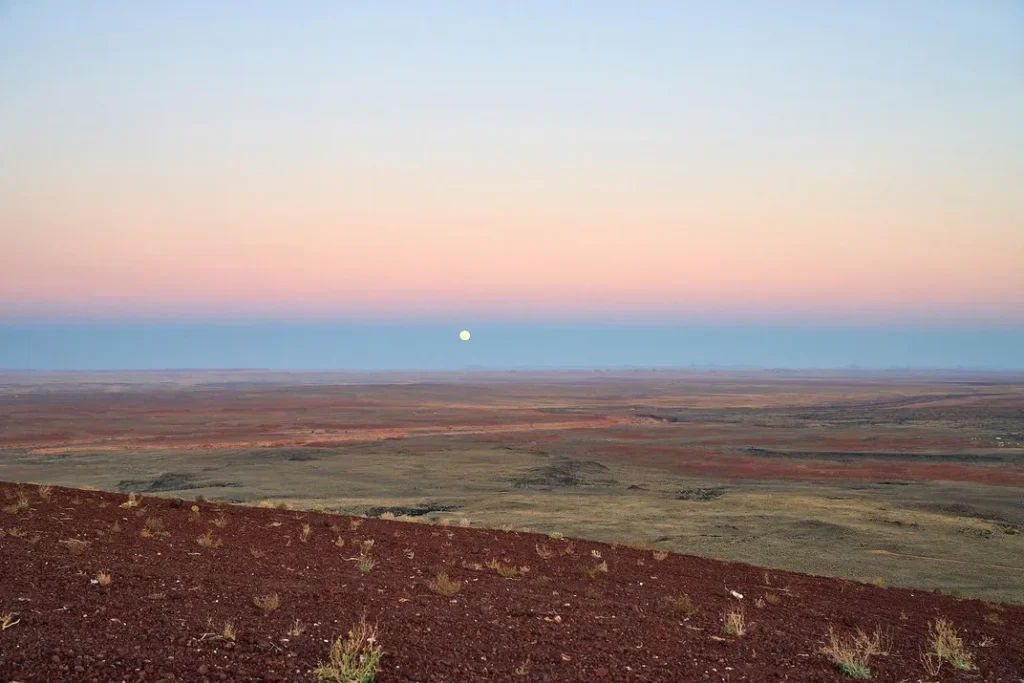
Turrell’s path to this point has been unusual even by the standards of contemporary art. Over the course of several decades he has moved between roles as a pilot, architect, optical designer, rancher, and artist, all while maintaining Roden Crater as the central project of his career. What began as a solitary observation made from the cockpit of a small aircraft has gradually developed into one of the most ambitious works of land-based art ever attempted. Today the crater is widely regarded as one of the defining projects of environmental and perceptual art of the late twentieth and early twenty-first centuries.
Unlike many other artworks, Roden Crater is not intended to be viewed quickly or explained easily. Its spaces unfold slowly, often requiring visitors to remain in darkness or stillness while the sky changes above them. Turrell has repeatedly emphasized that the work does not simply frame the heavens but alters the act of looking itself. In that sense, the project is less a monument than a perceptual instrument, an environment where light, landscape, and time combine to produce an experience that exists somewhere between art, astronomy, and architecture.
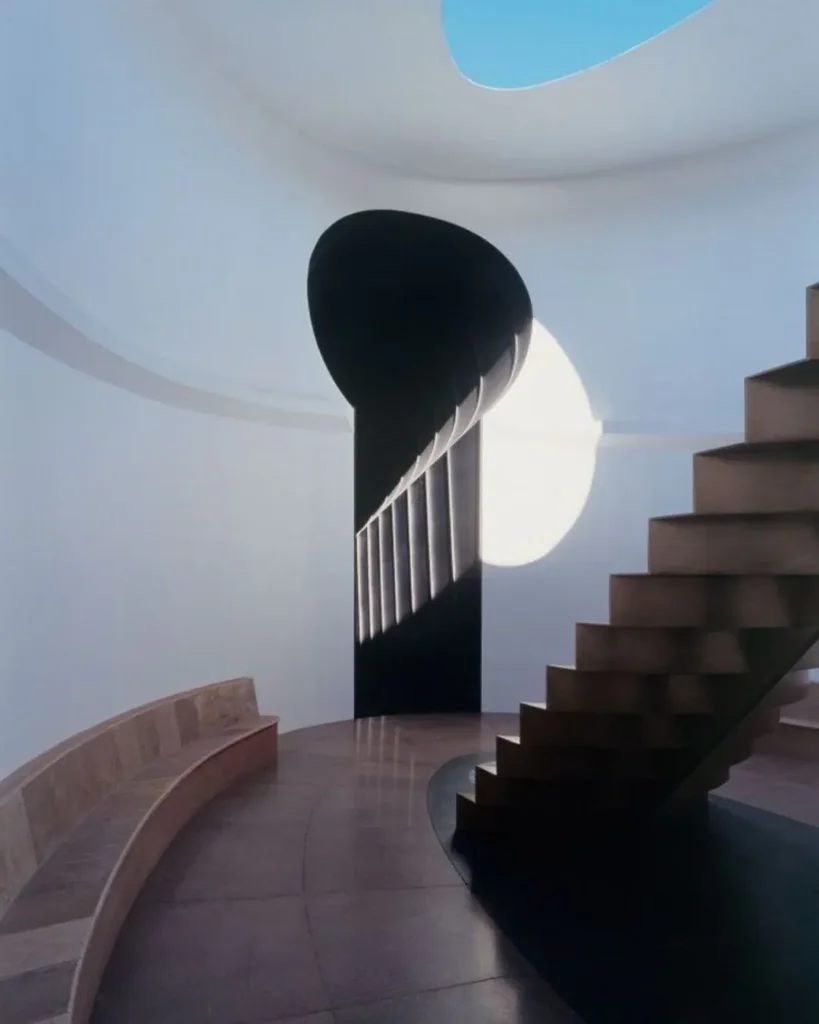
For decades the obvious question surrounding Roden Crater has been a simple one: when will the public actually be able to see it? Turrell originally hoped the project might open in the 1990s, but the complexity of the excavation, the precision required for its astronomical alignments, and the constant challenge of funding have repeatedly pushed that timeline further and further into the future.
A rare glimpse came in 2015, when Turrell briefly opened the crater to a small group of visitors for a series of private viewing sessions. Only eighty people were admitted across four days of guided experiences inside the crater’s chambers. Attendance required a $5,000 donation to the Skystone Foundation, the nonprofit organization established to support the project’s continued construction and preservation. Visitors also paid an additional fee of roughly $1,500, which covered accommodation near the remote site as well as meals and guided tours through the completed sections of the crater.
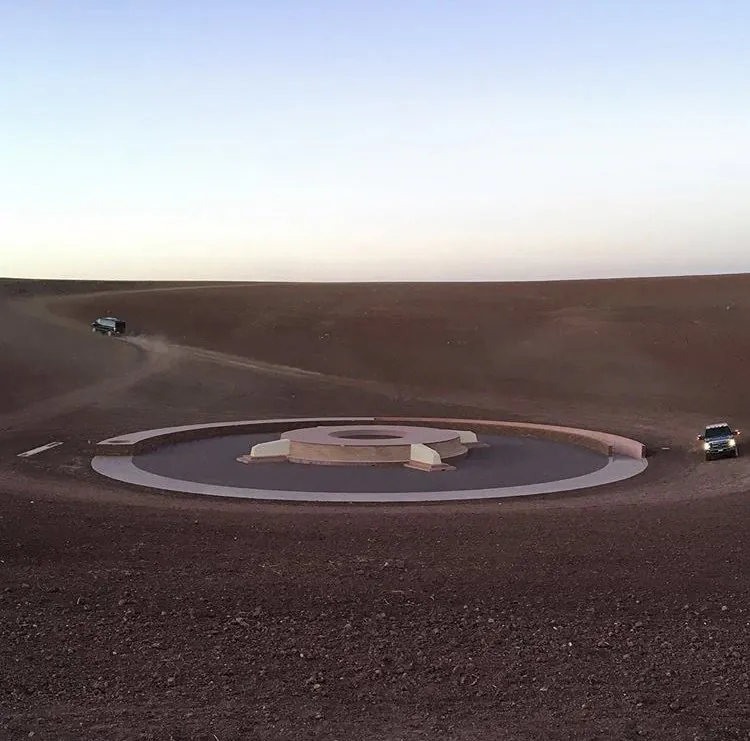
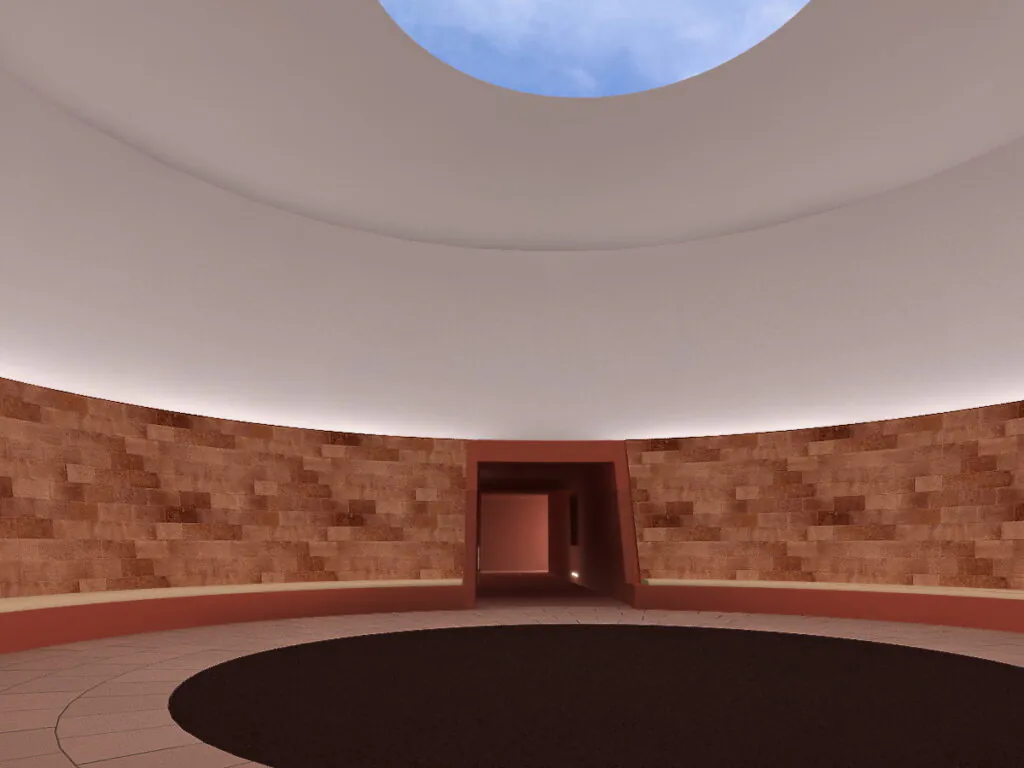
Outside of those rare events, access has remained extremely limited. Turrell has occasionally invited museum curators, researchers, collaborators, and longtime supporters to visit the site privately while construction continues. For devoted followers of his work there is also an informal pathway sometimes referred to as the “Turrell Tour,” an itinerary that involves visiting installations and exhibitions of Turrell’s light environments across museums and permanent sites around the world, which span more than 30 countries. These works, ranging from indoor Skyspaces to large-scale architectural commissions, offer partial insight into the perceptual ideas that ultimately culminate at Roden Crater.
For now, the volcano remains largely closed to the general public. Yet the project continues to grow in both reputation and anticipation. Over the years Turrell’s installations have appeared at institutions such as the Solomon R. Guggenheim Museum, the Los Angeles County Museum of Art, and the Museum of Fine Arts Houston, where audiences can experience the same careful manipulation of light and perception that defines the crater itself. These works function almost like fragments of a much larger experiment, smaller environments that hint at the scale of the volcanic observatory still taking shape in the Arizona desert.
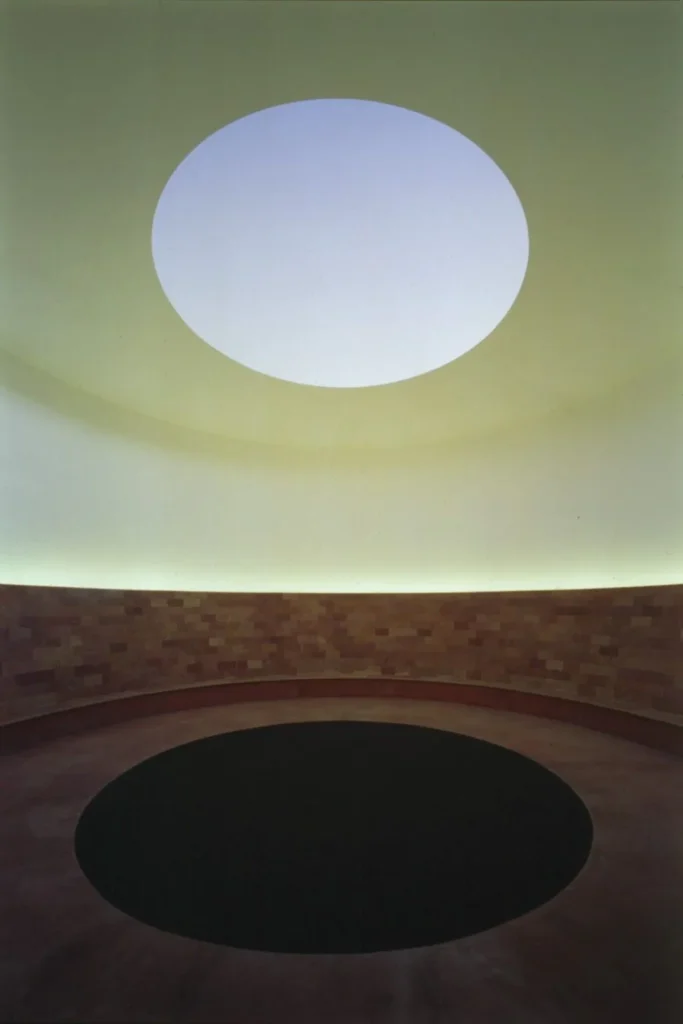
Looking ahead, plans call for Roden Crater to eventually open through a reservation-based system that would allow controlled public access while protecting the site’s fragile environment. The project has also been discussed as a potential location for research collaborations in astronomy, building on Turrell’s original ambition to create a naked-eye observatory capable of framing celestial events with unusual precision. Progress has continued slowly but steadily in recent years, including the completion of the South Space in 2019, suggesting that the long-delayed opening may finally be moving closer to reality. Even when access does become possible, visiting the site will remain an undertaking in itself: the crater sits in an isolated stretch of northern Arizona, reached primarily by unpaved dirt roads branching off U.S. Route 89, where the final approach requires high-clearance vehicles to navigate the rugged desert terrain.
Roden Crater has now been under construction for more than half a century, making it one of the longest-running artworks in contemporary practice. Its completion remains uncertain, but that uncertainty has become part of the project’s mythology. Unlike a conventional museum installation, the crater is tied to geological time, astronomical cycles, and the slow processes of excavation and engineering. Turrell continues to visit the site almost daily, working closely with two architects while teams of specialist contractors handle fabrication and construction for installations around the world. The ranch surrounding the crater also plays a practical role in sustaining the project; agricultural operations on the property help subsidize the ongoing work. Turrell’s wife oversees finances and investments connected to the site, helping manage the long-term logistical demands of the project.
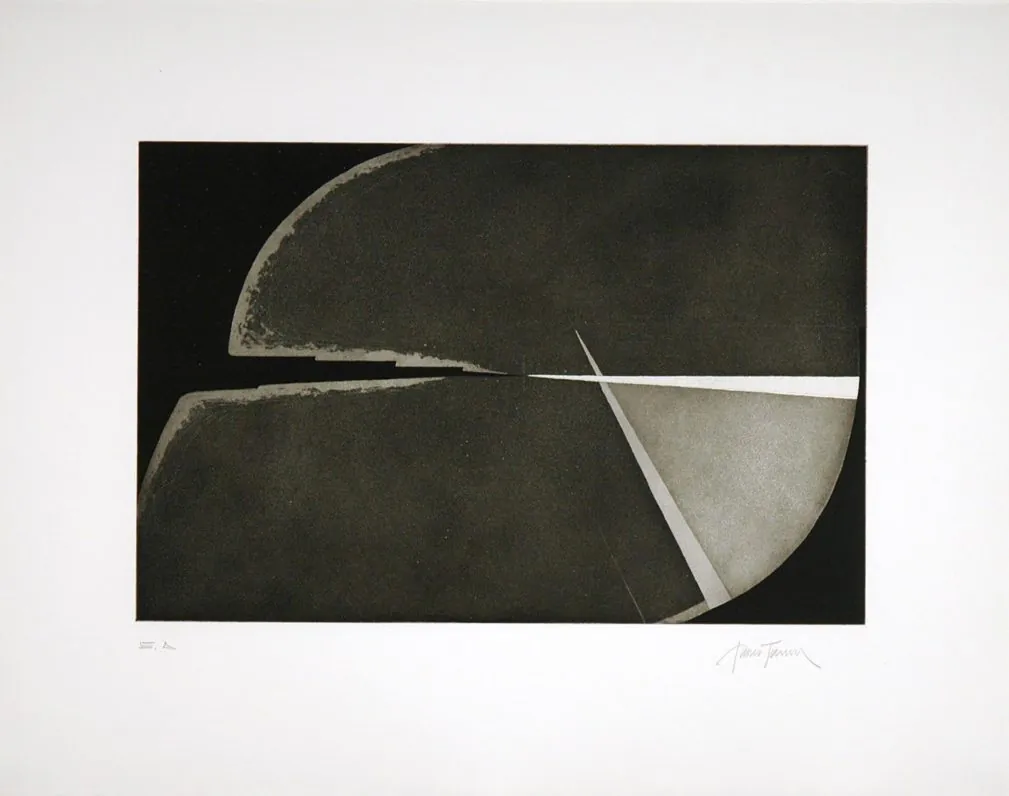
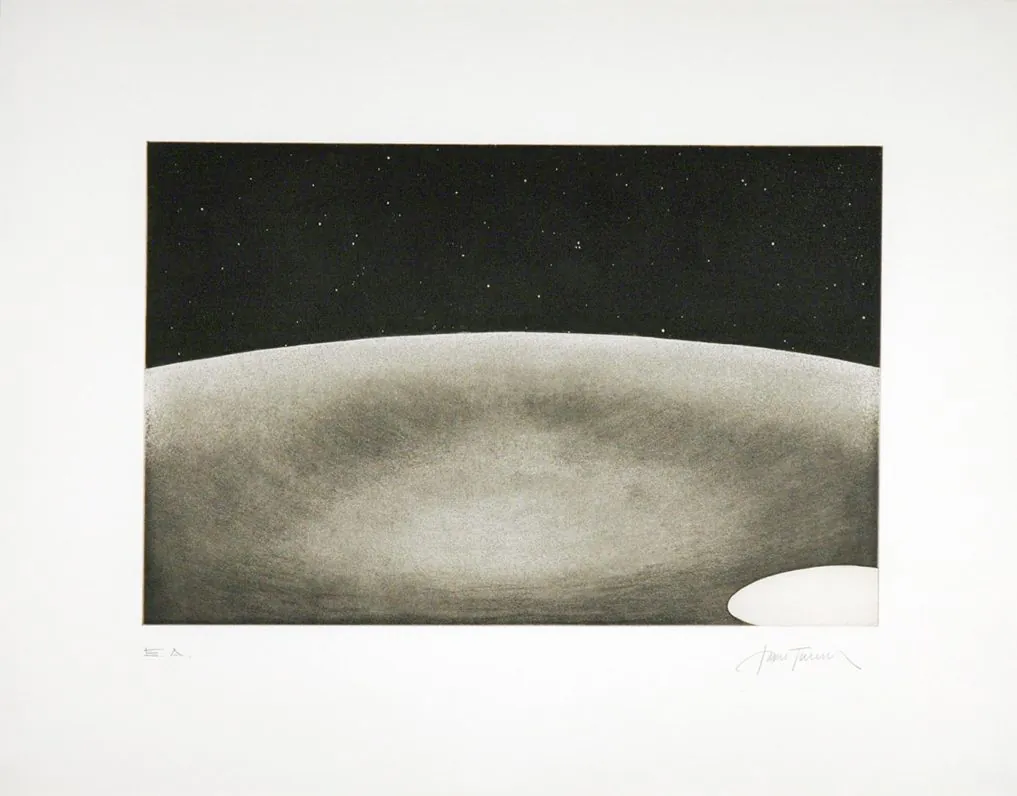
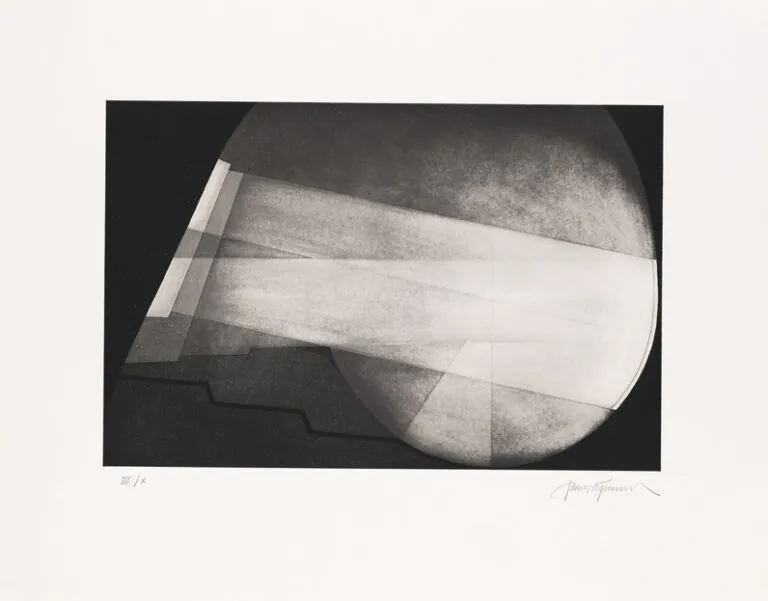
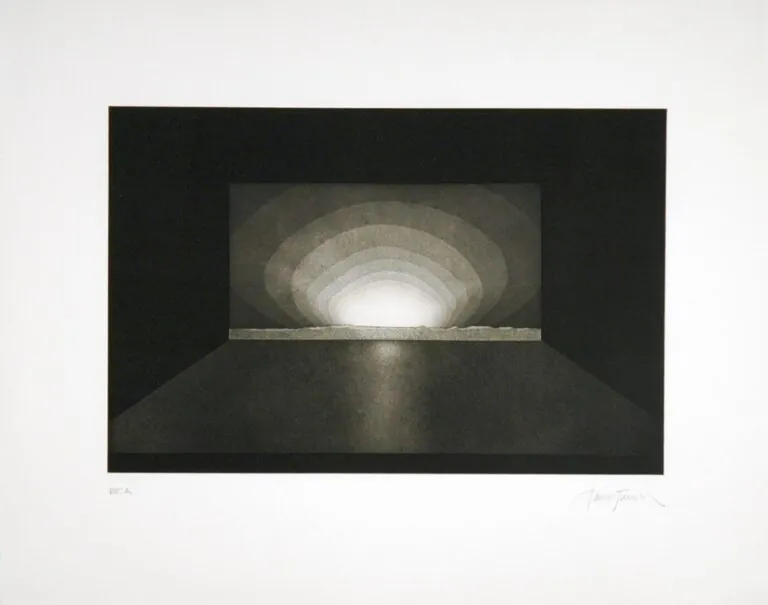
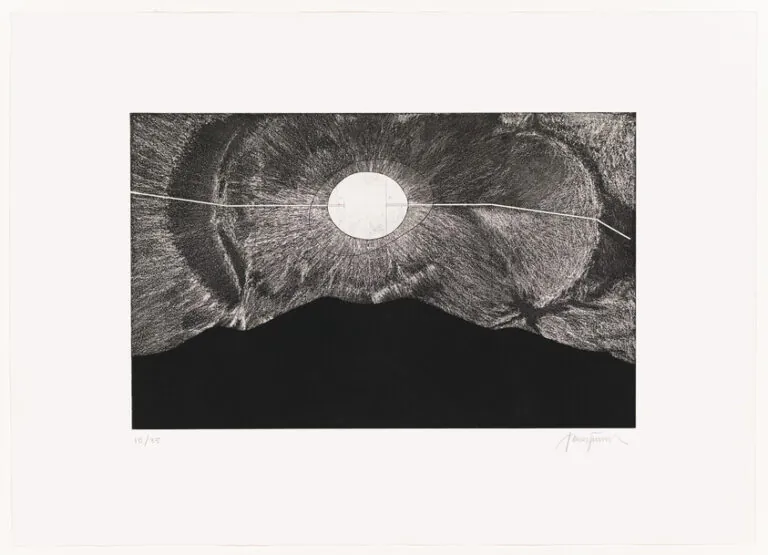
Despite an exemplary career spanning more than sixty years, Turrell has sometimes noted that his work has not always convinced members of his own Quaker family. “They don’t believe in what I do. According to them, art is vanity, an ego booster,” he once remarked. The irony, as he points out, is that he has created several meeting houses for Quaker gatherings as well as installations in religious spaces, including a Lutheran chapel in Berlin. He has also maintained a strong cultural connection to France through his father’s heritage, and in 1991 he was named Chevalier des Arts et des Lettres by French president François Mitterrand following exhibitions that helped establish his reputation in Europe.
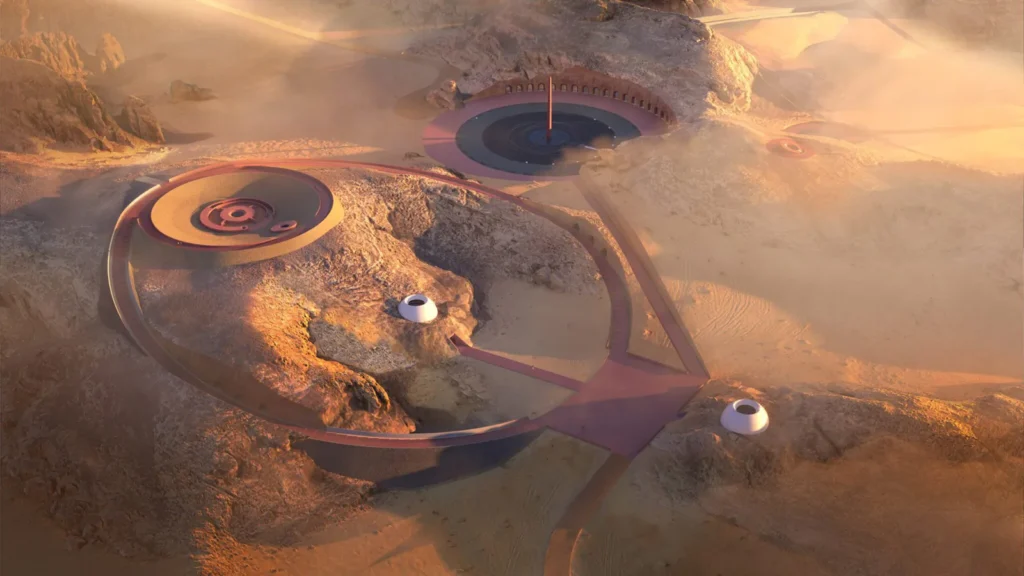
Turrell has remained reluctant to offer a firm public opening date for Roden Crater, especially after a projected 2024 timeline passed without completion. Yet he shows no signs of slowing down with the other projects currently in progress, and the ideas developed inside the Arizona volcano continue to expand outward into other monumental projects. One of the most ambitious is a set of permanent installations planned for the desert valley of Wadi AlFann in Saudi Arabia, commissioned by the Royal Commission for AlUla. The project spans roughly sixty-five square kilometers of desert and will include large-scale works by artists such as Agnes Denes and Michael Heizer as well as local artists Ahmed Mater and Manal AlDowayan.
Turrell’s contribution will again involve a network of pathways, tunnels, chambers, and staircases carved into the landscape, guiding visitors through alternating zones of darkness and light before emerging into circular Skyspaces that frame celestial phenomena. Above ground, elements such as an obelisk aligned with the movement of the sun and constellation maps embedded in the terrain will form a planetary diagram that visualizes the positions of celestial bodies across the sky.
These projects reflect Turrell’s long-standing interest in what he describes as the “thingness of light,” the idea that light itself can become the subject of perception rather than simply a means of revealing objects. “I call attention to the truth. Art history is littered with artists who have this fascination with how things are illuminated: Leonardo da Vinci, Caravaggio and Titian, then someone like Turner — boy, was he prescient! — all the way up to Rothko, who had the glow of light coming off the painting. I’m interested in the thingness of light — not that light is revealing something about an object or another thing, but that light becomes a revelation itself.”
If and when Roden Crater eventually opens on a wider scale, visitors will not simply encounter a sculpture or a building. They will enter a landscape-sized instrument for observing light itself, a place where the movement of the sun, moon, and stars becomes the material of the work. When the observatory is complete, Turrell’s work will essentially be finished. The land will have been shaped, the tunnels excavated, the celestial alignments set. From that point forward, the observatory will depend on a collaboration with forces far beyond the artist’s control. The sky will take it from there.