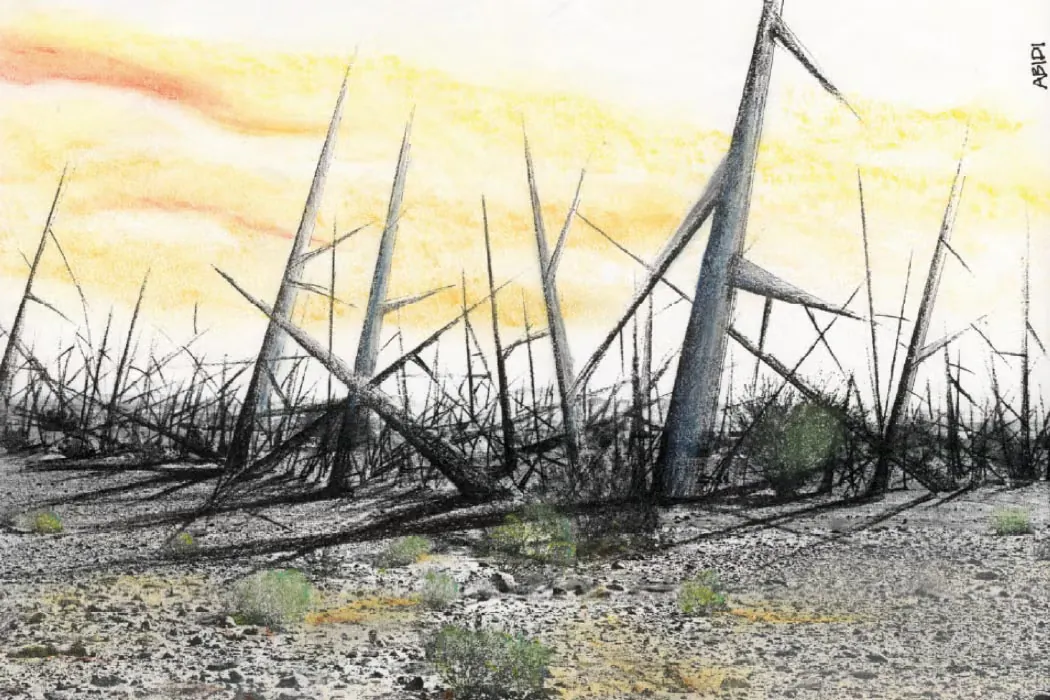
Radioactive waste can remain lethal for tens of thousands of years. When it’s buried deep in the ground, how do you warn future generations to stay away? What message survives ten millennia? When researchers tried to answer that question for nuclear waste repositories, their ideas drifted into strange territory, bordering on speculative science fiction.
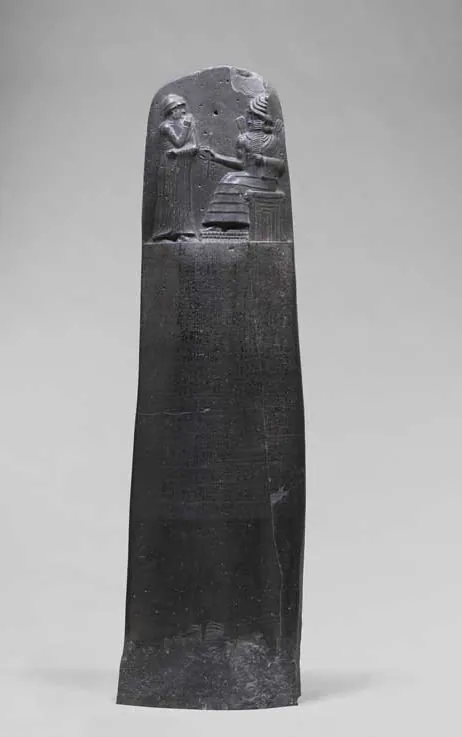
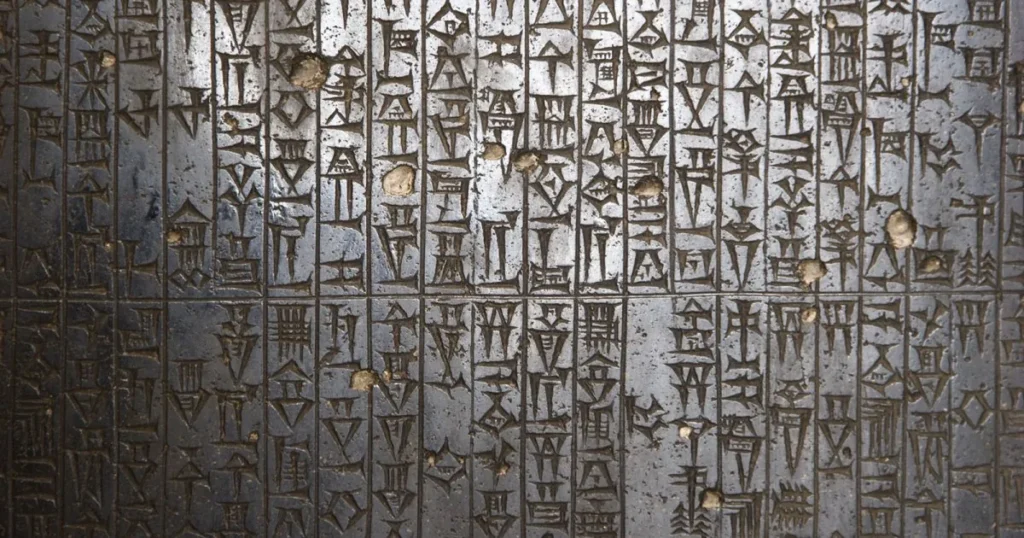
The Louvre Stele, containing the complete Code of Hammurabi, dates to around 1792 BC. When it was discovered in the ruins of the ancient city of Susa in 1902, the text carved into its black basalt surface, written in Akkadian (Babylonian dialect) using cuneiform, could be read by no more than a few dozen people in the entire world. The script had only been deciphered roughly half a century earlier. For nearly two thousand years before that, the language had been completely lost, spoken by no one and understood by none.
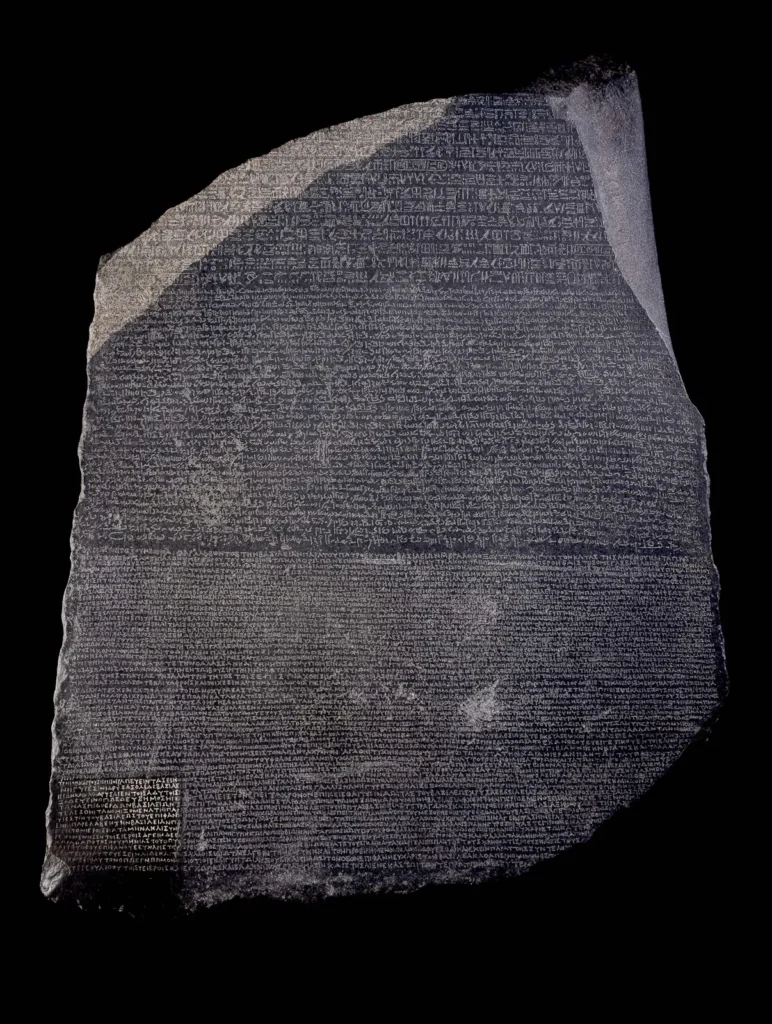
This pattern is common in human history. Large portions of the written Mayan language, used for centuries in Central America until the 17th century, remain undeciphered today. In the Indus Valley, people were writing in a script around 4,000 years ago that still cannot be read by modern researchers. Even China, often described as the world’s oldest continuous civilization, reaches back only about 5,000 years, roughly the same age as the oldest inscribed clay tablets ever discovered. All of written history itself is roughly the same age. Languages evolve, fracture, and disappear; writing systems degrade, are forgotten, or lose their meaning entirely. In a million years, it is unlikely that any language spoken today will still exist.
This poses a strange problem for the nuclear age. In the roughly seventy years since humans first split the atom, the nuclear-capable countries of the world have accumulated between 250,000 and 300,000 tons of high-level nuclear waste. Predictions maintain most of it will remain dangerously radioactive for at least 100,000 years. Building stable underground repositories to contain this material is only half the challenge. The other half is far stranger: designing a warning system, essentially a “Do Not Enter” sign for the deep future, that will remain understandable for a time span far longer than any civilization has yet survived. So, if there was a clear and present danger that would continue to exist far into the future, how would we warn the future of it and discourage them from accessing the area where the danger is stored?
Written language offers no guarantee. Even if a warning is carved into stone, future readers may not understand it. Today perhaps a thousand people among the world’s 7 billion can read cuneiform. Visual symbols are no safer: their meanings shift over time. Imagine a traveler 10,000 years in the future crossing the New Mexico desert. The traveler encounters a strange landscape of granite thorns rising from the ground, their jagged points weathered by millennia. Nearby are scattered signs bearing a distorted human figure resembling the screaming subject of Edvard Munch’s The Scream, a painting long having ceased to exist. On a wall are words written in several languages, perhaps one the wanderer can still decipher:
“This place is not a place of honor.
No highly esteemed deed is commemorated here.
Nothing valued is here.
This place is a message and part of a system of messages.
Pay attention to it!
Sending this message was important to us.
We considered ourselves to be a powerful culture.”
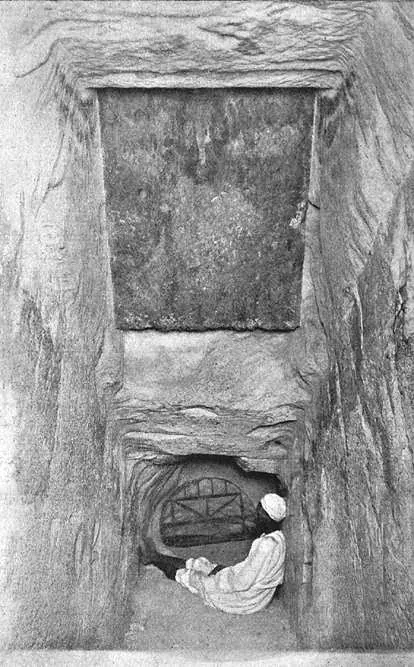
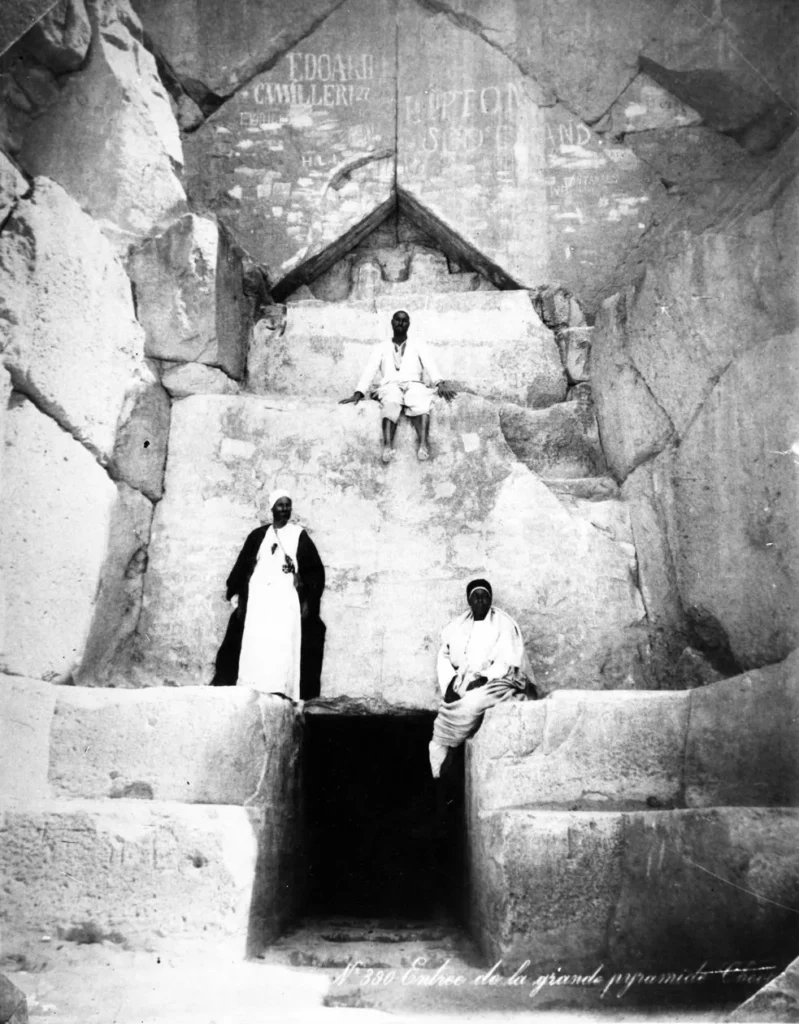
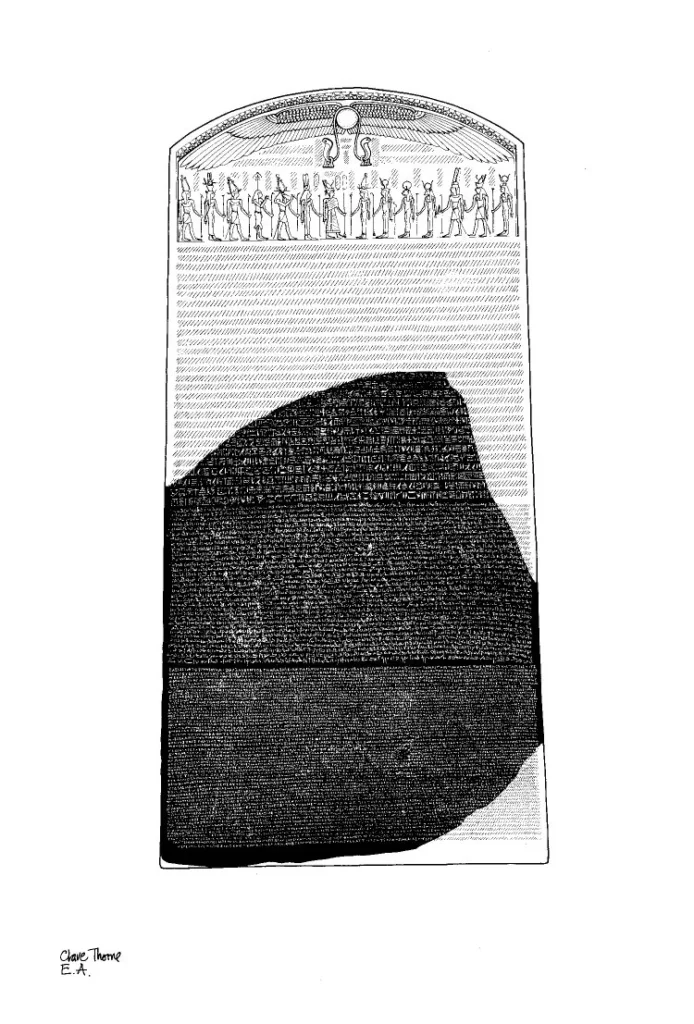
Even if the warning survives, would anyone heed it? History suggests otherwise. The Egyptians built the Great Pyramid at Giza around 4,500 years ago with the intention that it would never be opened. Yet archaeologists eventually mapped its interior, walked its chambers, and even accessed its hidden shafts. This happened despite the fact that we eventually deciphered Egyptian hieroglyphs, thanks to the discovery of the Rosetta Stone, and understood that the pyramids were tombs meant to remain sealed. In other words, even when we can read the warning, curiosity often wins. Preventing future generations from breaching underground nuclear repositories for periods twice the age of the Great Pyramid may be impossible.
The timescales involved are almost absurd. Chlorine-36, a radioactive isotope present in nuclear waste, has a half-life of around 300,000 years, while neptunium-237 persists for roughly two million years. Regulatory authorities often choose containment timelines, 10,000 or 100,000 years, partly by estimating how long ice ages may last. At such scales, even careful planning begins to resemble educated guesswork.
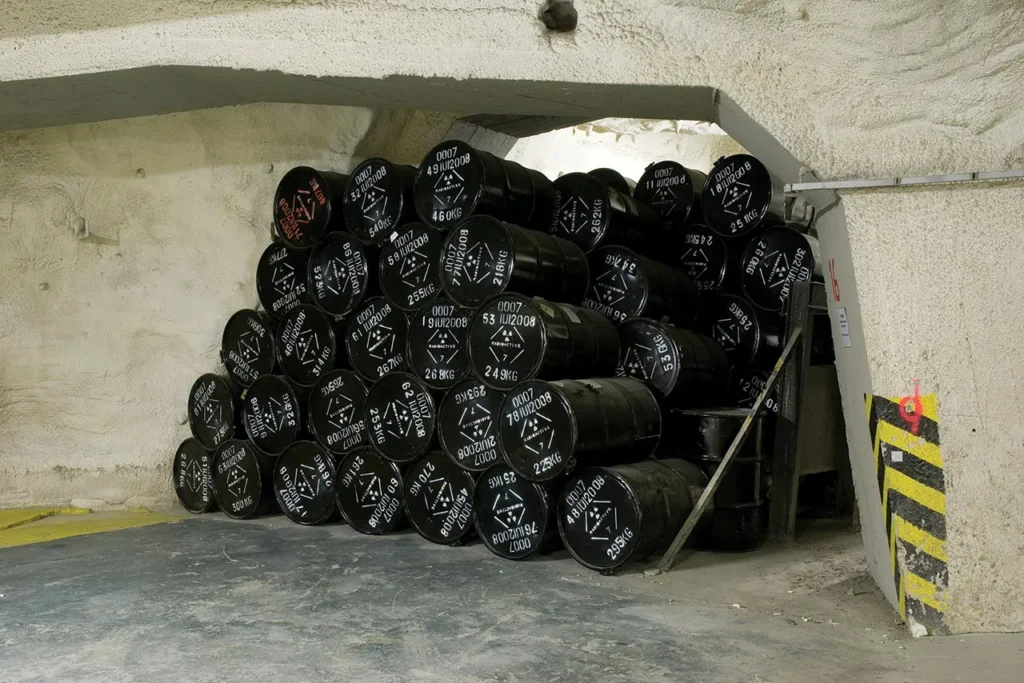
High-level nuclear waste consists primarily of spent fuel from nuclear reactors. Although it represents only a small fraction of total nuclear waste by volume, it accounts for the vast majority of its radioactivity. According to some estimates, the most dangerous material must remain isolated for up to one million years before radioactive decay renders it relatively harmless. Longer than the entire span since Neanderthals first appeared on Earth. And yet somehow, across that immense stretch of time, humanity must leave behind a message simple enough, durable enough, and frightening enough to say only one thing to the traveler in the year 12000: “Stay away.”
Modern Homo sapiens have existed for roughly 100,000 years. That is also about the length of time scientists hope to keep high-level nuclear waste sealed away from the biosphere. In other words, the safety plans for nuclear waste must stretch across a period comparable to the entire known history of our species. What humanity might look like at the end of that span, if we are still here at all, is impossible to predict. To understand how that traveler in the desert would eventually arrive at this problem, it helps to go back about a thousand centuries.
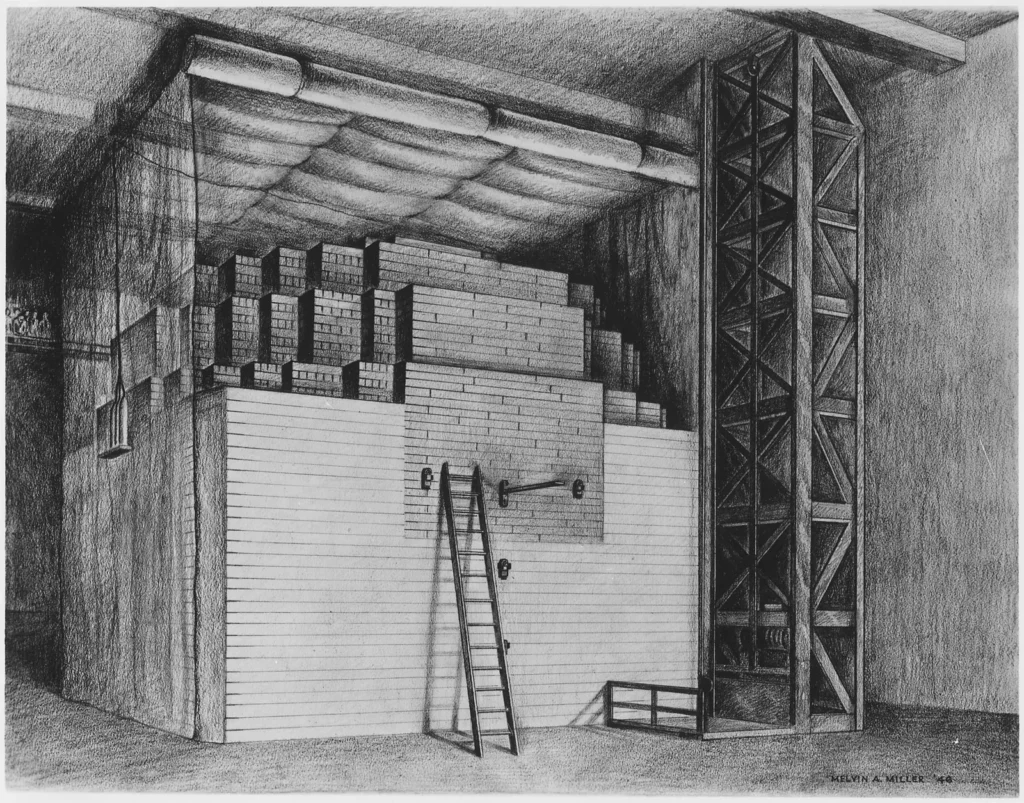
In 1942, beneath the unused football stands at the University of Chicago’s Stagg Field, Italian physicist Enrico Fermi and a small team assembled a strange structure inside a squash court. The device, later known as Chicago Pile‑1 (CP‑1), was essentially a carefully arranged mound of uranium pellets and graphite bricks threaded with cadmium control rods.
The idea was deceptively simple. Uranium atoms naturally emit neutrons, which can strike other uranium nuclei and split them, releasing still more neutrons. Graphite blocks slowed those neutrons down, increasing the chance they would trigger further fission events. Cadmium rods, which absorb neutrons, acted as brakes. When inserted into the pile they suppressed the reaction; when slowly withdrawn they allowed it to intensify. If everything worked as predicted, the system would eventually reach criticality, the point where the chain reaction sustains itself.
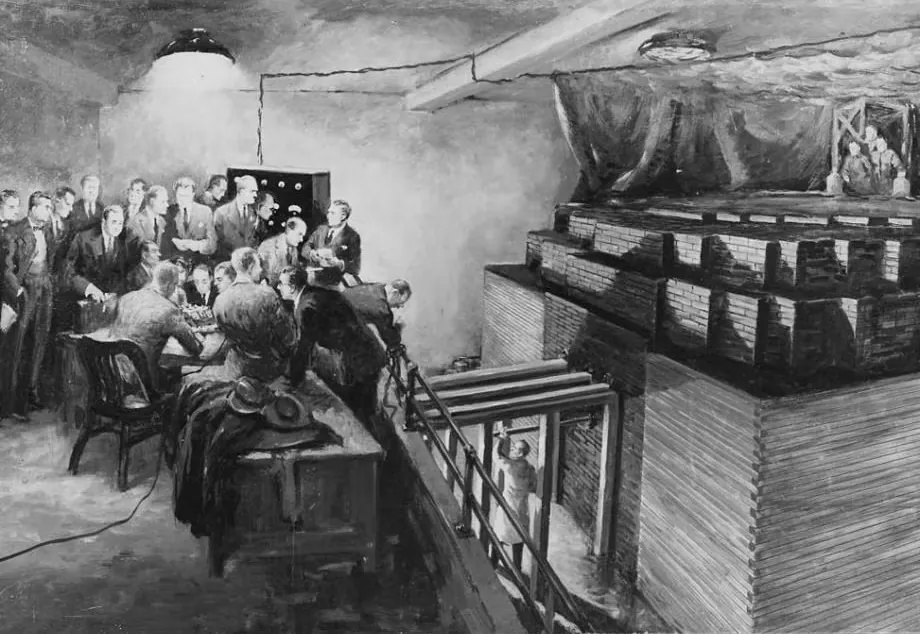
On December 2, 1942, Fermi’s team carefully pulled back the control rods. Instruments confirmed what they hoped to see: the first controlled, self-sustaining nuclear chain reaction in human history. Because the experiment was part of the secret Manhattan Project, the scientists could not celebrate publicly. Instead, the forty-nine observers quietly toasted the achievement with paper cups of Chianti.
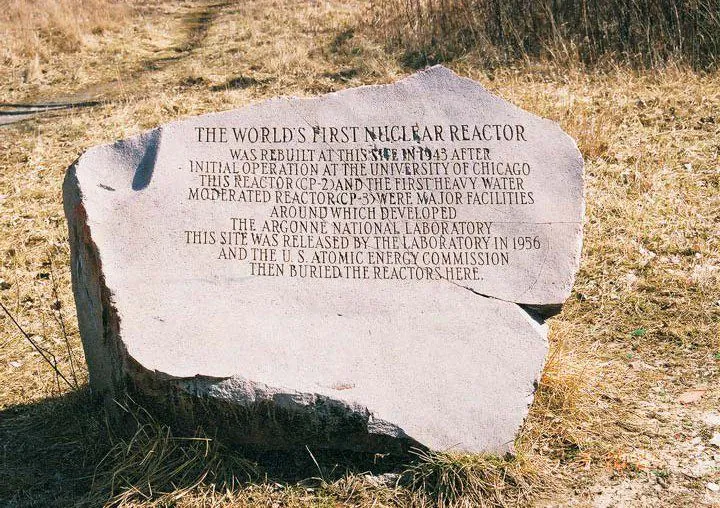
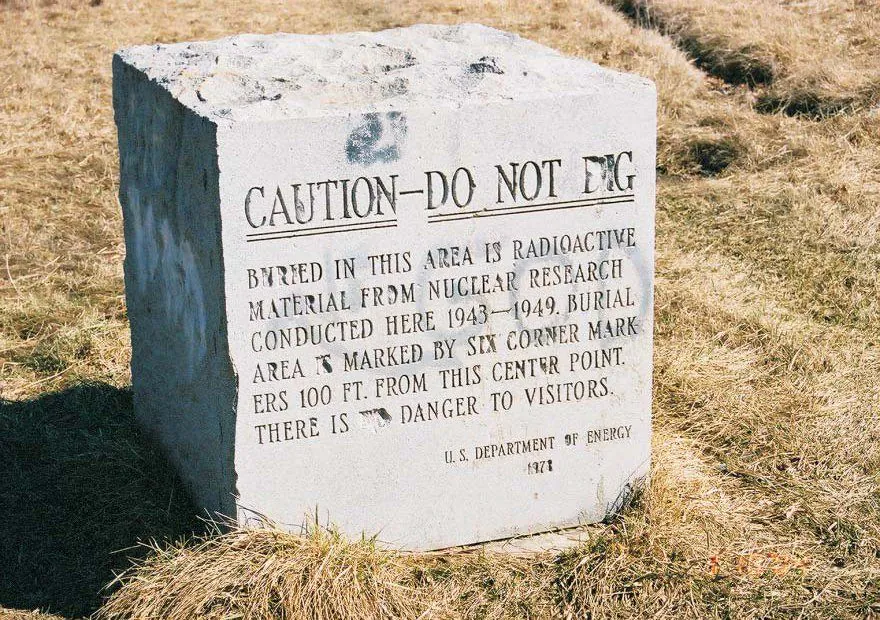
The pile itself did not last long. In 1943 CP‑1 was dismantled and moved to Red Gate Woods, outside Chicago, where it was rebuilt with shielding as CP‑2. A third experimental reactor, CP‑3, followed soon after. When the Manhattan Project no longer needed them, the structures were taken apart and buried nearby at two locations known as Site A and Plot M. Today the spots are marked only by modest granite monuments. Plot M carries a blunt inscription, for now still understandable to nearby inhabitants: “DO NOT DIG”.
After the Second World War, governments faced similar disposal dilemmas on a much larger scale. Allied forces had recovered enormous stockpiles of German chemical weapons, roughly 300,000 tons of munitions containing substances such as mustard gas. The solution often chosen was simply to dump them at sea. At least 40,000 tons ended up in the Baltic Sea, sometimes outside the designated dumping zones. Records were incomplete or lost, leaving uncertain maps of where these weapons actually lie. Even today, fishing crews occasionally haul up corroded shells from the seabed.
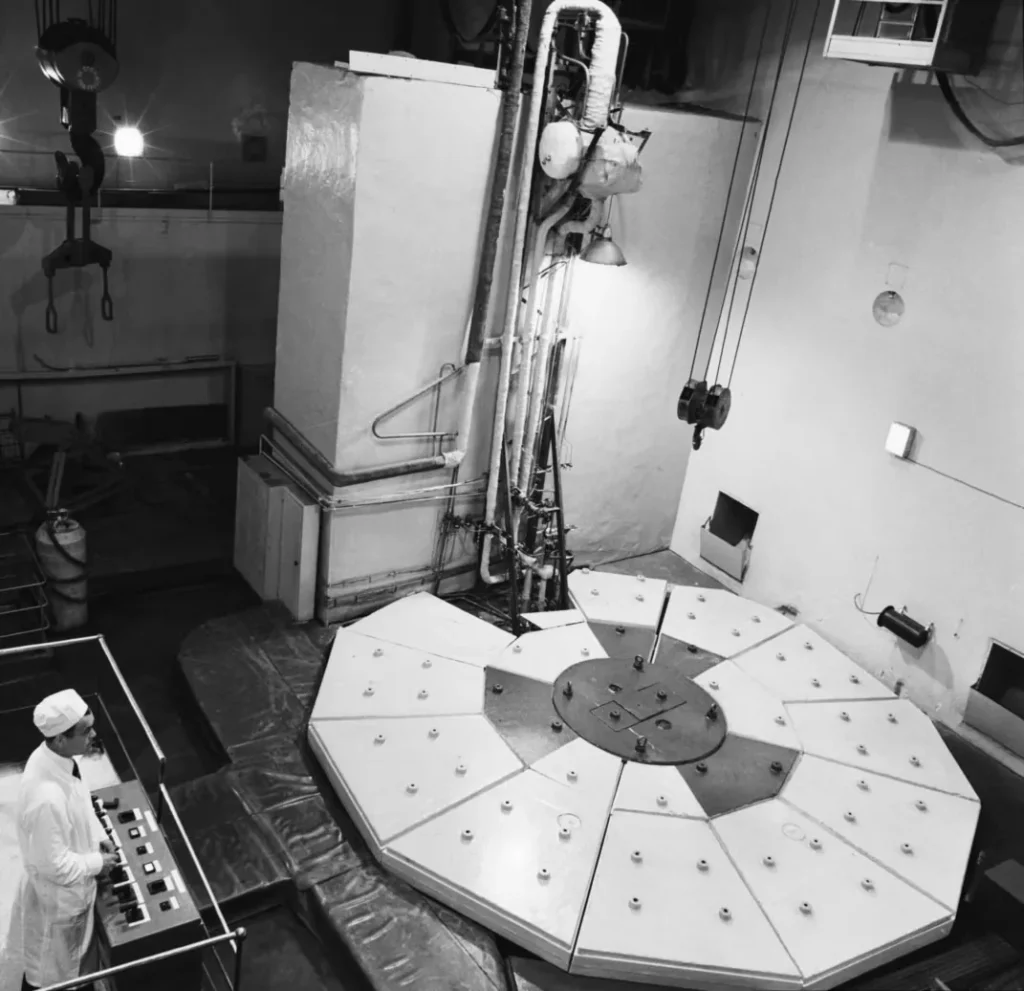
Meanwhile, the geopolitical race for nuclear technology accelerated. The Soviet Union opened the world’s first grid-connected nuclear power reactor near Moscow in 1954, run by the state and providing energy for all. The United States pursued a different path. The Atomic Energy Act allowed knowledge developed during the war to flow into the civilian sector, making commercial nuclear electricity possible for private industry. Both decisions also ensured something else: the steady creation of nuclear waste.
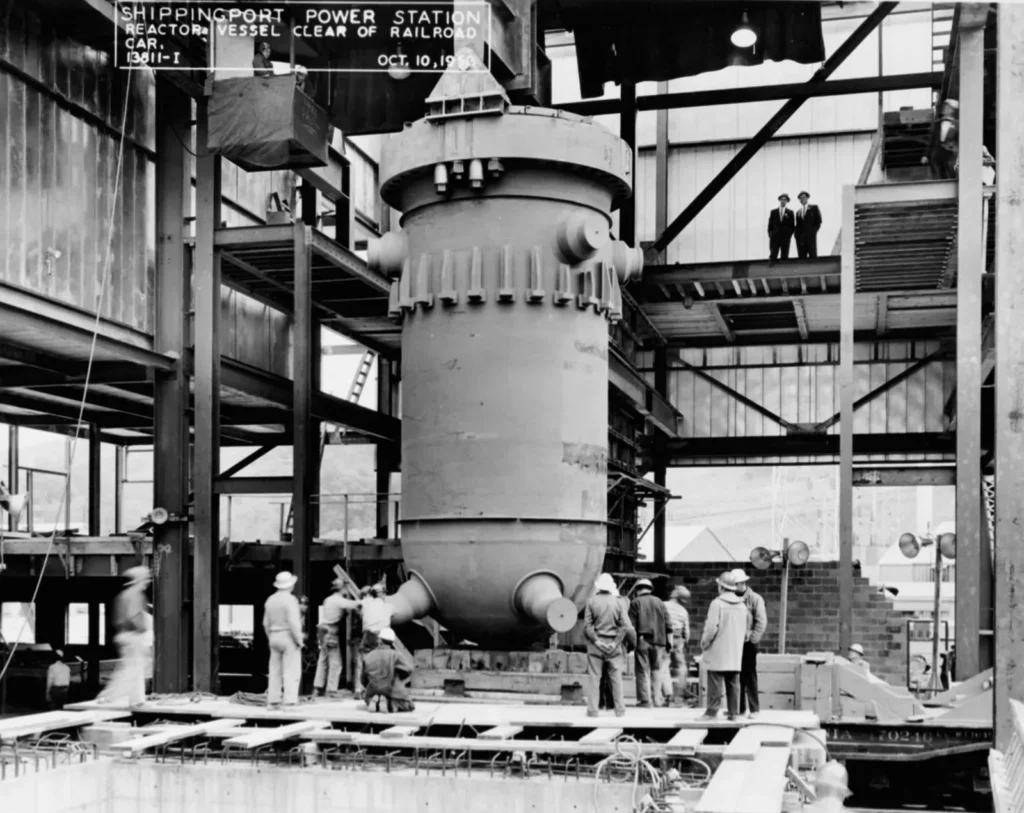
By 1957, as the first commercial U.S. nuclear reactor began operation, the National Academy of Sciences had already recognized the looming disposal problem. Its report recommended removing highly radioactive “spent fuel” from reactor sites as quickly as possible and isolating it deep underground. Salt formations were considered particularly promising because the rock slowly flows over time, sealing fractures and trapping contaminants. Vast deposits beneath New Mexico were specifically mentioned as potential storage sites.
The Department of Energy later surveyed similar geological options across the United States, salt beds, volcanic tuff, deep granite. Scientists and engineers evaluated them in terms of stability, groundwater movement, and long-term containment. But when Congress eventually moved toward selecting a permanent repository, the process would be shaped less by scientific agreement than by political bargaining. And that is where the real conflict began.
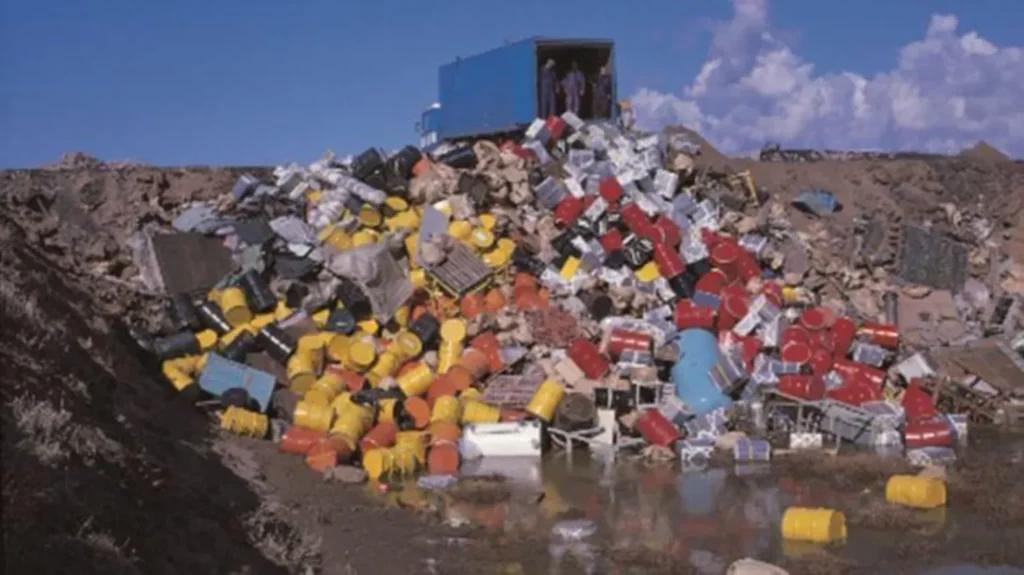
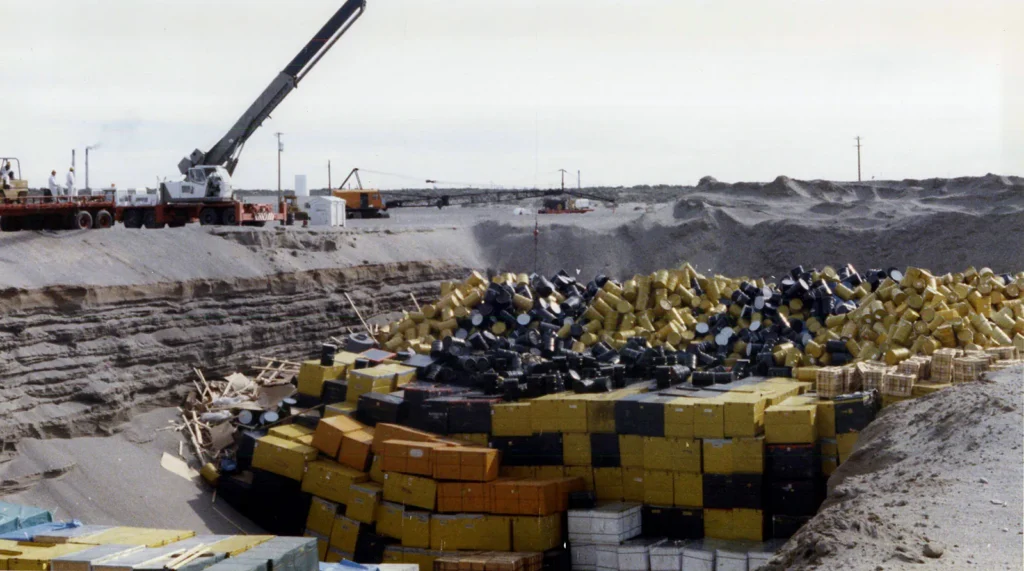
Despite this guidance in place, disposal methods in the early decades of the nuclear age were often improvised. In parts of the United States, radioactive material was simply buried in shallow landfills. In some cases it was reused as construction fill. In Niagara County, New York, contaminated waste from uranium processing was mixed into gravel and used beneath driveways, parking lots, and roads. The material looked ordinary, but it was anything but. Some of these hidden “hot spots” have radiation levels measured at up to seventy times higher than the surrounding ground.
Elsewhere, the solutions were hardly more durable. In West Germany, authorities turned to an abandoned salt mine known as Asse II. Between 1967 and 1978, the nation’s supply of roughly 47,000 cubic meters of low- and intermediate-level radioactive waste were placed into former mining chambers deep underground. Much of it came from nuclear power companies, but research institutes, medical facilities, and other industries also contributed.
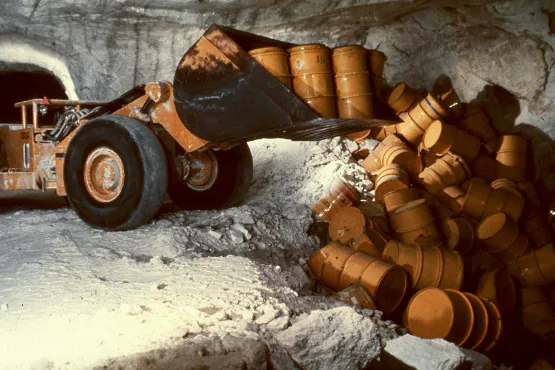
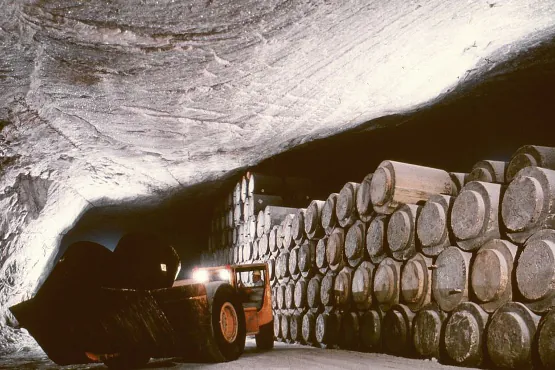
The waste itself was mundane in appearance, filters, scrap metal, paper, building rubble, laboratory debris, wood, and chemical slurries. Altogether it was packed into thirteen old mine chambers, most of them between 725 and 750 metres below ground, with another located at the 511-metre level. At the time, the project was presented as a practical solution: the mines would collapse over time, trapping the waste safely within. These quiet leftovers from the Cold War are reminders of a larger problem: the United States still has no permanent long-term repository for most of its radioactive waste.
Meanwhile, the scale of the problem continued to grow. From 1954 to now, humanity produced roughly 400,000 tons of spent nuclear fuel. This material is classified as high-level waste, containing the most radioactive by-products created inside reactors. Though it can no longer generate electricity, it remains intensely hot and radioactive. Similar waste also emerges from nuclear weapons production and from fuel reprocessing facilities.
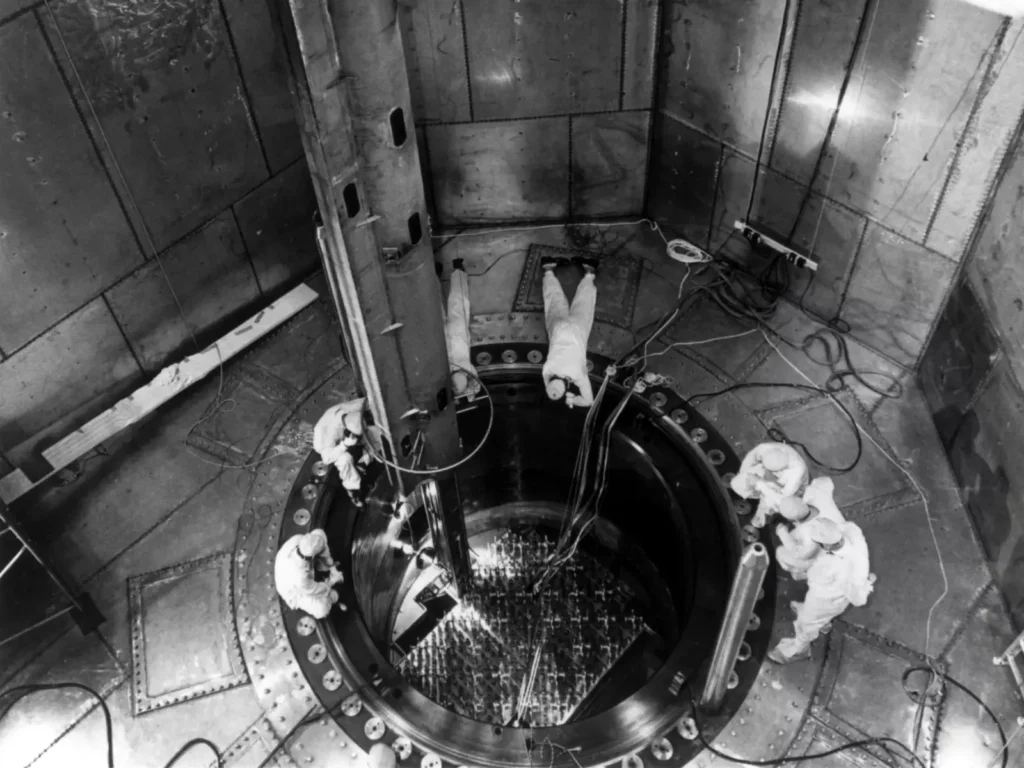
The stockpiles are still expanding. In the United States alone, around 65,000 metric tons of spent fuel sit in storage pools and dry casks at reactor sites spread across 33 states. If current projections hold, that figure could double by 2055. Globally, the picture is similar. The International Atomic Energy Agency estimates that roughly 263,000 tons of spent fuel currently exist in interim storage facilities worldwide, awaiting disposal. “We generated this electricity. We benefited from that,” nuclear waste expert Tom Isaacs once remarked. “In my view, that’s an unacceptable legacy to leave to future generations.”
Today, the nuclear age continues to produce waste faster than it can be permanently stored. According to the U.S. Department of Energy, nuclear reactors in the United States generate more than 2,000 metric tons of radioactive waste every year. With no permanent disposal site available, most of that material simply remains where it was produced.
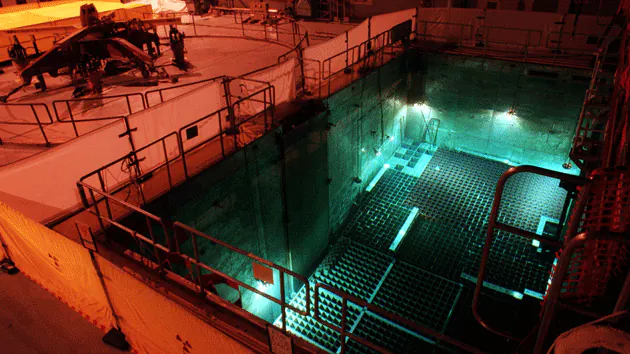
“When we remove fuel from the core after its final usage, we store it in a pool on site,” explains Bryan Dolan, vice president of nuclear development at Duke Energy, which operates several reactors in South Carolina. “We have the capacity to store it there for many years.” In purely physical terms, the material occupies surprisingly little space. Even decades of nuclear waste, he notes, require only a modest storage footprint.
At each of the country’s nuclear reactors, more than a hundred in total, there are enormous spent fuel pools, often comparable in size to Olympic swimming pools. Freshly removed fuel rods are lowered into these water-filled basins and left there for five to ten years. The water acts as both a coolant and a shield, absorbing the intense radiation still pouring from the fuel.
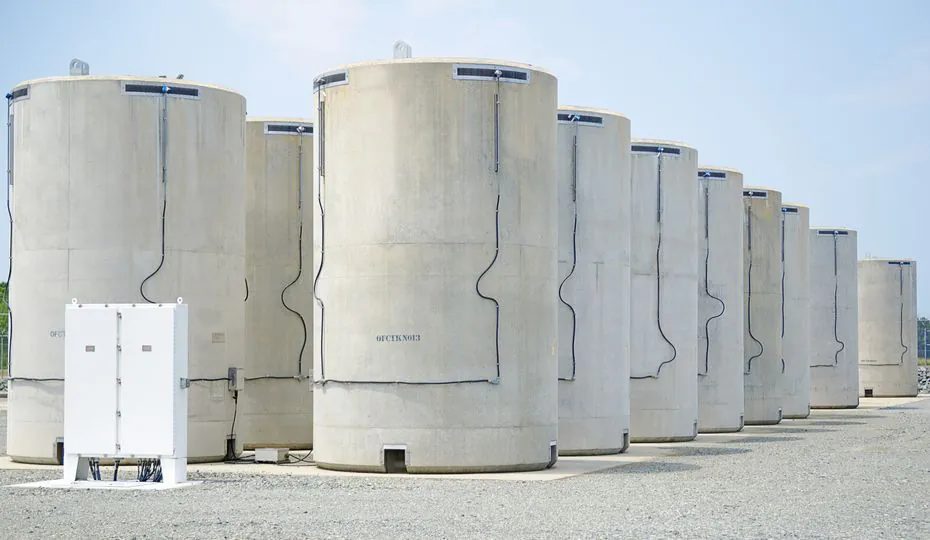
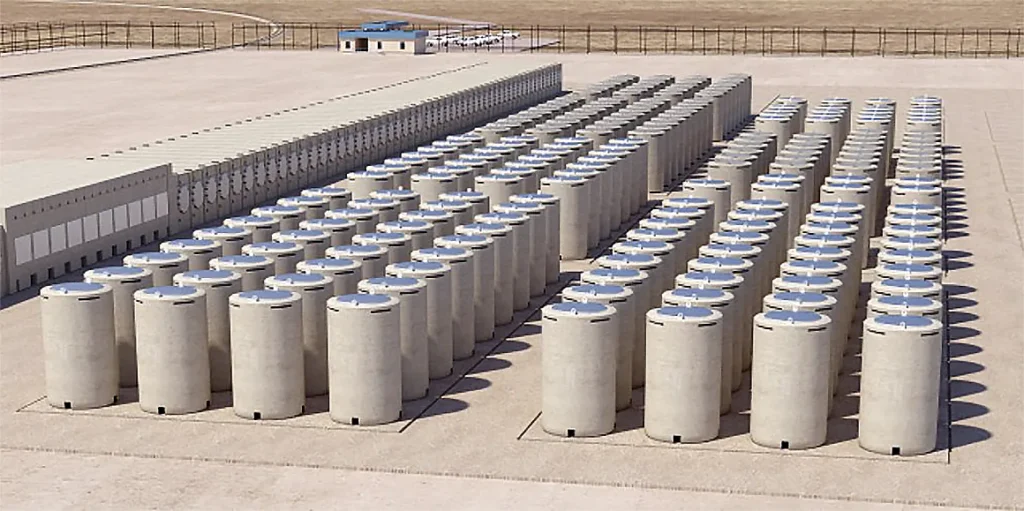
After that cooling period, specialized teams transfer the rods into dry casks, heavily reinforced steel and concrete containers designed for long-term storage. The process has become routine. After nearly six decades of commercial nuclear power, every operating reactor follows some variation of this same cycle. Yet the larger question remains unresolved: where should the waste ultimately go?
Humanity has learned how to harness uranium in remarkably short order. The element itself formed in ancient supernova explosions roughly 6.6 billion years ago, becoming part of the cosmic debris from which Earth eventually formed. It is relatively common in the planet’s crust, about as abundant as tin or tungsten, and scattered throughout the rocks beneath our feet.
Over the past century, we have discovered how to extract that material and turn it into extraordinary things. Uranium can power entire cities. It can also produce weapons of unprecedented destructive force. But when its useful life is over, we are still uncertain how best to deal with the leftovers. Globally, more than a quarter of a million tons of high-level nuclear waste already exist, and roughly 12,000 tons are added to that total every year.
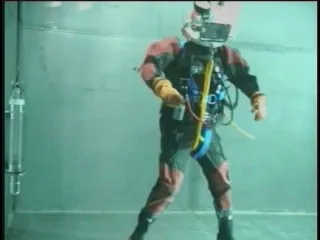
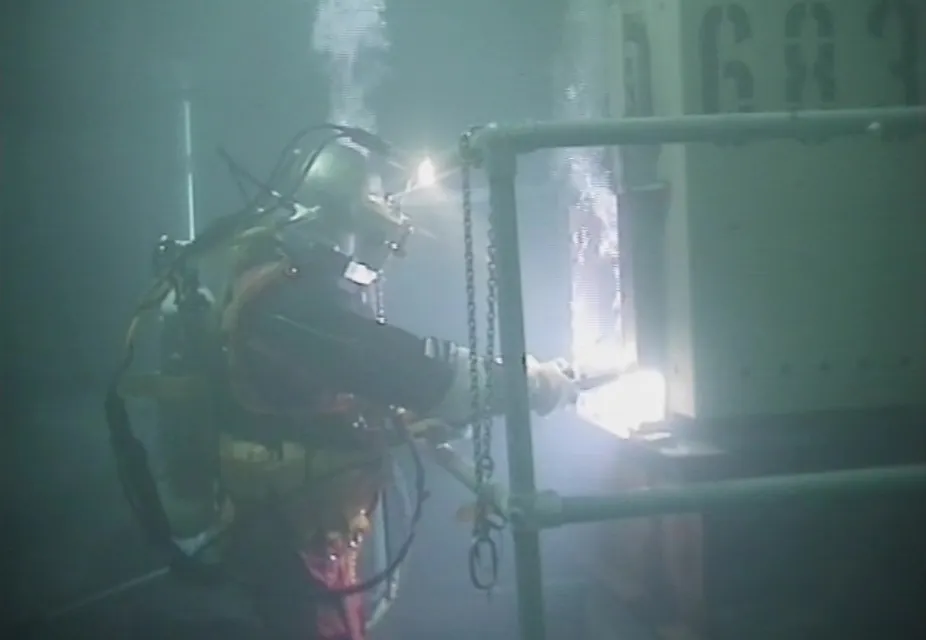
For the casual observer, the danger of nuclear waste can appear ambiguous. In October 2025, for example, a worker at the Palisades Nuclear Generating Station in Michigan accidentally fell into a water-filled reactor cavity while attempting to retrieve a dropped flashlight. Wearing protective equipment and a life vest, he swallowed some of the water but survived the incident with only minor injuries. After medical checks for radiation exposure, he reportedly returned to work the same day.
Yet the worker who fell into the pool at Palisades was completely safe because the radioactivity was greatly decreased near the surface. In fact, trained divers are sometimes, but rarely, purposely lowered into the pools to perform maintenance.
Cases like this sometimes feed the perception that the risks of nuclear waste are exaggerated. Nuclear advocates frequently note that the total volume of waste produced in the United States is relatively small. A common comparison is that all the country’s spent fuel could fit on a single football field stacked about seven feet high.
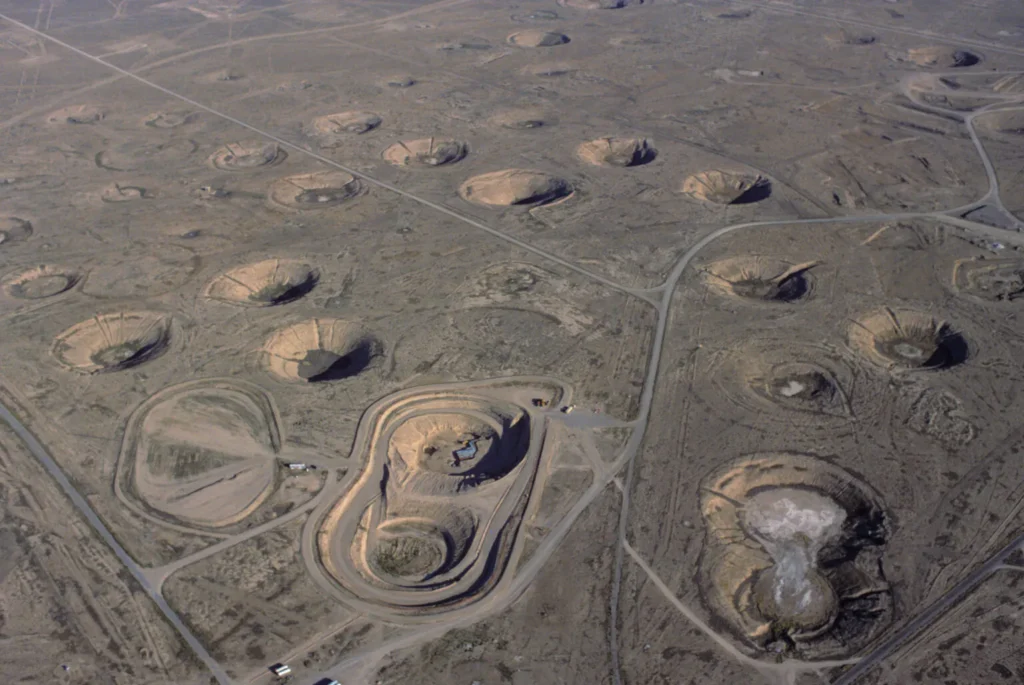
They also point to nuclear accidents to argue that radiation risks are often overstated. No one died from radiation exposure at Three Mile Island, the death toll directly attributable to radiation at Chernobyl remains measured in the dozens, and the long-term health consequences of Fukushima remain debated. Claims by so-called Downwinders, people exposed to fallout from Cold War weapons tests in Nevada, are still contested by some scientists.
But the core danger lies in high-level waste, which contains the overwhelming majority of radioactivity produced by nuclear power. Spent nuclear fuel accounts for roughly 94 percent of the total radioactivity generated by the nuclear industry, despite making up only about 0.2 percent of the total waste volume. If released or improperly contained, this material can contaminate soil and groundwater for millennia, exposing living organisms to intense ionizing radiation capable of causing severe illness, genetic damage, and long-term ecological harm.
The water of nuclear cooling pools, if removed from the system without the intention of being purified, would usually be classified as low-level nuclear waste. Had the worker who accidentally fell into the pool sunk down to within a few inches of where the spent fuel rods actually were sitting, he would have been dead within hours. In other words, the most dangerous material is also the smallest fraction.
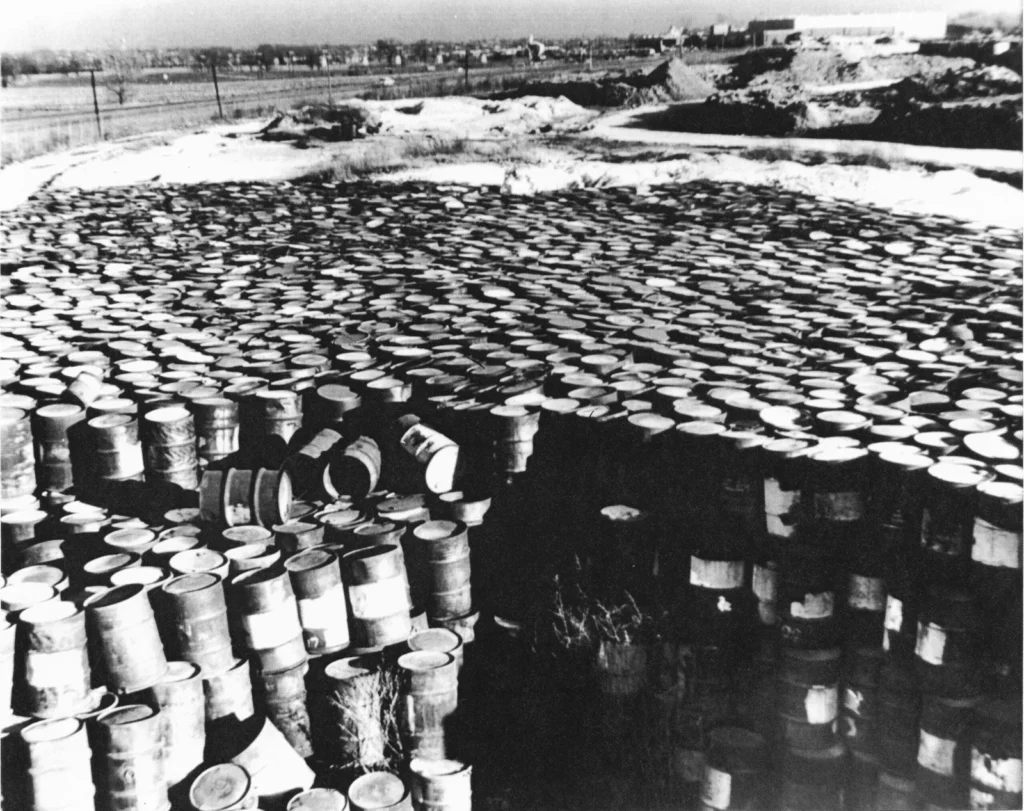
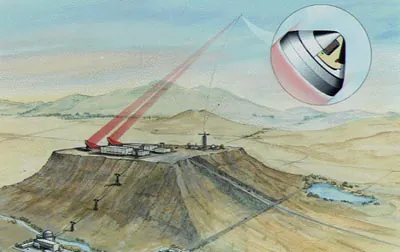
That concentration is both a blessing and a curse. Because it occupies so little space, it can theoretically be isolated and contained with relative efficiency. Yet if it escapes containment, through groundwater contamination, structural failure, or human interference, the consequences could be severe, spreading radioactive material into ecosystems and communities. If an individual were to have direct contact with high-level nuclear waste, such as freshly removed spent nuclear fuel, it would expose a person to extremely intense gamma and neutron radiation capable of causing severe radiation burns and acute radiation syndrome within minutes, with doses high enough to be fatal after only a brief exposure at close range. At very close range, less than a minute can be enough to deliver a lethal dose.
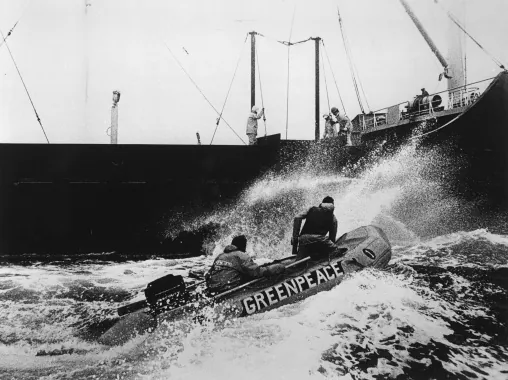
Over the decades, proposals for dealing with it have ranged from the ambitious to the absurd. Some engineers suggested launching nuclear waste into deep space. Others proposed lowering it into ocean trenches or dropping it into fractures deep within the Earth’s crust. In the 1970s and 1980s, nuclear agencies in France and elsewhere seriously considered both space launches and deep-sea disposal. In fact, several European countries had already been disposing of radioactive waste at sea for decades, dumping thousands of barrels into designated sites in the North Atlantic, a practice that drew direct protests from activists who sailed to the dumping grounds to disrupt the operations.
One of the most visible campaigns was led by the environmental group Greenpeace, whose activists confronted dumping ships in the early 1980s at sites used by members of the Organisation for Economic Co-operation and Development. Countries including France, United Kingdom, and Belgium participated in these operations before international opposition eventually led to a global ban on ocean dumping of radioactive waste in the 1990s.
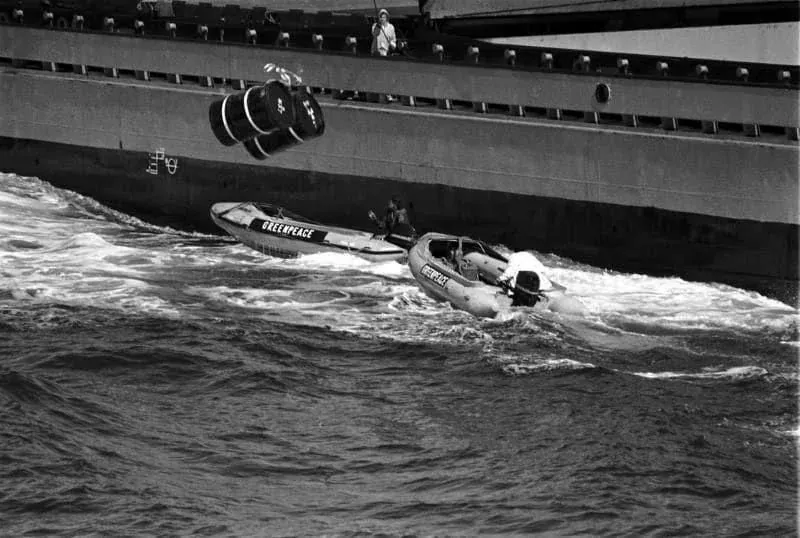
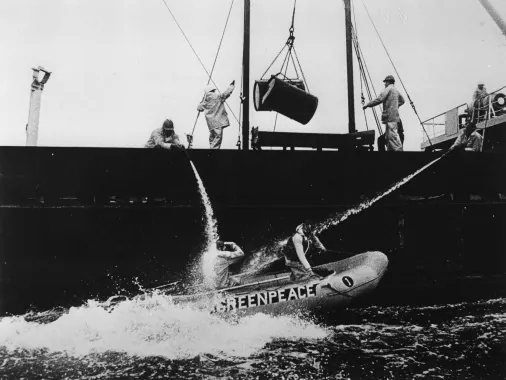
Each idea eventually collapsed under its own risks. A rocket explosion in the atmosphere could scatter radioactive material across the planet. Dumping it in the ocean raised fears of contamination spreading through marine ecosystems. The most widely accepted solution today is far less dramatic: bury the waste deep underground, in stable geological formations where it cannot easily reach the surface or groundwater.
One of the places where the consequences of the nuclear age are most visible lies in the wilderness of Hanford Nuclear Reservation in Washington. During the Cold War, the sprawling complex along the Columbia River produced the vast majority of the plutonium used in the United States’ nuclear weapons program. When the weapons race slowed and the reactors were shut down, what remained was not a clean slate but a monumental cleanup problem. Today Hanford hosts the largest environmental remediation project in the United States.
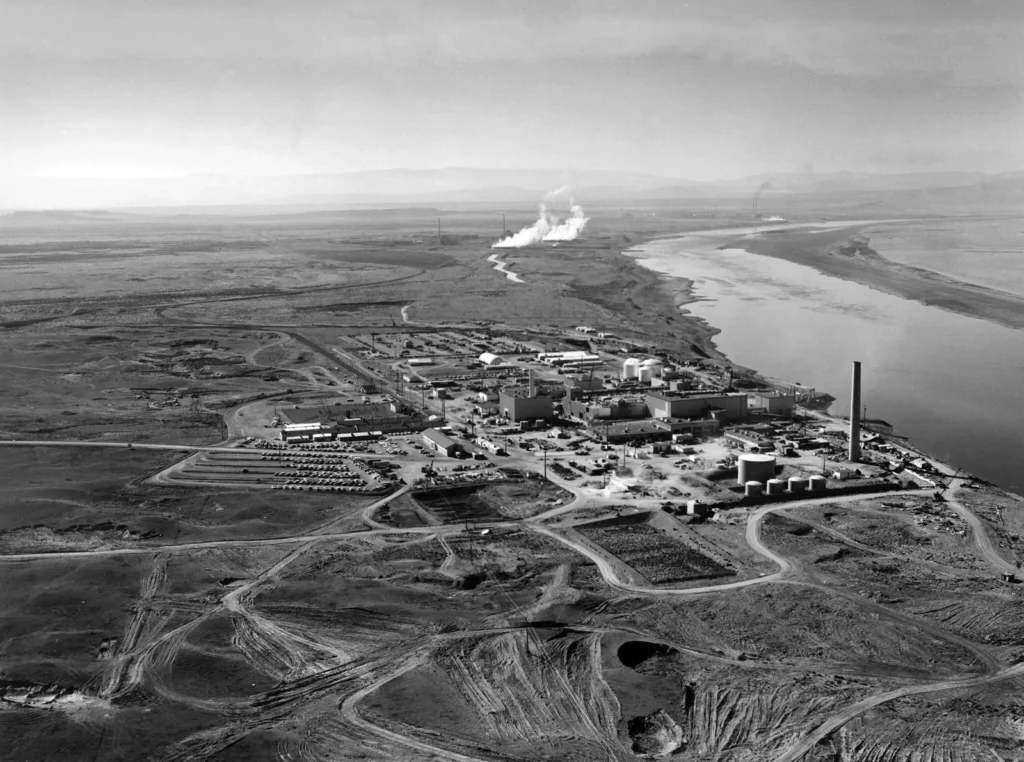
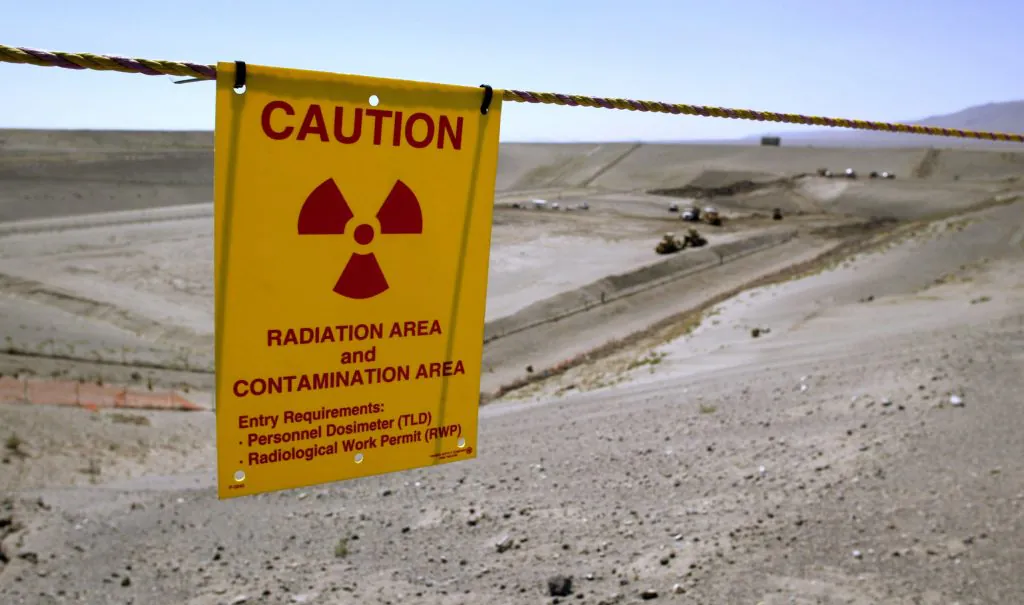
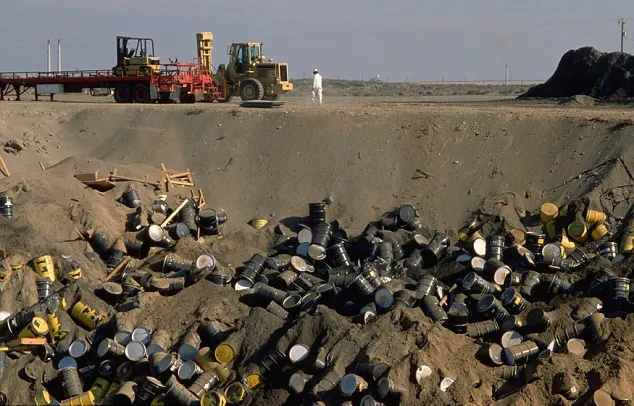
Beneath the ground are 177 massive steel tanks containing roughly 56 million gallons of radioactive waste, a volatile mixture ranging from watery sludge to thick chemical soup. Many of these tanks date back to the early years of the nuclear program and were never designed for storage on the timescale now required. Over the decades, several have leaked, allowing radioactive material to seep into surrounding soil and groundwater.
The long-term plan was supposed to solve this problem through a process called vitrification. At Hanford, engineers began constructing a vast plant where radioactive waste would be blended with molten glass and poured into large steel cylinders. Once cooled, the hardened glass would lock radioactive particles into an impermeable solid, essentially creating durable nuclear “coffins.” These sealed containers were originally intended to be transported to a permanent underground repository at another site.
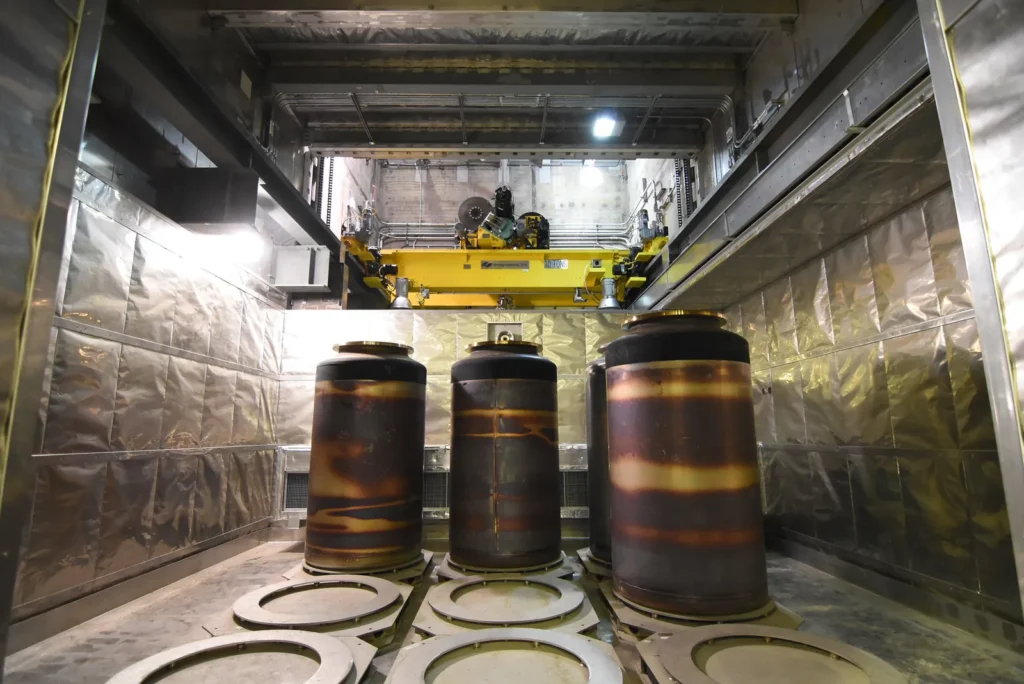
But that plan has stalled. The vitrification plant, once expected to begin operating in 2011, remains incomplete after years of technical complications, ballooning costs, and political battles. Even if the waste at Hanford is eventually stabilized, the United States still faces the same unresolved problem: there is no permanent repository ready to receive it.
Finding a suitable location for deep geological storage is extraordinarily difficult. The International Atomic Energy Agency outlines strict conditions for such facilities. The surrounding geology must remain stable for hundreds of thousands or even millions of years, and groundwater movement must be minimal and demonstrably unchanged for tens of thousands of years. These requirements immediately rule out large parts of the planet. For example, a seismically active country like Japan is unlikely to ever host an ideal geological repository. As a result, Japan, like many nations, relies on interim storage, holding high-level waste in temporary facilities while hoping that a viable long-term solution will eventually emerge.
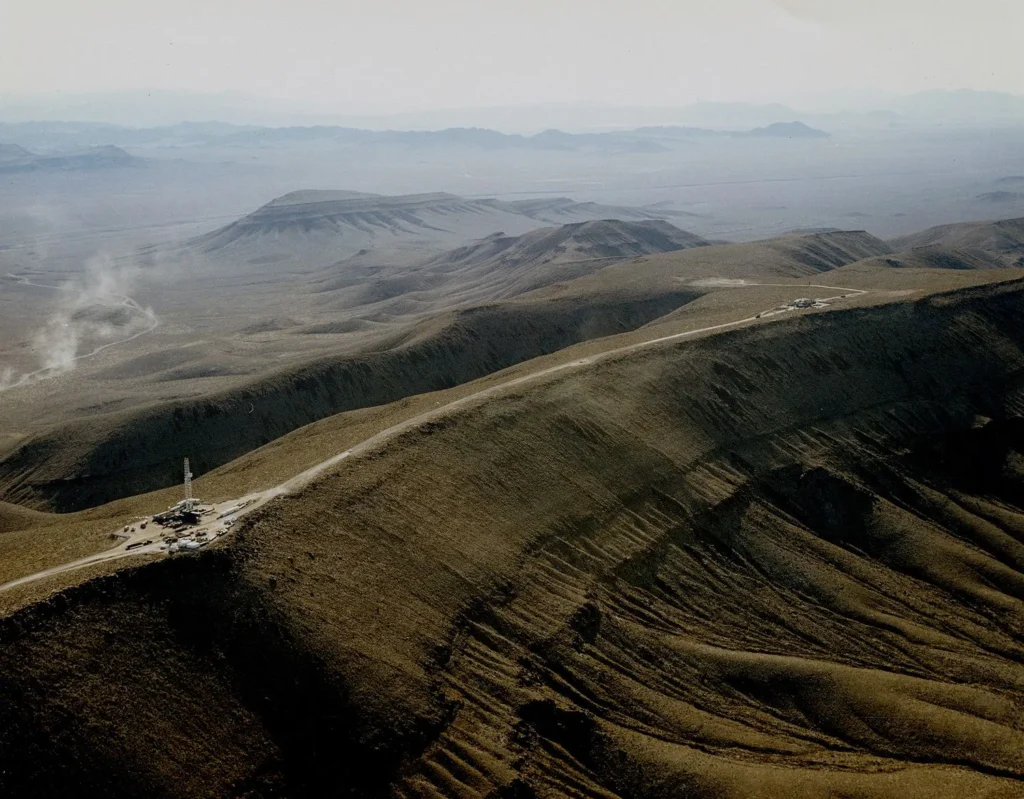
In 1987, Congress passed legislation requiring the United States Department of Energy to take possession of spent fuel from the country’s nuclear reactors by February 1998. Yucca Mountain, a barren volcanic ridge rising from the Nevada desert about 90 miles northwest of Las Vegas, was ultimately selected as the United States’ first permanent repository for high-level nuclear waste, and a location not far from former nuclear weapons test sites.
The decision immediately triggered a decades-long conflict between federal agencies, Nevada residents, environmental groups, the nuclear industry, and politicians. Critics argued the location was unsuitable, pointing to nearby fault lines and the possibility that groundwater moving through fractured rock could eventually carry radioactive contamination into surrounding soil or drinking water supplies.
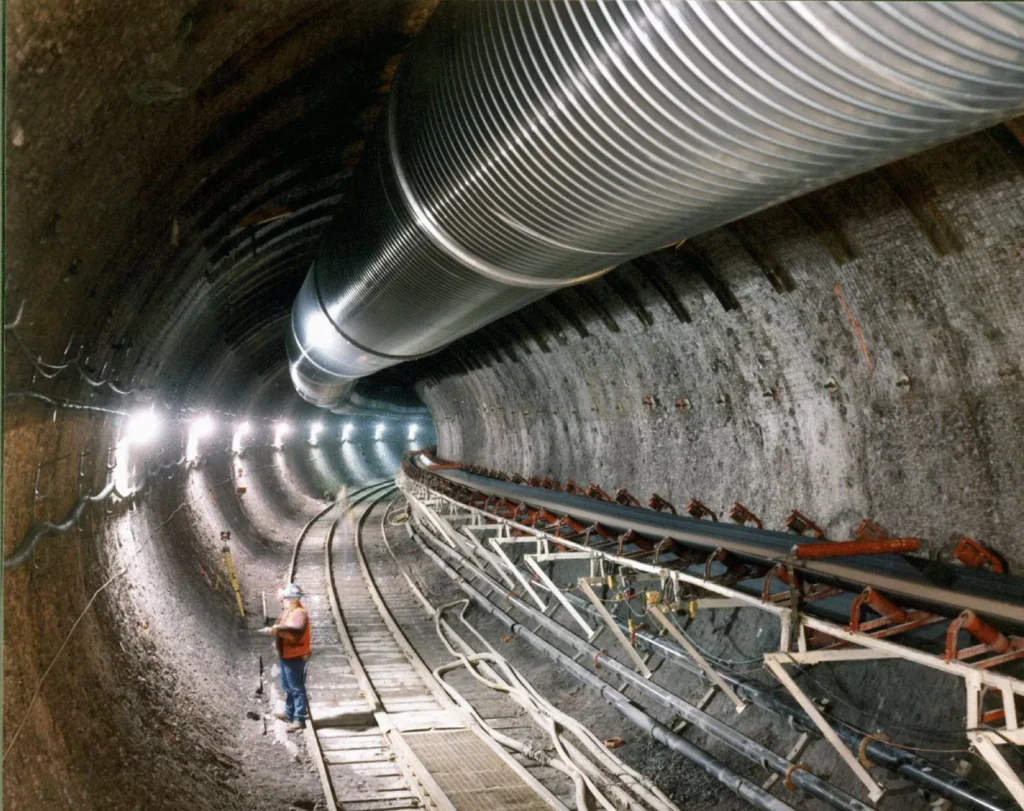
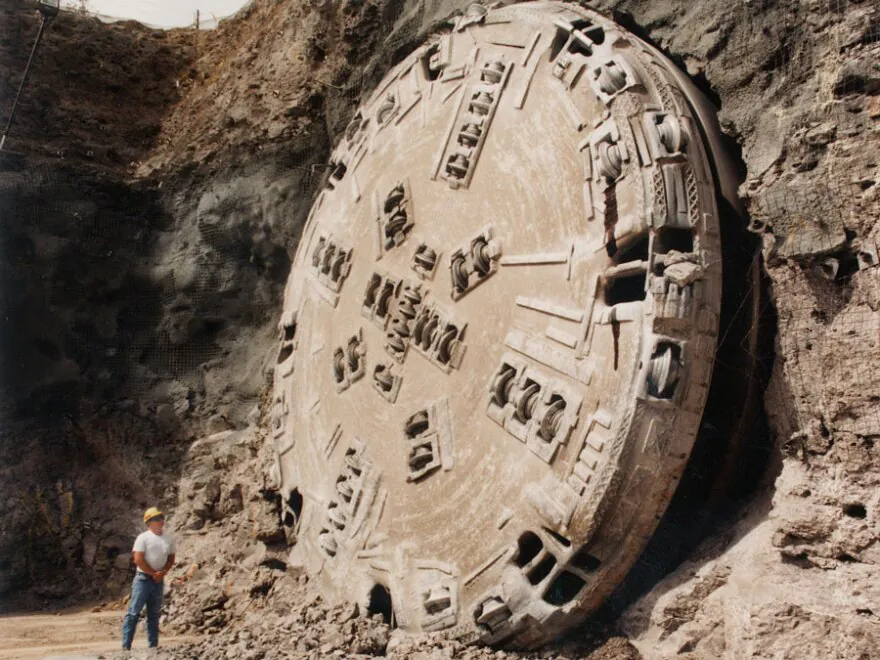
Despite the controversy, work proceeded. By 1994 engineers had driven a five-mile exploratory tunnel deep into the mountain. Around the same time the National Research Council issued technical standards for the site, including a remarkable requirement: because geological events such as glaciation were unlikely but possible, the repository would need to demonstrate stability for 10,000 years. Engineers were effectively being asked to design a structure that could remain intact for twice the span of recorded human history, longer than the Great Pyramid of Giza has existed.
Meanwhile, storage problems continued to grow. Most nuclear plants were never designed to hold decades of waste, and their spent-fuel pools must retain empty capacity in case of emergencies such as a reactor meltdown. Without a permanent repository, utilities increasingly rely on dry cask storage. In this system, used fuel rods are sealed in steel containers filled with helium or another inert gas, then encased in massive concrete cylinders weighing more than 100 tons. Each cask costs roughly $1 million, still emits about one millirem of radiation per hour, and warms the surrounding concrete casing to roughly 90°F (32°C).
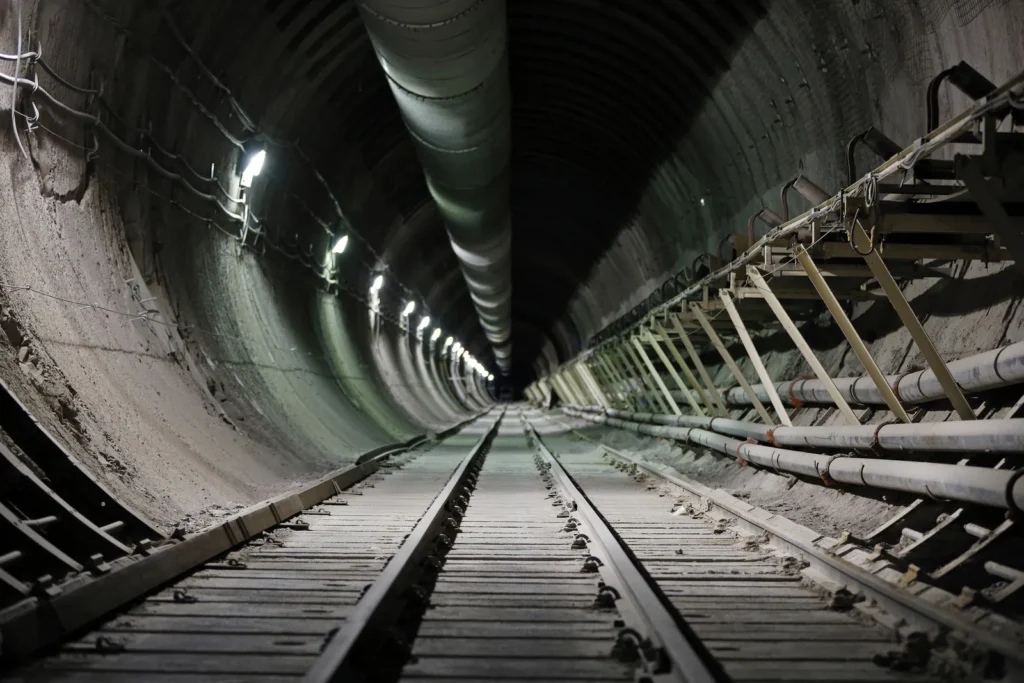
Geology also complicated the Yucca plan. Compared with ancient salt formations, such as those found in New Mexico, the volcanic cones at Yucca appeared less stable on million-year timescales. Early designs envisioned burying waste more than 2,000 feet underground, beneath the water table. But studies in the 1980s revealed unexpectedly high groundwater levels there, and the water was hot. Engineers responded by relocating the proposed storage level to a drier zone about 1,000 feet below the surface, above the water table. Even then, researchers detected traces of rainwater moving through the rock. Over thousands of years such moisture could corrode metal containers, allowing radioactive material to seep through fractures and eventually reach groundwater.
That water ultimately feeds communities including Beatty, Indian Springs, and Pahrump. Although relatively few people live within a 20-mile radius of Yucca itself, contamination could theoretically travel far beyond the immediate desert basin. The United States Nuclear Regulatory Commission eventually received a formal license application to construct the repository, but delays mounted. Because the federal government had failed to begin accepting nuclear waste as promised, it was forced to pay utilities about $1 billion per year in compensation for storing the material themselves.
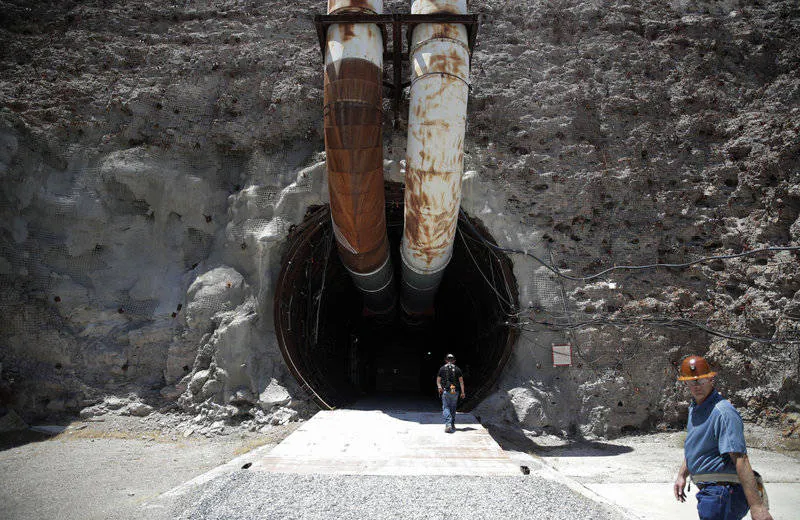
The federal government would ultimately spend roughly $11 billion excavating tunnels and infrastructure, essentially building a reverse mine intended to entomb nuclear waste deep within the mountain. Estimates in 2008 suggested completing the facility could cost $90 billion, with an earliest opening date sometime after 2017.
In 2010, the Obama administration effectively abandoned the project. By 2014, the government had accumulated roughly $40+ billion in the nuclear waste disposal fund through a mandatory surcharge on electricity bills, indirectly paid by electricity customers at about a tenth of a cent per each kilowatt hour of nuclear-generated electricity. That year, it was ordered by a court to stop collecting the fee, since the repository it was meant to finance did not exist, ruling that the government could not continue charging ratepayers for a facility it had no intention of completing. Five miles of tunnels had been carved into Yucca Mountain, far short of the planned forty, and no waste had ever been placed there.
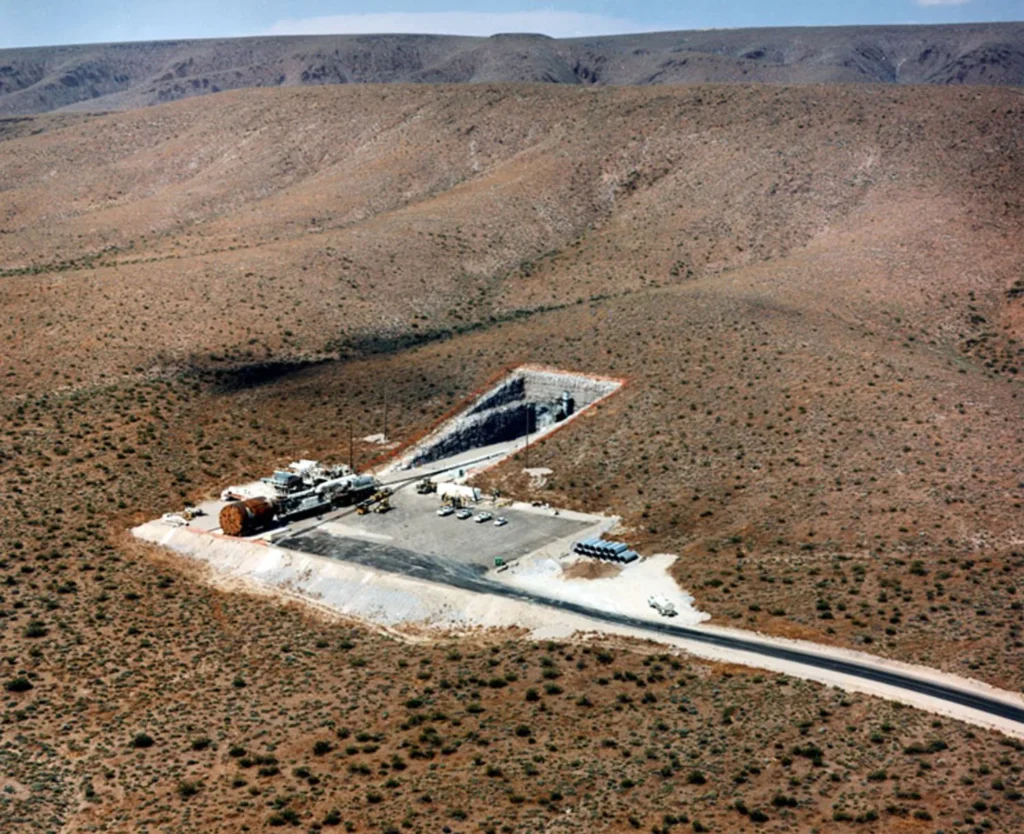
During the Donald Trump administration, the federal government briefly attempted to revive the project. Budget proposals in 2017 and 2018 requested funding to restart the licensing process and move the stalled repository forward, but Congress repeatedly declined to approve the money. The effort soon lost momentum, and by 2020 Trump himself signaled opposition to using Yucca Mountain, suggesting the federal government should instead pursue alternative waste-storage solutions elsewhere. Since then, the project has remained effectively frozen.
The current and previous administrations did not include funding for Yucca Mountain and have instead promoted a “consent-based siting” approach, asking states and communities to volunteer to host future nuclear-waste facilities rather than imposing a single national repository. Despite years of planning and billions of dollars spent, the facility has never opened in any capacity. Meanwhile nuclear power still generates roughly 20 percent of U.S. electricity, and the waste it produces, now about 70,000 tons, continues to accumulate at more than 75 temporary storage sites, including locations near major metropolitan areas such as New York City, New Orleans, and Chicago.
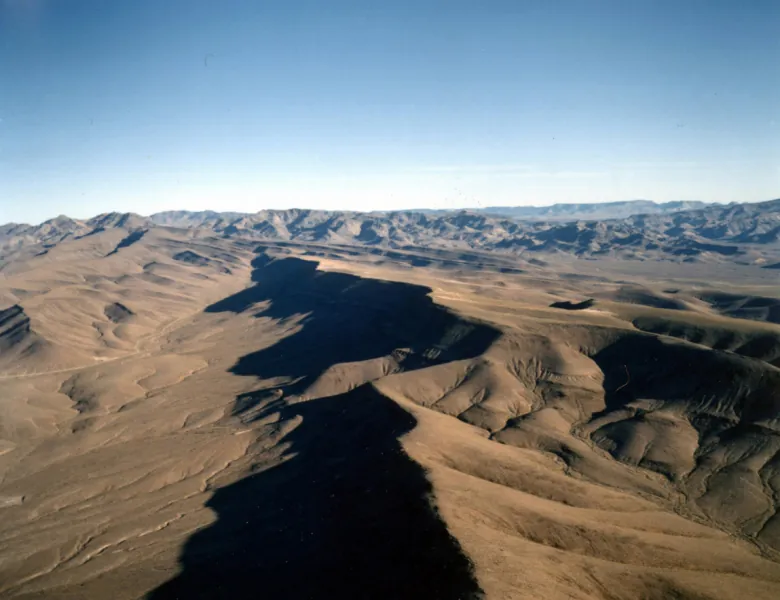
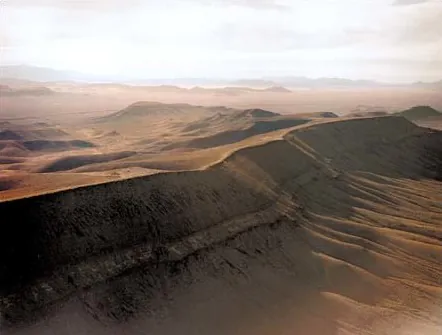
Yet Yucca Mountain represented more than a stalled infrastructure project. It was an attempt to engineer something unprecedented: a human-made structure intended to remain secure for ten millennia or more, longer than any civilization has yet endured, longer than any building humanity has ever maintained. Seen from that timescale, the project begins to resemble something closer to a mythic monument than a conventional industrial facility. If it had been completed, future civilizations might one day encounter Yucca Mountain the way we encounter Stonehenge or the Parthenon: a vast structure whose original purpose must be reconstructed from fragments of history and imagination.
However, should the day finally come that the site is opened as a repository for the nation’s nuclear waste, that only solves part of the problem. Even if the waste can be safely sealed beneath hundreds of metres of rock, one question remains stubbornly unanswered: how do you warn the future about what lies below? Because the period during which nuclear waste remains dangerous, tens or even hundreds of thousands of years, is longer than the entire known history of modern humans.
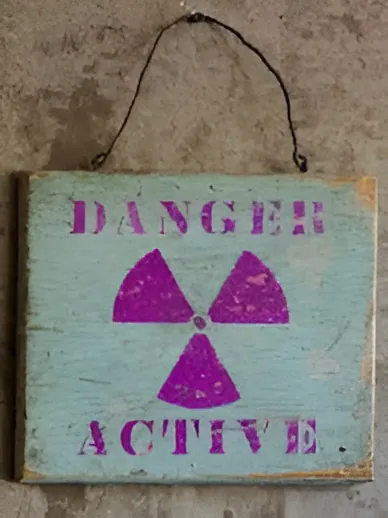
In the early twentieth century, even something as basic as a warning sign for dangerous materials lacked a universal language. Laboratories and institutions used their own symbols, often with little regard for consistency. The U.S. Army marked biological hazards with an inverted blue triangle. The Navy preferred a pink rectangle. The Universal Postal Convention used a staff-and-snake emblem on a violet background. None of these systems aligned with one another, and the confusion they created carried real consequences: workers and handlers could easily misinterpret the warnings and expose themselves to dangerous pathogens. A standard symbol was needed, but it did not arrive until the early atomic age.
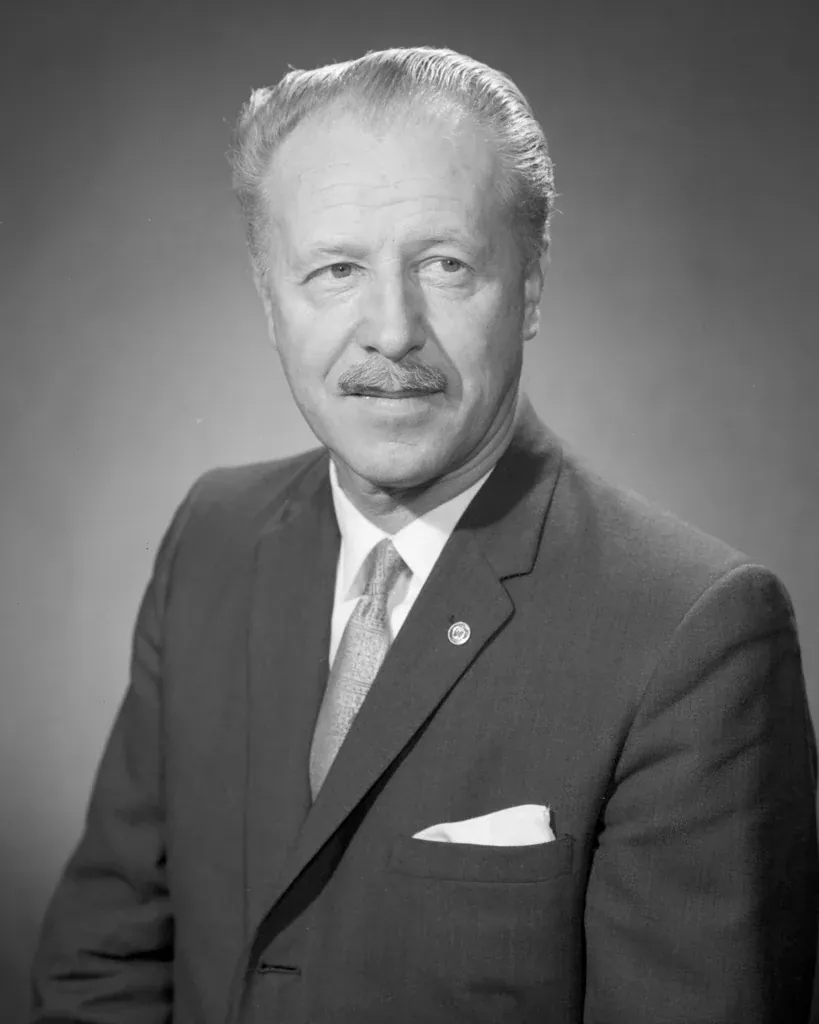
In 1946, the same year geneticist Hermann Muller received the Nobel Prize for demonstrating that X‑rays can cause genetic mutations, Cyrill Vladimir Orly, an engineer from a small group of researchers at the University of California, Berkeley designed what would become the international radiation warning symbol: the trefoil. Its three black blades radiating from a central point have been interpreted in various ways, perhaps inspired by propeller warning signs, perhaps by the three primary types of radiation emitted during nuclear decay, or even by echoes of the Japanese rising sun motif from the Second World War.
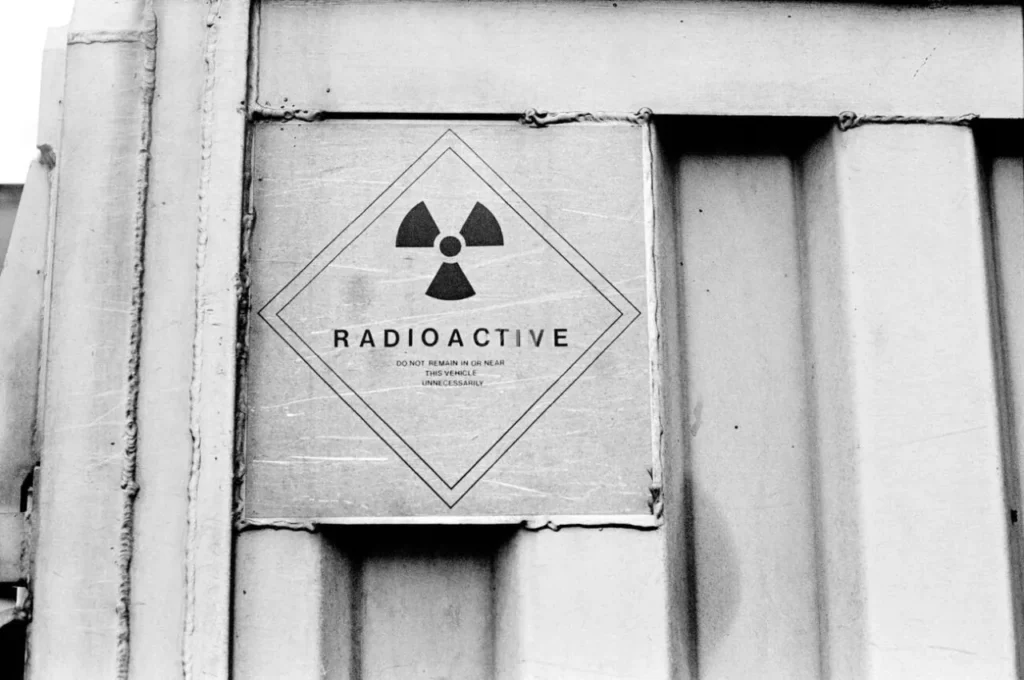
Whatever its origin, the trefoil quickly became the emblem of the nuclear age. The design: simple, bold, and originally pink against a purple background (in contrast to the more famous black on yellow, which was only officially adopted in 2011), it was intended to signal invisible danger in places ranging from research laboratories to remote testing grounds. But nuclear technology was new, and the symbol had no cultural history behind it. Even today, many people encountering it for the first time have no immediate sense that it signals danger. To someone unfamiliar with its meaning, the shape can look less like a warning than a simple road sign. Designers had already confronted a similar challenge in another field: biological hazards.
In 1966, engineers and designers at Dow Chemical set out to create a universal icon for biohazardous materials. Their approach was unusually systematic. The symbol needed to be striking, unique, quickly recognizable, easy to stencil, symmetrical, and culturally neutral. Anything too familiar, a medical snake-and-staff, a simple geometric shape, risked ambiguity. Environmental health engineer Charles Baldwin and his team therefore pursued an unusual idea: a symbol that was memorable but initially meaningless, allowing its significance to be taught rather than inferred.
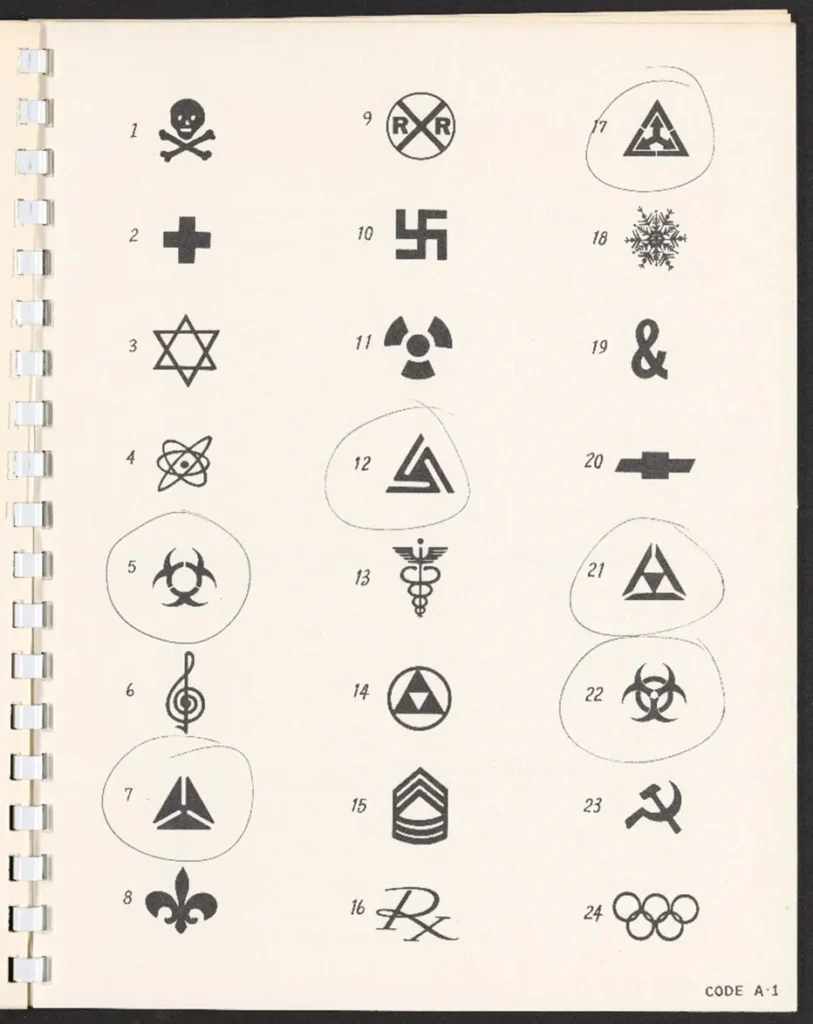
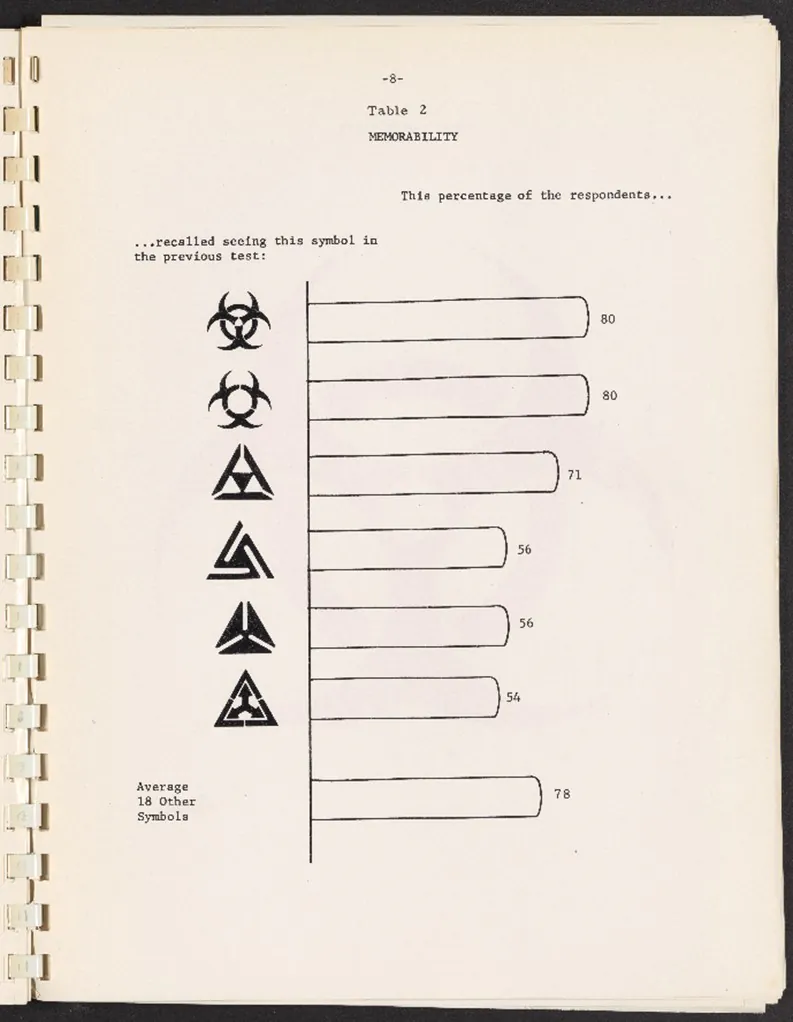
To test their designs, the researchers showed 60 symbols to 300 participants across 25 American cities. Six were newly designed biohazard icons; the other eighteen were well-known logos and symbols, including the Shell Oil emblem, the Texaco star, the Red Cross, and even a swastika. Participants first guessed the meaning of each symbol, giving researchers a “meaningfulness score.” A week later they were shown the symbols again, along with several new ones, and asked which they remembered.
One design stood out. It scored highest in memorability and lowest in inherent meaning, exactly what Baldwin’s team wanted. It was unforgettable, but also a blank canvas onto which a new meaning could be deliberately assigned. The now-familiar biohazard symbol soon became a national and eventually international standard.
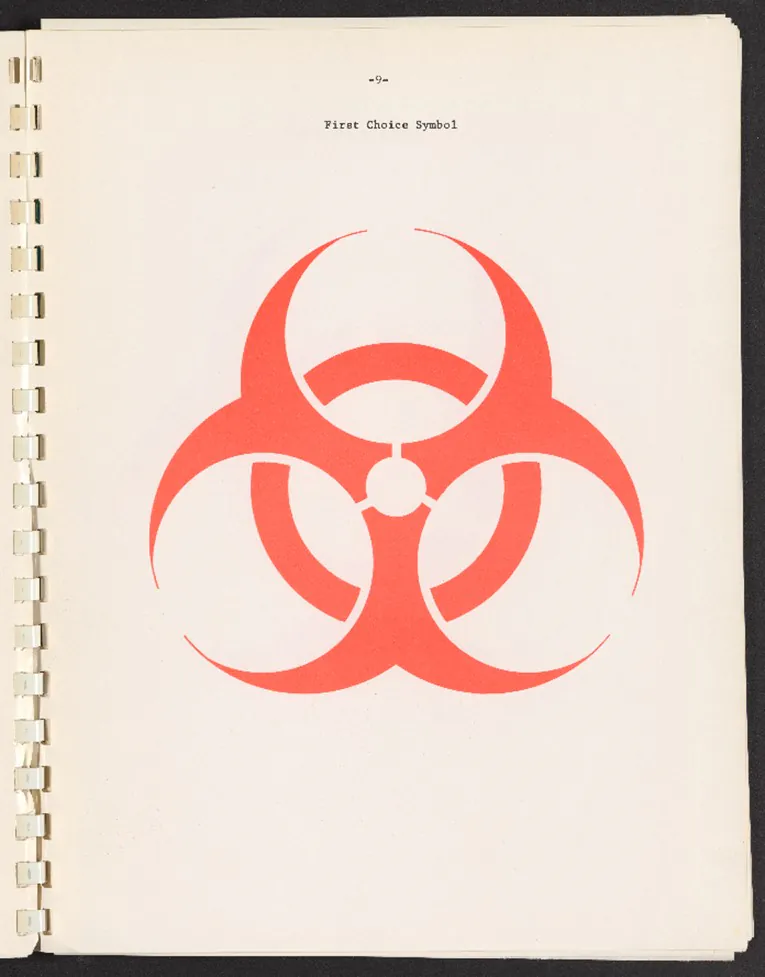
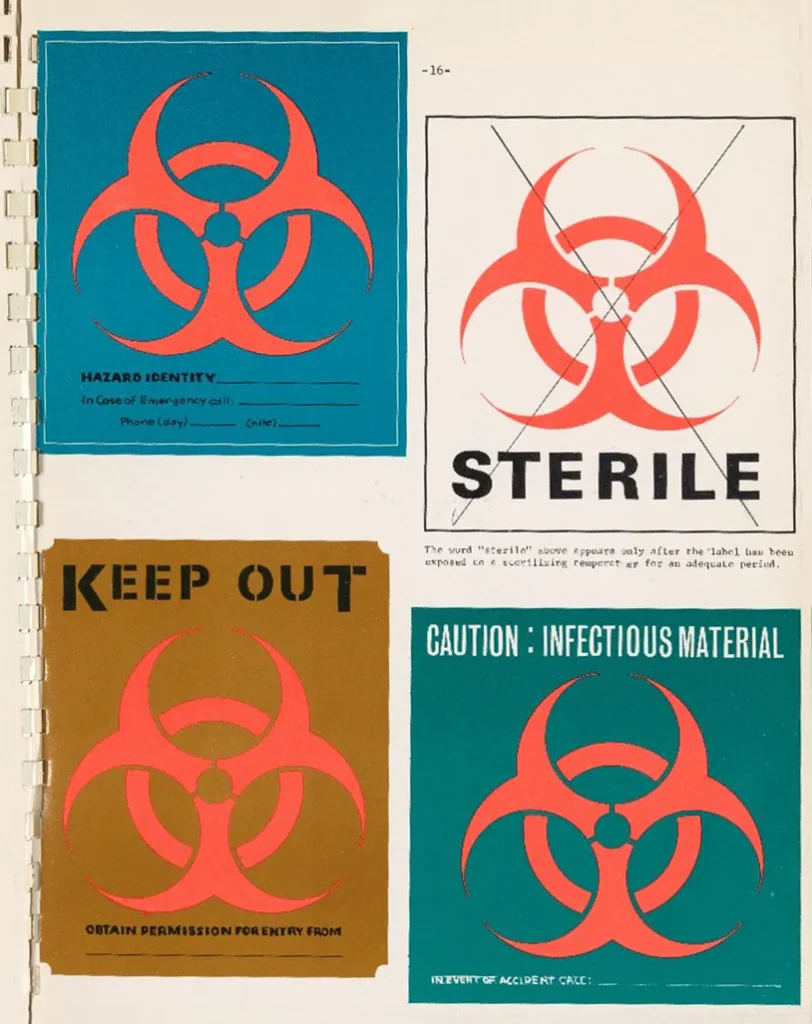
Its effectiveness is easy to underestimate. The design is geometrically simple, you can reproduce it with nothing more than a straightedge and a compass, yet it conveys a powerful sense of menace despite referencing no obvious object in the real world. For decades it has served as a shorthand for invisible biological danger. But even these carefully engineered symbols raise uncomfortable doubts. If recognition can be taught within a generation, it can also be forgotten within one.
The limitations of the biohazard design and radiation trefoil have been acknowledged for decades. As early as 1975, the International Organization for Standardization (ISO) noted that the latter symbol often requires additional text or context to communicate its meaning clearly. In practice, recognition remains uneven. A 2007 study by the International Atomic Energy Agency, conducted across eleven countries, found that the trefoil had little intuitive meaning for many people. In Kenya, India, and Brazil, only six percent of participants correctly identified it as a radiation warning.
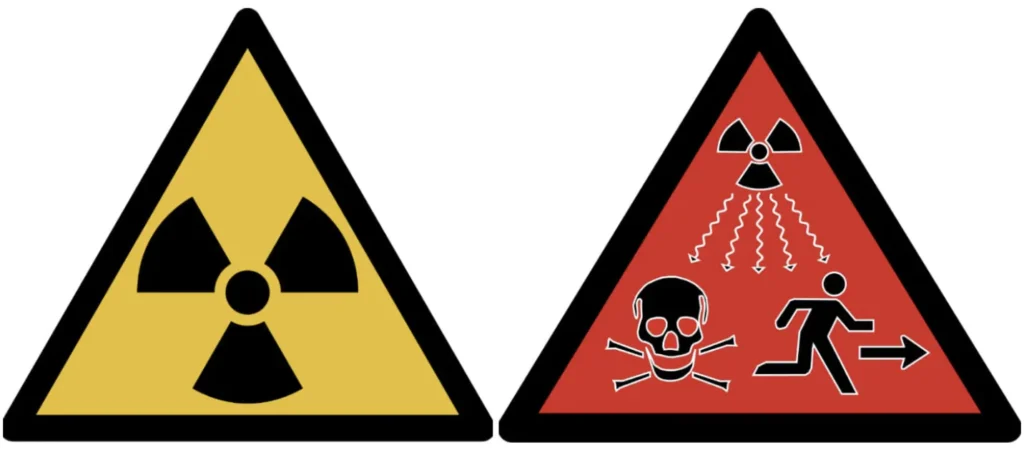
The response was to introduce yet another new supplementary sign: a red warning symbol combining the trefoil with radiating waves, a skull and crossbones, and a running figure fleeing the scene. The design was meant to convey a universal message: danger, radiation, get away, even to those who had never encountered the trefoil before. Importantly, this new symbol was not meant to replace the original. Instead it serves a different purpose: a stark “Do Not Touch” warning for sealed radiation sources that should never be handled directly. The traditional trefoil still appears in many other contexts, such as transport containers and regulated facilities.
Over time, warning symbols rarely remain fixed in meaning. They drift, are repurposed, and eventually become ordinary. The biohazard symbol is no exception. What was once designed as a stark visual marker of danger now appears casually across consumer culture, printed on T‑shirts, stickers, skate decks, and bike helmets. Its graphic power remains intact, but its meaning has been diluted through repetition and commercialization.


Charles Baldwin, the Dow Chemical engineer, was steadfast in his belief in the symbol’s importance, once rejecting the gift of a tie with the biohazard symbol emblazoned on it in recognition for this efforts, believing it would trivialize the symbol to be used even in this way. To him, it was a warning, not an ornament. Unfortunately, others are not so principled and that distinction has not survived particularly well. Like many powerful images, the symbol has been absorbed into broader visual culture, where it functions as much as aesthetic shorthand as it does as a marker of genuine hazard.
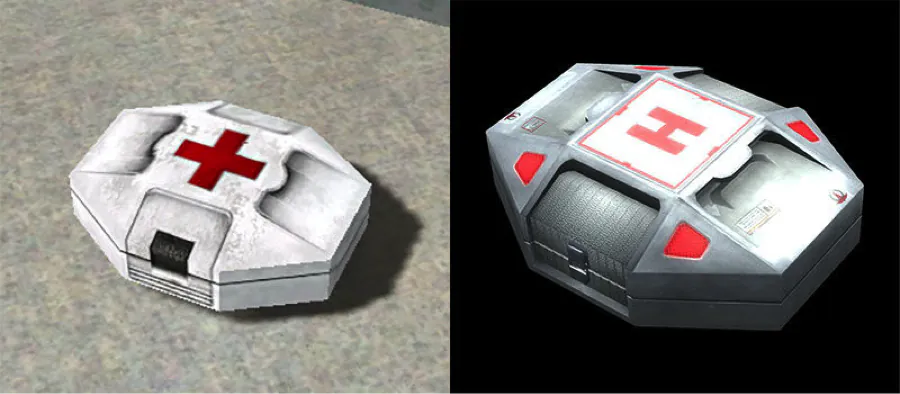
A comparable issue has arisen with the Red Cross emblem. The organization has notably vocal in its requests for video game developers and others in the industry to stop using the red cross symbol to represent health packs or medical recovery in games. Because the emblem is legally protected under the Geneva Conventions as a marker of neutral medical aid in conflict zones, the Red Cross argues that casual or fictional uses dilute its meaning and risk weakening its recognition as a real-world sign of humanitarian protection. As a result, several game studios have replaced the icon with alternative symbols, such as green crosses or other medical imagery, to avoid misusing a sign intended to signal genuine medical assistance.
The cross itself was chosen in 1863 to represent the organization and its foundation as a Christian aid organization, a decade later, a crescent was adopted by its counterparts in the Ottoman Empire on the grounds that the cross was seen as a symbol with purely religious connotations, thus offensive to Muslim soldiers and not considered a neutral symbol. In 1992, research went into developing a symbol that had no national, ethnic, or religious connotation, resulting in a diamond shape known as the red crystal, officially adopted in 2007 but so far without widespread use.
This tendency for symbols to drift away from their original purpose presents a serious problem for nuclear waste. Any warning marker placed above a repository would need to remain undiluted and unqestionably understandable for at least 10,000 years, a span of time far beyond the lifespan of modern languages or political systems. In such a future, it’s likely that all of our present-day alphabets, icons, and cultural references will be as opaque as ancient hieroglyphs or cuneiform tablets are to most people today.
So what about languages and the written word? Linguists estimate that roughly half of the world’s approximately 6,800 living languages could disappear by the end of the century. Words and scripts change, fracture, and vanish with the cultures that sustain them. Radioactive waste, by contrast, does not fade so quickly. Many of its most dangerous isotopes will remain hazardous for millennia.
Meaning in language is not inherent; it emerges through shared usage within a community. Words function because groups of people collectively agree on what they signify, and that agreement shifts constantly over time. Designers confronted with the problem of nuclear warnings therefore faced an unusual challenge: they had to communicate danger without relying on any shared linguistic or cultural context. The task was to create a visual form whose meaning could be grasped intuitively, something that might signal threat even to people separated from us by thousands of years and an entirely different civilization.
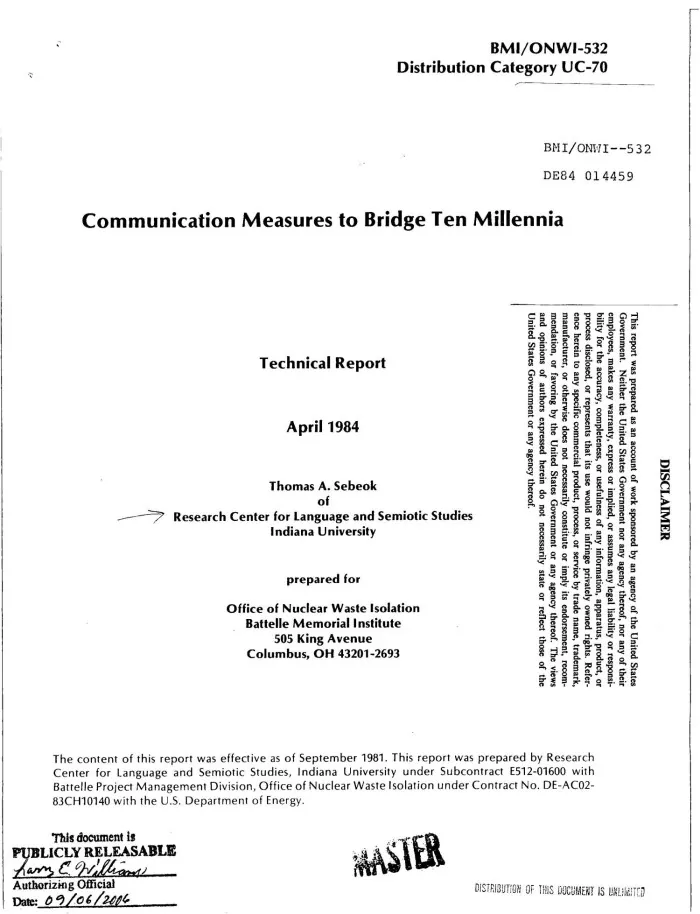
Long before Yucca Mountain was formally selected as a repository, U.S. officials were already confronting these questions. In 1980, the U.S. Department of Energy created the Human Interference Task Force (HITF) to study the issue of marking a completed nuclear waste repository after it had been sealed, employing the help of experts from the Bechtel Corporation. The group was asked to answer an unusual question: how do you warn people not to dig into something that will remain dangerous for at least 10,000 years? Any warning system would need to last physically for millennia and remain understandable to cultures whose languages, symbols, and technologies might bear little resemblance to those of the present.
The problem quickly expanded beyond engineering. Alongside scientists and technical experts, the task force included an archaeologist, a linguist, and a specialist in nonverbal communication. Their work approached the challenge as a problem of semiotics, the science of signs and symbols, and eventually helped establish a niche field sometimes referred to as nuclear semiotics: the study of how to communicate radioactive danger across deep time.
One of the group’s first conclusions was that no single warning would be enough. Their report proposed a system built on redundancy, combining multiple types of messages. Future markers should include iconic imagery, symbolic warnings, and indexical signs that point directly to the presence of danger. Because languages inevitably change, the task force also recommended a relay system in which messages would periodically be translated and re-encoded over centuries so their meaning would not be lost.
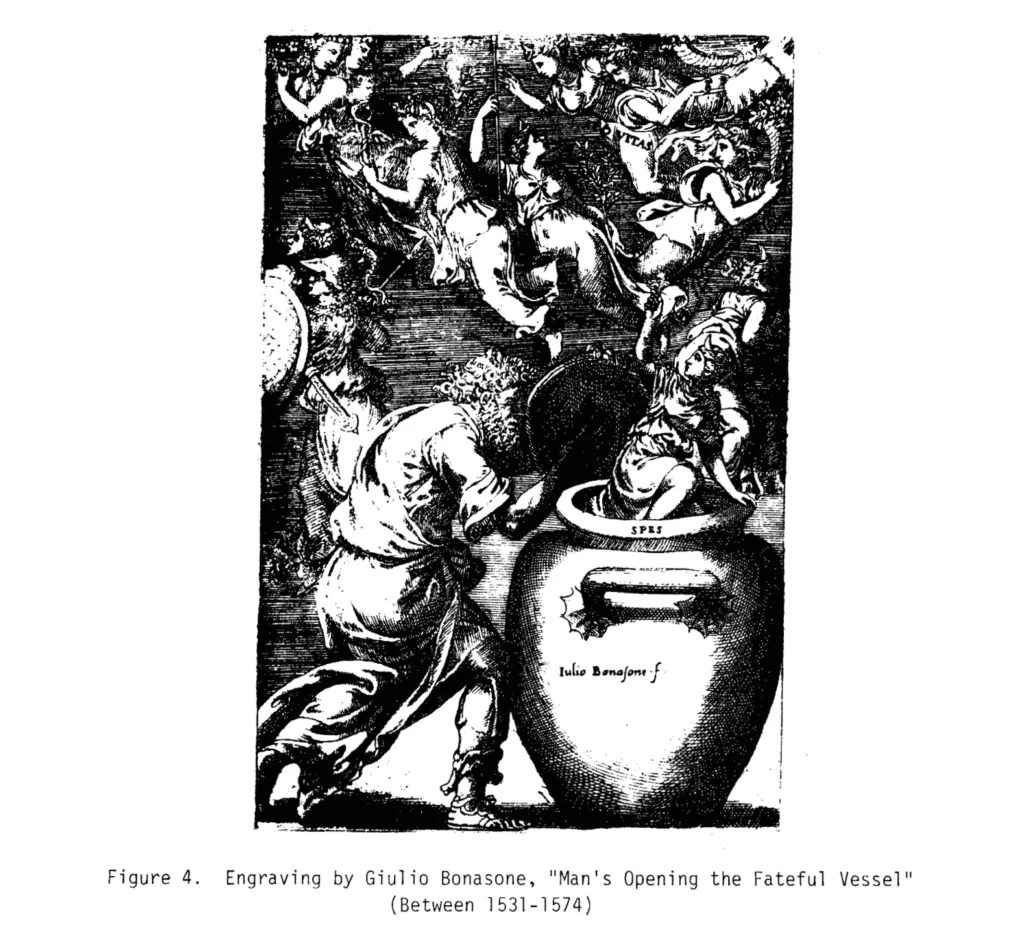
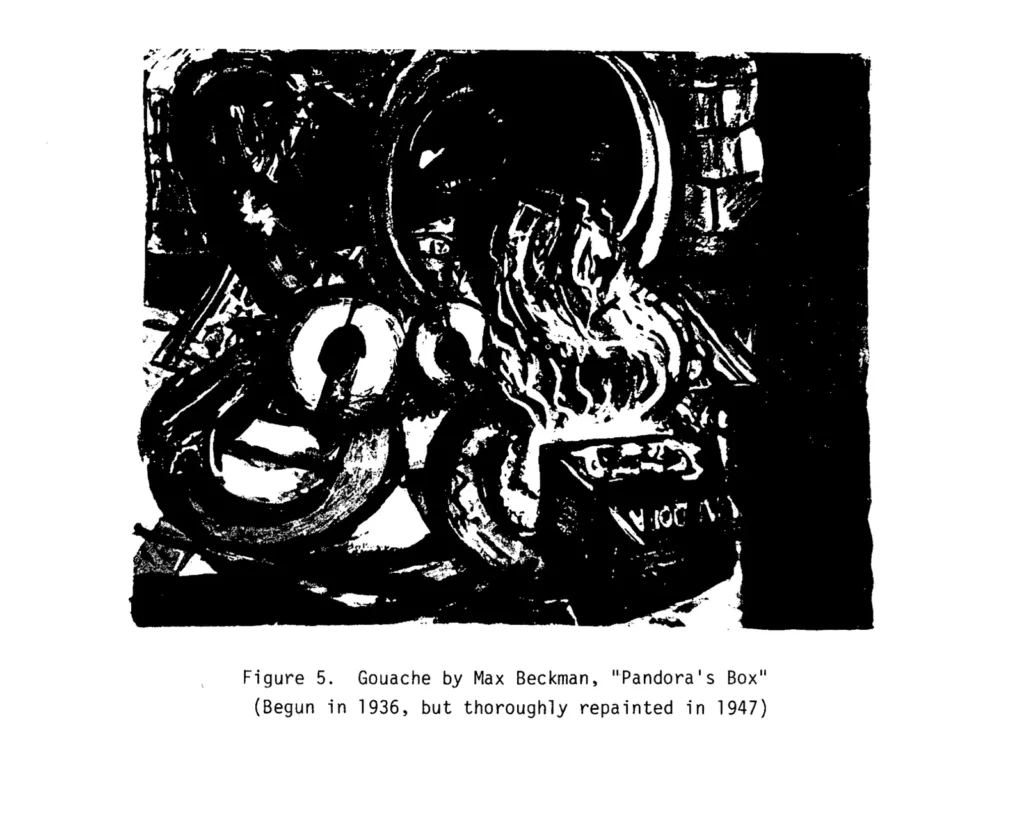
The physical marker itself posed another paradox. It had to survive for ten millennia, yet it also had to discourage curiosity rather than attract it. Human history is filled with monuments like Stonehenge, the pyramids, ancient temples, all sites that endured for thousands of years precisely because they inspired fascination. A nuclear repository marker would need to do the opposite: repel attention rather than invite exploration. As the team noted, referencing the myth of pandora’s box, accessing the material could prove disastrous for future generations.
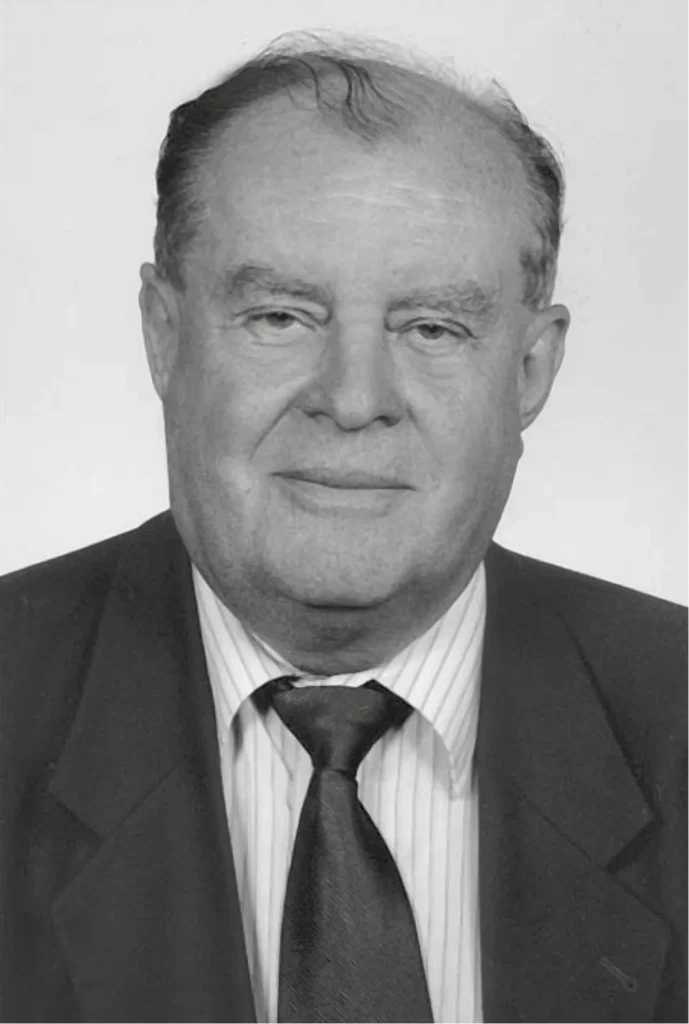
Working with the task force in 1981, Hungarian folklorist Vilmos Voigt from Eötvös-Loránd University in Budapest proposed installing warning signs written in the world’s major languages arranged in concentric rings around the repository. Roughly every few generations, the messages could be rewritten in contemporary languages so they would remain understandable, while the older inscriptions would remain in place as a historical chain of interpretation.
Several members of the task force suggested further long-term information strategies alongside the physical warnings. One proposal involved distributing detailed records about the repository to libraries and archives around the world. By dispersing the information globally, the designers hoped to retain global knowledge of the site’s danger in the face of a catastrophic loss of knowledge similar to the destruction of the Library of Alexandria.
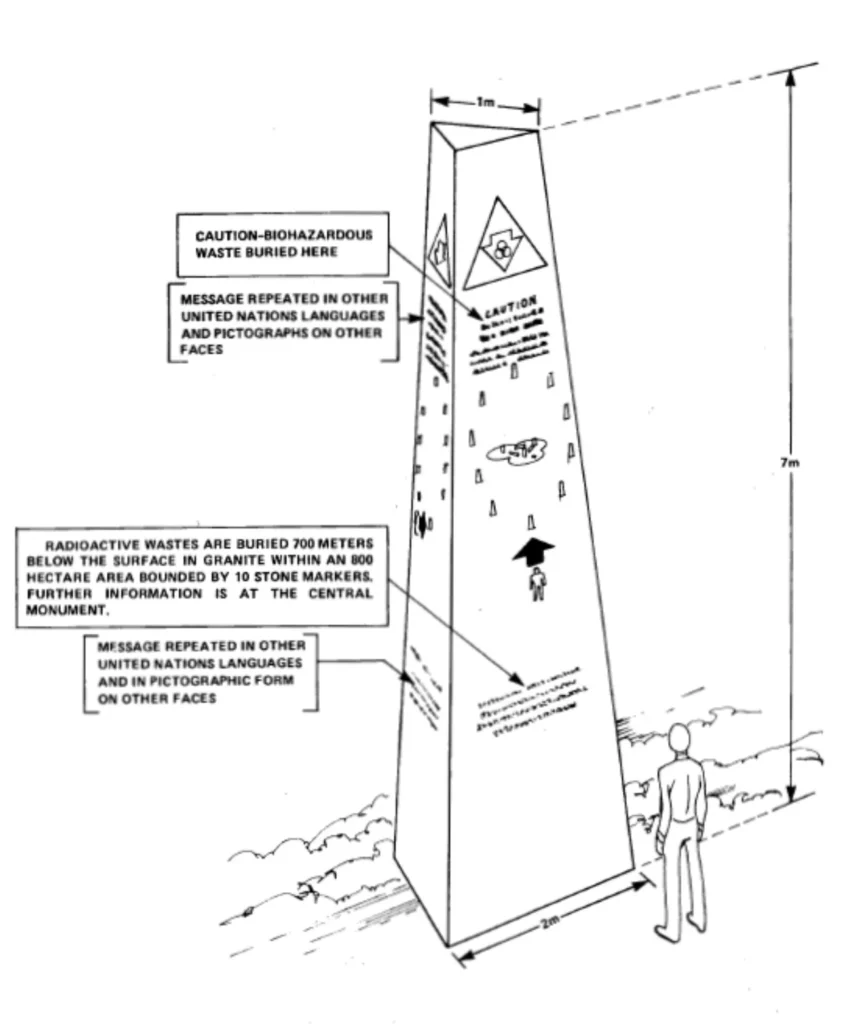
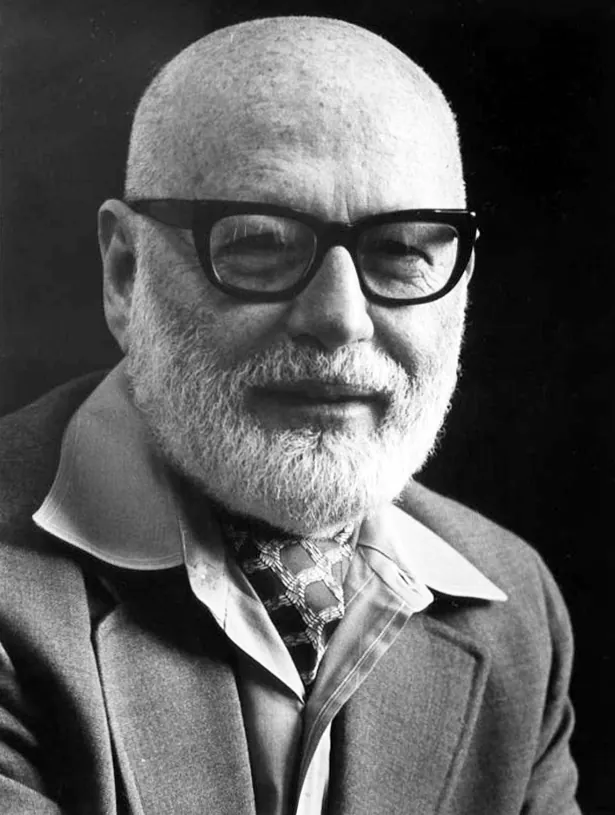
The linguist Thomas Sebeok, another consultant to the project, building on ideas previously suggested by Alvin Weinberg and Arsen Darnay, proposed an unusual institutional solution inspired by the structure and practice of the Catholic Church, an organization that has handed down its message across nearly 2,000 years. In a 1984 report titled Communication Measures to Bridge Ten Millennia, he suggested the creation of a long-lived body of specialists responsible for preserving and transmitting knowledge about nuclear waste repositories across generations as well as cultivating a body of myths and folklore centered on the danger of the site, including annual rituals that highlighted the site and its meaning. Rather than explaining the technical details of radiation, the stories would simply portray the place as a place of extreme danger.
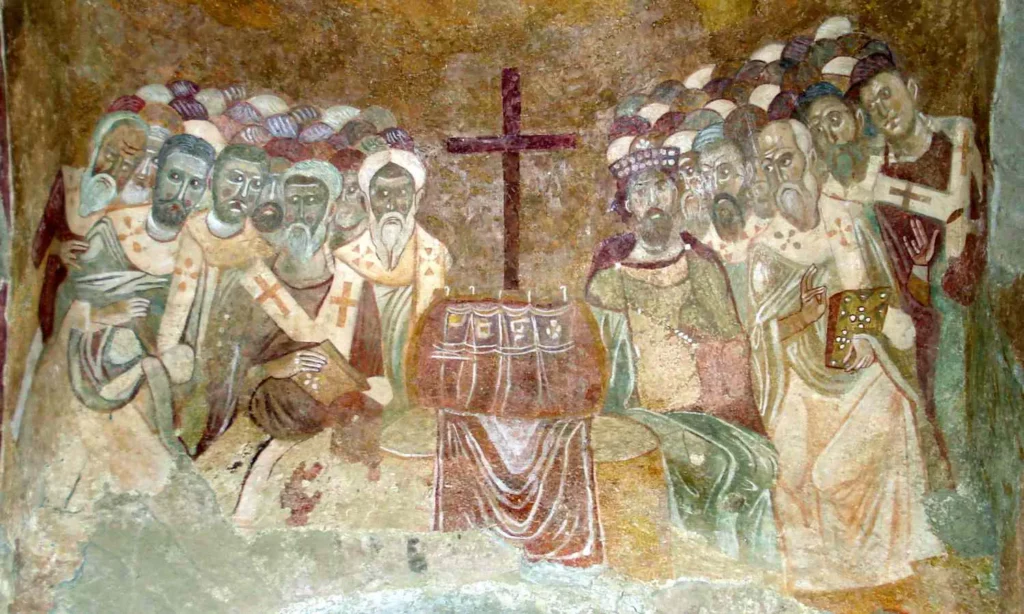

These traditions would not necessarily explain nuclear physics. Instead, they would reinforce a simple message: the locations were dangerous and should not be disturbed. Through recurring ceremonies or legends repeated over generations, the warnings might persist even if written language or scientific understanding were lost. Alongside myths and symbolic warnings, the scientific reality of radioactive waste would also have to be preserved somewhere. Without accurate technical records, future generations might dismiss the warnings as superstition or worse, assume the danger was invented to conceal something valuable beneath the ground.
“The actual ‘truth’ would be entrusted exclusively to—what we might call for dramatic emphasis—an ‘atomic priesthood,’” Sebeok wrote. The group would consist not of clergy but of experts: physicists familiar with radiation, medical specialists in radiation sickness, anthropologists, linguists, psychologists, semioticians, and any other disciplines needed to maintain the chain of knowledge over time.
The proposed institution would function somewhat like a scholarly order. Members would be selected by a governing council and replaced as they retired or died, creating a continuous lineage of custodians responsible for safeguarding the information. Sebeok imagined the group performing two parallel roles. Internally, they would maintain the accurate scientific record of the repositories. Externally, they would cultivate stories, rituals, and cultural traditions warning that certain places were forbidden, in order to keep out those who would not be swayed by scientific fact. In the worst case, the institution would also set the formal consequences for anyone who would persist in attempting to access the site.
Viewed one way, the proposal was not entirely alien to existing systems of knowledge transmission. Scientific fields already operate through mentorship chains in which senior researchers pass expertise to younger scholars. But concentrating such sensitive information within a small, specialized institution also raised obvious risks, as any organization entrusted with exclusive knowledge of nuclear waste sites might acquire political influence simply by controlling that information. The system could create a privileged hierarchy, and outsiders might attempt to seize the knowledge for strategic or economic advantage.

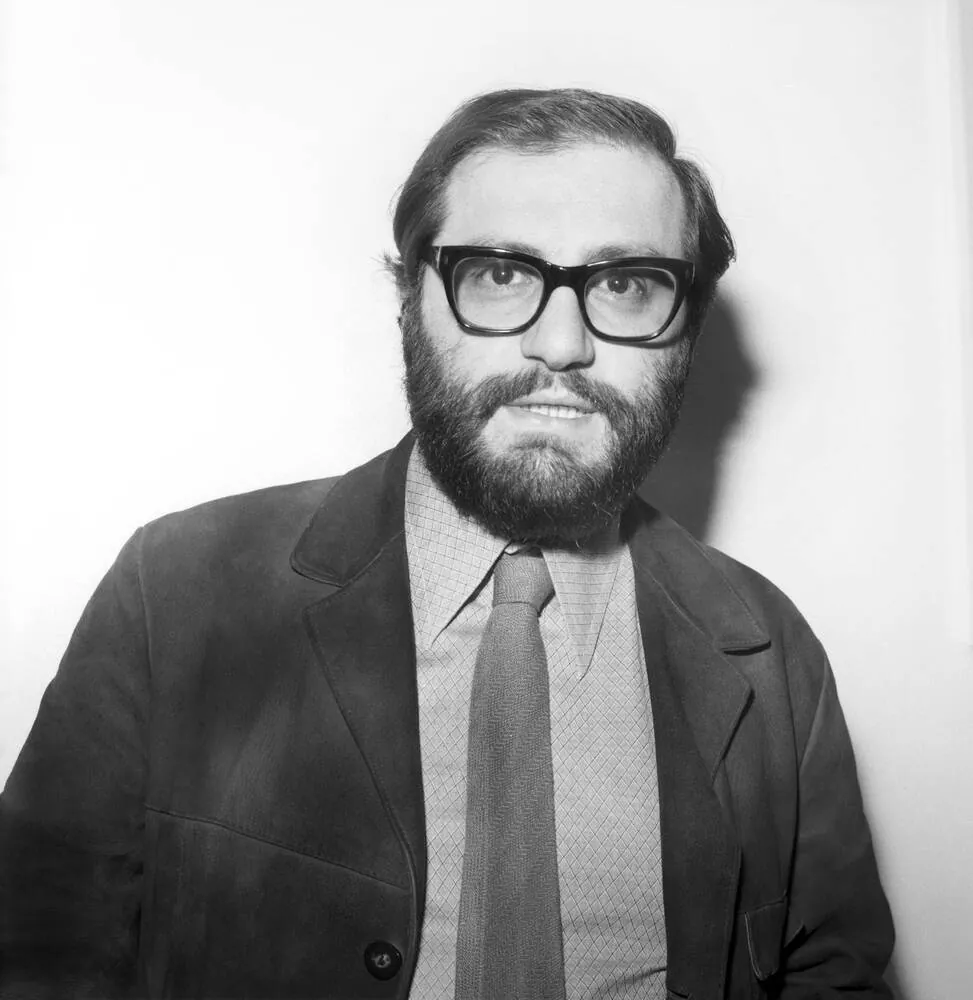
The Italian novelist and semiotician Umberto Eco later discussed Sebeok’s proposal in his 1993 book The Search for the Perfect Language. Eco treated the idea as part of a broader question: whether stories, rituals, and cultural memory might ultimately prove more durable than written warnings or pictographic symbols when trying to communicate with a future thousands of years removed from our own.
In 1984, the German journal Zeitschrift für Semiotik published a series of responses from academics attempting to answer the same strange but serious question. The proposals ranged from pragmatic engineering fixes to ideas that sounded closer to science fiction. One suggestion, from Swiss physicist Emil Kowalski, was straightforward. Nuclear waste repositories could be engineered so that reaching them would require highly advanced drilling or excavation technology. The logic was simple: any civilization capable of penetrating the site would likely also possess the scientific knowledge necessary to detect radiation and understand its risks.

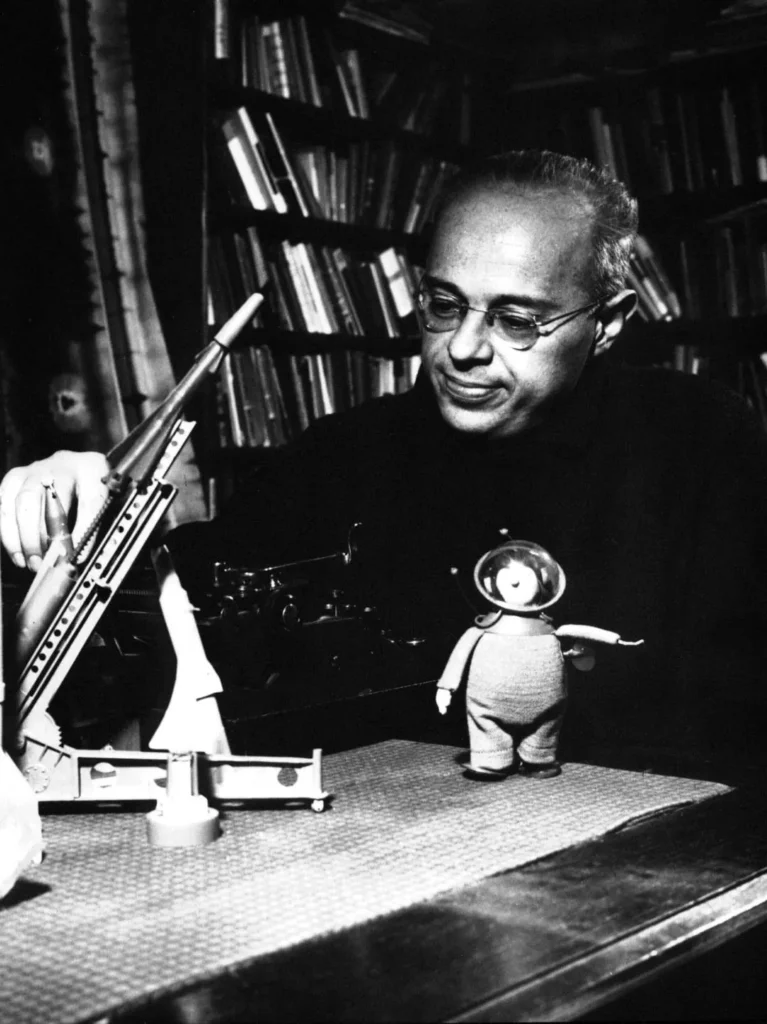
Other proposals were far more imaginative. Polish science-fiction writer Stanisław Lem suggested launching artificial satellites that would orbit Earth for centuries, repeatedly transmitting information about the location and danger of the sites. Another variation imagined something like an “artificial moon” permanently visible in the sky, serving as a long-term archive of warnings.
Lem also proposed a biological solution: encoding information about the repository into the DNA of specially engineered plants. These so-called “atomic flowers” would grow around storage sites, their genetic code containing data about both the location and the dangers buried beneath the ground. In theory, the plants would replicate themselves indefinitely, turning the landscape into a living warning system.
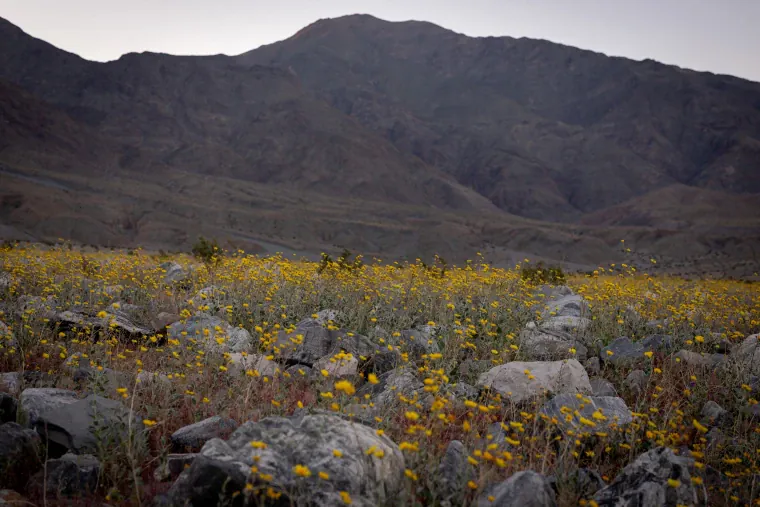
But Lem himself acknowledged the problem. Ten thousand years from now, humans might not recognize such plants as warnings at all. Even if the encoded information survived, future societies might never think to decode the DNA in search of meaning. Like many of the proposals in the semiotics debate, the idea highlighted the central dilemma: the real difficulty is not preserving information, but ensuring that anyone in the distant future would know how or why to read it.
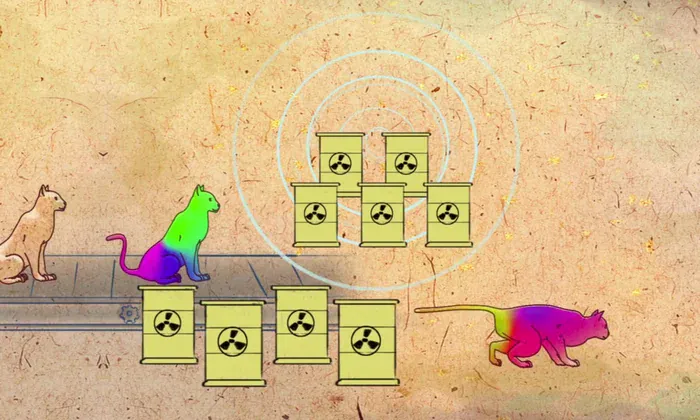
Most famously among the responses, semiotics philosophers Françoise Bastide and Paolo Fabbri proposed one of the strangest solutions to the nuclear semiotics problem in 1984: the creation of a “living radiation detector.” Their idea built on the Human Interference Task Force’s suggestion that oral traditions and folklore might be the most durable way to transmit warnings across deep time. “We wanted to find a medium that would remain important to humans forever,” Fabbri, a professor of semiotics at the University of Urbino, later explained. “Symbols and language will change, but cats have always mattered to us. It’s reasonable to guess they will matter to future humans as well.” The proposal was intended primarily as a semiotic thought experiment rather than a serious engineering project.


Their proposal imagined animals, referred by the philosophers as “ray cats”, genetically engineered to visibly change appearance when exposed to radiation. Bastide and Fabbri never specified exactly how the animals’ appearance would change. Instead, they pointed to biological precedents, including the rare genetic condition xeroderma pigmentosum, which causes severe skin damage and visible markings after exposure to radiation or ultraviolet light. The example illustrated that radiation can produce outward physical signs, suggesting that, in theory, an organism could be engineered to visibly react to dangerous exposure. Additionally, the long and unbroken history of felines as domesticated companions of humans would make them a likely choice for this system.
The real mechanism of warning, however, would not be the animals themselves but the culture built around them. Bastide and Fabbri suggested that societies should develop myths, proverbs, and folklore teaching that when a cat changes color, it signals a terrible danger and people must flee. Over generations, the story would spread independently of any scientific explanation, embedding the warning in cultural memory rather than technical knowledge.
Despite its speculative origins, the idea has continued to circulate. In 2015, technologist Kevin Chen founded the Ray Cat Solution, a small community exploring whether such a biological warning system might one day be possible through genetic engineering and enzyme-based fluorescence. “Looking at it through a scientific lens, a Ray Cat doesn’t look too crazy to me,” Chen has said. “It’s crazy—but maybe no crazier than bringing back the woolly mammoth. The concept is there; the technology might come later.”
The Ray Cat has since taken on a life of its own in popular culture. Artists, musicians, and designers have produced Ray Cat T‑shirts, songs, and music videos, while the idea has been explored in podcasts and documentaries, including the short film The Ray Cat Solution. These cultural artifacts help embed the concept in collective memory, precisely the kind of myth-making Bastide and Fabbri imagined. French director Benjamin Huguet revisited the idea in a short documentary for Aeon, speaking with Fabbri and journalist Matthew Kielty, who helped popularize the story through the 99% Invisible podcast. The resulting wave of curiosity in the form of folk songs, artwork, and internet lore illustrates the strange logic behind the proposal: if the legend spreads widely enough, the warning might survive even if the technology never does.
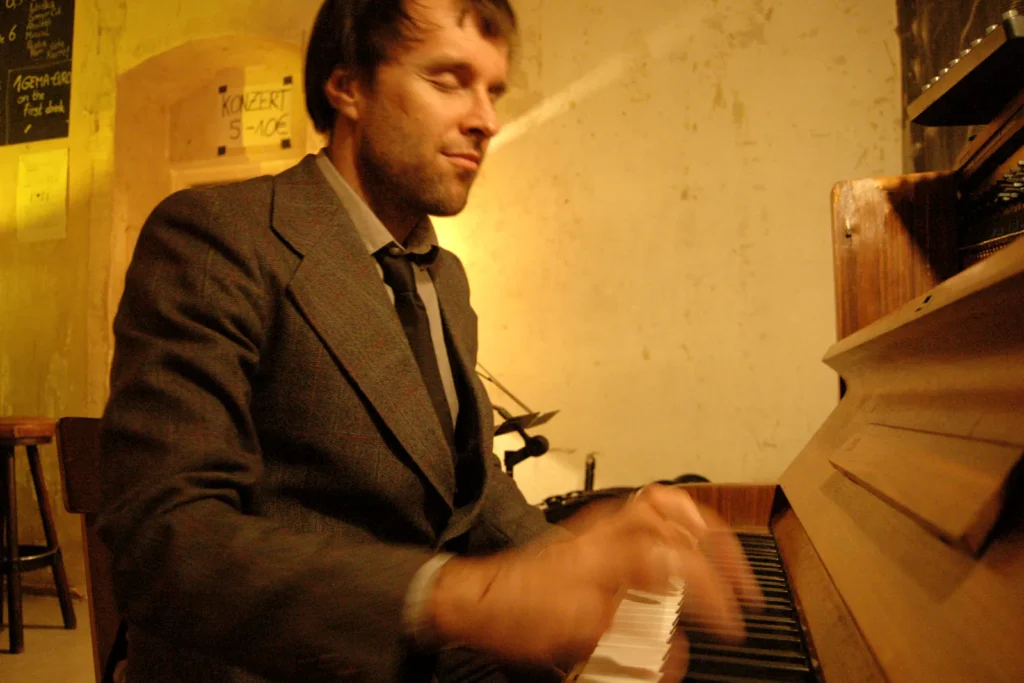
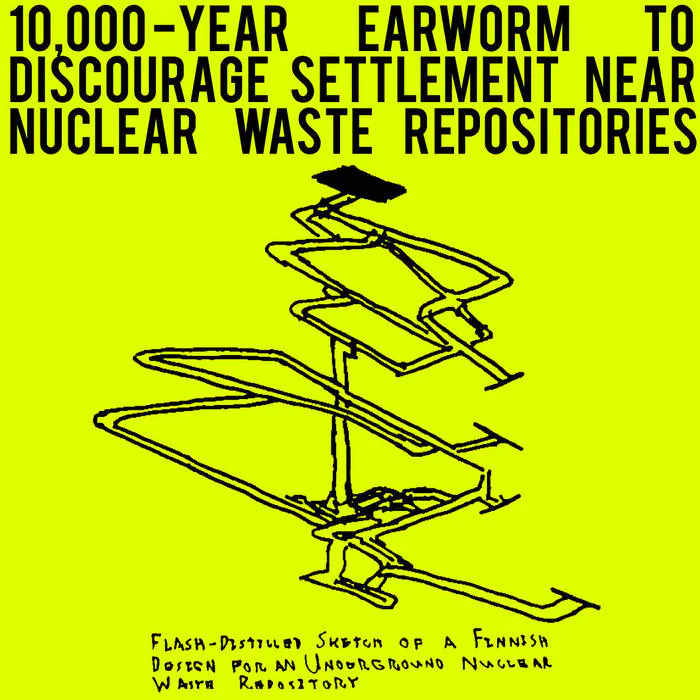
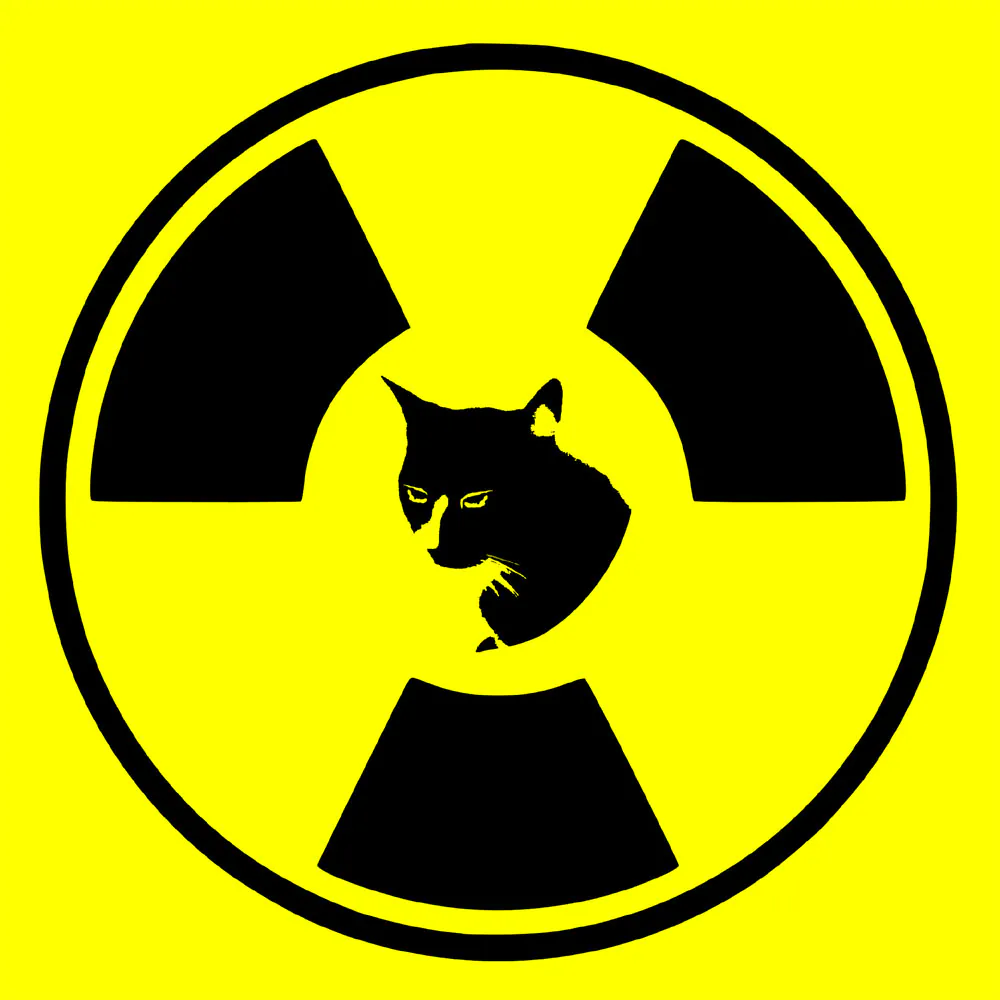
One of the more memorable outcomes came from the podcast 99% Invisible, which commissioned Berlin-based musician Chad Matheny, also known as Emperor X, to compose what a song he titled as “10,000-Year Earworm to Discourage Settlement Near Nuclear Waste Repositories.” The goal was simply to create a song so annoyingly catchy that it might survive thousands of years of cultural transmission:
“Don’t change color, kitty.
Keep your color, kitty.
Stay that midnight black.
The radiation that the change implies
can kill, and that’s a fact.”
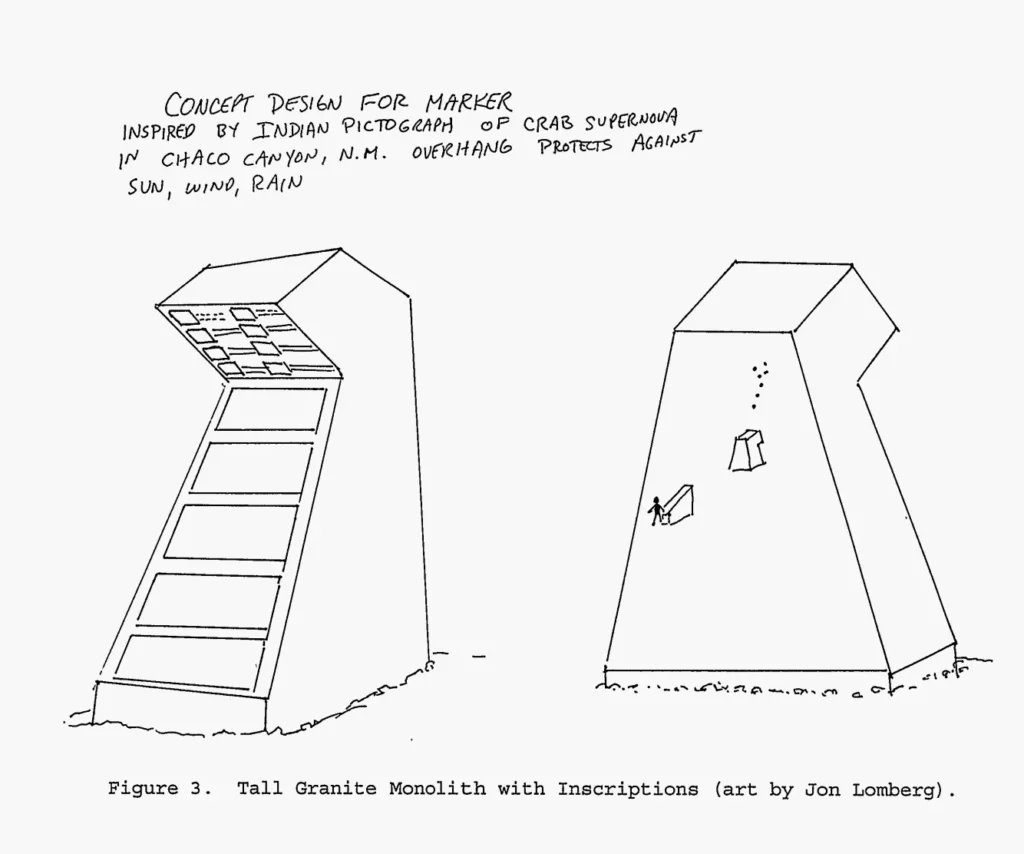
Around the same time, archaeologist Maureen Kaplan, another member of the HITF proposed a far more physical solution: a monumental warning system built from massive stone markers designed to endure for millennia. Kaplan envisioned a field of 29 to 30 “megalithic monoliths” surrounding a nuclear waste repository. Each marker would be a single block of hard, dense, nonporous stone from materials such as granite or basalt, sunk roughly five feet into the ground and rising about twenty feet above the surface. The shape would taper slightly toward the top, creating a broad and stable base that could withstand centuries of weathering.
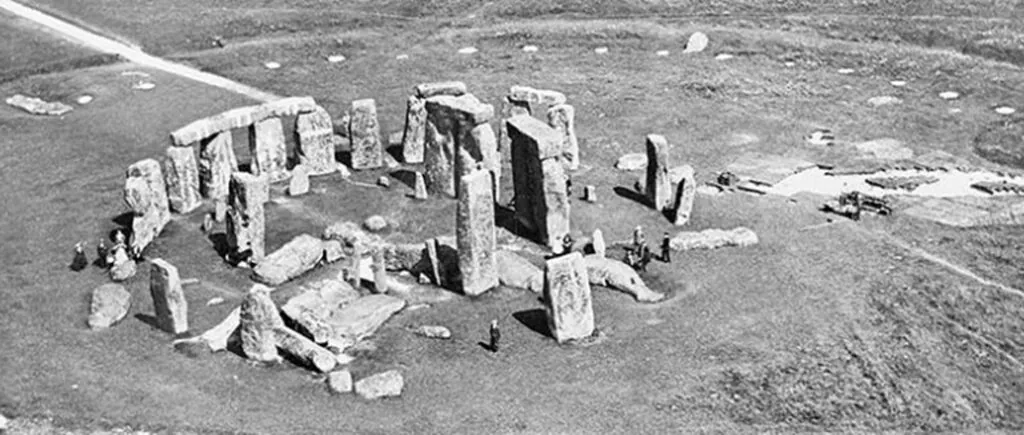
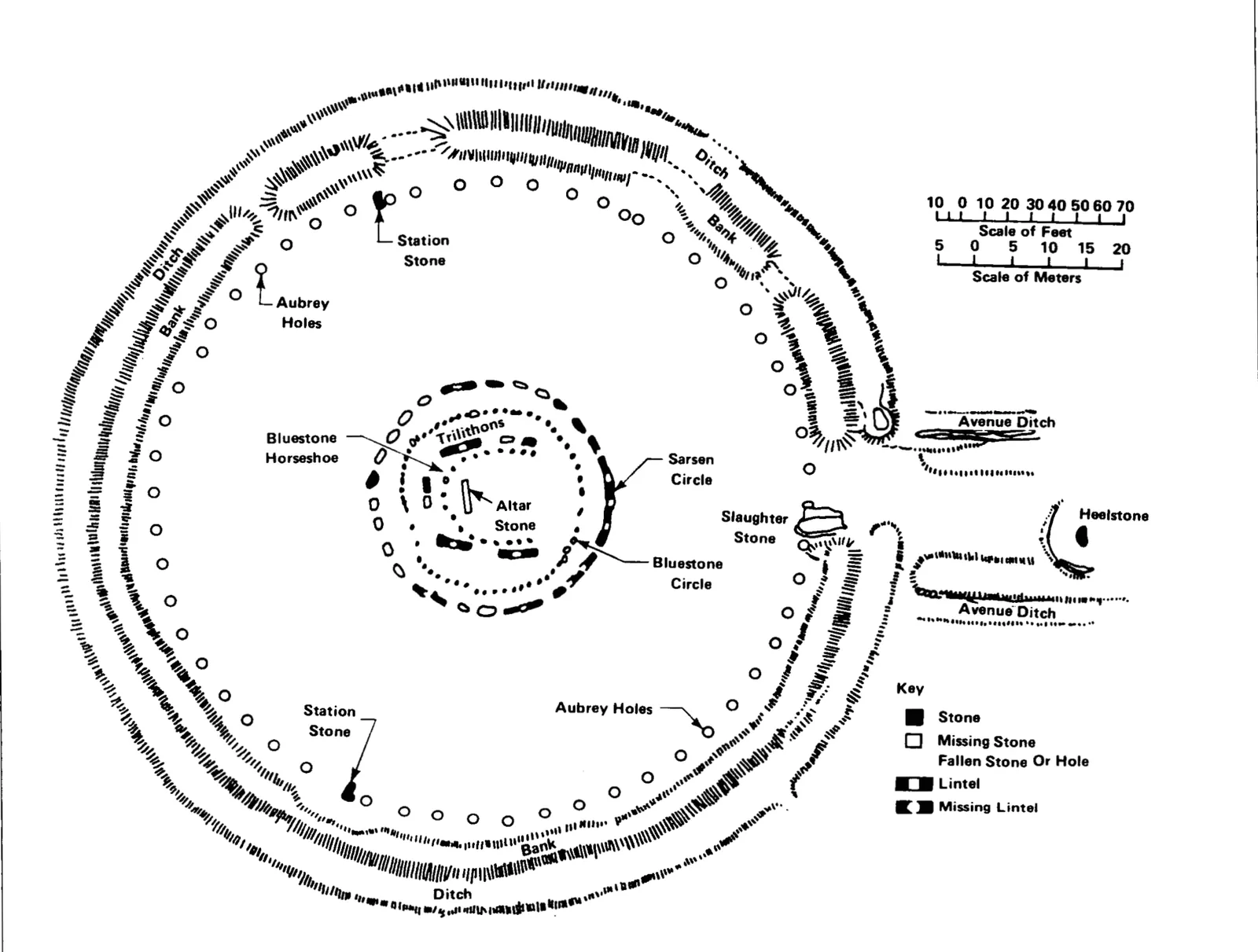
Kaplan described the concept as something like an “improved Stonehenge.” Unlike prehistoric monuments, however, these stones would be explicitly communicative. Each monolith would be inscribed on three sides with a clear warning: “Danger. Radioactive waste. Do not dig deeply here.” The inscriptions would not appear only in English. Kaplan proposed repeating the message in the six official languages of the United Nations: English, French, Arabic, Spanish, Russian, and Chinese, on the assumption that at least one of those languages might still be recognizable ten thousand years in the future.
The proposal emerged from a broader archaeological study conducted by Kaplan while working as an analyst at the Massachusetts-based consulting firm Analytic Sciences Corporation, which had been contracted to examine what lessons ancient monuments might offer for marking nuclear waste sites. Kaplan surveyed six major historical structures, evaluating how they had survived weather, war, looting, and the slow erosion of time. Among them, she concluded that the Stonehenge model offered the most promising template for long-term durability.
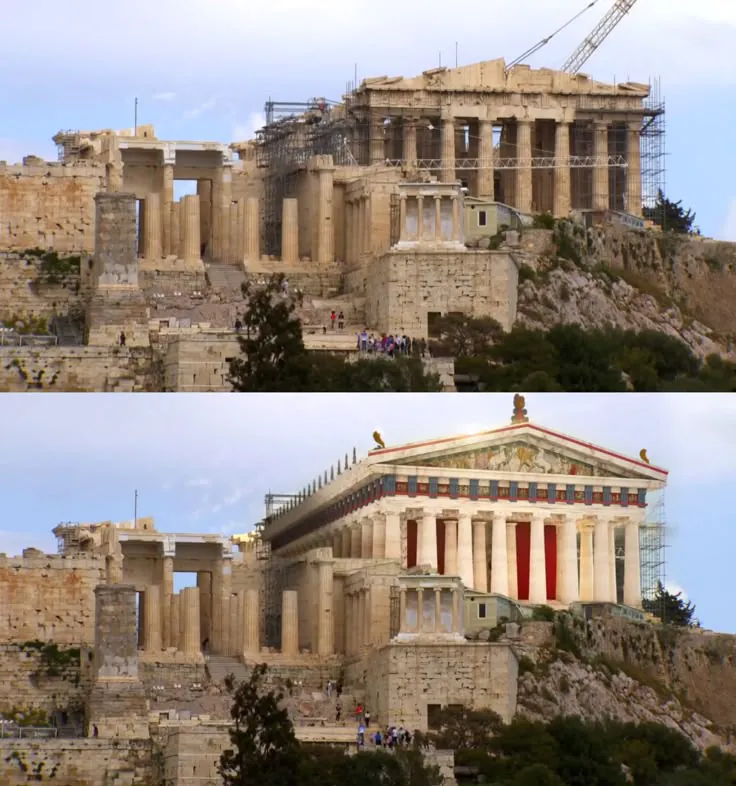
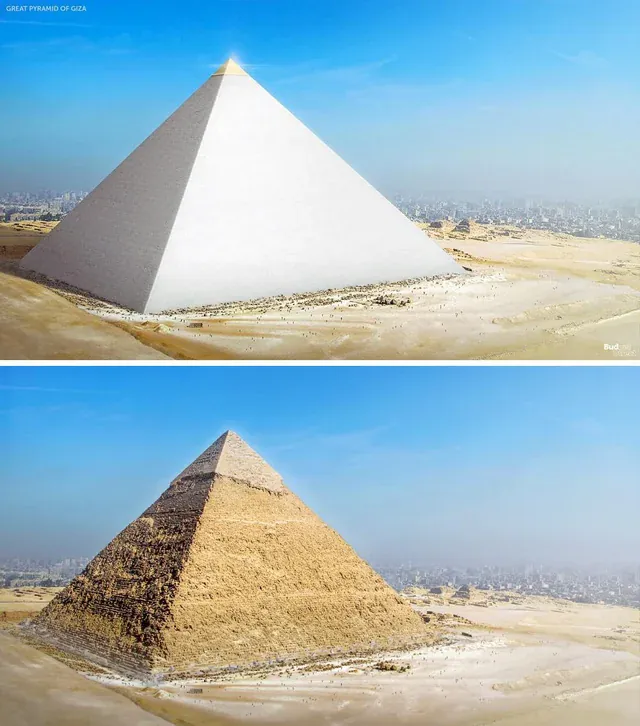
Her reasoning was partly practical. Stonehenge had remained largely intact despite centuries of exposure and had resisted the removal of its largest stones by vandals or collectors. It was also visible from a great distance, an important trait for a warning monument. By comparison, Kaplan judged other famous structures less suitable as models. The Pyramids of Egypt, though durable, were too vast and architecturally complex. The Acropolis of Athens had lost much of its decorative marble and bronze elements to recycling and looting over the centuries, as did the pyramids their limestone exterior. And the Great Wall of China, while monumental, required constant maintenance across enormous distances.
Kaplan acknowledged that even a carefully designed marker system could not survive every possible natural catastrophe. A sufficiently large geological event could still erase it. “It is unlikely,” she wrote, “that any on-site marking system could withstand the onslaught of a glacier.” Yet among the many proposals being considered at the time, from folklore systems to orbiting satellites, her megalithic warning field represented one of the most grounded attempts to create a physical signal that might remain standing long enough to warn humans thousands of years into the future.
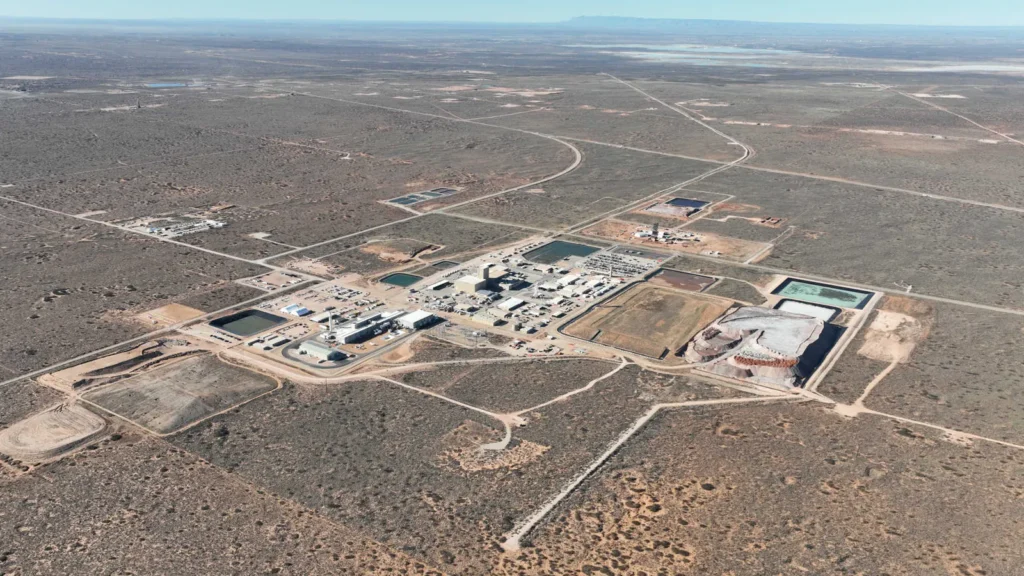
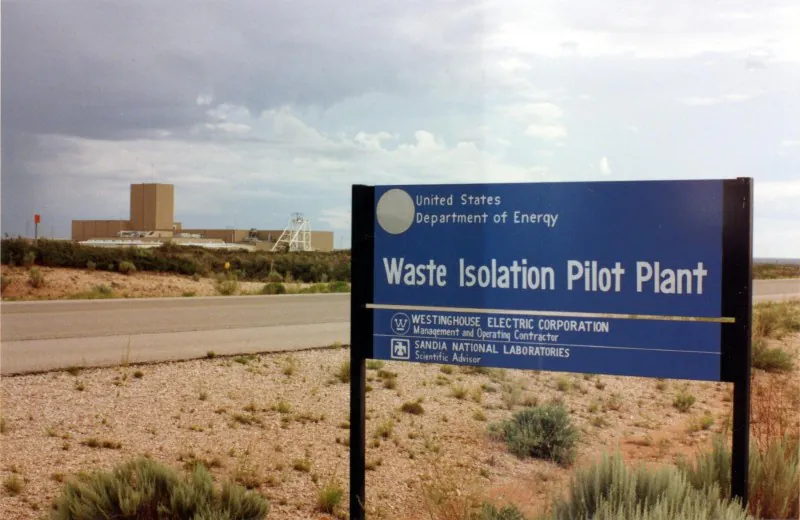
In 1979, the U.S. Congress authorized construction of a new facility intended to store radioactive waste deep underground in the deserts of southeastern New Mexico. The site, known as the Waste Isolation Pilot Plant (WIPP), would eventually become the only operating deep geological repository for nuclear waste in the United States. Unlike the proposed repository at Yucca Mountain, however, WIPP was not designed to store high-level waste such as spent nuclear fuel. Instead, Congress reclassified the material destined for the site as transuranic waste, lower-level radioactive debris generated during the manufacture of nuclear weapons.
Transuranic waste typically consists of equipment and materials contaminated with radioactive elements such as plutonium or uranium. Gloves, tools, rags, protective clothing, and pieces of machinery used in nuclear weapons production are sealed into steel drums and shipped to the facility for disposal. Although far less thermally intense than reactor fuel, the waste is still dangerous for extremely long periods of time, with some components remaining radioactive for roughly 24,000 years.
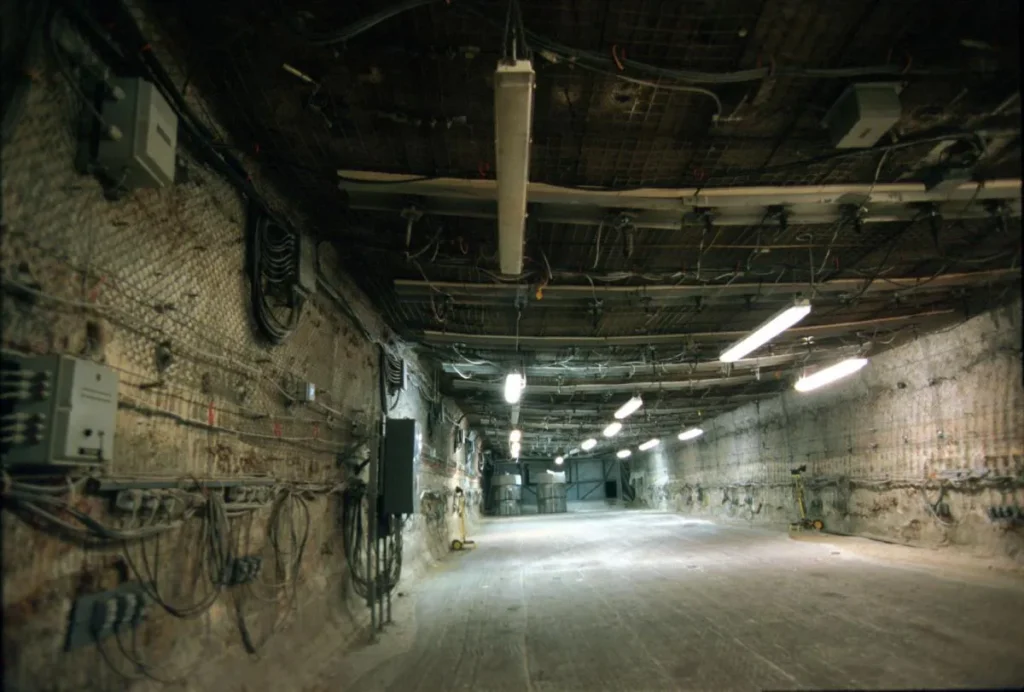
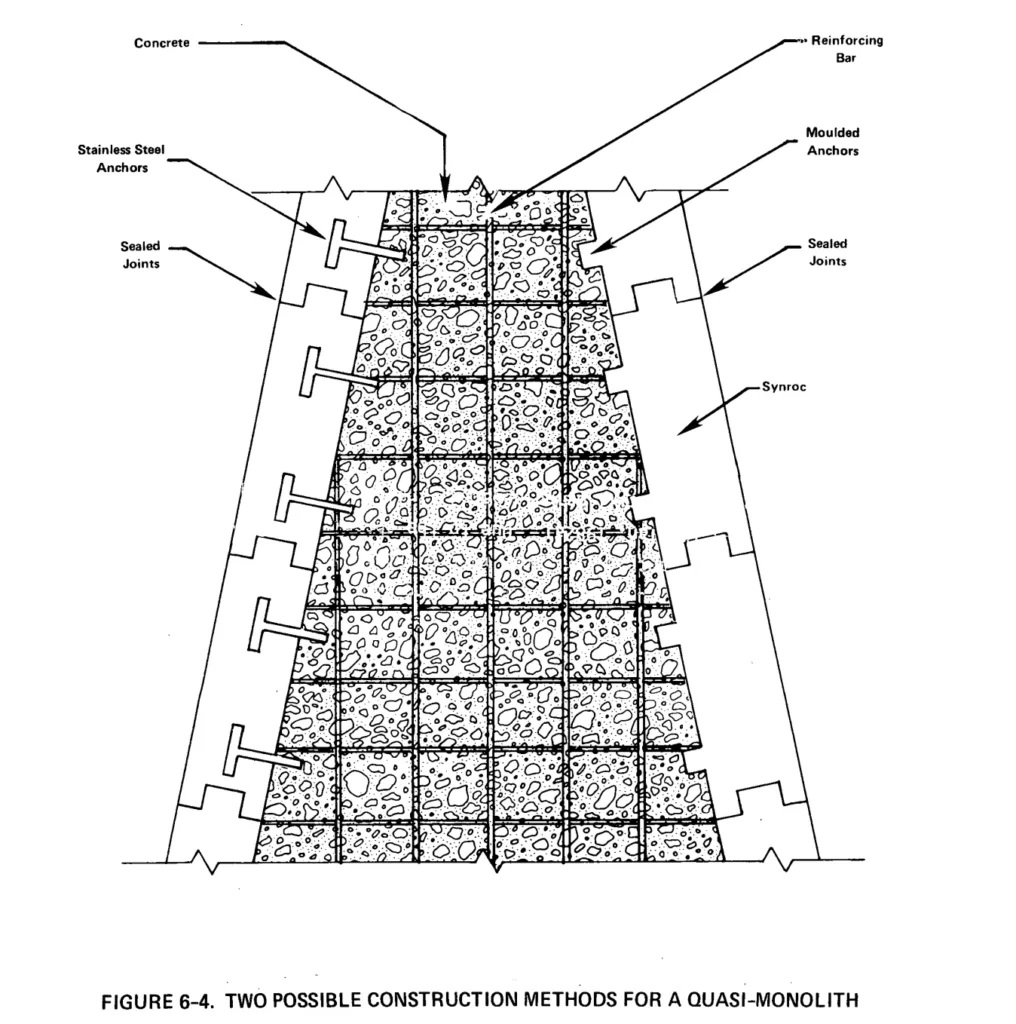
WIPP is located about 42 kilometers (26 miles) east of Carlsbad, New Mexico, where the waste is stored roughly 650 meters (about 2,100 feet) underground in thick natural salt formations. The repository consists of a network of tunnels containing 56 storage rooms carved into the salt deposit. Over time, the surrounding salt is expected to slowly creep and compress, closing the excavated chambers and encasing the waste containers in solid mineral, effectively sealing them off from groundwater and the surrounding environment.
The facility did not open quickly. Although the project had been under development for years, a 1991 federal court ruling required explicit congressional approval before even test shipments of waste could be sent to the site. The 102nd United States Congress ultimately approved the facility in October 1992, following a contentious debate in which critics raised concerns about long-term safety. The final legislation required the Environmental Protection Agency (EPA) to establish new safety standards and review detailed testing plans for the repository.
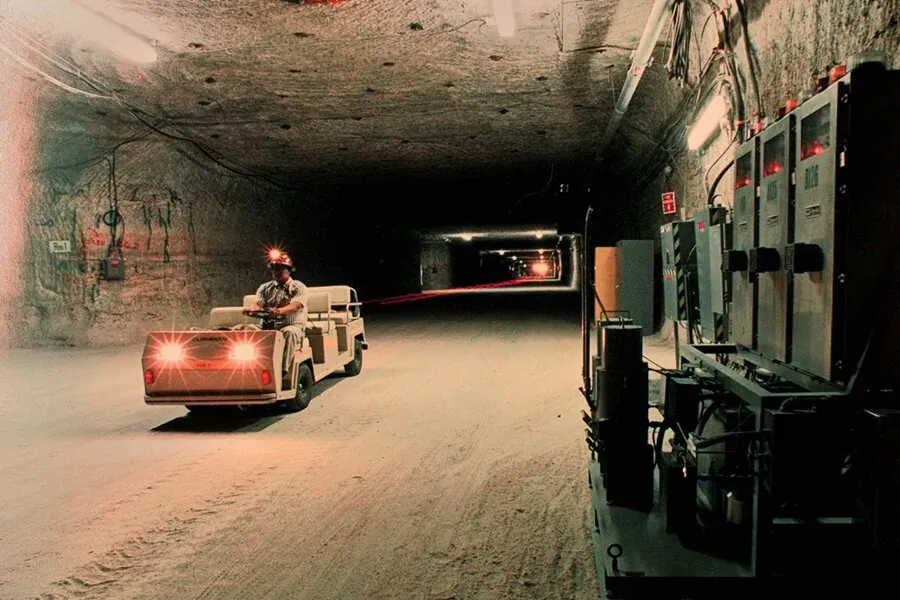
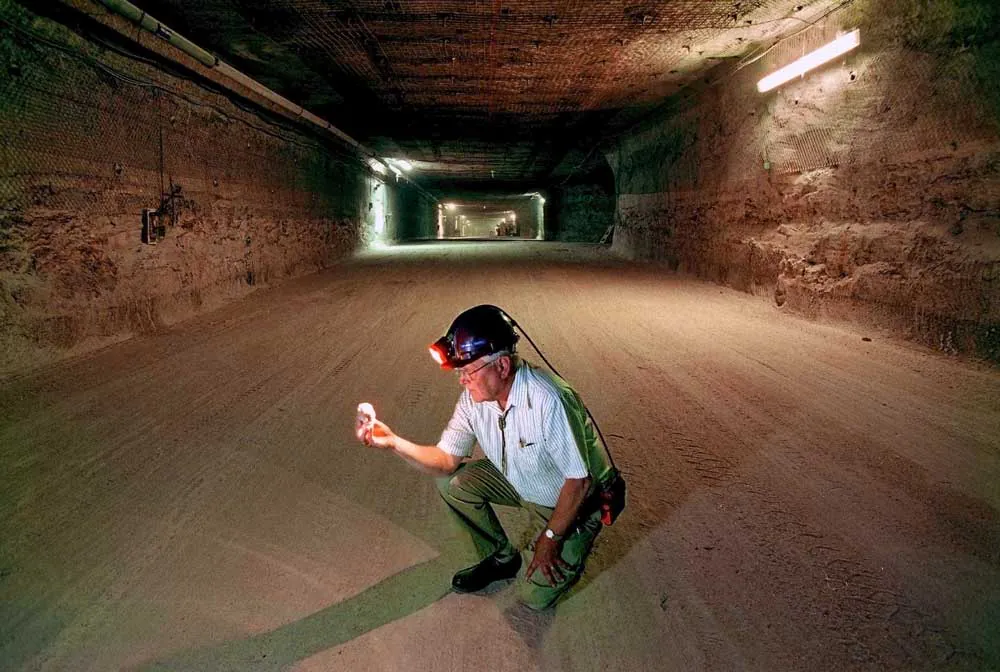
Extensive evaluation followed. In 1994, Congress instructed Sandia National Laboratories to conduct a comprehensive assessment of the facility’s long-term safety under EPA regulations. After nearly four years of analysis, part of more than two decades of cumulative study, the EPA concluded in May 1998 that there was a “reasonable expectation” that the site could safely contain the waste placed within it. The first shipment of nuclear waste arrived at WIPP on March 26, 1999.
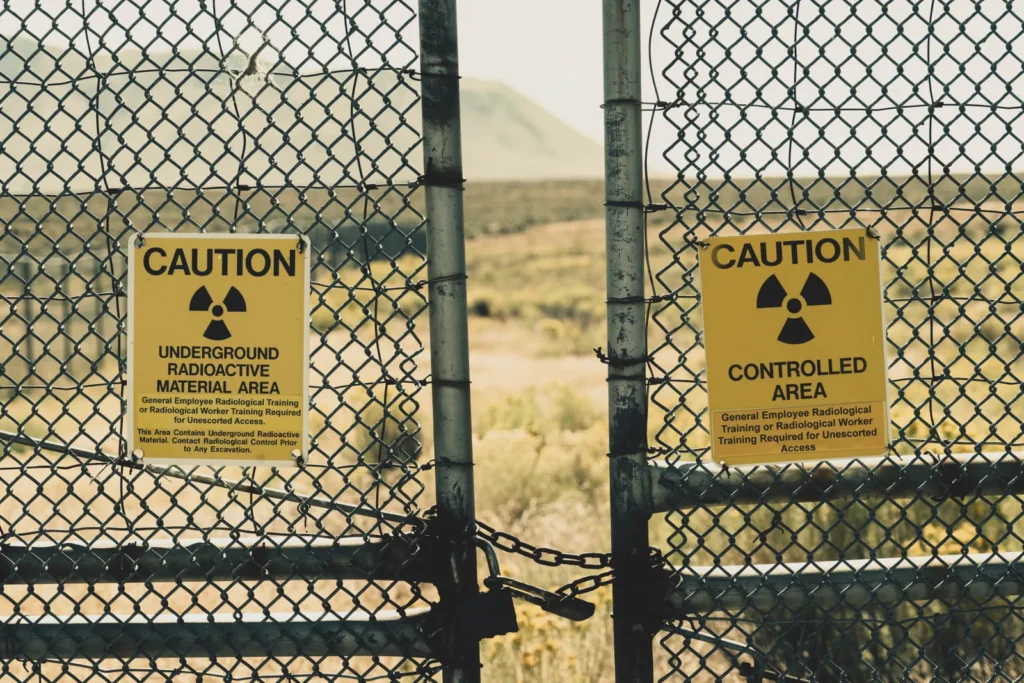
The facility is expected to accept waste for 25 to 35 years, after which it will be permanently sealed. Yet even buried deep underground, the danger does not completely disappear. Like the proposed Yucca Mountain repository in Nevada, WIPP was built in a geologically stable desert environment in the hope that it could isolate hazardous materials for at least 10,000 years. But there remains a lingering problem: long after the repository is closed, future generations might accidentally dig into it.
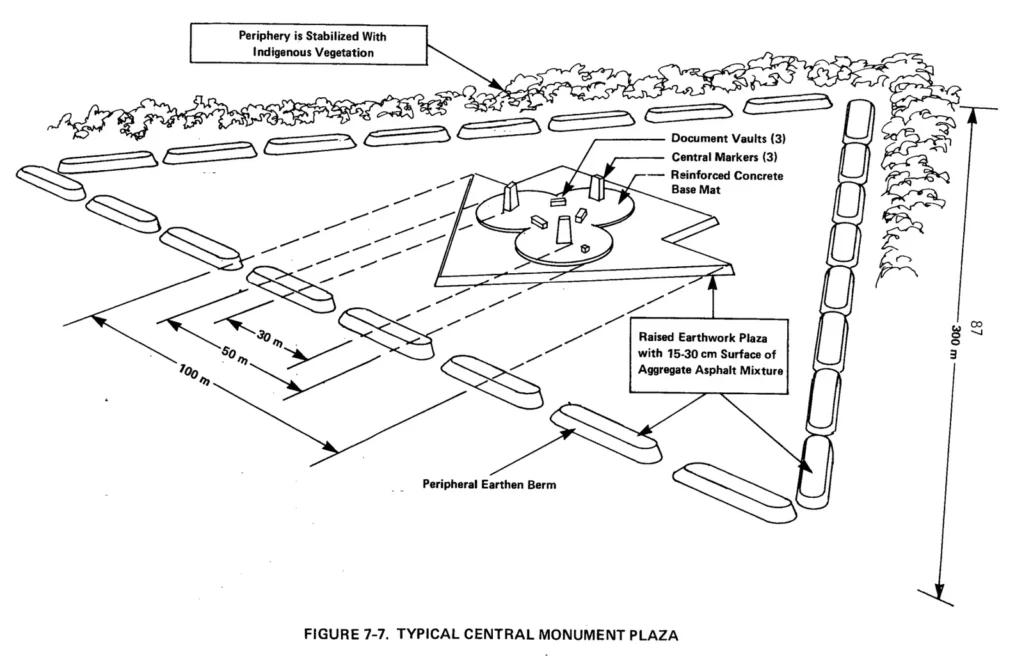
Because of that possibility, the U.S. Department of Energy began studying long-term warning systems in the 1980s. By 1989, officials concluded that the site would require a system of markers designed to remain understandable even if languages and cultures changed drastically over millennia. At this time they worked with Sandia Laboratories, combining another team of experts to design a system, one that actually has a chance of being implemented in the not so distant future. Firstly, they needed to know what will likely happen down the line. A year later, the U.S. Department of Energy convened an unusual group of specialists to confront a problem that had been anticipated but never really existed until now: the exact, actionable, real-world methodology of how to warn people thousands of years in the future about something currently being buried underground today.
Sandia National Laboratories, which had been contracted by the DOE to manage the research, assembled a panel of experts to attempt to predict the future. Between 1990 and 1991, the so-called Futures Panel expanded its work by organizing experts into four independent teams located in different regions across the United States, including specialists in sociology, history, geology, political science, engineering, and risk analysis. Their task was to imagine how human societies might change over the next ten millennia. The teams developed a range of possible futures, including scenarios involving societal collapse, radical cultural transformation, rediscovery by archaeologists, and the continuation of technological civilization. Two of the four teams even suggested that the safest option might be to leave the site unmarked entirely, arguing that any marker could act as a beacon that might attract curiosity or excavation from future societies.
In the final report from the Futures Panels, the authors explained the importance of prehistoric sites to their thinking: “There are particular places (built forms and natural or man-made landscapes) that elicit powerful feelings in almost everybody. These places feel ‘charged’, almost in an electric sense, and seem filled with meaning… The places that carry this charge are sometimes beautiful, but at least as many are ugly, awesome, or forbidding. Their importance lies in their content—the message—far more than their form, and the success of their form lies in its expressive capacity rather than its aesthetics. These meanings and feelings often come to people in places not even of their culture or time. Obvious examples are the way Stonehenge and the painted caves of Altamira and Lascaux evoke profound responses in modern viewers. This stable and common reaction to certain places seems to transcend particular cultures and times. It suggests an origin in something much broader than individual experience and older and deeper than culture—something species-wide, part of what it is to be human.”
Drawing on this idea, the panel concluded that the most durable and legible monument would follow what they called the “Stonehenge model”: a field of massive stone monoliths, thirty to seventy feet tall, rising from the landscape. These structures, they recommended, should be made from common local materials with little intrinsic value, reducing the likelihood that they would be dismantled for reuse. The design should also emphasize redundancy. A landscape scattered with many monoliths would increase the chances that at least some would survive even if others were damaged, removed, or destroyed over the centuries.
The second phase of the project followed soon after. In 1991–1992, Sandia convened what they called a “Panel of Unique Communicators,” a 14-member interdisciplinary group of linguists, historians, materials scientists, sociologists, artists, futurists, and even a science-fiction writer. Known as the Markers Panel, the group’s task was not engineering or geology, the modern-day repository itself had already been designed, but rather the far stranger challenge of communicating danger across deep time.
The Markers Panel, whose role was to respond to the Futures Panel’s scenarios by designing a warning system capable of surviving, and remaining meaningful, under those potential futures. Unlike the earlier group, which focused on speculation and long-term cultural change, the Markers Panel concentrated on physical design.
After an initial site visit to WIPP, the panel was split into two independent teams, known simply as Team A and Team B, each tasked with producing its own design proposals without consulting the other. Despite working separately, both teams arrived at similar conclusions. They agreed that leaving the site unmarked would be irresponsible and potentially unethical, since it would knowingly leave future generations vulnerable to an invisible hazard. If the waste was going to remain dangerous for thousands of years, some form of warning had to exist.
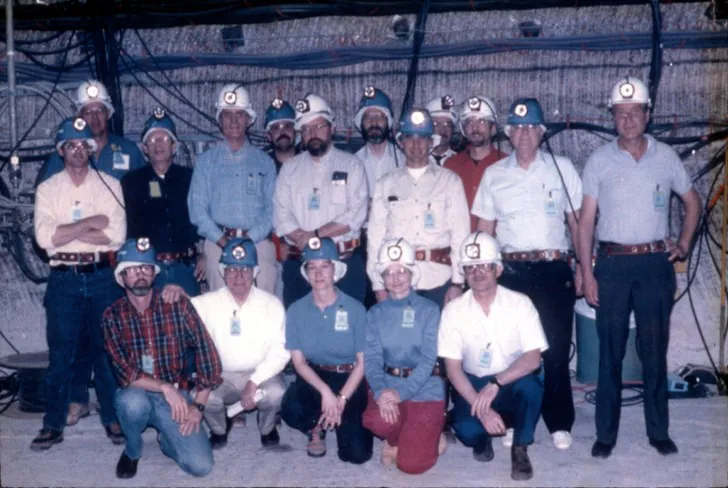
“It was a thought experiment, but we tried to approach it seriously,” said Jon Lomberg, one of the participants of the panel, “One thing we were told was that there were no budgetary restraints. We could design what we want and not worry about building permits or construction costs.”
These were experts from fields that dealt with interpretation, symbolism, and long-term meaning: anthropology, archaeology, linguistics, astronomy, architecture, and cognitive science. Among them was Jon Lomberg, an artist and science communicator best known for helping design the Voyager Golden Record, the phonograph record launched aboard NASA’s Voyager spacecraft in 1977 containing sounds, music, images, and greetings intended to explain humanity to potential extraterrestrial listeners. As Lomberg later put it: “They believed they had solved the technical problem. We were there to solve the human one.”
Astronomer Carl Sagan was invited to contribute to the panel’s discussions on what researchers began calling “nuclear semiotics.” He was unable to attend the meetings, but sent a letter suggesting the use of the skull-and-crossbones symbol as a warning marker, a proposal considered somewhat simplistic compared to the panel’s broader architectural and cultural strategies.
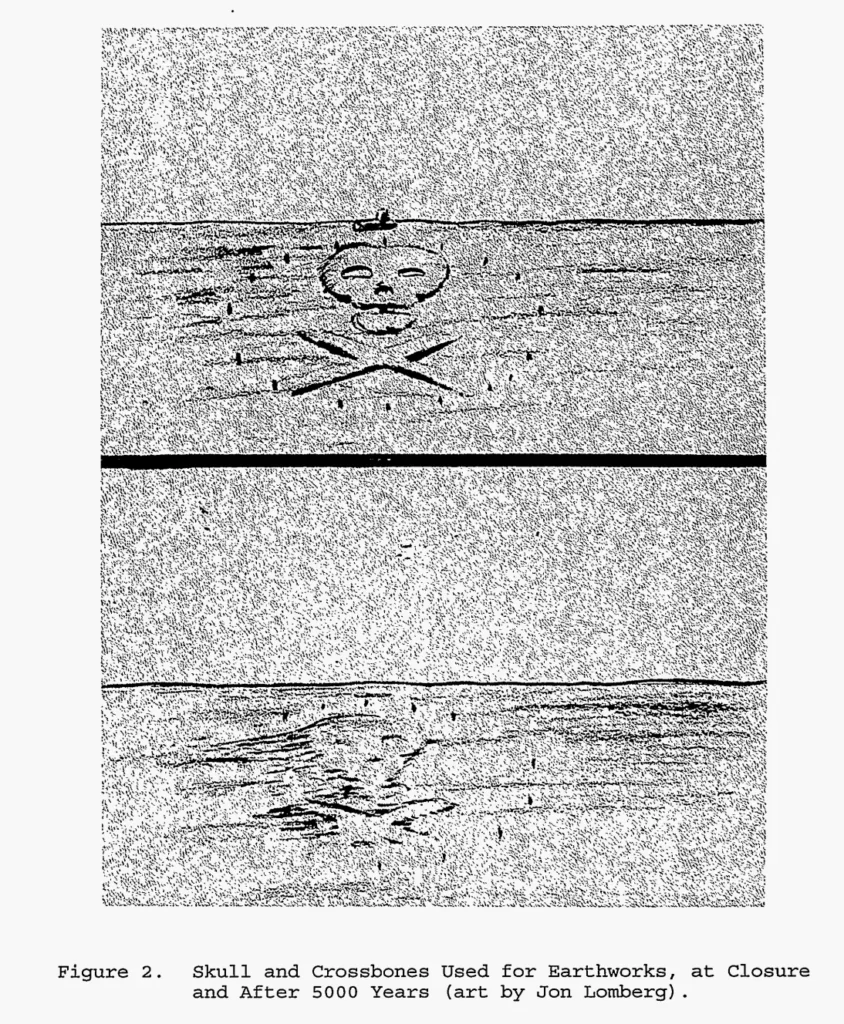
Physicist and science-fiction author Gregory Benford was also asked to participate. One of his tasks was to estimate the likelihood that someone might intrude on the site over the next 10,000 years, the period during which the waste would remain hazardous. The conclusion was sobering: almost nothing in human culture lasts that long. Symbols change meaning, languages disappear, and even widely recognized icons, like the skull and crossbones, might eventually lose their association with danger.
One principle quickly emerged as central to the project: redundancy. The panel concluded that any warning system would need to communicate the same message in multiple ways, through architecture, language, symbols, and landscape design. Messages would appear at different levels of complexity, using different materials and forms of communication so that at least some element might survive and remain understandable far into the future.
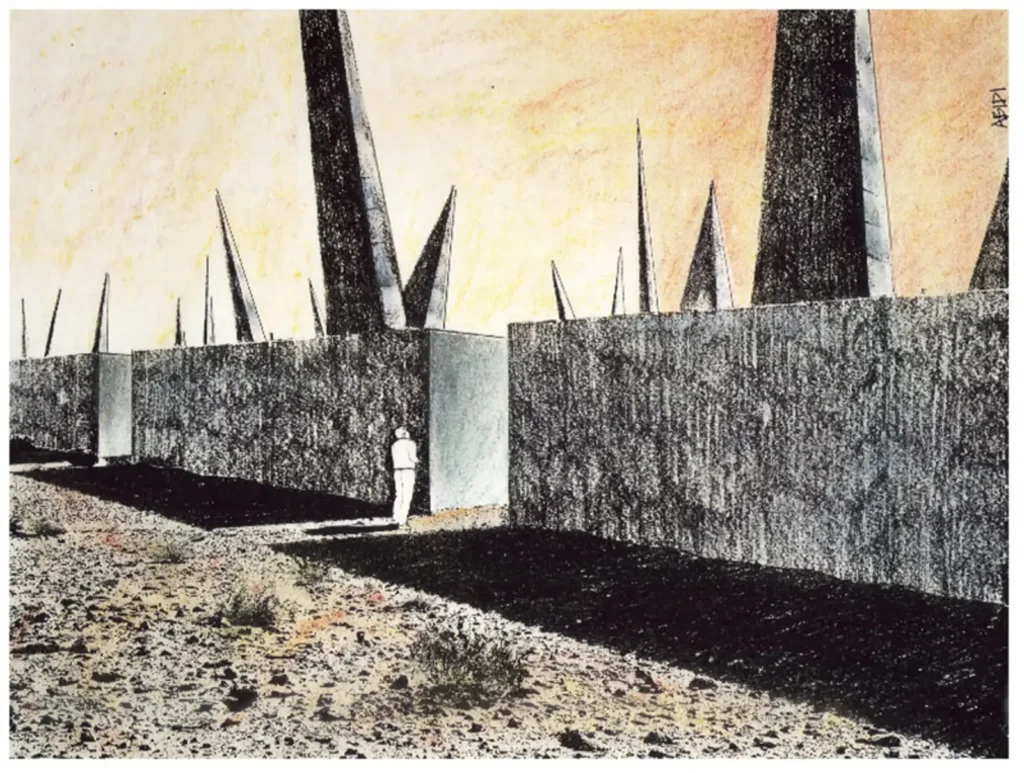
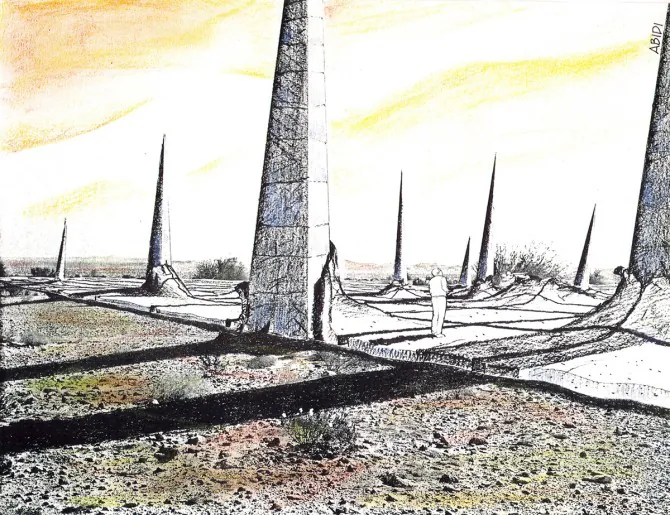
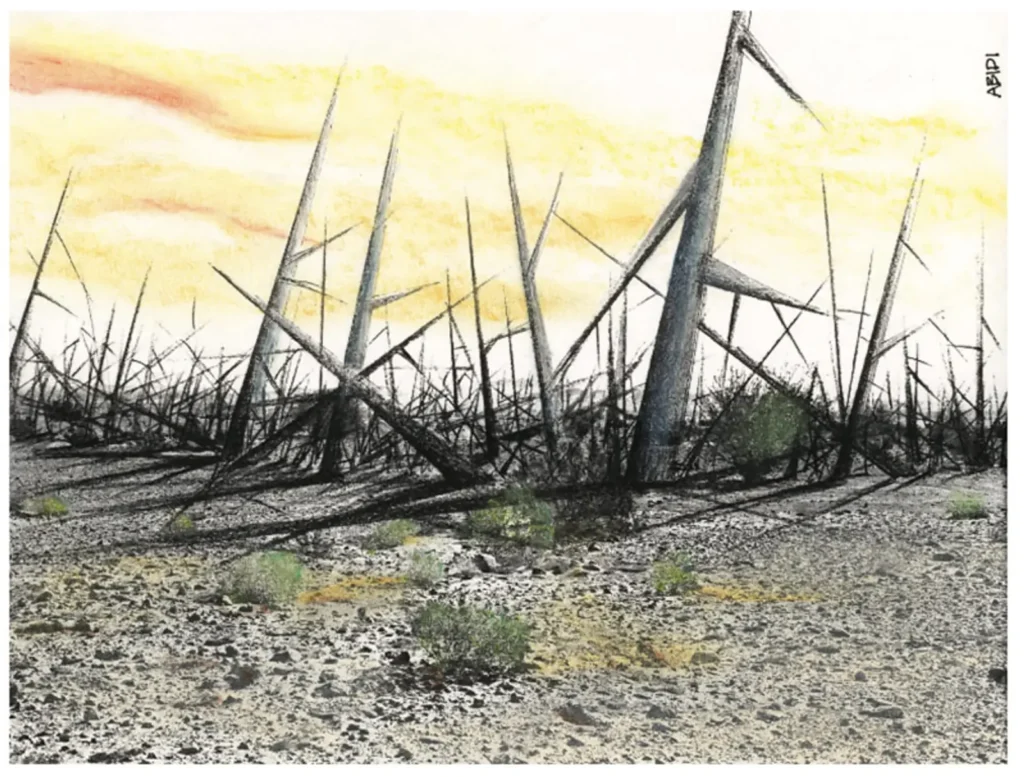
Team A, led by Dieter G. Ast of Cornell University and including figures such as Michael Brill and Maureen Kaplan, approached the problem from a different angle. Their central assumption was that literacy would likely persist in some form over the next 10,000 years, and that future scholars would eventually be able to decipher surviving written languages even if civilizations rose and fell in the interim. Because of this, they emphasized monumental architecture, pictographic warnings, and large-scale written messages as the backbone of any long-term communication system.
The team evaluated warning markers under three possible societal and technological scenarios. The first imagined a society comparable to iron- and metal-using cultures of roughly two centuries ago. The second assumed a technological level similar to the present. The third considered a future society that had experienced a major catastrophe, forgotten the existence of the WIPP repository, and later redeveloped advanced scientific and technological capabilities.
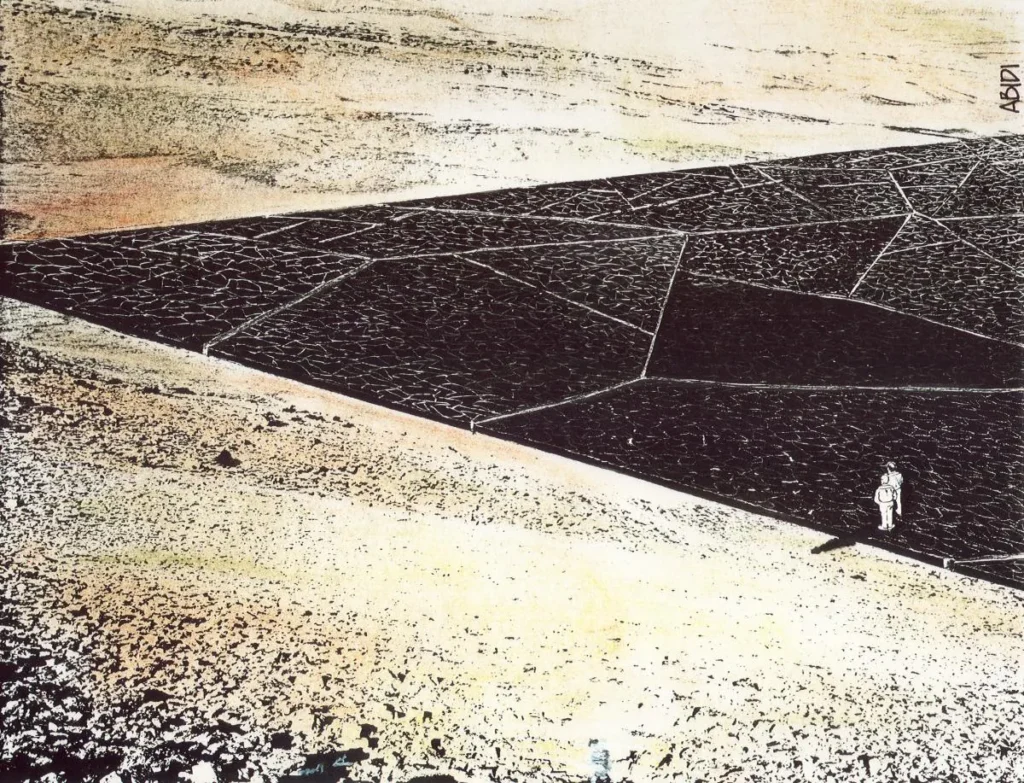
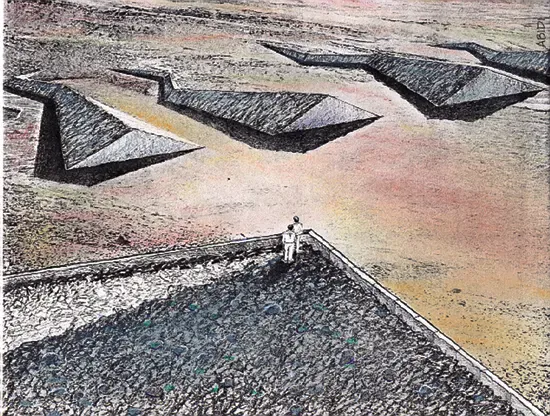
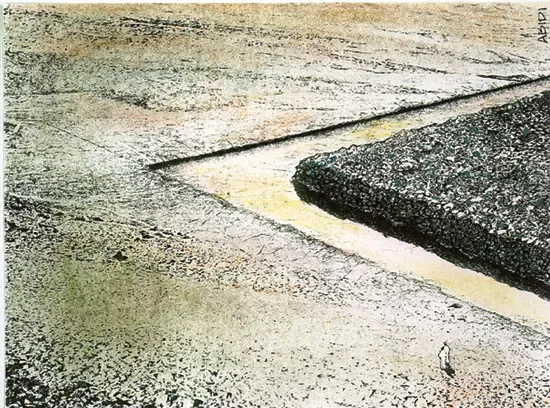
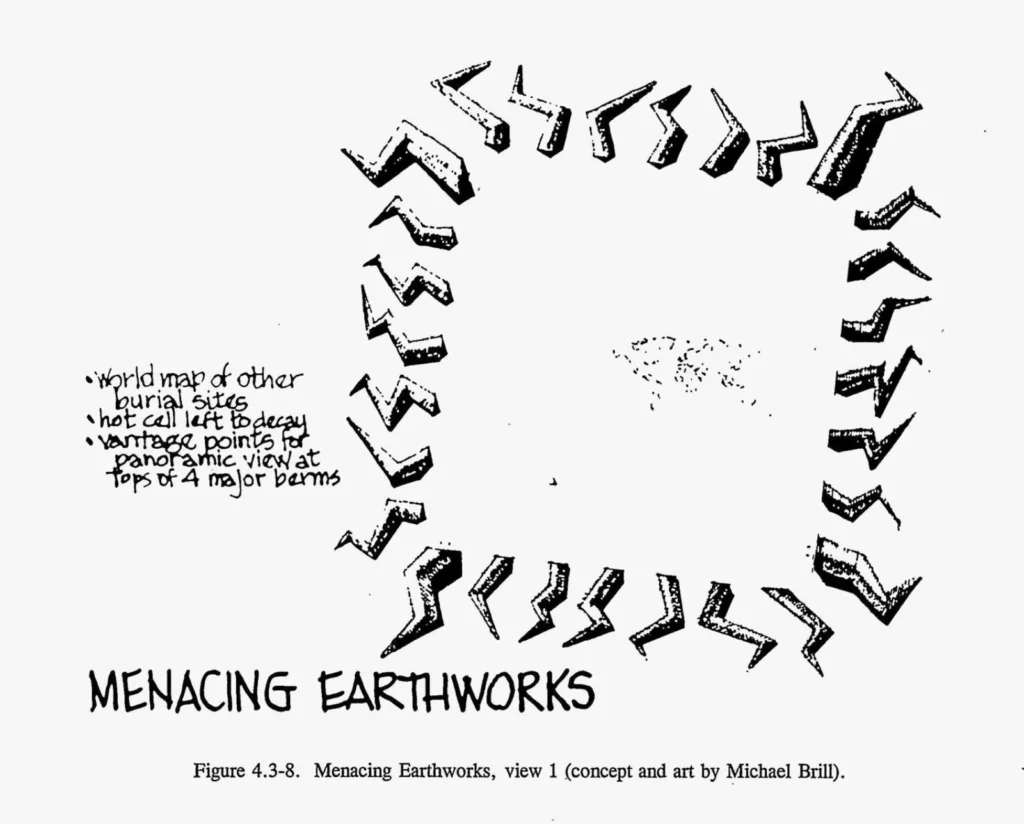
Where the teams diverged most clearly was in how they imagined communicating with future beings who might share neither our culture nor our language. Team A explored the possibility that certain shapes and images might evoke universal emotional reactions. They proposed landscapes designed to provoke instinctive dread. Architect and environmental designer Michael Brill produced some of the most striking concepts. One proposal, “Menacing Earthworks,” envisioned an immense lightning-shaped berm radiating outward from a central open structure known as the Keep. Another design, “Landscape of Thorns,” imagined a field of towering concrete spikes erupting from the desert floor. The idea was not simply to mark the location, but to create a terrain that physically and psychologically signaled danger to the body.
Several of these designs anticipated what today might be called hostile architecture, though the project described them more formally as “passive institutional controls.” Among the proposals were “Forbidding Blocks,” massive angular structures intended to intimidate visitors into turning back, and “Black Hole,” a large slab of dark granite or concrete designed to absorb solar heat and radiate it outward, creating an area of oppressive temperatures, rendering the ground impassable. Others included “Leaning Stone Spikes” and fields of jagged pillars arranged across the landscape.
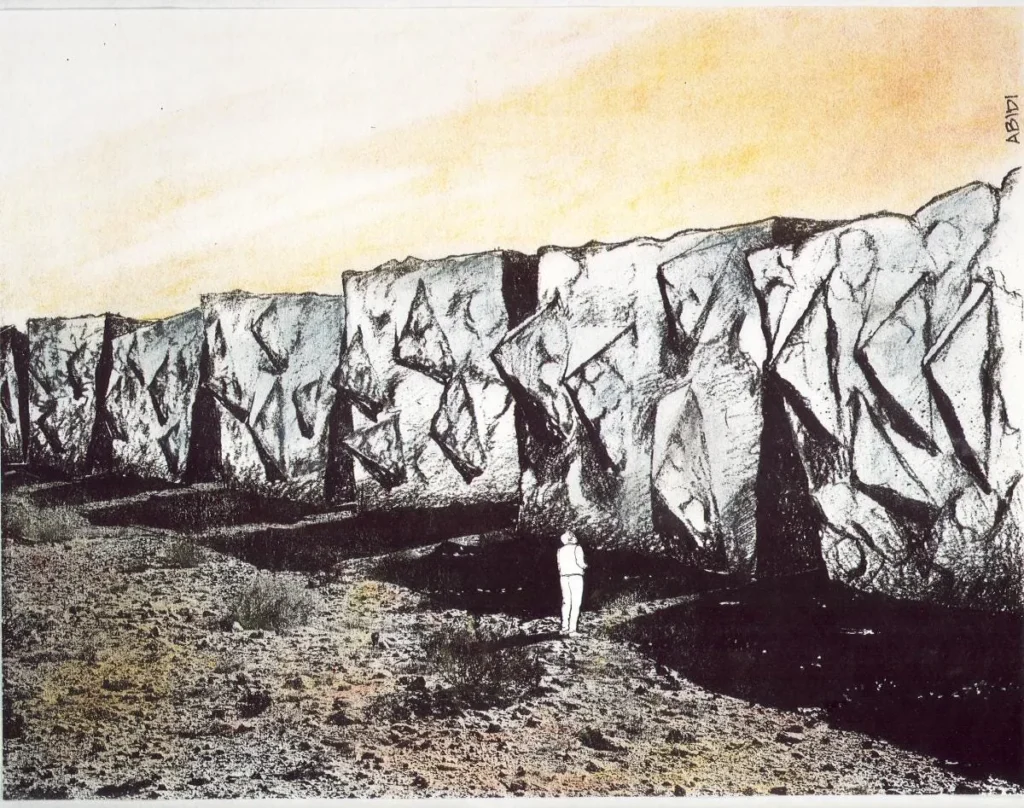
Underlying these designs was a particular assumption about human nature. While languages and symbols might change beyond recognition, human physiology would remain broadly the same. As cultural theorist Peter C. van Wyck later summarized, the designers believed that certain physical forms could produce stable, cross-cultural emotional responses. If a place felt hostile, unsettling, or physically threatening, people might instinctively avoid it, even without understanding the specific reason why. “Future humans would be guided away from the site not by a message from without, but by a feeling from within.” as one report puts it.
Brill later described the logic of the approach simply: “We wanted something that didn’t depend on language. We veered toward a potent form of communication that doesn’t have to be learned and happens viscerally. You can go to a place and say, ‘There’s something wrong here.’” Scale was another crucial element. The proposed markers were envisioned as colossal constructions, rising as much as 100 feet into the air and extending across a 16-mile perimeter. The sheer magnitude of the structures was intended to distinguish the site from any ordinary landscape and force future observers to recognize that the location had been deliberately altered.
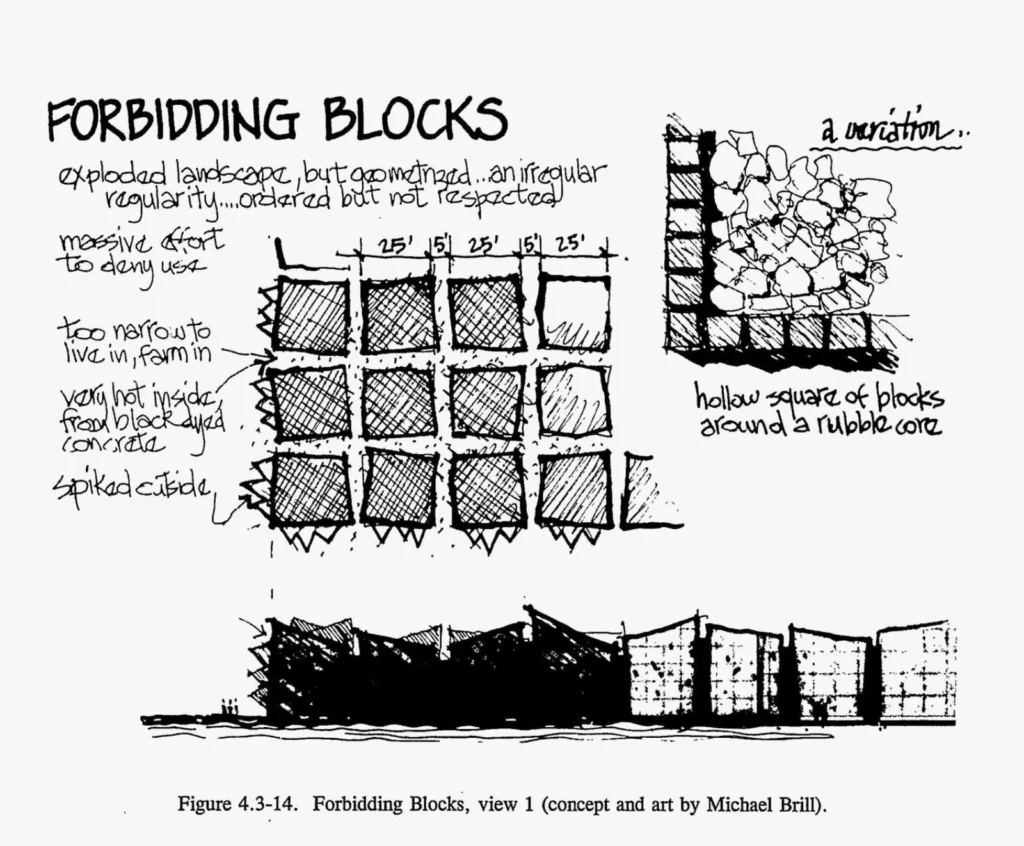
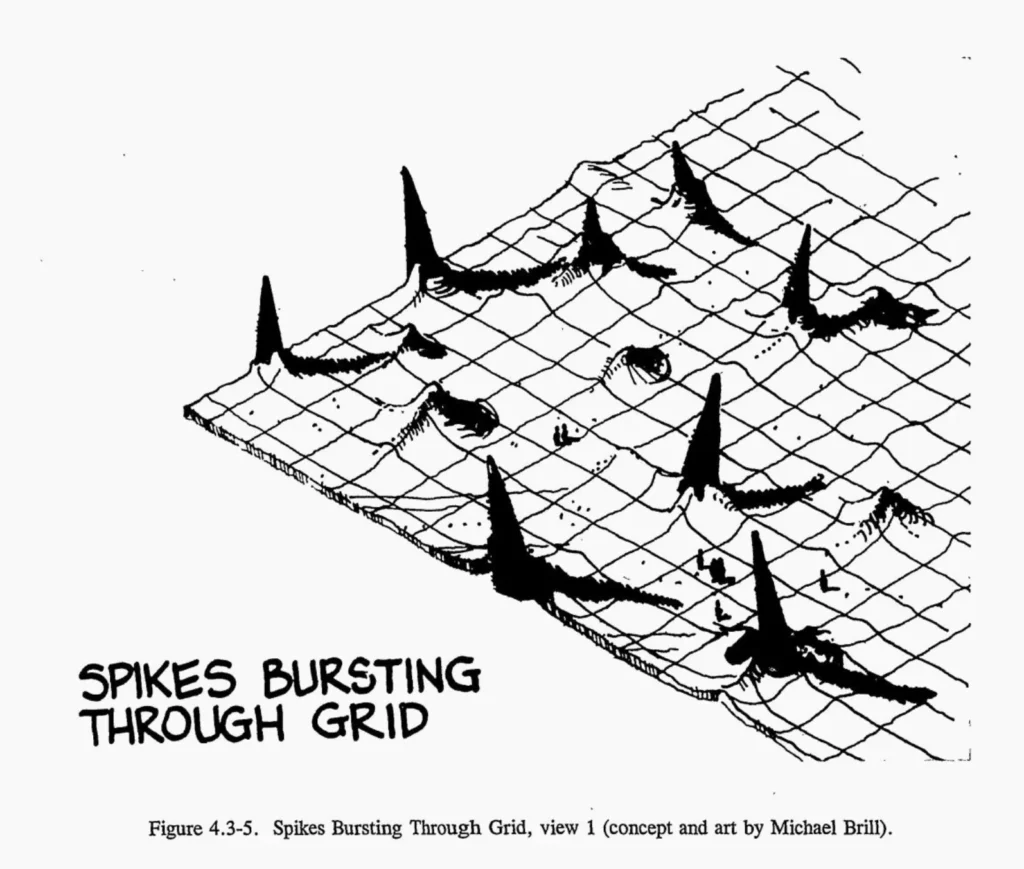
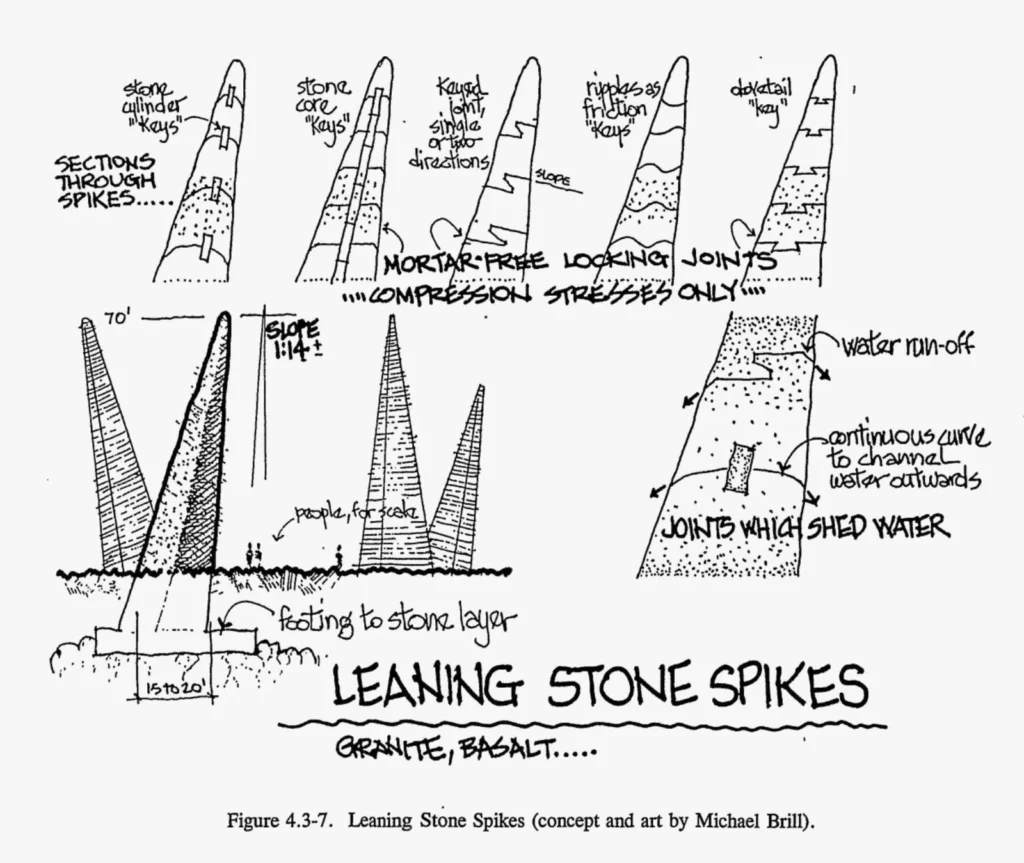
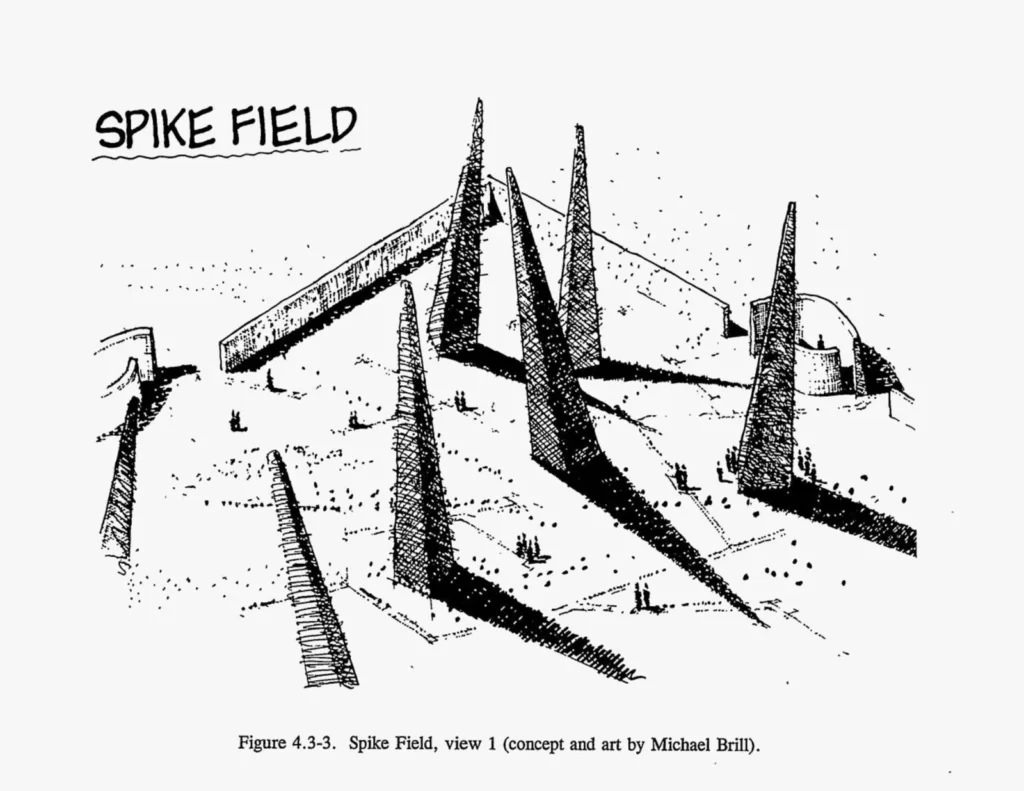
Yet the strategy contained an obvious paradox. If the architecture became too monumental or visually striking, it might attract curiosity rather than repel it. Linguist Frederick Newmeyer acknowledged this possibility in a note appended to Team A’s 1991 recommendations. If the proposals were actually built, he warned, “the WIPP site will quickly become known as one of the major architectural and artistic marvels of the modern world. Quite simply, there will be no keeping people away.”
Team B, led by geomorphologist Victor R. Baker, took a far more pessimistic view of cultural continuity. Their panel included a number of figures experienced in communicating across deep time and unfamiliar audiences, among them Frank Drake, the astrophysicist behind the Drake Equation, a probabilistic formula devised in 1961 to estimate the number of technologically communicative civilizations that might exist in the galaxy, and Jon Lomberg.
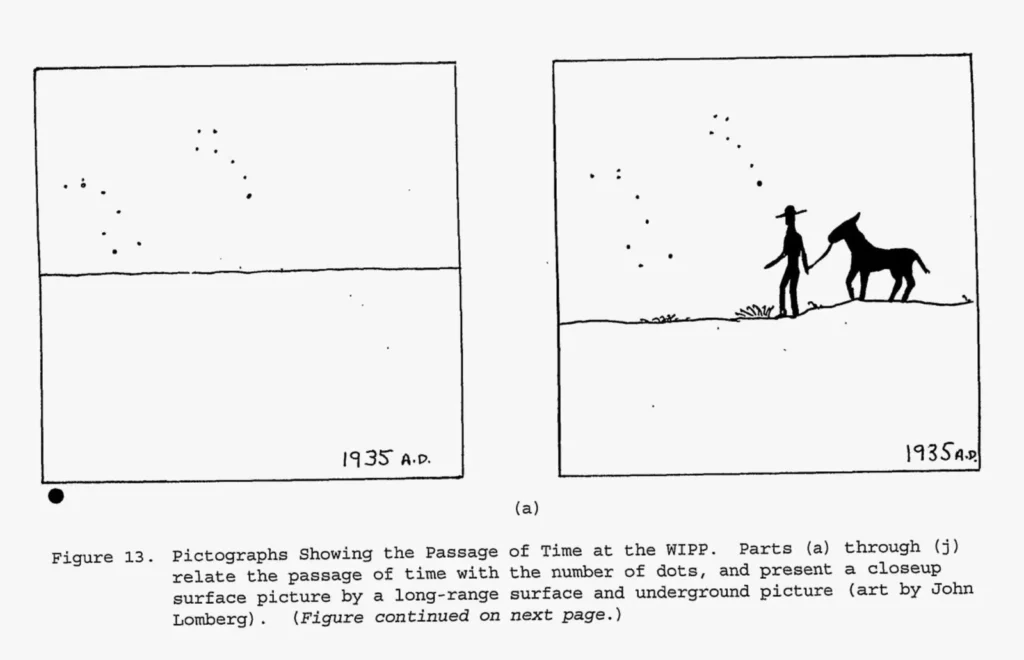
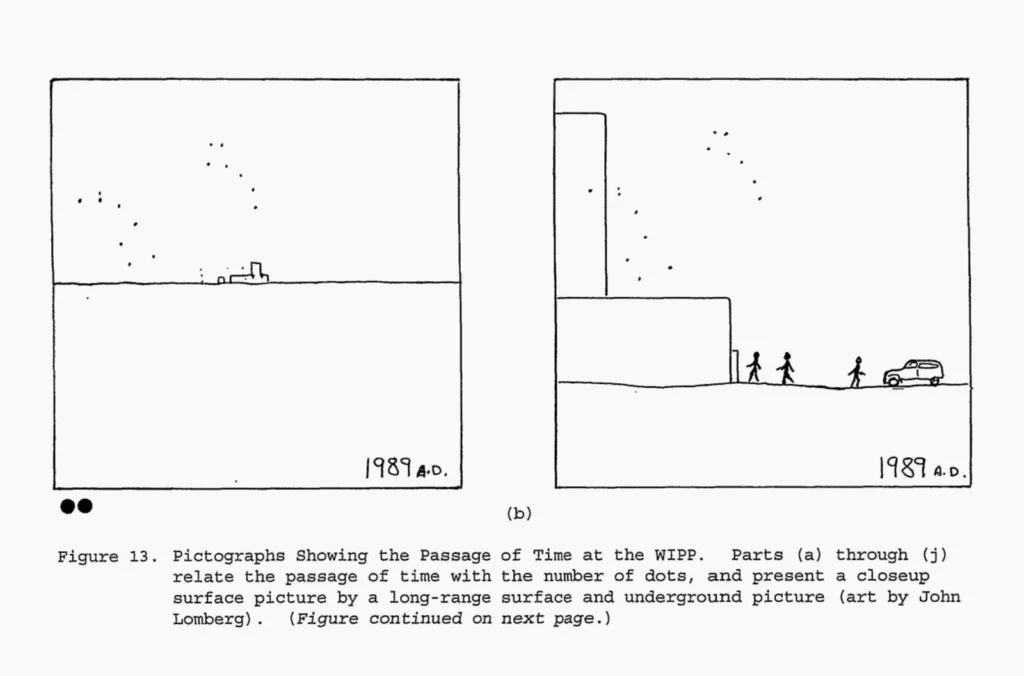
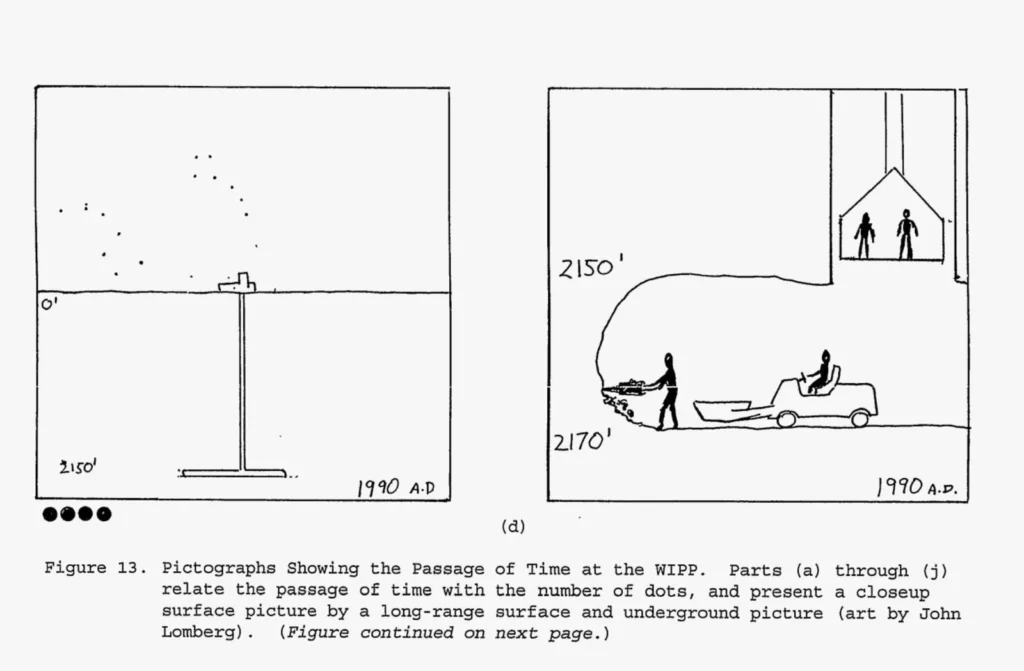
The team examined how warning markers might function across three distinct time horizons: 0–500 years, 500–2,000 years, and 2,000–10,000 years. Their work evaluated the effectiveness of markers both in terms of physical durability and long-term intelligibility. To do this, they considered several possible future societal scenarios, including significant shifts in political control, the re-emergence of societies comparable to pre-Columbian Native American cultures, widespread vandalism, dramatic increases in global resource consumption, and even catastrophic disruptions followed by renewed technological development.
Because of this background, Team B assumed the opposite of Team A: languages might disappear, civilizations might collapse, and political control of the region could change repeatedly over thousands of years. Under those conditions, any warning system that depended on literacy alone would likely fail. Communication therefore had to function even if no written language could be understood. Their solution was a multi-layered “system approach.” Instead of relying on a single monument or symbol, they proposed a network of markers and messages operating at different scales and levels of complexity. The system would include landscape-scale markers, symbolic warnings, pictograms, narrative diagrams, scientific explanations, and off-site archives preserved elsewhere in the world.
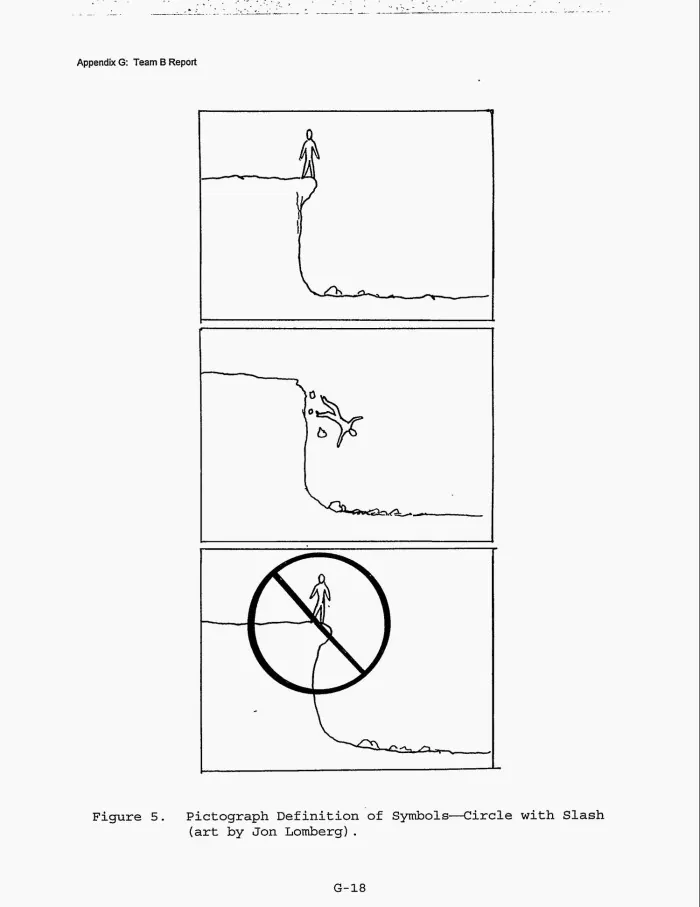
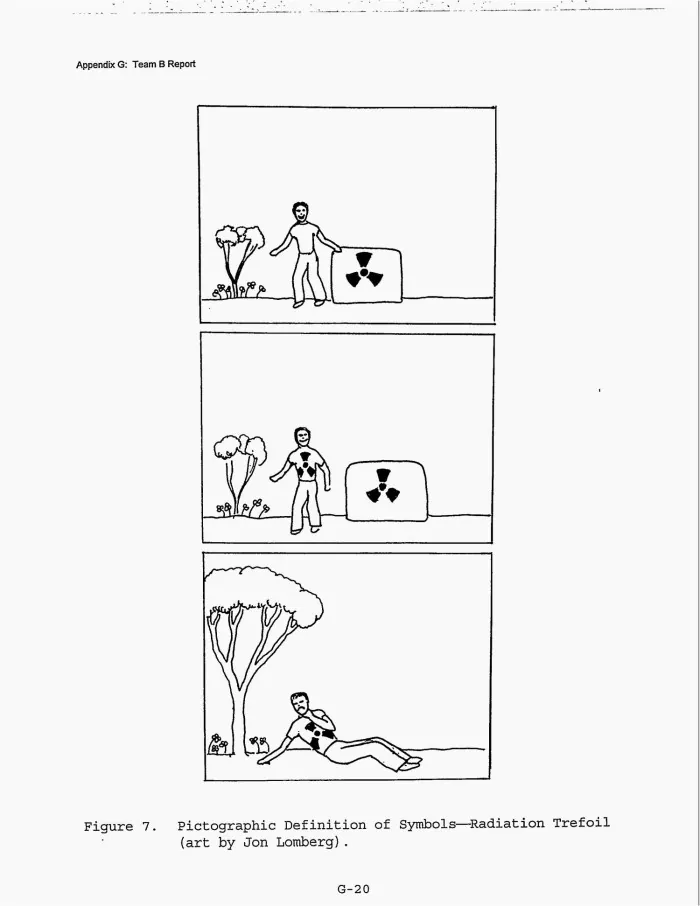
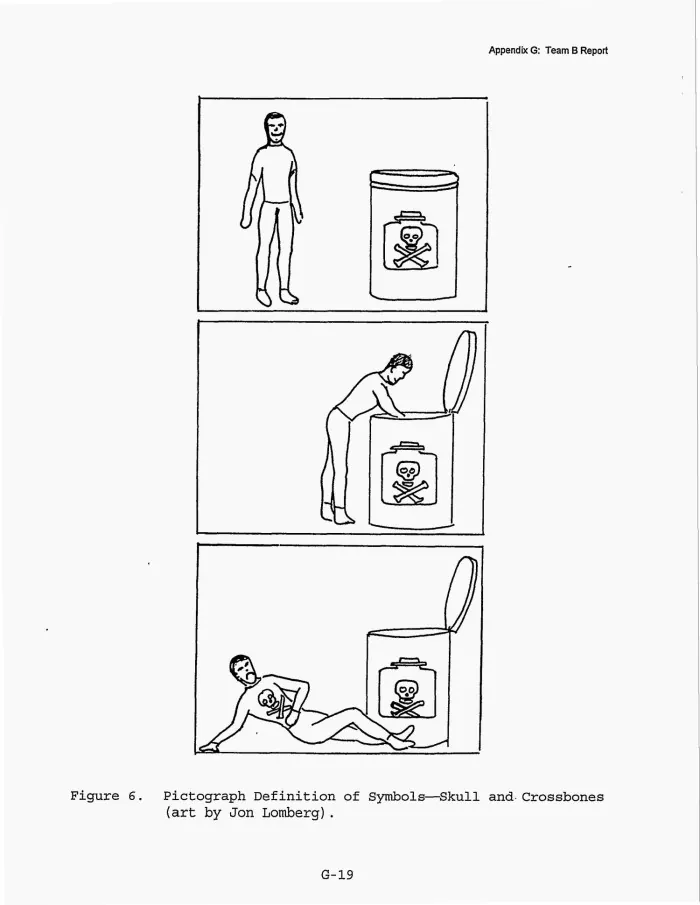
Several core principles guided their design. Firstly, markers must exist in multiple forms and locations. Then there must be multiple communication modes, meaning information should be conveyed through symbols, pictograms, narrative diagrams, and scientific language. Detailed information should then also be distributed and stored in archives around the world. This would then allow nuclear waste sites should be recorded together as part of a shared international record. Lastly, markers should be constructed from substances unlikely to be scavenged or repurposed.
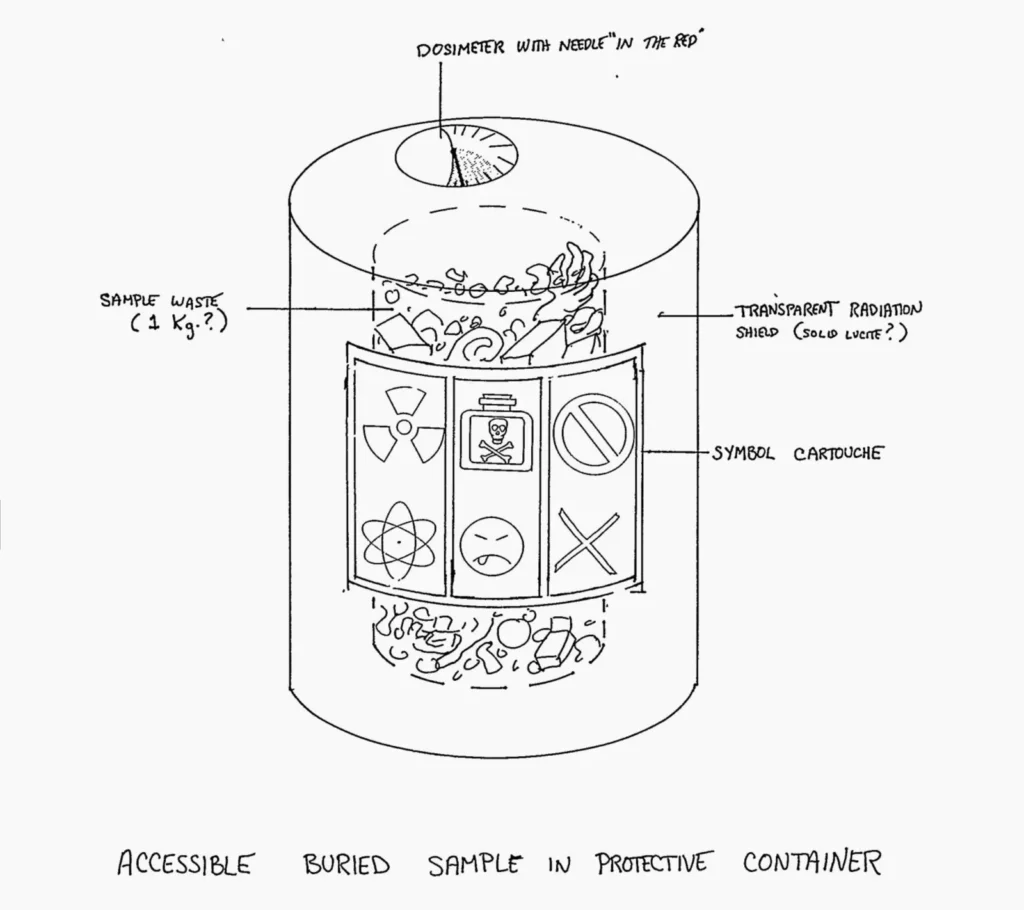
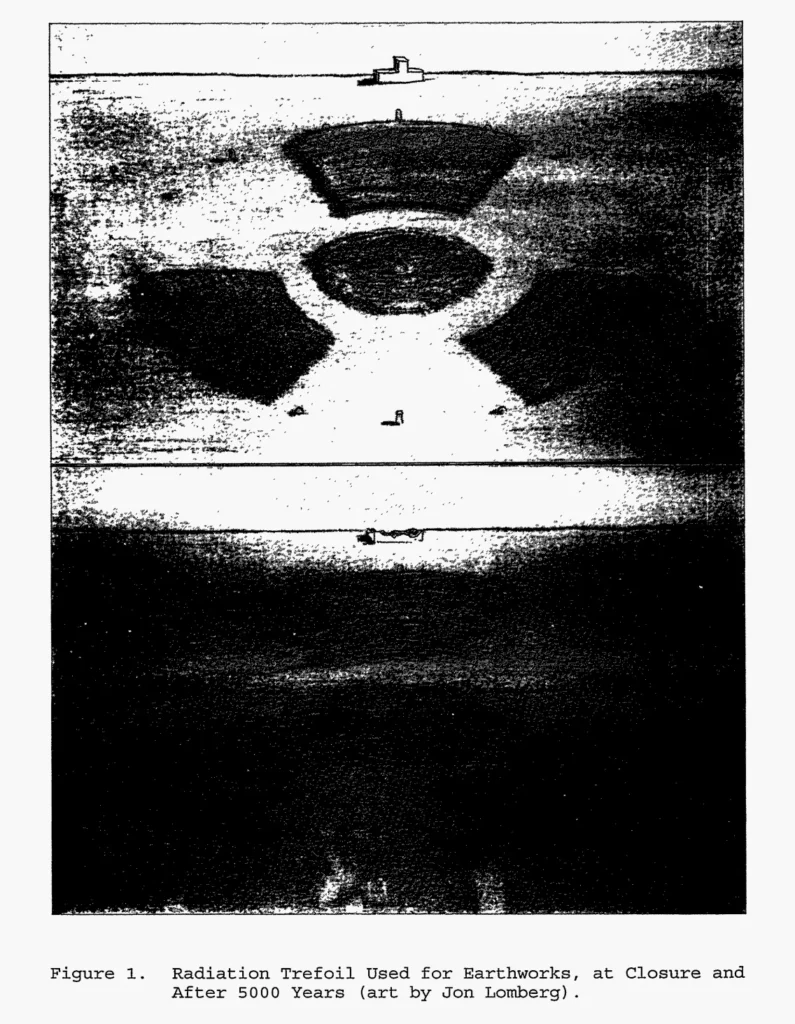
Lomberg’s group also proposed large-scale earthen berms shaped like the nuclear trefoil symbol, combined with a layered marker system using languages, symbols, and pictographs placed both above and below ground. The idea was to ensure that at least some part of the warning would survive cultural or linguistic collapse. Central to their strategy was the belief that humans naturally understand pictorial storytelling. “Humans inherently like and understand pictorial narratives,” Lomberg explained. This led the team to explore sequences built around the stick figure, a visual form recognizable across cultures and traceable as far back as prehistoric cave paintings. Because the human outline is so fundamental, the designers believed it might remain legible even thousands of years in the future.
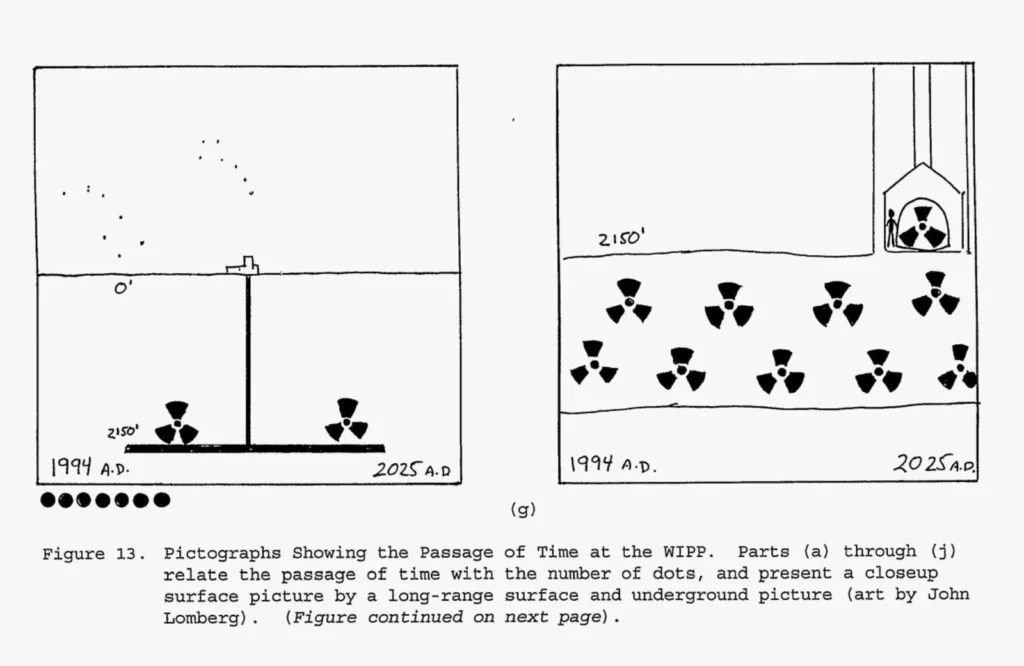
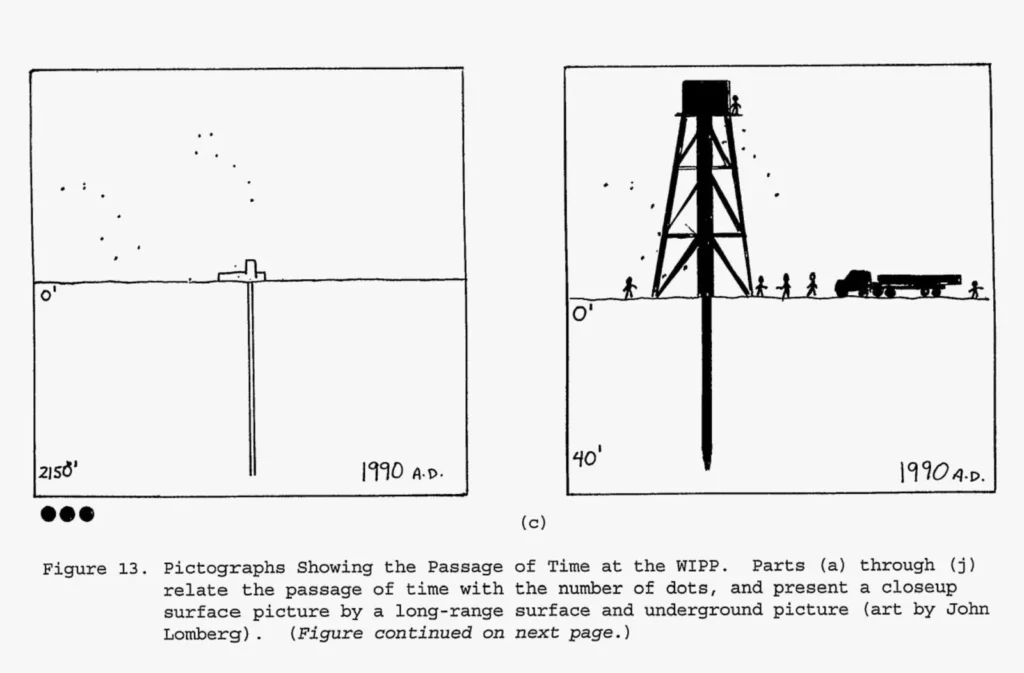
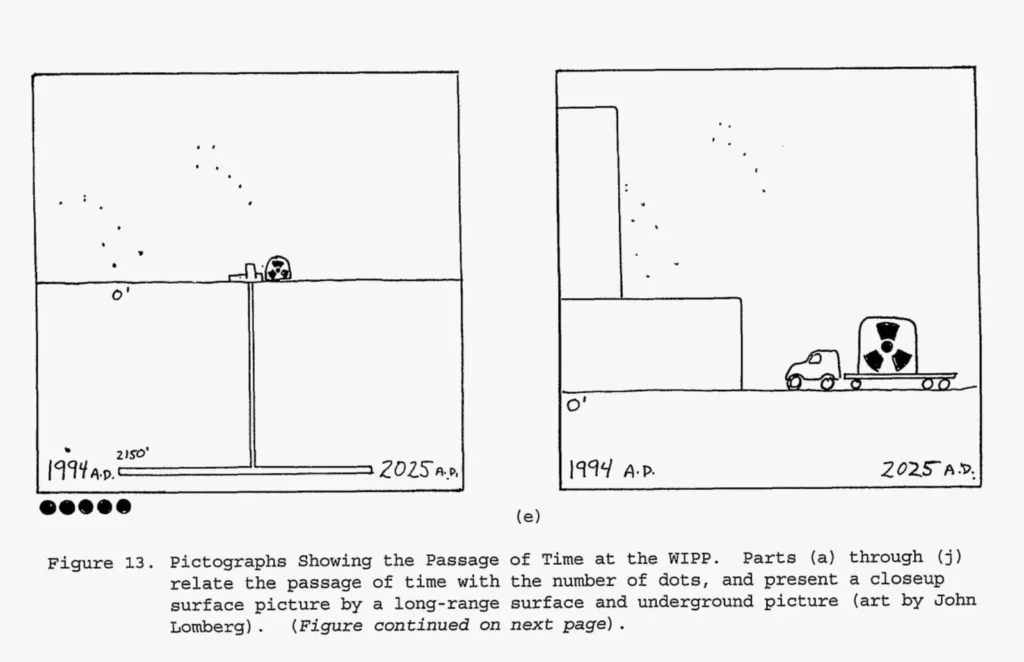
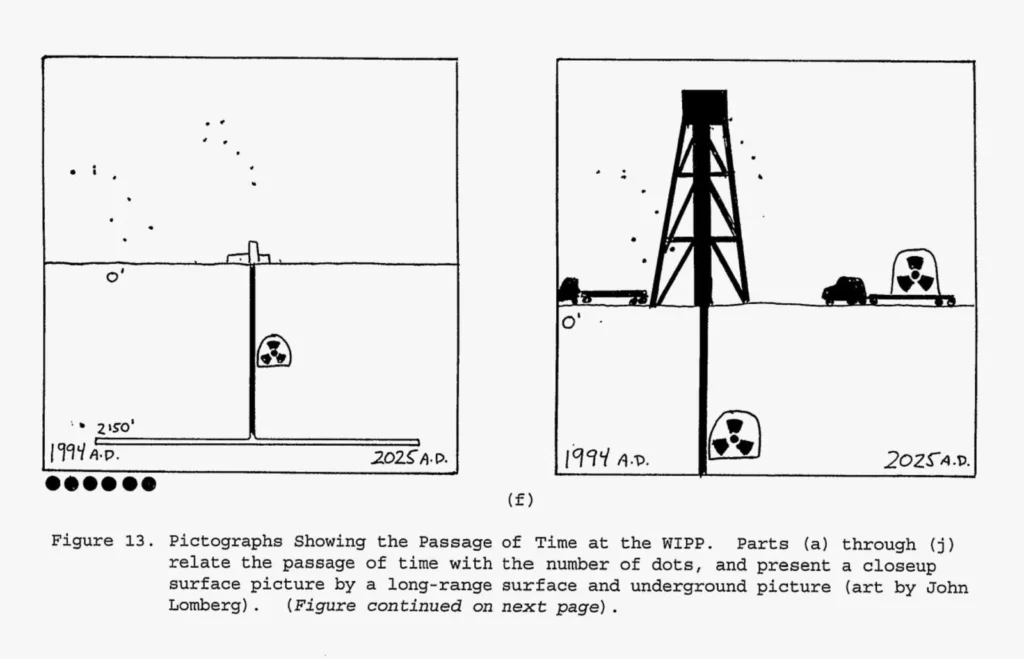
Borrowing from the instructional pictograms used in U.S. National Parks, the team devised a visual narrative showing the construction of the waste repository and the danger buried beneath it. In one example, a sequence might show a human approaching a buried container of radioactive material and then falling ill, an attempt to depict cause and effect without relying on language. But even this approach contained serious ambiguities. As researcher Christopher Wisbey later pointed out, a pictogram showing a man approaching a barrel and becoming sick might be interpreted in reverse: a sick man approaching the barrel and becoming healthy. The problem is compounded by the fact that cultures read visual narratives in different directions, left to right, right to left, or even upwards, starting from the bottom.
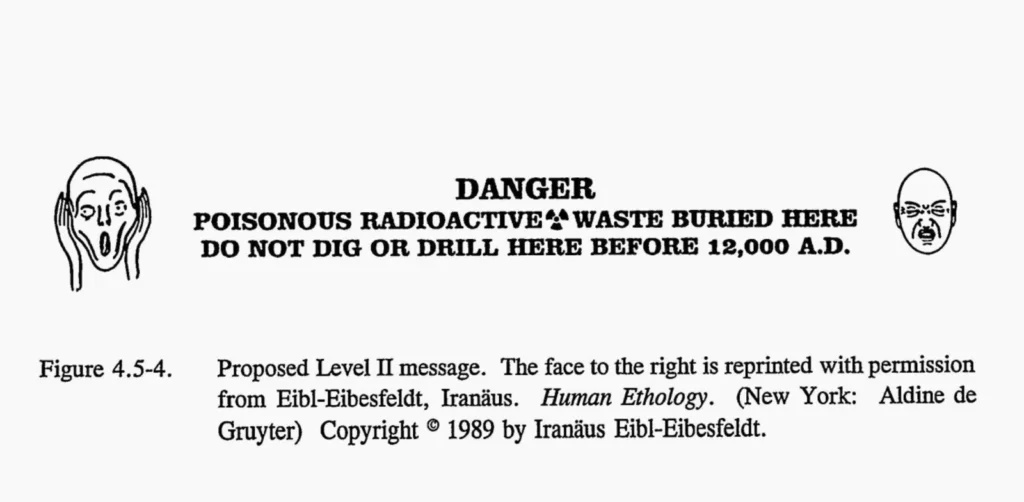
Team B also experimented with more symbolic or emotional imagery. Some proposals suggested carving human faces depicting archetypal expressions of terror, specifically invoking Edvard Munch’s The Scream, into stone markers. Others explored environmental signals, such as structures that would produce eerie sounds in the wind or even an aeolian instrument tuned to D minor, a musical key often associated with sadness. Underlying many of these ideas was an interest in what might be called geo-mythology, the possibility that landscapes, myths, and archetypal imagery could encode warnings that survive long after their original cultural context disappears. The concept echoes earlier proposals such as Thomas Sebeok’s “atomic priesthood,” which imagined ritual traditions preserving knowledge of nuclear danger across generations.

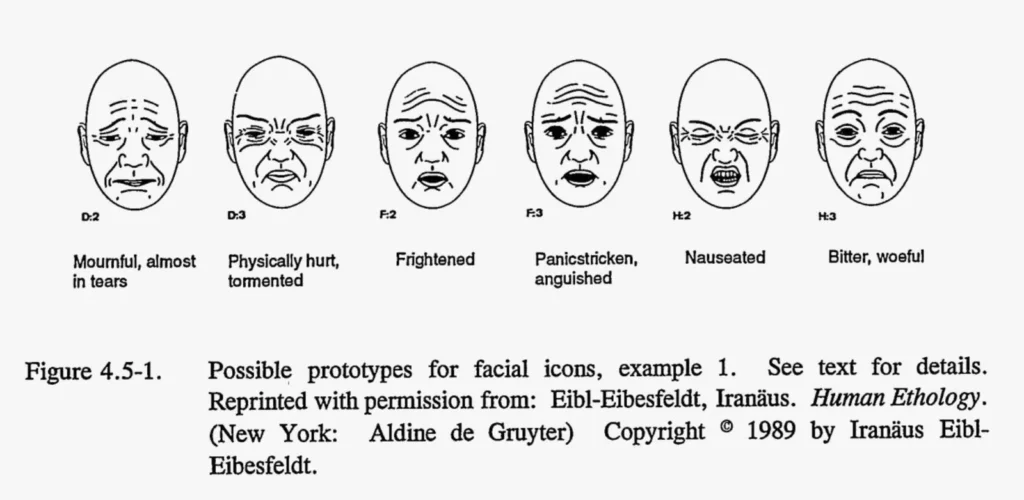
Yet the approach was not without critics. As scholar Andrew Moisey later argued, the designers underestimated how much shared cultural context is required for any communication to succeed. Even carefully designed pictograms might fail without a shared interpretive framework. A sequence meant to warn of danger could just as easily be read as a map to something beneficial. Modern examples suggest this risk is real. Throughout Rome, buildings and bridges contain carved flood level inscriptions dating back to the Roman Empire. Some markers record catastrophic floods from the Middle Ages and earlier. These marks clearly show how high the river historically rose, yet construction repeatedly crept back into flood-prone areas. Modern floods such as the Tiber flood of 1870 inundated large parts of the city that had centuries of visible warnings literally carved into their walls.
Yet the approach also carried an obvious flaw. A monumental and disturbing landscape might repel some visitors, but it could just as easily attract them. “We are adventurers. We are drawn to conquer forbidding environments,” says Florian Blanquer, a semiotician hired by the French nuclear agency Andra. “Think about Antarctica, Mount Everest.” Both teams’ proposals ultimately envisioned a massive monument complex, surrounded by earthen berms, granite markers, and multilingual warnings, an approach that echoed the earlier recommendations of archaeologist Maureen Kaplan a decade prior. Yet the two groups differed sharply in how visitors should interact with the site.
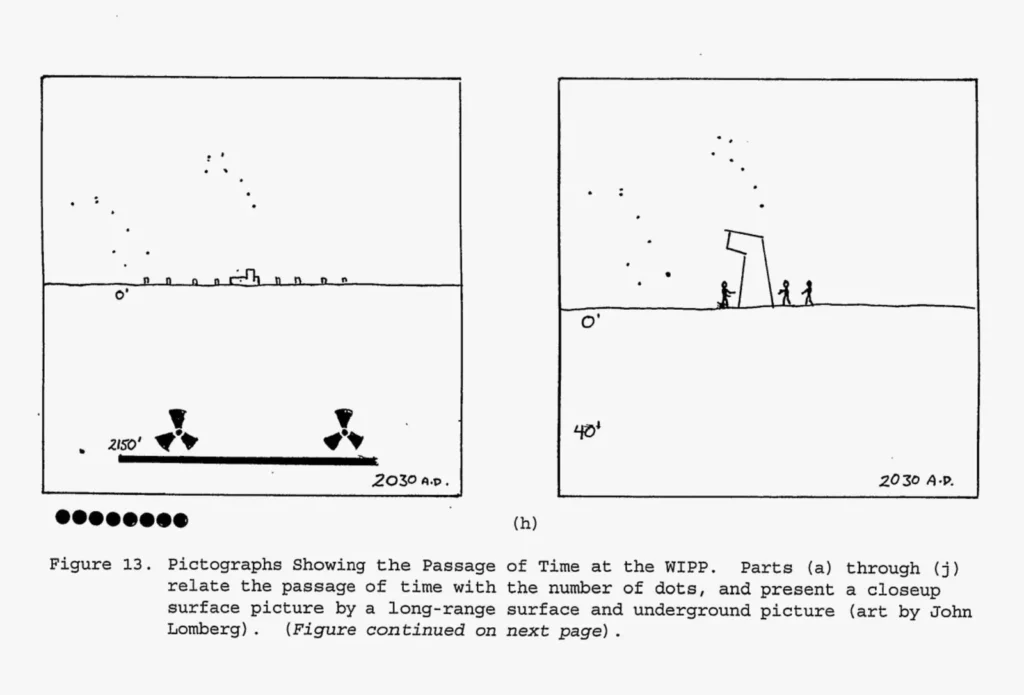
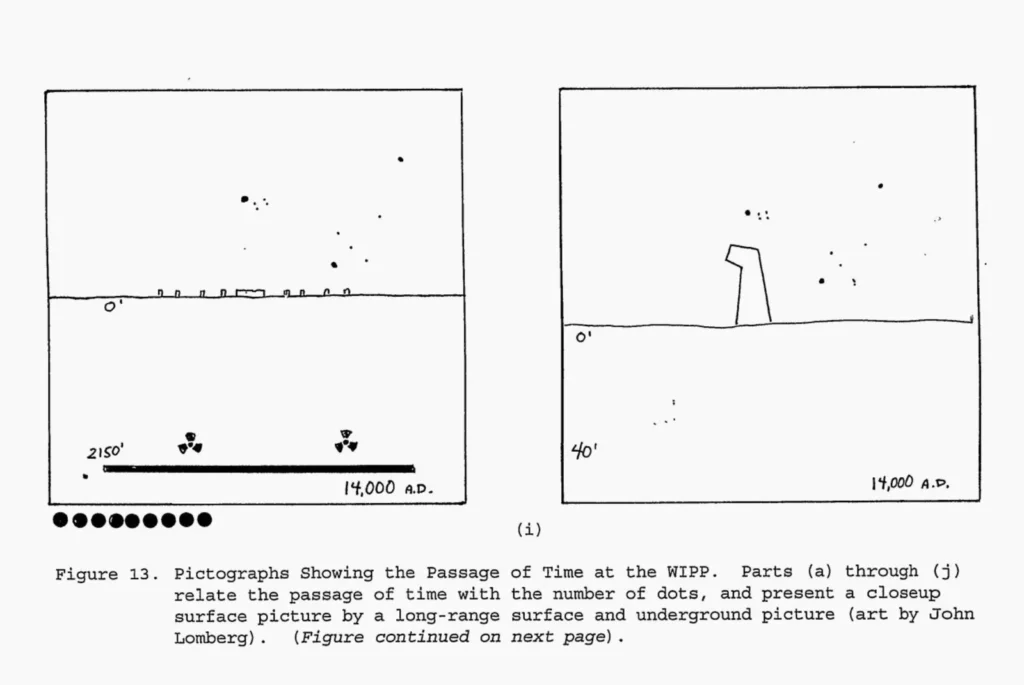
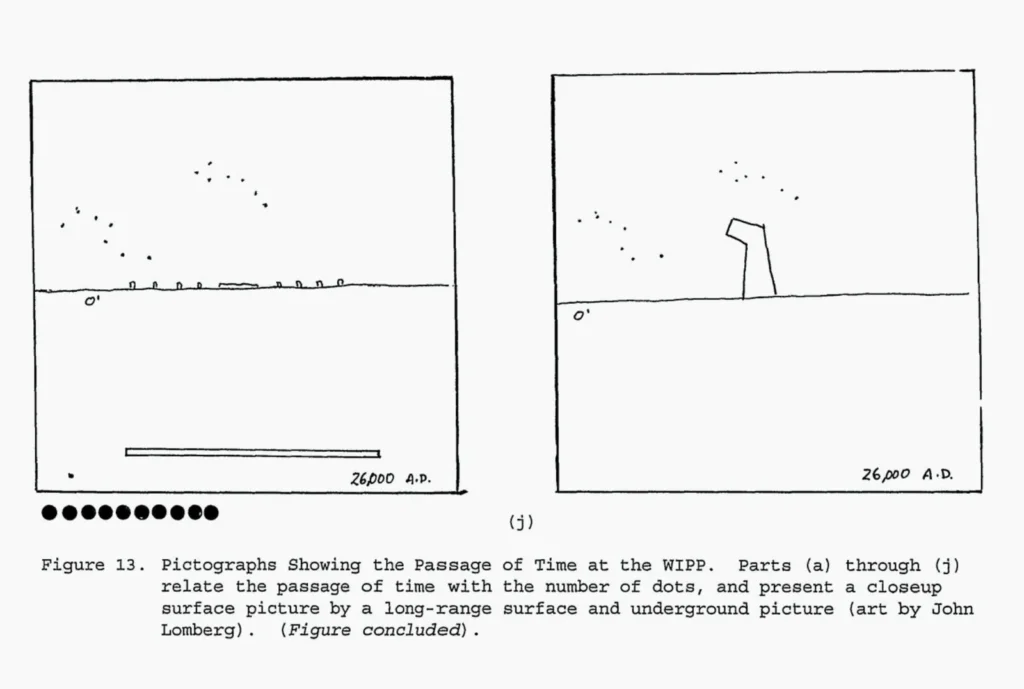
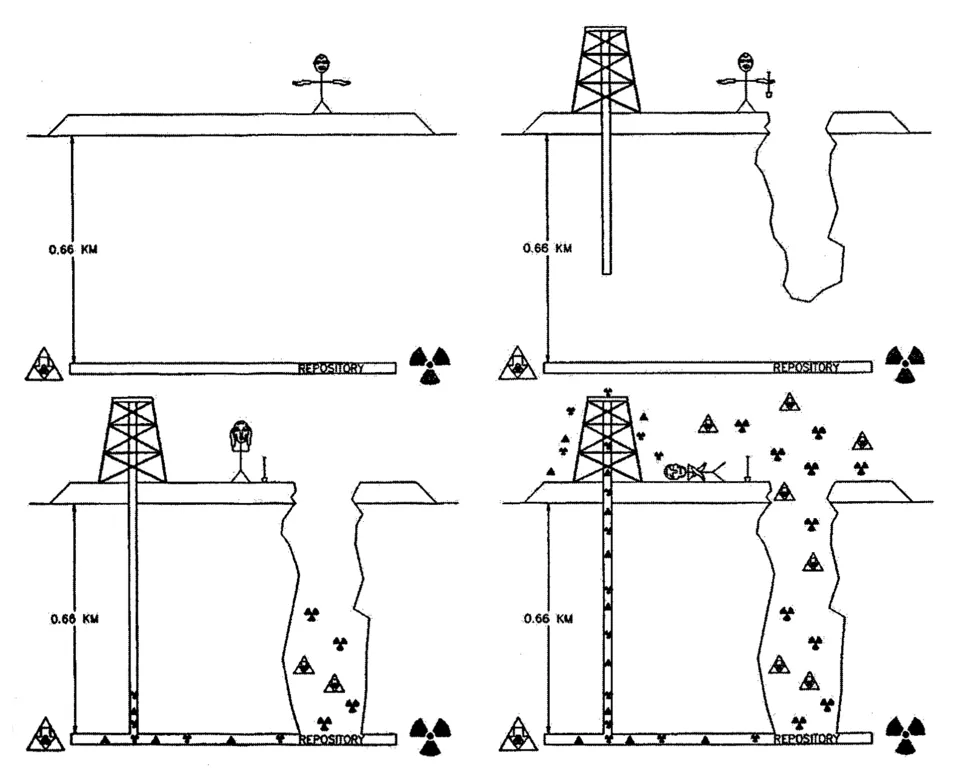
Both proposals revealed a fundamental tension between attraction and repulsion. A warning monument must first attract attention before it can communicate anything at all. Visitors would need to approach close enough to be repelled by the landscape (Team A) or close enough to encounter explanatory messages (Team B). As materials scientist Dieter Ast observed, the paradox was unavoidable: “A marker system should be chosen that instills awe, pride, and admiration,” since these are precisely the emotions that motivate societies to preserve monuments across centuries. In other words, the very structures meant to warn people away might need to be preserved like sacred sites in order to survive long enough to do their job.
Despite their philosophical differences, the two teams converged on several key principles. Both recommended large-scale landscape markers, berms, stone monuments, and perimeter markers, designed to make the site unmistakable from afar. Both also emphasized layered communication, with simple warnings at the surface and deeper chambers containing more detailed explanations. The message itself would be repeated through multiple channels: symbols, pictograms, written language, and scientific diagrams, ensuring redundancy in case one form became unintelligible. Detailed records would also be preserved in off-site archives, such as libraries and institutional repositories elsewhere in the world. Finally, the system would rely on durable materials, granite, ceramics, and buried information disks, capable of surviving for millennia.
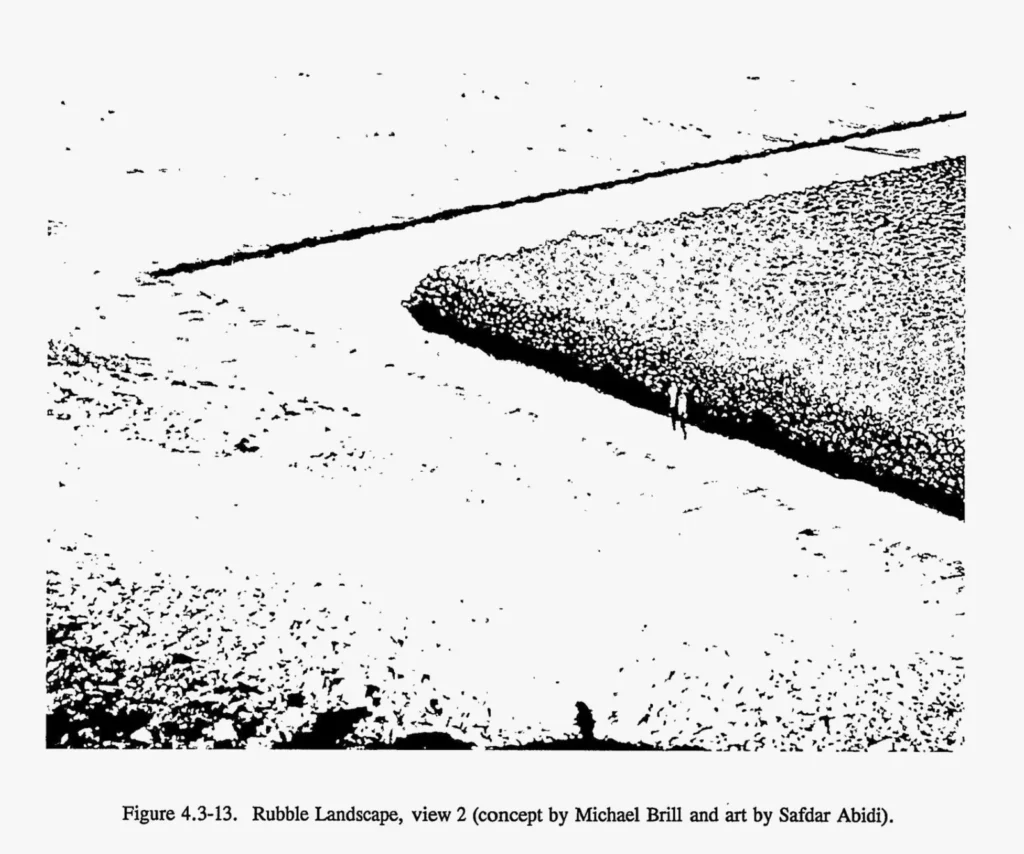
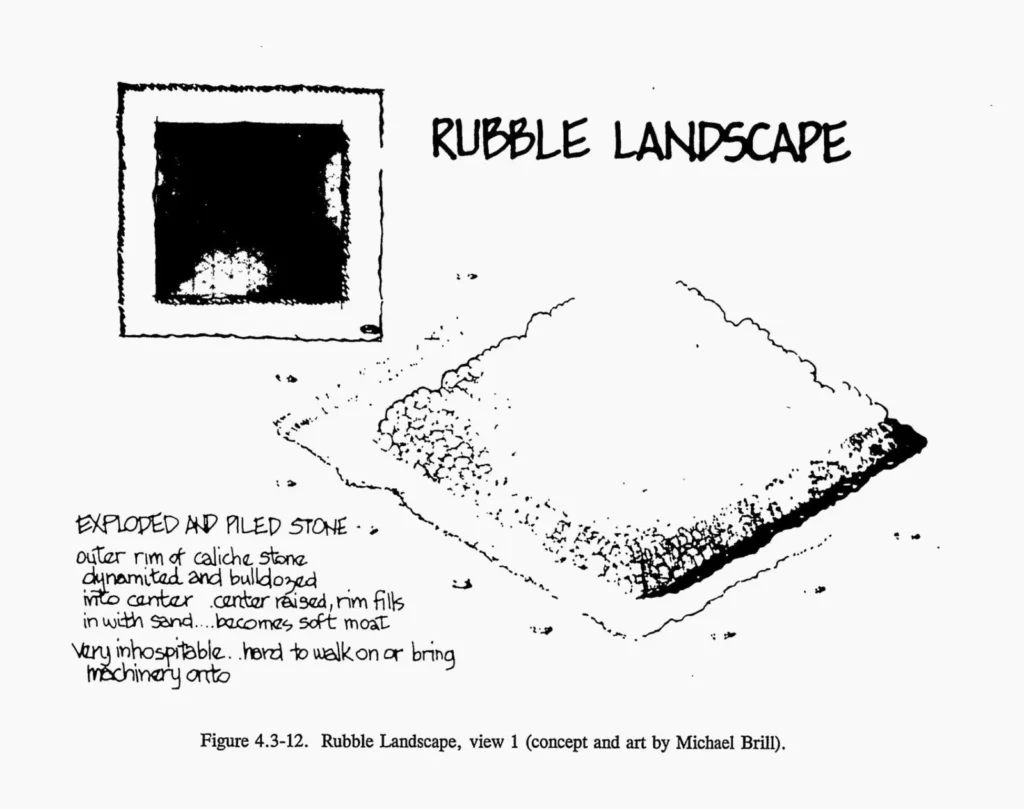
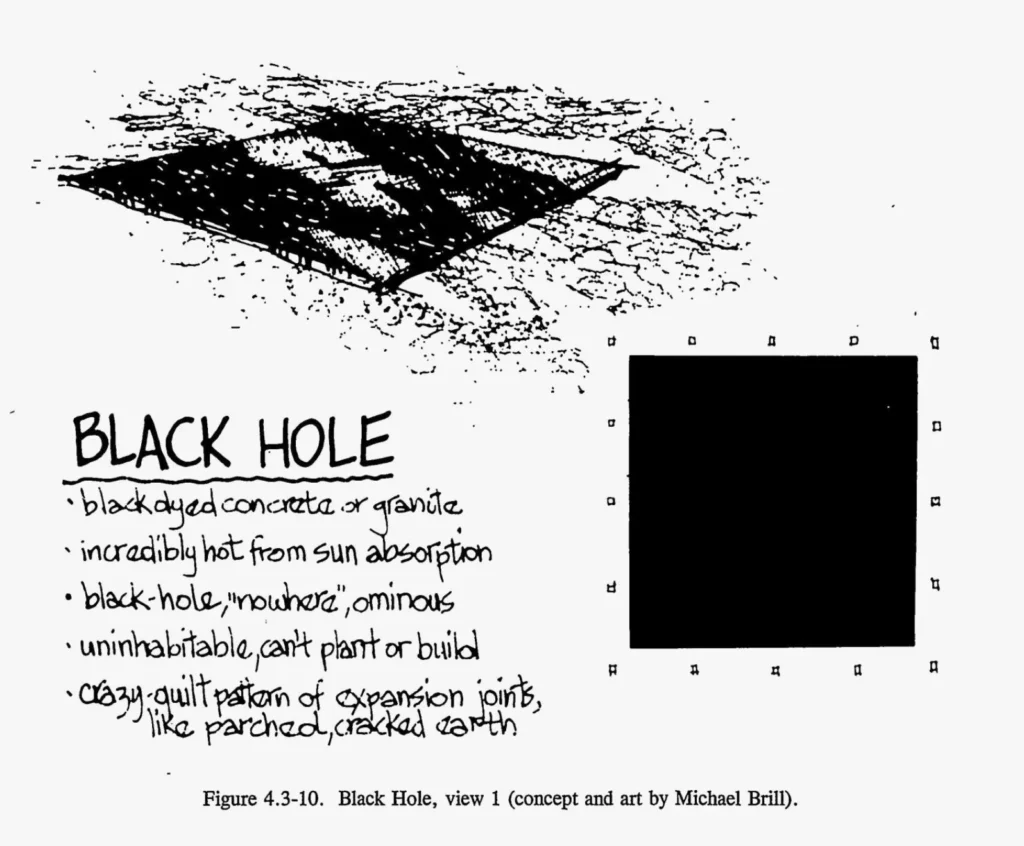
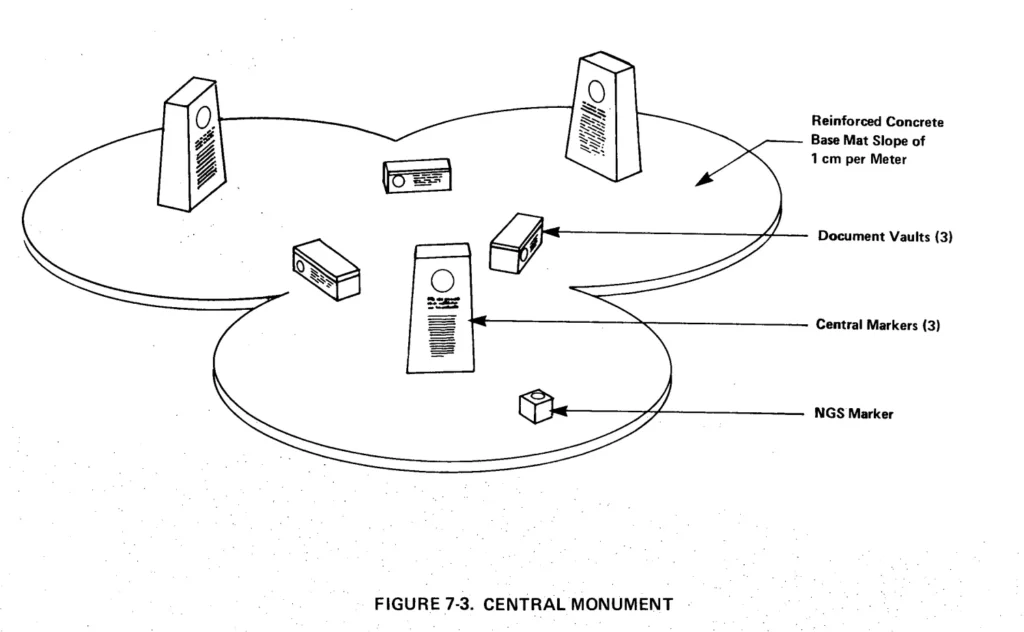
Sandia National Laboratories eventually synthesized these ideas into a hybrid marker concept. The proposed system included an outer landscape zone covering roughly seven square kilometers, marked by massive earthworks and stone structures intended to signal that the terrain itself was abnormal. Surrounding the core would be perimeter monuments carved from granite, each warning of the danger below. At the center, a buried message chamber would contain more detailed information, including the now-famous warning text beginning: “This place is a message…” Alongside the text would be pictograms depicting illness and death, as well as diagrams explaining radiation.
Both teams submitted their proposals and Sandia’s final report, published several years later, translated their recommendations into a tentative design for the Waste Isolation Pilot Plant site. The final concept included a 33-foot-tall, 98-foot-wide earthen berm surrounding the central area. Inside the barrier, sixteen granite monuments would display warnings in seven languages and incorporate visual imagery, including the anguished faces inspired by Edvard Munch’s The Scream. Additional messages would be buried at various depths throughout the complex.
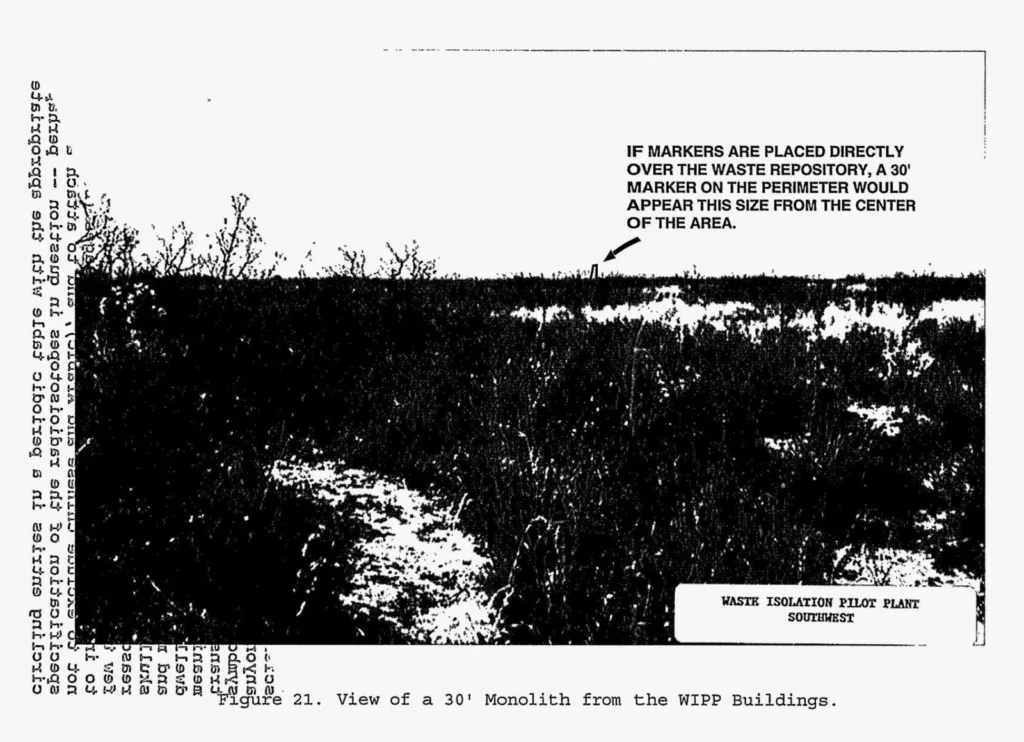
In 1999, the Waste Isolation Pilot Plant received its first shipment of nuclear waste, beginning an operational period now expected to last into the 2080s, after which the facility will be sealed. Despite decades of planning, however, none of the proposed warning monuments have yet been constructed. As long as the site remains actively monitored and guarded, a situation likely to continue for at least a century, the elaborate marker system is not yet considered necessary.
Since opening, WIPP has received more than 171,000 containers of nuclear waste, making it the United States’ only operational deep geological repository. The long-term marker system required by federal regulations is still expected to be built once the site is finally closed, though what form it will ultimately take remains uncertain. As Jon Lomberg later remarked, the nuclear monument he helped design “is still just a design proposal.”
The situation has often struck observers as strangely surreal. As historian of science Peter Galison, co-director of the documentary Containment, put it, the challenge forced policymakers into unusual territory: “The government was essentially being driven to science fiction in order to be able to open a multi-billion-dollar nuclear waste site.”
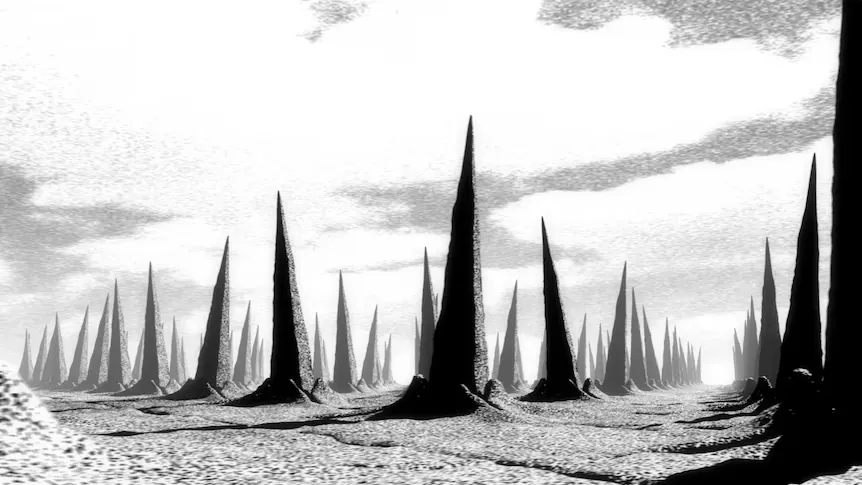
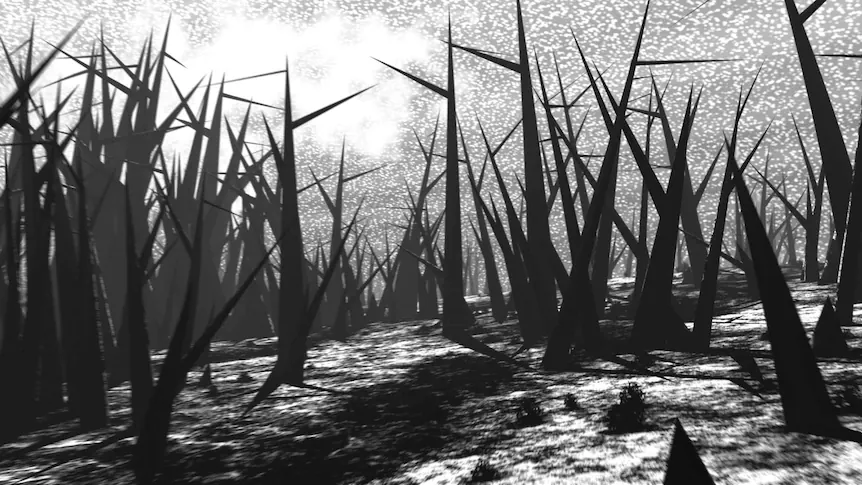
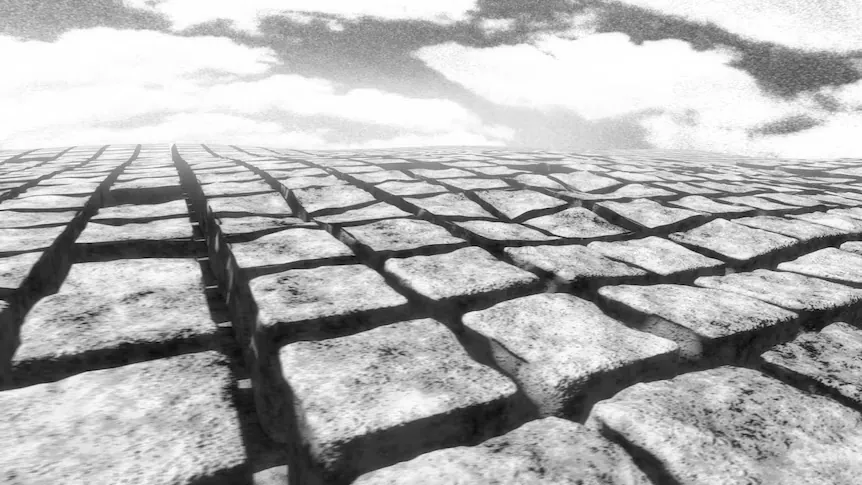
The Department of Energy’s 2004 “Implementation Plan” for the permanent markers at the Waste Isolation Pilot Plant was presented as a compromise between the competing philosophies proposed in the early 1990s. In practice, however, the plan largely reflected the approach advocated by Team B: a layered system of warnings that would guide a visitor progressively toward increasingly detailed information about the buried waste.
A 98-foot-wide, two-mile-long ditch with steep walls 33 feet deep, studded with magnets and radar reflectors, was proposed as one of the most dramatic warning features for the Waste Isolation Pilot Plant (WIPP) outside Carlsbad, New Mexico. The idea was to create a landscape so unusual and difficult to traverse that it would signal danger to anyone approaching in the distant future. Paired with 48 massive stone or concrete monuments, each weighing around 100 tons and carved with warnings in seven languages, including English and Navajo, as well as human faces contorted in expressions of fear. Their surfaces would carry carved warnings and pictograms, protected by a surrounding concrete “mother wall” designed to shield the inscriptions from erosion and vandalism. The texts would be placed high on the structures so they would not easily be buried by drifting desert sand.
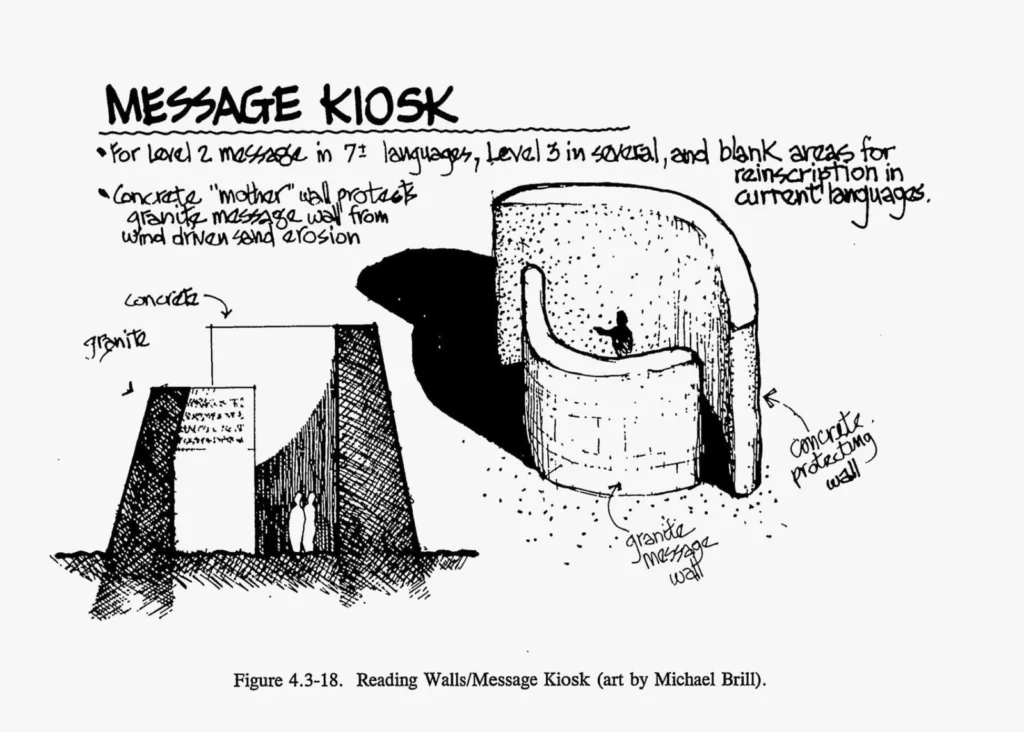
The broader design envisioned several concentric warning zones. Along the outer boundary of the four-square-mile site, 25-foot-tall granite columns would mark the perimeter. Within this boundary, a large earth berm roughly 33 feet high and 100 feet wide would trace the footprint of the underground repository itself. Inside the berm, a second square of granite pillars would reinforce the warning, creating layers of physical and symbolic barriers.
Alongside the physical markers, the plan also proposed a parallel archival strategy. Detailed information about the repository would be stored in archives around the world on specially prepared paper, stamped with instructions that the documents should be preserved for the licensed lifespan of the repository itself. Together, the monuments, landscape modifications, and global archives were meant to form a redundant system of warnings intended to survive deep time.
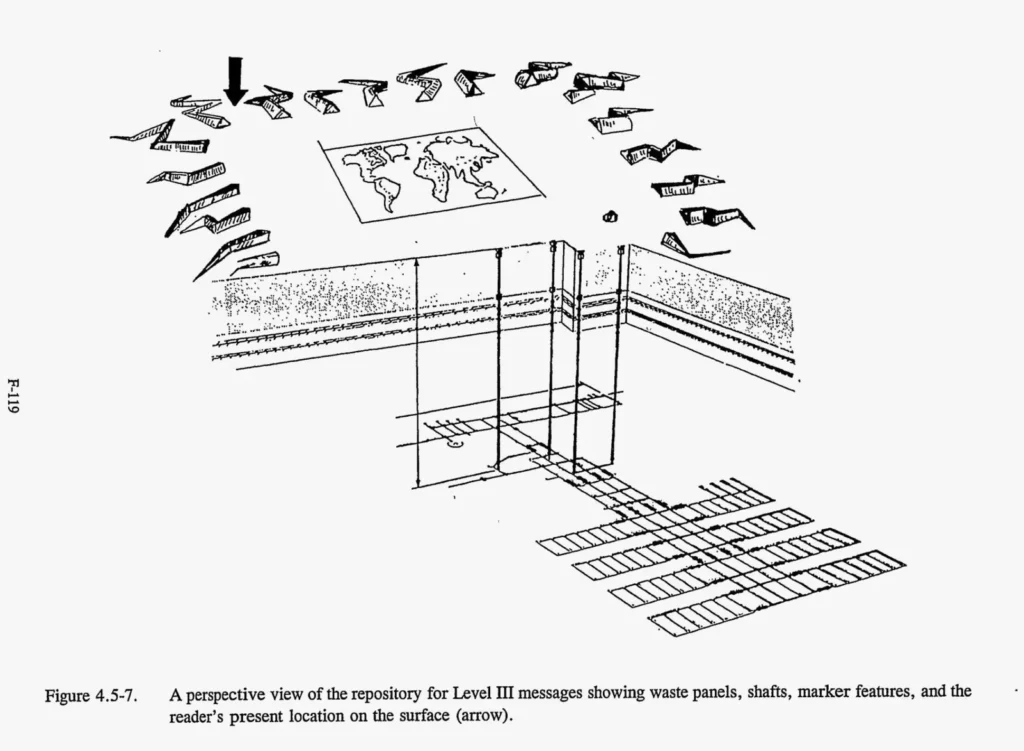
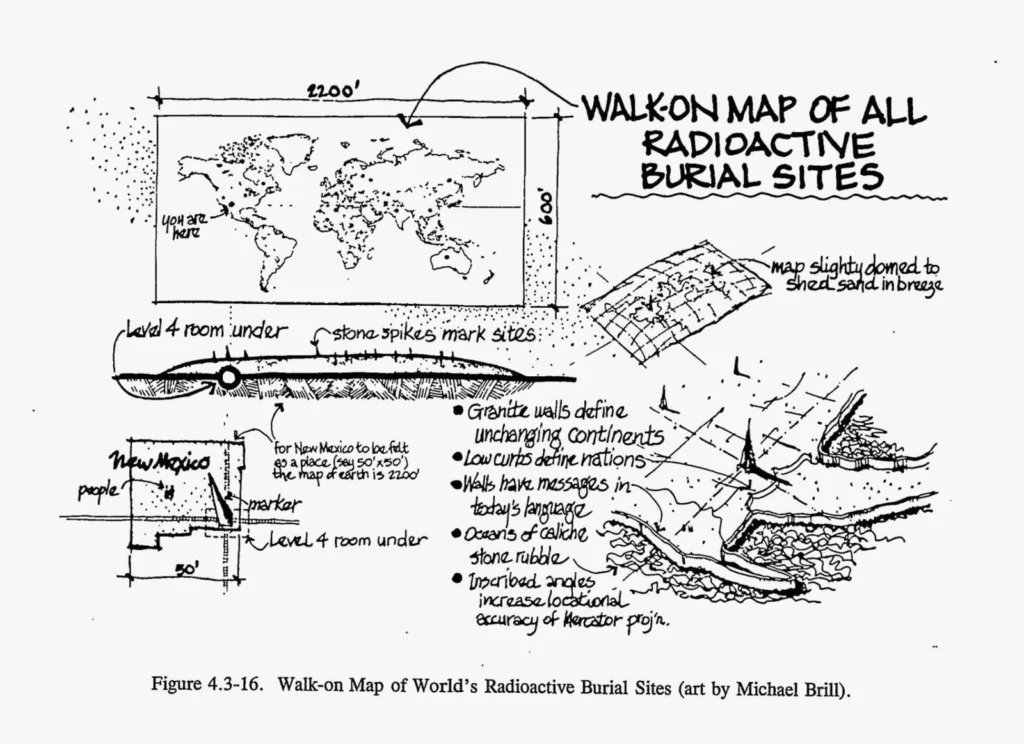
Rather than monumental architecture on the scale imagined in some early proposals, the marker system centers on a set of large earthen berms, essentially vast, jagged mounds of dirt arranged around the repository footprint. Their irregular shapes are meant to suggest danger and unnatural disturbance in the landscape while also resisting erosion. At the corners of the formation, taller berms will act as vantage points from which visitors can view the entire complex. Beneath these corner points, reinforced concrete rooms will contain highly detailed records: maps, astronomical charts marking the date the facility was sealed, the periodic table, and other scientific information. These materials will be engraved into large stone slabs designed to be too heavy to remove, additionally they will be constructed of common stone, concrete, or other materials of the least possible value, to prevent their theft and repurposing.
The overall site will be marked by a perimeter roughly sixteen miles in circumference, punctuated by rows of massive granite pillars. These markers, each weighing many tons, will carry warning texts in multiple languages alongside carved images of human faces contorted in fear, inspired by Edvard Munch’s The Scream. Inside this outer boundary, a berm of tamped earth and rock approximately 33 feet high and nearly 100 feet wide will outline the actual footprint of the underground repository, with a core of salt in the middle, enclosing the surface footprint of the site. Additional granite columns and message kiosks will stand within this inner area, repeating basic warnings and directing visitors toward more detailed information deeper within the site. “This place was chosen to put this dangerous material far away from people. The rock and water in this area may not look, feel, or smell unusual but may be poisoned by radioactive wastes. When radioactive matter decays, it gives off invisible energy that can destroy or damage people, animals, and plants.” reads one of the warnings.
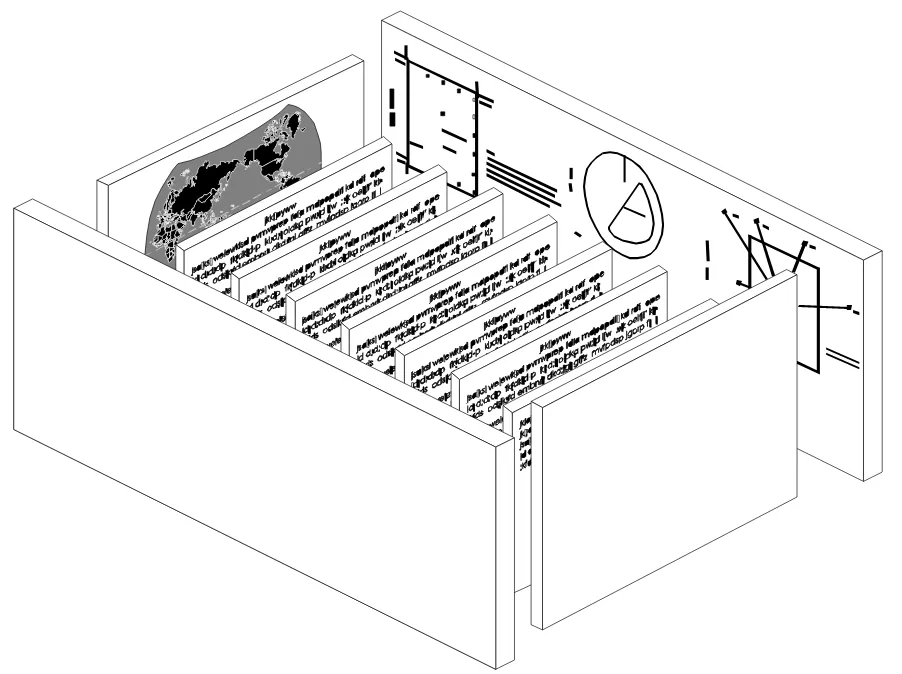
At the center of the monument complex will be an information chamber, constructed from reinforced concrete and granite and designed to survive at least ten millennia. Inside, stone slabs will carry maps, timelines, and scientific explanations of the waste repository and its dangers, along with more engravings of Munch’s Scream. The texts will be written in the six official languages of the United Nations along with Navajo, the Indigenous language historically spoken in the region. Blank sections will also be left for future societies to inscribe the warning in additional languages should existing ones become too antiquated to read with ease. The text of the room, as it stands, is planned to read as follows:
“We are going to tell you what lies underground, why you should not disturb this place, and what may happen if you do. This site was known as the WIPP (Waste Isolation Pilot Plant Site) when it was closed in 2038 A.D. The waste was generated during the manufacture of nuclear weapons, also called atomic bombs. We believe that we have an obligation to protect future generations from the hazards that we have created. This message is a warning about danger. We urge you to keep the room intact and buried.”
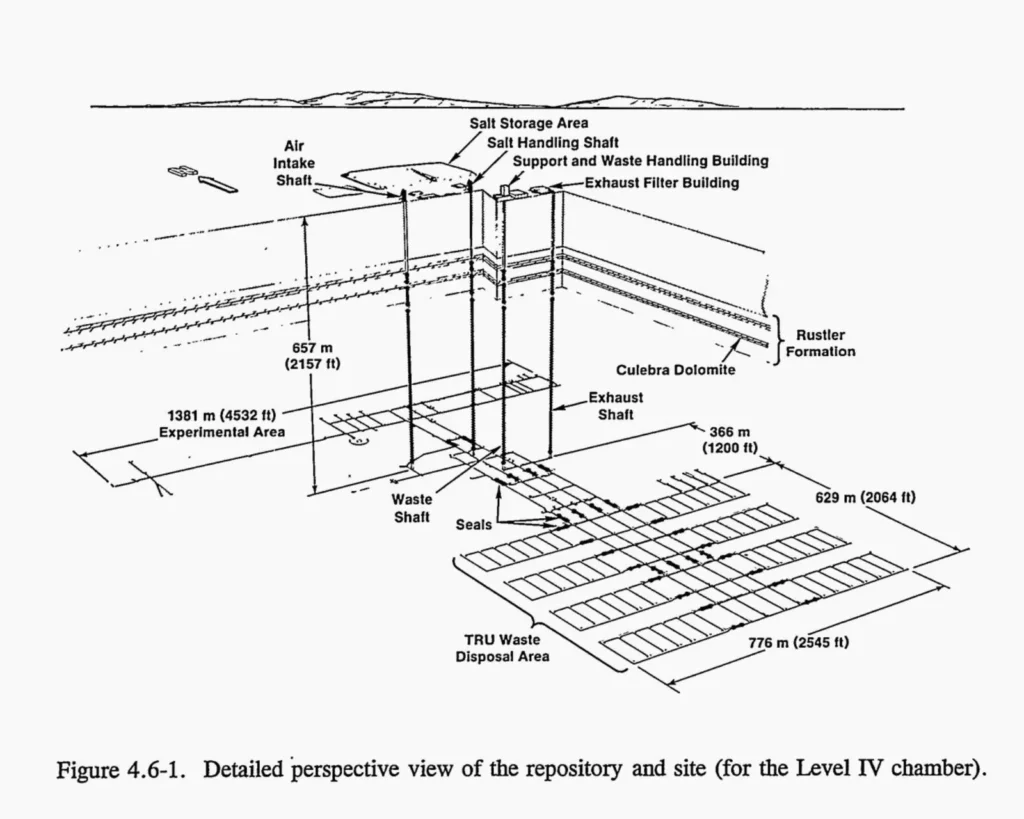
As mentioned earlier, redundancy is central to the design. Should the information chamber be destroyed or the information contained within be rendered undreadable, numerous “time capsule” records will be buried at different depths below the berms and surrounding soil, These disks, made from materials such as ceramic, clay, glass, and aluminum oxide, will carry warning messages and diagrams, ensuring that at least some information survives even if the surface monuments erode or collapse. Samples of wood may be buried alongside them, allowing future generations to accurately date the site. Radar reflectors and magnets will also be embedded in the ground to signal the site’s artificial nature to future surveying technologies.
Another proposed element is a large stone map of the world, measuring roughly 2,200 by 600 feet, slightly domed so that wind-blown sand will slide off its surface. The continents will be outlined in granite, with oceans represented by stone rubble. The map will identify the world’s major nuclear waste repositories, with an obelisk marking the location of the WIPP site itself: You Are Here. Near the site, a reinforced concrete structure standing 30 feet deep in the earth and 60 feet out of the ground known as a “Hot Cell” would display sealed samples of the radioactive material buried deep below, demonstrating physically what lies beneath the ground.
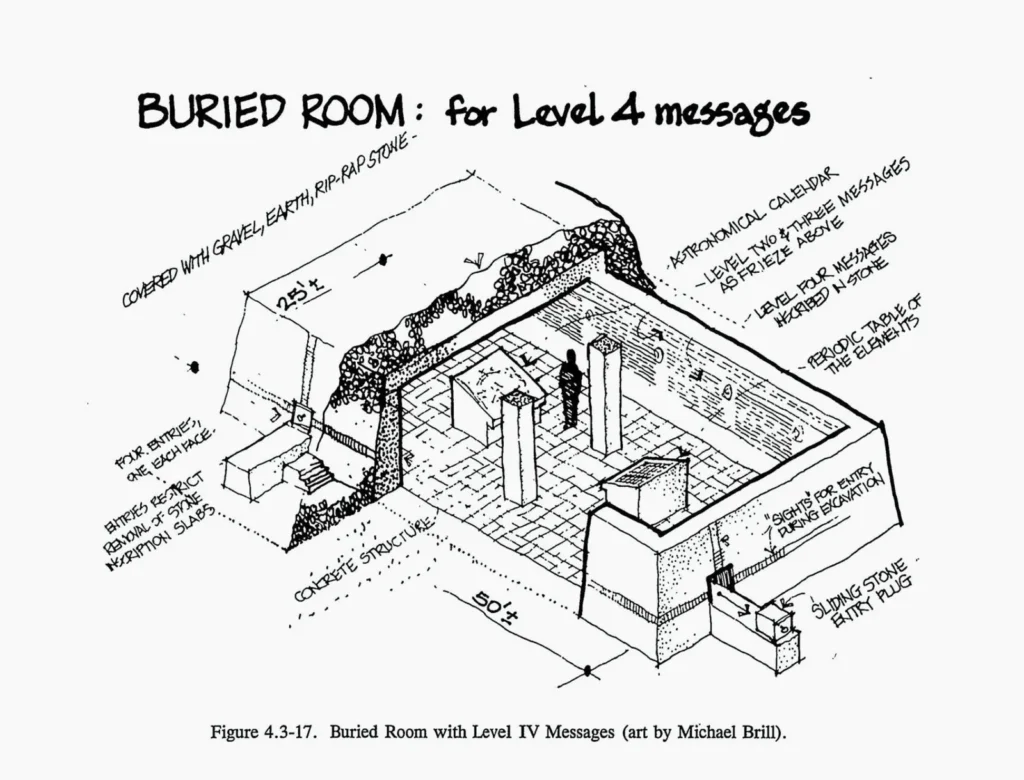
Underlying the entire design is a four-level communication strategy developed in the Sandia reports. Level I simply signals that something artificial is present in the landscape. Level II communicates that the place is dangerous through threatening forms and imagery. Level III conveys basic written information about radioactive waste and the hazards it poses. Finally, Level IV preserves detailed scientific explanations within protected chambers and archives. Non-linguistic architecture and symbolism can likely carry the message only through the first two levels, which is why written language and scientific documentation are preserved deeper within the site. The warning texts themselves combine explanation with instruction. One version begins:
“This place is a message… and part of a system of messages.
Pay attention to it. Sending this message was important to us.
We considered ourselves to be a powerful culture.”
The inscription goes on to explain that the site contains the dangerous byproducts of nuclear weapons production and urges future visitors not to dig, drill, or disturb the ground. It would also include a kind of meta-instruction: if the warning system begins to deteriorate, future societies should renew it using whatever languages and symbols they understand, repeating the message generation after generation for the next ten thousand years.
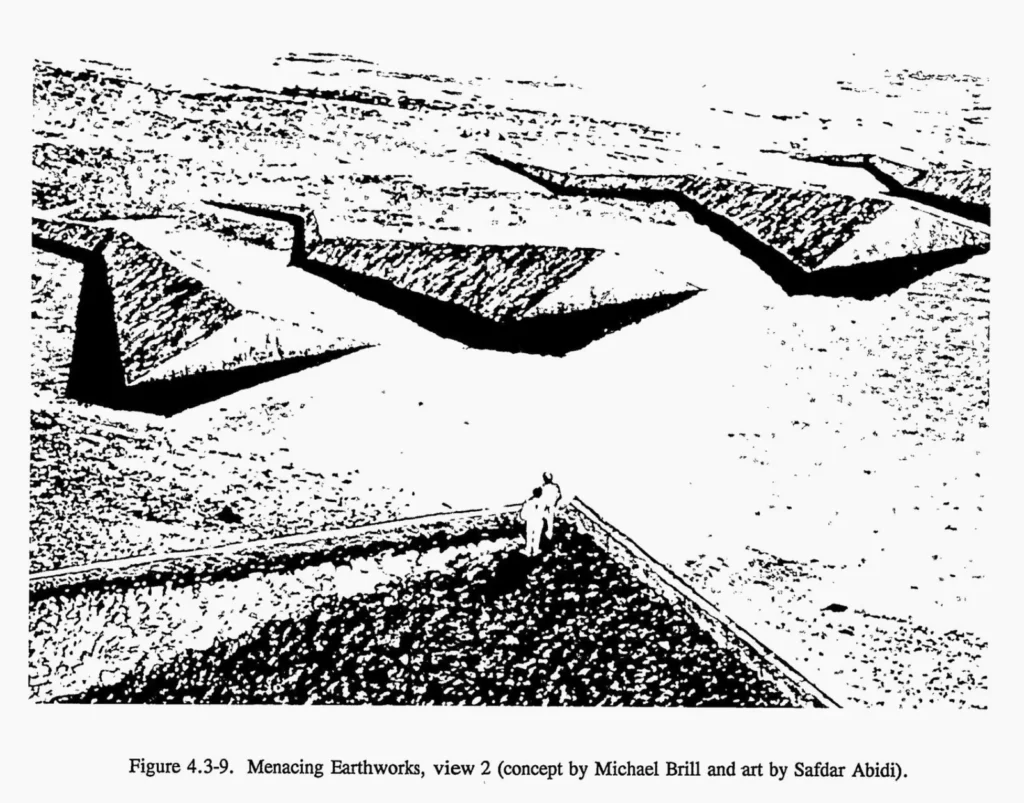
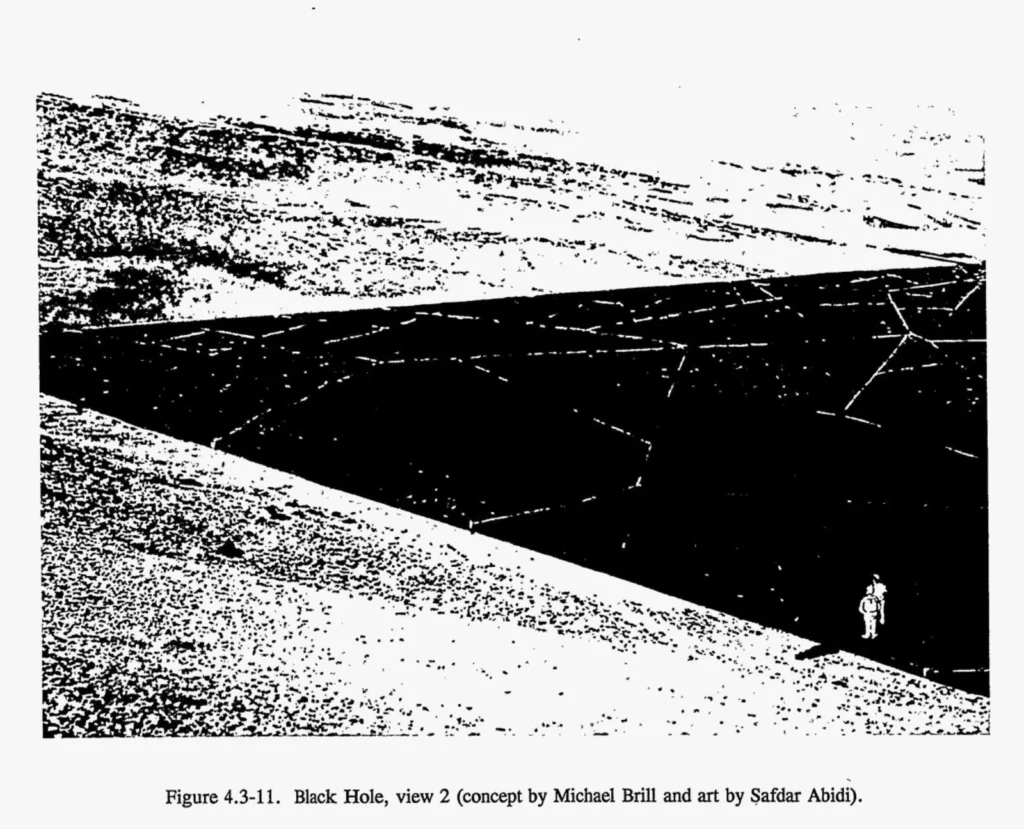
When the repository eventually reaches capacity, currently projected sometime around 2083, the underground caverns will be backfilled, collapsed, and sealed with concrete and soil. The industrial infrastructure now visible at the surface will be dismantled and erased. In its place will remain a stark landscape of berms, stone markers, buried archives, and warning monuments, an attempt, as one observer put it, at our civilization’s largest deliberate effort to communicate across the abyss of deep time.
Cost and practicality played a decisive role in shaping the final design. However, in the eyes of nuclear officials, the truly most economical way to ensure the warnings survive may not be monumental architecture at all, but social memory. One recurring proposal is the creation of museums and visitor centers that keep the story of the site alive through continuous cultural transmission. Abraham Van Luik, a geoscientist at the Waste Isolation Pilot Plant, has suggested that the American repository could eventually include a desert museum designed by an architect and operated as a tourist destination. The point is not spectacle but continuity: if the site becomes locally meaningful, its history may persist through community knowledge long after official oversight disappears.
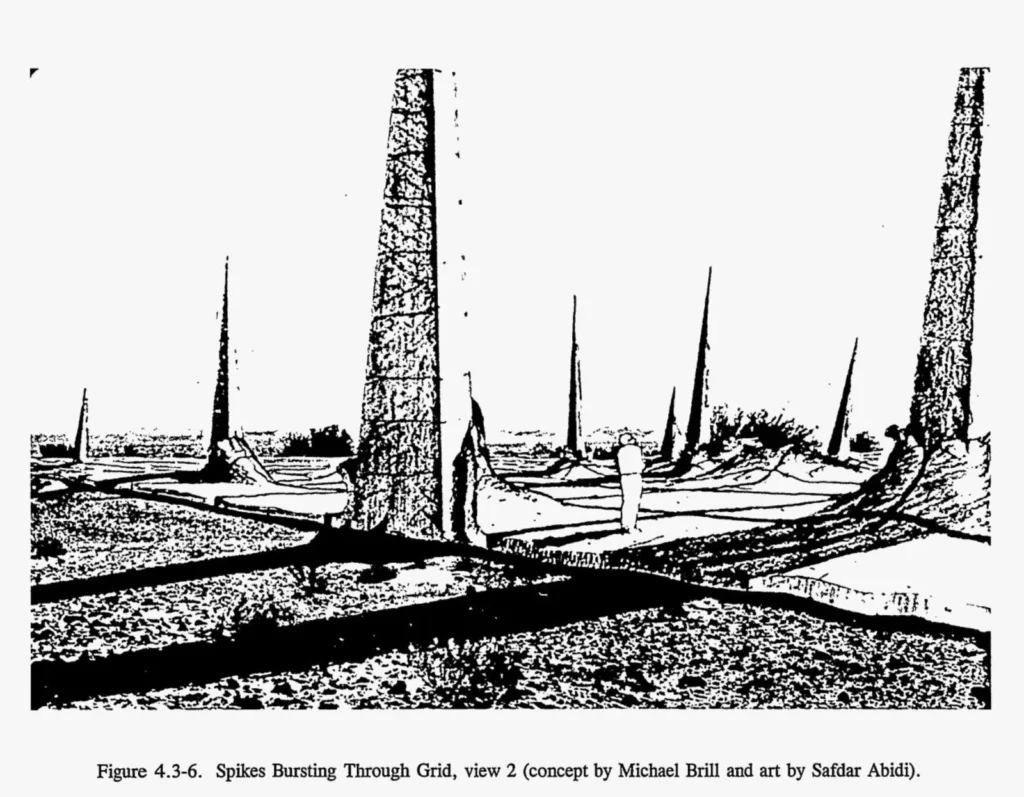
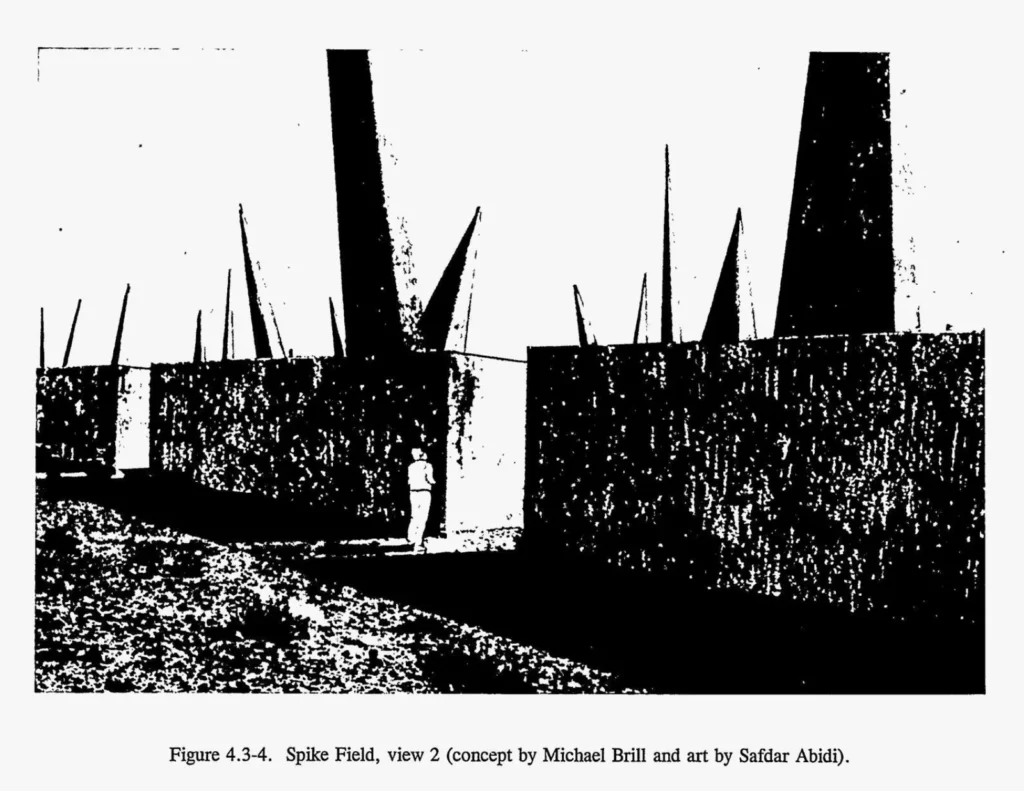
The concerns about cost are reasonable. The monumental schemes of the early 1990s were seen as prohibitively expensive. In 1994 the cost of constructing the Sandia marker proposals was estimated at $68 million, and decades later none of the designs have been built. Meanwhile, Yucca Mountain, a few hours from Las Vegas, has effectively stalled after more than $12 billion had already been spent; its eventual cost had been projected at roughly $96 billion.
Design discussions nevertheless continue. The current idea of gigantic granite blocks meant to frighten future visitors has begun to fall out of favor. Some critics describe it as a “classic American solution”, very large, but also visually crude, and warn that unattractive monuments may simply be vandalized or dismantled by future inhabitants.
Abraham “Abe” Van Luik, a senior scientist of the WIPP that was involved in its planning for the site’s future, argued that future safety may ultimately depend less on monuments than on people. If civilization were to collapse and someone arrived centuries later hoping to drill for oil, the first warning might come not from stone markers but from nearby residents who still remember what lies beneath the ground. For that reason, officials have increasingly concluded that local community involvement is essential. A place that matters culturally, he suggests, can remain in memory for generations.
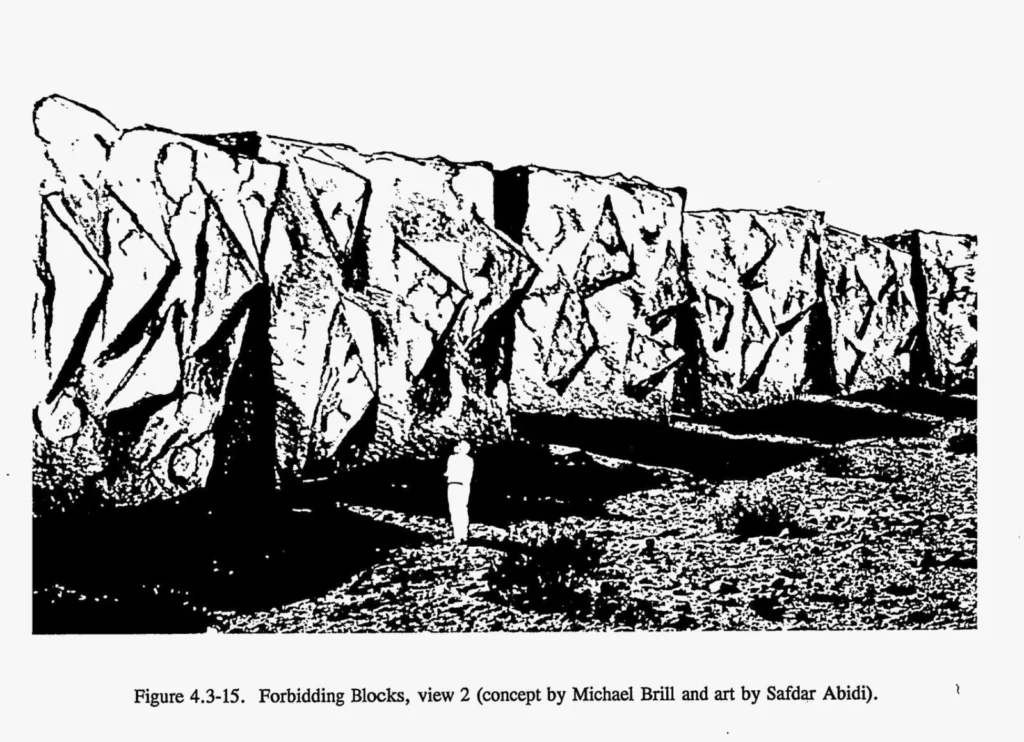
A deeper criticism concerns human behavior itself. Archaeology shows that warnings often fail, and sometimes even provoke curiosity. Egyptian tombs marked with dire curses were still looted; in popular culture, rule-breakers like Indiana Jones are heroes rather than cautionary examples. “Humans are naturally curious,” one critic notes. “Warnings are an invitation.” A monument might also be misunderstood entirely: if literacy collapses, written instructions become meaningless.
Some scholars argue that the early nuclear semiotics proposals suffered from exactly this problem. The designs were visually striking, mysterious, and unusual, qualities that might attract attention rather than repel it. In legal terms they resembled an “attractive nuisance”: a curious object placed in an empty landscape that invites investigation. “Any marker, no matter what it looks like, will attract future humans to it,” one observer wrote, “Once the civilization that shines meaning upon it sets over the horizon, it will be shrouded in darkness forever. Such is the fate of all unidentified objects that come in contact with a boundless historical imagination.”
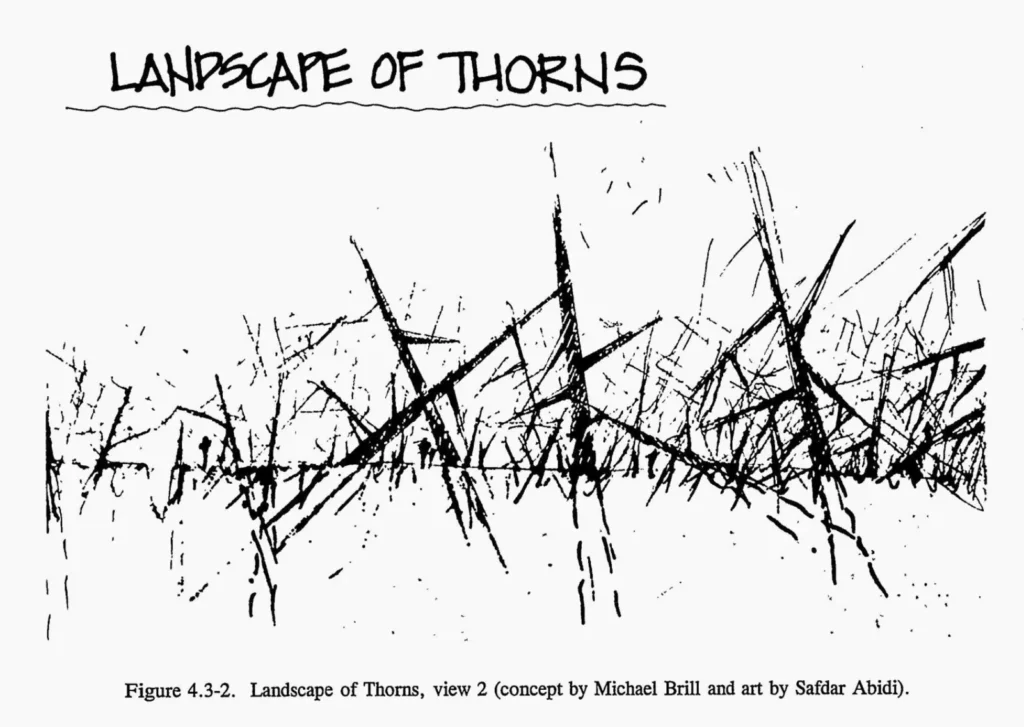
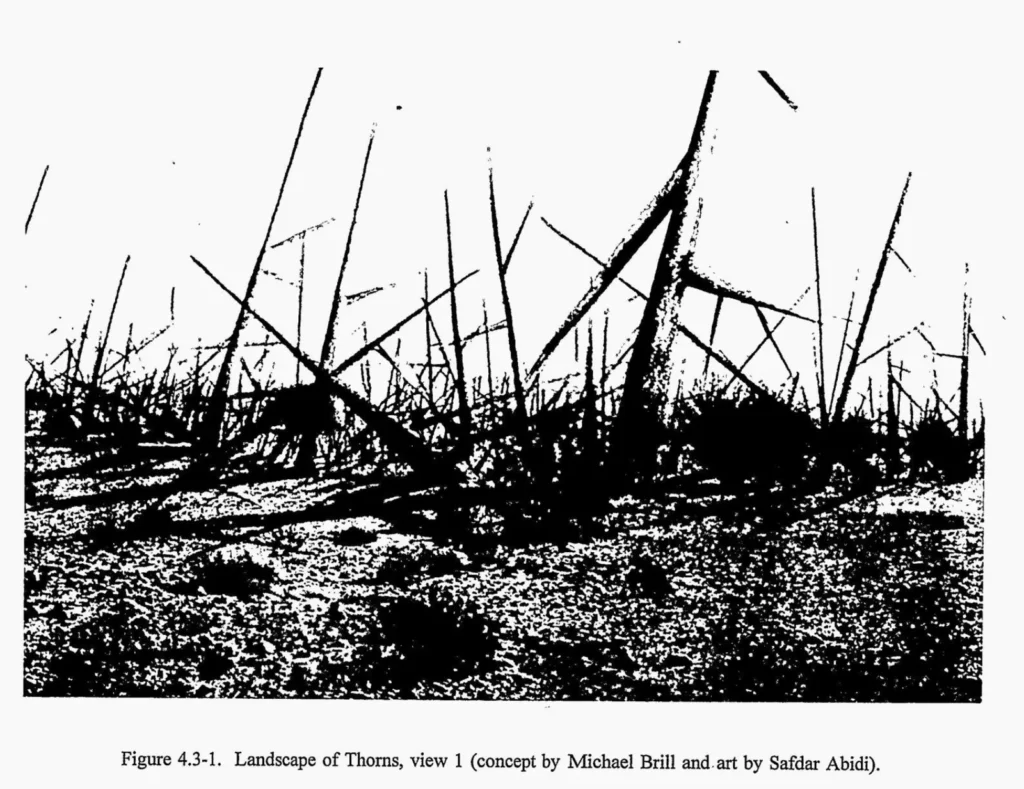
Van Luik himself now questions the premise that future generations must be frightened away from the site. Emotional warnings like fear, guilt, prohibition, often fail even in the present. Instead, he argues, the goal should be straightforward explanation. “Parents attempt to control children with emotions like guilt or fear, with mixed and unpredictable results,” he says. “If you tell people not to touch the red button, but don’t say why, what will they do? Our thinking today is we want to treat future generations like adults and just give them facts to prevent them from doing anything in ignorance.”
Others have speculated that the monumental designs revealed a more human motivation. Some participants in the project may have been drawn to the opportunity to create something that could outlast civilization itself, and thus their judgement may have been skewed. Andrew Moisey, continuing his criticisms of the project, notes a possible explanation. “Perhaps they could not resist the opportunity it offered for a kind of immortality,” he writes. “This would be an understandable response from a group asked to devise the final communication of the first truly Promethean civilization.”
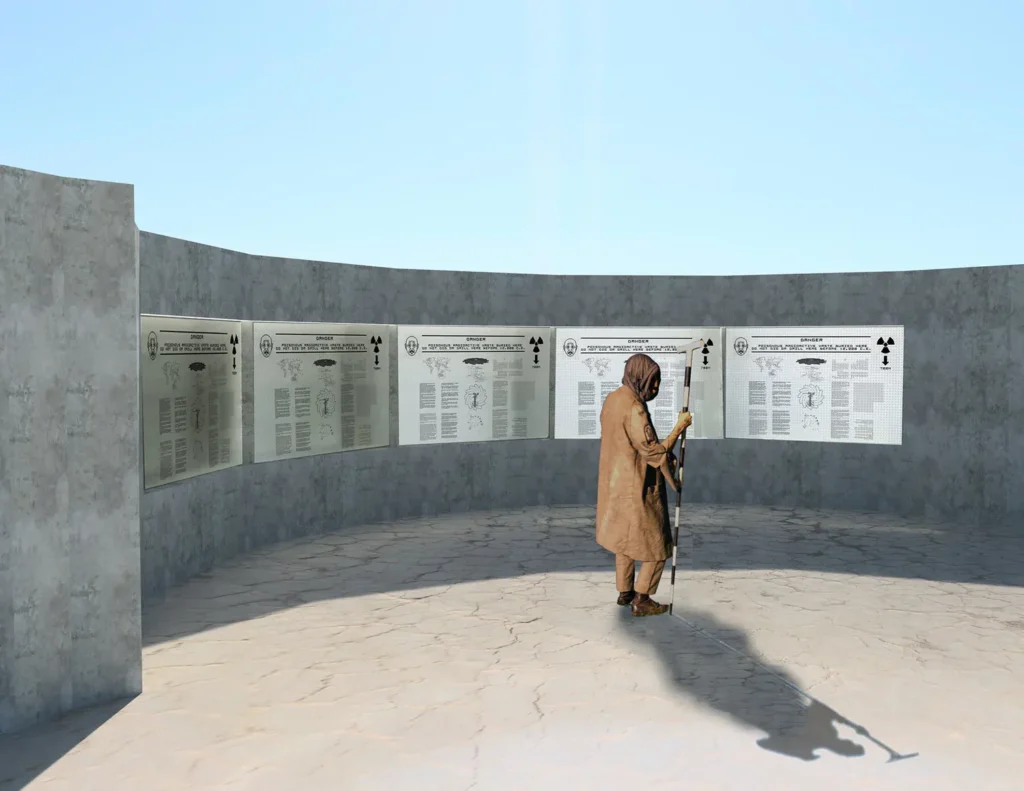
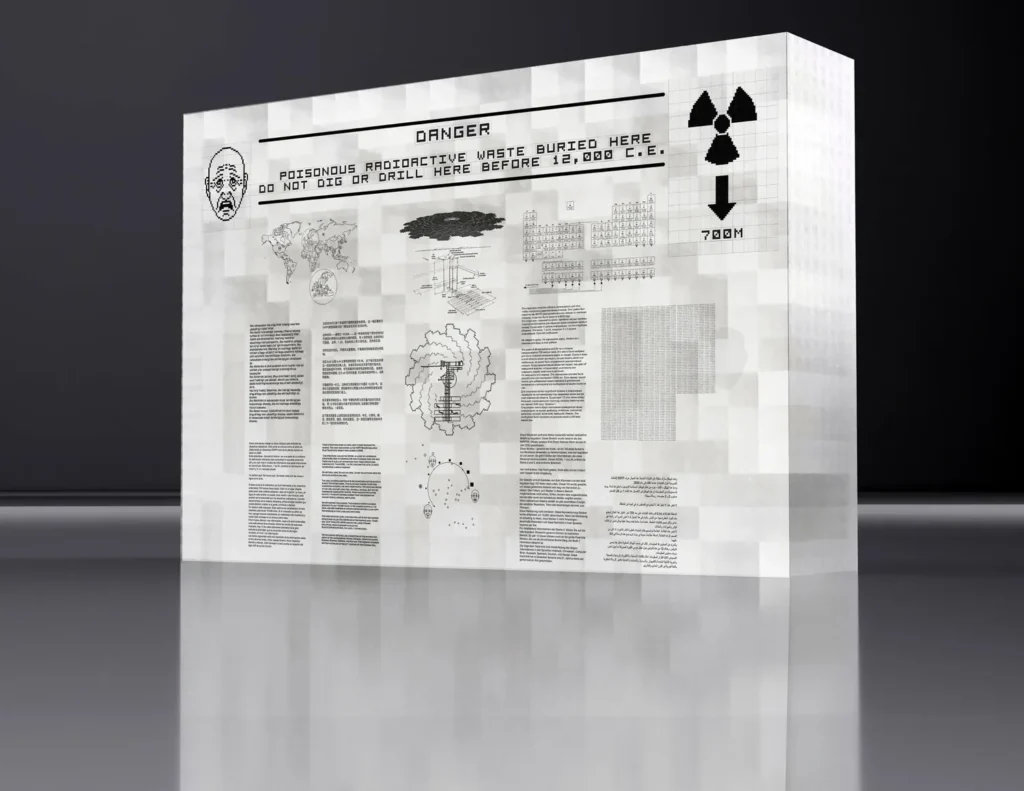
Yet even the ten-thousand-year horizon that guided the WIPP marker studies is modest when compared with the physics of radioactive decay. Two of the most persistent isotopes found in nuclear waste, technetium-99 and iodine-129, have half-lives of about 220,000 years and 15.7 million years respectively. Courts eventually ruled that the original planning horizon was inadequate and that repositories should consider one-million-year timescales. Over spans like that, geological upheaval becomes plausible: mountain ranges rise and erode, coastlines shift, and entirely new landscapes emerge.
The timescales also dwarf human history itself. Uranium-235 has a half-life of 4.46 billion years, a number so large that it nearly dissolves the human perspective entirely. By comparison, Homo sapiens has existed for roughly 300,000 years. The waste being buried today will remain dangerous far longer than our species has walked the Earth.
For decades until this year, WIPP remained the only licensed deep geological nuclear waste repository in operation anywhere in the world, an experiment in both engineering and communication across deep time. Among the people drawn into this strange challenge was Jon Lomberg, who had already spent much of his career thinking about how civilizations speak to distant futures.
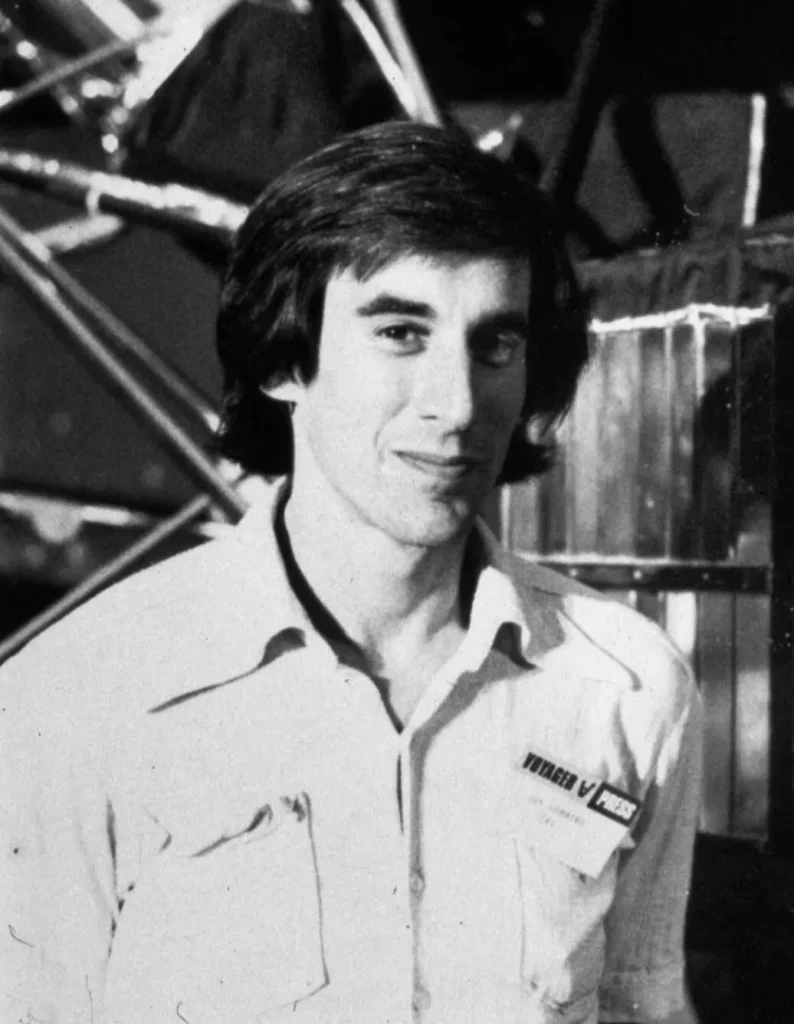

Lomberg, now 78, is best known for helping design several artifacts intended to travel beyond Earth itself, including interstellar messages and spacecraft plaques, including seven artifacts that have left Earth. Over the years he has contributed to a number of projects aimed at communicating with unknown audiences across enormous distances and timescales. In 2007 he also directed the Planetary Society’s Vision of Mars project, a message sent aboard NASA’s Phoenix lander that carried a silica-glass mini-DVD containing art, literature, and reflections about Mars from scientists and writers including Carl Sagan. “When humans eventually settle Mars,” Lomberg has said, “I will be part of their prehistory.”
Yet in policy circles the elaborate nuclear semiotics proposals of the 1980s and early 1990s are often regarded today as something of a historical curiosity. They reflect the grand ambitions and anxieties of the nuclear age, when governments began confronting the reality that their technologies would outlast their languages, cultures, and perhaps even their civilizations. The question of how to warn the distant future still remains largely unanswered.
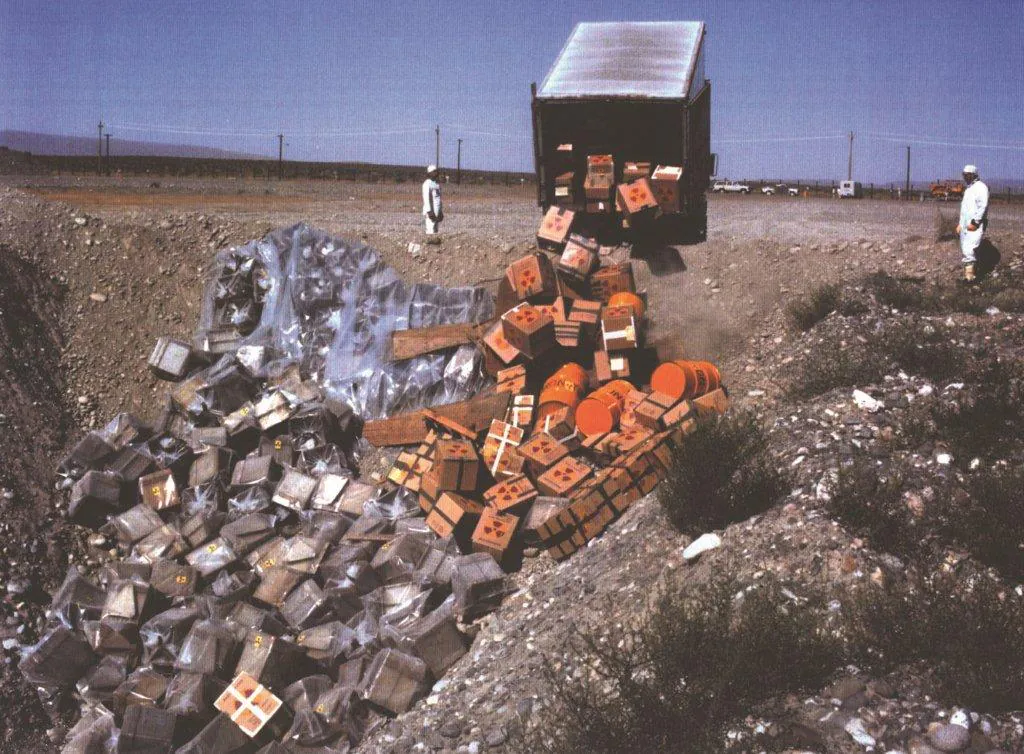
But there is still no consensus on how to warn the future. In fact, the fear is growing that there may be no foolproof way to communicate across deep time. According to Simon Wisbey of the UK’s Radioactive Waste Management Directorate, the fundamental problem is simple: there are no markers guaranteed to survive for 10,000 years, none that can be protected from dismantling by future societies, and no message we can be certain another civilization will understand, even if it appears perfectly clear today.
For some researchers and artists, the solution may lie not in a single monument but in the creation of an ongoing cultural tradition around nuclear waste. Brussels-based contemporary artist and researcher Cécile Massart, a pioneer in nuclear semiotics research since the 1990s, echoes the thoughts of Sebeok, believing that warning systems must become part of a broader “nuclear culture,” complete with its own monuments, rituals, and institutions. At present, she notes, the only widely recognized symbol is the familiar radiation trefoil.
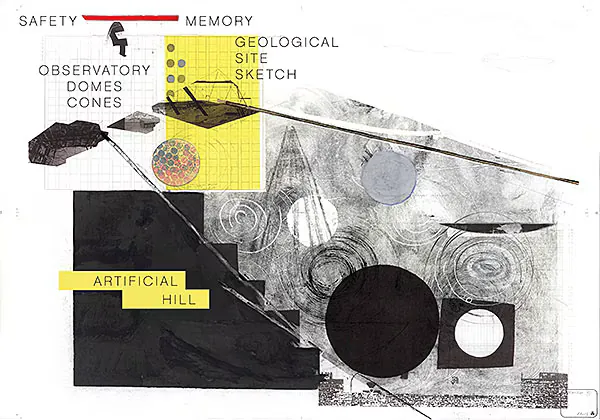
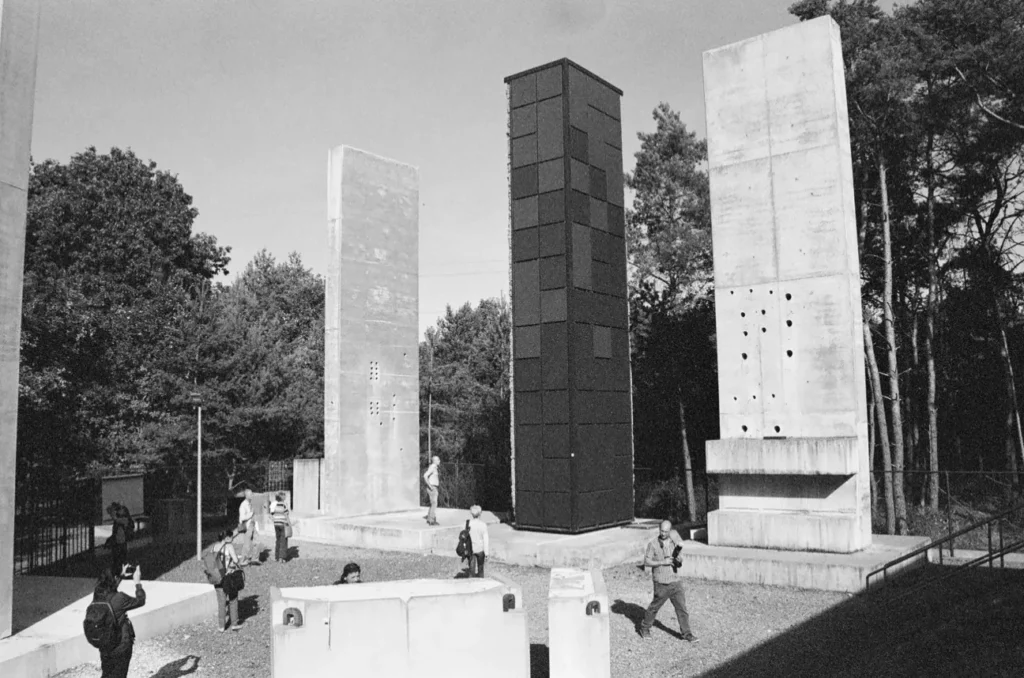
Massart explored this idea in her project Laboratories. Inspired by the information-center concept proposed for the WIPP marker site, she imagined a permanent creative laboratory built above the repository in the form of metal cones and domes rather than a static information chamber. Each generation would contribute to maintaining and updating the warnings. “It would bring together musicians, archaeologists, writers, economists, artists, biologists and poets,” she explains, allowing future societies to continuously reinterpret and transmit the memory of what lies underground.
In her concept, artists would continually reinterpret the nuclear legacy for each generation through temporary works installed in the space. As the installations accumulate, older pieces would be dismantled and replaced, ensuring that the site remains culturally active rather than frozen in time. Across the world, many traditions are preserved in this exact way, such as traditional rope bridges that are rebuuilt yearly and a Japanese Zen temple that is disassembled, redesigned, and rebuilt from scratch every several years.
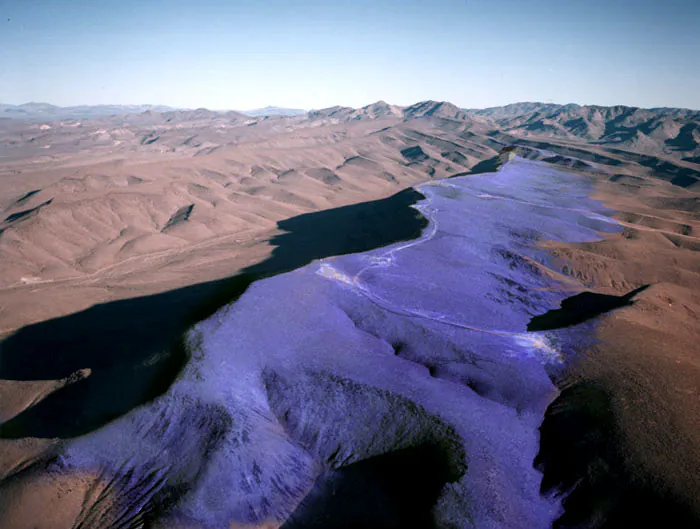
Other attempts to solve the problem have been far more experimental. In 2002, the Desert Space Foundation, an arts organization based at the University of Nevada, Las Vegas, sponsored an international design competition for a “universal warning sign” for the proposed Yucca Mountain nuclear waste repository. The brief asked participants to imagine a marker system that could communicate danger for at least 10,000 years.
The winning proposal, Blue Yucca Ridge by Ashok Sukumaran, suggested turning the landscape itself into a warning. His idea was to genetically engineer the desert’s native yucca plants so that they would glow cobalt blue, with the intensity of the color varying according to radiation levels. Planted across a mile-long stretch of the Yucca Mountain ridge, the modified plants would form a living warning system, self-replicating markers whose unusual color would signal that something unnatural lay beneath the ground. As Sukumaran described it, the plants would become “a landscape intervention … a marker for other mutants buried below,” with their genetic code carrying an embedded warning across generations.
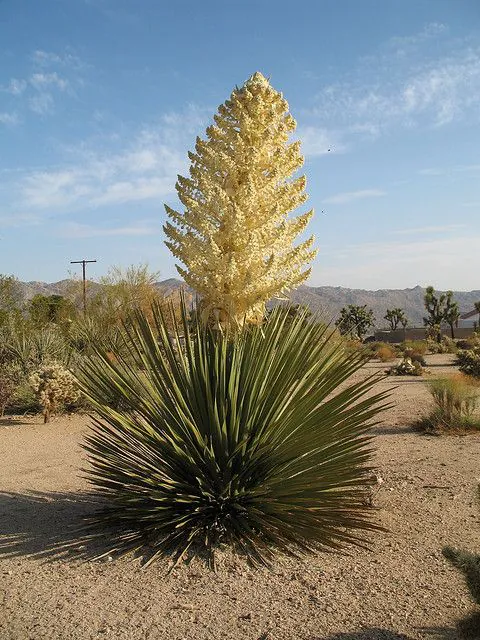
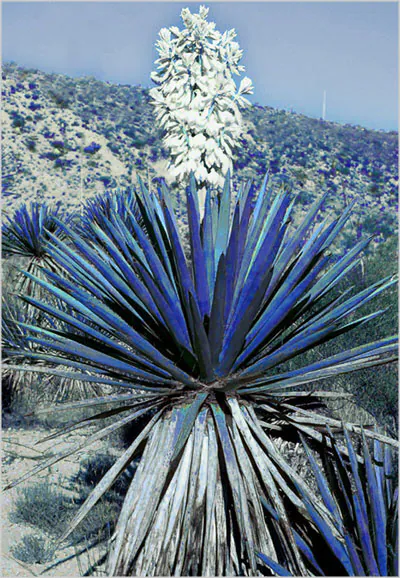
Other competition entries pursued a different strategy: making the landscape itself hostile or unsettling. Designers Goil Amornvivat and Tom Morbitzer proposed a project called Fields of Asphodel, a vast metal meadow composed of thin steel blades that would emit an eerie, screeching sound as wind passed through them, turning the desert into an unsettling acoustic warning.
Yet these ideas reveal the central paradox of nuclear warning systems. Strange monuments, eerie landscapes, or glowing plants may not repel future visitors at all, they may attract them. There is also the possibility that future societies might see nuclear waste not as a curse but as a resource. As Rod McCullum, director of the Yucca Mountain project at the Nuclear Energy Institute, has noted, as much as 95 percent of the energy in fissile uranium remains in spent nuclear fuel. In that sense, what today’s engineers are trying to hide and seal away might one day be seen as a valuable stockpile waiting to be reclaimed.
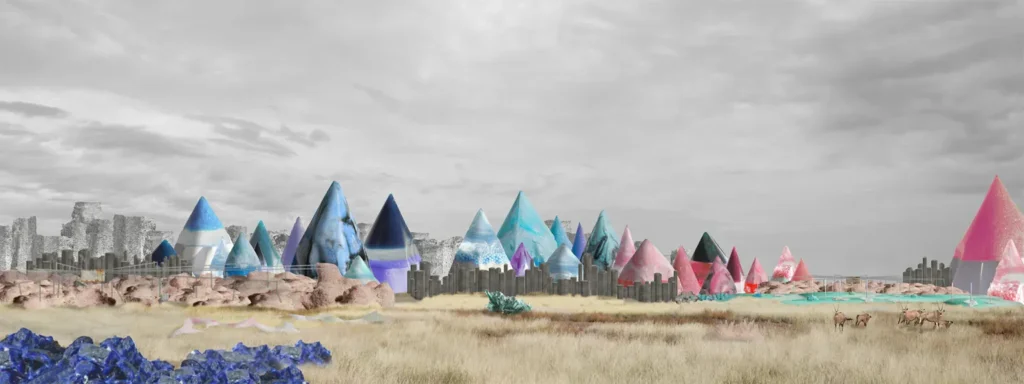
Later competitions continued to explore how a warning for deep time might look. In 2017 the architectural research initiative Arch Out Loud organized an unofficial competition to design a landmark for the nuclear waste repository in New Mexico, open to international entries. Participants were asked to imagine a piece of architecture capable of standing for 10,000 years, warning future generations about the unstable by-products of nuclear weapons production buried 2,150 feet beneath the surface at the Waste Isolation Pilot Plant (WIPP).
Many of the entries responded directly to the geology of the site, proposing large-scale interventions in the desert landscape that could endure for millennia. The winning project, Testbed, proposed transforming the WIPP site into an ongoing climate-engineering experiment. Rather than constructing a conventional monument, the proposal manipulates the geology itself through processes such as mineral sequestration, reacting olivine or basalt with carbon dioxide to form stable carbonate rock. These processes would gradually generate hybrid geological formations, neither entirely natural nor entirely human-made, marking the landscape as something deeply strange and altered.
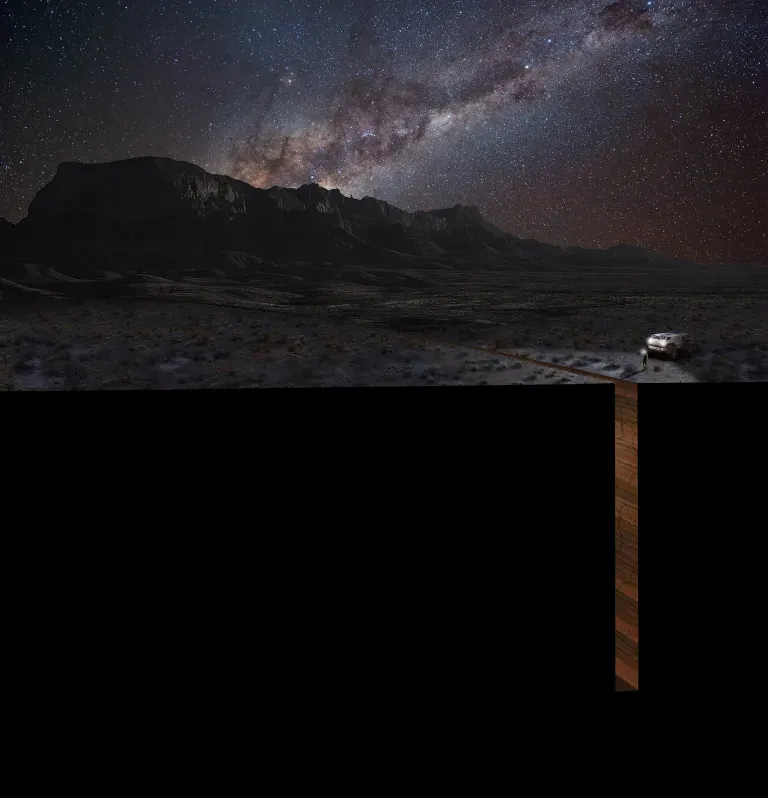
The designers envisioned deploying multiple carbon-capture strategies across the site, including ex-situ mineral sequestration, in-situ geological storage, and direct-air-capture farms. Over time these systems would create an evolving surface layer that stores carbon dioxide above the buried transuranic waste below. In effect, the project would use one form of energetic by-product, carbon dioxide, to mark the presence of another. Through continual transformation, the site would become an active scientific earthwork whose strange geological formations signal that the ground beneath has been fundamentally disturbed.
Another proposal, Lodestar, turned to celestial timekeeping. Drawing on the long human tradition of using the stars for navigation, the design used simple architectural alignments with celestial movements to track the passage of millennia. By tying the marker to astronomical cycles rather than language or human stewardship, the structure would communicate the passage of 10,000 years through shifts in the night sky.
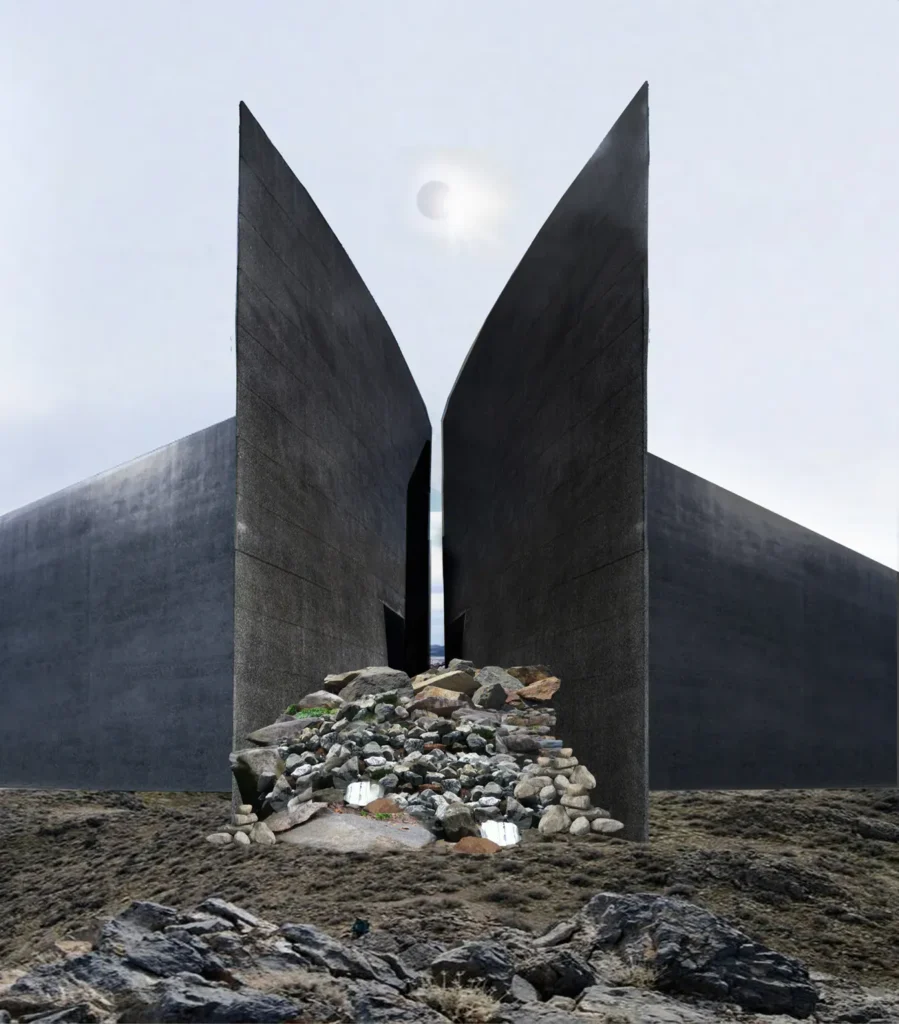
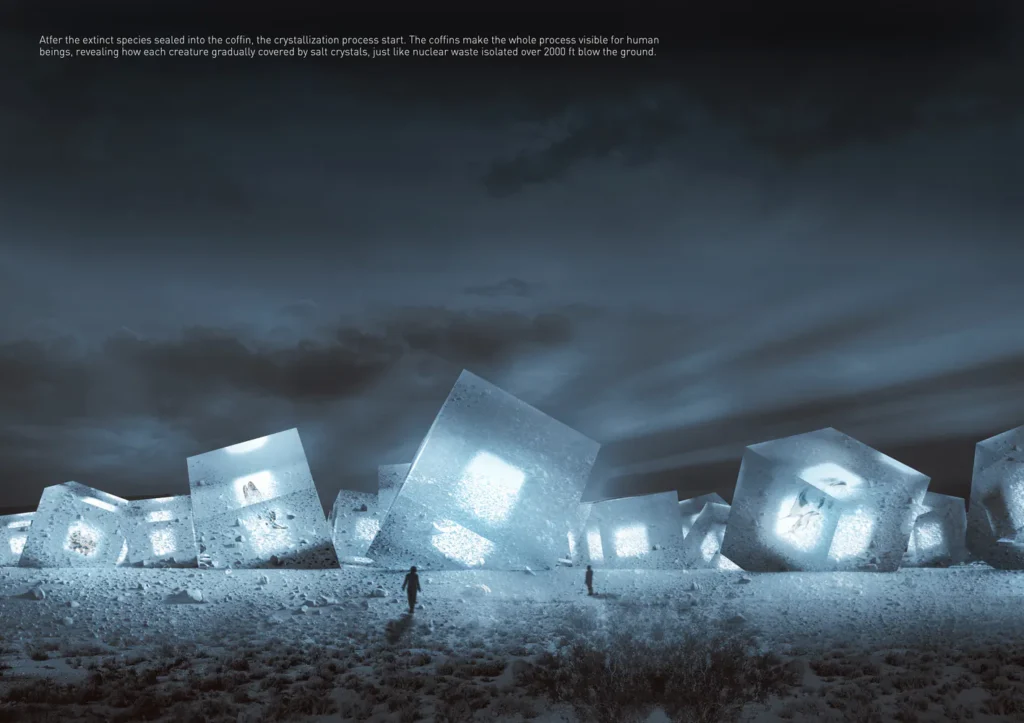
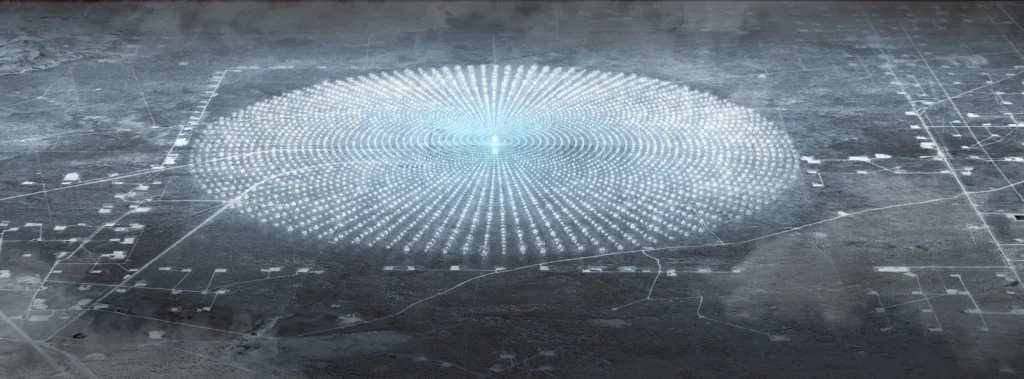
Other finalists explored more speculative approaches. Some proposed displaying radioactive material encased within large salt cubes placed above ground, turning the waste itself into a visible warning. Another design envisioned a massive perimeter wall built from volcanic basalt surrounding the 16-mile site, filled with boulders that would gradually erode and slip outward into the surrounding landscape over time, eventually becoming part of the geological strata.
Several proposals attempted to create unsettling visual environments. One imagined a wall of thick laser-sintered glass slabs surrounding a highly ordered desert garden, a hortus conclusus, where the curved surfaces refract and distort the landscape beyond, producing unsettling optical illusions of mutated desert life. Another proposed partially buried biospheres in which isolated plant populations would evolve separately from surface flora, producing visibly altered ecosystems that would signal something unnatural below.
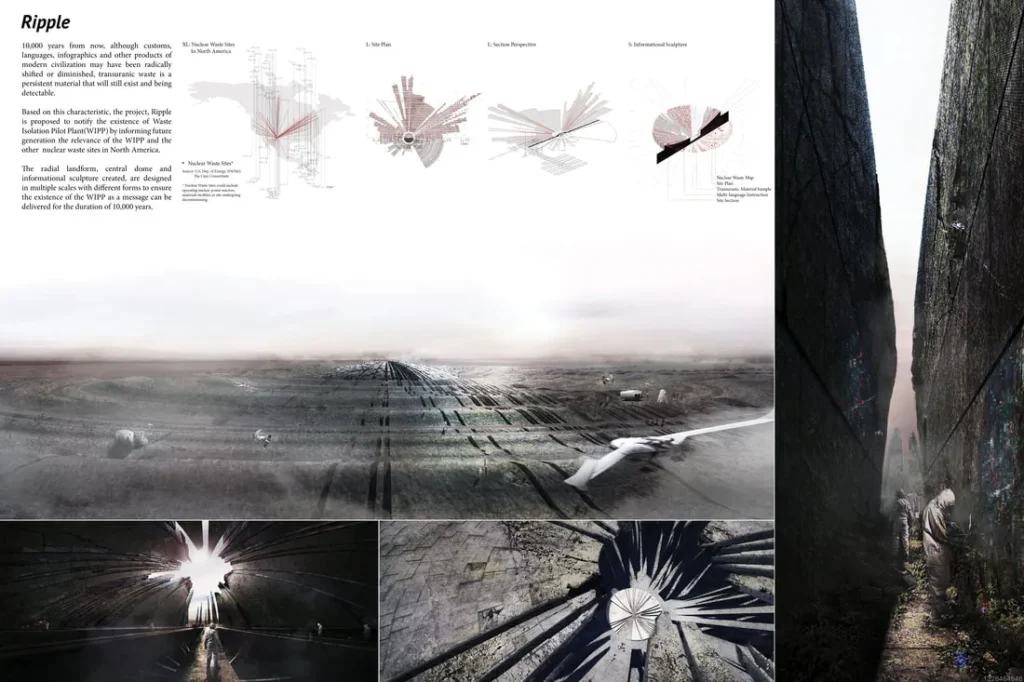
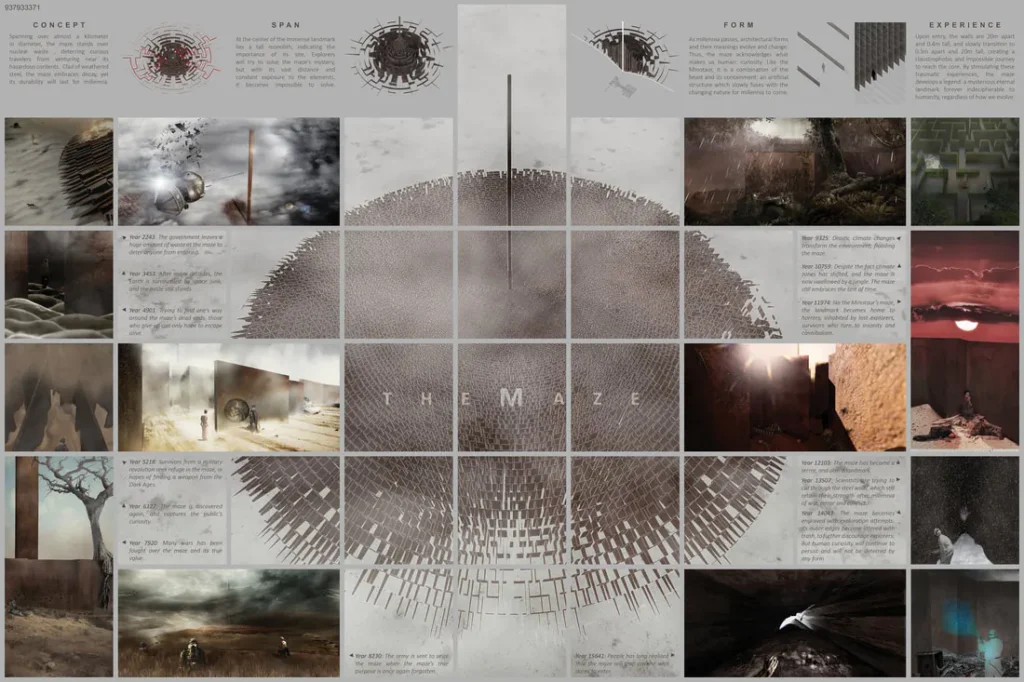
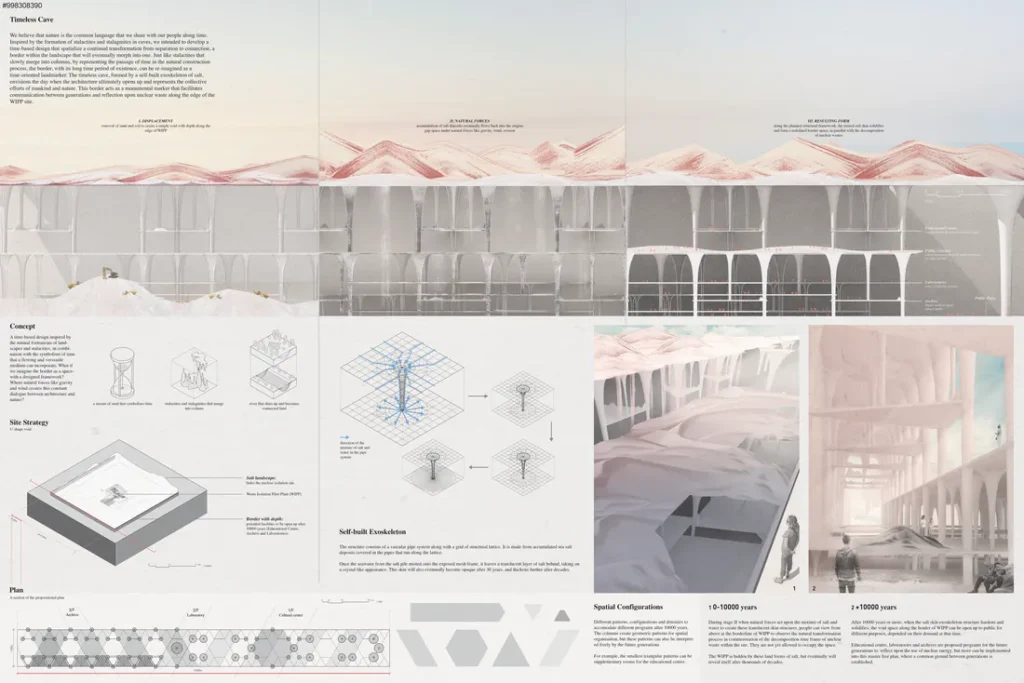
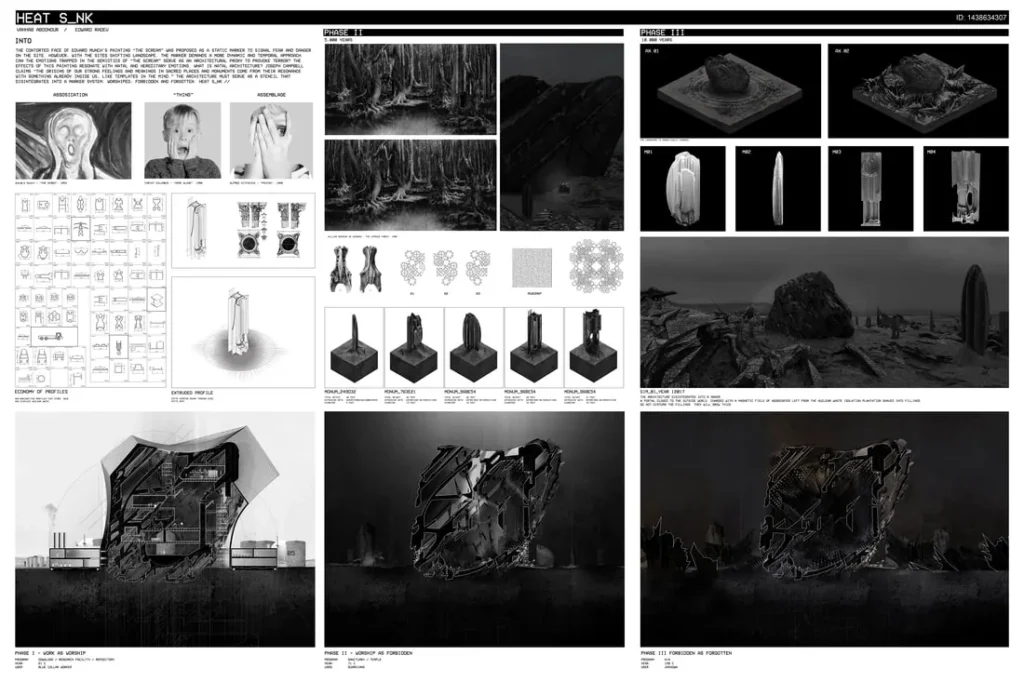
Other entries relied on time itself as the warning. One design proposed dividing the 16-square-mile site into thousands of colored geological “subpixels,” creating a vast geochromatic landscape that would slowly transform over centuries. Another envisioned columns designed to attract lightning strikes, gradually weakening and collapsing after 10,000 years. One design proposed a giant labyrinth whose walls grow progressively higher the deeper one travels into it, discouraging entry. Another suggested arranging 10,000 standing stones in an Archimedean spiral, with one stone removed each year, creating a visible countdown that would last for ten millennia.
Today, ideas like the atomic priesthood have largely migrated from academic speculation into the realm of art. One group engaging with atomic semiotics is The Atomians, an anti-nuclear protest collective from Münsterland, Germany, who incorporate elements of nuclear warning symbolism into street theatre and performance during their demonstrations.
In the United Kingdom, American artist Bryan McGovern Wilson and Robert Williams, professor of fine art at the University of Cumbria, have explored similar ideas through projects linking the nuclear industries of Cumbria and north Lancashire with the surrounding landscape. Their work centers on what they call “atomic folk objects”, costumes, stories, artifacts, and rituals intended to create an oral and cultural memory around nuclear sites so that they will never be forgotten.
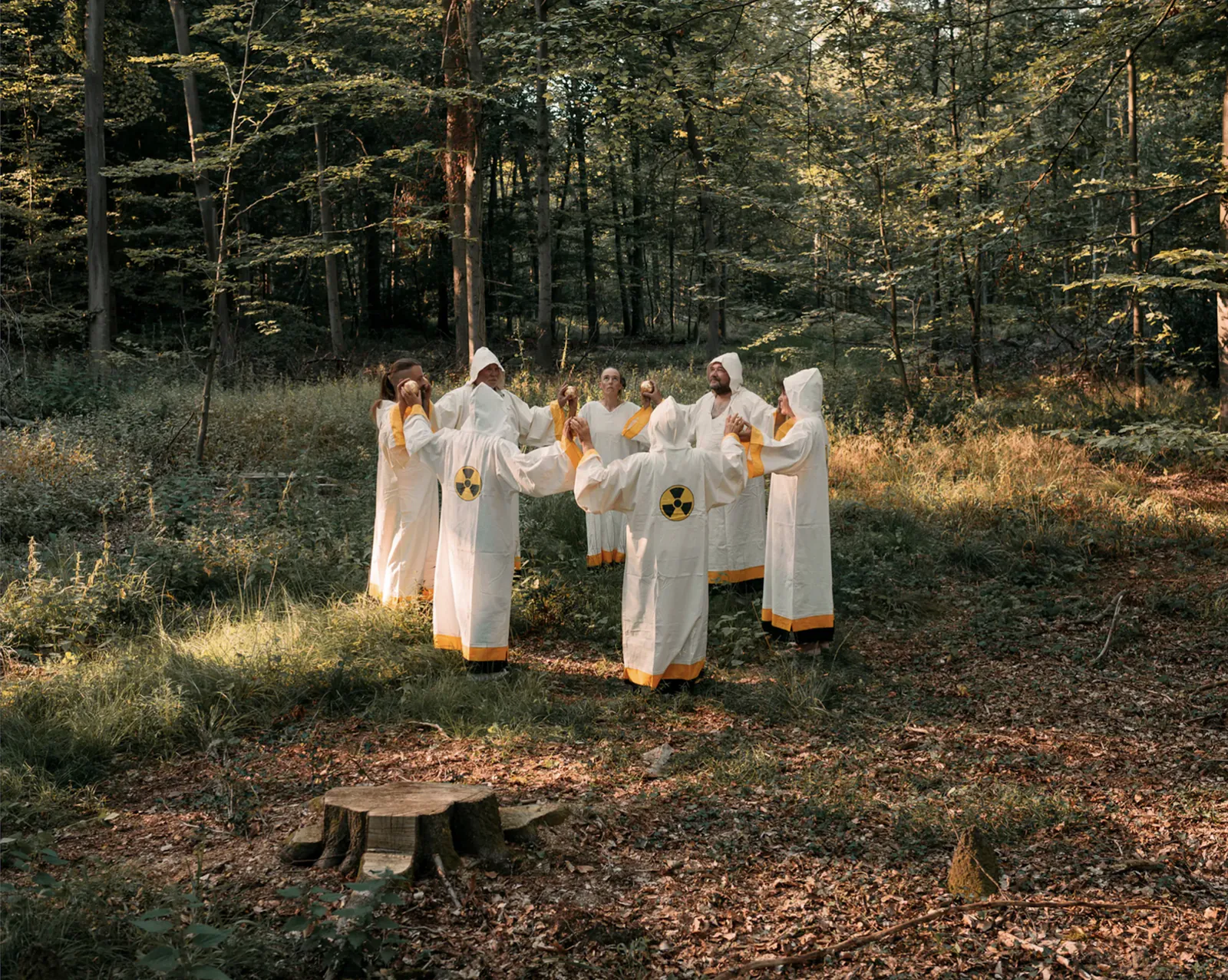
Wilson’s Atomic Priesthood Project, which drew directly on linguist Thomas Sebeok’s proposal for an “atomic priesthood, began in 2009. The project imagined how such a priesthood might manifest materially, including the “vestments” its members might wear. The garments drew inspiration from the understated clothing associated with J. Robert Oppenheimer, director of the Los Alamos laboratory where the first atomic bomb was developed: the light business suit and fedora that became part of his public image. These were combined with a silvery mask modeled after a third-century Roman cavalry helmet discovered in Cumbria.
The project also proposed the “vestments” incorporate bio-sensing materials and silver-lined fabrics designed to resist microbial contamination and environmental toxins, blending contemporary wearable technology with ceremonial symbolism. The resulting “Atomic Priest” figure was photographed at archaeological sites across the region as a way of testing how ritual, symbolism, and landscape might combine to produce long-lasting cultural memory. The project expanded these ideas through a series of artworks and speculative proposals. These included “pilgrimages”, “ritual inscriptions” in the form of tattoos, altars dedicated to “St. Oppenheimer,” and symbolic objects such as a model of Oppenheimer’s hat cast in uranium glass.
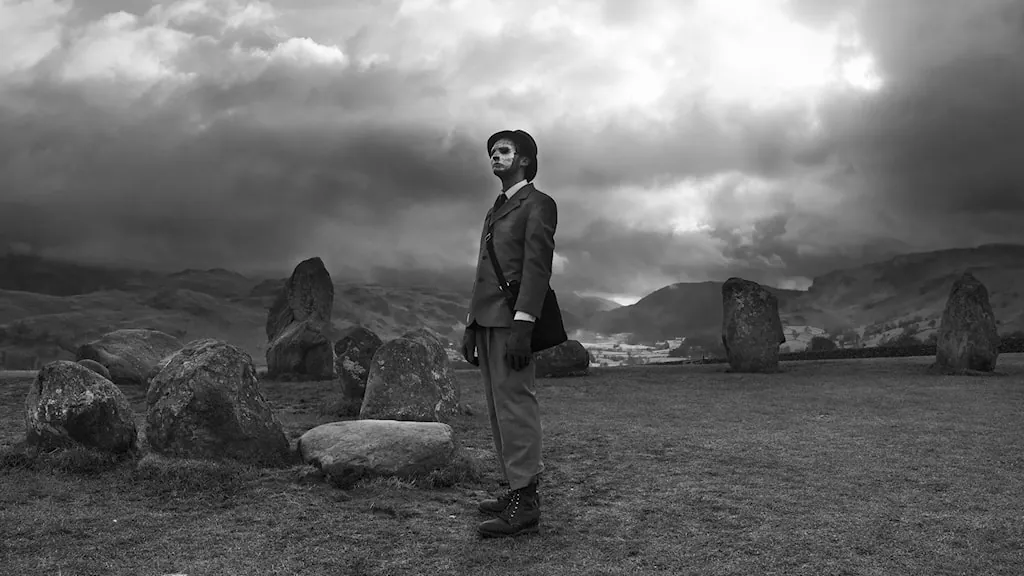
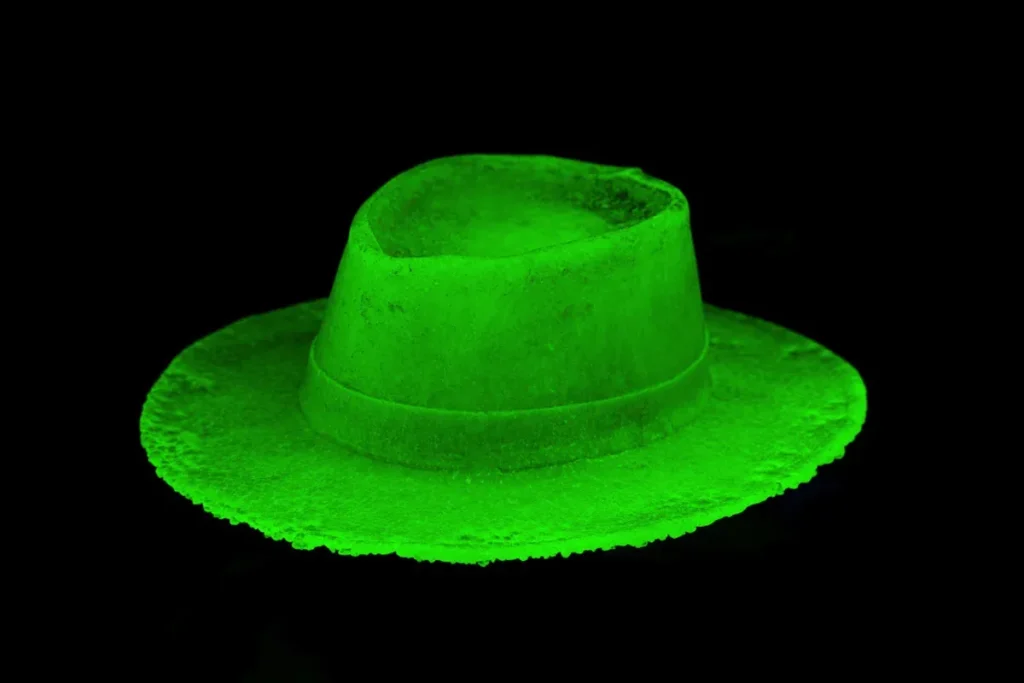

At the largest scale, Wilson proposed a monumental landscape intervention called Black Sun Rose, intended as a possible marker for the WIPP. The design envisioned a pyramidal megastructure built from thousands of interlocking blocks arranged according to Penrose tiling patterns, creating a repeating geometric structure that clearly signals deliberate human design. Cast from black concrete, the structure would absorb solar radiation, making the environment hostile to plants, animals, and human habitation. Covering an area roughly four miles across, large enough to encompass the buried WIPP site, the Black Sun Rose would appear as a stark artificial scar on the desert landscape, visible even from space.
These proposals, emerging from various competitions and artistic projects, often drift into the realm of creative speculation. Many seem less concerned with communicating a simple warning than with expressing ideas about contemporary society or the designers themselves. Yet the essential requirement of a nuclear marker is far more limited: it must communicate danger. Anything beyond that risks losing its context over time, inviting reinterpretation and diluting the marker’s intended meaning.
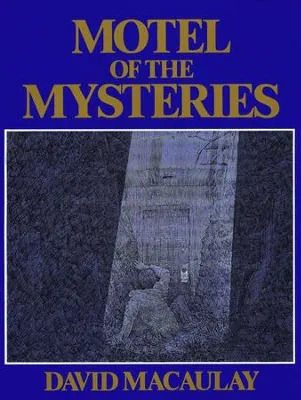
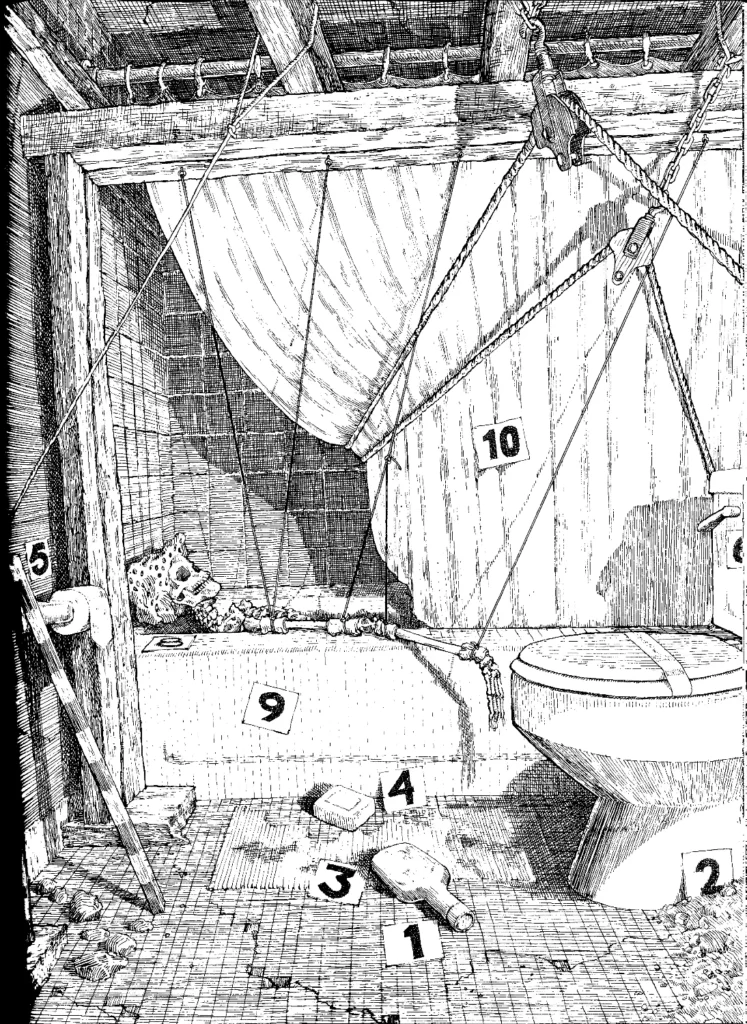
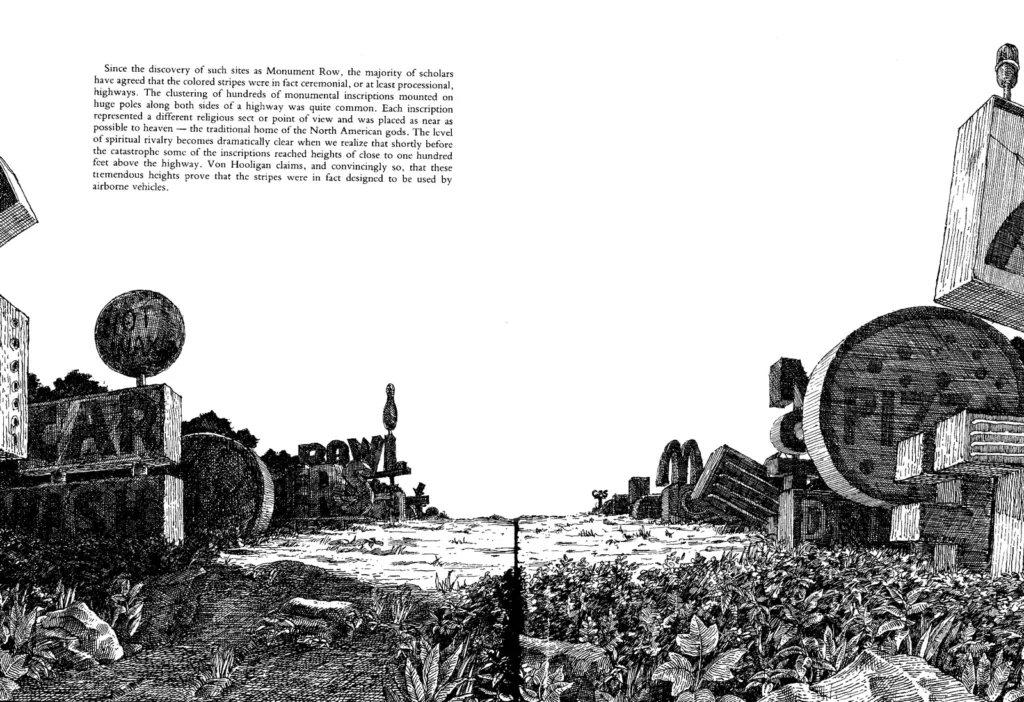
Author David Macaulay illustrated this problem with remarkable clarity in his satirical book Motel of the Mysteries. In the story, the entire North American continent is buried during the 1980s and excavated centuries later by archaeologists attempting to interpret the remains of modern civilization. When they uncover a motel complex, the researchers carefully reconstruct its supposed rituals and meanings from the objects they find. A television set becomes a “great altar,” a toilet seat is interpreted as a “sacred ceremonial collar,” a toilet brush becomes a “ritual wand,” and fast-food signs are mistaken for religious monuments. Macaulay’s humor underscores a serious point: even the most mundane objects of everyday life can become incomprehensible once their cultural context disappears. Language, symbols, and design conventions are no exception.
For this reason, the original panel convened by Sandia National Laboratories to develop warning systems for the Waste Isolation Pilot Plant was skeptical of involving the art world. Jon Lomberg argued strongly against it, remarking that he would “die before I’d let the art world come anywhere near this,” saying that, “the art world in places like New York is anti-scientific, anti-representational, and seems to favor more detached and nihilistic statements; if you involve the art community in this process, they are likely to end up picking a giant inflatable hamburger to mark the site.”

Yet even apparently universal symbols carry hidden complications. According to Peter Galison, the danger of relying on artistic or symbolic language is that meaning can shift dramatically over time. A symbol that seems obvious today may not remain so indefinitely. The skull-and-crossbones pictogram, now widely understood to signify death or poison, has not always carried that meaning. In earlier European traditions, particularly in alchemy and Christian iconography, the skull represented Adam, while the crossed bones symbolized the promise of resurrection. Over just a few centuries, the symbol evolved from one associated with rebirth to one that signals mortal danger, an example of how easily visual language can drift as cultures change. The real solution will likely be much more mundane and bureaucratic.
Forty years after the original Human Interference Task Force (HITF), international agencies were still grappling with the same problem involving warning the future of radioactive waste. The Paris-based Nuclear Energy Agency continued this work through its Preservation of Records, Knowledge and Memory Across Generations (RK&M) Initiative, launched in 2011 and concluding with a final report in 2019. The agency, which coordinates cooperation among 33 countries with advanced nuclear technology, revived many of the same questions first raised in the 1980s, just as governments were again reconsidering nuclear energy as a tool for reducing carbon emissions.
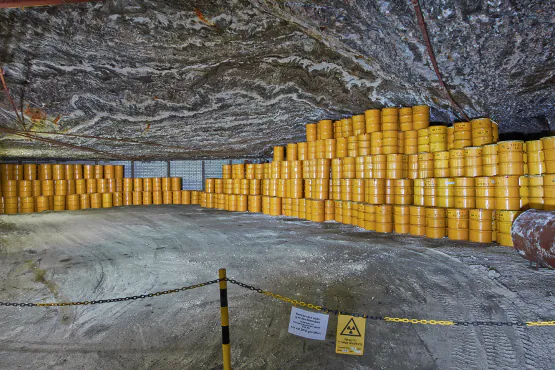
Unlike the more speculative ideas of earlier decades involving atomic priesthoods, hostile landscapes, and monumental stone warnings, the RK&M Initiative focused on practical systems for preserving knowledge. The goal was not simply to frighten people away from nuclear repositories, but to ensure that future societies would possess enough information to make informed decisions about them. Proposed methods included maintaining archives and libraries, preserving records in durable formats, creating time capsules, and installing physical markers at repository sites.
Some of the suggestions were deliberately low-tech. Information might be recorded on extremely durable materials such as vellum, parchment made from animal skin, rather than on laminated paper or digital media like USB drives. Physical markers could range from large monuments such as obelisks to distributed systems of smaller markers spread across a landscape. According to curator and researcher Ele Carpenter, a dispersed system might be more resilient than a single monumental structure. Instead of one large object that could be destroyed, thousands of smaller markers buried in the ground could be discovered gradually over time, much like archaeological artifacts such as Roman coins.
The central idea of the RK&M report was that no single solution would be reliable on a 10,000-year timescale. Instead, the initiative advocated a layered system combining multiple forms of communication. Physical markers at a site could be backed up by archives stored in different institutions and countries. “The most successful approach would have a number of systems that complement each other,” explained project participant James Pearson. “If one archive disappears or a building burns down, there are backups elsewhere.” In other words, the strategy mirrors the principle of “defense in depth”: redundancy across many independent systems.
This approach also reflects a broader shift in thinking about nuclear waste sites. Earlier proposals often imagined landscapes designed to repel visitors through fear or hostility. More recent thinking emphasizes informing future societies rather than frightening them. As Neil Hyatt, chief scientific adviser to the U.K. government’s Nuclear Waste Services, has noted, the international community has increasingly moved toward multi-layered communication systems that document what was done at these sites, allowing future people to decide how (or whether) they should interact with them.
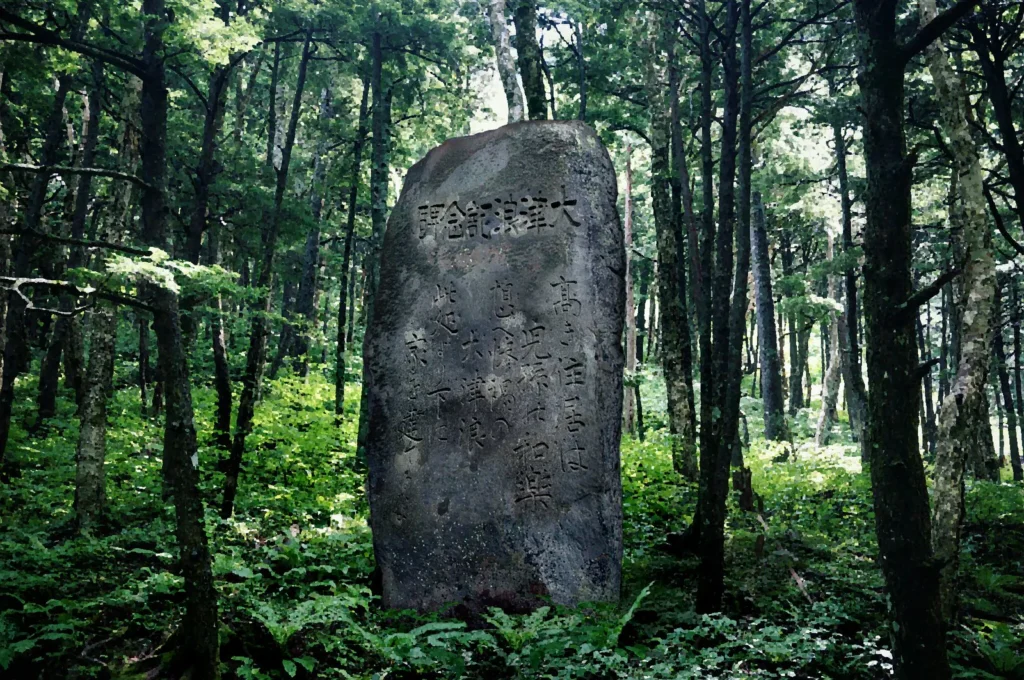
Even when warnings survive, however, they are not always followed. Along the coast of northeastern Japan, centuries-old Tsunami Stones still stand, warning communities not to build below certain elevations. Their messages remained legible for generations, yet many were ignored, contributing to the devastation during the 2011 Tōhoku earthquake and tsunami. History provides many similar examples of lost or misunderstood knowledge. After the fall of the Inca Empire in the 16th century, its khipu, a sophisticated system of knotted cords used for record-keeping, became largely indecipherable. Elsewhere, legends about rivers of mercury buried with Qin Shi Huang survived in historical texts, yet their meaning became muddled over time, caught between myth and fact.
The lesson is uncomfortable but clear: warnings from the past can endure for centuries and still be ignored, misunderstood, or reinterpreted, but ironically, integrating them with future societies may prevent the loss of their meaning and context. “You don’t have to try to scare people away by looking menacing and symbolising danger like what’s currently planned for the WIPP. You need try to inform people of what’s there, so they can then make an informed decision for themselves.” The plans for warning markers at Yucca Mountain have largely retained the original intention of keeping people away from the site. The logic is simple: the consequences of failure are severe, and the history of nuclear waste management shows how easily things can go wrong.
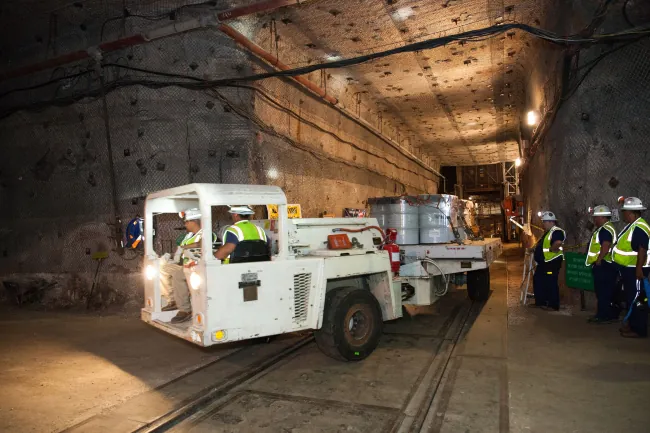
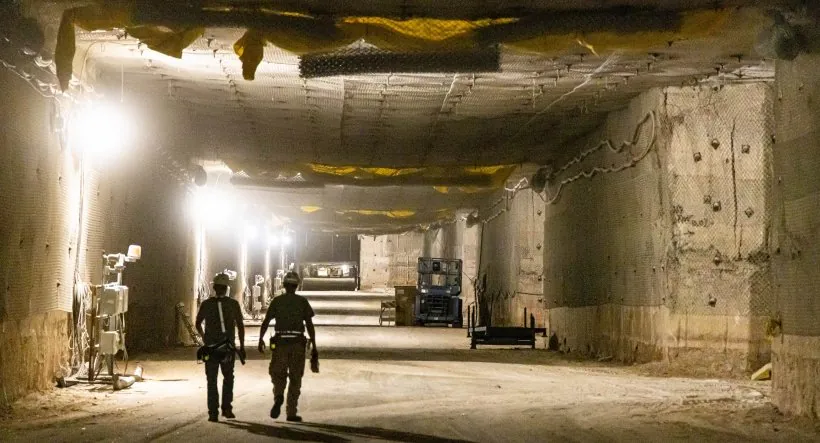
A reminder came in February 2014 at the Waste Isolation Pilot Plant (WIPP). First, a truck hauling salt caught fire deep underground, filling the facility with smoke and soot and endangering 86 workers operating roughly 2,000 feet below the surface. Everyone eventually reached safety, although several were treated for smoke inhalation. Just over a week later, a more serious incident occurred in a separate part of the repository: a drum of nuclear waste ruptured, effectively becoming a small “dirty bomb” that released transuranic radioactive material. Twenty-two workers received low radiation doses, and a small amount of contamination escaped beyond the site, roughly equivalent to about three percent of the radiation from a chest X‑ray.
Investigators traced the incident back to Los Alamos National Laboratory, where the waste drum had originally been packed. Workers had mistakenly used an organic, wheat-based cat litter rather than the inorganic clay variety normally used to stabilize radioactive material. Organic material can react with nitrates in the waste, generating heat and pressure inside sealed containers. As temperatures rose, the pressure eventually caused the drum to burst. The accident forced the closure of two underground sections of WIPP and required the construction of replacement areas, pushing the facility’s long-term schedule further into the future. The site now expects to continue operations for decades before final closure, currently projected around 2083.
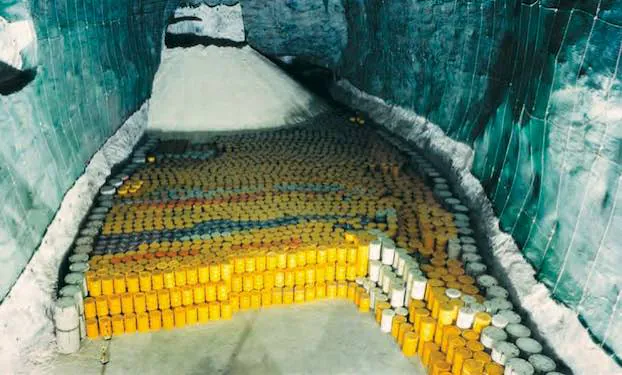
The episode illustrates a deeper problem: storing hazardous material safely for tens of thousands of years is not merely a theoretical challenge. Even routine operations can fail due to small mistakes, misunderstood procedures, or seemingly harmless materials. Designing warning systems for the distant future may be difficult, but ensuring the waste itself remains stable over such timescales may be harder still.
Meanwhile, the political future of Yucca Mountain itself remains uncertain. After decades of planning, the project stalled amid funding cuts and political opposition. Since the late 2000s the U.S. government has repeatedly reconsidered how to resolve the country’s nuclear waste stalemate. Part of the problem is financial. The Blue Ribbon Commission on America’s Nuclear Future found that money collected in the federal Nuclear Waste Fund had effectively been folded into the Treasury’s general budget and spent elsewhere, leaving the program without the resources originally intended for long-term waste disposal.
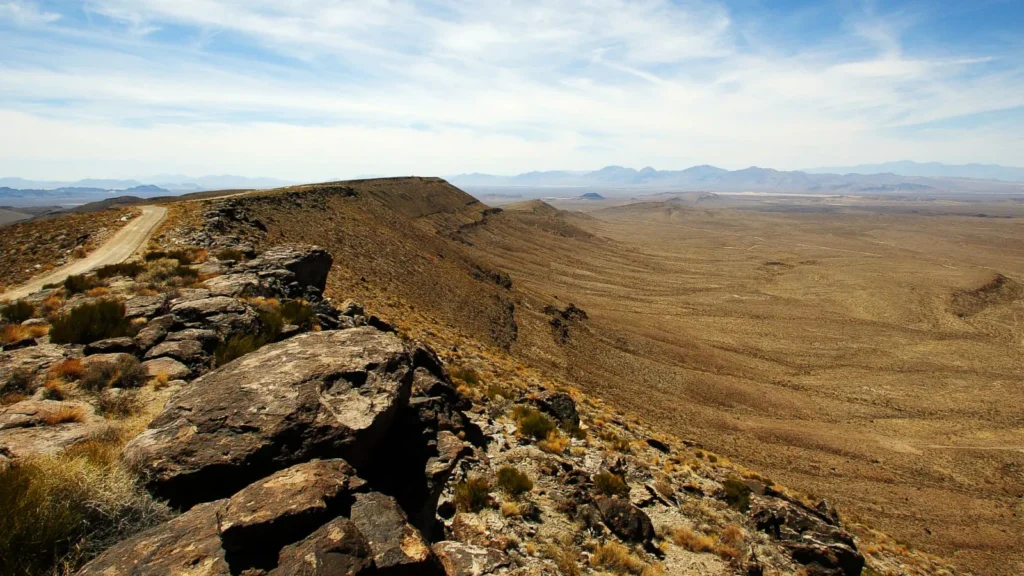
Whether Yucca Mountain will ever open remains unclear. Some critics suspect that many of the elaborate warning-marker studies commissioned over the years were largely symbolic exercises meant to reassure the public rather than precursors to actual construction. Jon Lomberg later suggested that officials weren’t actually interested in ever implementing the ideas themselves.
Elsewhere in the American nuclear landscape, the challenges of containing radioactive material continue to unfold in unexpected ways. At the vast Hanford Site, where decades of weapons production left behind enormous quantities of contaminated waste, the surrounding security buffer has gradually become an accidental wildlife refuge. Today much of the area forms part of the Hanford Reach National Monument, largely untouched by agriculture or development. “A lot of us had been around the block a few times and knew this was going to be a report that the government only did because they needed it to show compliance,” Lomberg was quoted as saying, “They didn’t really care what we said, I think.”
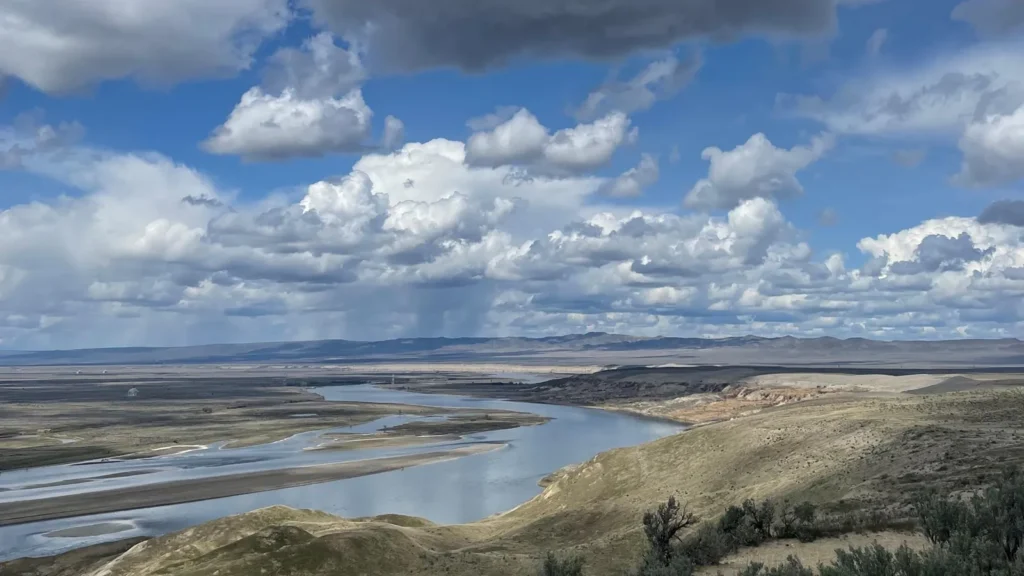
For the site’s biological control teams, however, the wildlife presents a different problem. Rabbits, badgers, gophers, and other animals can ingest radioactive particles and spread contamination through their droppings across wide areas. Even insects such as ants and termites have been known to bring radioactive material to the surface while building nests. Plants can also play an unexpected role: tumbleweeds with deep taproots may draw contaminants from buried waste and then roll for miles in the wind once they detach. In one case in 2010, workers had to track down dozens of radioactive tumbleweeds that had escaped the site perimeter.
All of this underscores how complex the nuclear waste problem remains. By 2008, Yucca Mountain had become one of the most extensively studied geological formations in the world, with the United States investing roughly $9 billion in research ranging from geology to materials science. The proposed repository was designed to store more than 100 million gallons of highly radioactive waste along with thousands of tons of spent nuclear fuel from weapons production and research programs.
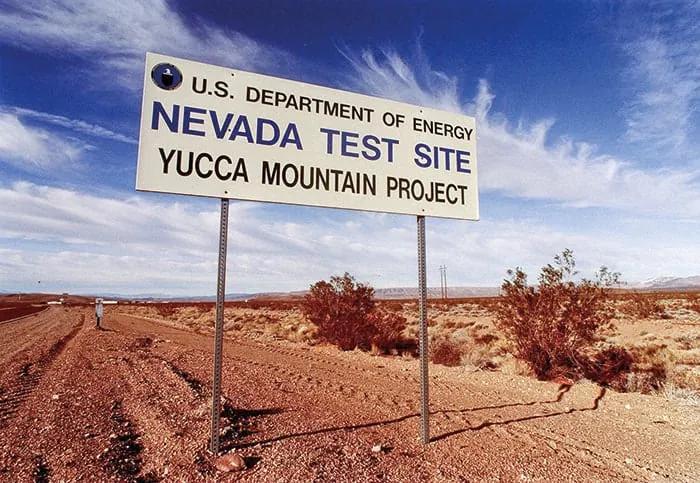
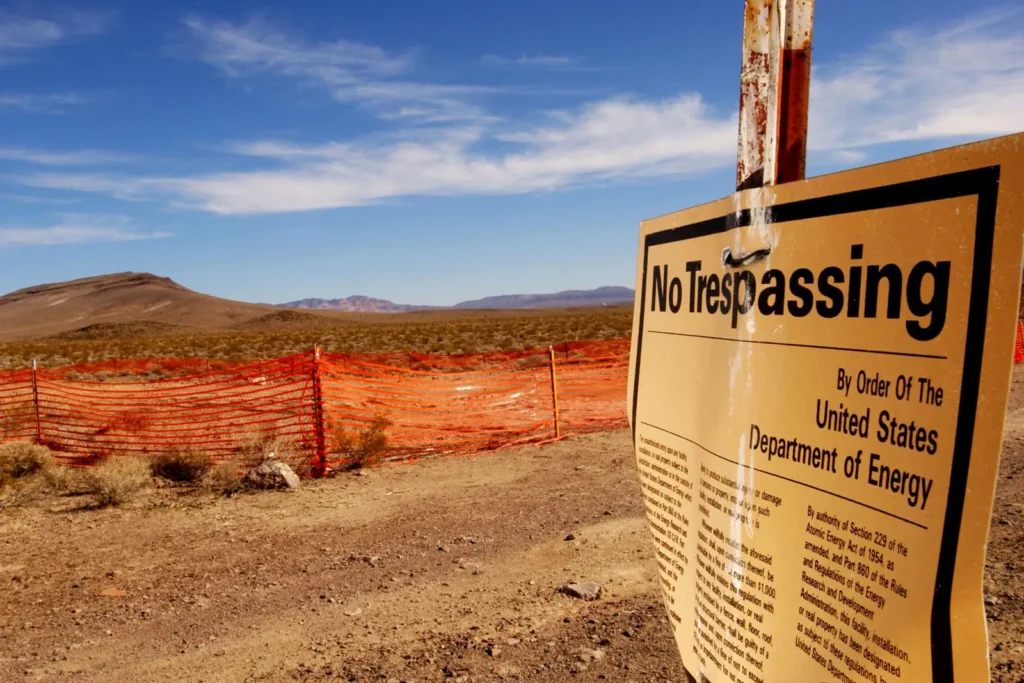
Funding for such projects is supposed to come partly from a tax on nuclear-generated electricity and partly from federal spending related to military waste. Yet the gap between projected costs and available funding remains significant, and the timelines involved stretch far beyond normal political planning cycles. “I think it’s possible to create a successful warning marker. It’s just about the political will to do it,” Lomberg has said. “You can’t control the future, all you can do is give them the facts. So if the people of the future decide to ignore it and dig anyway, that’s their responsibility. It’s their world.”
In practical terms, humanity still has time to wrestle with the question of how to warn the distant future. WIPP is not expected to be sealed until late in the 21st century, and Yucca Mountain, if it ever opens, could remain operational well into the 24th. For now, the warning message to the next ten thousand years remains unfinished.
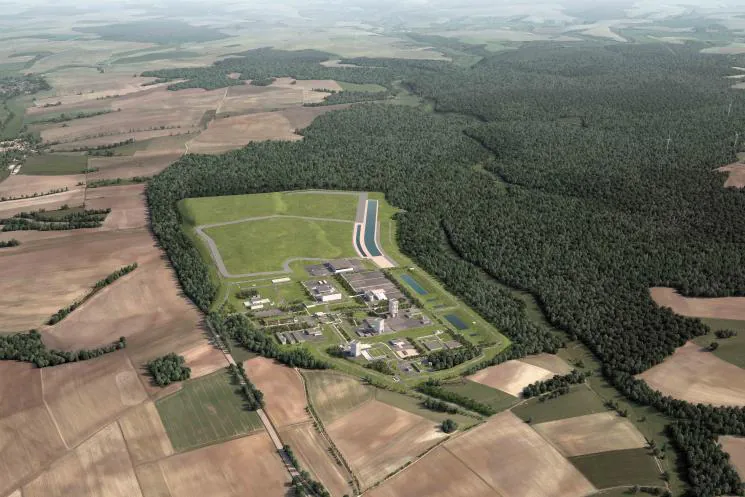
France is the world’s largest exporter of electricity and one of the most committed nuclear nations on Earth. With 58 reactors generating roughly 75 percent of the country’s power, it also produces enormous quantities of radioactive waste each year, around 13,000 cubic meters, enough to fill roughly 120 double-decker buses. On average, that amounts to about four and half pounds of nuclear waste annually for every French citizen. Managing that legacy is the goal of Agence Nationale pour la Gestion des Déchets Radioactifs (ANDRA), which is developing a deep geological repository near Bure known as Cigéo. The challenge is not simply burying radioactive material deep underground, but ensuring that the site remains understood, and undisturbed, for tens of thousands of years, longer than four thousand human generations.
Jean-Noël Dumont, head of ANDRA’s Memory Program, says the philosophy around nuclear warnings has shifted since the early days of atomic semiotics. “We are no longer in this idea of creating fear in order to deter people,” he explains. “We are more in the idea of informing.” Dumont has explored how culture and storytelling might help carry knowledge forward across generations. Some proposals have come from artists such as Aram Kebabdjian and Stéfane Perraud, who describe their work as “multimedia narrative machines.” One of their concepts, known as the Blue Zone, imagines a forest planted above a nuclear repository whose trees would be genetically modified to grow entirely blue, an unnatural landscape that would signal to future visitors that something unusual lies beneath.
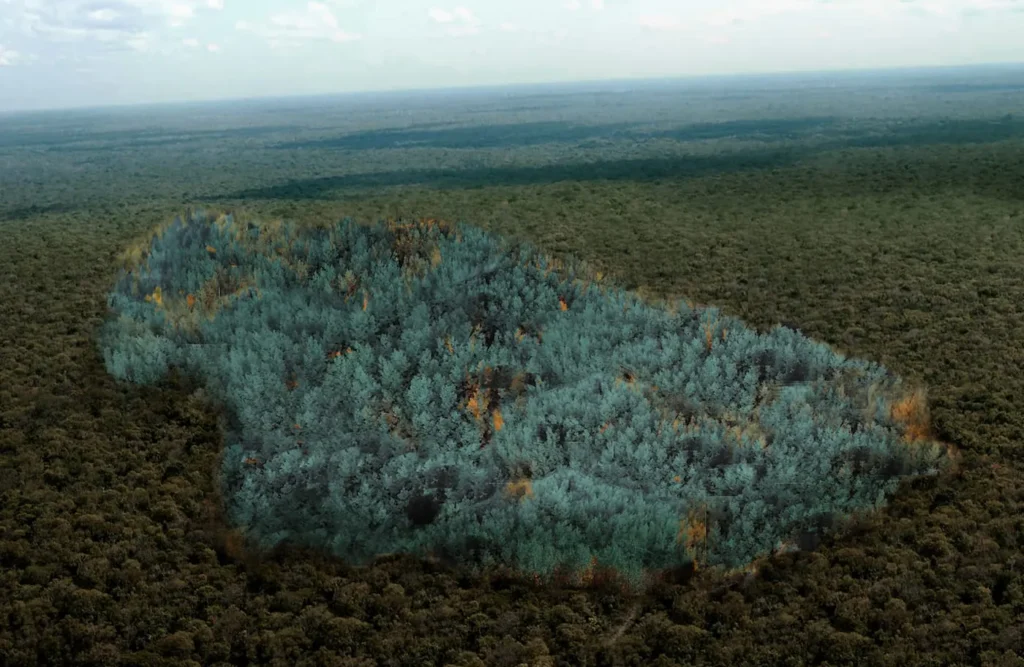
Beyond artistic proposals, ANDRA has begun preserving information about nuclear waste on long-lasting materials. The agency records key documents on permanent, acid-free paper, which resists the yellowing and chemical decay that affects ordinary paper exposed to heat and light. But written records alone may not be enough. One idea borrowed from early nuclear-semiotics discussions is “oral transmission”: passing down stories about dangerous places through generations, embedding warnings within local culture.
To explore this possibility, Dumont and his team examined historical examples of knowledge passed down orally. One case is the Canal du Midi, completed in the 17th century to connect the Atlantic and Mediterranean. For more than three centuries, families working on the canal have transmitted specialized maintenance knowledge from one generation to the next. Similar long-term memory appears in Indigenous traditions. In his book The Edge of Memory, Patrick Nunn from the University of the Sunshine Coast describes his research in documenting Aboriginal stories that may record coastal flooding events dating back more than 7,000 years, preserved across hundreds of generations.
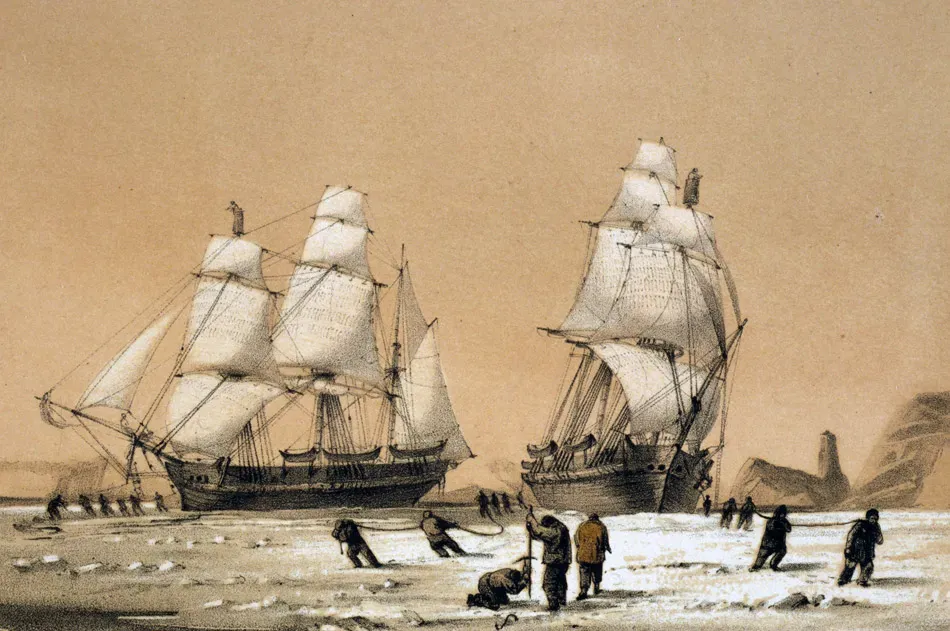
Oral traditions have also preserved more recent historical details. Inuit accounts in northern Canada described where the ships of the ill-fated Franklin Expedition became trapped in the ice. British search parties initially dismissed these accounts, but the expedition’s ships, HMS Erebus and HMS Terror, were eventually discovered in 2014 and 2016 almost exactly where Inuit testimony had long suggested. Inuit traditions also contain stories describing encounters with Norse explorers from the era of Leif Erikson, suggesting that cultural memory can endure far longer than written archives alone.
But like every other method so far, this too has its flaws. It’s been noted that throughout history, other attempts to preserve the knowledge of danger orally have also gone ignored. Coastal Indigenous nations around the Pacific Northwest preserved stories describing villages destroyed by great waves. These oral histories correspond closely to the 1700 Cascadia earthquake and tsunami, which originated along the Cascadia Subduction Zone. The stories encoded rules about where not to build permanent villages. European settlers later ignored these settlement traditions and built towns in exposed coastal areas.
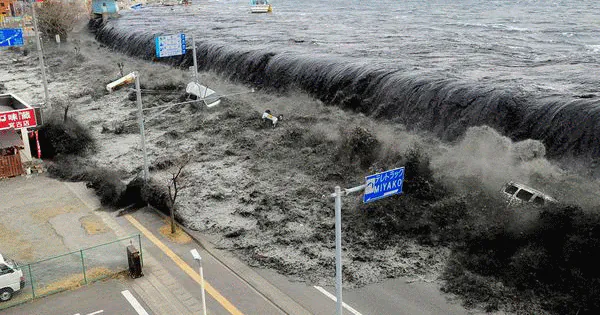
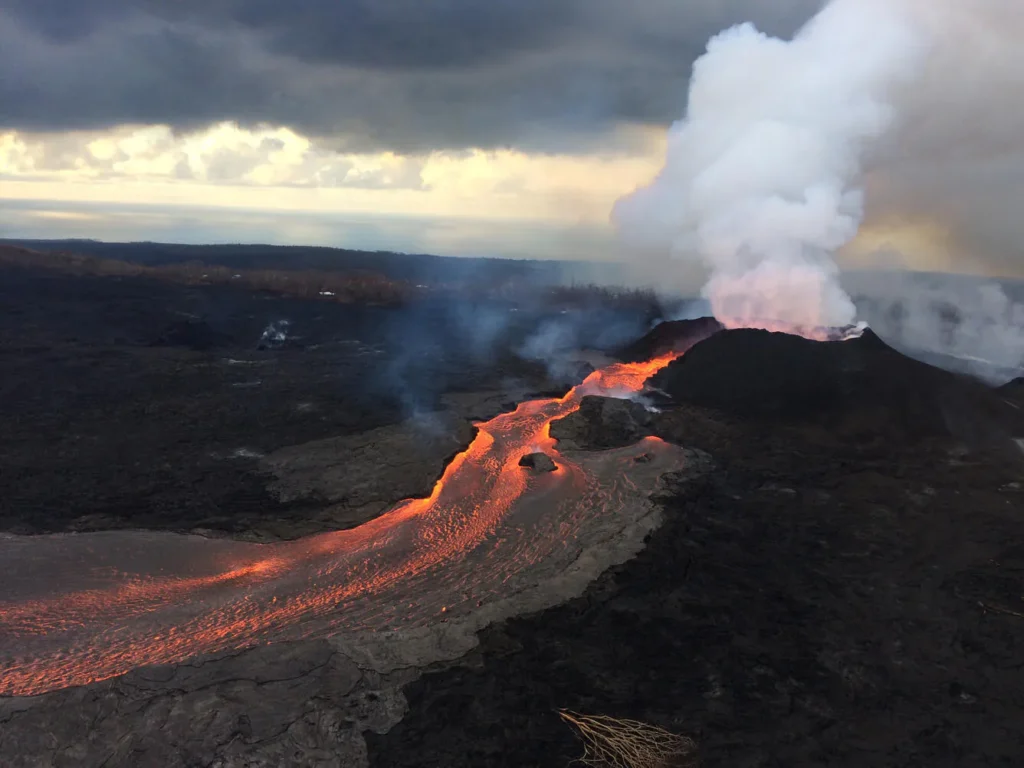
Similarly, Traditional Hawaiian belief systems contained strict taboos about living or farming in areas associated with the volcano goddess Pele near Kīlauea. These taboos effectively discouraged permanent settlement in zones historically covered by lava flows. Modern housing developments built on these same slopes have repeatedly been destroyed during eruptions, most recently in the 2018 lower Puna eruption of Kīlauea.
For researchers studying nuclear memory, the goal is not only to communicate with the distant future but also to confront the present. “We need to think about the nuclear present and our current responsibility,” says Ele Carpenter. Modern thinking increasingly treats nuclear memory as something that must be embedded across society through archives, education, culture, and physical landscapes. Dumont describes the ideal solution as a reinforcing network of systems rather than a single warning monument.
In parallel in the US, the Nuclear Energy Agency has also begun to encourage cross-disciplinary collaboration, bringing together philosophers, artists, and designers to explore ideas that might one day be implemented. Over the past decade the number of artists involved in these discussions has grown significantly, producing proposals that range from pragmatic to highly speculative.

Preserving the information itself presents another problem. Most digital media, from CDs to hard drives, last only a few decades at best. To address this, engineers in France have experimented with “sapphire discs”: data engraved onto thin plates of industrial sapphire and etched with platinum. In theory such discs could survive for up to two million years and store tens of thousands of pages of images and text. But even this solution is fragile in its own way. As Dumont and his colleagues note, durability alone does not guarantee survival. If future societies can no longer read the languages recorded on the discs or if someone simply smashes the artifact with a hammer, the message disappears just as easily as any other.
At the same time, ANDRA has established three regional memory groups, each made up of about twenty local residents. They meet every six months to propose their own ideas for preserving knowledge of the repository over the long term. Suggestions so far have included collecting and preserving oral testimony from local witnesses and establishing an annual remembrance ceremony at the site, organized by and for the surrounding communities. The proposals resemble traditional rural rituals: a nuclear version of “beating the bounds,” a radioactive summer solstice, or even an atomic maypole.
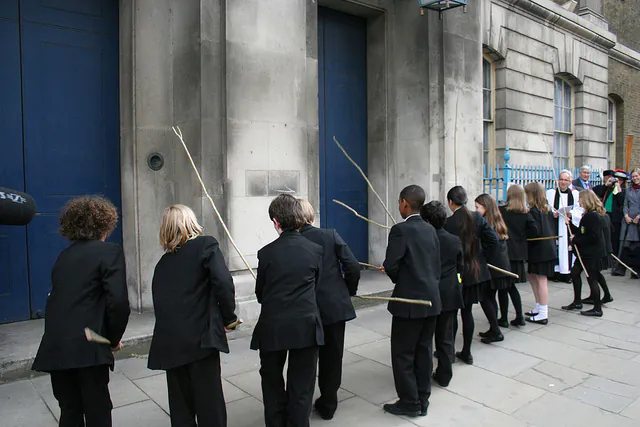
This idea echoes the thinking of Claudio Pescatore and Claire Mays, former researchers at the Nuclear Energy Agency in Paris. In one of their papers they argued that repositories should not be hidden away or treated purely as forbidden zones. Instead, they suggested making them part of the social fabric of the surrounding community. A monument celebrating the repository, they proposed, might even encourage local people to take pride in maintaining the site, especially if it possessed a distinctive aesthetic presence.
Responding to these challenges, designer Baptiste Blanquer has proposed what he calls a “praxeological device”: a communication system that does not rely on written language at all. Instead, it would teach visitors an entirely new symbolic system through physical interaction. In Blanquer’s concept, when someone encounters a pictogram, they would also encounter the object it represents and be required to perform an action. The body itself becomes part of the learning process. The aim is to gradually build a system that can become more complex over time, eventually communicating the core message that dangerous radioactive material lies underground.
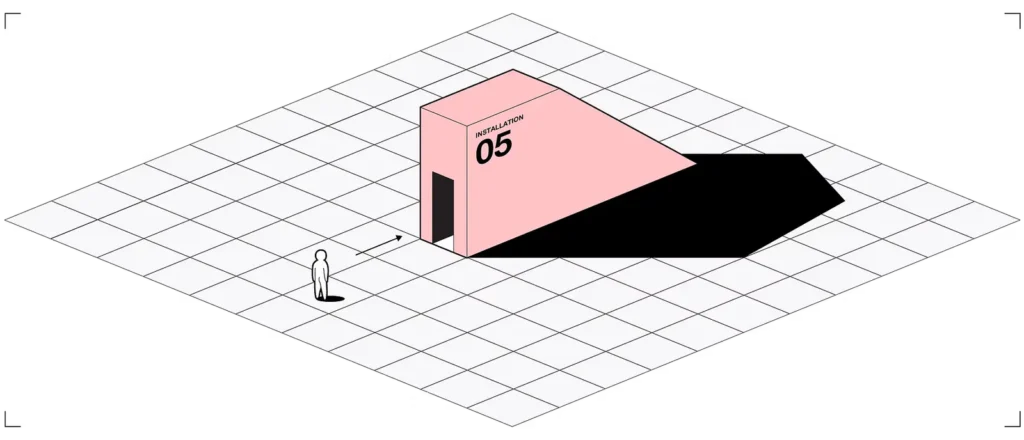
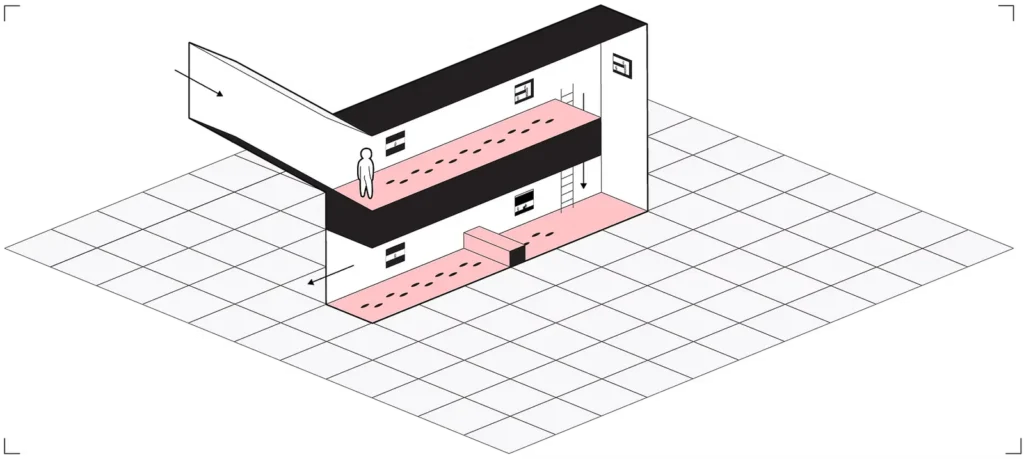
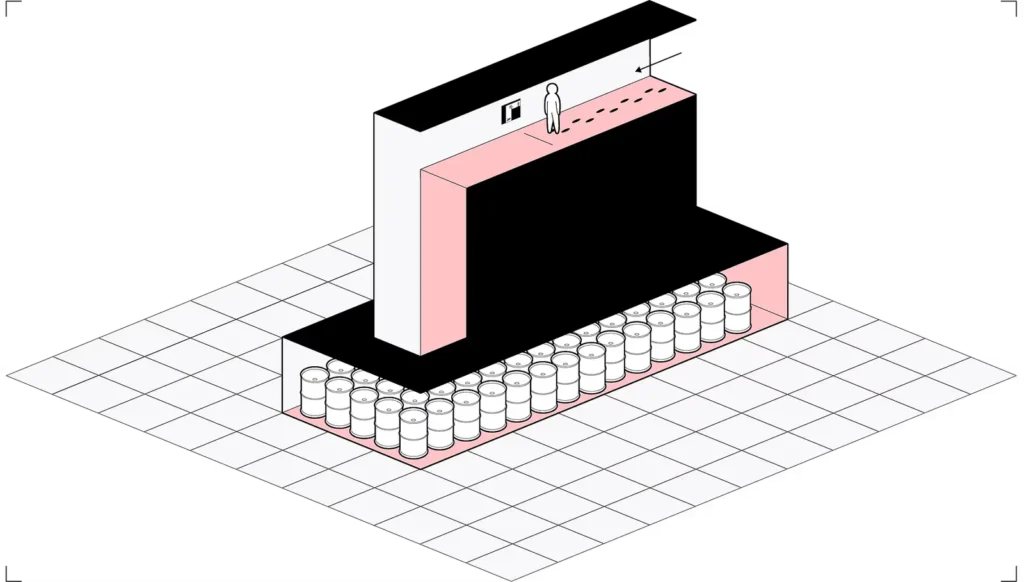
Blanquer imagines a sequence of underground passages, possibly using the repository’s own access tunnels. On the wall of the first corridor is a rectangular pictograph showing a person walking along the passage, accompanied by a line of footprints indicating the direction of movement. At the end of the corridor there is a ladder descending into a hole, alongside three new pictograms. A circular pictograph shows a person holding onto the ladder; a triangular pictograph shows a person not holding on and falling. As the visitor progresses, patterns begin to emerge. The human figure on the walls clearly refers to the actions of the person inside the space. Over time, the viewer learns to copy the actions shown inside circles and avoid those depicted in triangles.
The idea is that meaning would not be transmitted through language or inherited memory but discovered directly through experience. As Jean-Noël Dumont explains, the crucial factor is learning itself. Over extremely long timescales, when cultural continuity cannot be guaranteed, systems that allow people to rediscover meaning on their own may prove more durable than any written warning.
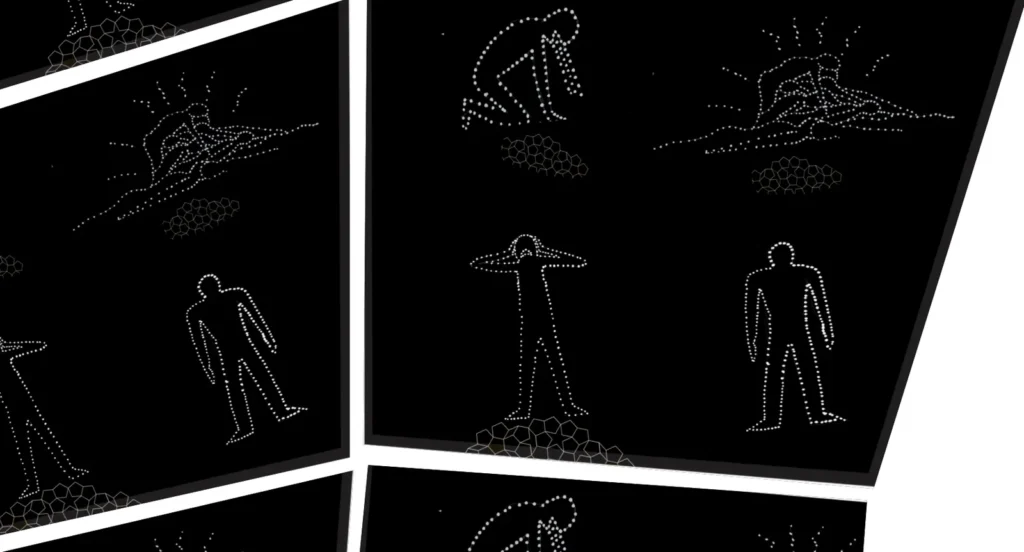
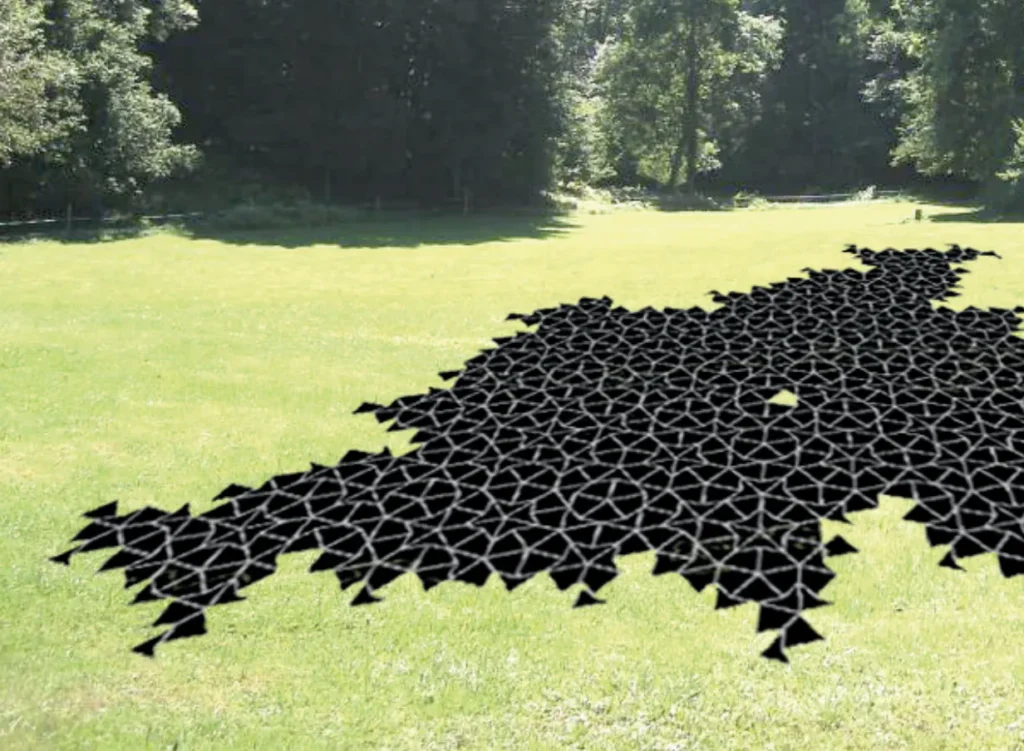
ANDRA has continued these efforts through competitions, including one offering a €6,000 prize for proposals aimed at preserving the memory of the Cigéo repository far into the future. In one of the agency’s recent competitions, the first prize went to Alexis Pandellé for Prométhée oublié (“Forgotten Prometheus”), a proposal that imagines the site marked by a scar carved into the landscape, a vast land-art gesture suggesting a wound that will never fully heal.
Some projects unintentionally echo earlier concepts developed during the American nuclear semiotics studies of the 1980s and 1990s. In 2016, the architectural duo Les Nouveaux Voisins won ANDRA’s prize with a proposal resembling a contemporary Stonehenge. Their design envisioned eighty concrete pillars, each about thirty meters high, planted above the repository. Oak trees would grow from the tops of the pillars; as decades passed, the pillars would slowly sink into the ground while the trees matured, gradually replacing the concrete structures. The result would be a long-lasting alteration of the landscape, visible above ground while leaving traces beneath the surface.
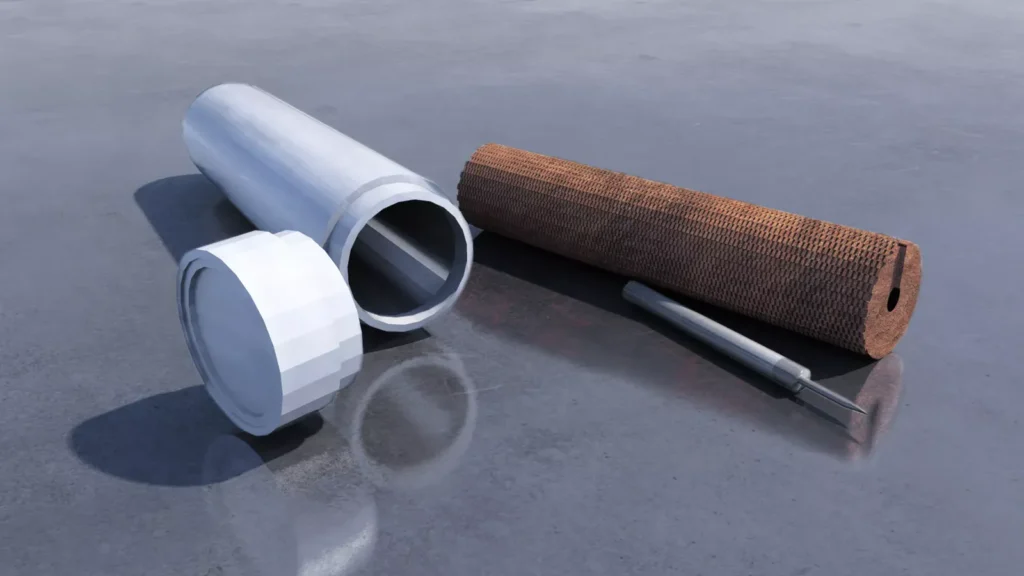
Other artists have focused less on monumental markers and more on systems of memory. French artist Bruno Grasser, runner-up laureate of ANDRA’s 2016 memory prize with his project Bonne Chance, proposed transmitting knowledge through a physical ritual inspired by the long tradition of engraved marks. Instead of carving warnings into stone, Grasser imagines a series of capsules filled with clay containing 2,500 small cubes, each representing a unit of time. The capsules would be passed to new custodians every forty years, and each generation would scratch away one cube. Over thousands of years the clay would gradually become smooth, a physical countdown marking the roughly 100,000 years required for the danger of buried radioactive waste to subside.
A related example comes from the Netherlands. In 2001, Dutch artist William Verstraeten was commissioned by COVRA to redesign its interim nuclear waste storage facility in Vlissingen. Verstraeten coated the exterior building in bright orange paint, stamped the equation E = mc² across its façade, and added an art museum inside. As the radioactive material stored within gradually cools over the next century, the building’s color is designed to fade to white. The project transformed a previously shunned industrial site into a public attraction visited by tens of thousands of people each year, suggesting that nuclear infrastructure might be integrated into civic culture rather than hidden away.
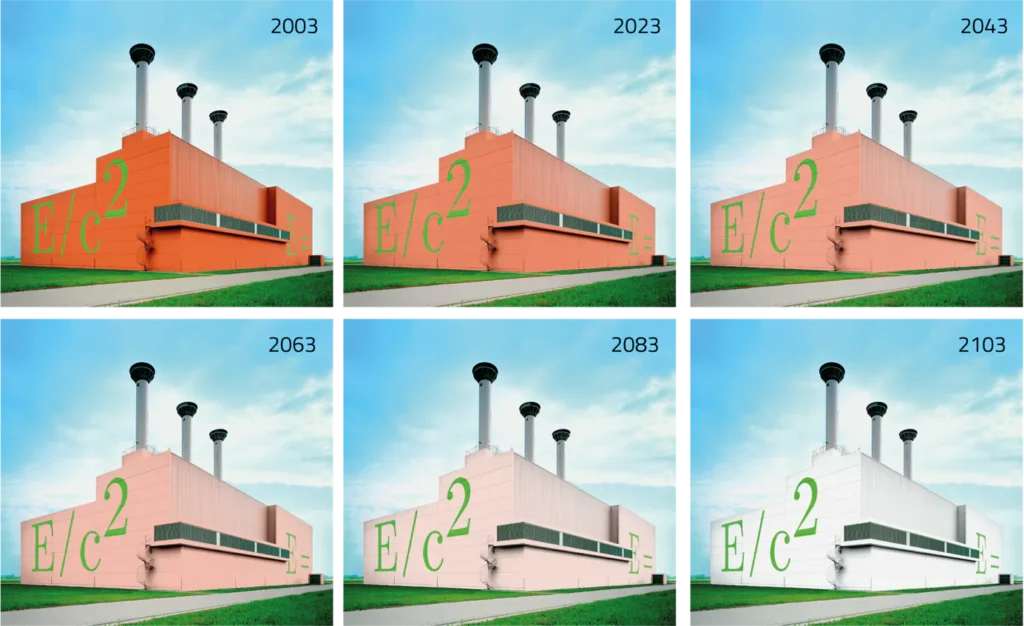
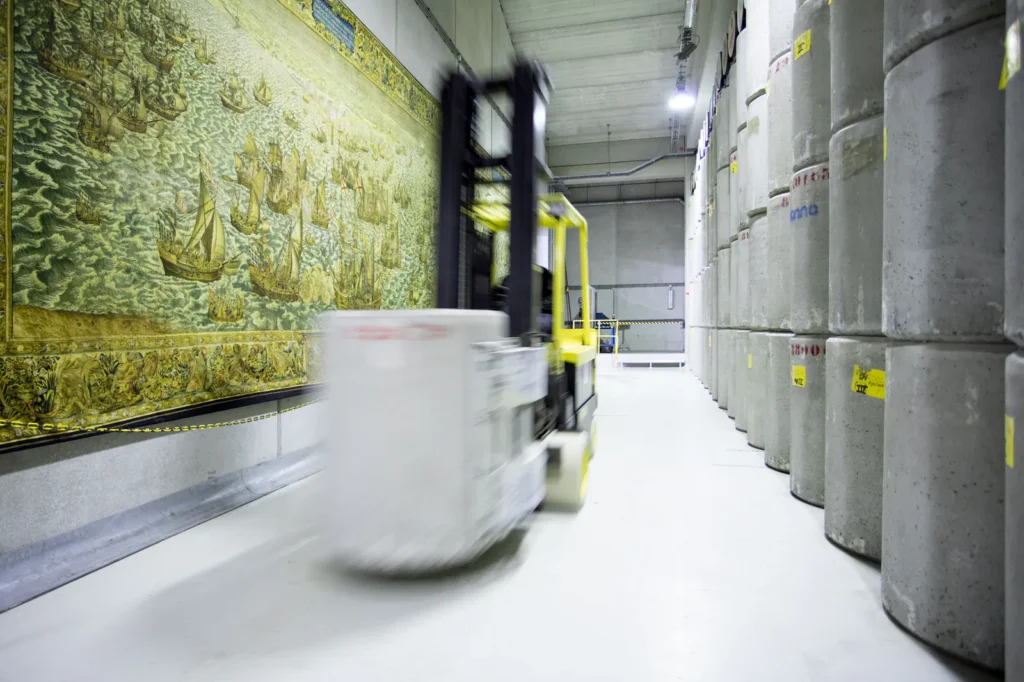
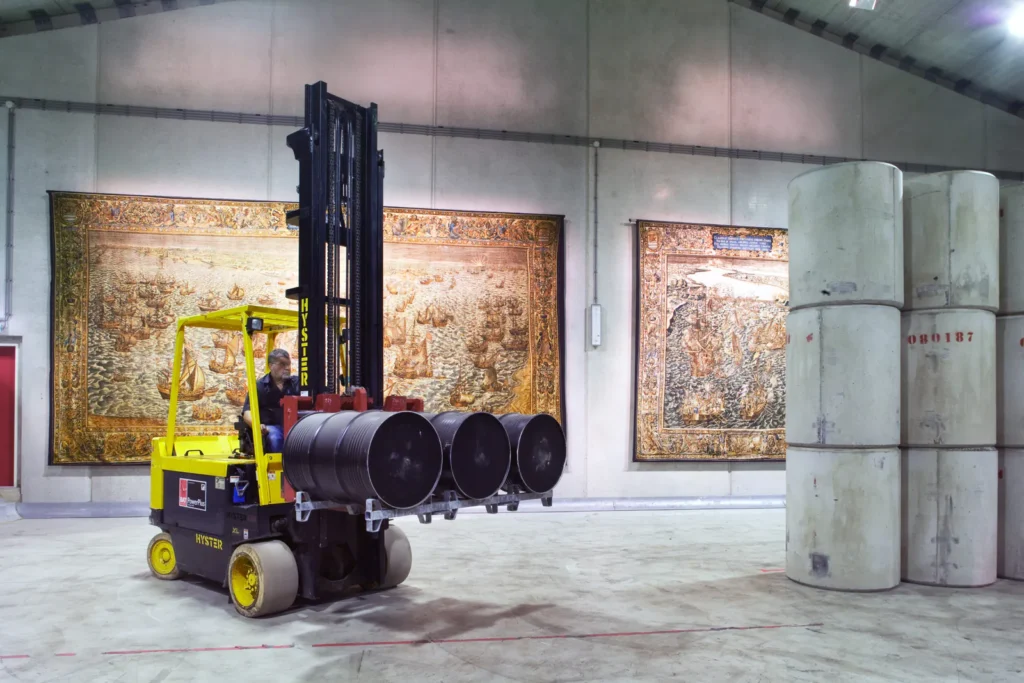
Among the more unconventional proposals is the collaboration between Rossella Cecili and Italian composer Valentina Gaia, who developed a children’s song explaining where French nuclear waste is buried and warning listeners about the dangers beneath the ground. Cecili argues that while physical structures inevitably decay, cultural form such as songs, stories, and myths may endure far longer. Some melodies, she notes, have been sung for centuries.
Chemist Hans Codée, a former director of COVRA, has made a similar argument in research on long-term nuclear communication. Storytelling, he writes, is one of humanity’s oldest methods for transmitting knowledge across generations. Epics such as The Iliad and The Odyssey still recount events believed to have occurred around 1200 BC, nearly three millennia ago. Visual art may last even longer: cave paintings in southern France depicting animals date back 30,000 to 32,000 years, suggesting that symbolic imagery can survive on timescales approaching those required for nuclear waste repositories.
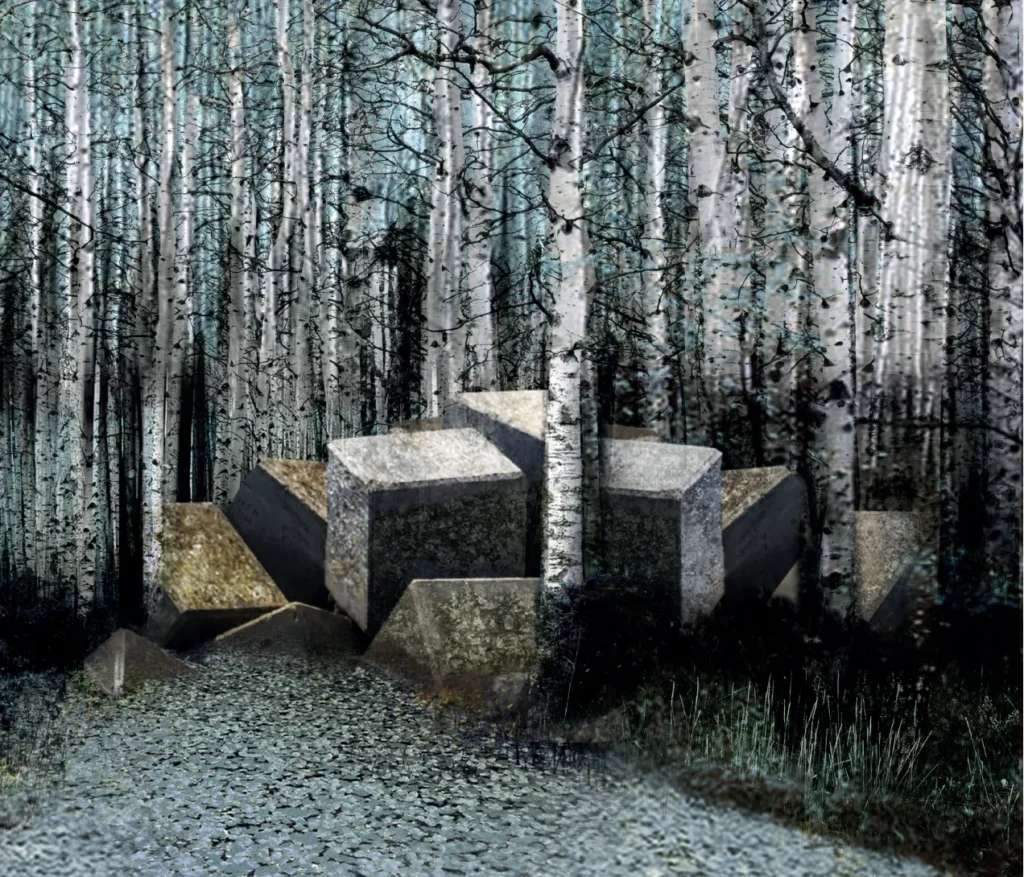
Perraud’s blue-forest proposal follows this logic in biological form. By genetically modifying plants above the Bure site so that they grow in an unnatural blue color, he hopes the location would appear mysterious and unusual to future societies. The strange landscape might encourage investigation, allowing people to discover the buried danger for themselves rather than relying solely on inherited warnings.
Even so, long-term safety standards remain uncertain. Different countries have adopted different planning horizons for nuclear repositories, some designing systems meant to last several thousand years, others aiming for periods approaching 100,000 years. Some have avoided specifying a strict cutoff point altogether. The reason is simple: the further into the future projections extend, the less certain they become. Geological processes, environmental conditions, and the behavior of the waste itself all become increasingly difficult to predict over such immense spans of time.
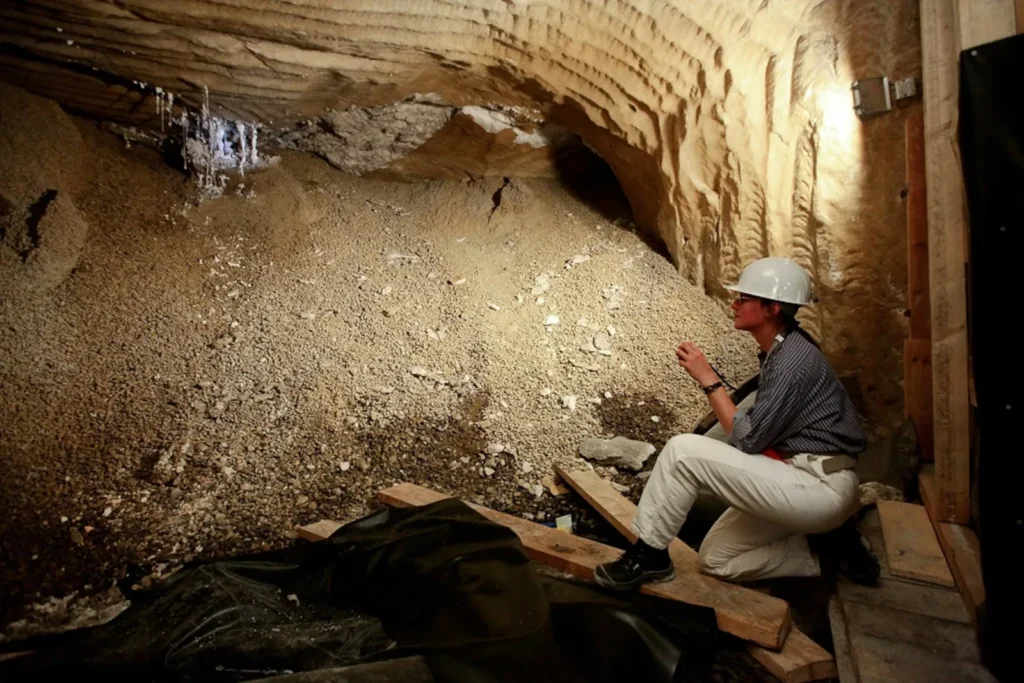
All of these nuclear agencies face two fundamental challenges as they attempt to design systems capable of winning regulatory approval for deep geological repositories. The first is purely physical: how to construct a facility that will remain secure across geological timescales. Over the next 100,000 years, roughly the period required for the most dangerous radioactive isotopes to decay, tectonic movement, erosion, and even the advance of a new ice age could dramatically reshape the landscape above a repository. The nightmare scenario is that radioactive elements slowly seep into groundwater, poisoning ecosystems and human populations without immediate detection. In Germany, the former Asse II Mine, a salt mine where 126,000 drums of nuclear waste were stored in the 1970s, is already collapsing, forcing authorities to undertake the enormously complex task of retrieving the waste and relocating it elsewhere.
Only a handful of countries have attempted to construct repositories designed for such long-lived waste. Belgium has built an underground research facility known as HADES Underground Research Laboratory, where scientists study how radioactive material might behave in deep clay formations. After decades of planning, excavation, and political conflict, the Yucca project was suspended, leaving behind miles of empty tunnels carved into the ignimbrite rock. One of the concerns raised during the long approval process was the mountain’s proximity to seismic faults, including the large Sundance Fault and the deeper Ghost Dance Fault. Had the repository ever reached its planned capacity, it would have contained what writer John D’Agata described as the radiological equivalent of “two million individual nuclear detonations”—roughly seven trillion lethal radiation doses.
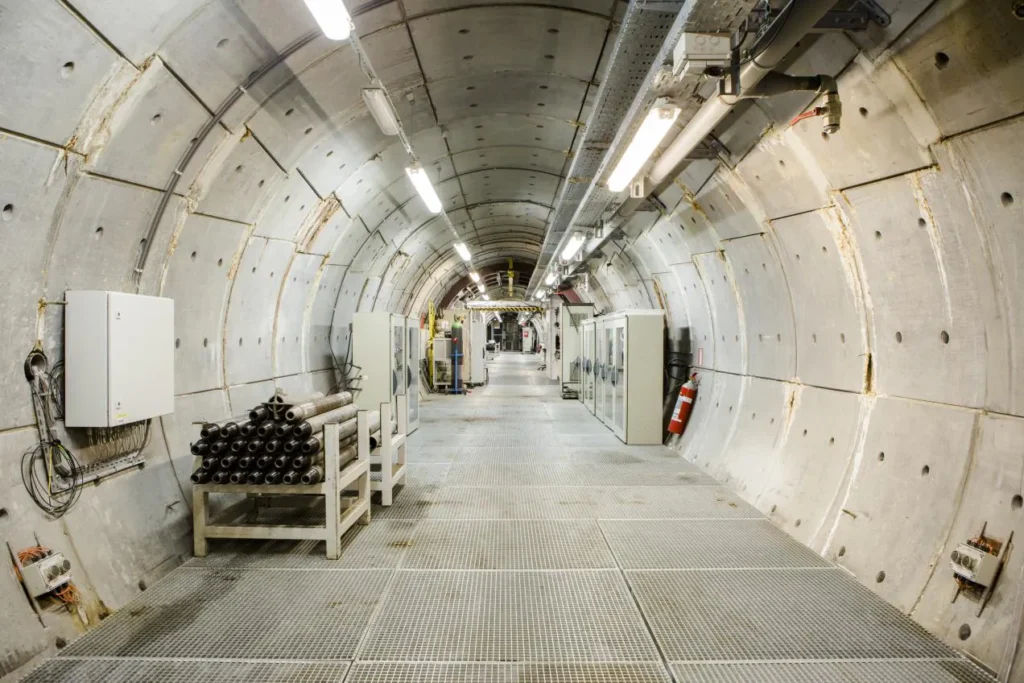
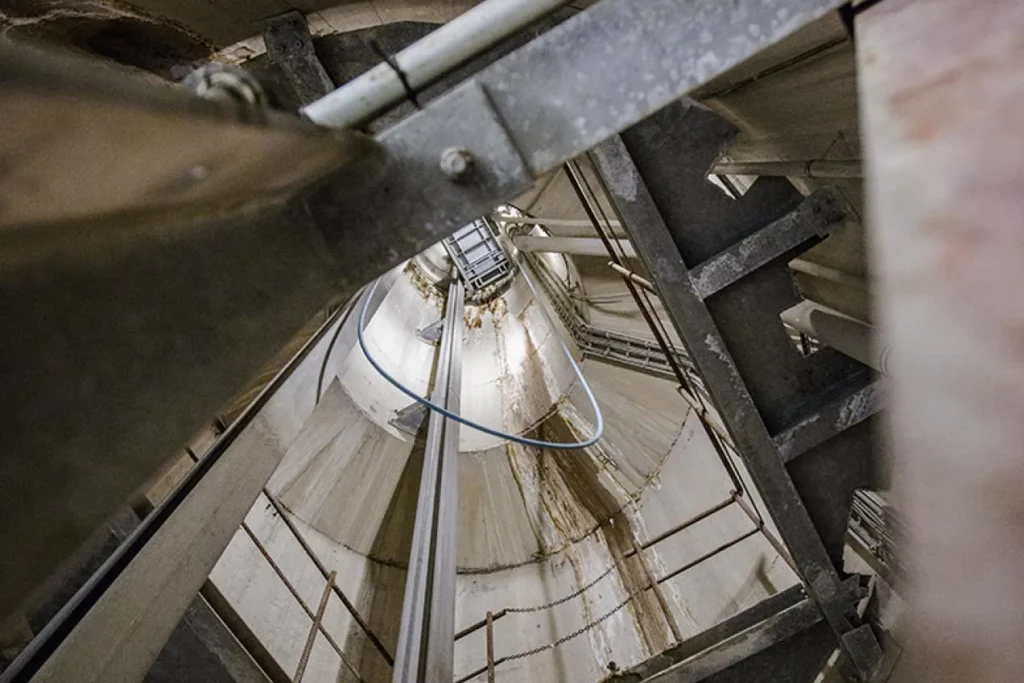
The questions raised by nuclear semiotics are therefore global in scope. Although the WIPP remains one of the few operational deep repositories in the world, several others are planned or already under construction in countries including Canada, Finland, Sweden and Germany. Yet the United States remains unusual in having formally commissioned expert panels to design warning systems intended to communicate danger across thousands of years. Many other nuclear programs have focused primarily on engineering immediate containment rather than on the cultural problem of how future societies might interpret these sites.
In Russia, most radioactive waste is currently stored at facilities operated by Rosatom, often in temporary storage systems designed with multiple safety barriers. These facilities were originally expected to operate for around seventy years, meaning that many are now approaching the end of their intended lifespan. As a result, Russia has begun moving toward a long-term strategy for permanent disposal. A national law passed in 2011 established a federal enterprise responsible for implementing a unified radioactive waste management system.
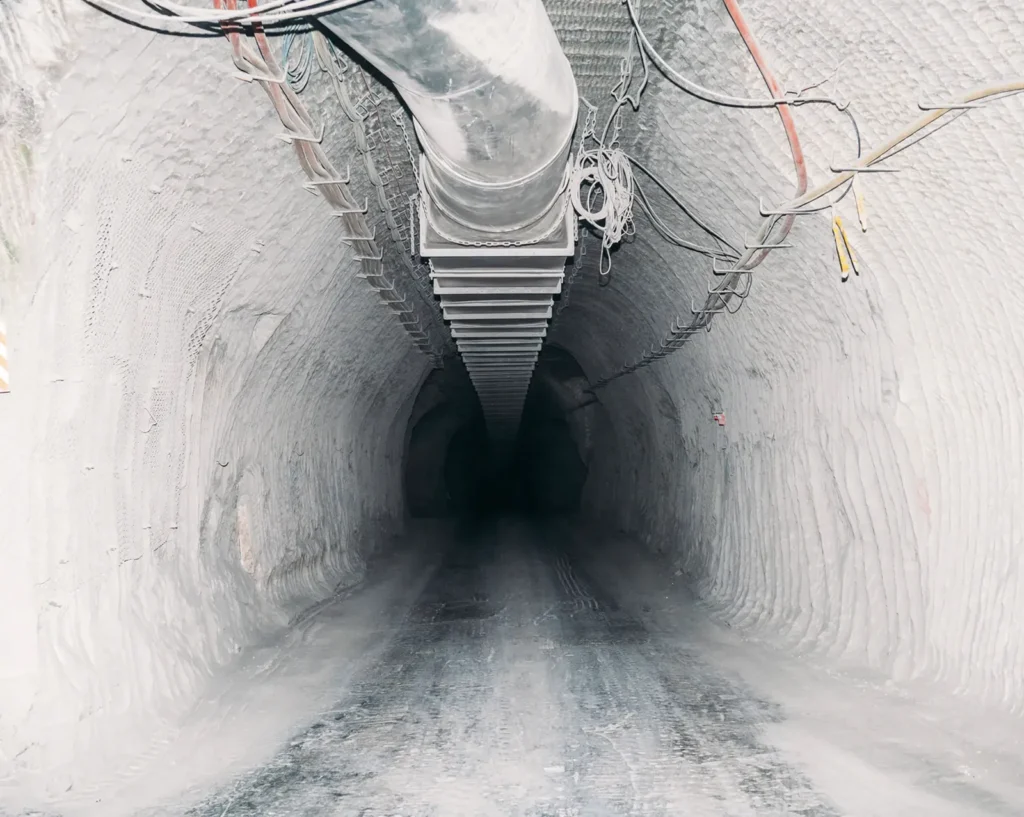
At present, Russia has no modern deep repository for its highest categories of radioactive waste. Plans call for such a facility to be constructed near Zheleznogorsk, deep within the Nizhnekansky Rock Massif. Before construction proceeds, however, scientists are building an underground research laboratory where hundreds of experiments will test whether the geological conditions are suitable for safely containing long-lived radioactive material. Construction of the research infrastructure began in 2018.
Some countries have moved even further toward fully integrated systems. Sweden’s nuclear program is often cited as a model because it treats waste disposal as a continuous chain of carefully controlled steps. After cooling for about a year at the reactor site, spent nuclear fuel from Sweden’s coastal power stations is loaded into specialized transport casks and shipped by a purpose-built vessel to a central interim storage facility. There, robotic arms transfer the fuel into storage cassettes underwater, before moving them to deeper pools about 25 meters below ground where they remain for at least thirty years. Only after this long cooling period is the material transferred to another plant, sealed inside thick copper canisters, and prepared for final disposal in bedrock.
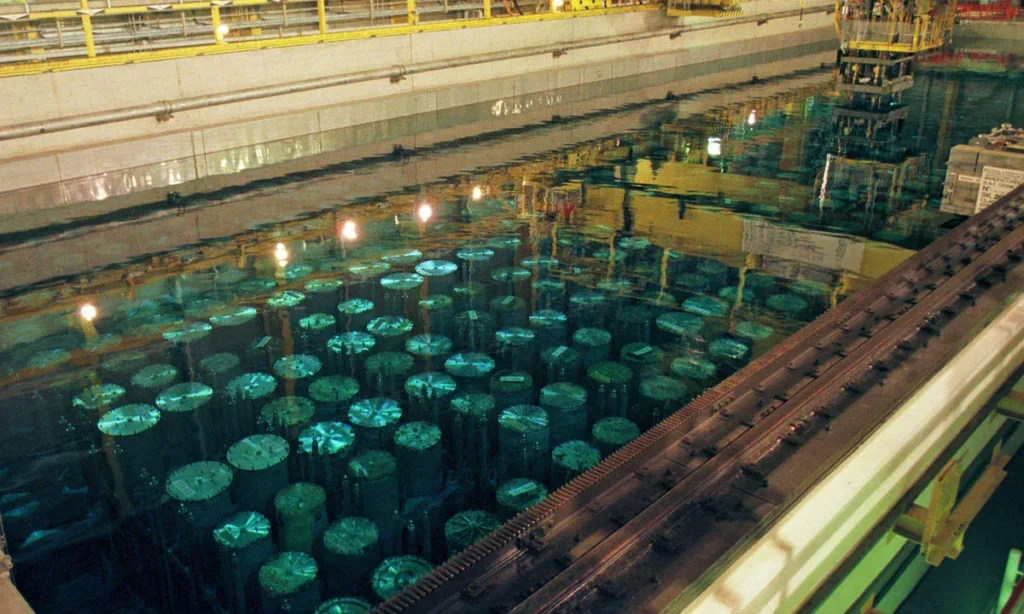
Deep geological facilities, often abbreviated as GDFs, are vast underground systems designed to contain the most dangerous byproducts of nuclear energy. The material they are meant to store includes spent fuel assemblies, reactor components, graphite from reactor cores, and highly radioactive liquid residues produced during fuel reprocessing. At present, much of this waste remains in temporary surface facilities such as those at Sellafield in the United Kingdom or La Hague Reprocessing Plant in France.
“The licensing for one of these high-level waste disposal facilities takes over twenty to thirty years, we haven’t seen any country taking less time,” says Jacques Delay, a scientist involved in the French programme. Once approved, he notes, the repositories themselves will operate for about a century before being sealed, followed by centuries of monitoring.
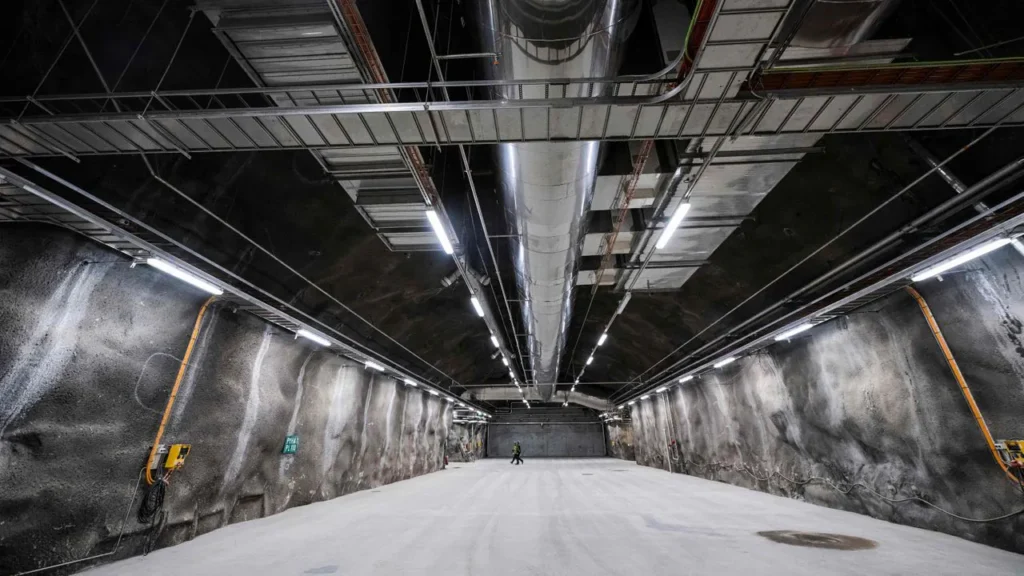
This also shapes Britain’s search for a site to host its own national repository. The program emphasizes the importance of a willing host community, cultivating local participation not only during construction but throughout the repository’s entire lifecycle, an operation expected to last around 750 years including closure and post-closure monitoring. Yet the deeper problem remains philosophical as much as technical. Over tens of thousands of years, even the longest political institutions and cultural traditions fade into insignificance. “It’s hugely interesting and challenging as a technical person,” Hyatt says, “because it takes us right to the core of what it means to be human.”
There is also a darker possibility. A clearly marked warning might not deter future visitors at all; it might instead provoke curiosity. Archaeologists of the distant future could interpret a sealed repository as a mysterious monument worth exploring. For that reason, some researchers have suggested the opposite strategy: allowing the site to blend back into the natural landscape so completely that it is eventually forgotten. In fact, one of the most radical proposals for preventing human intrusion is precisely that—to hide the repository entirely from the future.
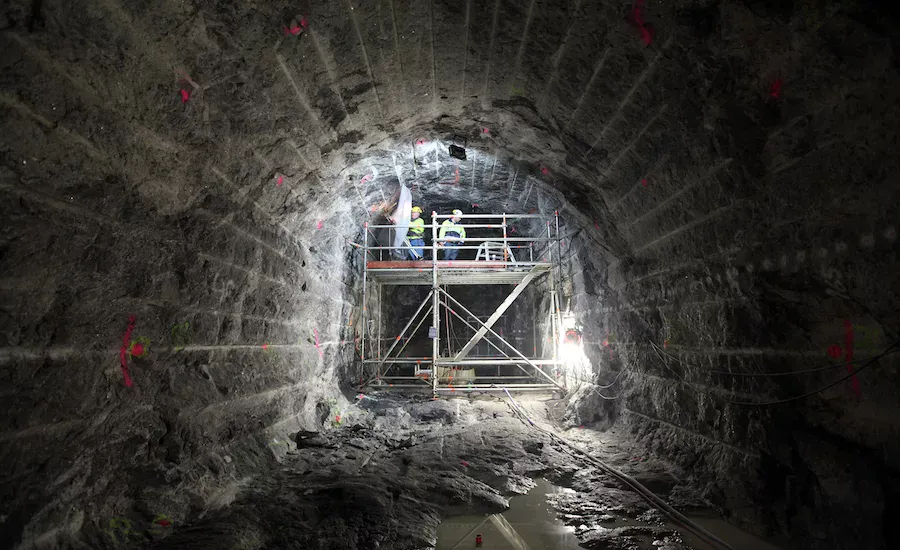
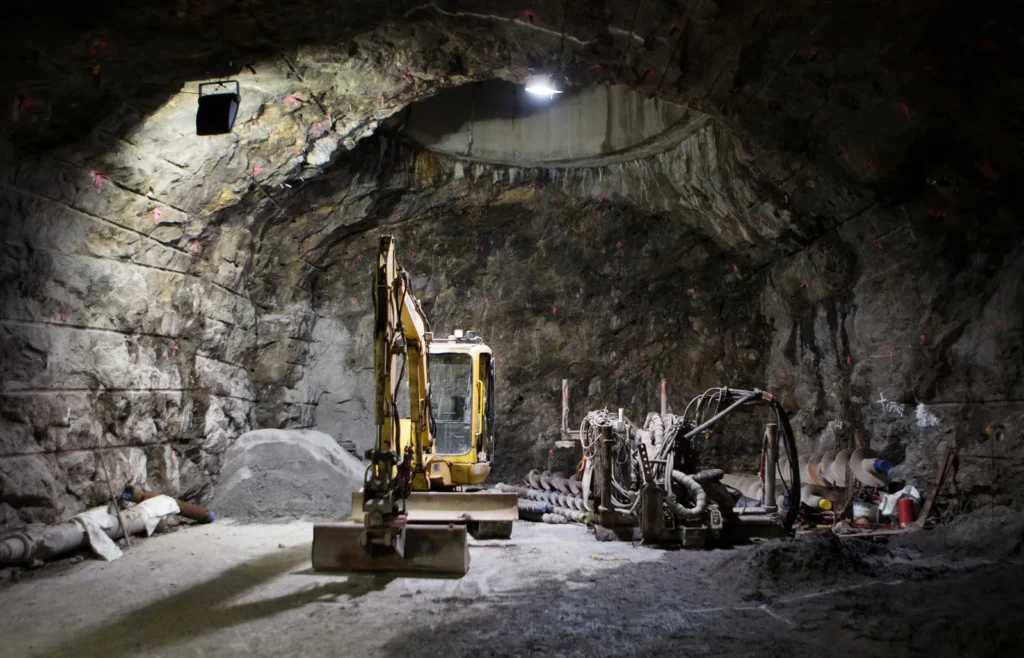
While American researchers explored monumental warning systems designed to instill dread across millennia, the Scandinavian approach has often moved in the opposite direction. Instead of building permanent markers, Finland’s deep geological repository at Onkalo Spent Nuclear Fuel Repository is currently designed to leave no visible trace on the landscape at all.
Onkalo lies on the west coast of Finland near the Olkiluoto Nuclear Power Plant, where engineers have spent two decades excavating a vast underground storage system. The facility consists of a five-kilometer spiral tunnel descending more than 400 meters into the bedrock, where hundreds of storage tunnels branch outward like a honeycomb. When complete, the repository will hold around 6,500 tons of spent nuclear fuel sealed inside cast-iron inserts and thick copper canisters, each surrounded by bentonite clay.
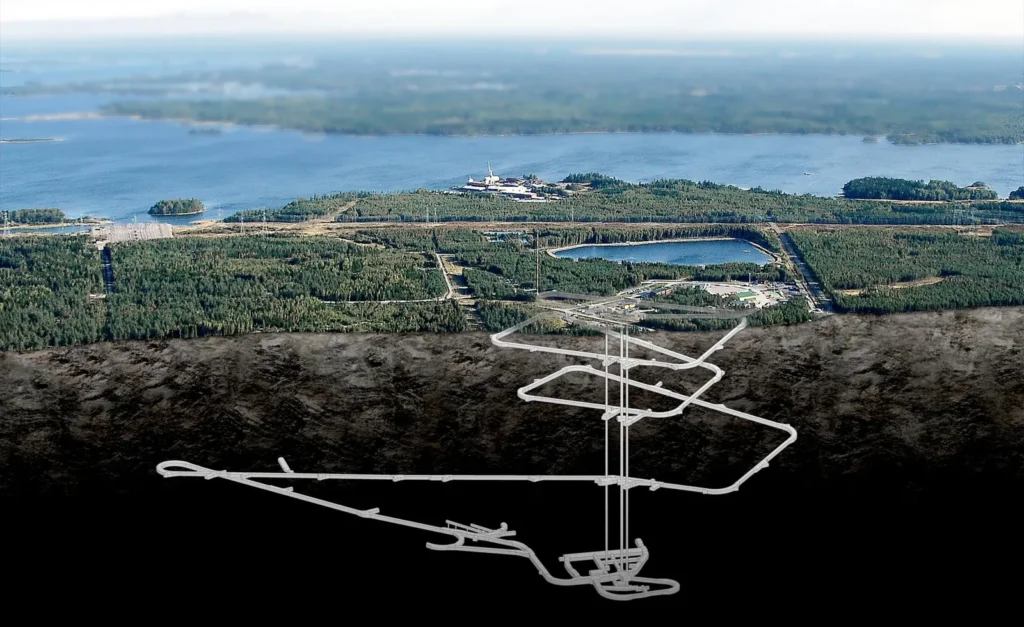
Construction began in 2004, and the project, expected to cost roughly €3.5 billion, is the first deep geological disposal facility for spent nuclear fuel ever built. The tunnels extend into rock that is nearly two billion years old along Finland’s Bothnian coast. When the burial chambers are eventually filled with waste from the nearby nuclear reactors, more than 3,000 canisters will sit quietly in their shafts, slowly cooling as radioactive decay releases heat.
Unlike the American proposals for vast warning landscapes, Finland’s strategy is based on a different assumption: perhaps the safest solution is simply not to tell the future. After roughly a century of operation, when the repository reaches capacity sometime around the next century, the tunnels will be sealed with millions of tons of crushed rock and bentonite clay. Ventilation shafts will be filled in, the access ramp buried, and the surface facilities dismantled. Eventually, nothing above ground will indicate that the site ever existed.
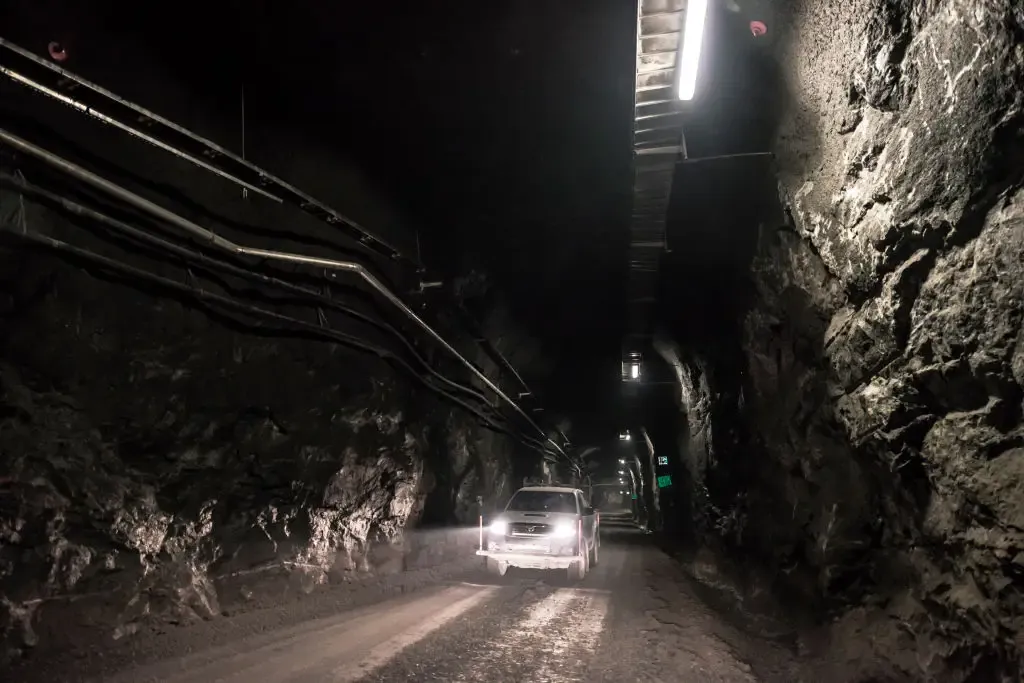
“The idea is that the facility will be safe forever, even if the memory is lost,” says Kai Hämäläinen of Finland’s nuclear safety authority. Finnish legislation does not require permanent surface markers. In the frozen landscape of Olkiluoto, far from valuable mineral deposits, engineers believe the chance that someone in the distant future would randomly dig 400 meters into solid bedrock is extremely small.
The strategy carries obvious risks. A repository of this scale is difficult to hide forever, and even a single accident could potentially expose its existence. Critics argue that assuming future societies will simply ignore the site may be overly optimistic. Florian Blanquer has described the concept as a “non-solution,” warning that the utopian idea of erasing the past could easily become a dystopian one.
Others question the durability of the materials themselves. The repository’s copper canisters were chosen because copper corrodes extremely slowly in oxygen-poor environments. But research led by Peter Szakálos has suggested that copper may still corrode in pure, oxygen-free water, releasing hydrogen and gradually becoming brittle. If that process occurred faster than expected, it could eventually cause cracks in the canisters.
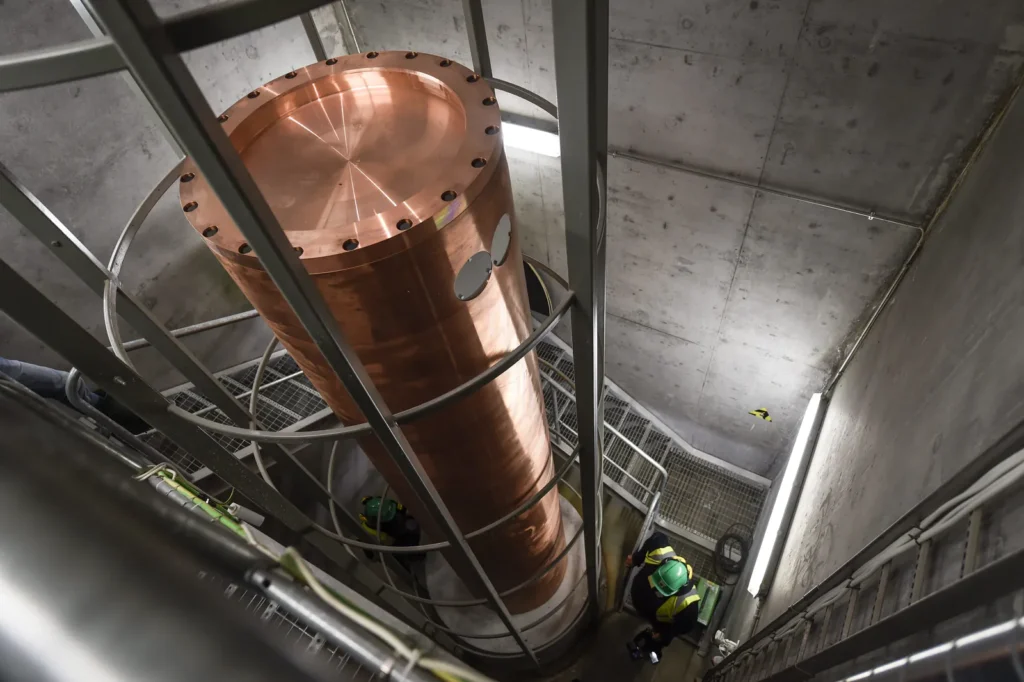
Engineers involved in the project argue that the system was never meant to rely on a single barrier. “You’re never relying on one protection,” explains Emily Stein. The design uses multiple layers of defense: the fuel pellets themselves, the sealed copper canisters, the swelling bentonite clay that blocks groundwater flow, and the surrounding bedrock. Even in worst-case scenarios considered during safety assessments, radioactive material would take decades or centuries to migrate through the geological layers, allowing most of its radioactivity to decay along the way.
Finland has encountered relatively little public resistance to the project, in part because the nearby community of Eurajoki has lived alongside nuclear reactors for decades. “Almost everyone here knows someone who works at the plant,” says Janne Mokka, whose company Posiva manages the repository. When the repository finally closes, expected sometime around 2120, the surface buildings will be dismantled and the entrance tunnel sealed. No monuments will remain. Deep below the reclaimed landscape, thousands of tons of spent fuel will remain entombed in silence for at least 100,000 years.
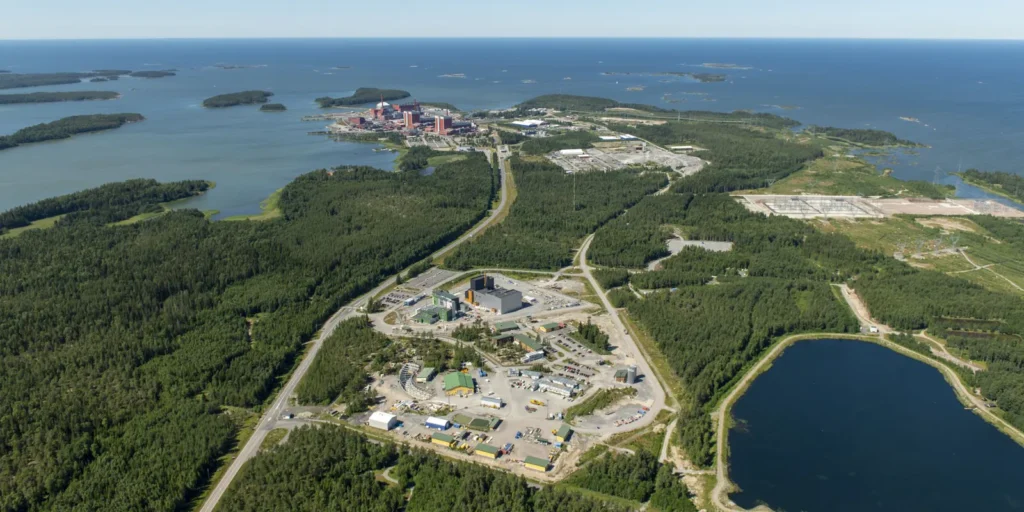
One engineer involved in the project bluntly put the question of long-term warnings into a much wider perspective. “Also, you should note that after the next ice age, there will no longer be any city or building in Europe anyway. Everything will have disappeared under two kilometers of ice. So your question about the necessity of communicating its presence for thousands of years is completely hypothetical.”
That claim, however, rests on uncertain ground. There is no scientific consensus on when the next ice age might occur. Some studies suggest it could begin in as little as 1,500 years, while others place it as far as 100,000 years in the future. Nor can anyone reliably predict what resources future societies may seek. History offers many examples of materials once dismissed as worthless later becoming valuable with new technologies. The deeper question is ethical rather than geological: whether it is reasonable to obligate perhaps 3,000 future generations to manage the dangerous waste of their ancestors.
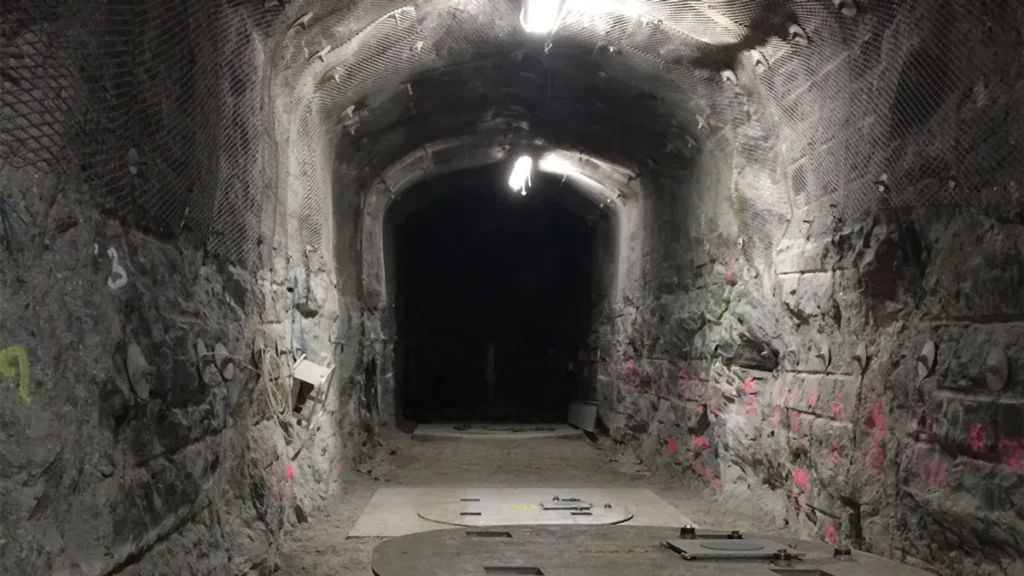
Part of the difficulty lies in the nature of the threat itself. Radiation is almost uncanny in its invisibility, silent, odorless, and impossible to detect without instruments. At contaminated sites today, technicians move slowly across the ground in protective suits, scanning the air with Geiger counters. To someone unfamiliar with their purpose, the scene might resemble a kind of ritual: robed figures searching for an unseen force, like members of an atomic priesthood appealing to an invisible power.
The problem of communicating danger across deep time is therefore not only technical but cultural. An intriguing observation comes from linguistics. The Finnish language, for instance, has no grammatical future tense. Speakers refer to the future indirectly, using the present tense combined with context (“Tomorrow I do this”) or conditional forms that suggest possibilities rather than certainty. This may contain a quiet kind of wisdom. Rather than making absolute declarations about events tens of thousands of years ahead, Finnish grammar encourages a way of speaking about the future as a range of potential outcomes unfolding from the present.
Seen in this light, the real lesson may be more modest. Human societies cannot fully imagine the distant future using the conceptual tools of the present. What they can do is act responsibly now: to contain the danger, mark it where possible, and design systems that reduce the risk of disturbance. If those efforts succeed, the distant descendants who inherit this planet are unlikely to judge us harshly for trying to protect them from what we left behind.