A vast complex of monolithic churches carved from living rock in medieval Ethiopia, Lalibela was conceived as a “New Jerusalem” and despite the ravages of erosion, conflict, and time, it remains one of Christianity’s most extraordinary pilgrimage sites, but you might not know it.
In the Old Testament, the prophet Isaiah writes: “Look to the rock from which you were cut and the quarry from which you were hewn.” In medieval Ethiopia, the line took on an almost literal meaning. What was once a spiritual metaphor became a method of construction: churches not built from quarried stone, but carved directly from the living rock itself.
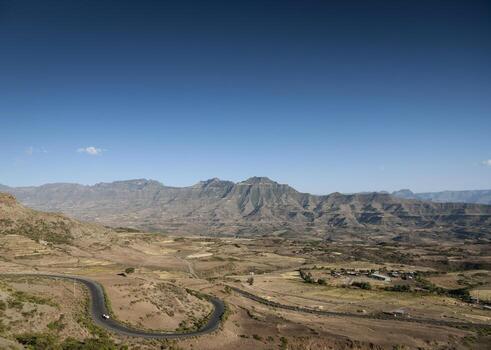
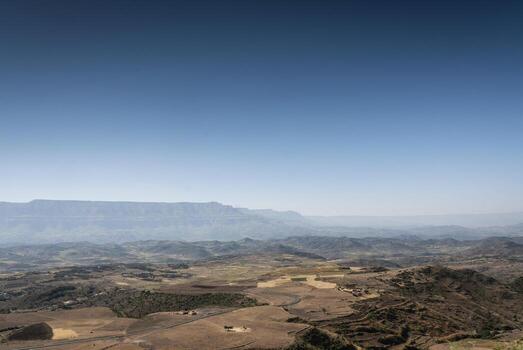
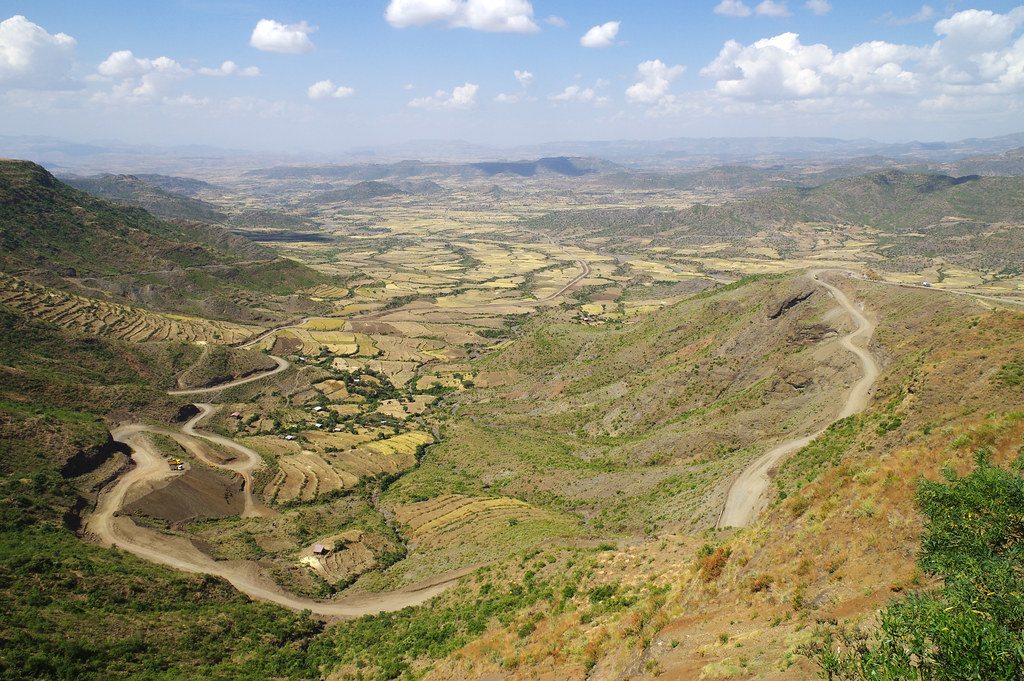
High in the Lasta Mountains of northern Ethiopia, at roughly 2,600 meters (8,530 feet) above sea level, lies the small town of Lalibela. Here stands one of the most remarkable sacred landscapes in the Christian world: a series of monolithic churches carved directly into the living rock. Unlike conventional buildings assembled from stone blocks, these sanctuaries were sculpted downward from a single mass of volcanic tuff, their roofs left level with the surrounding ground. The result is a network of churches that appear almost hidden within the earth, revealed only when one approaches their excavated courtyards and descending passageways.
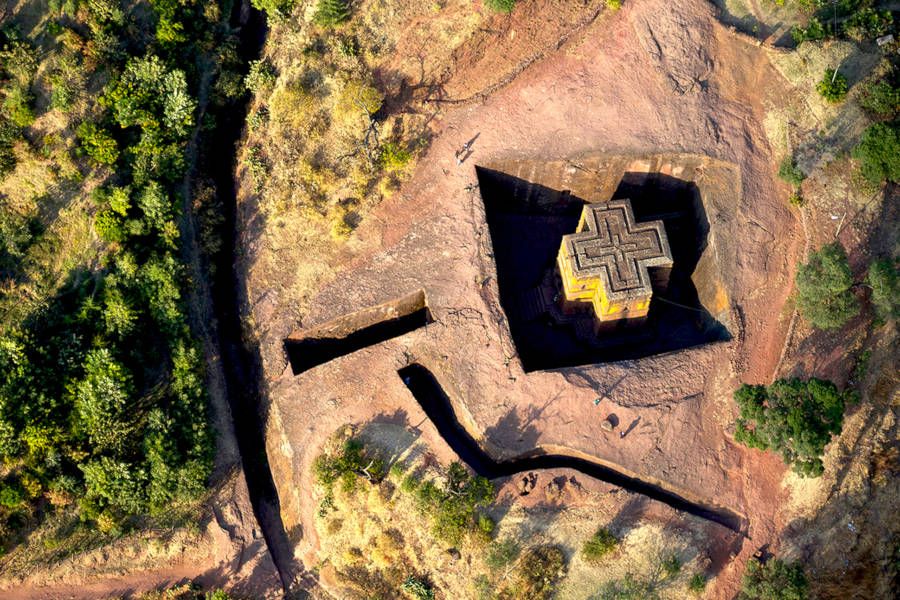
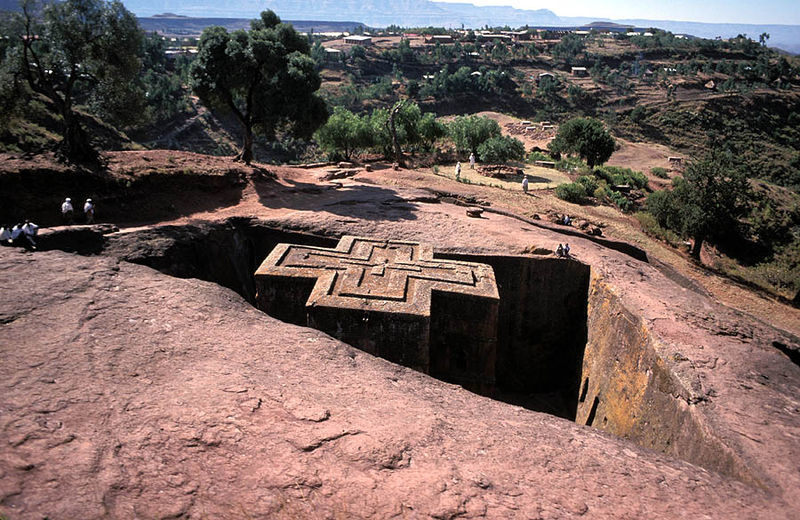
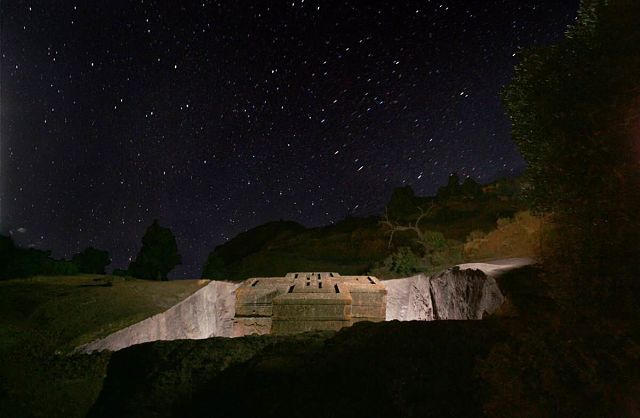
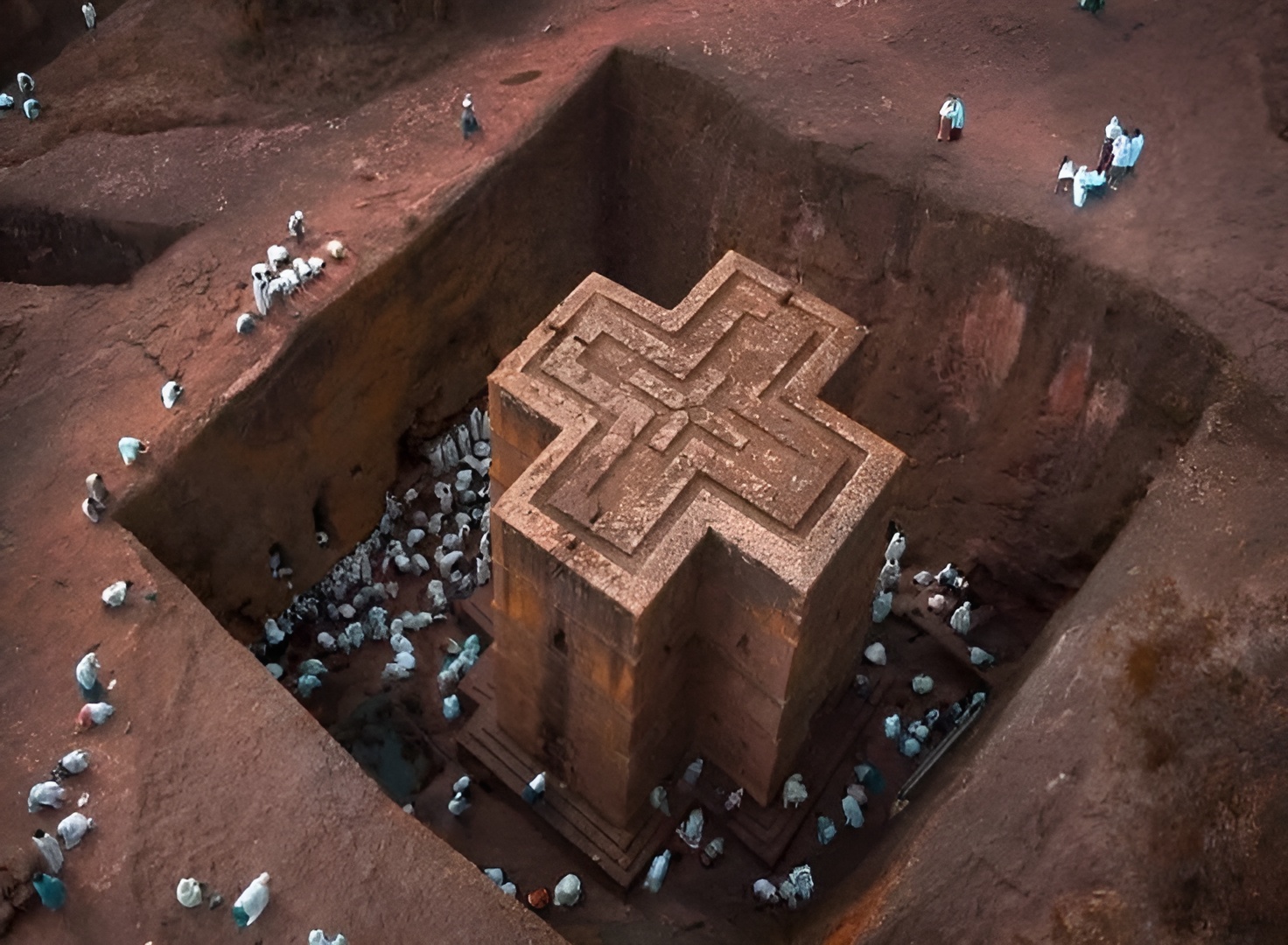
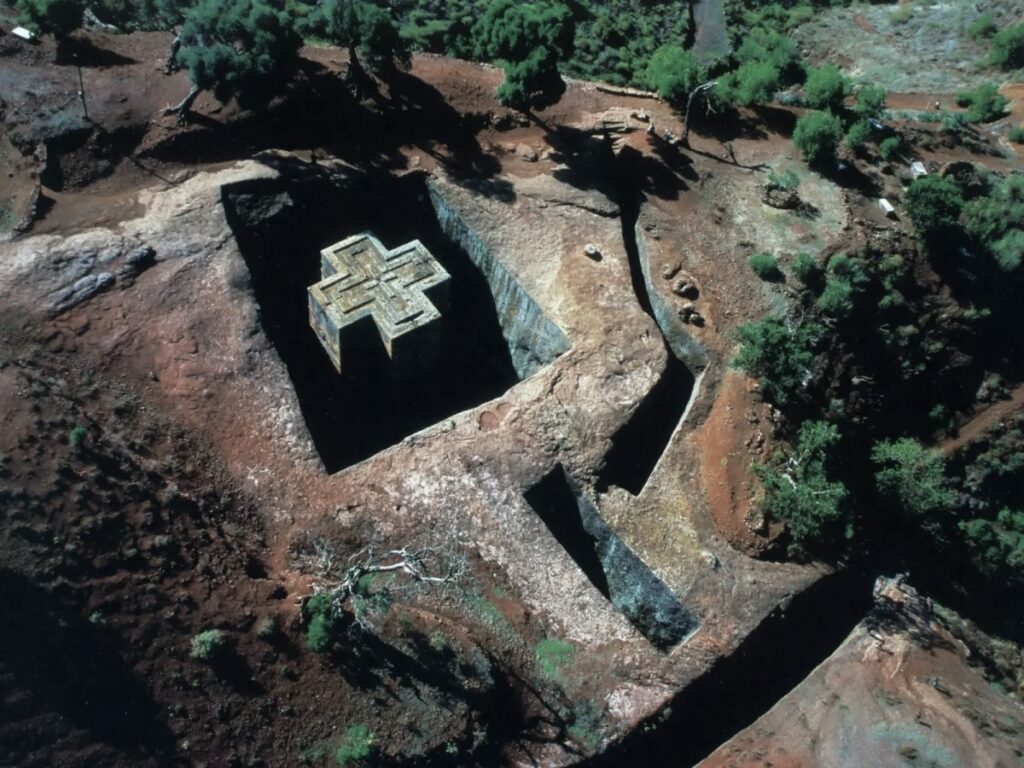
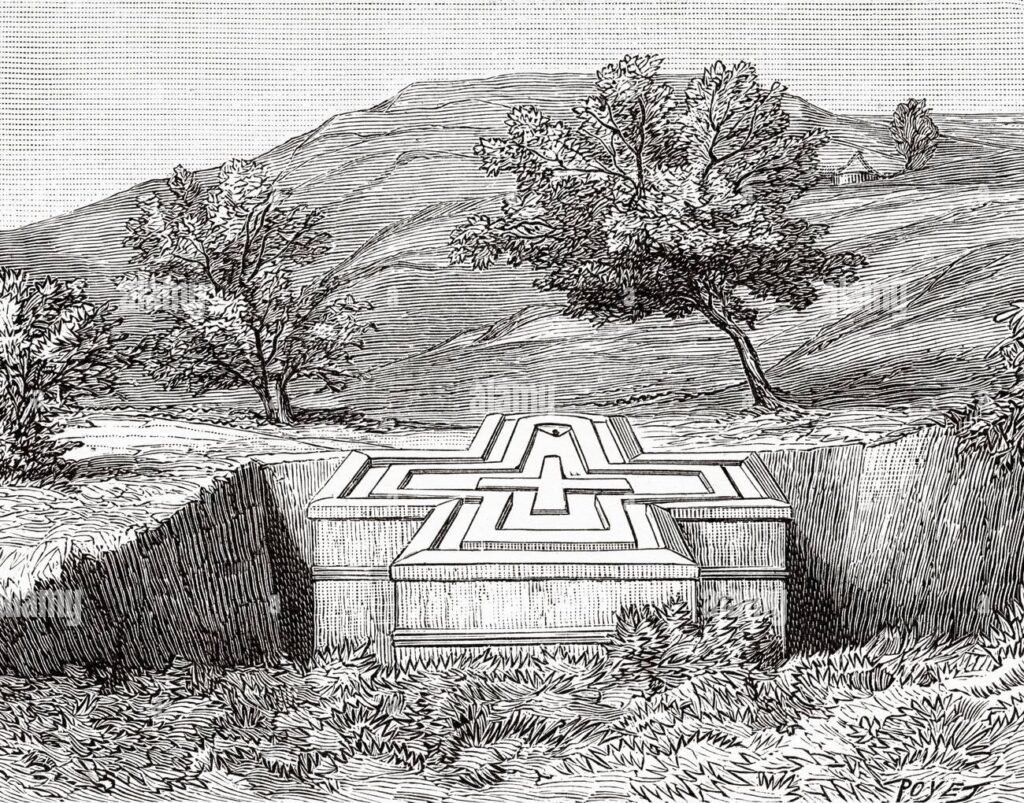
Because of this process, the structures are often described less as architecture than as monumental sculpture. The most famous example within this site, the Church of Saint George (Bete Giyorgis), was not constructed in the conventional sense. Builders first cut a trench roughly twelve meters, around forty feet, deep into the rock, isolating a massive block. From that single block they carved a cruciform church whose roof remains flush with ground level. Only after the exterior form was completed did they hollow out the interior chambers, columns, and passageways. The same technique was used across the site’s twelve other churches, all created with simple tools: hammers, chisels, and extraordinary patience.
The geology that made this possible began millions of years earlier. Around 31 million years ago, volcanic fissures flooded the Horn of Africa with enormous flows of lava, in some places more than a mile deep. As these flows cooled, they formed thick layers of basalt and volcanic tuff. On the hillsides around Lalibela, columns of ancient lava can still be seen frozen in place. Iron within the rock oxidized to give the stone its reddish color, while trapped gases created a porous, relatively workable material, firm enough to stand for centuries yet soft enough to yield to a chisel.
Christianity had already taken root in Ethiopia long before the churches were carved. In the early fourth century CE, King Ezana of the Kingdom of Aksum converted to Christianity, making Ethiopia one of the earliest officially Christian states in the world. Ethiopian Christianity therefore developed alongside the Christianization of the Roman Empire and centuries before most of Europe adopted the faith.
By the late twelfth and early thirteenth centuries, the region was ruled by the Zagwe dynasty. It was during their reign, around the year 1200, that the rock-hewn churches of Lalibela were carved. The motivations behind their creation remain debated. One explanation lies in the political upheaval of the broader Christian world. In 1187, Muslim forces led by Saladin retook Jerusalem, making pilgrimage to the Holy Land far more difficult for Ethiopian Christians. They needed a replacement. In response, a sacred landscape intended to mirror Jerusalem may have been created in the Ethiopian highlands, an alternative pilgrimage destination for those unable to reach the Levant.
This was not an unusual idea in the medieval Christian world. Replicas or symbolic versions of Jerusalem appeared in several regions around the world, designed so that the faithful could reenact the geography of the Holy City without traveling thousands of kilometers. Lalibela’s complex, with its churches, trenches, and ritual pathways, is said to follow this same logic.
Legends have long surrounded the site’s construction. One story claims the churches were carved with the help of the Knights Templar, the powerful crusading order active during the same century the churches were created. Yet no concrete evidence supports their involvement. Whether aided by legend or not, the achievement remains astonishing: a series of sanctuaries cut directly into the earth, each emerging from a single mass of stone, standing as both engineering feat and act of devotion.
The explanation most widely accepted by historians links the churches to King Lalibela, the ruler of Ethiopia in the late twelfth and early thirteenth centuries. According to According to the Gadla Lalibela, a religious biography compiled centuries after the king’s death and whose title translates as “The Acts of Lalibela”, the ruler was said to have made the roughly 1,600 mile trip to Jerusalem and arrived shortly before the city fell to the forces of Saladin. When the Holy City became inaccessible to many Christians, the Ethiopian king is said to have received a vision of an alternative pilgrimage center in the highlands of his own kingdom, a “New Jerusalem” carved directly from the volcanic rock.
At the time, the settlement now known as Lalibela was called Roha. The town was later renamed in honor of the king whose building program transformed it into one of Christianity’s most unusual sacred landscapes. Lalibela belonged to the Zagwe dynasty, which had taken control of the Ethiopian throne around the year 1000. Like many rulers, the Zagwe sought legitimacy not only through military authority but through religious patronage. By commissioning an ambitious complex of churches in Roha, Lalibela strengthened ties with the powerful Ethiopian Orthodox Church while simultaneously anchoring his dynasty within the wider narrative of Christian history.

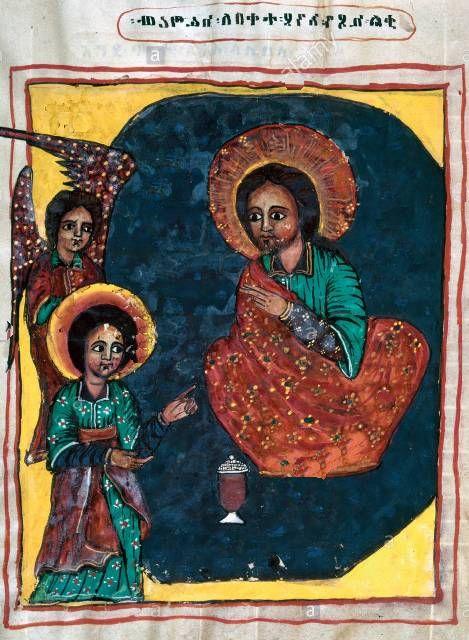
The complex is spread across roughly sixty-two acres and includes eleven principal churches connected by trenches, courtyards, and narrow passageways cut into the rock. Some of the churches rise nearly four stories in height when measured from the floors of their excavated courtyards, while the largest structures cover close to 8,000 square feet. Yet their most striking dimension is less measurable: the extraordinary devotional landscape they create. The entire site was planned to echo the topography of Jerusalem. The network of paths and ceremonial routes allowed pilgrims to symbolically retrace the sacred geography of the Holy Land without leaving Ethiopia.
This vision served both religious and political purposes. By recreating Jerusalem within Ethiopian territory, the Zagwe dynasty positioned itself as a guardian of Christian tradition at a time when access to the actual Holy City was uncertain. Lalibela thus became not only a pilgrimage destination but also a statement of Ethiopia’s place within the global Christian world.
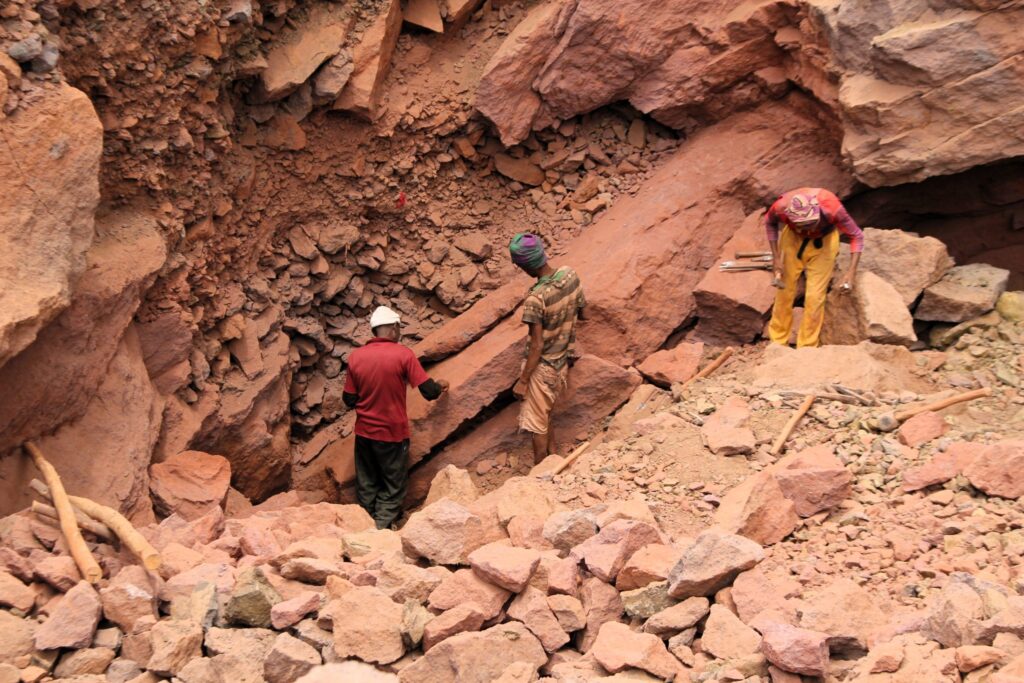
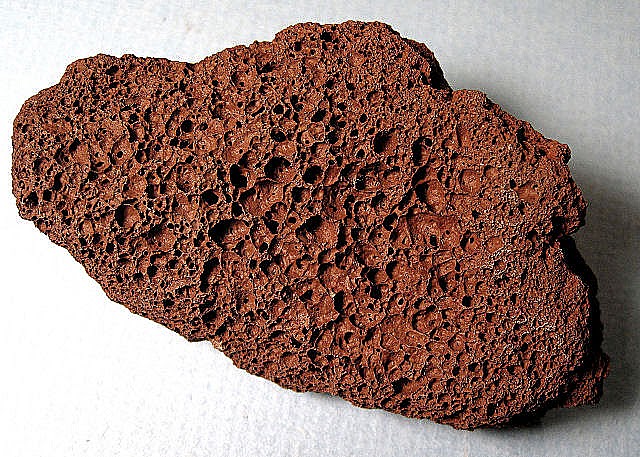
The churches themselves were carved from reddish volcanic rock known as basaltic scoria, formed by ancient lava flows. Sculpted below ground level, their courtyards and facades remained hidden from distant view, giving the impression that the structures had been lowered into the earth rather than built above it. For centuries the complex remained largely unknown outside Ethiopia until a Portuguese priest, Francisco Álvares, described the churches to European readers after visiting the region in 1520.
Within the complex, many features deliberately reference biblical locations. One rock-cut structure is associated with the Tomb of Adam, the first man of the Bible. Nearby hills are named for Calvary and Golgotha, while local tradition holds that olive trees planted nearby were descended from branches brought from the Garden of Gethsemane.
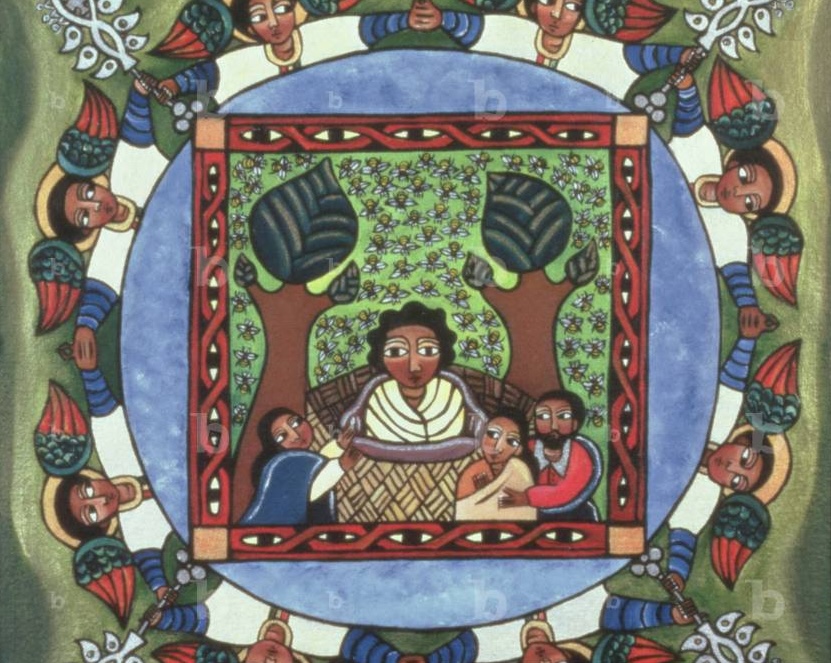
The life of King Lalibela itself is surrounded by legend. One story recounts that when he was born he was encircled by a swarm of bees, prompting his mother to name him Lalibela, a name often interpreted as “the bees recognize his sovereignty.” His older brother, the reigning king Harbay, supposedly feared the prophecy implied by this omen and attempted to eliminate him. According to the legend, the young prince was eventually poisoned and fell into a three-day coma.
During this period, it is said, angels carried him to heaven where God instructed him to return to Roha and construct churches unlike any the world had seen. When Lalibela awoke and later ascended the throne, the story continues, he began gathering craftsmen and laborers to realize this divine command. Whether literal or symbolic, the legend reflects the extraordinary ambition of the project that followed.
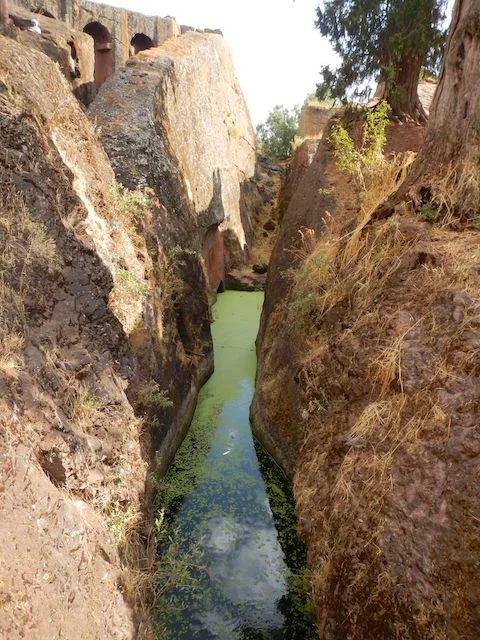
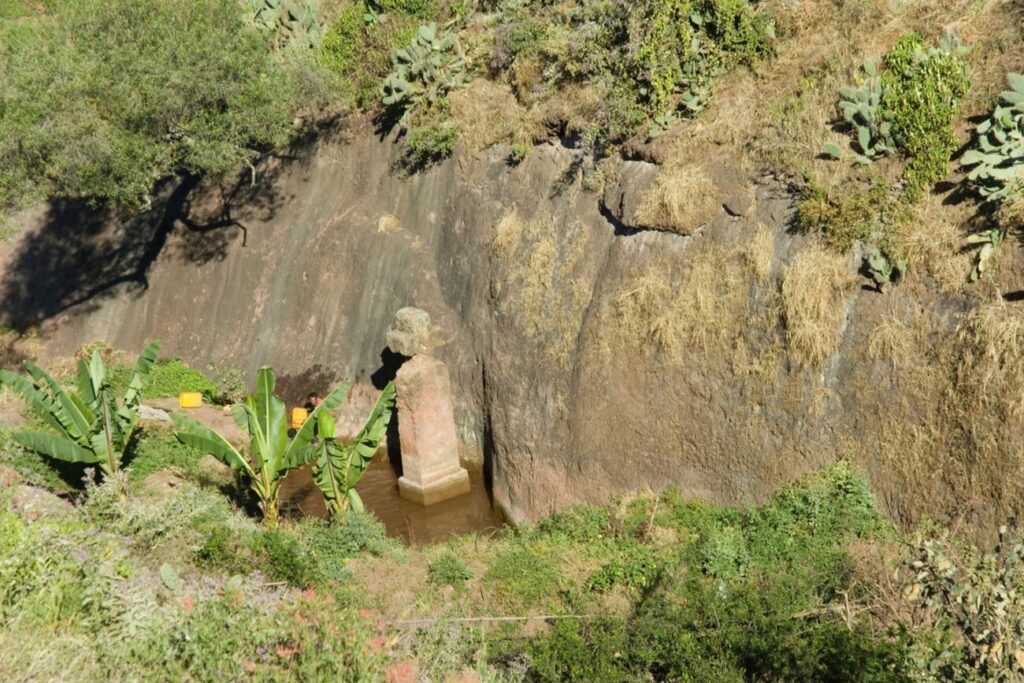
The churches, though connected through narrow tunnels and corridors, are separated by a small stream, the Yordanos, running through the site that was deliberately named after the Jordan River that flows through the original city of Jerusalem, while a nearby hill was named Debra Zeit in reference to the Mount of Olives, reinforcing the symbolic geography of the place. Those on one side of the river represent the earthly Jerusalem; those across the water symbolize the heavenly Jerusalem described in the Bible, the radiant city of jewels and golden streets awaiting the faithful.
The exact circumstances surrounding the construction of Lalibela’s churches remain partly obscured by legend. One enduring tradition claims that King Lalibela was aided not only by human craftsmen but also by angels who labored through the night, continuing the work begun during the day. According to this story, divine assistance allowed the entire complex to be completed in just twenty-four years, an astonishingly short period for a project of such scale. Modern engineers still debate the precise methods used by the medieval builders, particularly how such extensive excavations were carried out without triggering structural collapse in the surrounding stone.
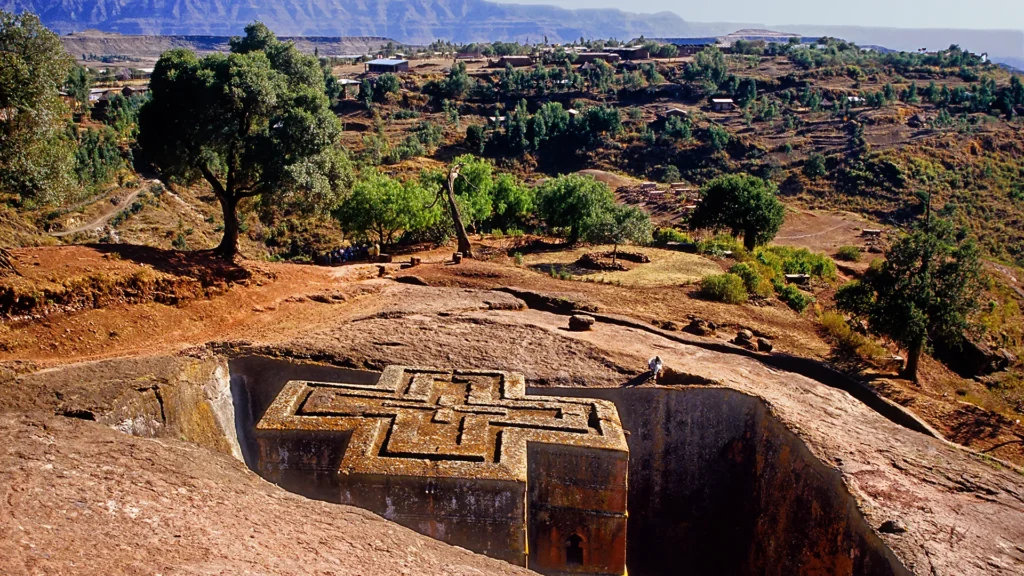
What is certain is that the churches were not built in the conventional sense. They were excavated. Archaeological studies suggest that the sculptors followed a carefully planned “top-down” technique. Workers began by cutting deep trenches around a selected section of volcanic rock, isolating a massive block from the surrounding stone. Only once the block had been separated did the sculptors begin shaping the exterior form of the church.
Although the churches comprising the site are discussed as a single entity, they are not all carved in the same way. Some are fully monolithic structures, meaning they were completely separated from the surrounding rock during excavation. Others are semi-monolithic, remaining attached to the bedrock along one side or at the roof. Still others are carved directly into the face of the rock itself rather than standing free within excavated courtyards.
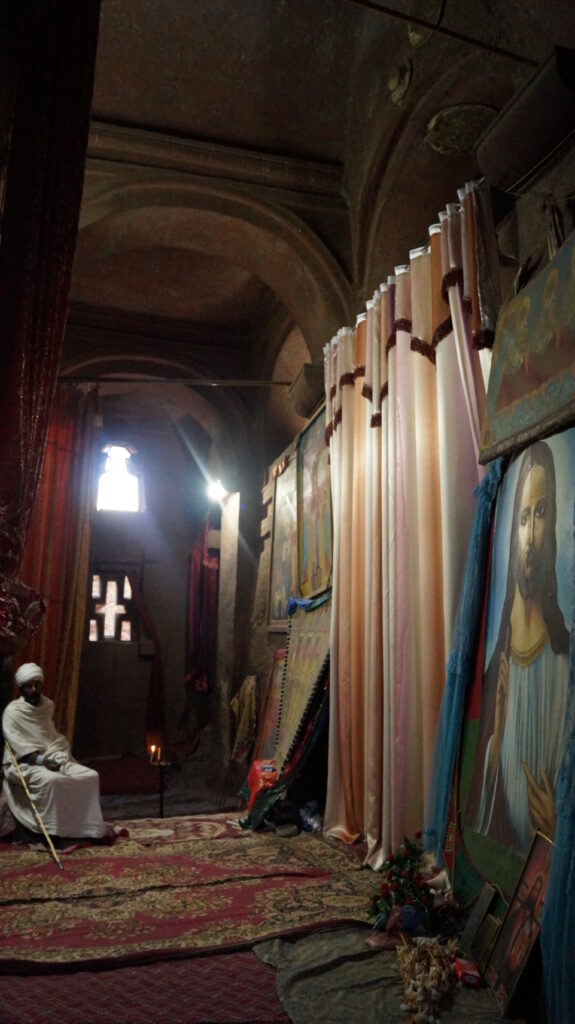
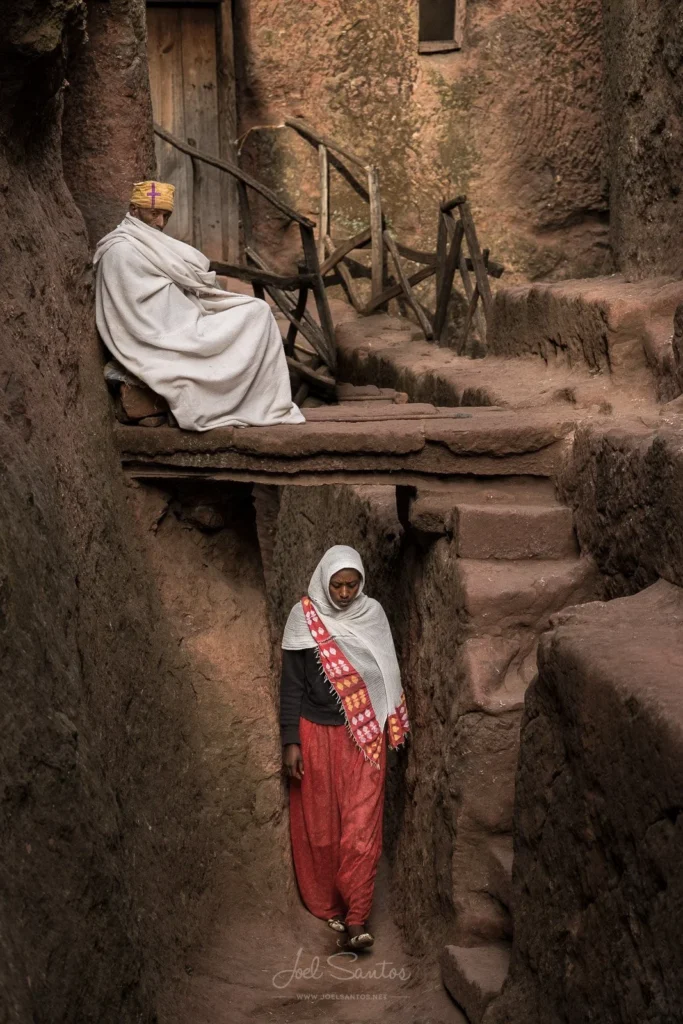
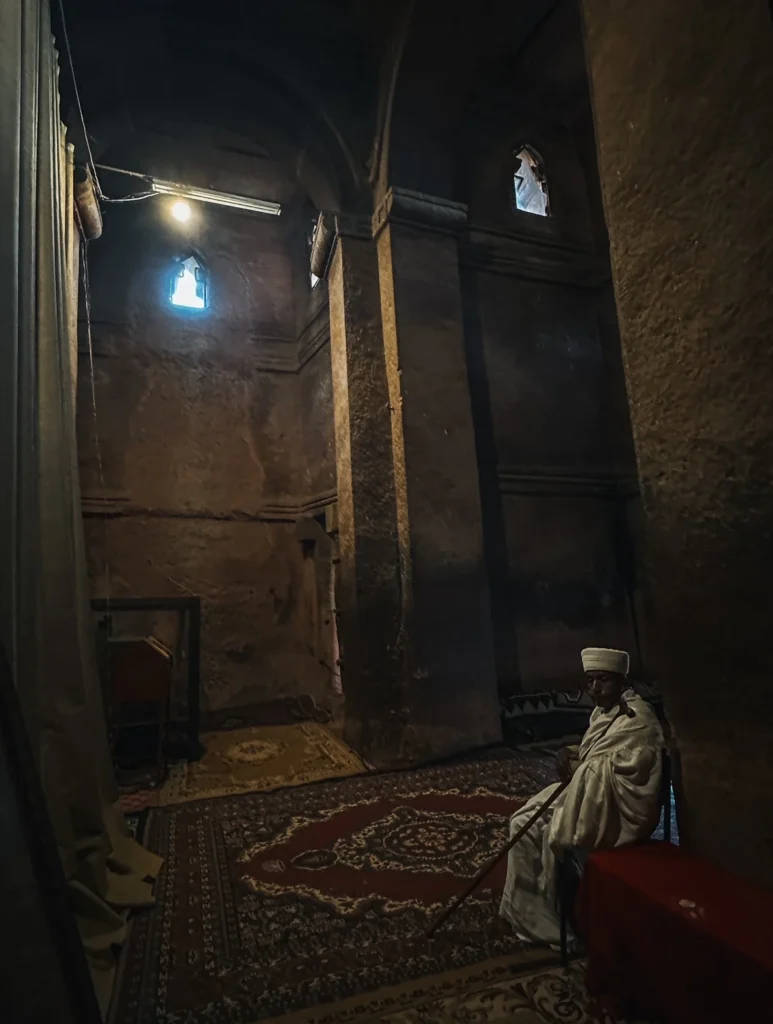
After the necessary outer walls, roofs, and decorative elements were defined, they hollowed out the interior spaces, creating columns, chambers, and passageways, working inward from the surface. Some of the largest structures reach nearly forty feet in height when measured from the floors of their sunken courtyards. In every case, the structures are enclosed by sheer vertical rock walls. Access is provided through a network of trenches, tunnels, and courtyards that link the churches together. These pathways guide visitors along carefully controlled routes, shaping the way the complex is experienced and revealing each church gradually and dramatically.
The method offered one major advantage: because the building mass remained attached to the surrounding bedrock during excavation, there was no need for scaffolding or external supports. At the same time, the approach required extraordinary precision. A mistake made while carving could not easily be corrected; removing too much stone would permanently alter the structure. The architectural forms found at Lalibela draw on much older traditions.
Scholars have identified clear influences from the architecture of the Kingdom of Aksum, which flourished more than eight centuries earlier. Among the most sophisticated structures are large basilicas with three or even five aisles, complete with carved columns, window openings, and intricate geometric ornamentation. These details, cut directly into the stone both inside and out, demonstrate not only technical mastery but also the continuation of architectural ideas that had shaped Ethiopian Christianity since the early medieval period.

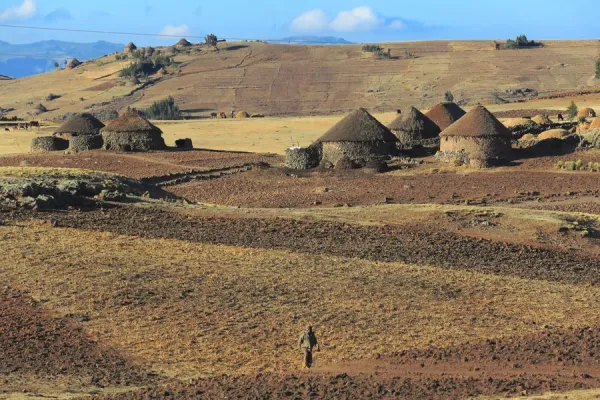
The location itself was chosen carefully. The settlement stood in the mountainous terrain of northern Ethiopia, a naturally defensible landscape that strengthened the political position of the Zagwe dynasty. At the same time, the site lay near trade routes linking older highland networks associated with Kingdom of Aksum and the region of Shewa. This strategic placement ensured not only security but also a steady movement of travelers, merchants, and pilgrims whose presence supported the town’s religious and economic life.
The political landscape shifted in 1270 AD when Yekuno Amlak overthrew the Zagwe rulers and established the Solomonic dynasty. The new dynasty based its legitimacy on a lineage tracing back to King Solomon and Queen of Sheba. Despite their initial suspicion toward monuments created under Zagwe rule, the Solomonic kings preserved the churches of Lalibela. By this time the complex had already become one of the most important pilgrimage destinations of the Ethiopian Orthodox Tewahedo Church, and its religious role was too deeply embedded in Ethiopian Christianity to be discarded.
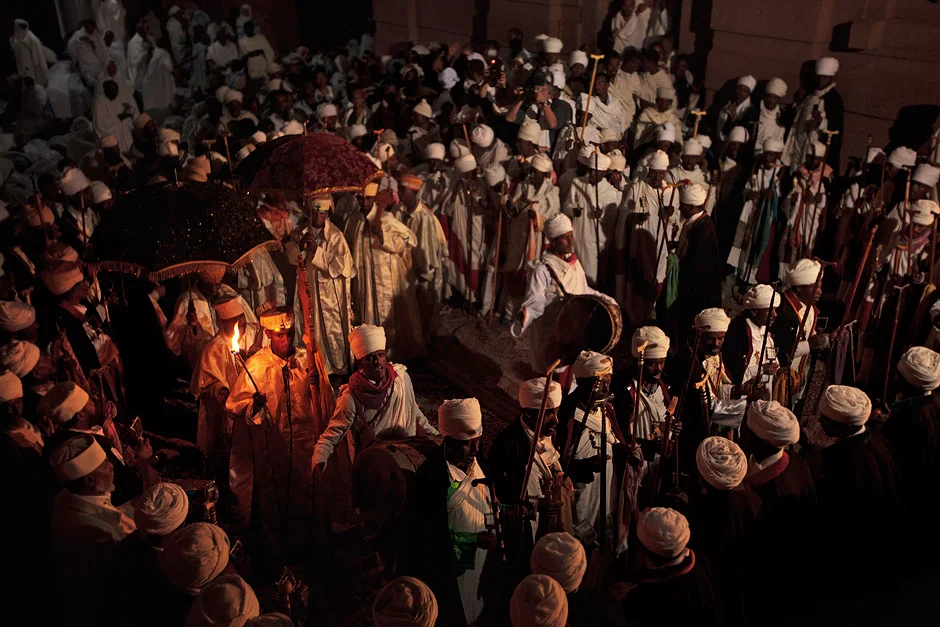
Over the centuries Lalibela evolved into a major spiritual and cultural center where kingship and faith reinforced one another. Royal ceremonies and important liturgies were sometimes associated with the churches, strengthening the idea that Ethiopian rulers governed with divine favor. This symbolic connection between sacred authority and political power also made the region an attractive target during periods of conflict with outside forces.
One of the greatest threats came in the sixteenth century, during the campaigns of Ahmad ibn Ibrahim al-Ghazi, often called Ahmad Gragn, whose armies invaded the Ethiopian highlands between 1529 and 1543. His forces destroyed numerous monasteries and religious artifacts across the region. Lalibela, however, appears to have escaped significant damage. Its remote location and the unusual monolithic construction of the churches likely contributed to their survival, allowing religious services and pilgrimages to continue even as much of northern Ethiopia was engulfed in conflict.
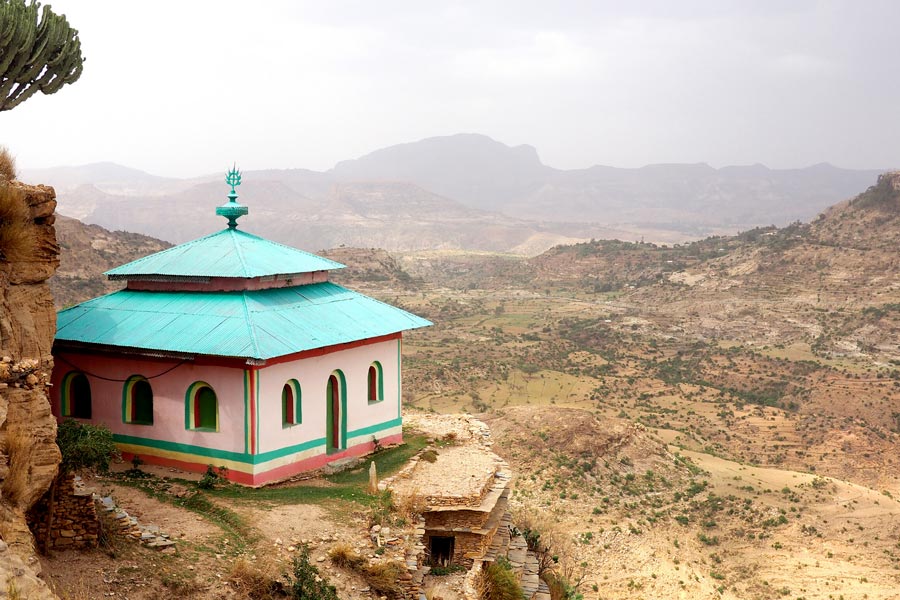
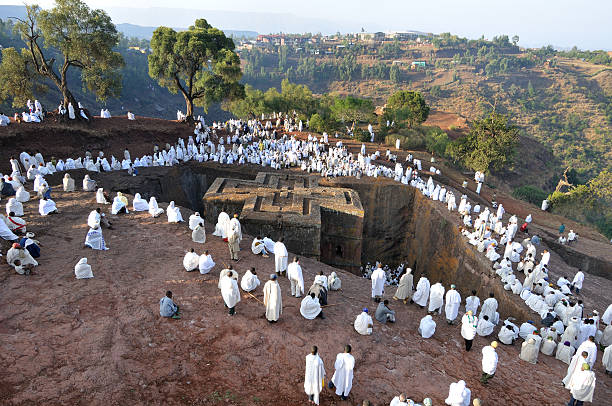
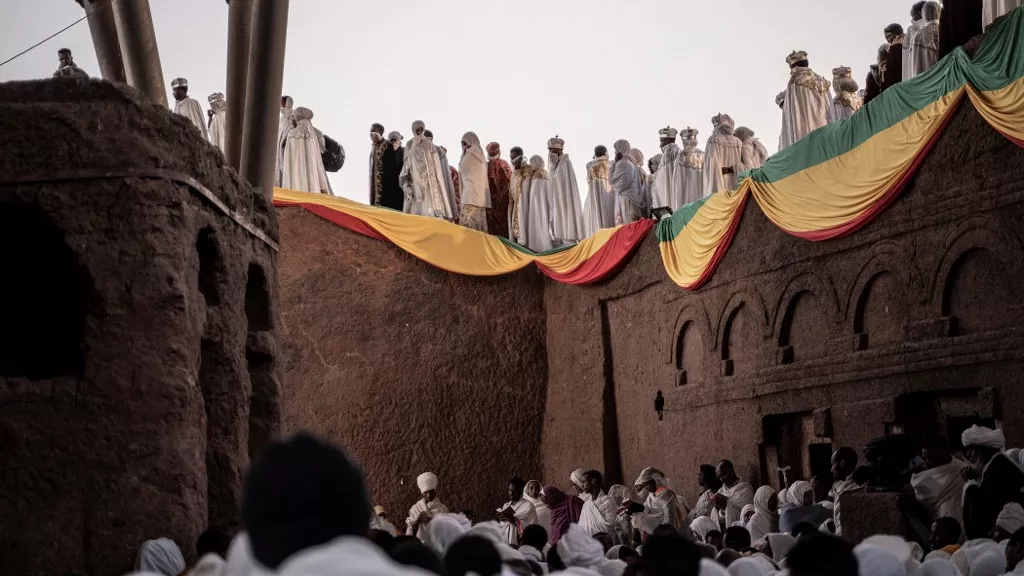
Lalibela is not the only place in Ethiopia where churches were carved from living rock. Across the country there are roughly two hundred known rock-hewn sanctuaries dating to different periods. Yet the churches at Lalibela remain the most famous and architecturally ambitious among them. Today the site continues to function as an active religious center. The churches host daily services for the faithful of the Ethiopian Orthodox Church, and pilgrims still travel great distances, sometimes more than a hundred miles on foot, to reach the town. During Genna, the Ethiopian Christmas held in early January, the population of Lalibela can swell dramatically, with as many as 200,000 pilgrims gathering among the ancient rock-hewn sanctuaries that have remained in continuous use for more than eight centuries.
The churches are arranged in two primary clusters on either side of the stream, while a separate structure, Biete Giyorgis, stands alone to the southwest about 300 meters from the others, carved into its own isolated pit. The five churches that form the northwestern cluster appear to follow a more unified architectural scheme than those in the rest of the complex. Their arrangement, the alignment of passages, and the relationships between courtyards suggest a degree of planning that has led some historians to propose that the complex may have been executed according to a single coherent vision. The southeastern cluster, by contrast is less organized and may have been completed at a later date. Together, these churches form one of the most complex and symbolically layered sacred landscapes in the Christian world, an entire religious city carved from living rock.
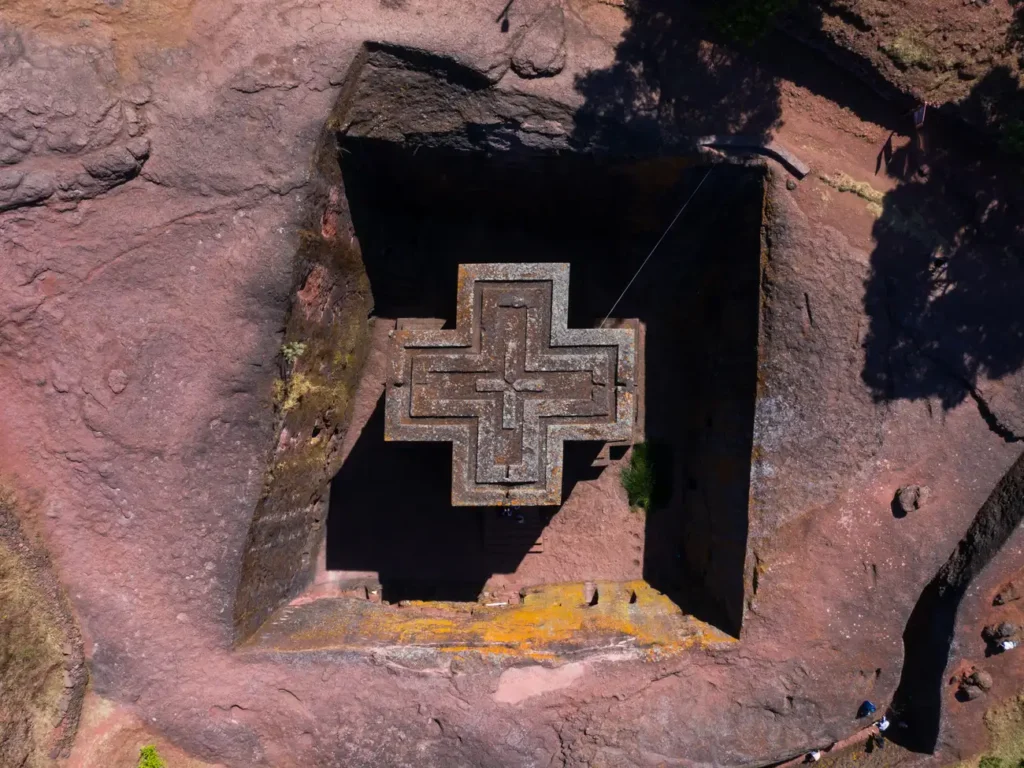
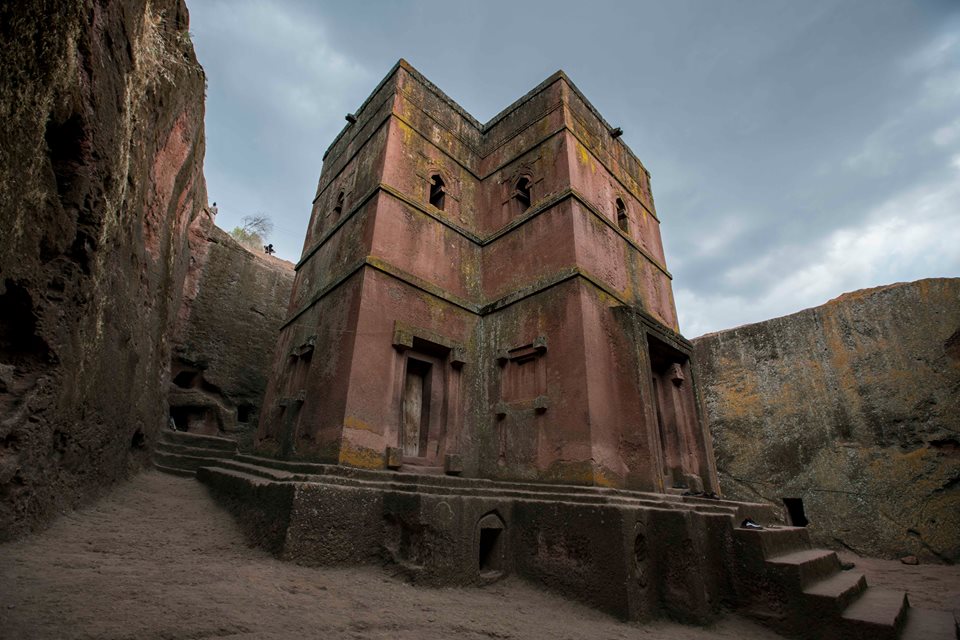
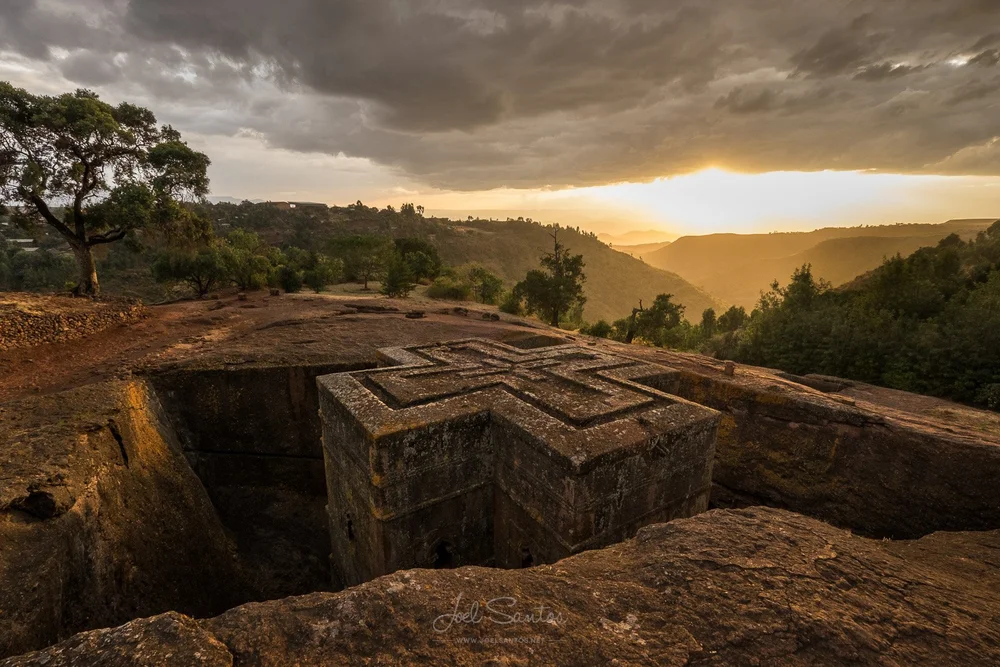
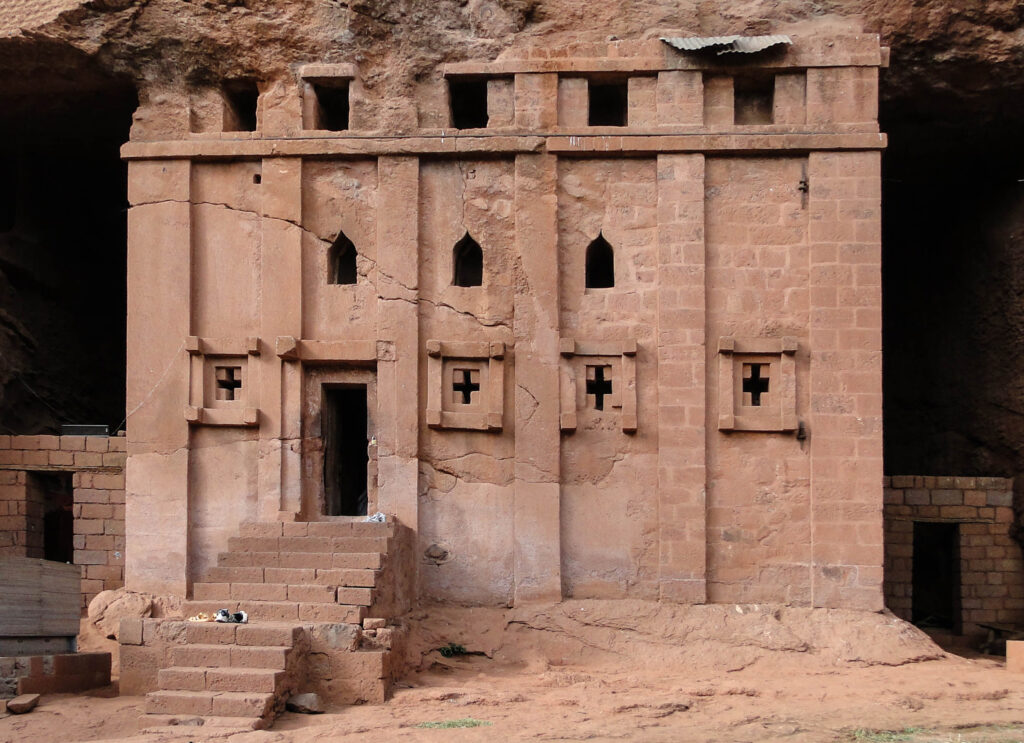
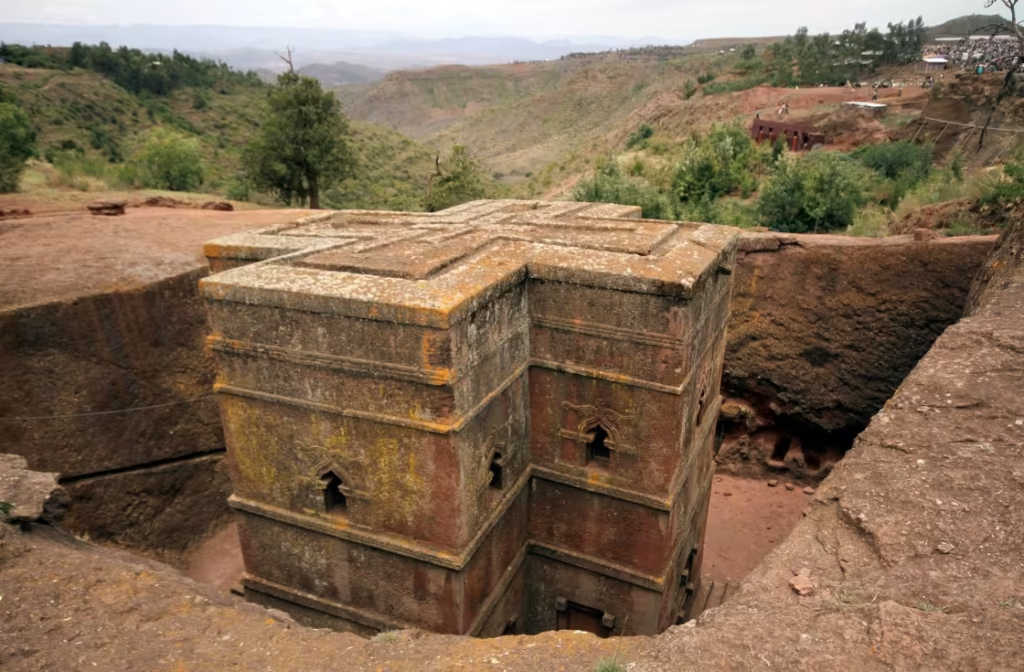
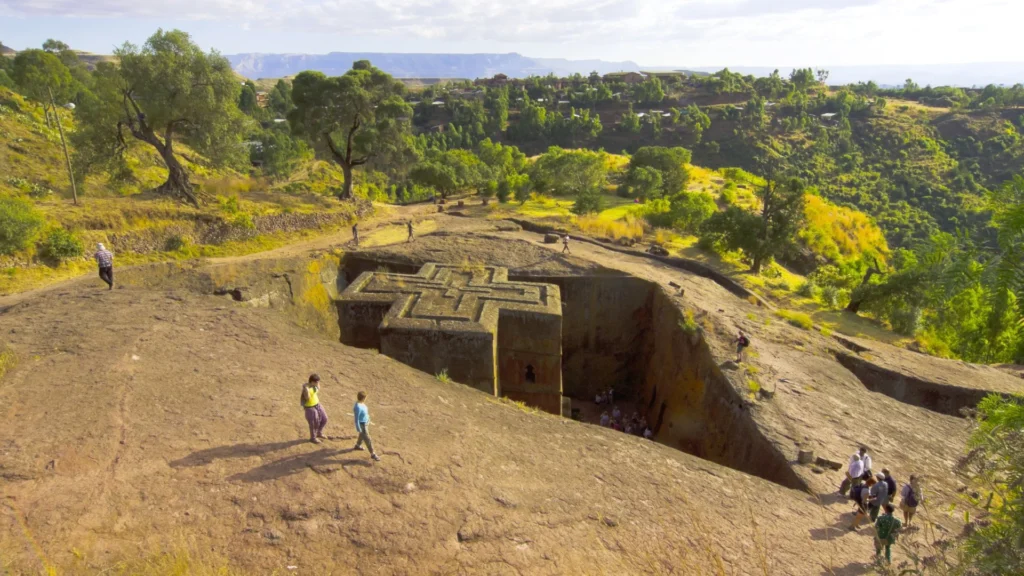
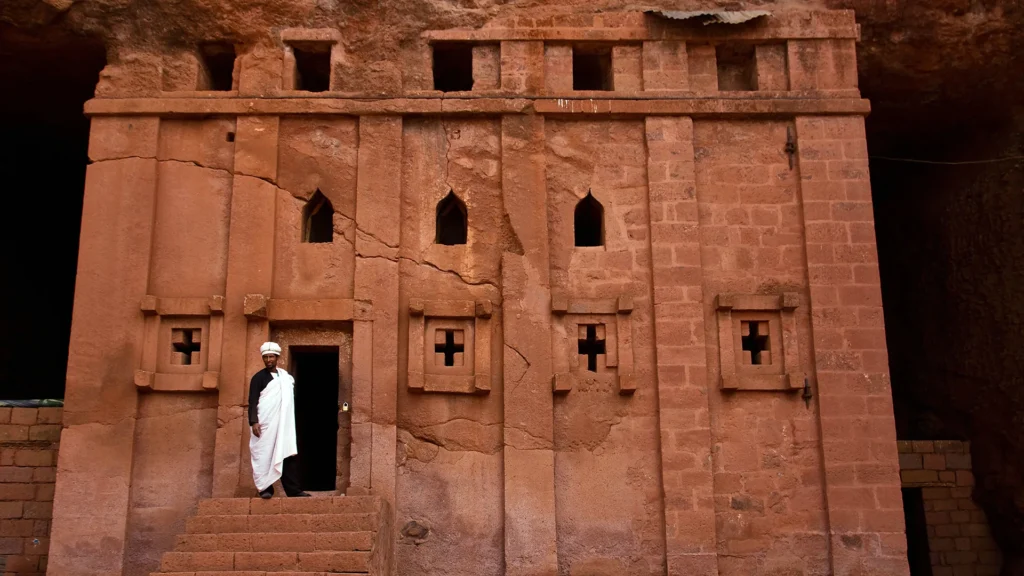
Among the monolithic churches carved into the volcanic landscape of Lalibela, none is more recognizable than Biete Giyorgis, or The House of Saint George. Considered the final church constructed in the Lalibela complex and the most finely executed and best preserved of Lalibela’s churches, its isolated placement and near-perfect symmetry have made it the most recognizable structure in the entire complex. Carved in the form of an equilateral Greek cross, the church sits within a deep courtyard enclosed by sheer rock walls. Visitors reach the structure by descending through a narrow rock-cut tunnel and trench system that gradually reveals the building below ground level.
The church rests on a three-tiered plinth and rises approximately fifteen meters from the floor of the pit in which it stands. From ground level above, only the roof is visible; the remainder of the structure lies hidden within the excavated courtyard. The exterior walls display alternating projecting and recessed horizontal bands that recall architectural forms from the earlier Kingdom of Aksum, linking the monument stylistically to Ethiopia’s earlier Christian heritage. The precise symmetry of the cross-shaped plan and the crisp geometry of its facades demonstrate the remarkable engineering skill achieved by the medieval builders.
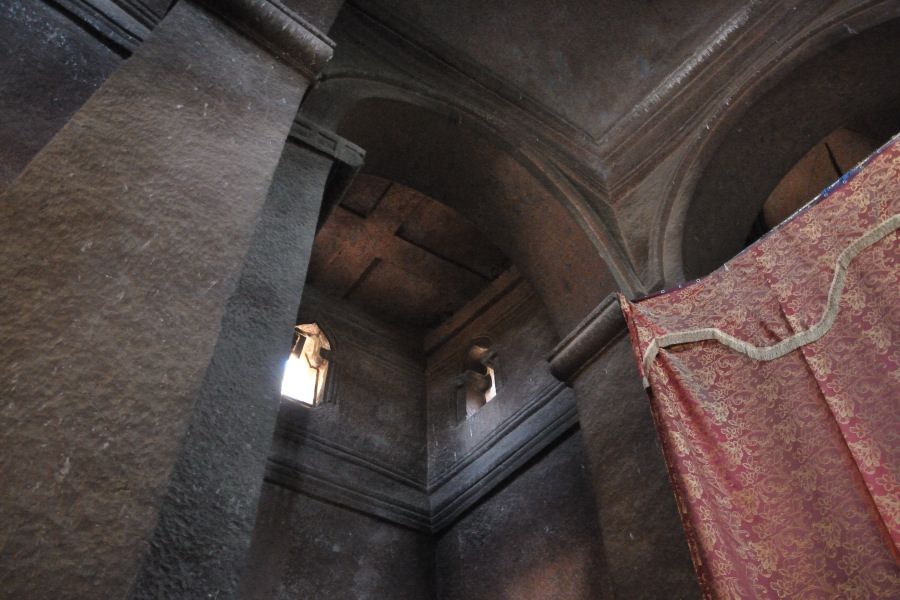
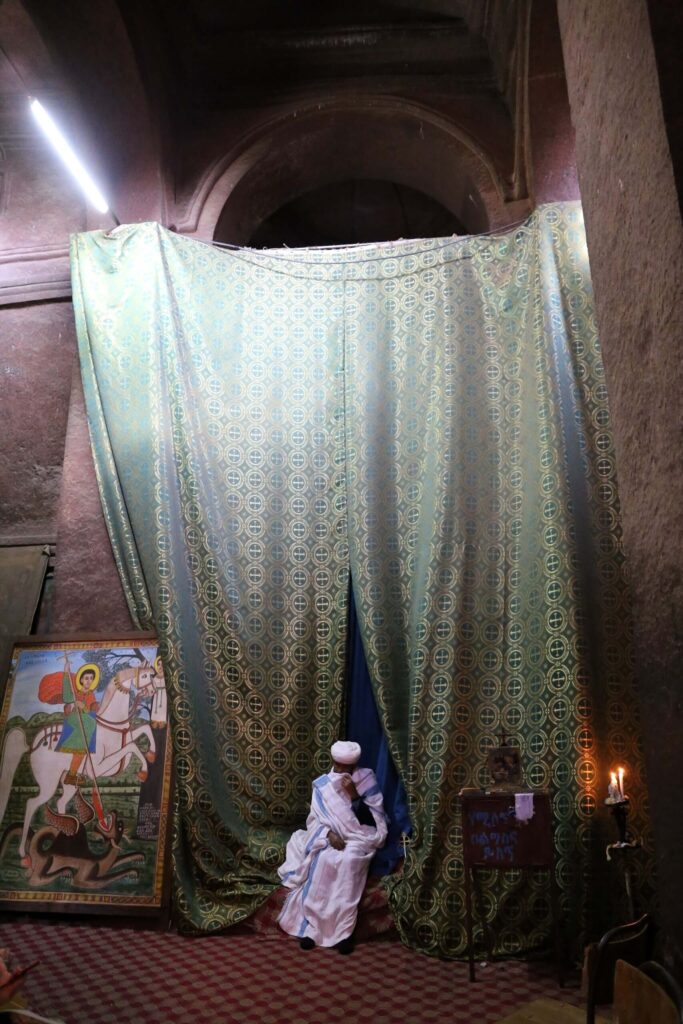
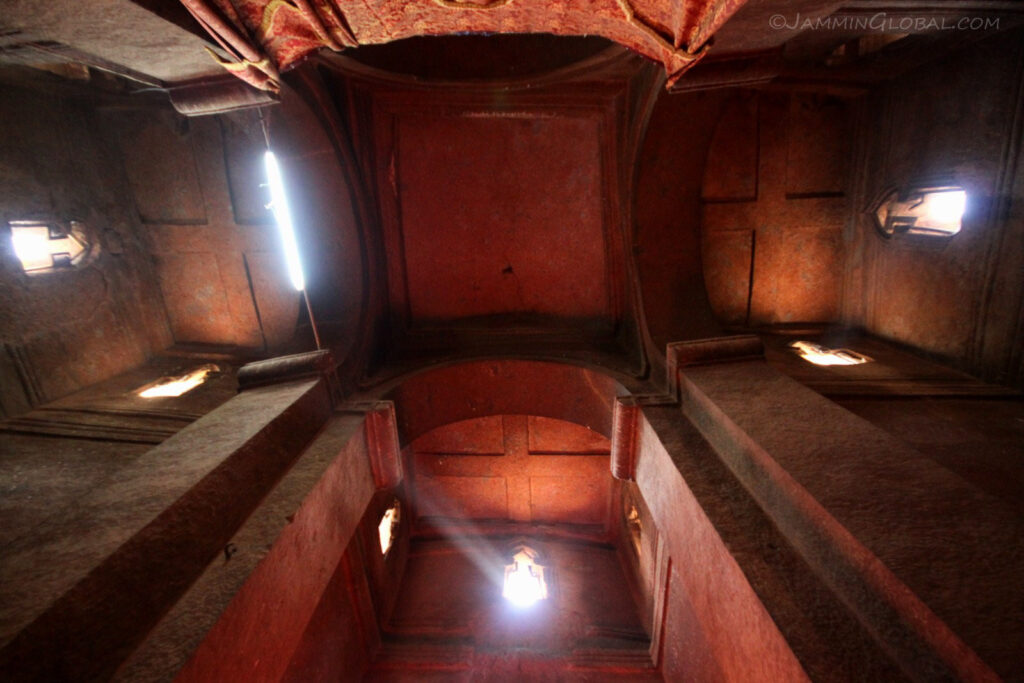
Inside, the decorative program becomes richer. Columns, arches, vaults, capitals, and window frames are all carved from the same continuous rock as the rest of the structure. Painted and carved reliefs, both figurative and abstract, show stylistic connections to Ethiopian manuscript illumination while also incorporating motifs revealing contact with Aksumite art, Greek architectural principles, the Islamic world, and the traditions of Coptic Orthodox Church.
The church also preserves a number of important liturgical objects, including two wooden boxes from the medieval period, one of which holds a crucifix said in local tradition to contain gold originating from the Temple of King Solomon in Jerusalem. Small caves and chambers carved into the courtyard walls serve as burial places for monks and devout pilgrims while in the same courtyard a small baptismal pool lies cut into the surrounding trench, a common feature to many other churches from Lalibela.
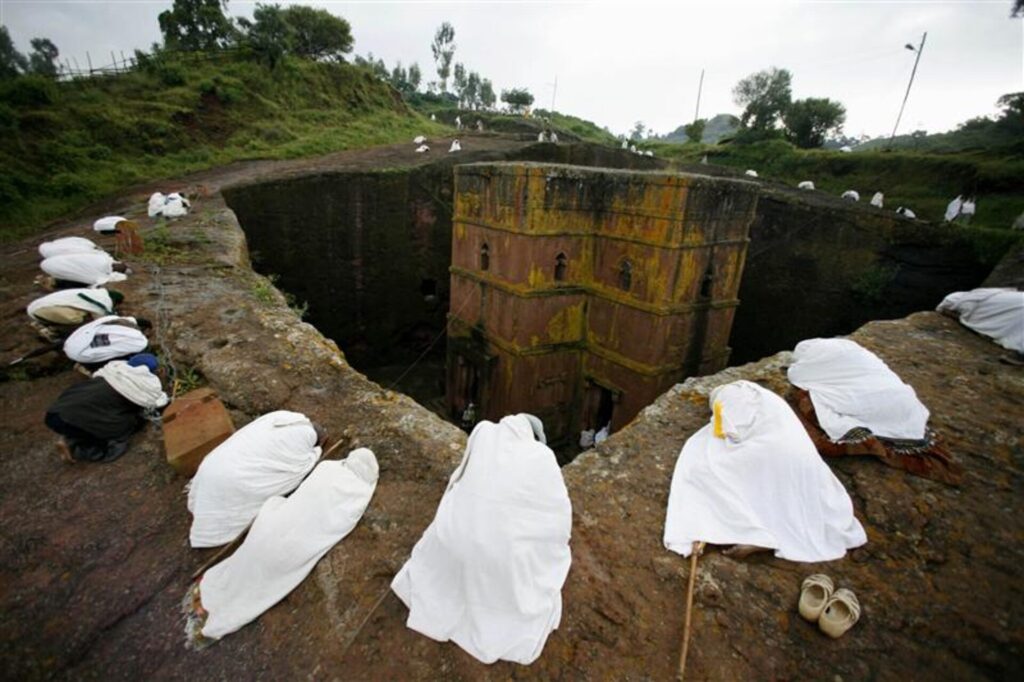
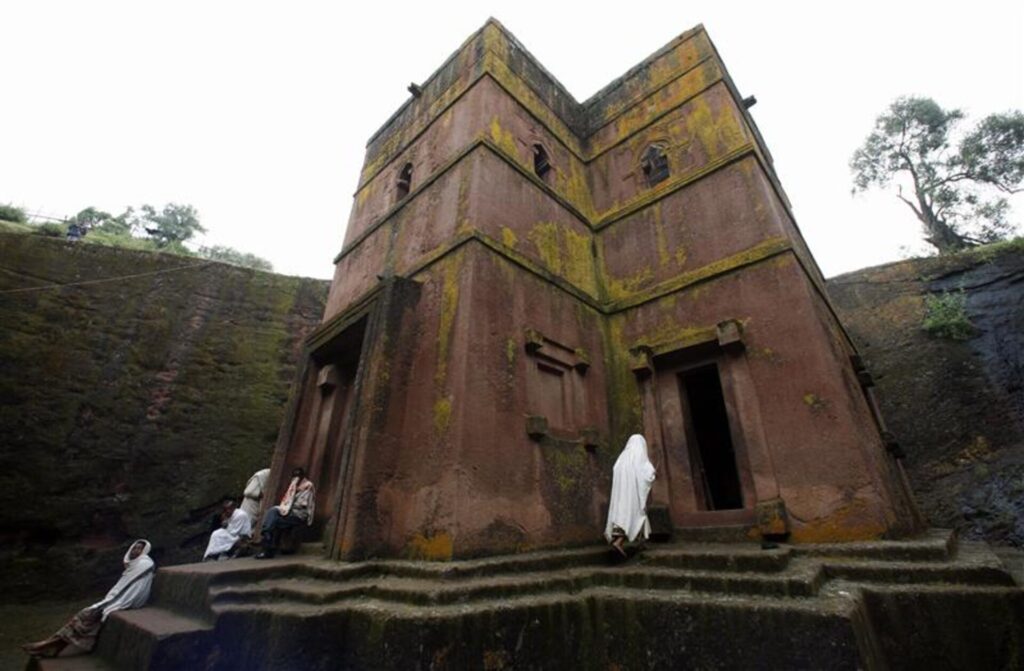
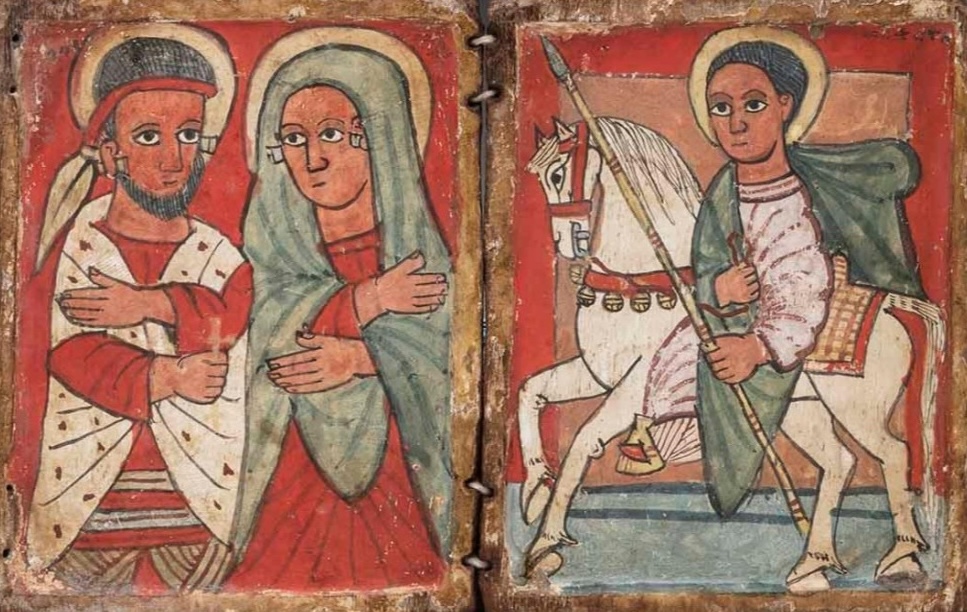
Like much of Lalibela, the church is also surrounded by legend. Legend recounts that while overseeing the construction of the many churches at Lalibela, the king neglected to dedicate one to Saint George. The saint, displeased by the oversight, is said to have appeared to the king in a vision, reprimanding him for the mistake. In response, Lalibela commissioned the cruciform church now known as Biete Giyorgis. Local guides sometimes point out marks near the entrance that are believed to be hoofprints left by the saint’s horse.
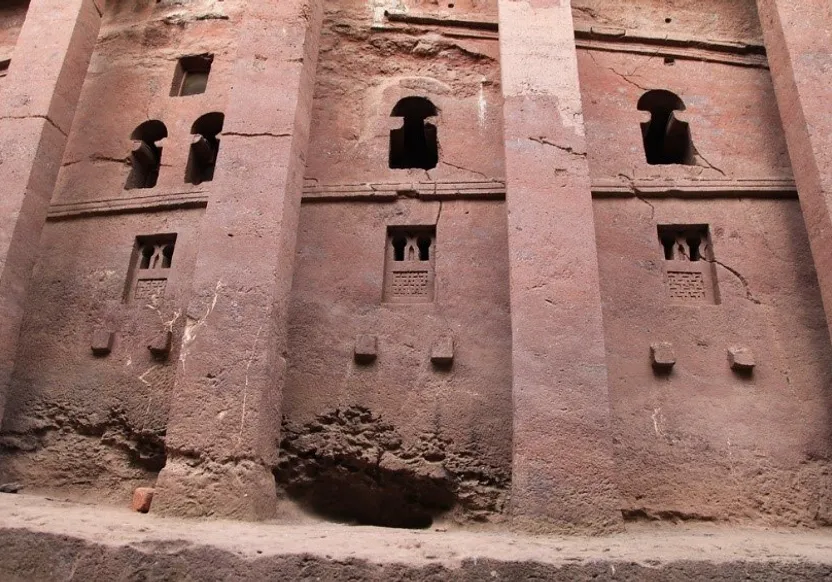
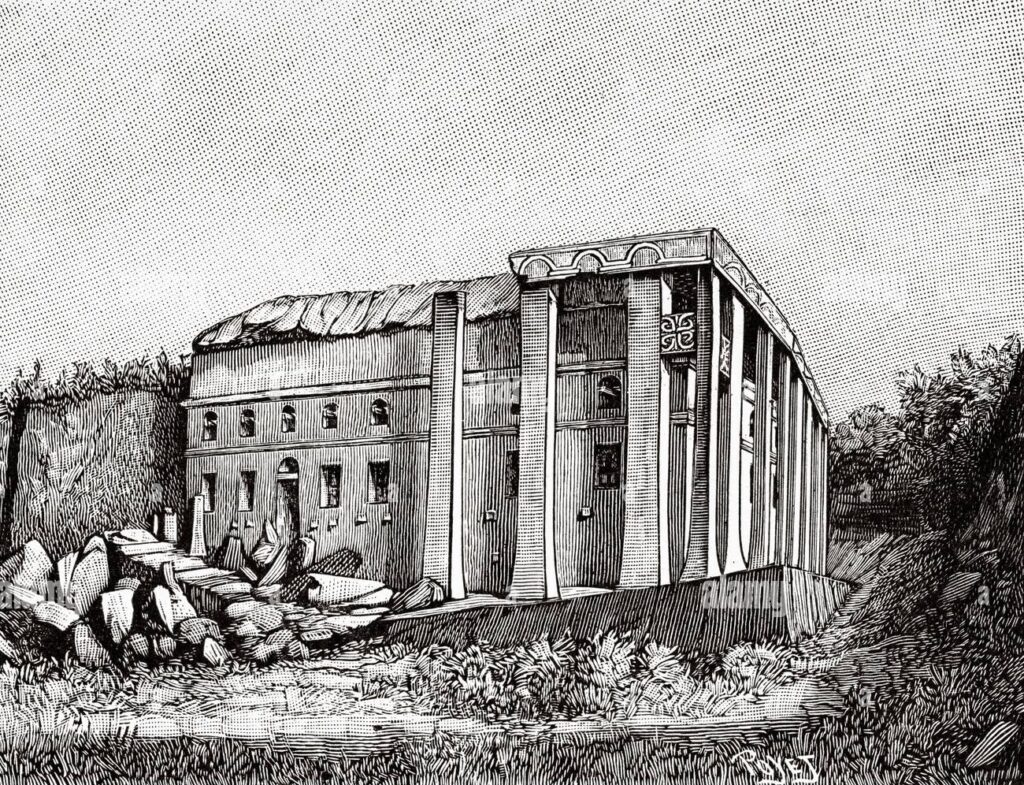
Within the northwestern cluster of the Lalibela complex stands one of its most imposing monuments, Biete Medhane Alem, the Church of the Savior of the World. Often considered among the earliest churches carved at the site, it is also widely regarded as the largest monolithic church anywhere in the world. The structure is monumental in scale. Carved entirely from living rock, it occupies a vast rectangular courtyard sunk deep into the volcanic plateau and is surrounded by high stone walls cut vertically into the earth.
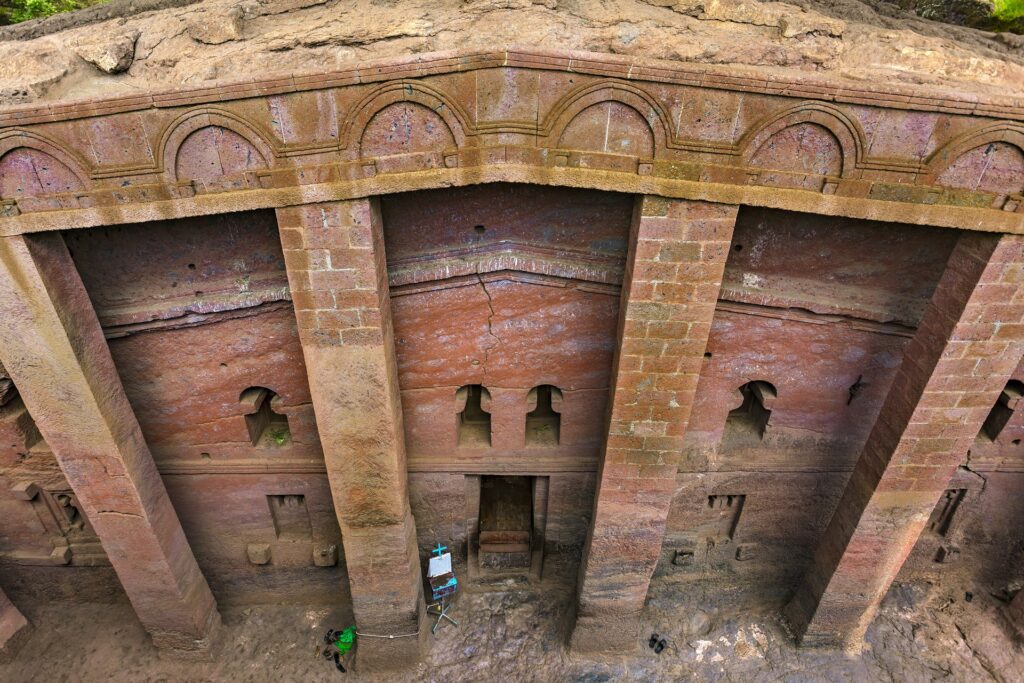
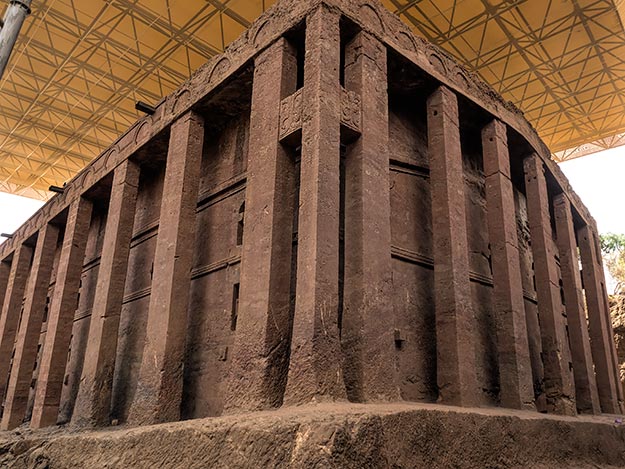
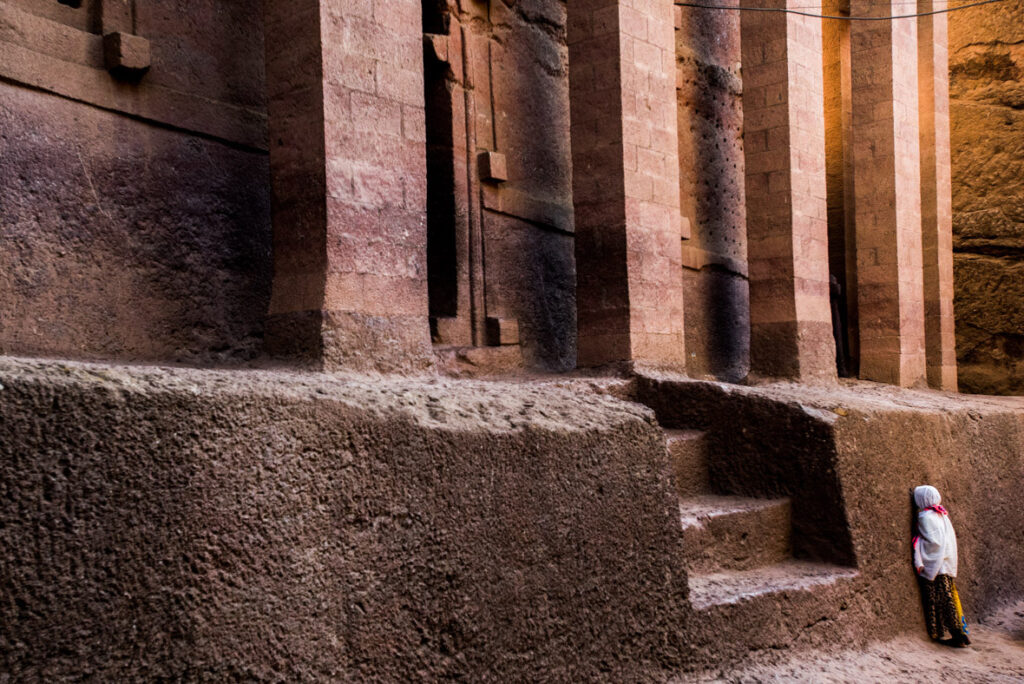
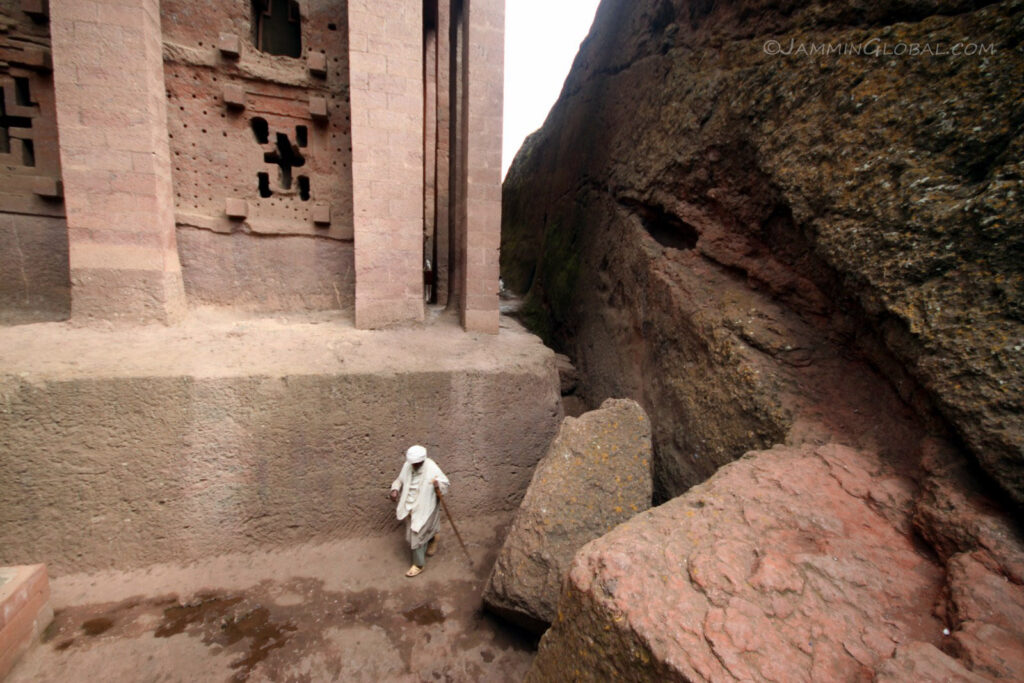
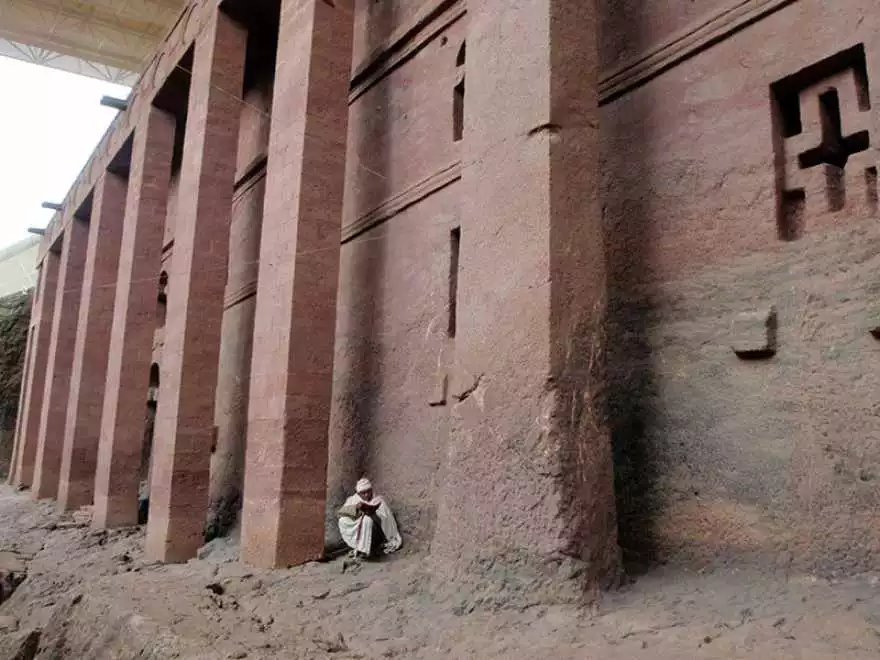
Architecturally, Biete Medhane Alem is striking for its resemblance to a classical temple. The exterior is ringed by rows of square pillars carved directly from the same rock mass as the church itself, forming a colonnade that encircles the building. Inside, a further forest of twenty-eight massive rectangular columns supports the roof, dividing the interior into aisles reminiscent of a basilica. The stone floor, polished smooth by centuries of pilgrims’ footsteps, reflects beams of light that enter through apertures carved high into the walls. In one corner of the church lie three empty graves traditionally said to represent the biblical patriarchs Abraham, Isaac, and Jacob.
Like Biete Giyorgis, this church sits within a spacious sunken courtyard, its surrounding rock walls punctuated by monastic cells and carved burial chambers that once served hermits and monks living ascetic lives around the sanctuary. Walkways and narrow passages connect Biete Medhane Alem to other churches within the northern group, forming a network of trenches, tunnels, and galleries that guide pilgrims through the sacred landscape.
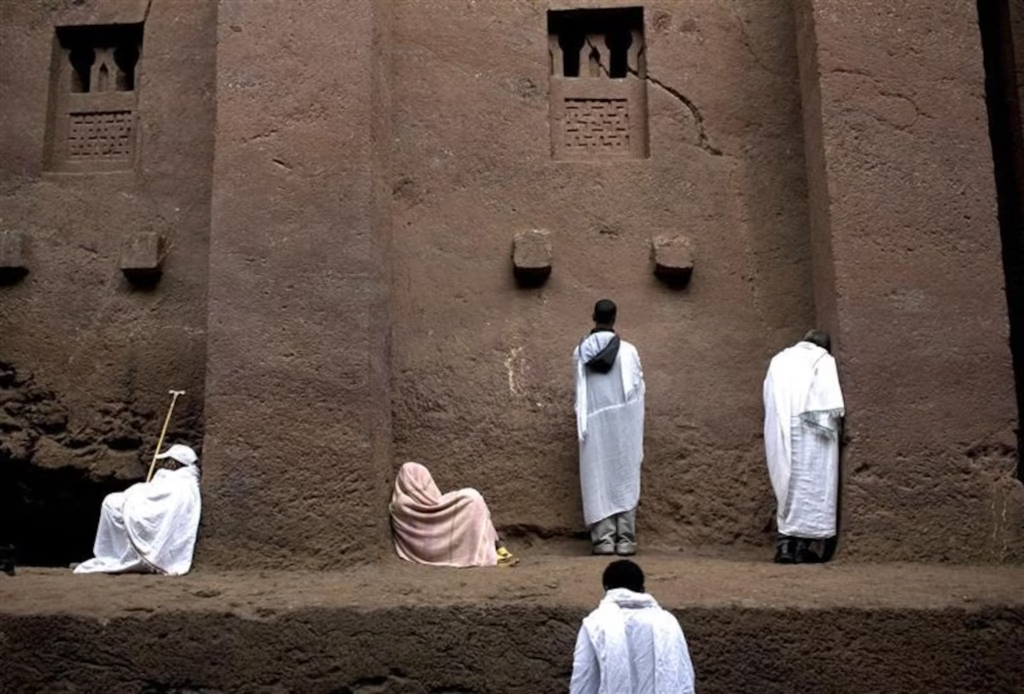
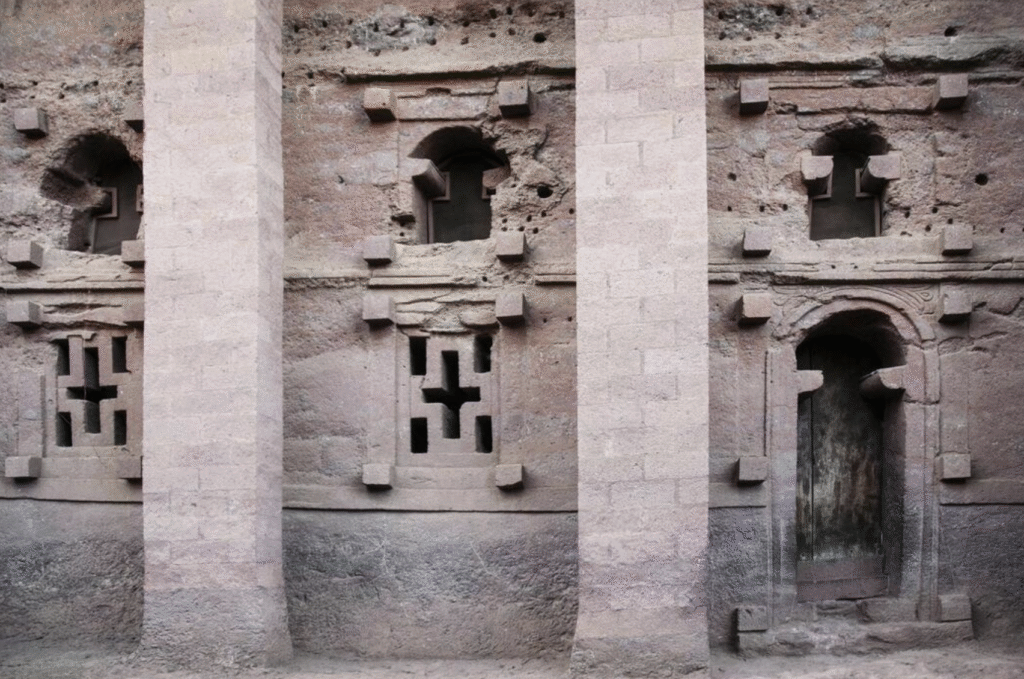
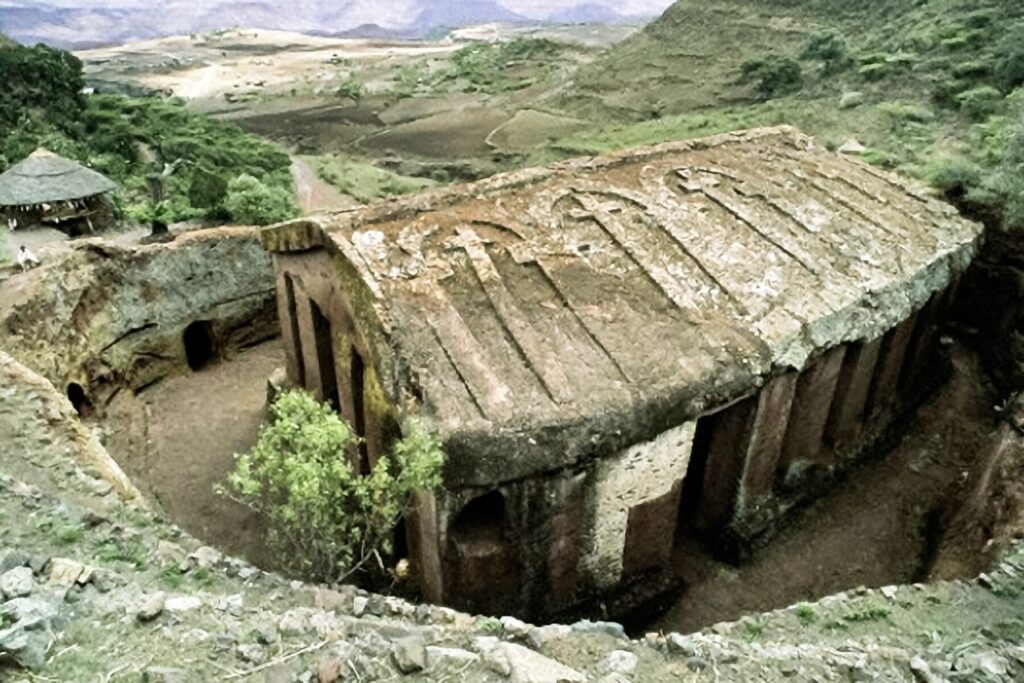
One of these passages leads to a courtyard with three other churches, which includes Biete Maryam, the Church of Saint Mary, one of the most revered and frequently visited churches in Lalibela. Many traditions hold that Biete Maryam was the first church carved at the site. It is a relatively compact structure, about ten metres high, reached through a short, low tunnel. Despite its modest size, the church contains some of the most elaborate decoration in Lalibela.
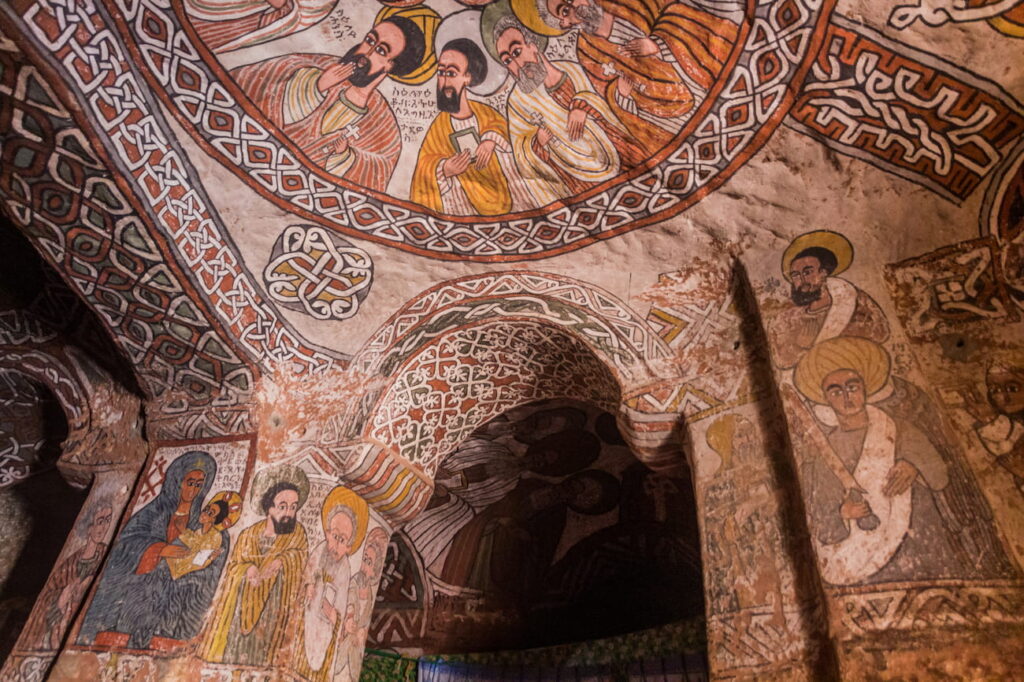
Inside, the ceiling and walls are adorned with intricate carvings and frescoes. On the eastern wall, a striking vertical arrangement of carved windows displays a sequence of symbolic forms: a Maltese cross set within a square, a semicircular design recalling motifs found on the stelae of Aksum, followed by a Latin cross and a simple square aperture. These windows illuminate the sanctuary containing the church’s tabot, a sacred replica of the Ark of the Covenant central to Ethiopian Orthodox worship.
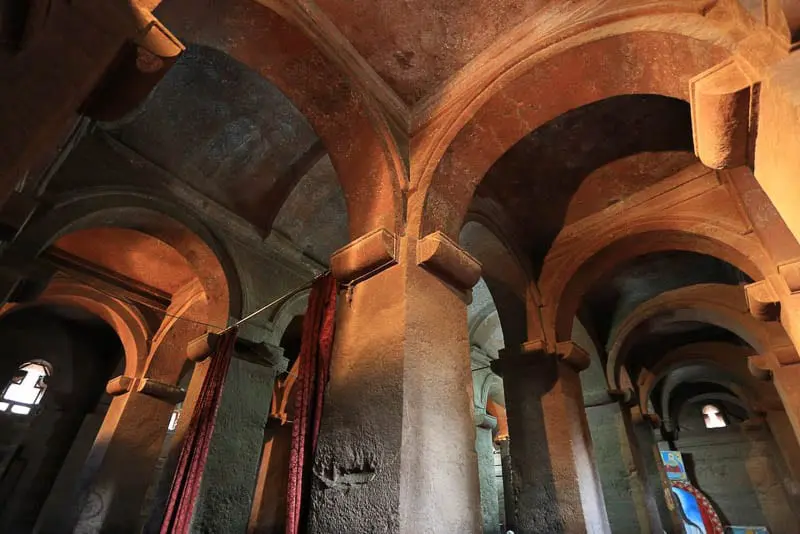
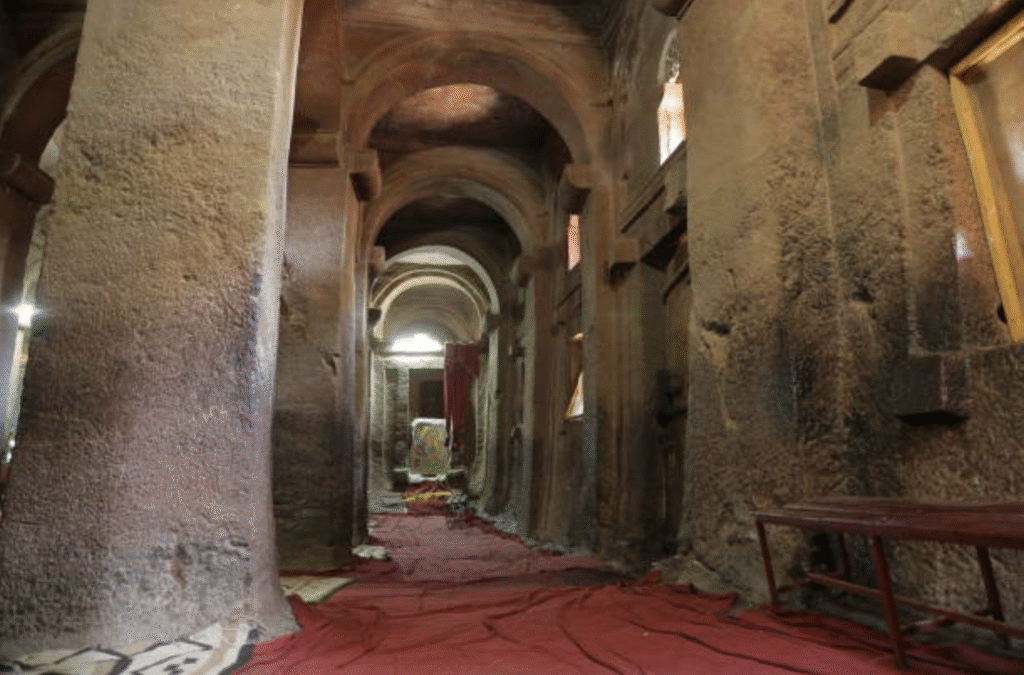
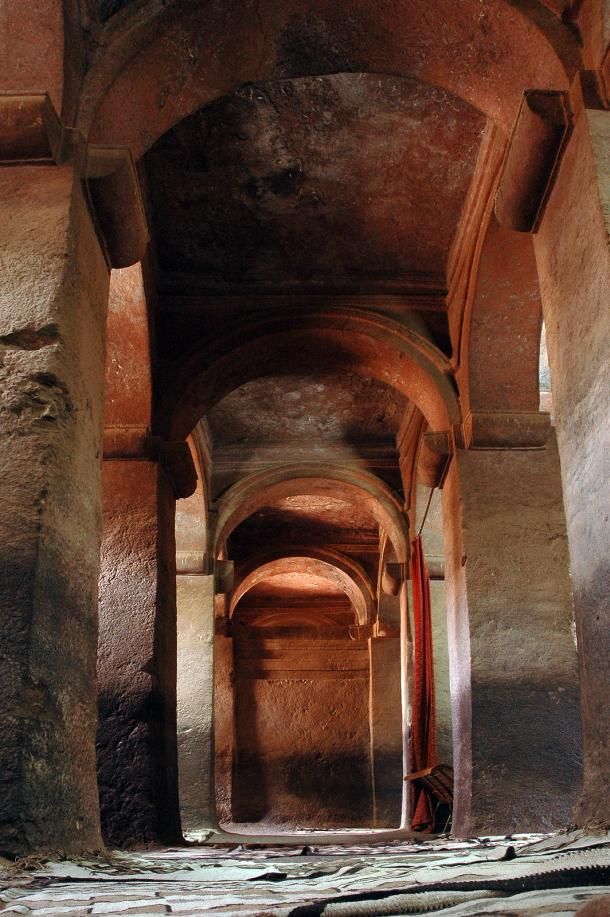
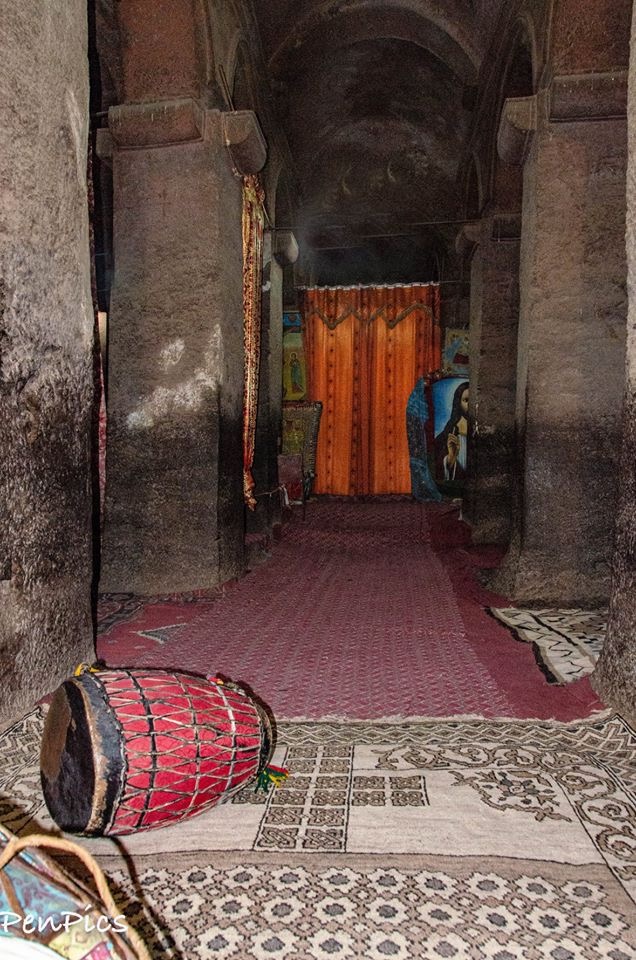
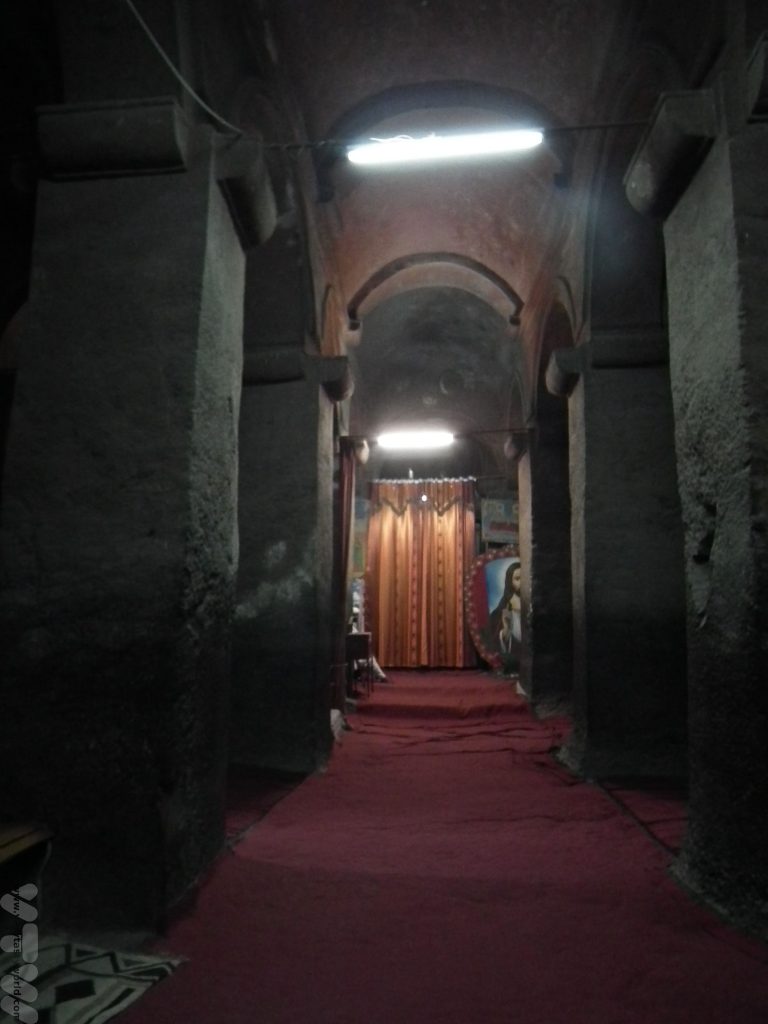
Decorative motifs throughout the church combine geometric and symbolic imagery, including a Star of David paired with a Maltese cross, a radiant sun with a human face flanked by eight-spoked wheels, and scenes depicting the Virgin Mary riding a donkey accompanied by Joseph during the journey to Bethlehem. Other imagery illustrates the Annunciation. Biete Maryam is especially important for pilgrims because it is dedicated to the Virgin Mary, who holds a particularly revered place in Ethiopian Orthodox devotion.
Local legends surrounding the churches extend beyond their construction. At Bete Maryam, often considered one of the oldest and most richly decorated sanctuaries in the complex, a sacred stone pillar is contained within, said to be inscribed in two languages with the Twelve Commandments, written by King Lalibela himself. According to tradition, the pillar also records both the secrets of how the churches were built and revelations concerning the past and future of the world. Another version of the story claims that the pillar contains the personal history and destiny of every individual.
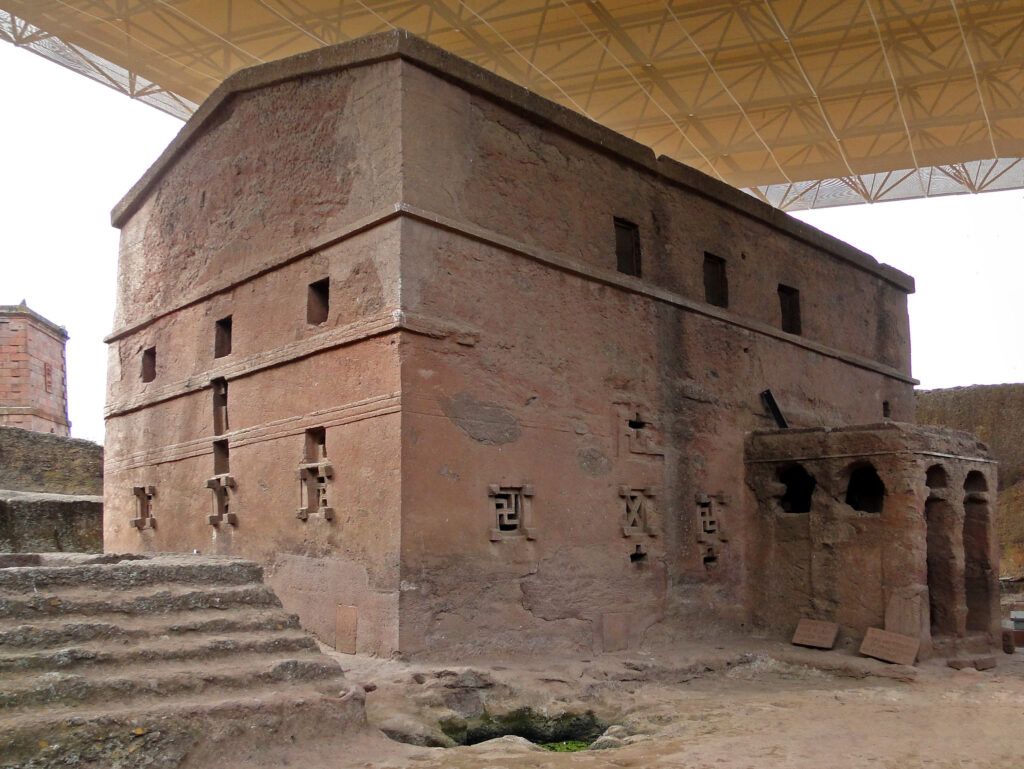
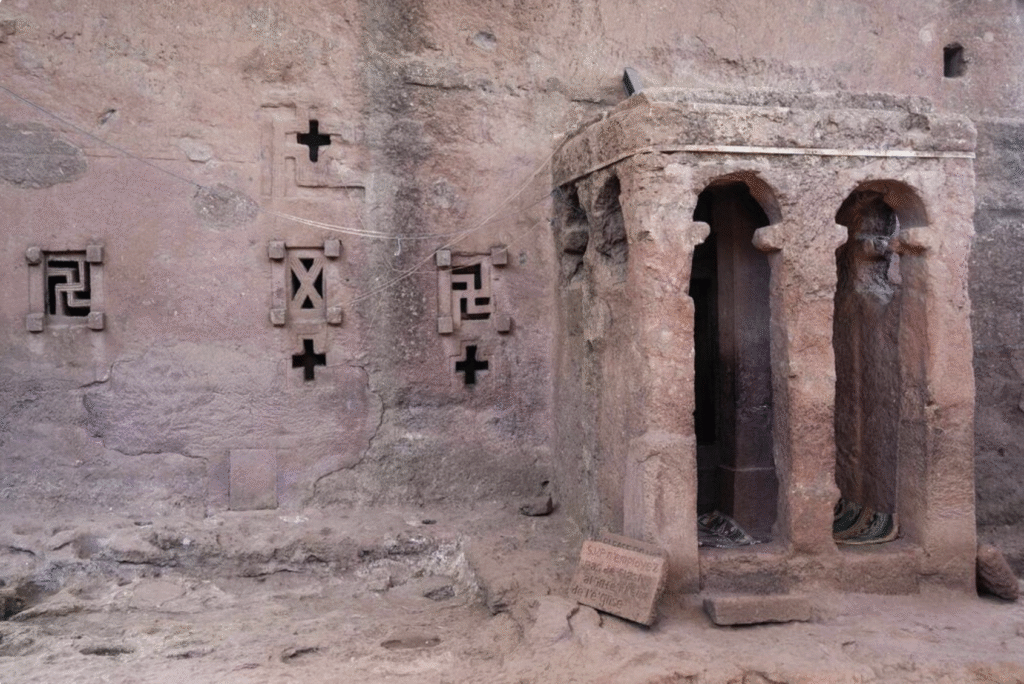
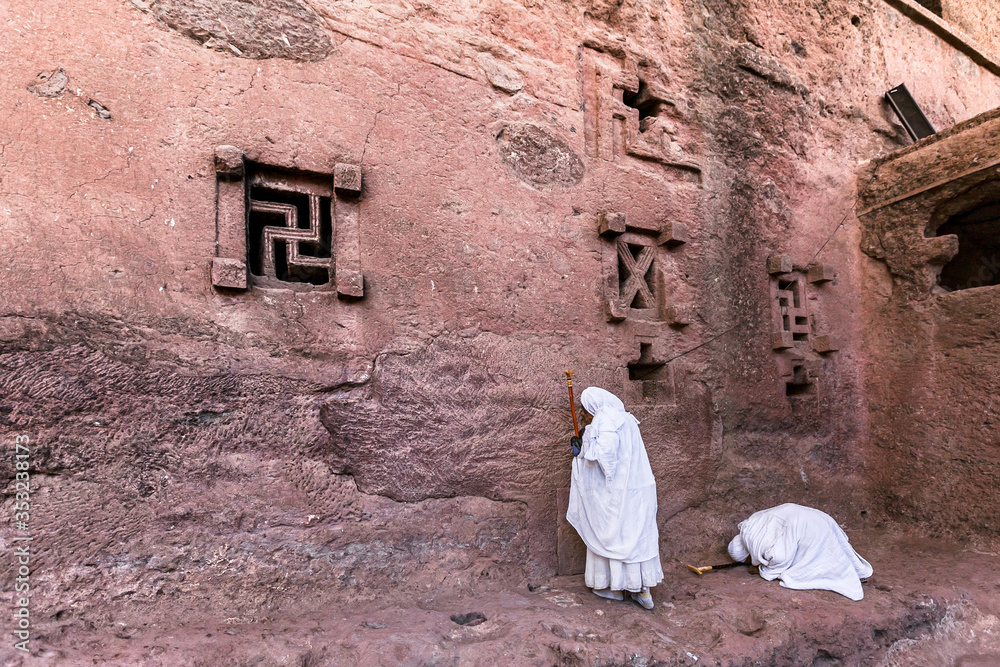
According to tradition, the pillar once emitted a divine glow until the sixteenth century, after which it was veiled and concealed from view. The curtain that covers it today has never been lifted publicly. The object remains permanently concealed behind red curtains, and the monks who guard it refuse to reveal what lies beneath the covering.
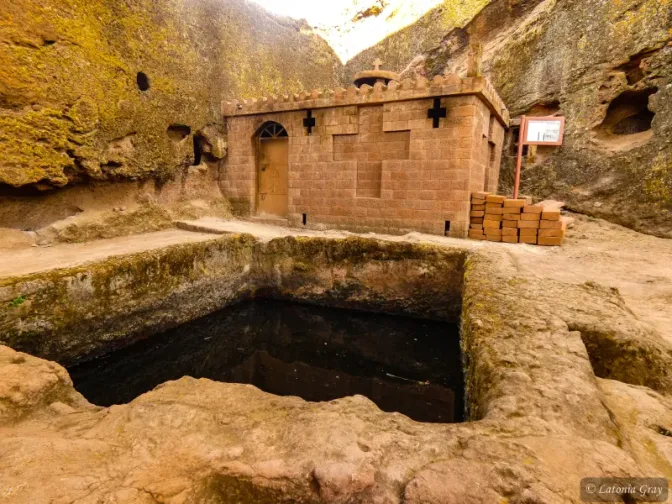
The courtyard surrounding Biete Maryam also contains a feature that blends ancient belief with living religious practice: a small algae-filled pool commonly known as the fertility bath. Fed by rainwater and naturally cleaned during the rainy season, the pool is associated with longstanding traditions of healing. During major religious celebrations, particularly Ethiopian Christmas, women hoping to conceive sometimes travel to Lalibela to be immersed in its waters. Church attendants may lower them carefully into the pool as prayers are recited, reflecting the enduring belief that the site carries a special blessing connected with fertility. Although few can say for certain, the fertility pool is believed to be very deep, roughly as deep as the height of the church itself.
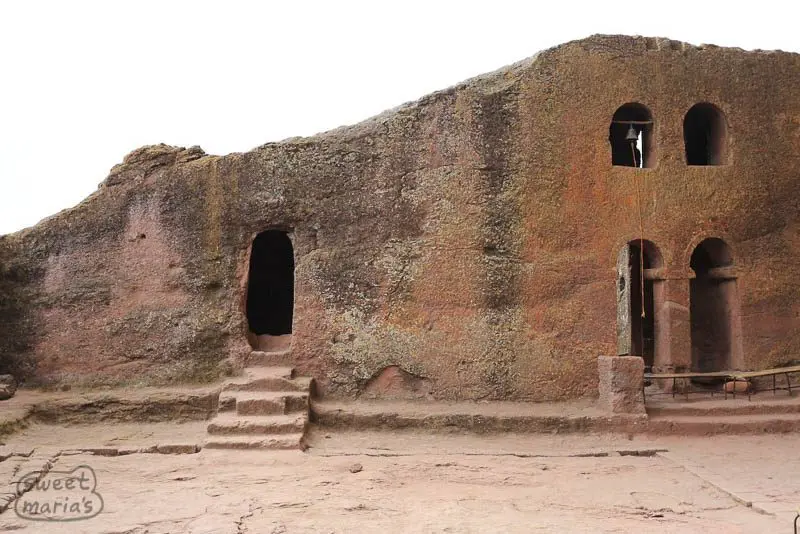
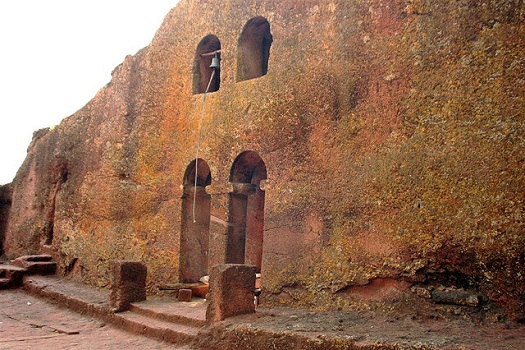
In the same courtyard stands another of the most venerated sanctuaries in the complex, Biete Golgotha Mikael, the House of Golgotha and Michael, carved as a semi-monolithic structure. Technically this structure contains two separate churches, the two share a common entrance before branching into separate sanctuaries. Access to parts of this part of the site by non-ecclesiastical visitors is traditionally restricted by the clergy serving within, with entrance totally forbidden to women. Within its chambers are some of the finest surviving examples of medieval Ethiopian Christian art, including sculpted figures of saints carved directly into stone niches. While some believe these churches were part of the original structures constructed according to King Lalibela’s plans, others suggest they were built much later, late King’s elevation to sainthood by the Ethiopian church in the 15th century.
Biete Golgotha Mikael is considered one of the holiest places in Lalibela. According to long-standing tradition, it contains the burial site of King Lalibela as well as objects associated with his reign. His tomb is believed to lie within the Selassie Chapel, a second, smaller chamber further inside the church. Although the chapel is generally closed to visitors, tradition holds that the king’s grave rests beneath a massive stone slab so heavy it cannot be moved. At the center of the slab is a small opening through which pilgrims are said to touch the tomb and collect dust believed to carry healing properties. Nearby stands a symbolic representation of the Tomb of Christ, reinforcing the sacred associations of the site.
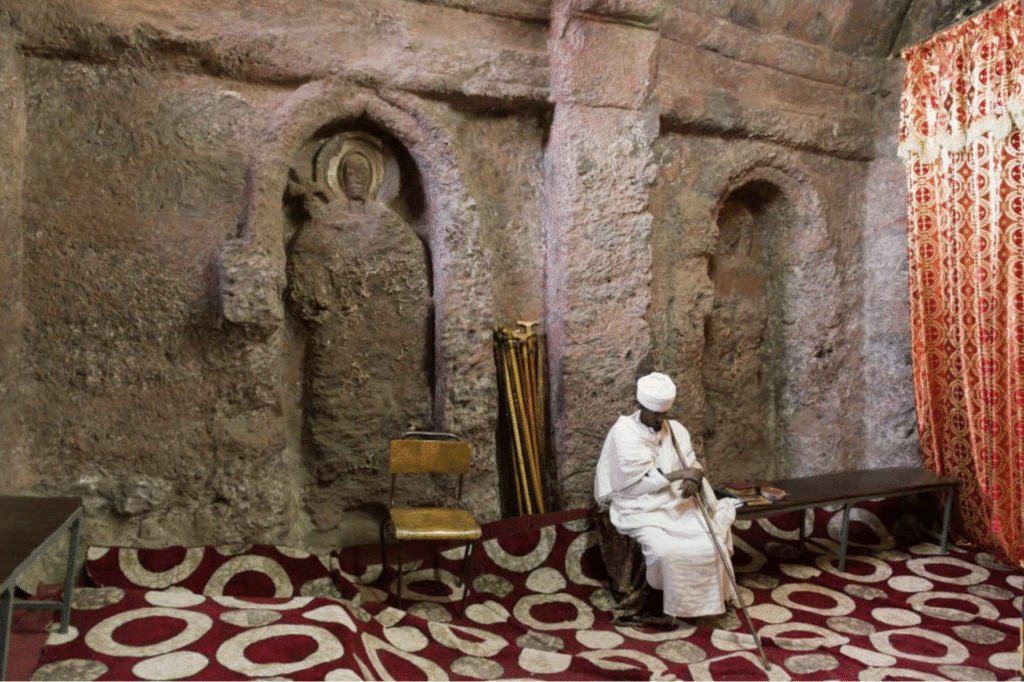
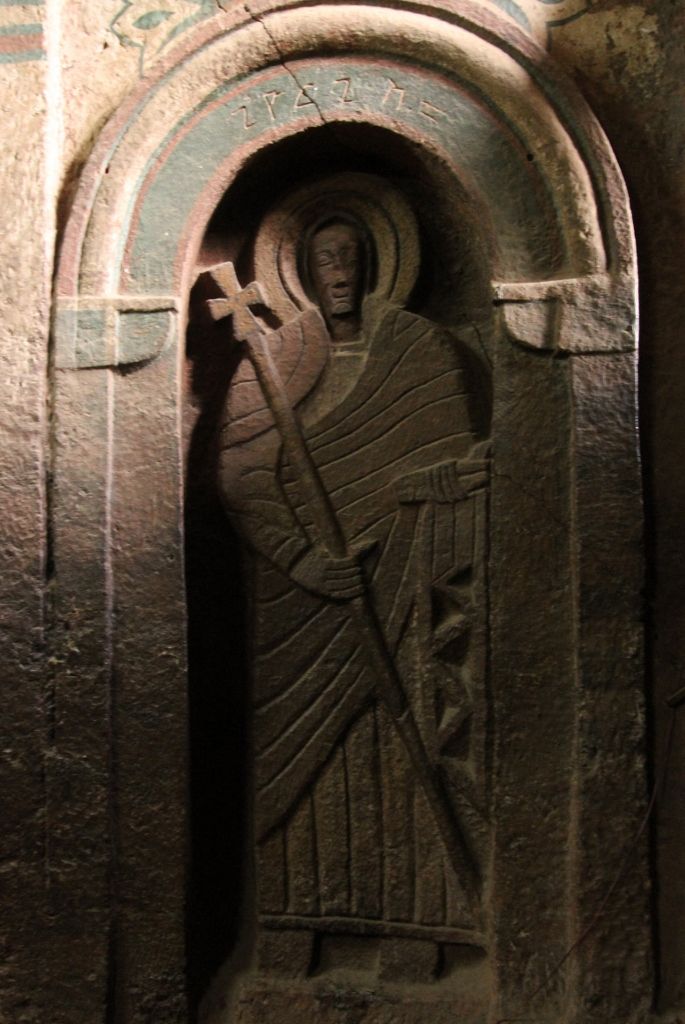
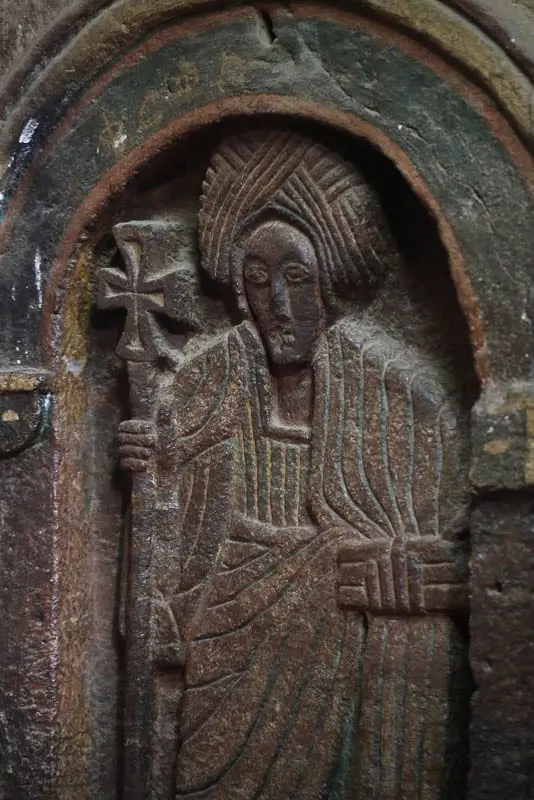
The interior of Biete Golgotha is notable for its ancient Christian artworks. Among its most remarkable features are relief carvings of life-sized saints sculpted directly into the stone walls. These figures, some of the oldest surviving Christian carvings in Ethiopia, create a solemn atmosphere within the dimly lit chamber. Several additional carvings depicting apostles are said to exist behind curtains within the Selassie Chapel, further emphasizing the church’s role as a space of deep spiritual significance.
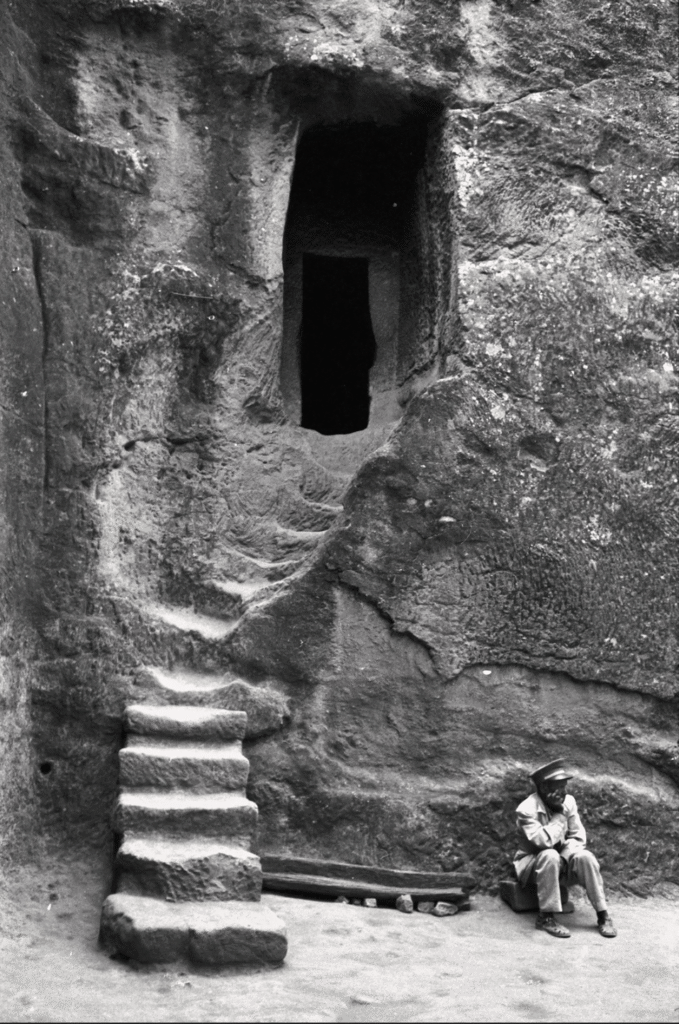
Connected to it is Biete Mikael, sometimes referred to as the Church of Mount Sinai or Saint Michael. The structure mirrors the general form of its twin but contains distinctive architectural elements of its own. Inside are cruciform pillars, unique among the Lalibela churches, along with numerous carved crosses decorating the stone surfaces. The church stands roughly 11.5 metres high and rests upon a base reminiscent of the tiered architectural style associated with the ancient Ethiopian capital of Aksum. Visitors reach the entrance by walking along a trench and climbing a narrow series of steps cut directly into the rock.
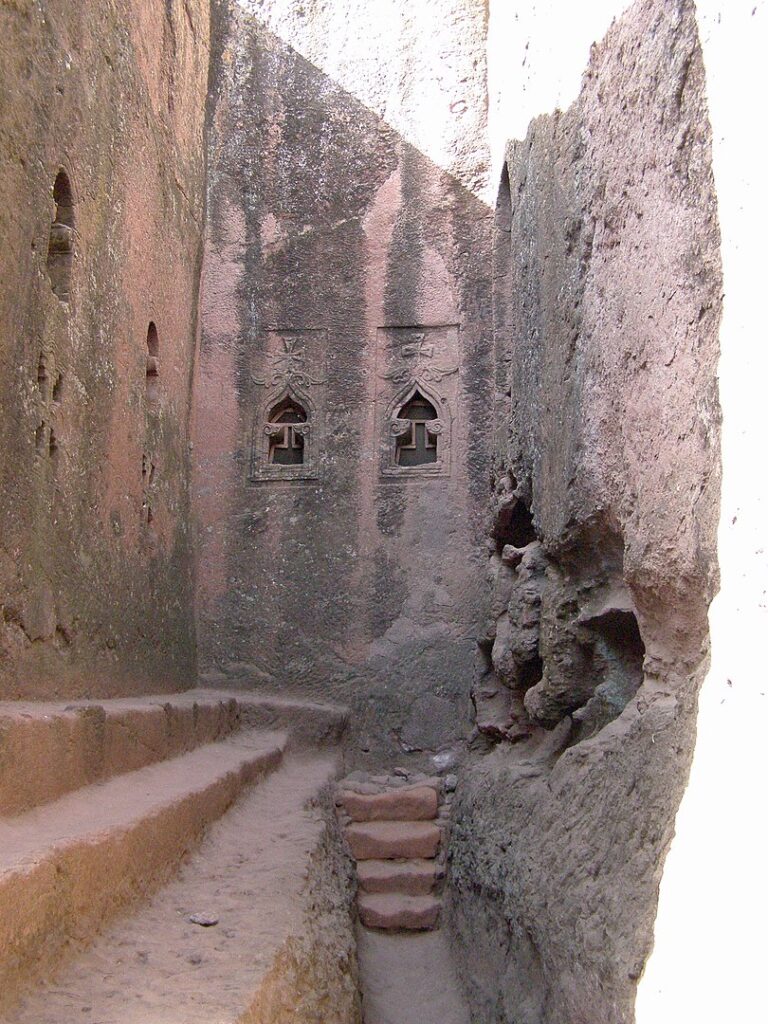
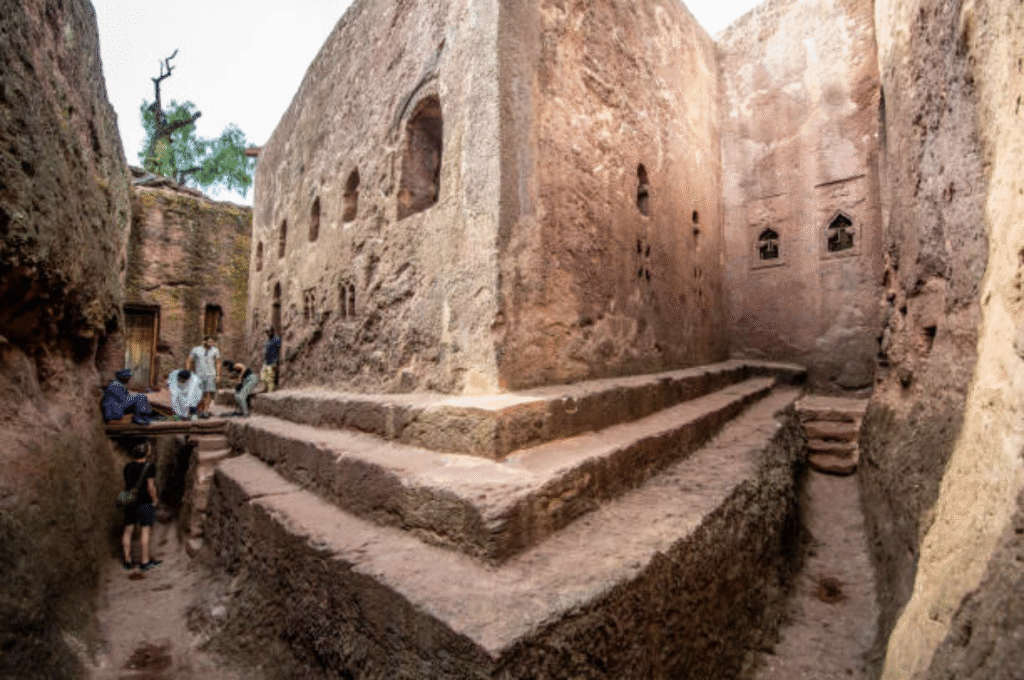
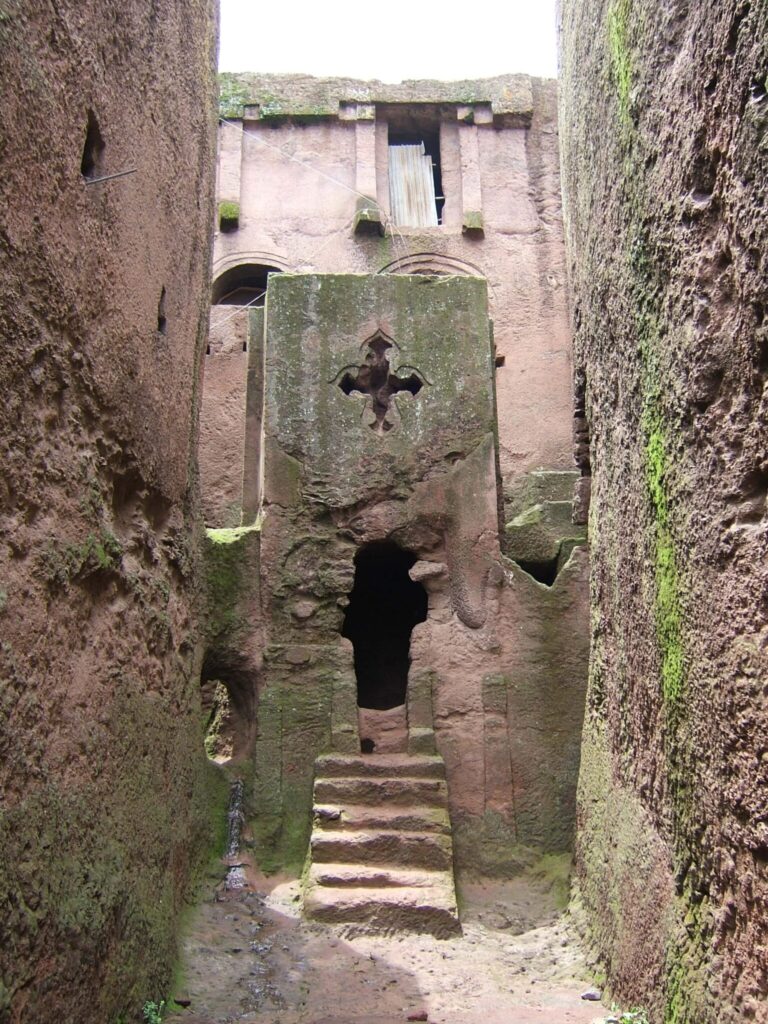
Within the same courtyard are two smaller chapels that contribute to the sacred landscape of the northern cluster. One of these is Biete Meskel, the Church of the Holy Cross. Carved into the northern wall of the courtyard, this modest chapel contains a small prayer hall and a separate chanting chamber used during liturgical ceremonies. Four stone pillars stand within the interior, traditionally interpreted as representing the four Evangelists.
Nearby is the even smaller Biete Denagel, sometimes known as the Church of the Virgins. Carved into the southern wall of the same courtyard, it is among the most roughly hewn structures in the complex. The church was dedicated to a group of Christian nuns believed to have been martyred in the fourth century under the Roman emperor Julian the Apostate. According to tradition, the chapel commemorates their steadfast faith and sacrifice.
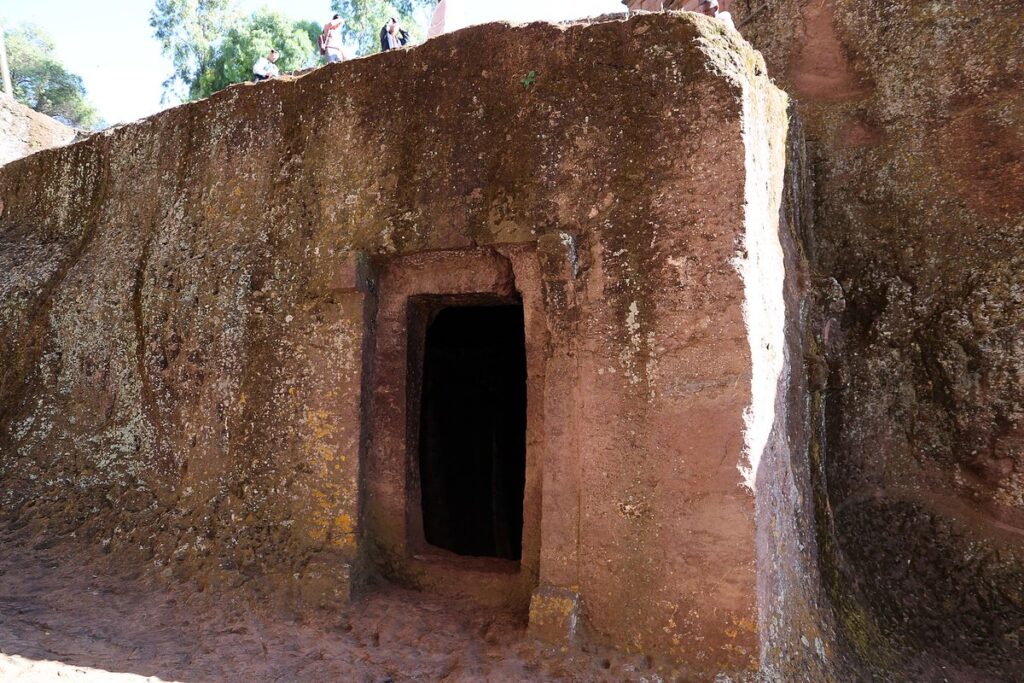
Together, the northwestern structures form a tightly integrated sacred environment. Narrow trenches, passageways, and sunken courtyards guide visitors through the complex, creating a carefully choreographed sequence of spaces that heightens the sense of pilgrimage. The southeastern complex, as mentioned, is less structured, yet equally as striking in many respects.
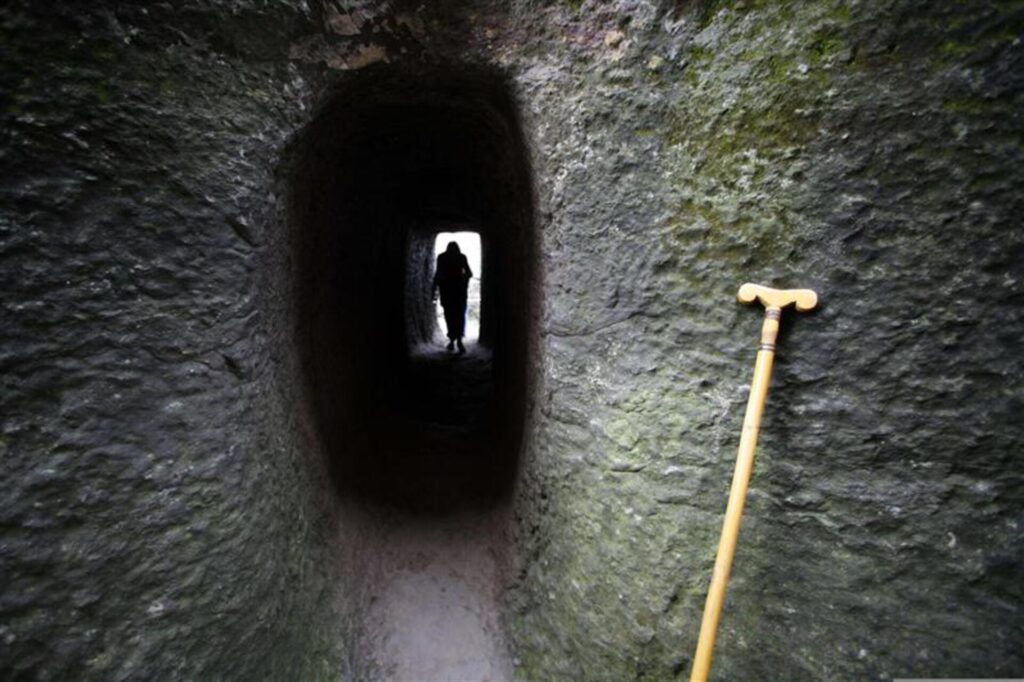
Crossing the Jordan River, visitors encounter the southern cluster, about 250 meters from the northern group. Here, the architecture feels less controlled and less formally planned than in the previous half of the complex. The churches are connected by a maze of rock-hewn passages, tunnels, trenches and courtyards. Some corridors suddenly descend into darkness before emerging in open courtyards carved deep into the bedrock. Symmetry is rare, pathways twist unpredictably through trenches and rock corridors, while handholds and stairs have been worn smooth over centuries by the movement of pilgrims and priests.
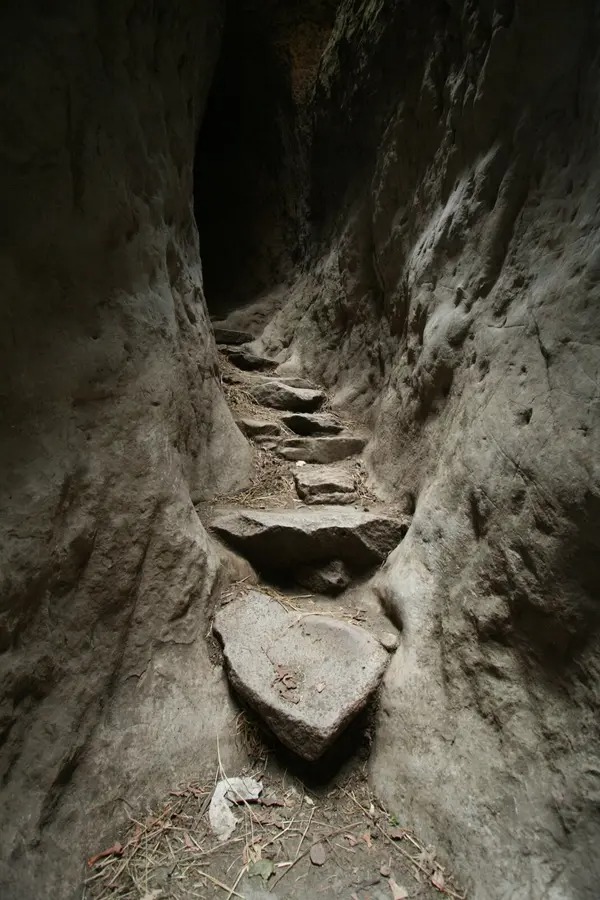
This atmosphere gives the southeastern churches a slightly older and more mysterious character. The sense of age is palpable, and the functions of some passages and chambers remain uncertain, leaving considerable room for interpretation about how this part of Lalibela originally operated. Their exact chronology and original purposes remain uncertain in many cases, and the lack of clear symmetry or alignment suggests that construction may have occurred over an extended period or under varying circumstances.
At the southeastern entrance to the rock-hewn complex of Lalibela stands one of its most enigmatic structures: Biete Gabriel-Rufael, the House of the Angels Gabriel and Raphael. Unlike most of the churches in the complex, which are organized around clear cruciform plans and liturgical symmetry, this building’s plan is irregular, its approach defensive, and its architecture unusually austere. For that reason, many historians believe it may not originally have been a church at all.
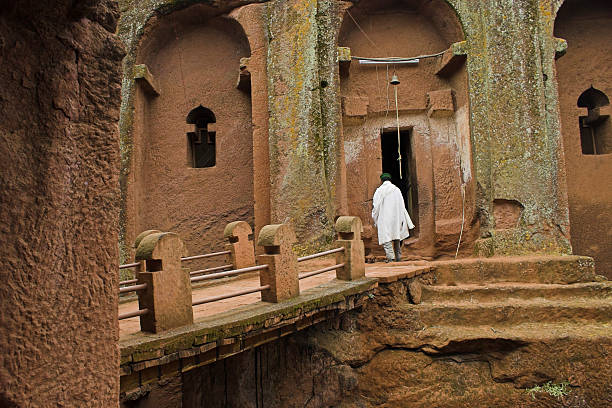
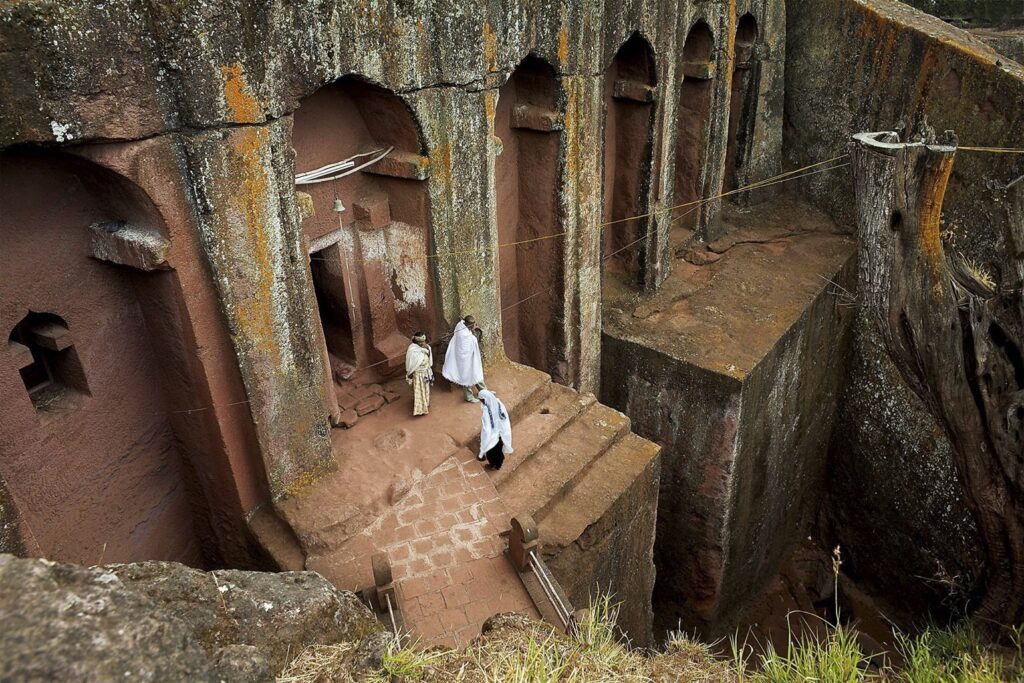
The structure occupies a commanding position at the entrance to Lalibela’s southeastern cluster of monuments. Unlike most of the rock-hewn churches, which are entered from the side or through trenches cut into the rock, Biete Gabriel–Rufael is approached from above. Visitors cross a narrow rock bridge known locally as the “Way to Heaven,” descending toward the structure after crossing a deep trench that surrounds it. During the rainy season this trench often fills with water, giving the church the appearance of a fortified island surrounded by a moat.
The monumental exterior walls rise steeply from the excavated trench, giving the entire complex the appearance of a defensive installation. The interior, by contrast, is relatively plain, dimly lit, and subdued, featuring large chambers with little ornamentation compared to other churches. Instead of the axial layout typical of Ethiopian ecclesiastical architecture, the church has an uneven, compartmentalized interior.
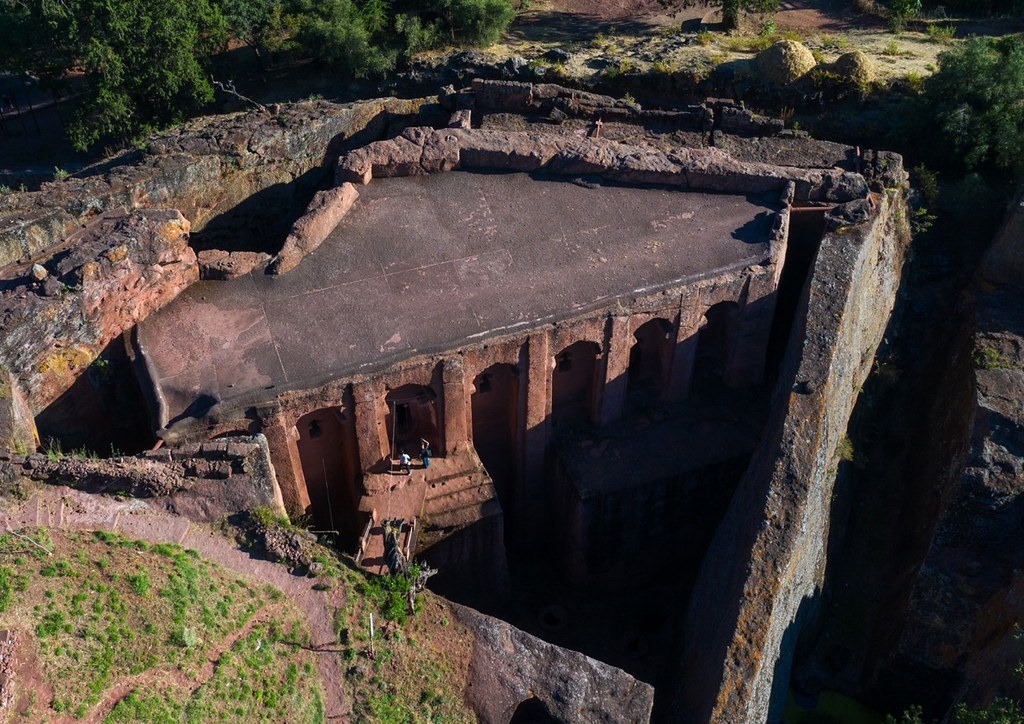
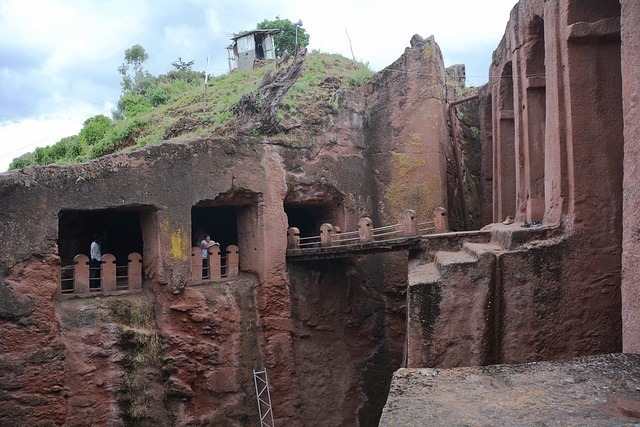
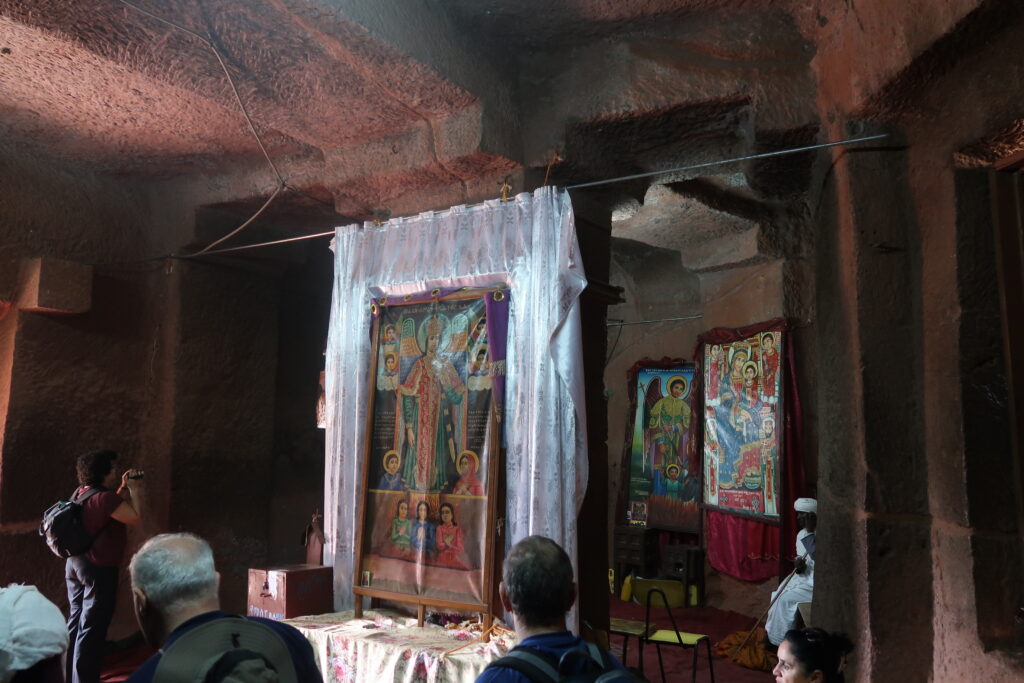
These features have led scholars to propose that the structure may originally have served as a fortified palace or administrative complex rather than a religious space. Some archaeological interpretations suggest it could date to the 7th or 8th century, long before the reign traditionally attributed to King Lalibela. That period coincides with the gradual decline of the ancient Aksumite Empire, when political instability reshaped much of northern Ethiopia.
The idea of a church functioning as a spiritual fortress is not uncommon in Christian architecture, but Biete Gabriel–Rufael may represent a rare case where the concept was literal. It has then been proposed that Biete Gabriel-Rufael may have begun its life as part of a royal compound connected to Aksumite authority before being incorporated into the later ecclesiastical complex during Lalibela’s building campaign.
Rumours also persist of hidden chambers beneath the church and of a secret subterranean passage leading to other parts of the complex, once known to the clergy who acted as its caretakers. Over time, however, that knowledge appears to have been lost. Even the priests who oversee the churches today are said to have forgotten how the hidden spaces were accessed.
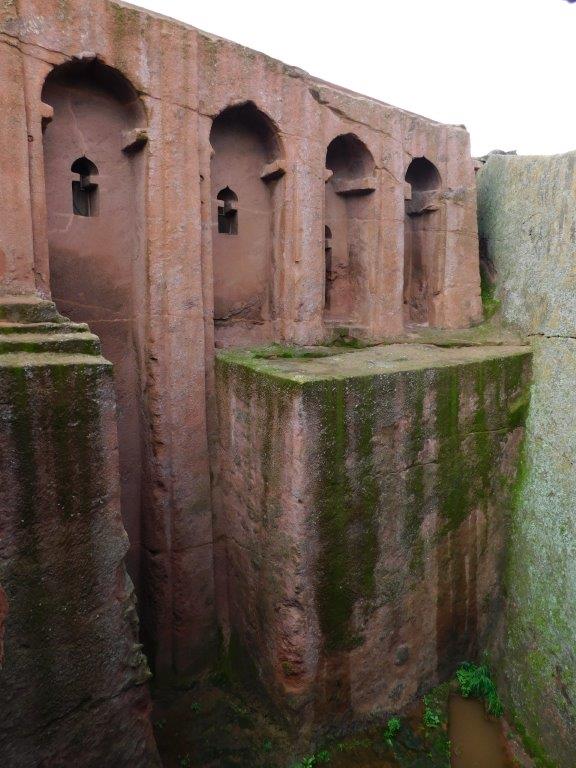
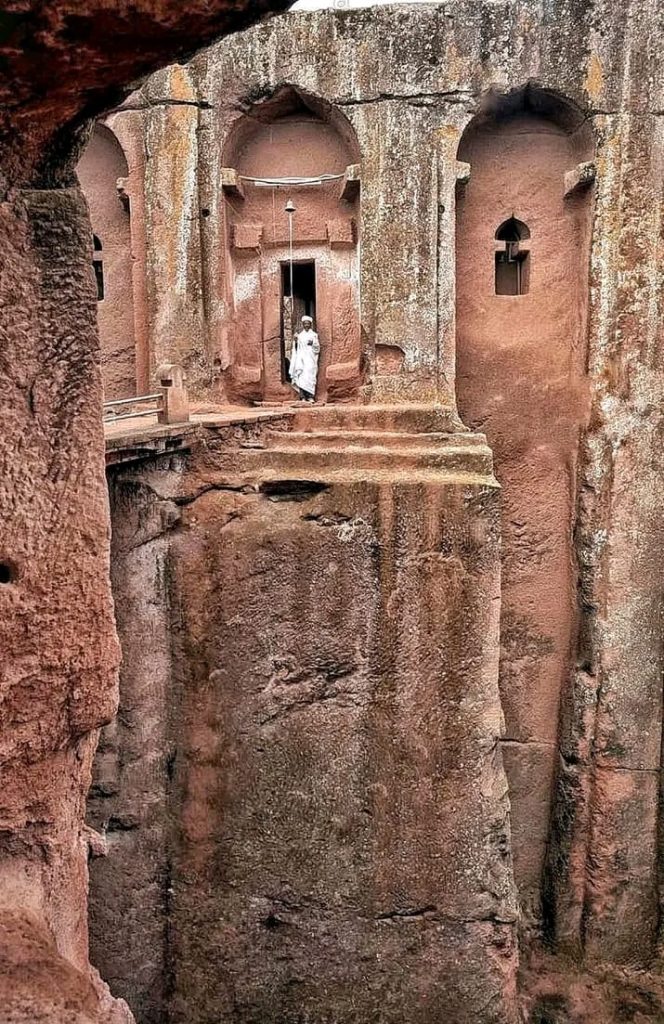
In this regard, one of the other puzzling structures in this area is Biete Qeddus Mercoreus, The House of Saint Mark the Evangelist and Saint Mercurius, a cave church whose original purpose also remains uncertain. Unlike many of the other churches, its interior is divided into a number of large rectangular chambers rather than a traditional cruciform sanctuary, including a separate chamber dedicated to Mark the Evangelist, while the rest of the structure is dedicated to Saint Mercurius, a third-century Coptic soldier-saint who was tortured and beheaded for his Christian faith by the Roman emperor Decius, the church also reflects Ethiopia’s deep connections with early Eastern Christianity. According to later Christian tradition, Mercurius went on to play a role in the death of the apostate emperor Julian a century later, further enhancing his reputation within the Christian world.
As is the case with Biete Gabriel-Rufael, it is believed the structure’s form as a church was not its originally intended purpose. Archaeologists and historians have long debated its original use, but if Biete Gabriel-Rufael once functioned as a fortress, some scholars speculate that Biete Qeddus Mercoreus may have served as a prison or judicial chamber. Evidence supporting this theory comes from iron shackles embedded in the surrounding trench, an unusual feature not found elsewhere among the Lalibela churches. Others propose that it may have served a ceremonial or administrative role within the broader complex. Whatever its origins, Biete Qeddus Mercoreus today functions as a sacred space within Lalibela’s pilgrimage landscape, another example of how the site has evolved across centuries of use.
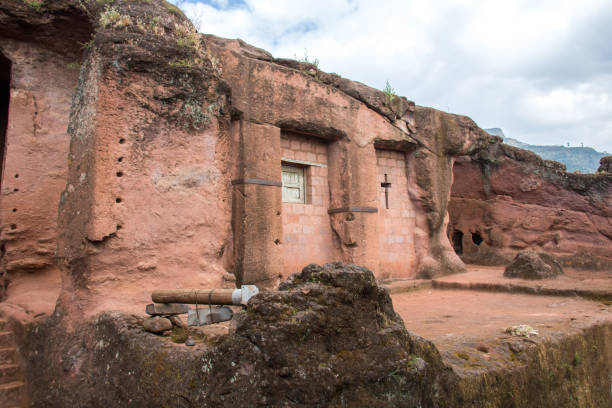
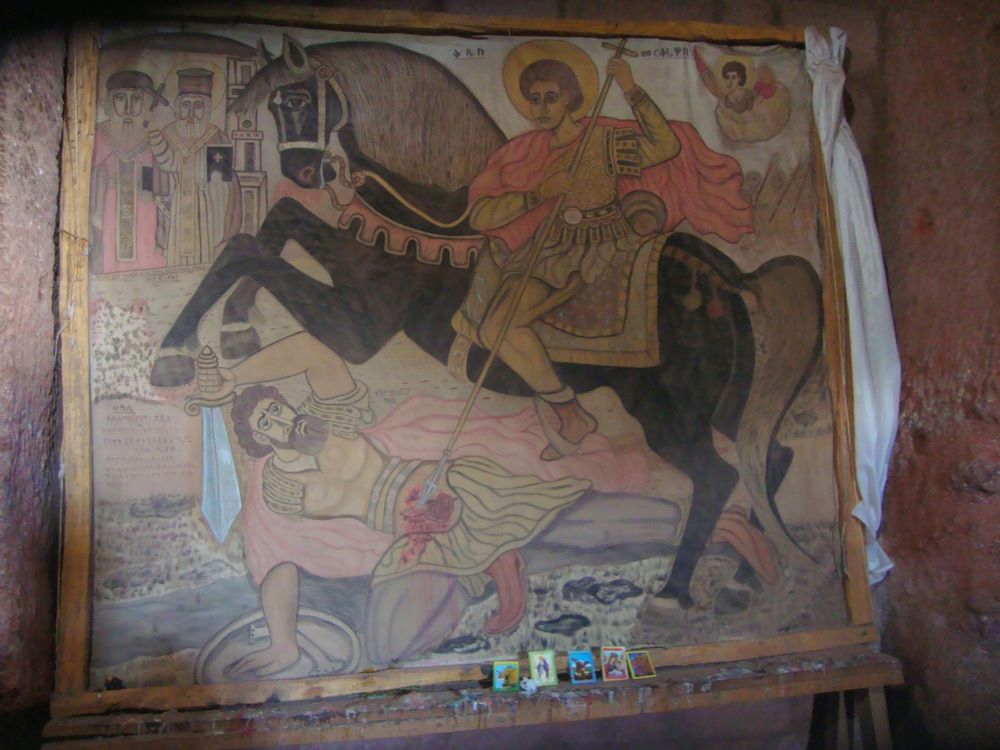
The church itself is now partially dilapidated. A large section of the structure collapsed at some point in the past and has since been reinforced with brick supports that, while visually intrusive, were necessary to preserve the building. Much of the interior artwork has faded over time, leaving only fragments of the once-vivid decorative programme visible along the walls and friezes.
Accessing Bet Merkorios remains one of the more memorable experiences within Lalibela’s southern cluster. Visitors approach through trenches and tunnels that connect the church to Bet Gabriel-Rufael. One of these passages is an unlit corridor approximately thirty-five metres long, through which pilgrims traditionally pass without a torch. The experience is often described as symbolic, a ritual movement through darkness that mimics a passage through hell before emerging into the light of the church itself. Such physical encounters with darkness further reflect the intensely symbolic nature of Lalibela’s role as a mirror to Jerusalem.
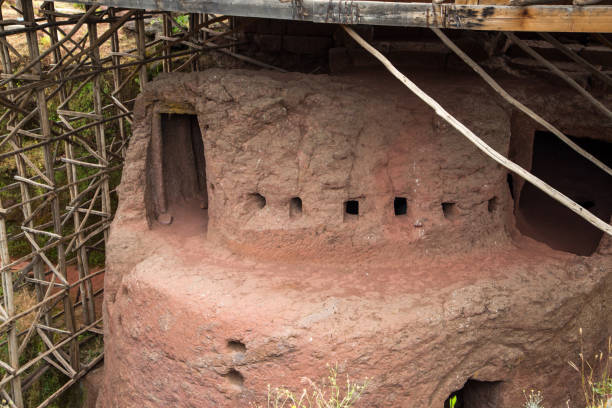
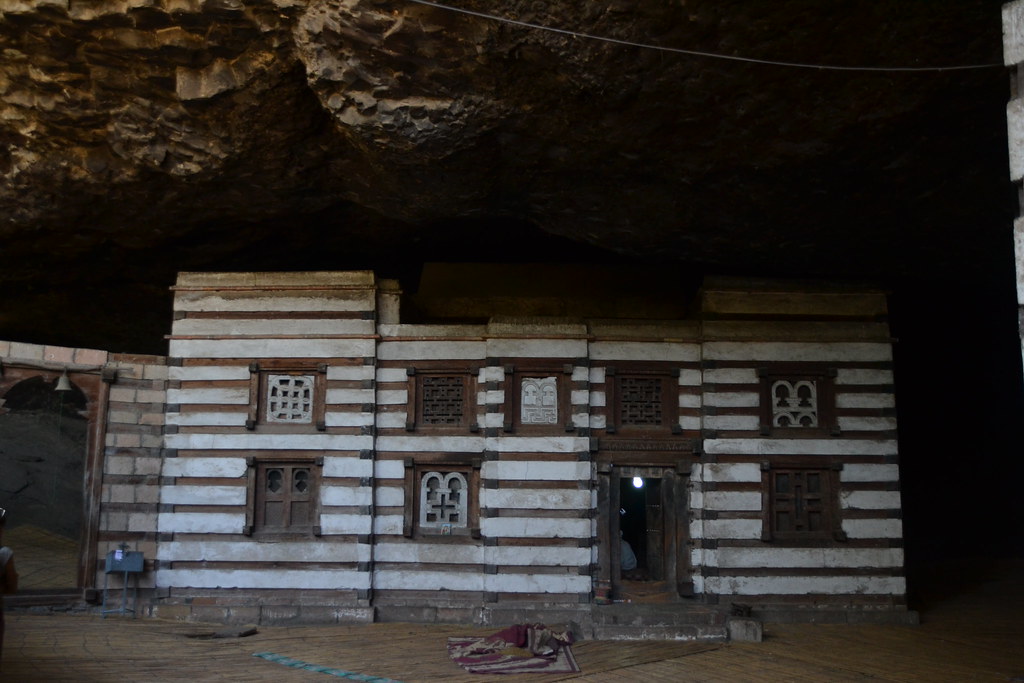
Just beyond lies Biete Abba Libanos, the House of the Abbot Libanos, one of the most visually unusual churches in Lalibela. Unlike the fully monolithic churches carved entirely free from the rock, this rectangular structure is semi-monolithic: it is cut into a cave along the southern wall of the cluster, with its roof and upper walls remaining connected to the original rock while the lower sections have been excavated outward, giving the impression that the church is suspended from the rock itself.
Local tradition attributes the construction of Bet Abba Libanos to Queen Meskel Kibre, the wife of King Lalibela, as a memorial to her husband immediately following his death. According to legend, she was able to construct the church in a single night through the assistance of angels. Architecturally, Biete Abba Libanos features interior pillars and arches decorated with geometric bands and carved crosses typical of medieval Ethiopian church design. The structure is smaller than some of the more monumental churches in Lalibela, yet its dramatic relationship with the surrounding rock makes it one of the most distinctive.
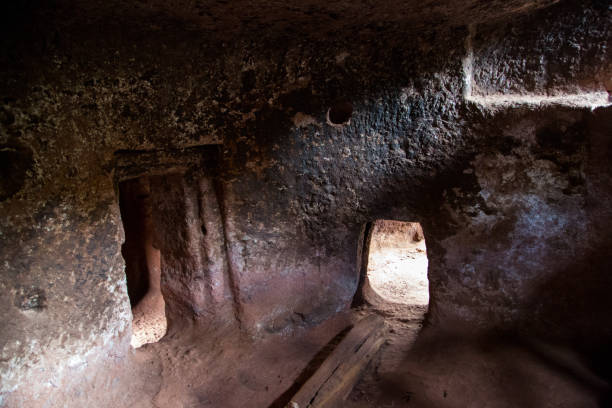
A tunnel extending roughly fifty metres leads from Abba Libanos to a chapel known as Biete Lehem, another small structure in the southeastern complex, named directly after the biblical city of Bethlehem, whose name means “House of Bread.” Though modest in appearance, the building is said to have been used by Lalibela himself as a private place of prayer as well as believed to have served an important ritual function. In Ethiopian Orthodox practice, the Eucharistic bread used during the liturgy is prepared within church precincts, and as the name suggests, Bet Lehem may have served as the bakery where this sacred bread was made. Its presence reminds visitors that Lalibela was not only an architectural monument but also a living religious center with the practical infrastructure required to support daily worship and large numbers of pilgrims.
Biete Lehem now houses sacred relics and devotional icons central to worship in the Ethiopian Church. Painted scenes from the Bible and images of saints contained within serve not merely as decoration but as visual aids for prayer, contemplation, and liturgical reflection. The chapel also plays an important role during major religious festivals, particularly Genna and Timkat, the celebration of the baptism of Christ in the Jordan river.
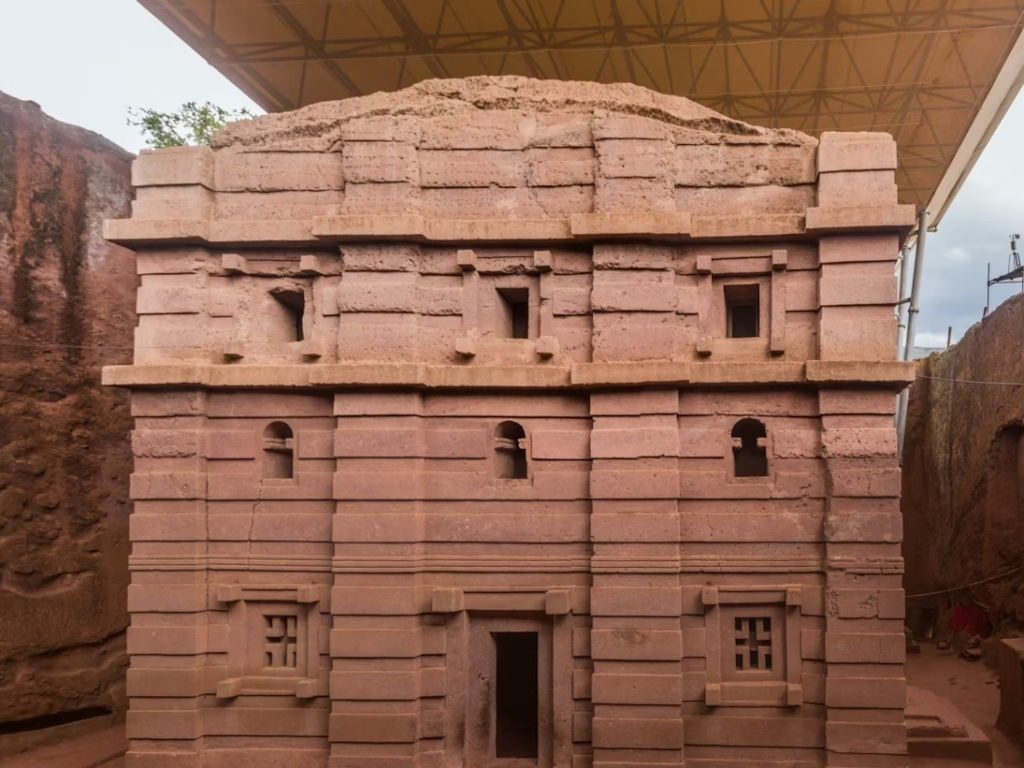
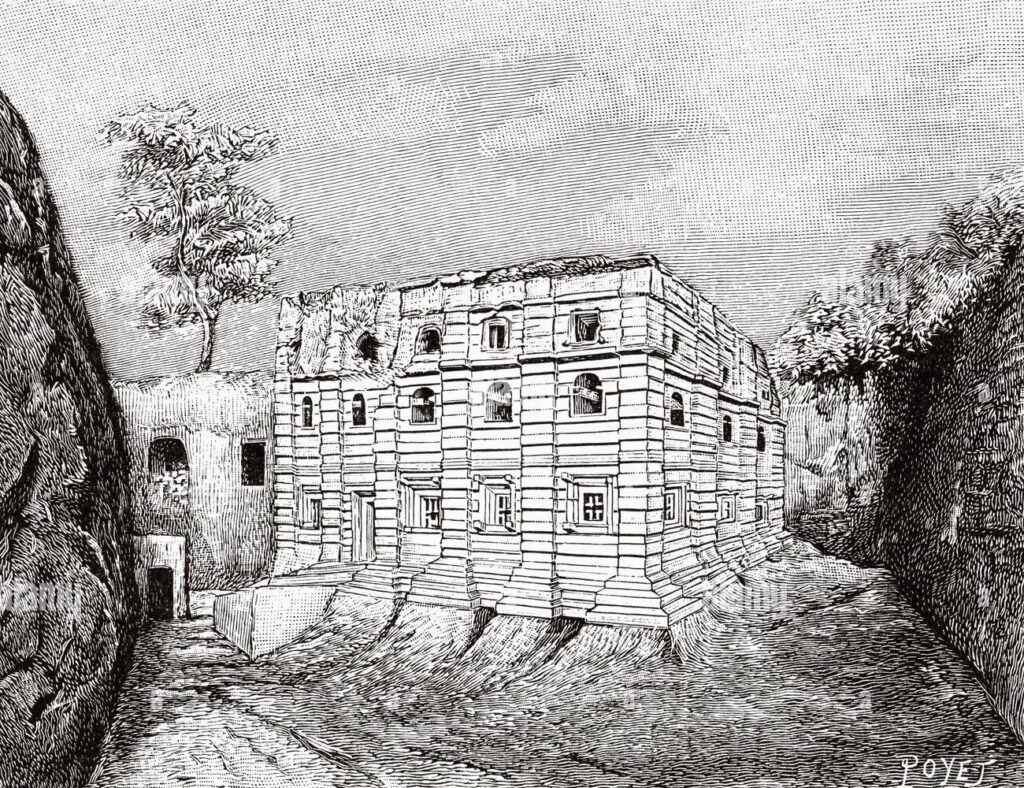
Lastly, there is Biete Amanuel, The House of Immanuel. Of all the churches of the southern cluster, Bet Amanuel is likely the masterpiece of the group, and perhaps second only to Biete Giyorgis. Carved as a complete monolith and standing approximately twelve metres high, it is the only fully freestanding monolithic church within the southern cluster. Its façade is carefully articulated with recessed panels and windows arranged in a pattern reminiscent of Aksumite palaces and temples. The windows themselves vary in shape and placement, further reinforcing the connection with earlier Ethiopian architectural forms.
Inside, the church opens into a large hall supported by four pillars. One of the most distinctive features of the interior is a double frieze of blind windows running along the vaulted nave. The lower band is purely decorative, while the upper series alternates between open windows and carved panels, allowing light from the galleries above to filter down into the interior space. A spiral staircase leads upward to an upper storey gallery, although access is now generally restricted to clergy.
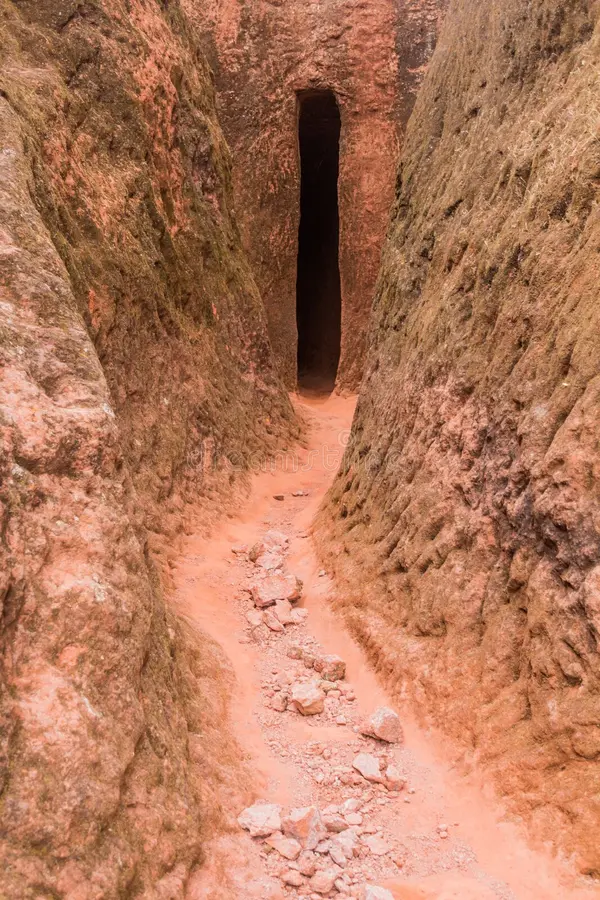
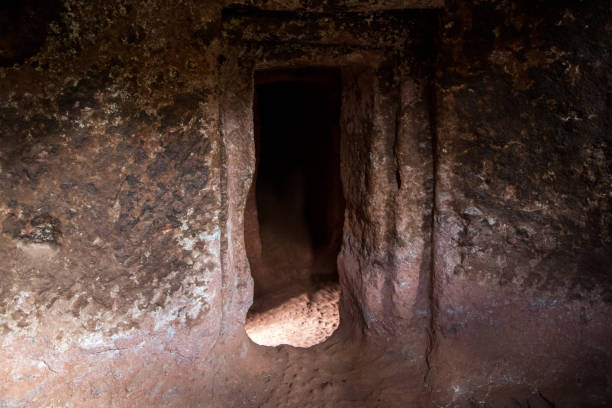
A tunnel approximately thirty-five metres long connects Bet Amanuel to the courtyard of Bet Merkorios, forming part of the labyrinthine network of underground corridors that link the southeastern churches. In the southwest corner of Bet Amanuel another passage once descended underground toward Bet Merkorios as well, though this route has since been sealed.
Because of its refined construction and relatively private location, Bet Amanuel is often thought to have served as the royal chapel for King Lalibela and his court. The spacious courtyard surrounding the church would have accommodated retainers, priests, and ceremonial processions during major religious festivals. Over time, however, the area around the church has taken on additional roles within Lalibela’s sacred landscape.
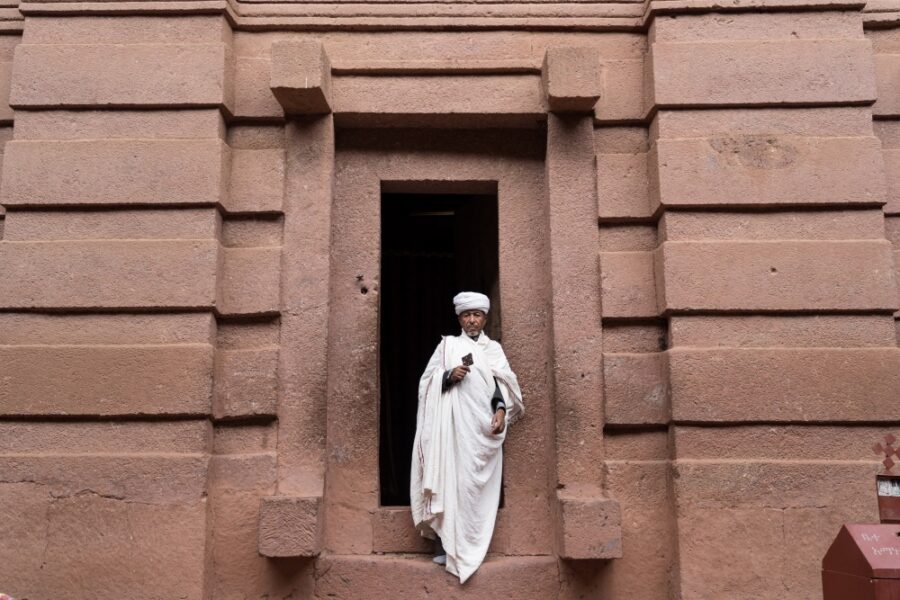
The outer courtyard walls also contain small cavities and chambers traditionally associated with sacred bees, referencing the bees which surrounded King Lalibela at birth, which priests interpreted as a prophecy that he would one day become king. The chambers built into the rock walls are said to commemorate this story, though some also function as burial niches.
Hermit cells have been carved into the surrounding rock walls, and niches in the stone now contain human remains, evidence of monks and pilgrims who chose to be buried in what they regarded as Ethiopia’s “holy city.” Remarkably, some of these bodies have undergone natural mummification. As one local priest explained to visitors: “Their bodies didn’t experience any decay but merely dried up.” In several cases fragments of skin remain visible, the preservation of these remains reflects both the dry conditions within the rock chambers and the longstanding monastic traditions associated with Lalibela.
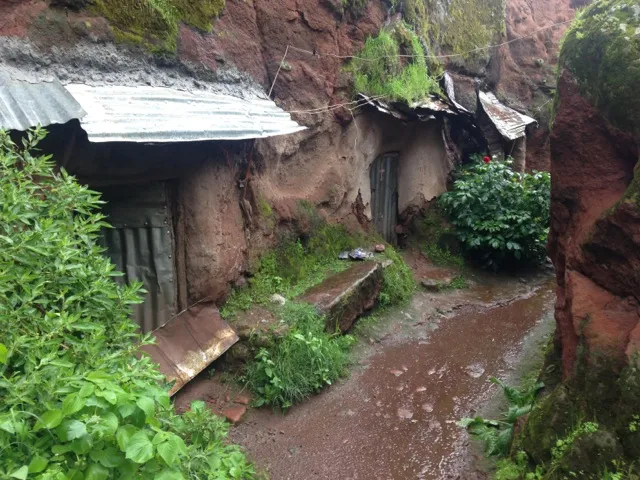
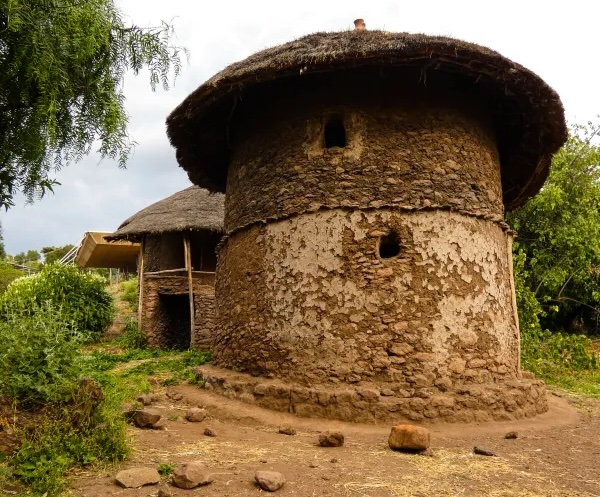
Near the rock-hewn churches lies the modern town of Lalibela itself, where everyday life continues alongside one of Christianity’s most remarkable sacred landscapes. The surrounding village is characterised by distinctive homes known as Lasta Tukuls, two-storey round houses constructed from the same reddish volcanic stone that forms the bedrock of the churches. Roughly 20,000 people live here, including a large community of priests, monks, and families whose lives remain closely tied to the religious life of the complex.
Beyond the central church site the sacred geography extends further into the surrounding highlands. Nearby stands the monastery of Ashetan Maryam, perched high above the town, while the cave church of Yemrehana Krestos, possibly dating to the eleventh century, represents an earlier stage of Ethiopian Christian architecture. Built in the Aksumite style but hidden deep within a cavern, Yemrehana Krestos demonstrates how sacred architecture in Ethiopia often adapted to the natural landscape rather than reshaping it entirely. Elsewhere across the cliffsides are smaller sanctuaries and hermitages, including a tiny church carved into a sheer rock face that can only be reached by a narrow and precarious path. Similar hidden religious sites dot the surrounding mountains, forming a wider sacred network around Lalibela.
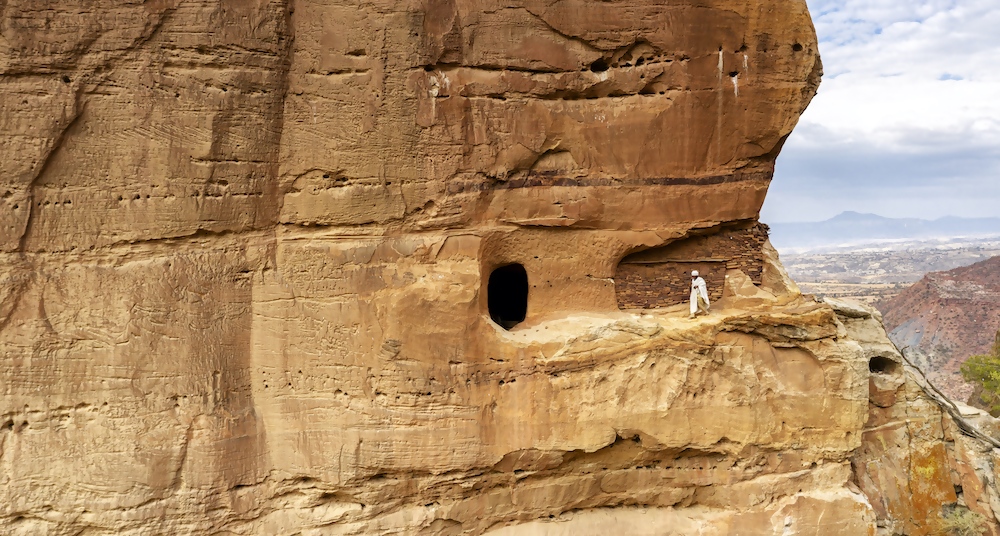
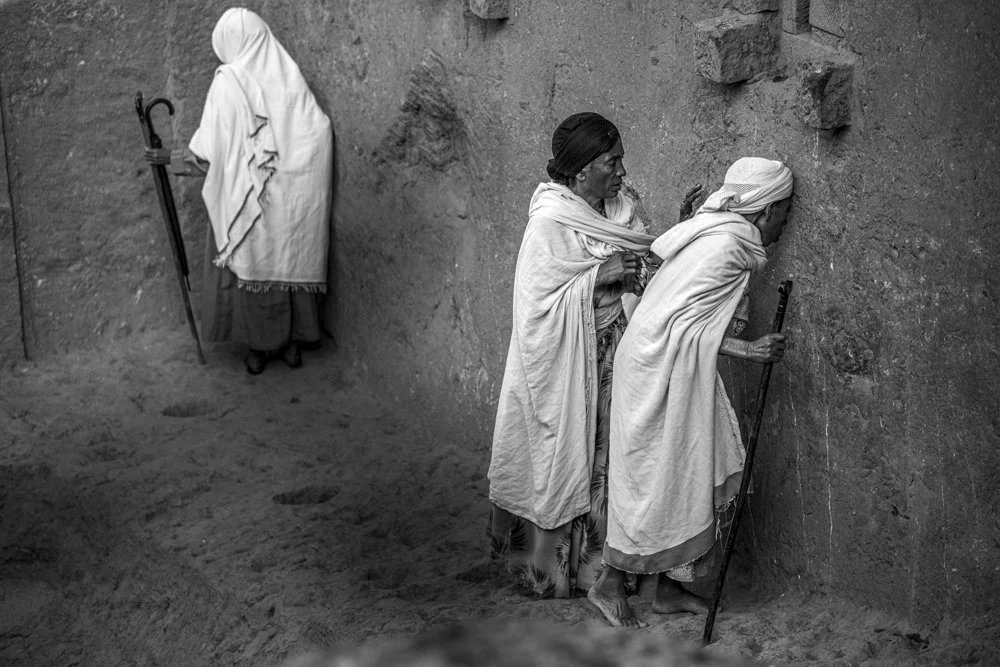
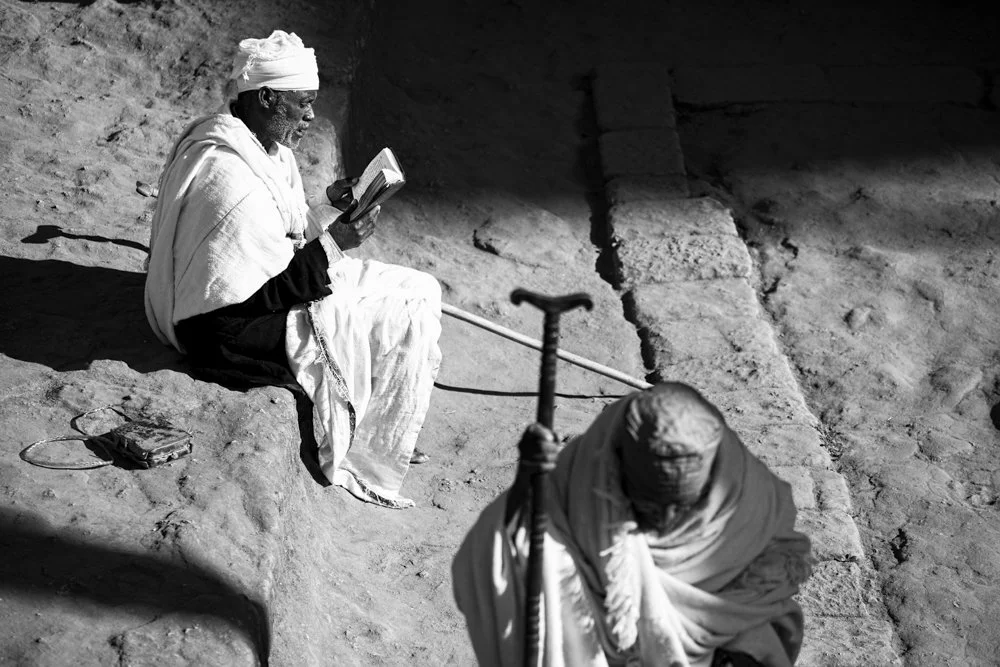
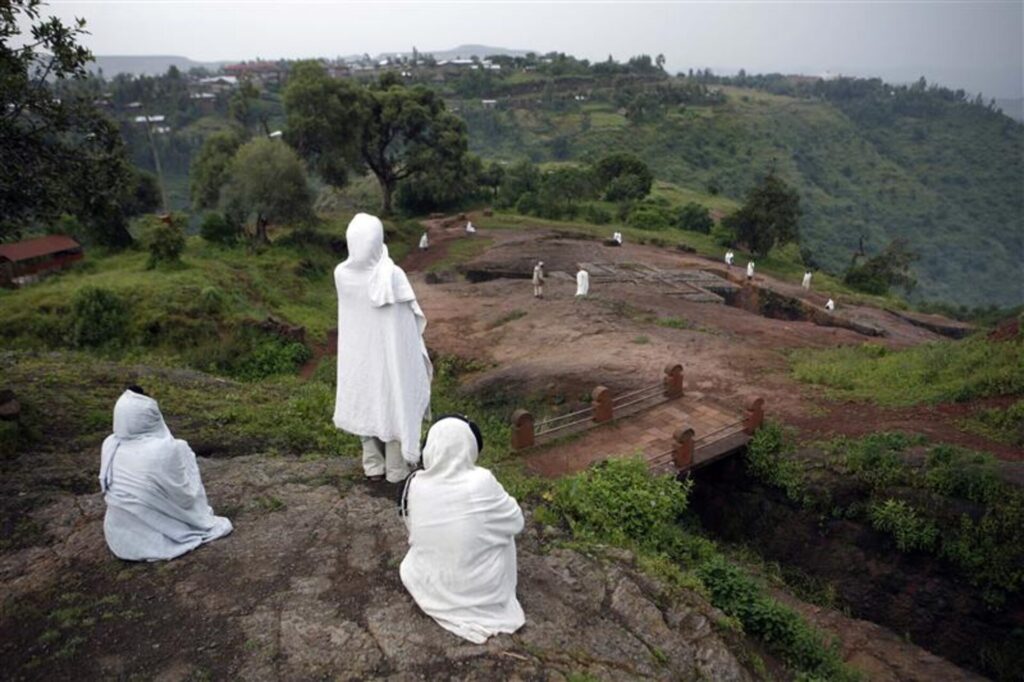
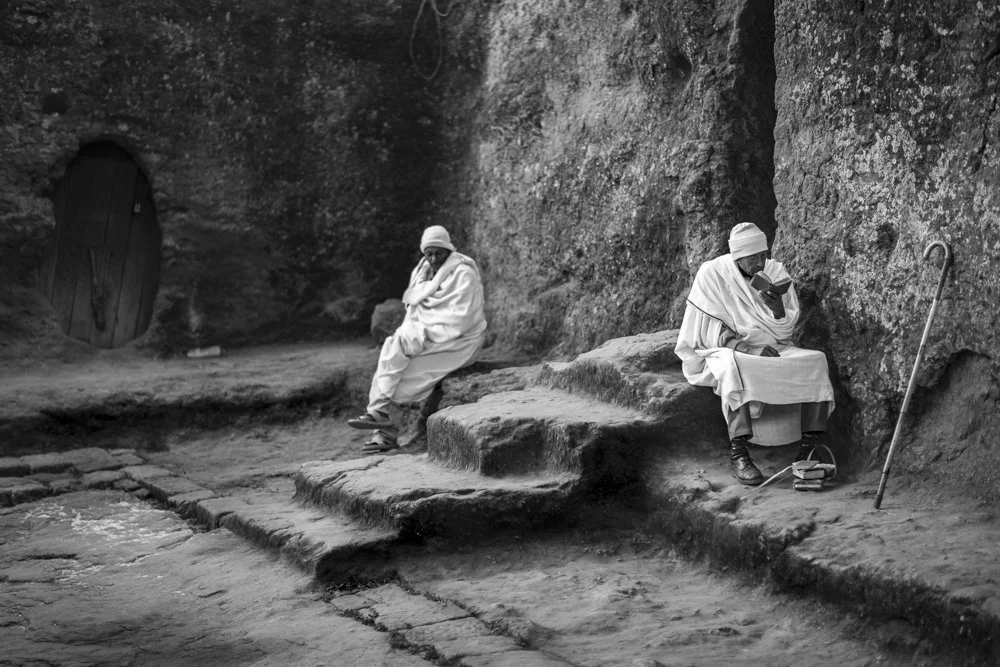
For Ethiopian Orthodox Christians, making the journey to Lalibela as a devout believer is regarded as a powerful expression of faith. Pilgrims travel from across Ethiopia and throughout Africa, many undertaking the journey on foot. Some walk hundreds of miles across the Ethiopian highlands, following routes that have been used for centuries. The journey itself is considered an act of devotion and spiritual purification.
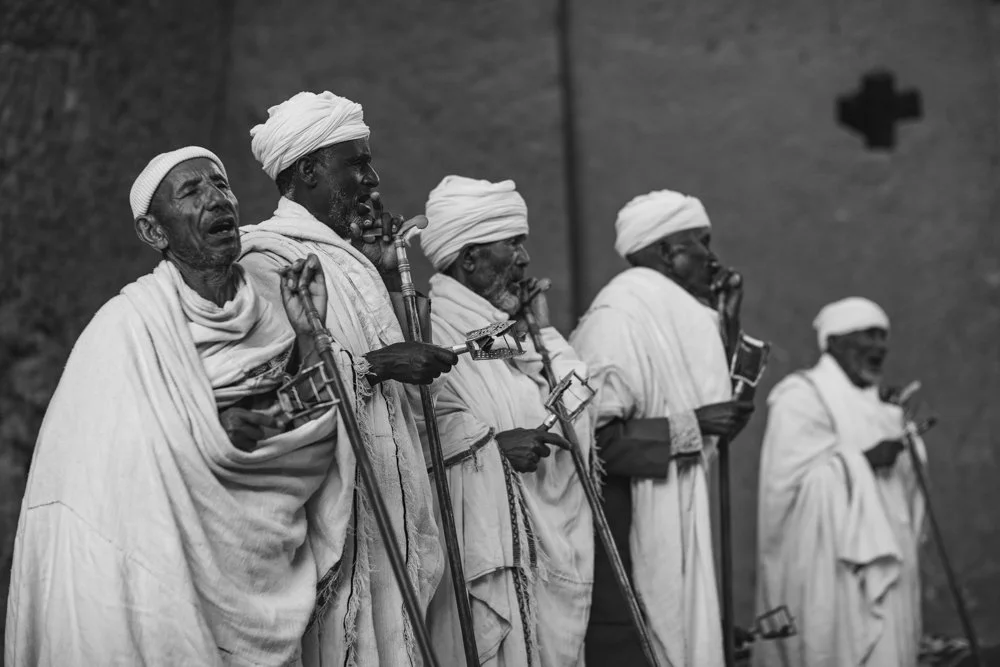
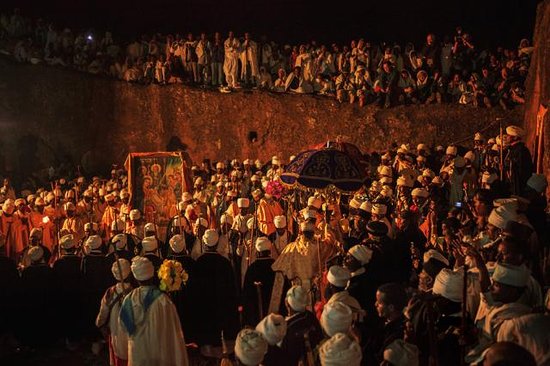
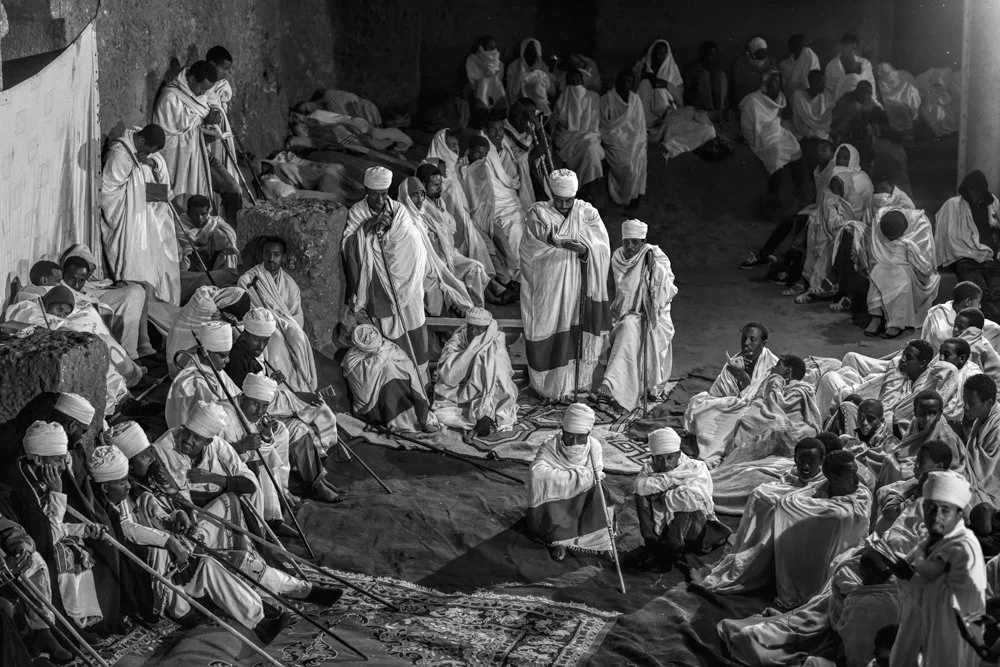
Each morning the site fills with the sound of prayer. Priests dressed in white robes chant liturgical texts in Ge’ez, the ancient language of Ethiopian Christianity that is no longer spoken in daily life but remains central to the church’s religious tradition. The chanting is accompanied by rhythmic percussion from drums and the metallic rattle of sistrums, instruments that have been used in Ethiopian worship for centuries.
Recognition of Lalibela’s significance came in 1978, when the complex was designated a UNESCO World Heritage Site. Despite its status as a globally recognized monument, the churches remain first and foremost a living place of worship for the Ethiopian Orthodox Tewahedo Church. Daily liturgies, pilgrimages, and religious festivals continue much as they have for centuries.
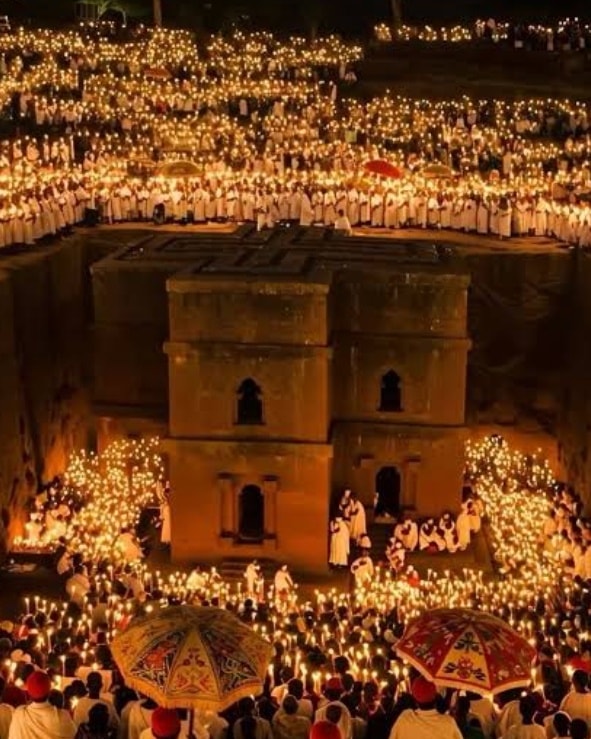
The churches remain open for worship throughout the year, but during major religious festivals the scale of pilgrimage becomes extraordinary. On Christmas Eve, for example, enormous crowds gather around the rock-hewn sanctuaries. At one such celebration nearly 200,000 pilgrims assembled, descending through the narrow pathways and trenches that lead down into the churches carved below ground level. Many had walked for days or weeks, fasting along the way and dressed in traditional white garments. The journey itself echoes the ascetic traditions of early Christianity, where hardship and endurance were understood as spiritual discipline.
For many Ethiopians the act of pilgrimage carries deeper historical meaning. Much of the population has lived through periods of drought, famine, and conflict. The collective memory of wars, displacement, and devastating famine forms part of the cultural background against which pilgrimage takes place. Having endured suffering in this life, many believers place profound importance on the promise of spiritual redemption and eternal life.
Upon arriving in Lalibela, pilgrims join communal prayers, attend long night services, and seek blessings from the clergy who maintain the churches. The atmosphere during these gatherings is intense yet communal: thousands of people gathered in prayer, united by a shared sense of purpose and belief. For Ethiopian Orthodox Christians, Lalibela occupies a place similar to Jerusalem in the Christian imagination, a sacred location where the earthly world intersects with the divine.
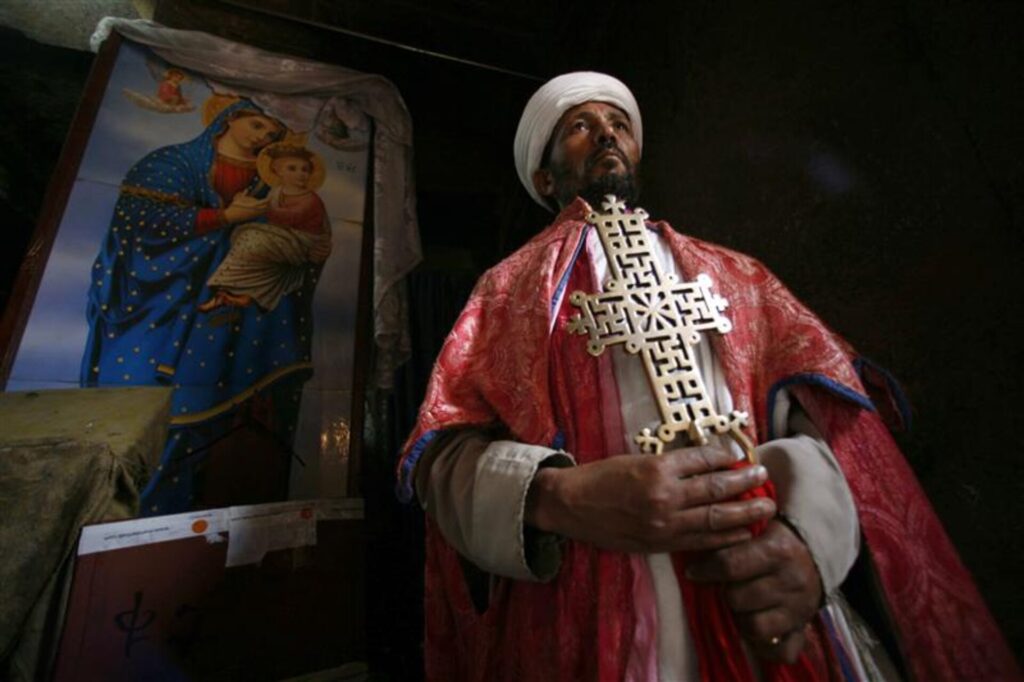
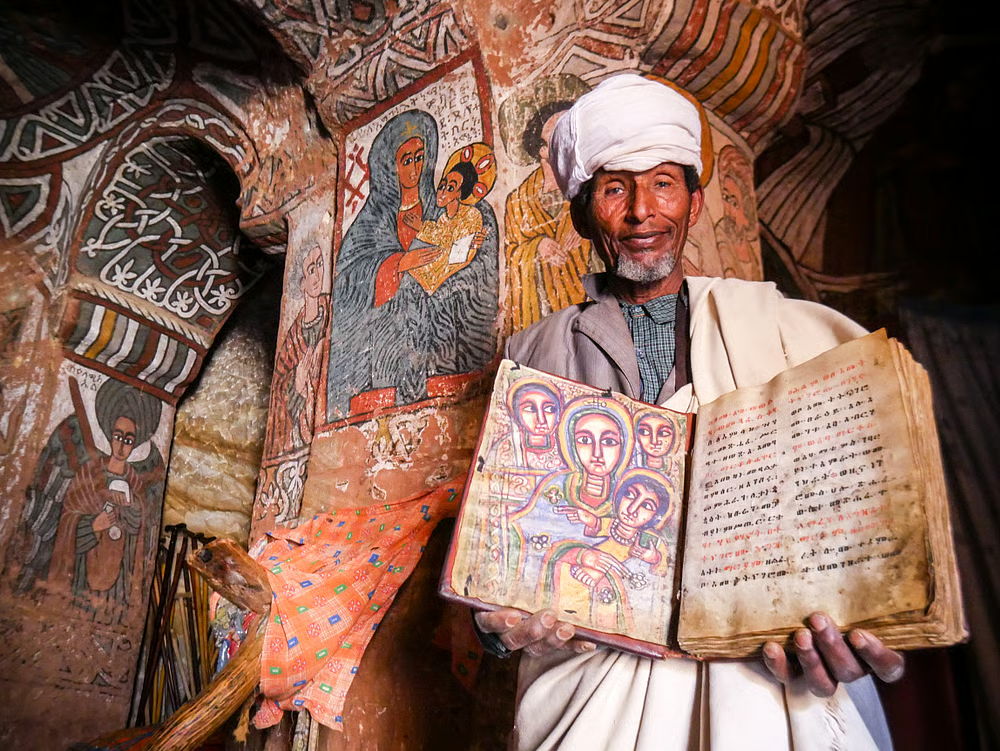
The religious life of Lalibela is maintained by the structures of the Ethiopian Orthodox Tewahedo Church. Patriarchal monastic orders and priestly hierarchies oversee the daily rituals, liturgies, and spiritual care of the churches. Authority within this system rests with male clergy: monks, priests, and deacons, who operate within an ecclesiastical structure under bishops and the patriarch. These traditions trace their lineage back to the early monastic foundations of Ethiopian Christianity, particularly those influenced by the group of missionaries known as the Nine Saints who arrived in the region during the fifth and sixth centuries.
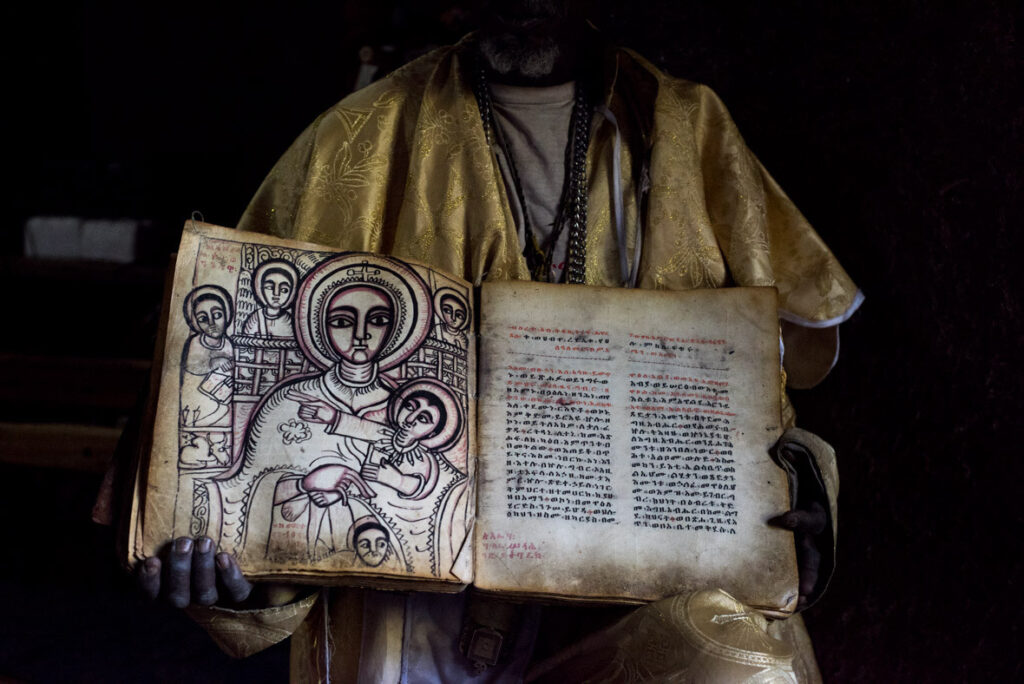
In addition to the formal clerical hierarchy, hereditary priestly families play an essential role in preserving Lalibela’s religious traditions. Specific families are traditionally assigned responsibility for individual churches, conducting services and safeguarding sacred objects. Among the most important of these are ancient manuscripts and elaborate processional crosses that are used during major religious festivals. The transmission of responsibility from one generation to the next ensures the continuity of liturgical knowledge and ritual practices, including the chanting of Ge’ez prayers, the use of incense during ceremonies, and the preservation of traditions that reach back to the medieval Zagwe dynasty under which Lalibela itself was built.
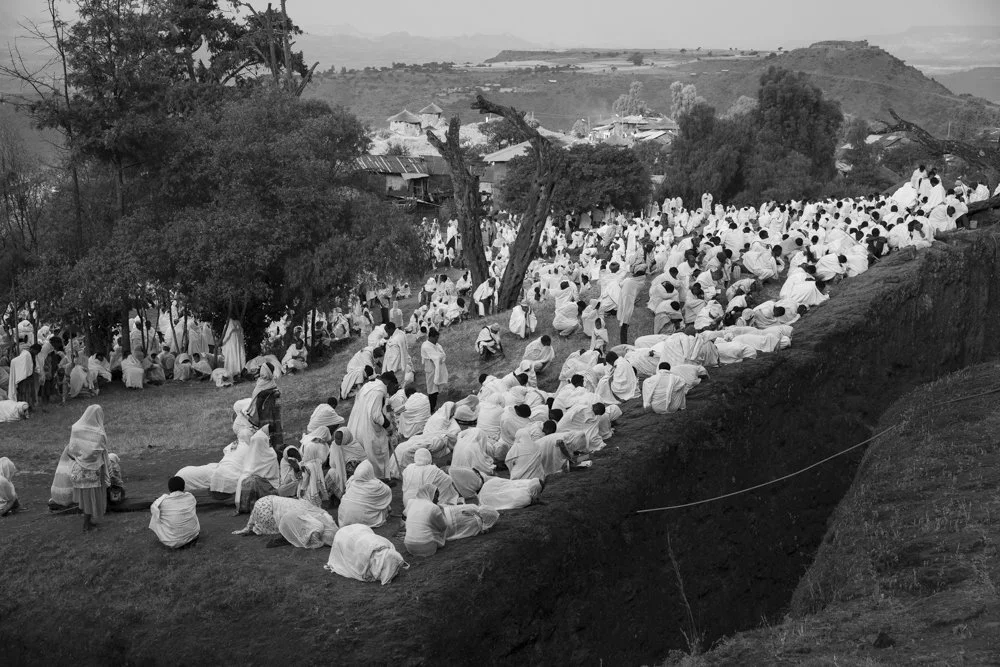
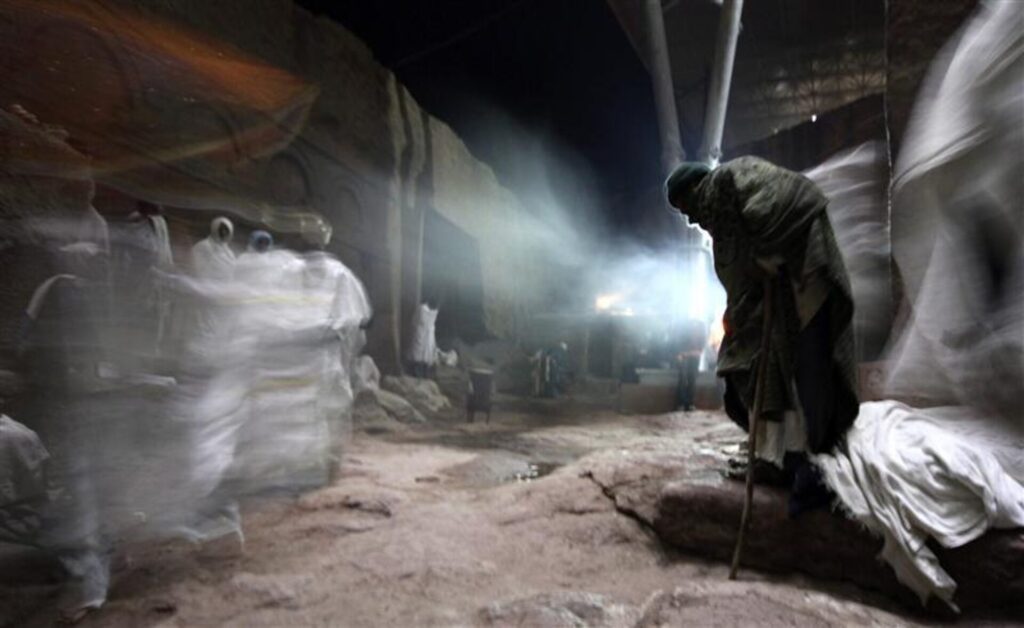
Yet despite centuries of continuous use and devotion, not all of Lalibela’s churches have survived in equal condition. Tourism has grown dramatically in recent decades, bringing both economic benefits and new conservation challenges. The constant flow of visitors means that the stone surfaces, already softened by centuries of erosion, are wearing down more rapidly than they did in earlier periods. As a result, foot traffic is carefully managed, tourists are instructed to use certain pathways only while specific areas of the complex have been restricted or closed altogether. Large religious gatherings that once filled the entire complex must now sometimes be limited in size in order to protect the fragile architecture.
These restrictions create both practical and emotional tensions for the local community. The churches are interconnected by a system of trenches, passageways, and tunnels, and each building has a particular role within the cycle of Ethiopian Orthodox rituals. If one church becomes inaccessible due to conservation work or heavy tourist traffic, the ceremonial pathways linking the sacred spaces can be disrupted. In the eyes of many believers, this interrupts the continuity of traditions that have been practiced for centuries.
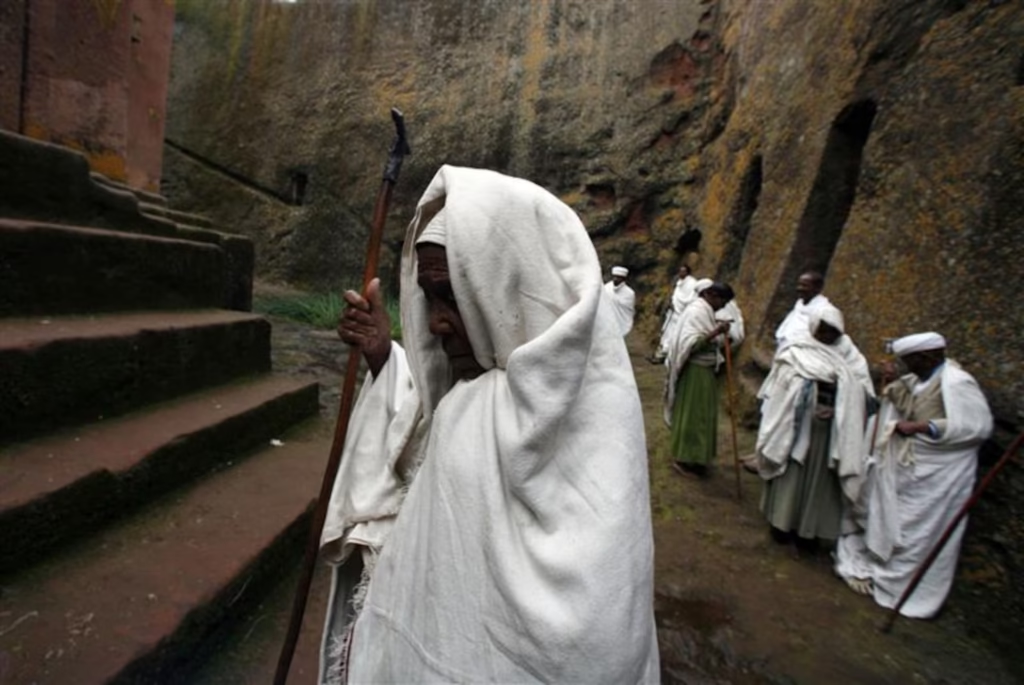
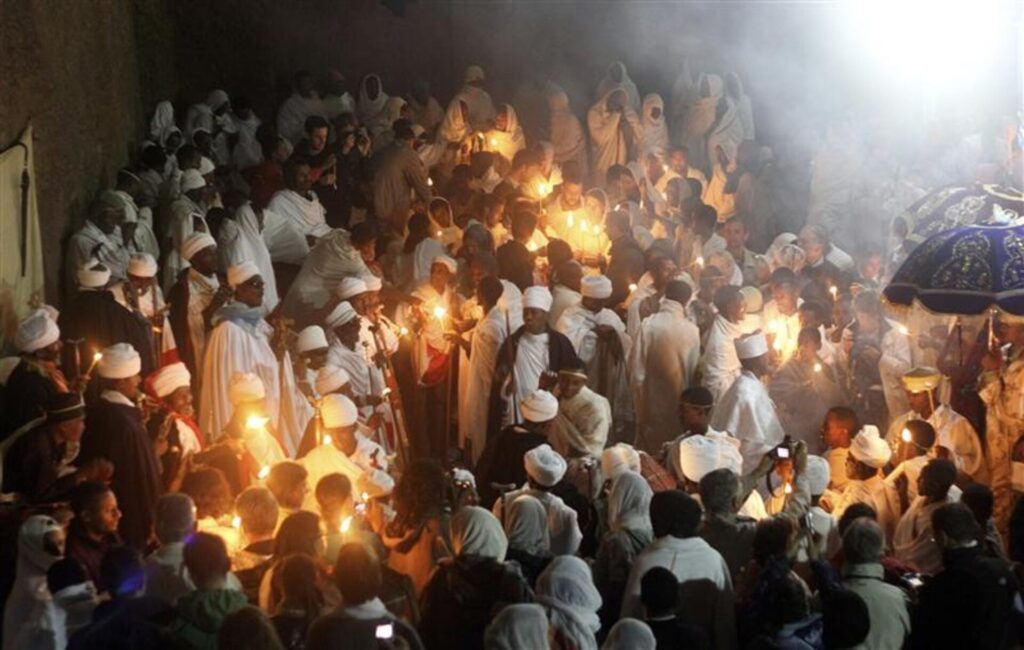
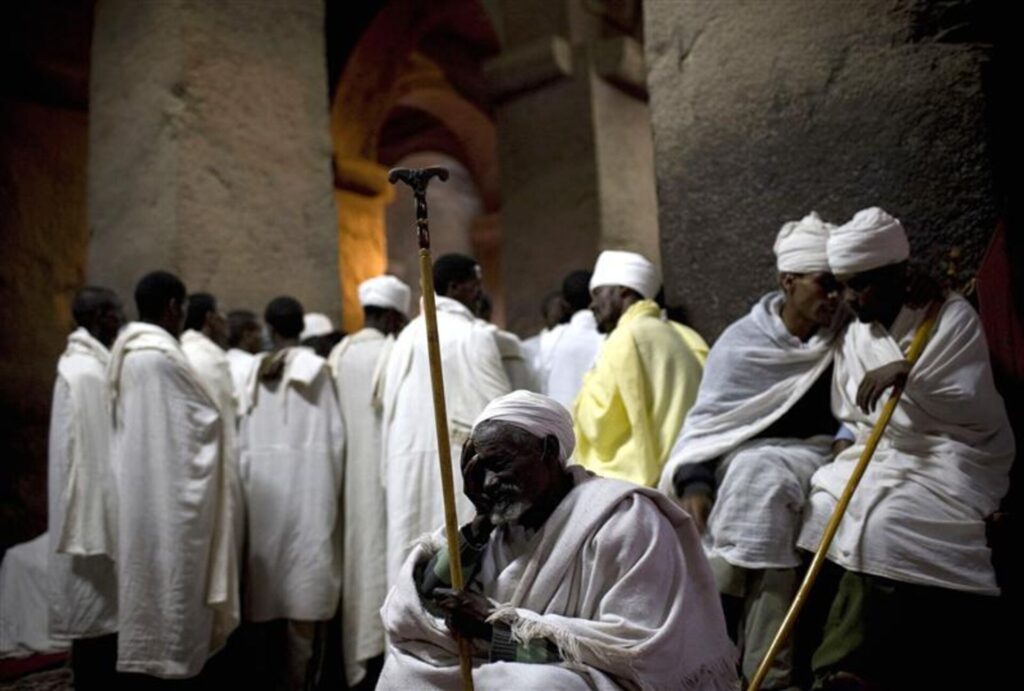
Other threats come from the environment itself. Many of the drainage channels originally carved into the site were gradually filled with soil over time, reducing the ability of the complex to direct rainwater away from the churches. Combined with periodic seismic activity and centuries of water infiltration, the damage has been significant. Today, many sections of Lalibela’s churches are considered to be in critical condition. The challenge facing preservationists is formidable: protecting an extraordinary archaeological monument while respecting its continuing role as one of the most sacred living religious sites in Africa.
The condition of several churches has grown increasingly precarious in recent decades. Biete Amanuel, one of the most architecturally refined structures at Lalibela, is now considered to face an imminent risk of structural collapse. Elsewhere, much of the sculptural detail has deteriorated dramatically. Relief carvings and decorative motifs at Biete Maryam, once among the most elaborate in the complex, have been worn down by centuries of exposure and are now heavily damaged, in some cases barely recognizable. The deterioration is not limited to any one church alone; wall paintings and carved ornamentation throughout the site have suffered extensive degradation.
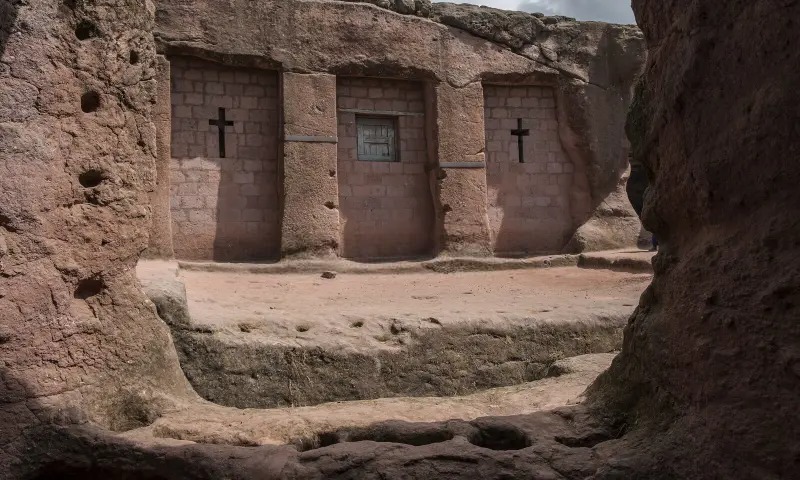
The vulnerability of rock-hewn churches in Ethiopia as a whole was tragically demonstrated in 2004 when a 13th-century church carved from rock from another site collapsed during a religious gathering, killing at least fifteen people who had assembled for a service commemorating an Orthodox saint. The incident occurred during the festival of Saint Gabriel, a major date in the Ethiopian Orthodox calendar that draws tens of thousands of pilgrims from across northern Ethiopia. The disaster underscored the risks posed by aging stone structures that remain in constant religious use.
The same structural instability is already seen in Lalibela itself. Biete Merkorios, for instance, has partially collapsed, and the surviving sections have been reinforced with several brick walls that, while necessary for safety, stand in stark contrast to the original rock-cut architecture. Across the wider complex, similar problems continue to threaten both the artistic and structural integrity of the churches.
The causes of deterioration are complex and interrelated. Geological stress plays a major role. Seismic micro-cracks caused by regional tectonic activity gradually weaken the stone, allowing water to penetrate deeper into the rock. These fissures channel moisture into interior chambers and structural supports, undermining pillars and destabilizing roofs in churches such as Biete Medhane Alem. Hydrological damage then compounds the problem as rainwater and groundwater seep through the porous volcanic rock.
Biological factors also contribute to the decay. Colonies of lichens, algae, and fungi grow across the exposed surfaces of the churches, slowly widening microscopic pores in the stone. These organisms promote salt crystallization beneath surface patinas, increasing the rock’s porosity and accelerating the gradual breakdown of carved facades.
Efforts to address these threats have taken place over several decades. Between the late 1980s and early 2000s, restoration projects funded by the European Union attempted to stabilize many of the churches through drainage improvements and structural reinforcement. Engineers injected grout into cracks within key buildings such as Biete Medhane Alem, strengthening weakened sections of stone and improving underground drainage channels to redirect water away from the foundations. These measures helped prevent immediate collapse in several areas of the site.
However, later assessments revealed the limits of these interventions. While the projects successfully stabilized certain structural weaknesses, they did not fully resolve the problem of persistent moisture accumulation. Groundwater infiltration and seasonal rainfall continued to introduce humidity into the churches’ interiors, slowly eroding surfaces even after structural reinforcement. The walls of Biete Abba Libanos, for example, now show several worrying cracks that hint at deeper stresses within the rock. Protecting the structures while allowing them to function as an active sacred site has therefore become an unusually delicate challenge.
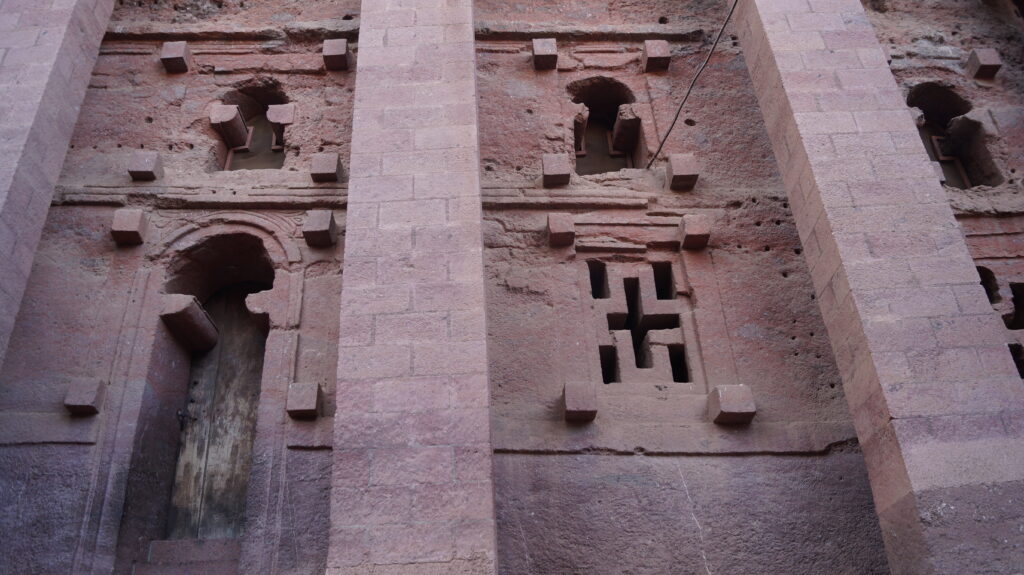
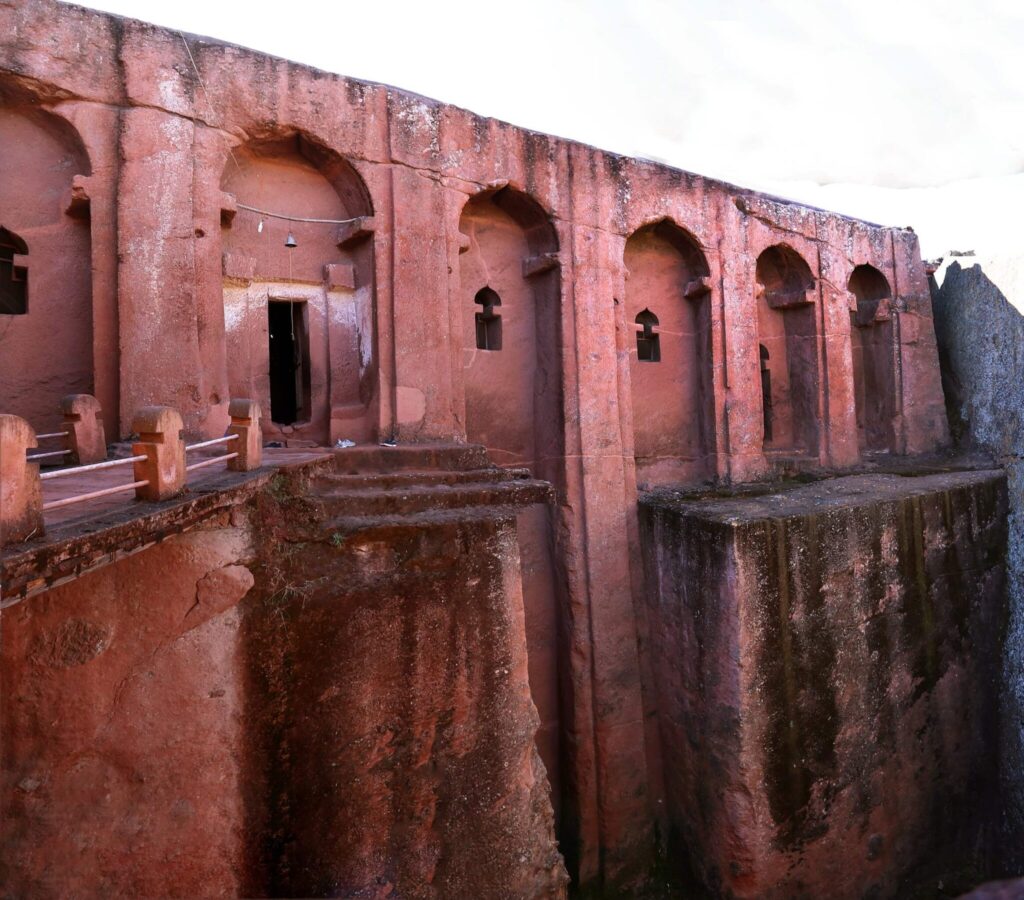
In recent decades, preservation efforts have increasingly focused on stabilizing the rock itself. A major conservation project led by the World Monuments Fund sought to address the slow destabilization of the churches caused by moisture infiltration, seismic activity, and centuries of environmental exposure, the result of research conducted across the site since 1965, originally with the intention of removing previous attempts are preservation in the form of tar coatings applied to the surfaces of the churches a decade prior.
The difficulty of preserving Lalibela stems not only from engineering challenges but also from the sacred status of the site. According to longstanding tradition, the churches were built with the assistance of angels, and as a result the rock itself is considered holy. Conservation specialists have reported that priests sometimes gather the dust produced by even the smallest drilling work during restoration. Every fragment of stone carries religious significance, making intrusive interventions difficult to justify. UNESCO has warned that, despite preservation attempts, the integrity of the entire complex remains under serious threat, especially as protective roofs installed on site, now nearly two decades old, need to be dismantled as soon as possible, as they are now themselves at risk of collapse.
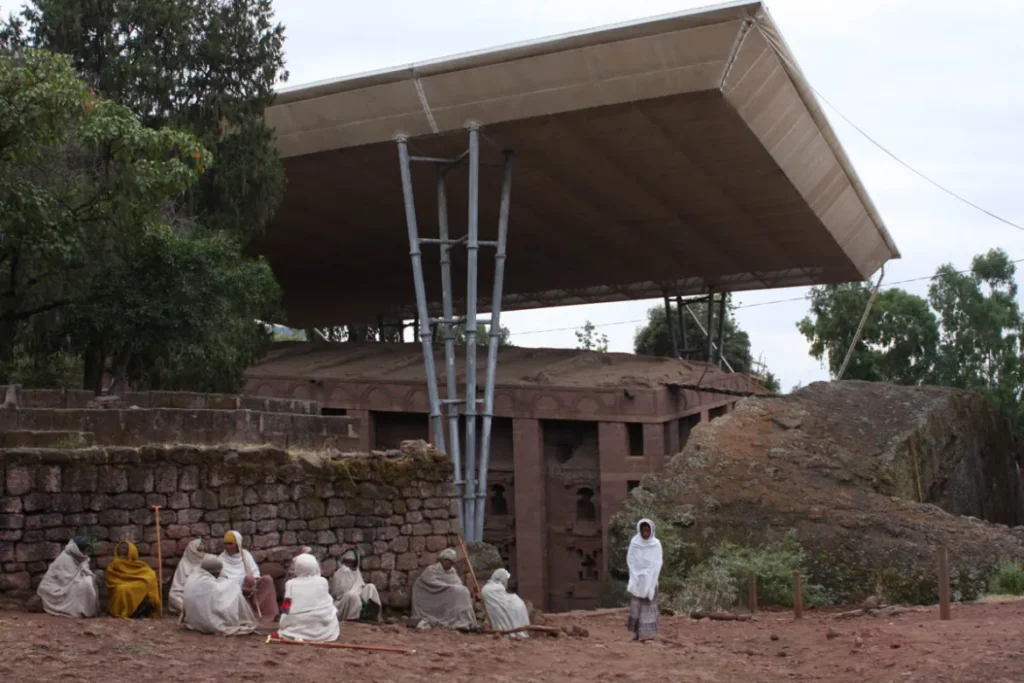
Several churches, including Biete Medhane Alem, are partially shielded from the elements by large slabs of sheet-metal roofing installed in 2008 as part of a €9.1 million conservation project funded by the European Union and overseen by UNESCO to slow further erosion. The solution is functional but visually intrusive, and it has become one of the most controversial preservation measures at the site. Critics argued that the shelters clashed visually with the ancient rock architecture and failed to provide adequate ventilation, trapping humidity beneath the roofs and inadvertently contributing to further deterioration.
Architectural conservator Stephen Battle has been among the most outspoken critics of the protective roofs. As he once remarked: “The local people call them gas station roofs. And I think it’s a pretty apt way of describing them. So you can imagine, we have this extraordinary site with some of the most beautiful buildings in the world with extraordinary, huge, spiritual significance. And there’s a bunch of gas station roofs that have been placed over the top of them. It’s really not compatible, it’s not appropriate.”
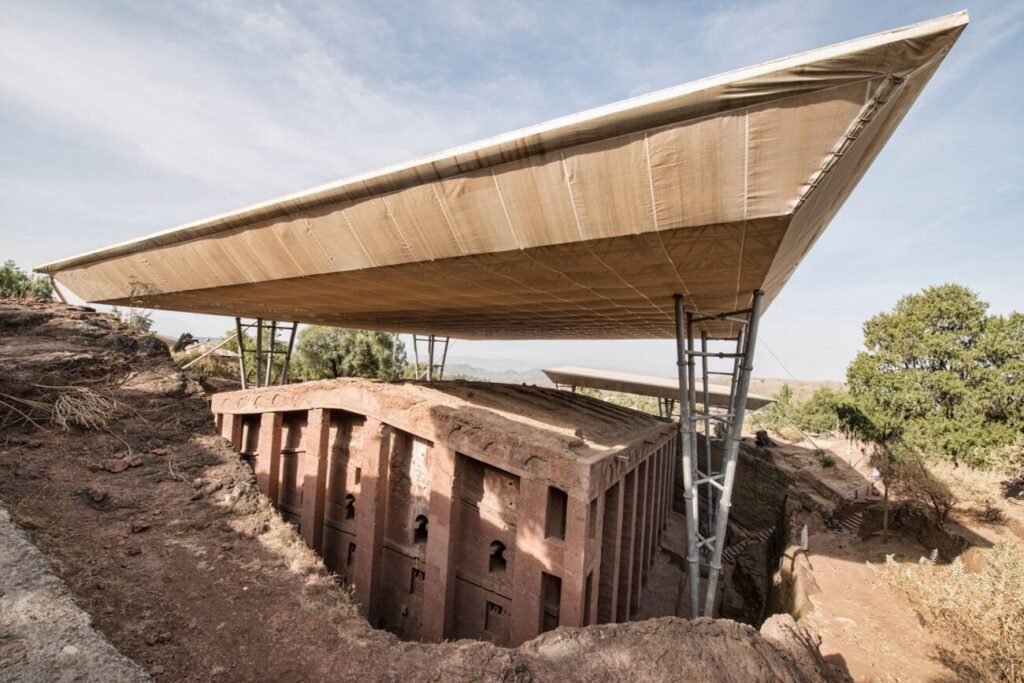
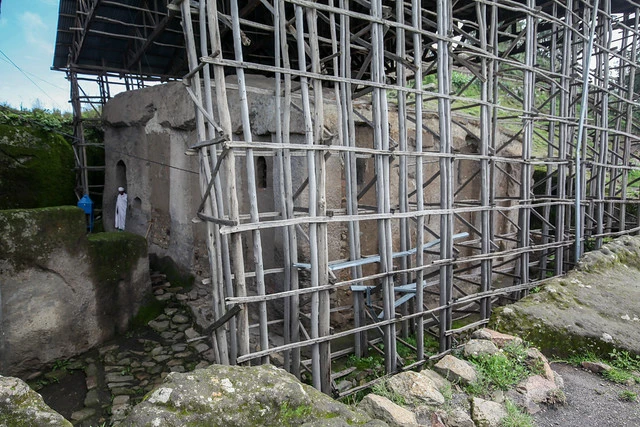
The intervention also introduced an unexpected problem. By shielding the churches from rainfall for the first time in nearly nine centuries, the shelters disrupted the natural cycle of wetting and drying that the volcanic tuff had long adapted to. What once seemed like a sensible conservation measure instead became an example of the law of unintended consequences: the churches were once considered too wet, but now they risk becoming too dry. Conservation specialist Stephen Battle explained that the absence of moisture causes the stone to contract more than it historically did, placing stress on the rock itself. This contraction leads to small structural failures at a microscopic level, gradually weakening the material and causing parts of the stone surface to crumble.
The coverings were intended to be temporary structures, installed only until more comprehensive restoration strategies could be implemented. Many conservationists hope they will eventually be removed altogether and replaced with intensive, long-term maintenance programs carried out by local specialists. To support that goal, the World Monuments Fund has been training dozens of Lalibela’s priests and local residents in conservation techniques so that the community itself can help care for the churches. When asked about the long-term survival of the site, Battle remains cautiously optimistic, believing they can easily last another 900 years if they’re properly cared for.
A comprehensive conservation strategy for the rock-hewn churches of Lalibela was formally outlined in 2006 through cooperation between the Ethiopian government and UNESCO. The plan aimed to move beyond temporary emergency measures and establish a long-term system for monitoring the stability of the volcanic tuff, managing groundwater drainage, improving visitor infrastructure, and gradually replacing the controversial temporary shelters that had been erected over several churches. It also emphasized better archaeological documentation, controlled tourism management, and the creation of a coordinated conservation authority capable of overseeing the entire complex.
Despite the ambitious scope of the proposal, progress has been slow. Many elements have advanced only in stages or remain incomplete. The situation has been complicated by funding gaps, and the technical difficulty of working within an active pilgrimage site. Two decades after the plan was introduced, preservation efforts at Lalibela continue to rely on a mix of temporary interventions, international partnerships, and incremental restoration projects rather than a fully realized implementation of the original strategy. In the meantime, new pressures continue to mount.
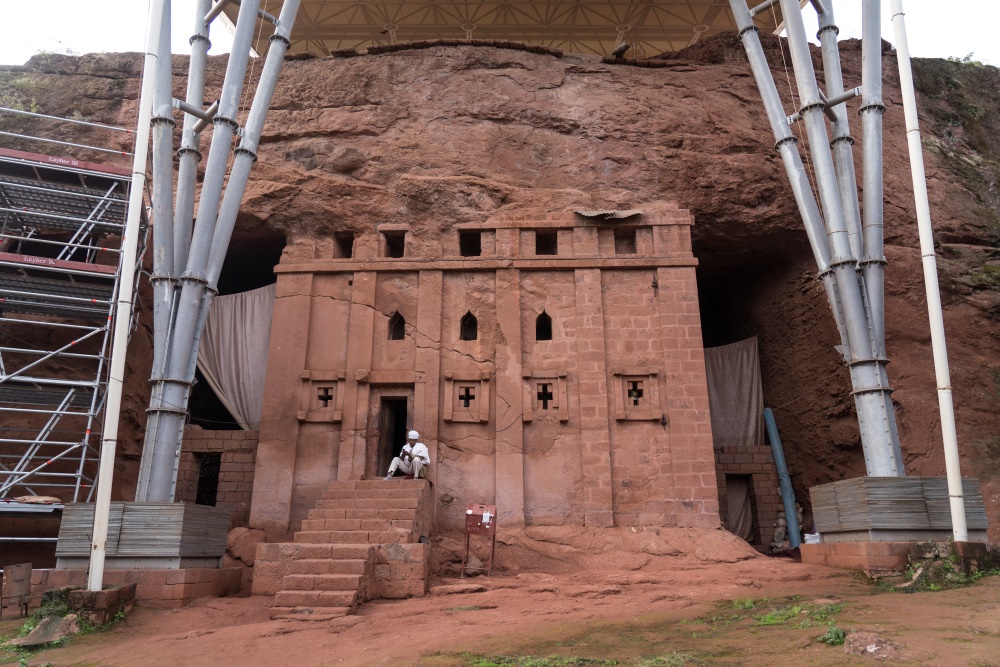
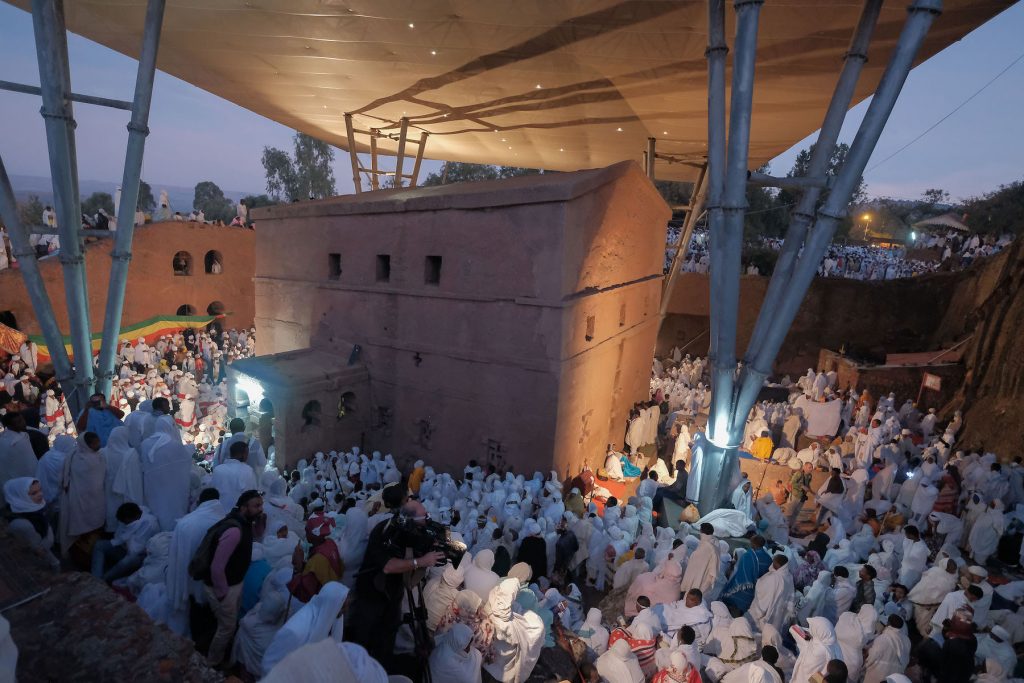
In response to these ongoing problems, the Ethiopian government launched an international architectural design competition in September 2025 to develop new protective shelters that would better integrate with the surrounding landscape. The proposed structures aim to replace the aging 2008 canopies with modular designs that control environmental exposure while preserving the visual integrity of the site.
The competition seeks proposals that combine environmental protection with minimal visual intrusion, though conservation experts have stressed the need for designs that are carefully tested and approved by local clergy and community members. Previous preservation attempts demonstrated how poorly integrated solutions can unintentionally create new problems for both the architecture and the people who use it. The initiative was delayed by the instability in the country, which limited access to the area for several years.
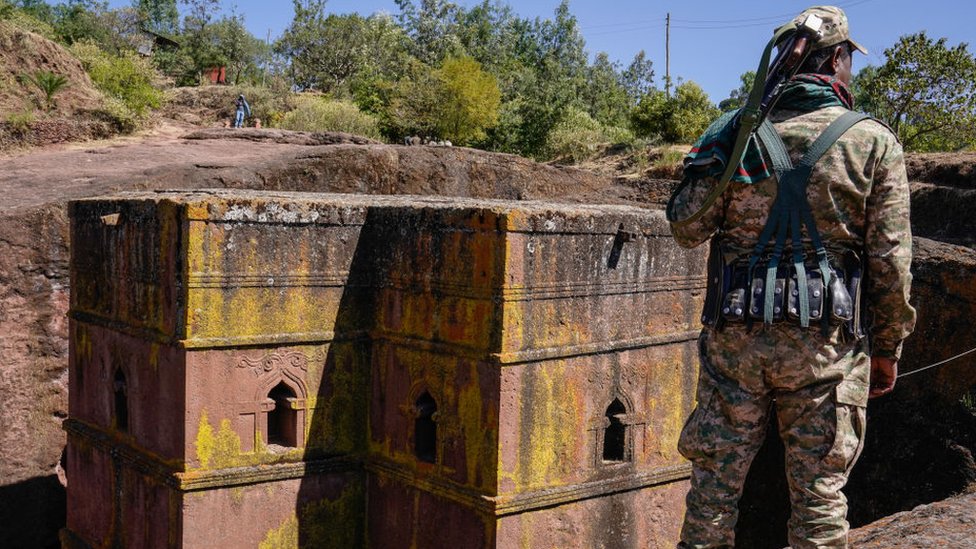
Lalibela and other religious sites in Ethiopia currently face a new threat: political violence ongoing in northern Ethiopia since November 2020. Rebel forces, who have already attacked other religious monuments, overtook Lalibela in the summer of 2021. That year, fighting spread from the neighboring region of Tigray into the Amhara and Afar Region, where Lalibela is located, forcing around 250,000 people to flee their homes as front lines shifted across the highlands.
In early August 2021, fighters from the Tigray Defense Forces captured Lalibela during the wider conflict known as the Tigray War, partly in response to the advance of Amhara regional forces into Tigray. On 1 December 2021, troops of the Ethiopian National Defense Force retook the town. The situation remained unstable: on 12 December, Tigrayan forces again seized control, and on 19 December Ethiopian state media announced the town had once more been recaptured by government troops, though the exact timing remained unclear.
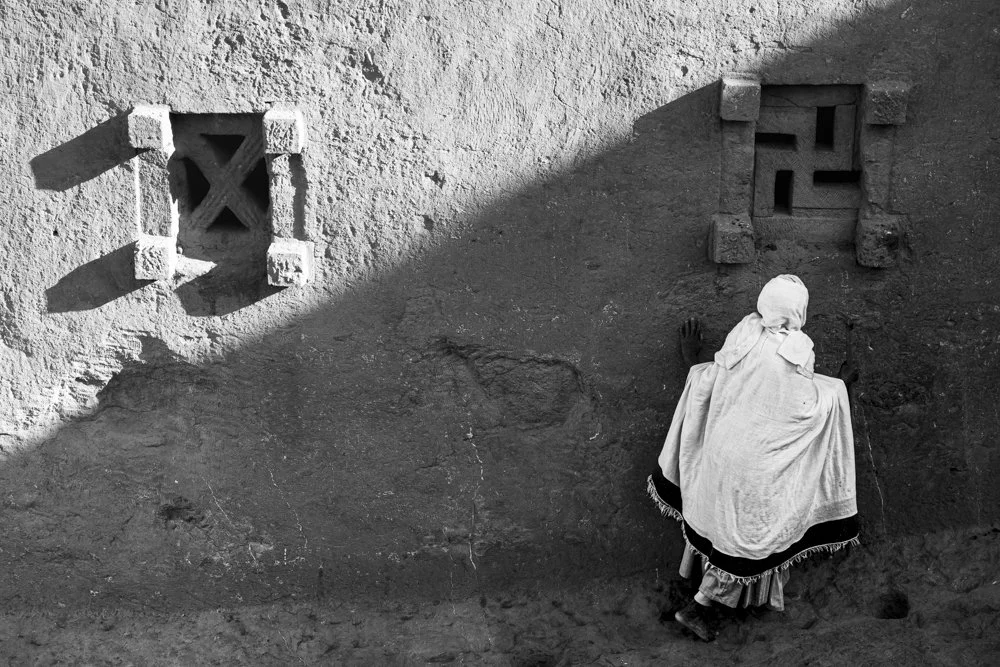
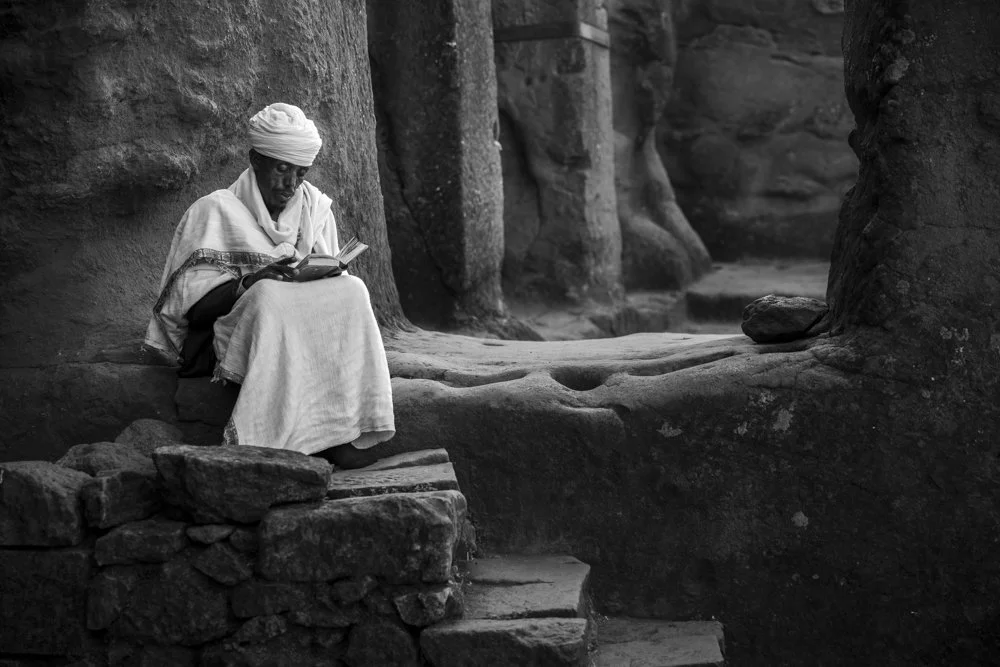
The conflict returned to Lalibela in early November 2023, when heavy fighting broke out between the Ethiopian army and fighters from Fano. Though the town remains under federal government control today, the instability surrounding the site has raised serious concerns about the long-term preservation of one of the world’s most extraordinary religious landscapes.
Despite these challenges, the rock-hewn churches remain firmly embedded within their natural landscape and continue to serve as active pilgrimage sites. Religious life has never ceased here; priests still conduct liturgy within the carved sanctuaries, and pilgrims gather throughout the year for major feasts and processions. At the same time, an unexpected response to the problem of preservation has emerged. Rather than treating the churches purely as fragile monuments, some Ethiopian religious figures have sought to continue the tradition of carving sacred architecture directly into the rock.
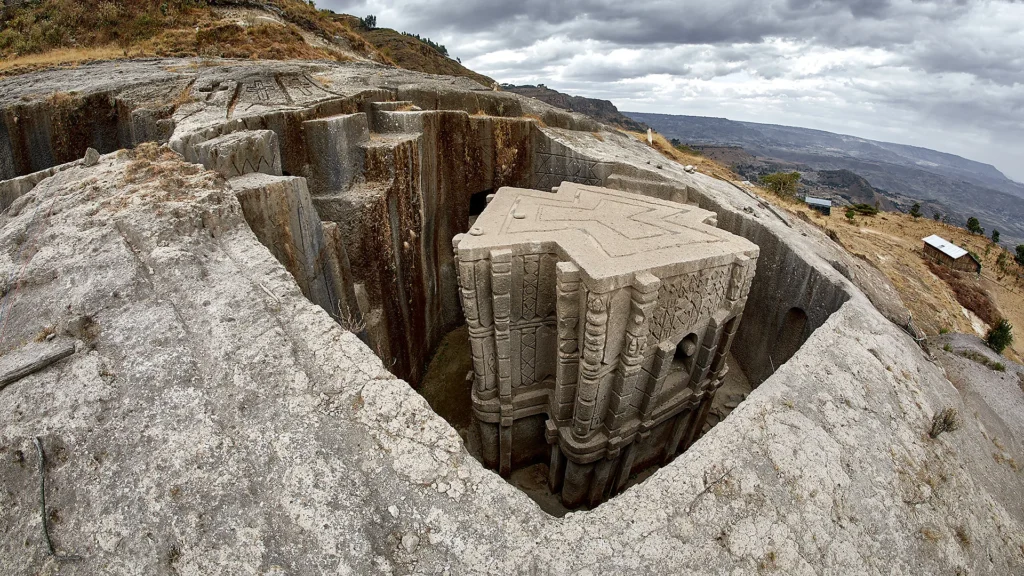
In recent years, new monolithic churches have begun to appear in the surrounding region, created using the same basic methods that shaped the medieval complex centuries ago. The idea reflects a simple but powerful logic: if the original site cannot be preserved indefinitely as a fully living space without damage, why not recreate it? The approach echoes strategies used elsewhere in heritage conservation, such as the creation of Lascaux IV, an exact replica built to protect the fragile prehistoric paintings inside Lascaux Cave while still allowing visitors to experience the site. In this sense, the future of Lalibela may not lie only in conservation, but also in continuation.
Roughly 60 kilometers south of Lalibela, work is underway on an unusual project that attempts to recreate one of the most extraordinary architectural achievements of medieval Ethiopia. On a remote mountainside, a solitary monk named Abu Gebre Meskel Tesema has spent years carving a new complex of monolithic churches directly from the rock. The undertaking is known as Dagmawi Lalibela, meaning “Second Lalibela.” Construction began in 2010, and the project aims to replicate the structure of the historic complex by producing a total of eleven rock-hewn churches.
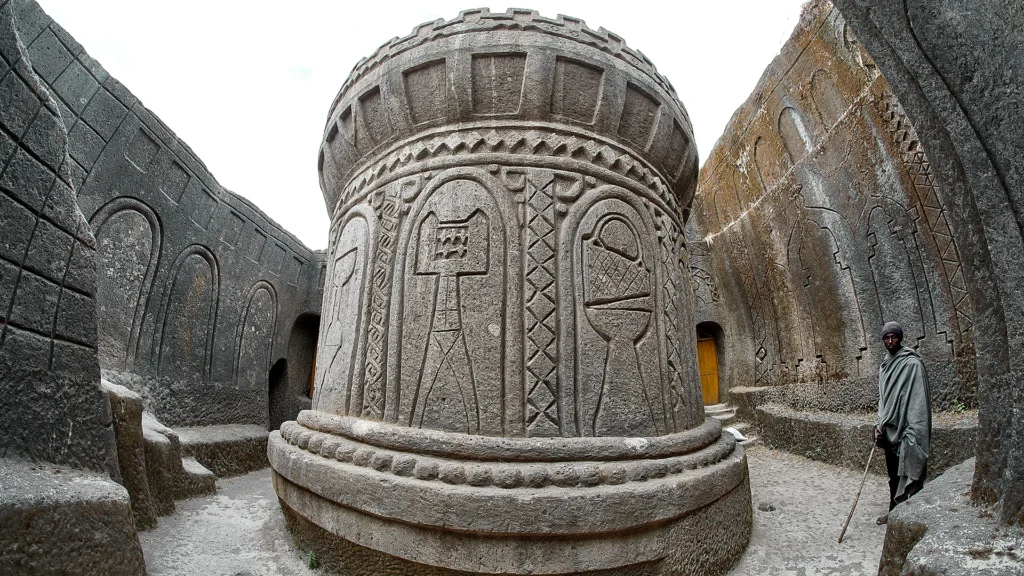
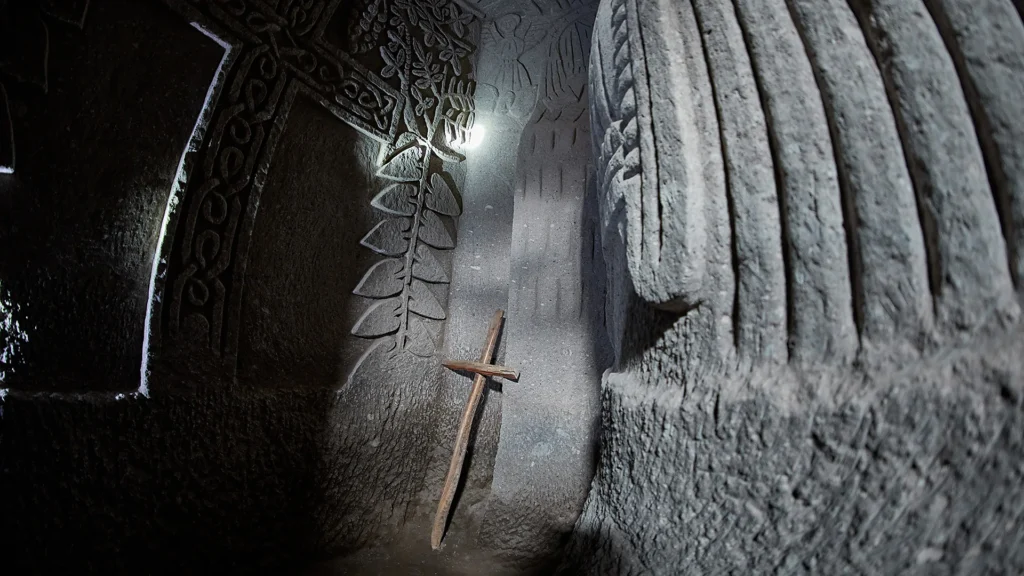
The effort is notable not only for its ambition but also for the conditions under which it is being carried out. For the first year Tesema worked entirely alone, carving into the stone by hand. Two church deacons eventually joined him, though their role remains limited largely to clearing debris and removing rubble from the excavation site. According to one of the deacons, the monk follows a strict routine while working: “While Tesema is working, he accepts no food and uses no artificial lighting.” When he carves inside the churches, the work is often carried out in near darkness.
Tesema intentionally restricts himself to the most basic tools, chisels and hammers, and avoids modern construction materials entirely. The churches are carved using techniques believed to resemble those used during the reign of Gebre Meskel Lalibela. There are no bricks, no mortar, no timber supports, and no architectural drawings. Measurements are determined entirely by eye. One of Tesema’s stated motivations is to demonstrate that the original churches of Lalibela could have been created without foreign architects or advanced engineering knowledge, countering long-standing claims that outside builders must have played a decisive role in their construction.
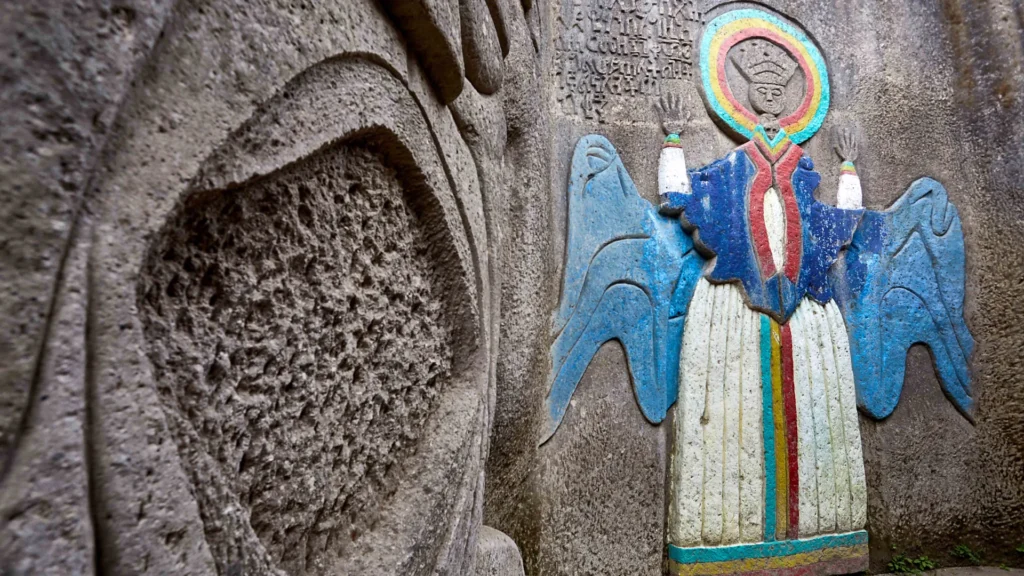
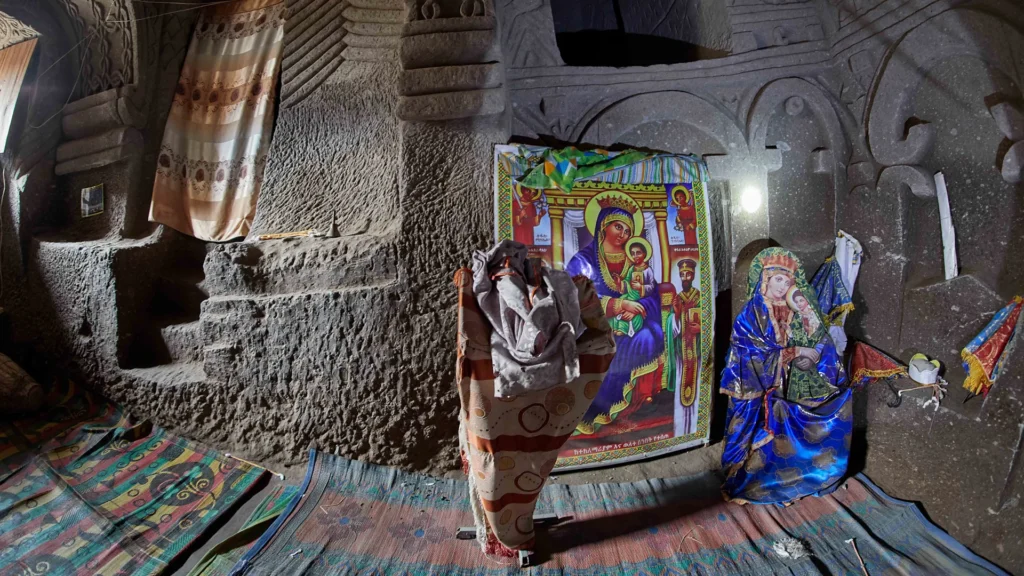
The location itself was chosen for several reasons. A source of holy water lies nearby, and the site already contained an unfinished cave church believed by some to date back to the time of King Lalibela. Locals have also suggested that the exposed cliff and rock-face setting of the new churches makes them spiritually significant, placing them “closer to God.” Like the original complex, the churches at Dagmawi Lalibela are carved from living rock and decorated with bold interior and exterior reliefs. One of the structures is even cut into the shape of a cruciform plan reminiscent of Biete Giyorgis, the famous cross-shaped church of St. George.
Despite the stylistic similarities, the new complex differs from the medieval churches in several ways. The buildings are significantly smaller, and the method of excavation appears to diverge from the technique thought to have been used in the original complex. At Lalibela, scholars believe the interior and exterior of the churches were carved simultaneously as the surrounding rock was removed from above. At Dagmawi Lalibela, the work progresses from the base upward, with the exterior form being cut first before the interior spaces are hollowed out.
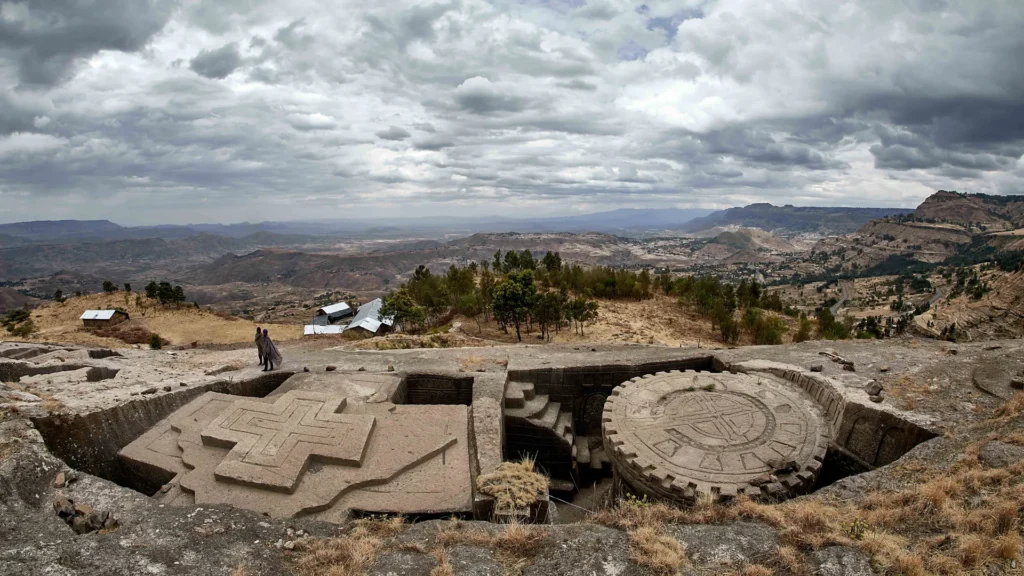
Seven churches have been completed so far, but the project has reached a temporary pause. With the available rock face largely exhausted, Tesema is searching for another nearby cliff where the remaining four churches can be carved. Even with this interruption, he and the deacons hope the complex will eventually be completed. Their goal is not simply to replicate the architecture of Lalibela, but to create a living continuation of the tradition, one that, centuries from now, might inspire the same sense of wonder that visitors feel when encountering Ethiopia’s original “New Jerusalem.”
At the same time, scholarly debate continues over the chronology of Lalibela’s construction. Archaeological evidence from rock-cut stratigraphy suggests that the churches were not carved all at once but developed over several phases, with work potentially extending across decades. Some finishing details such as decorative reliefs and carved fittings may even have been completed into the 14th century. Variations in tooling marks support this theory: earlier sections display rough basaltic carving techniques, while later surfaces show finer chiseling associated with finishing work.
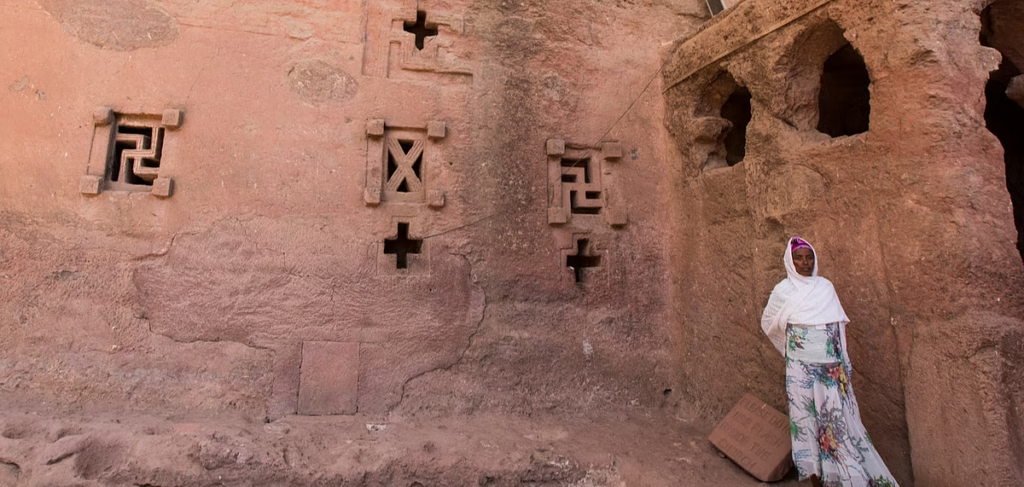
Stylistic inconsistencies in certain decorative elements, including variations in cross motifs, have led some historians to suggest that limited modifications or repairs may have taken place during the 16th century, a period of regional conflict. However, these alterations appear to have been minor interventions rather than major rebuilding projects, and they do not challenge the broadly accepted timeline that places the core construction of the churches within the Zagwe period.
Together, these layers of construction, modification, and conservation reveal Lalibela not as a frozen monument but as a continuously evolving sacred landscape, one shaped over centuries by faith, geology, craftsmanship, and the persistent effort to preserve one of the most extraordinary architectural achievements in the world.
Even to the modern eye, the rock-hewn churches of Lalibela inspire the same mixture of awe and disbelief that they did centuries ago. When the Portuguese priest and traveler Francisco Álvares encountered the churches in the early 16th century, he admitted that he hesitated to describe them in detail. The buildings seemed so improbable that he feared readers in Europe would dismiss his account as fantasy.
Álvares had come to Ethiopia searching for the legendary kingdom of Prester John, the mythical ruler of a powerful Christian realm said to exist somewhere beyond the Islamic world. In medieval European imagination, Prester John was both king and priest, rex et sacerdos, governing a distant Christian empire often imagined in India or Central Asia. When Portuguese expeditions reached Ethiopia in the 1500s, many believed they had finally located his kingdom in the Ethiopian highlands.
Another early visitor was the Portuguese soldier Miguel de Castanhoso, who served under Cristóvão da Gama during campaigns in Ethiopia and left the country in 1544. Castanhoso described the churches in terms that emphasized their apparent impossibility: “There are here certain churches cut out of the living rock, which are attributed to angels… each excavated with its pillars, its altars, and its vaults, out of a single rock, with no mixture of any outside stone.” He also recorded local traditions claiming that invading Muslim armies had tried to destroy the churches but were unable to do so, even with crowbars or gunpowder.
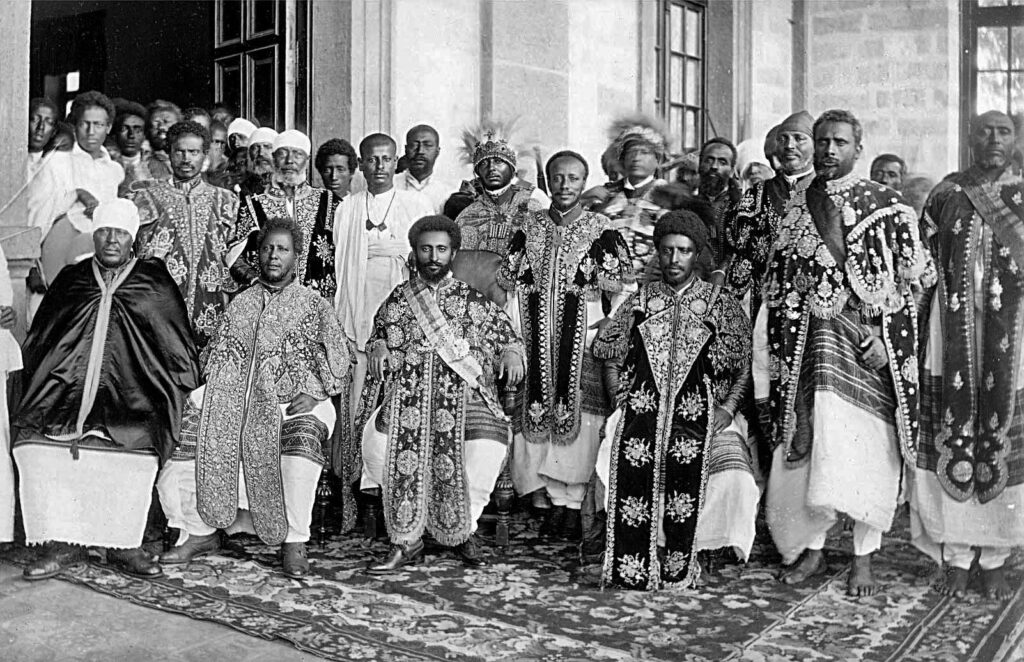
The churches continued to draw attention in later centuries. During the Second Italo‑Ethiopian War, Emperor Haile Selassie made a pilgrimage to Lalibela in 1936 despite the risk of being captured by Mussolini’s advancing Italian forces. Shortly afterward, Italian troops occupied the town. In the decades that followed, Lalibela also became a destination for international visitors and heads of state. In 1968 Haile Selassie once again visited the site alongside the Iranian monarch Mohammad Reza Pahlavi. The following year, the Dutch royal couple, Juliana of the Netherlands and Prince Bernhard of Lippe‑Biesterfeld, also traveled to Lalibela, underscoring the growing global fascination with Ethiopia’s extraordinary monolithic sanctuaries.
Unlike its more recent history, the early story of activity surrounding the churches at Lalibela remains uncertain. Written records from the period are scarce, and much of what is known comes from oral tradition or later chronicles. Modern archaeological research suggests a more complex development. The archaeologist David Phillipson has argued that some of Lalibela’s earliest rock-cut structures may date back to the 7th or 8th centuries, around five hundred years earlier than the traditional chronology. As seen with theories surronding some of the structures of the southern cluster, these earliest excavations may not have been churches at all. Instead, they were likely secular structures that were later modified and expanded, eventually converted into ecclesiastical buildings as Christianity strengthened in the region.
In Phillipson’s reconstruction, later construction phases, perhaps in the 11th or 12th centuries, produced the most elaborate churches. These were carved as multi-aisled basilicas and incorporated architectural elements derived from the much older civilization of Aksum, which had flourished centuries earlier and left a powerful architectural legacy. The final stage of development likely occurred during the reign of King Lalibela himself, when the complex was expanded and symbolically reshaped into a sacred landscape mirroring Jerusalem.
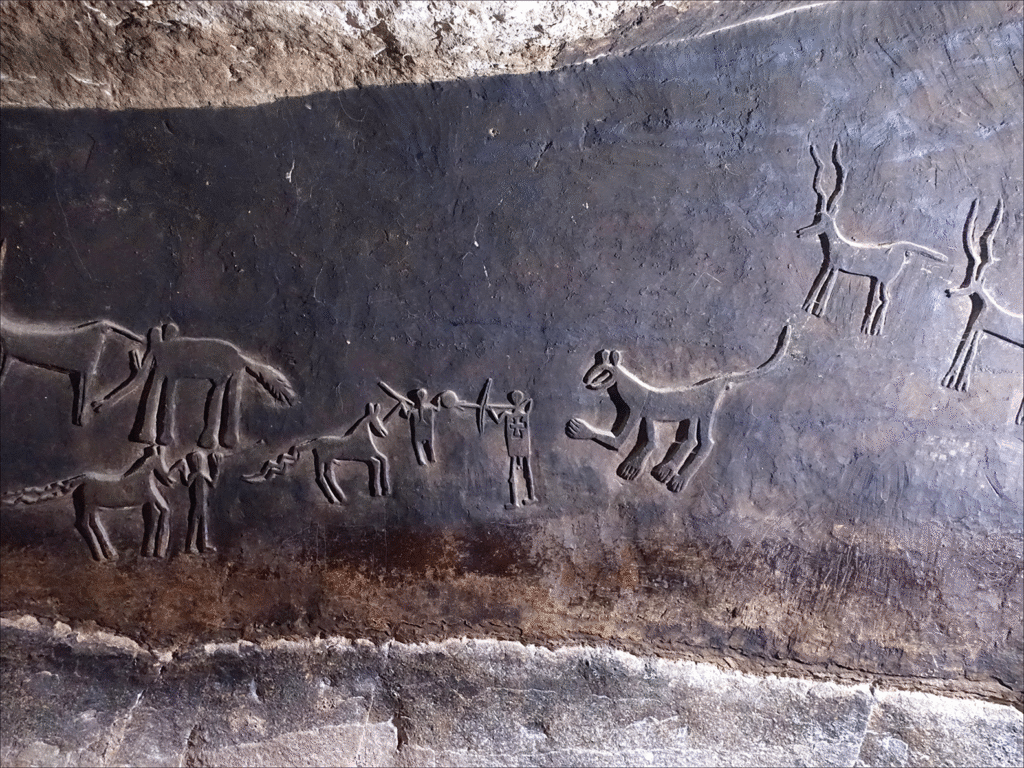
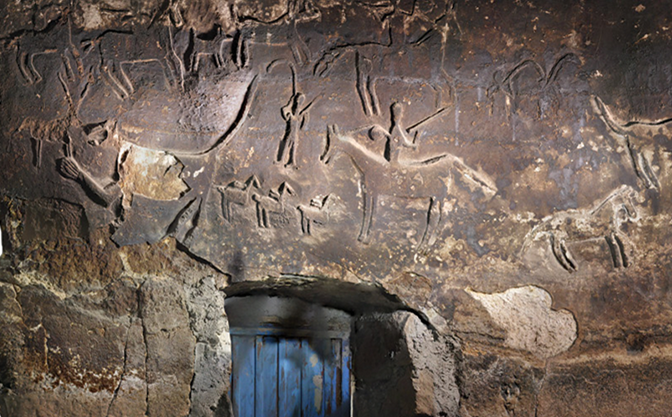
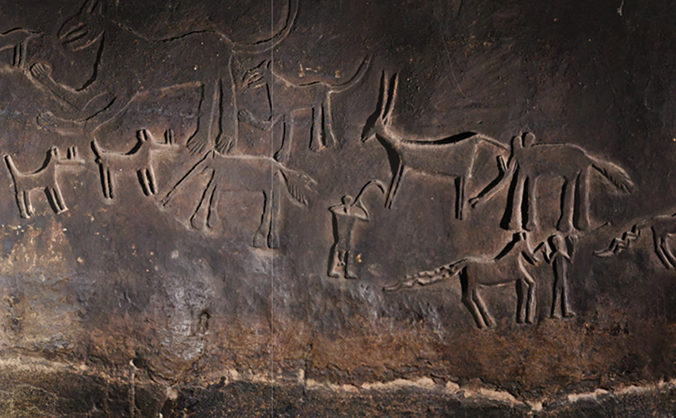
Archaeological excavations have also revealed that the area was inhabited before it became a major pilgrimage center. Pottery and animal remains dating between 900 and 1100 indicate that the settlement was originally secular. At another site near Lalibela, the Washa Mikael Rock Church, researchers discovered carved animal friezes on the lower walls that likely predate Christian occupation. Christian paintings were later added above them, suggesting that the region was still undergoing gradual Christianization during this period.
Phillipson argues that this revised chronology helps bridge what once appeared to be a 500-year historical gap between the decline of Aksum and the rise of medieval Ethiopian states. Earlier scholarship had often exaggerated the separation between these periods because ancient Aksum was mainly studied by archaeologists, while medieval Ethiopia was examined largely by art historians and scholars working from later written traditions. Lalibela’s layered construction history suggests that the transition between the two eras was far more continuous than once believed.
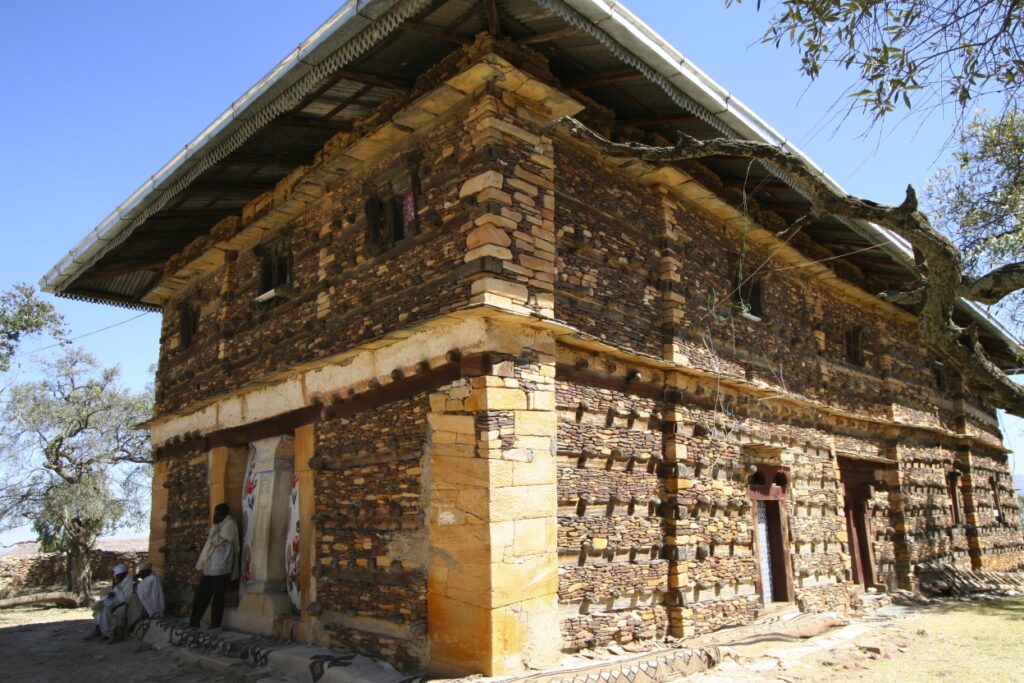
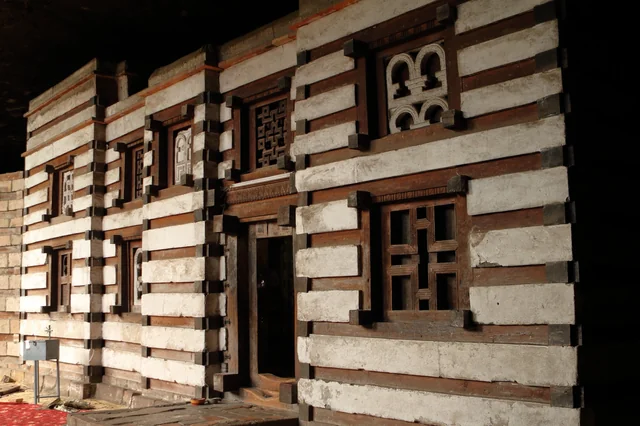
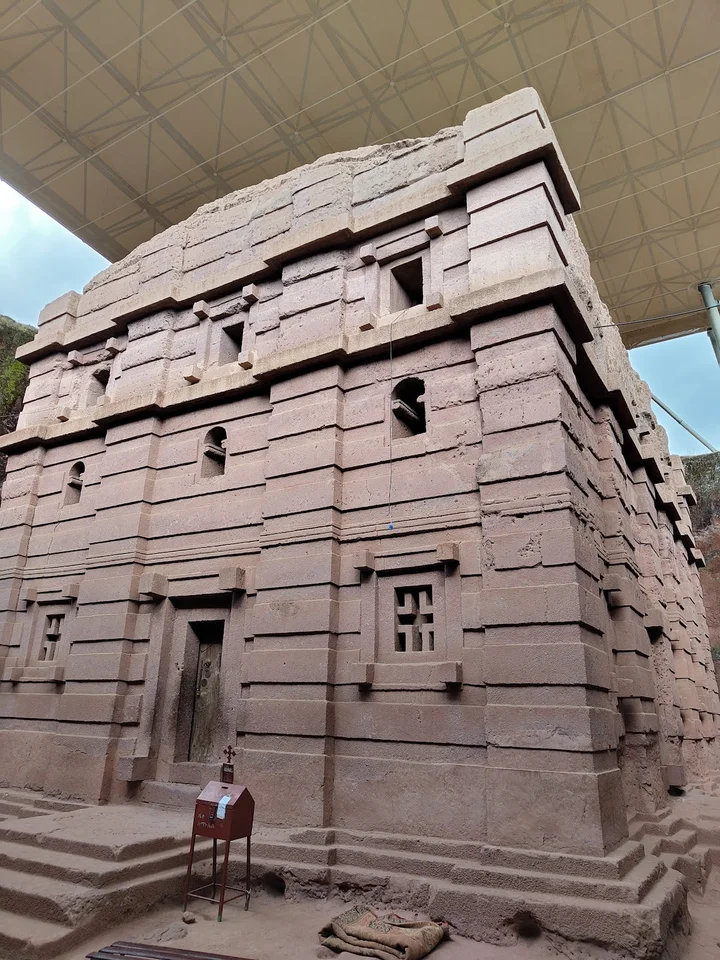
David Roden Buxton helped establish the chronology most scholars still follow. He observed that two of the churches closely replicate the architectural tradition seen at Debre Damo as it later appeared at Yemrehana Krestos Church. Because carving entire buildings directly from living rock would have required enormous labor, Buxton argued that construction likely continued well beyond the reign of Gebre Meskel Lalibela, perhaps extending into the 14th century. This long building period has also led some scholars to suggest that foreign craftsmen may have assisted in the project. This has historical parallels, a similar case in found in the Italian architects who were brought in by Ivan III to redesign the Moscow Kremlin in a blend of local and Italian Renaissance styles.
Evidence of wider Christian influence has also been identified in certain architectural details. Some elements appear related to traditions from eastern Christian communities, particularly Syrian and Coptic churches. The pitched roof profile and linear moldings at Biete Maryam, for instance, have been interpreted as showing Syrian influence. The historian Stuart Munro-Hay noted that during Lalibela’s reign a number of Coptic Egyptians migrated into Ethiopia, raising the possibility that they contributed to aspects of the construction. Earlier travelers such as Manuel de Almeida and Hiob Ludolf even attributed many of the monuments to Egyptian builders, while Francisco Álvares recorded that some local people believed foreigners had played a major role.
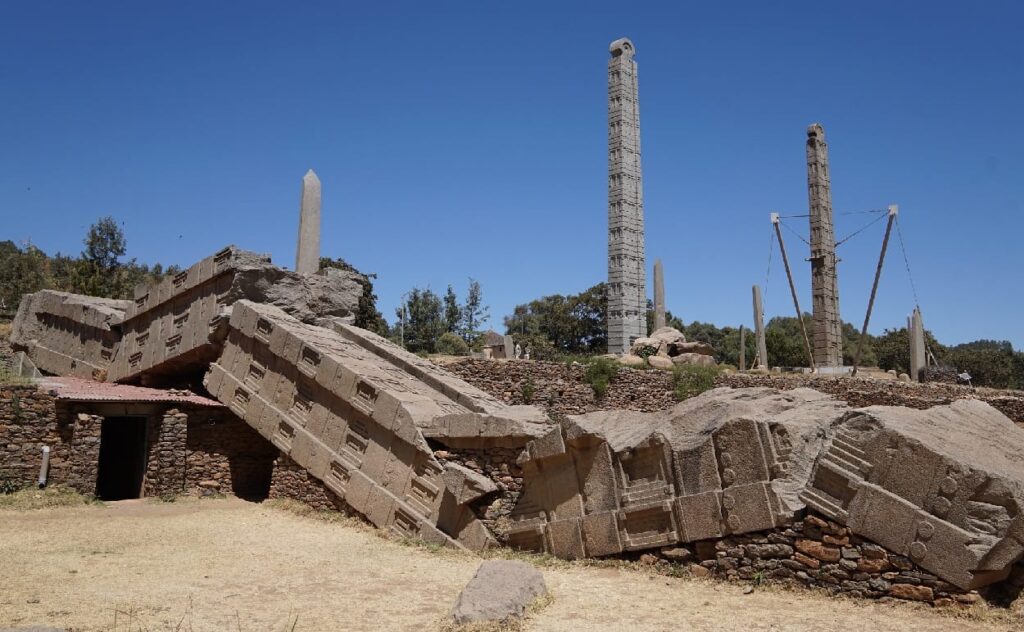
Yet most modern scholars emphasize the indigenous character of the architecture. Munro-Hay argued that although foreign decorative techniques may be visible, the churches themselves clearly follow the structural language of the earlier Aksum tradition, as also seen in places such as the Obelisks of Aksum. Buxton similarly acknowledged Coptic decorative influence but insisted that the essential architectural forms derive from local prototypes. In other words, Lalibela’s churches were not imported designs but developments of long-standing Ethiopian building traditions translated into stone.
The builders also integrated careful engineering into the site. Drainage channels were carved throughout the complex to carry away rainwater, while narrow trenches and tunnels link many of the churches below ground. These sunken passageways allowed monks and pilgrims to move between sanctuaries while reinforcing the impression that the churches emerge directly from the earth.
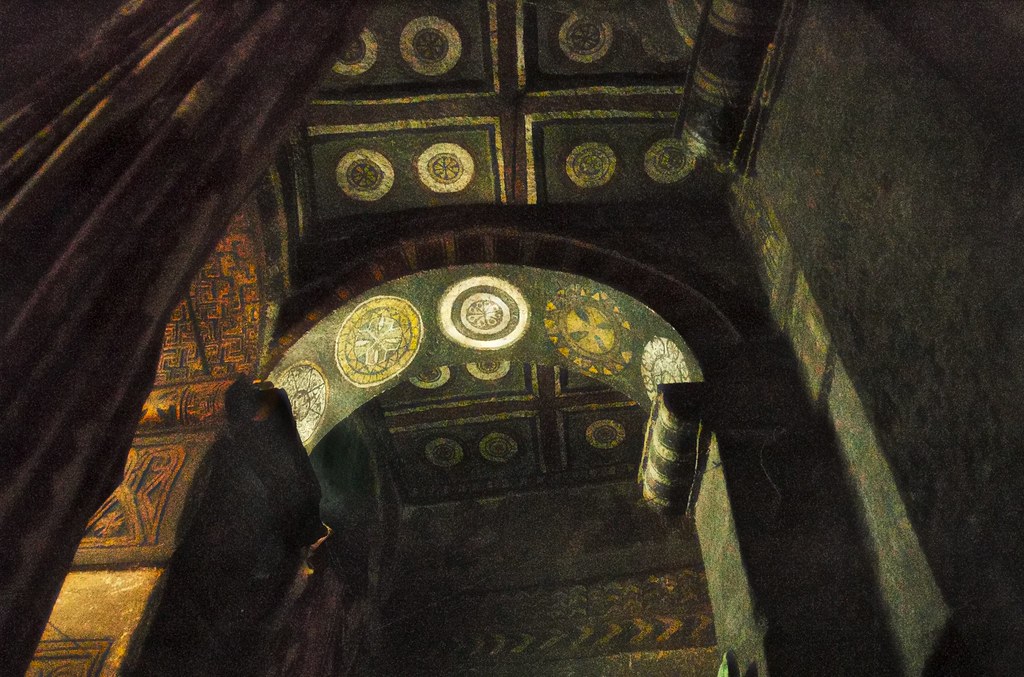
Inside several churches, including Biete Medhane Alem and Biete Maryam, the interiors reproduce basilica layouts complete with rows of columns and vaulted ceilings. Because the structures are carved from a single mass of rock, these columns are not structurally necessary; they were created instead to imitate conventionally built churches. Other buildings, such as Biete Gabriel-Rufael and Biete Amanuel, show particularly strong similarities to earlier Aksumite structures, leading some researchers to believe that this confirms that they incorporated or adapted older secular buildings.
Local tradition offers additional explanations for why the churches were excavated downward into the rock rather than built above ground. One suggestion is practical: during periods of conflict, visible churches were vulnerable to destruction, whereas structures hidden below the surface could remain protected. Another explanation connects the design to biblical symbolism. According to local guide Workeye Desale Alemu, King Lalibela may have been inspired by the accounts of Jesus Christ being born in a cave at Bethlehem and buried in a rock-cut tomb at Golgotha.
Whether attributed to divine intervention or human ingenuity, the technical achievement remains extraordinary. The churches were not assembled piece by piece; instead, they were gradually released from the stone itself. They were always there. Rather than constructing buildings on the landscape, the builders revealed structures that seemed to have been waiting beneath the ground all along.