An artist’s rare Porsche is stripped down to its bare essentials and reimagined through Japanese craft traditions and wabi-sabi philosophy, transforming into a fully drivable art object intended to weather, evolve, and register the passage of time rather than conceal it.
When an abandoned classic car is rediscovered in a barn or garage, the first instinct is to return it to its former glory, and bring about a sense of timelessness to a piece of old engineering. But what if the elements of time and wear were actually collaborative forces rather than problems to be erased? Oxidation, fading, scratches, and repaired surfaces can record decades of use more faithfully than a flawless repaint, preserving evidence of environment, handling, and care. American artist Daniel Arsham explored that concept in a project in collaboration with Porsche.
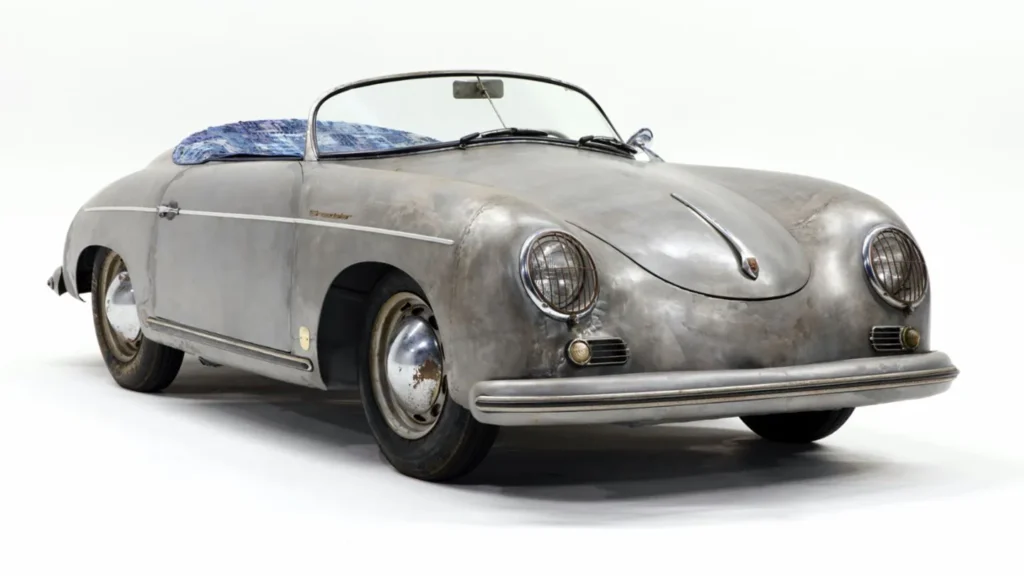
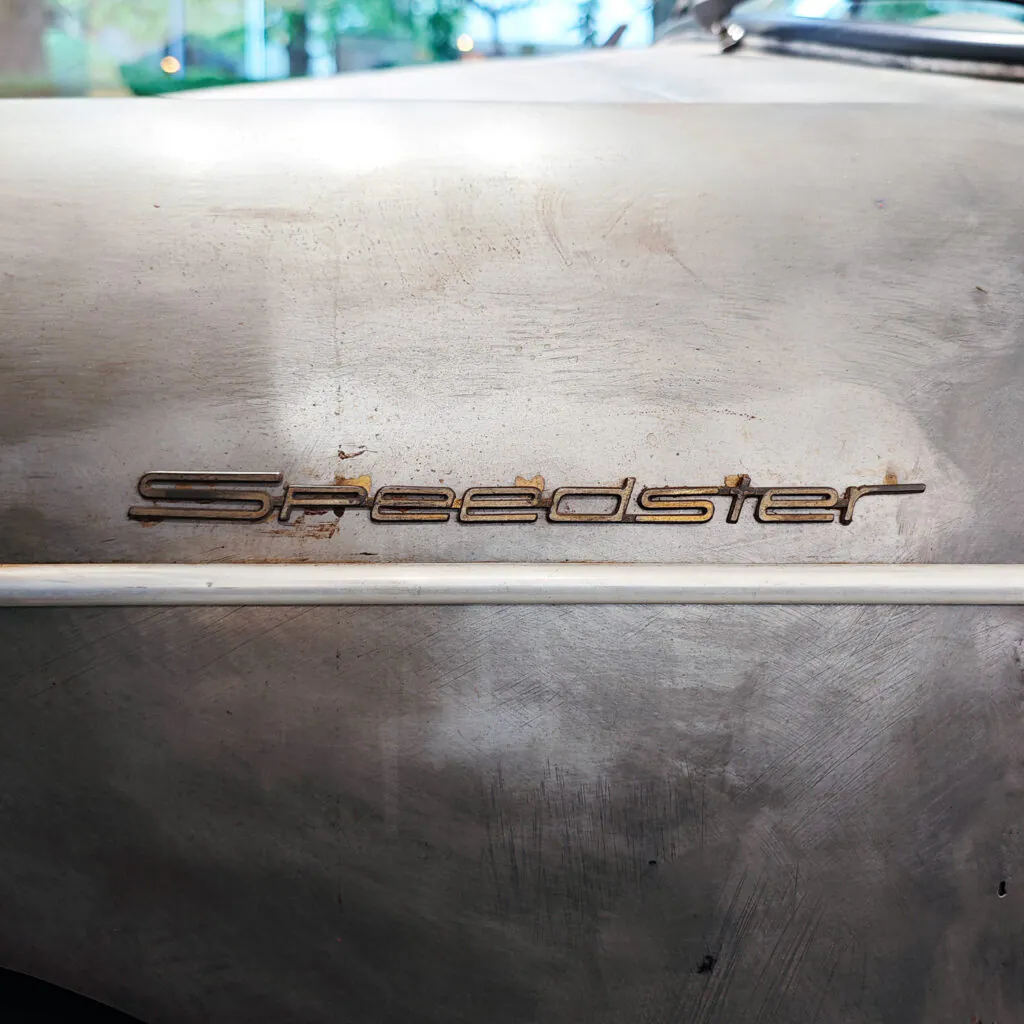
Arsham’s 1955 Porsche 356 Speedster is far from your average collector’s piece. At first glance it seems like you’re looking at a barn find left to oxidize in the corner of a coastal garage, waiting to be restored, yet every detail, even the unpainted metal exterior left unpolished, is deliberate. Rather than seeking a sense of pristineness, the project actually embraces the passage of time. project, known as the Porsche 356 Bonsai, presents a working sports car as a work of an art inspired by Japanese aesthetic principles.
One of several art cars produced by Arsham, the Porsche 356 Bonsai was created in 2022 as part of his ongoing exploration of time, material aging, and cultural craft traditions. Born in Cleveland and raised in Miami, Arsham first trained in architecture and performance before becoming known for sculptures that depict everyday objects as eroded or crystallized relics. Arsham’s work frequently references archaeology, preservation, and the transformation of familiar objects through time, becoming a highly sought after artist in the contemporary art world. As a child he drew everyday items that inspired him like sneakers, cameras, and Porsche models, interests that he continues to reference in his sculptural work today.
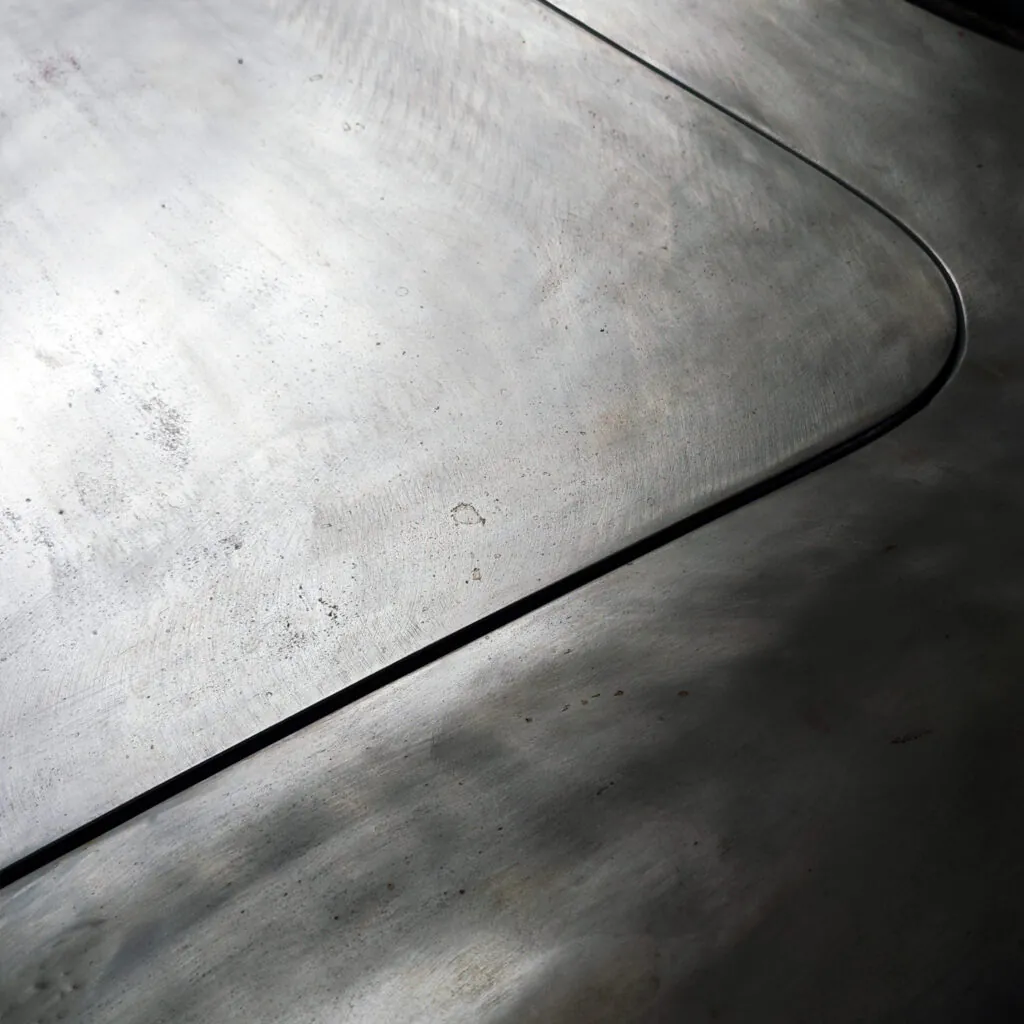
The Bonsai project is Arsham’s third official collaboration with Porsche, created over a period of two years. Instead of restoring the vehicle to factory condition, he stripped the body to bare metal and preserved the scratches, oxidation, and wear accumulated over decades. The exposed steel was treated with linseed oil to slow corrosion while allowing the surface to continue developing patina. The approach reflects the Japanese aesthetic philosophy of wabi-sabi, which values impermanence, irregularity, and visible aging rather than polished perfection.
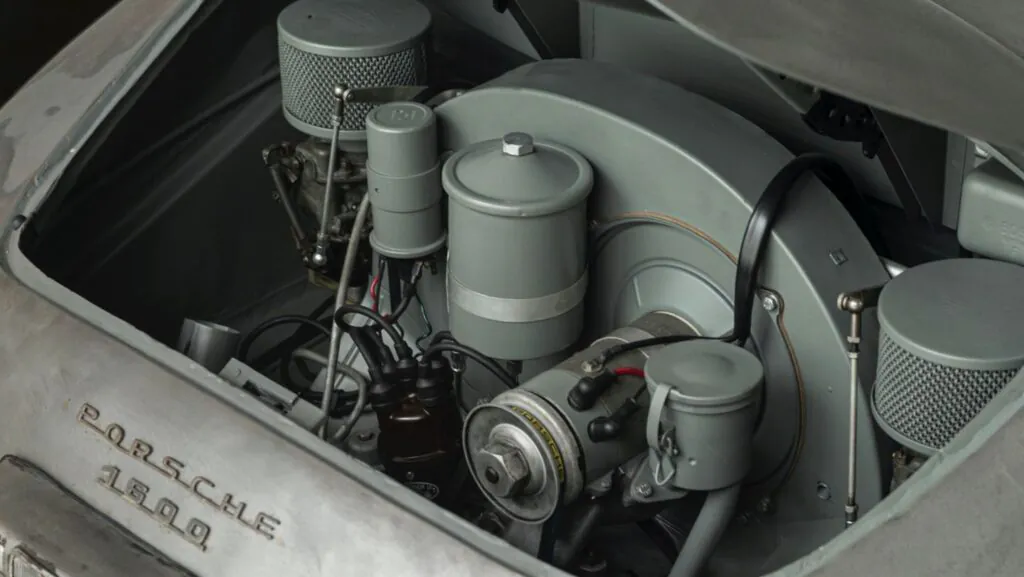
Although the exterior appears weathered, the car is fully functional. Mechanical restoration was carried out with John Willhoit of Willhoit Auto Restoration and Matthew Ammirati of Bridgehampton Motoring Club. The work preserved the original numbered engine and returned the vehicle to factory performance standards. Fewer than 4,000 Porsche 356 Speedsters were produced, and surviving examples are considered historically significant within early Porsche production.
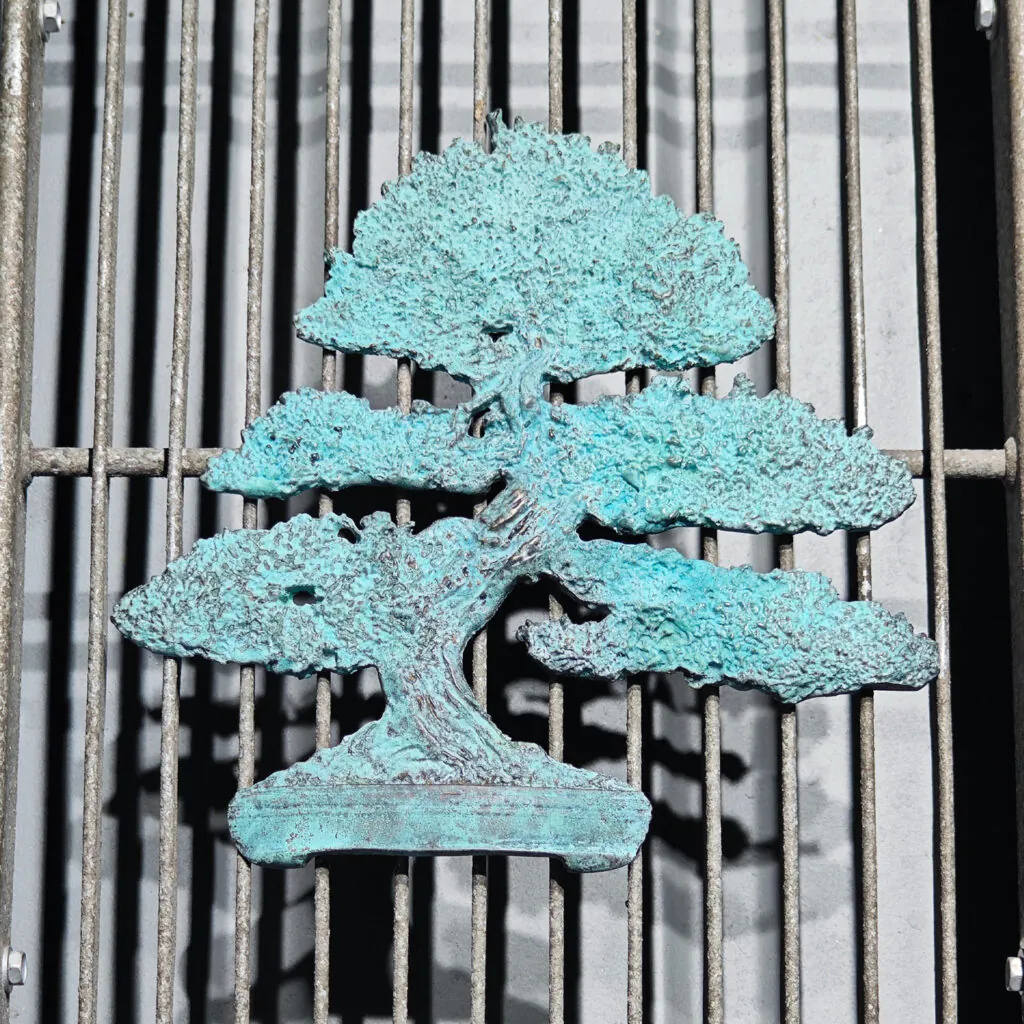
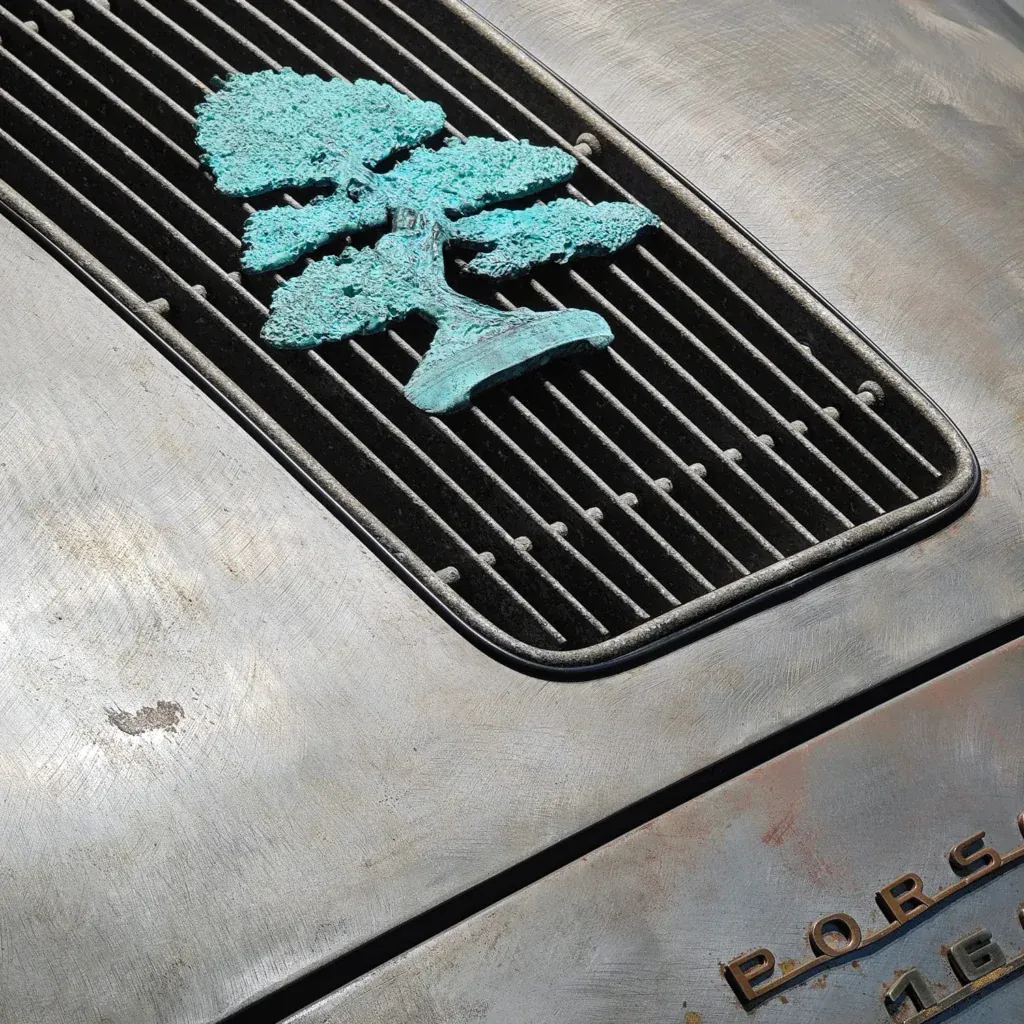
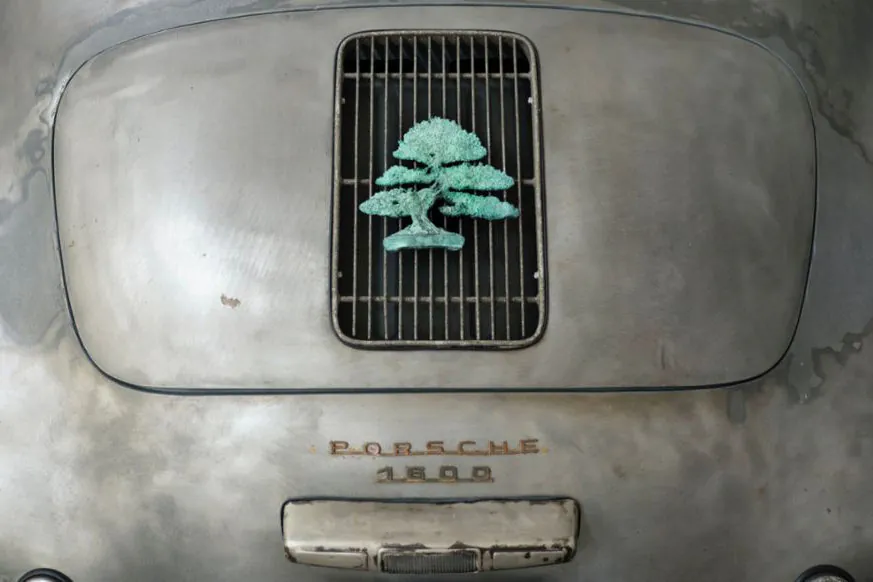
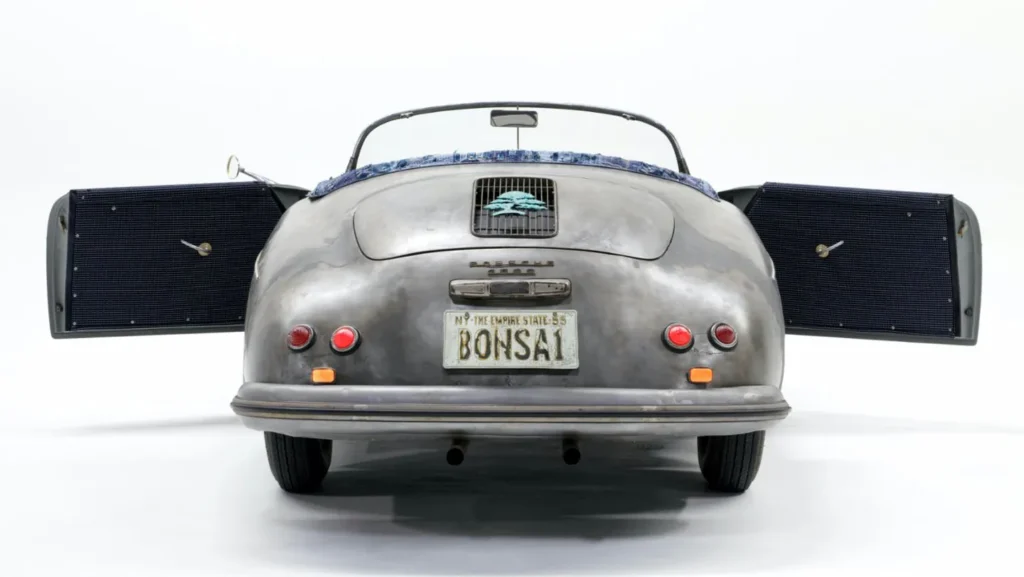
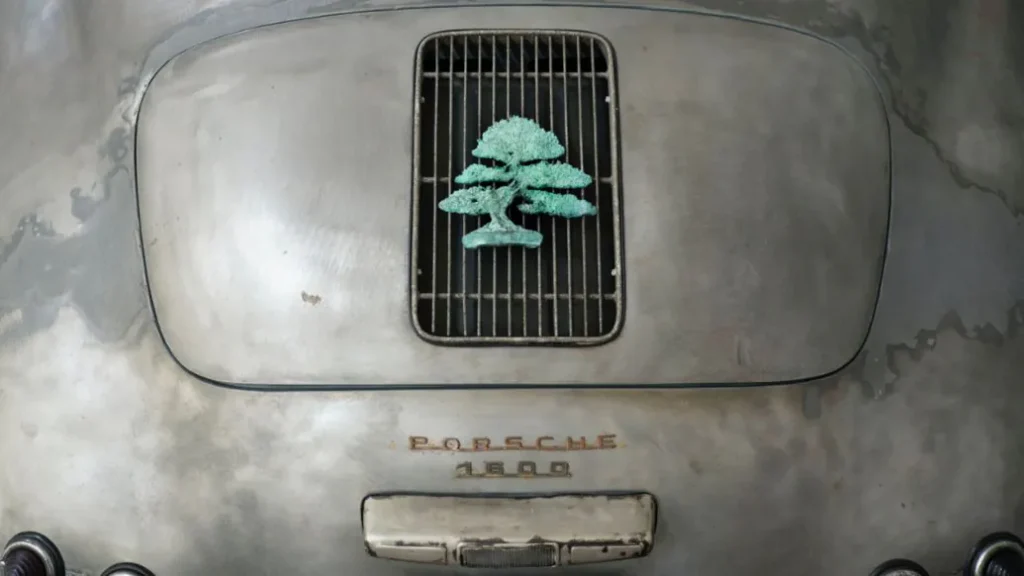
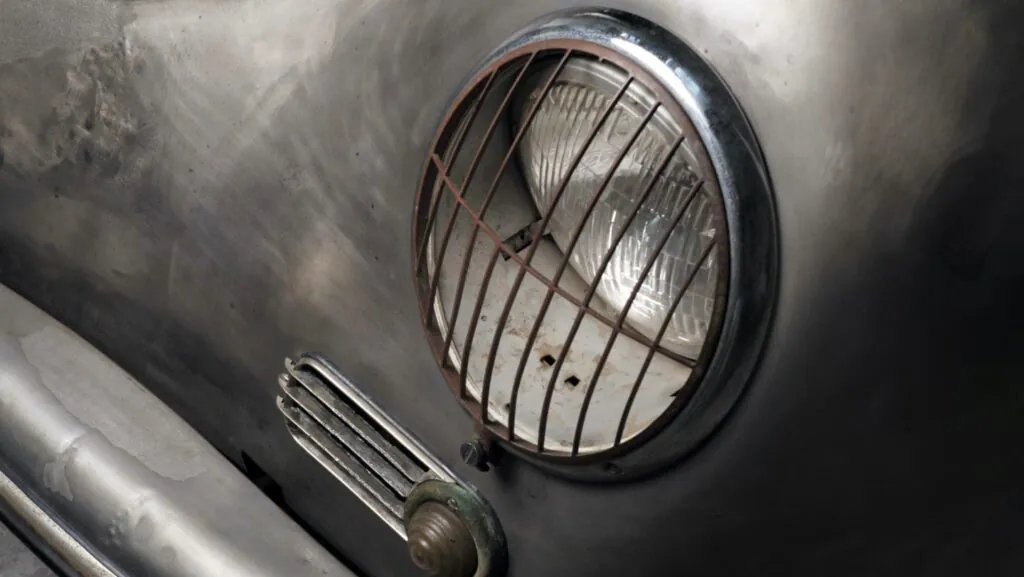
Even individual knobs and other small components were hand-selected in the process. In the dedicated Porsche forum on Reddit, a user by the name of Own_Key_971 who works for Willhoit had this to say about the project: “I had the pleasure of being assigned to help on this car. Super fun project, Daniel is a rad dude. I did all of the fake patina on the car. I had to match a lot of fresh parts to the rest of the bare metal and rusty car. It was a fun learning process to balance and try to match things to stuff that has genuinely been outside for who knows how long also just using lots of random stuff like dirt and the torch to blacken stuff, a lot of experimentation. I also got to pick all the aesthetic parts from our warehouse storage of old stuff. All the knobs, gauges, steering wheel, headlights, grills, the badges, side spear decos, wheels, windshield frame and whatnot where all handpicked from our storage by me and weathered to match the car if necessary. The horn button is one that I found in a box split in two so I super glued it back together, I felt that fit the vibe.” Notably, an oxidized bronze relief in the shape of a bonsai tree is integrated into the rear engine grille, and the car carries a vintage New York “Bonsai” license plate.
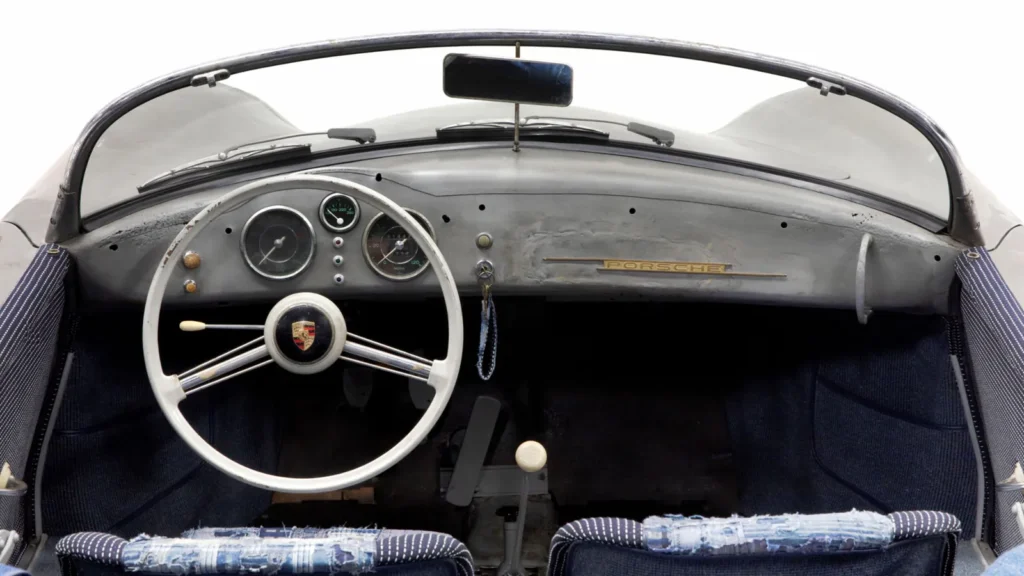
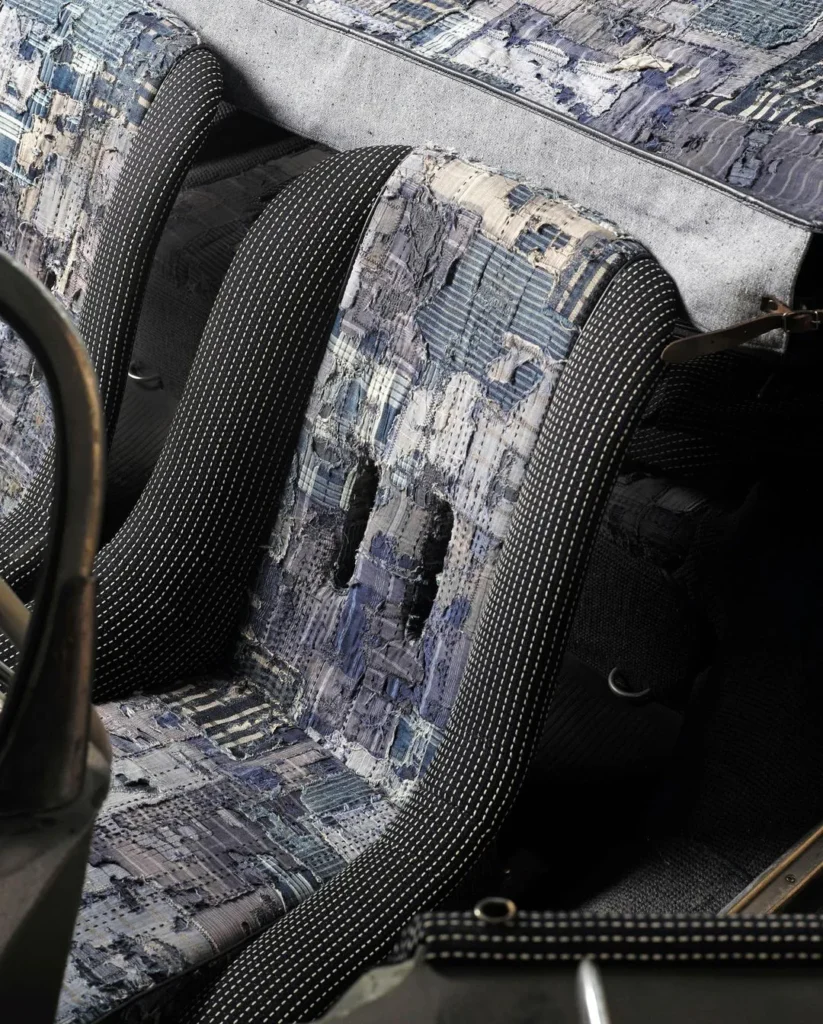
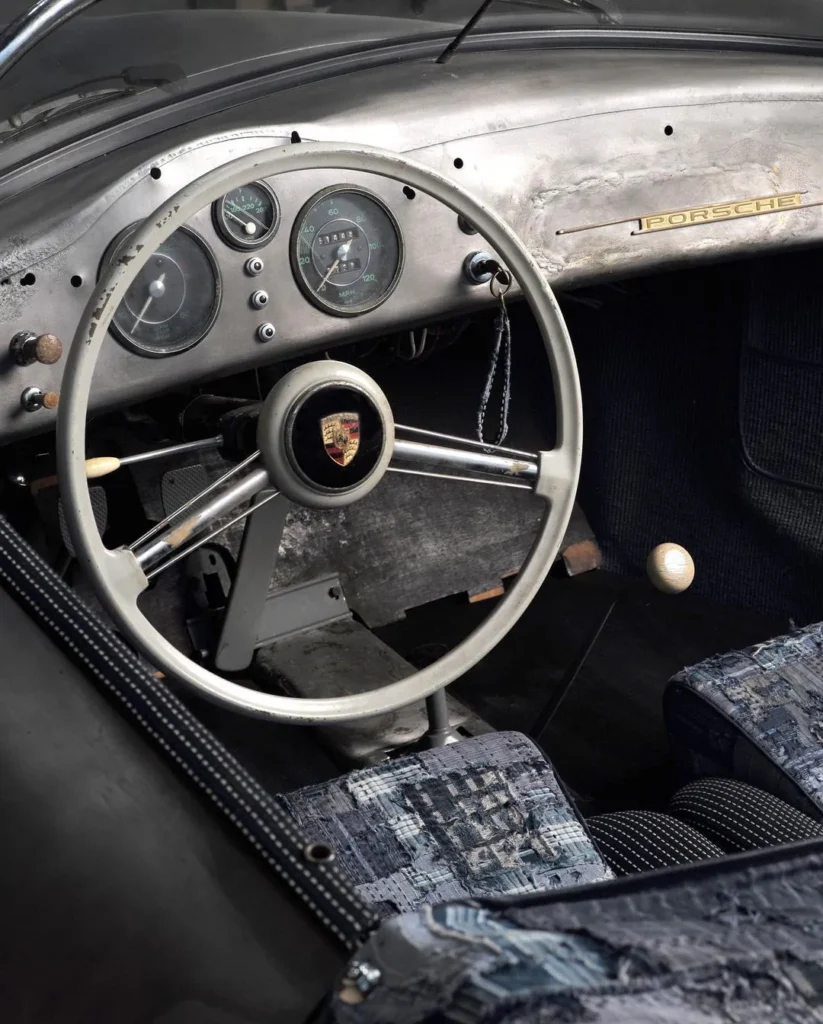
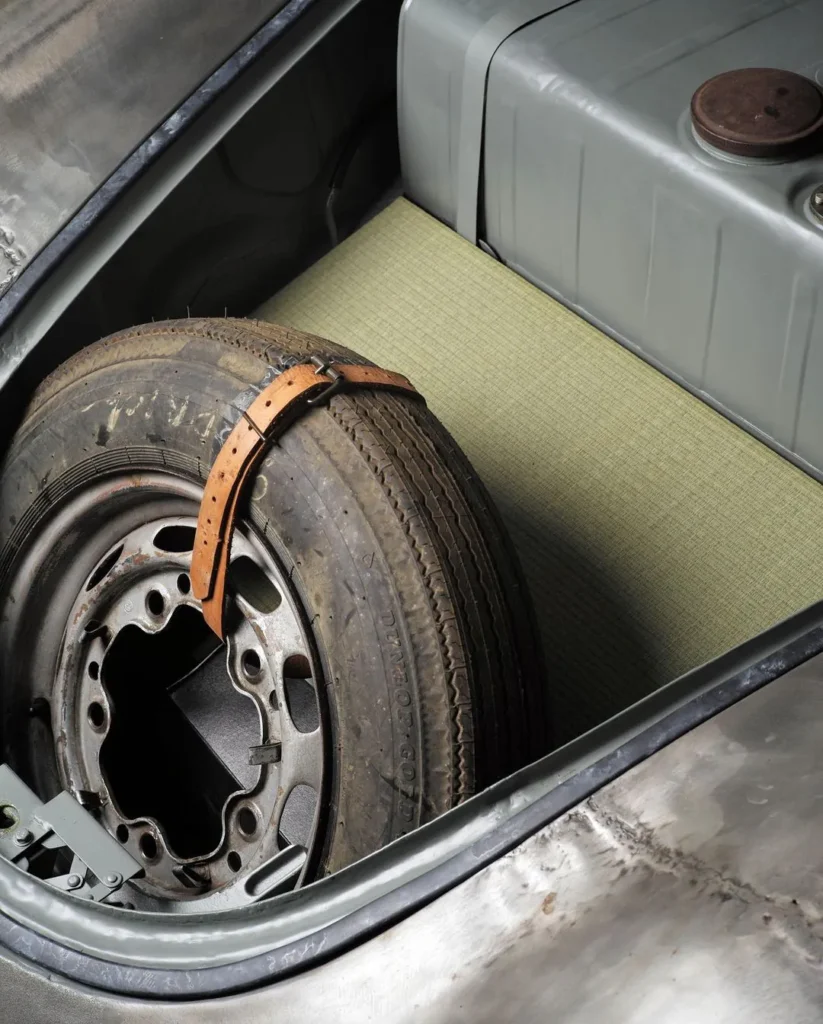
The interior was redesigned in collaboration with Japanese designers Motofumi “Poggy” Kogi and POGGY and BerBerJin director Yutaka Fujihara. Upholstery includes indigo-dyed boro patchwork, sashiko-stitched canvas, and denim produced by traditional craftsmen in Okayama, Japan. Boro textiles originated as repeatedly repaired household fabrics, while sashiko stitching reinforces material strength and creates geometric patterns through visible repair. The materials were selected for durability and for the way indigo fabrics fade and soften with use. A tatami mat made from rice straw is placed beneath the spare wheel in the luggage compartment, referencing domestic interiors and the concept of omotenashi, the practice of attentive hospitality.
Arsham’s interest in Japanese principles extends beyond this project. He maintains a Zen sand garden and a bonsai tree at his home, and the acceptance of aging and degradation has long been central to his sculptural work. “Throughout my career, I have looked to Japan as a source of inspiration for their love and dedication to craft. These sensibilities were the base for the Bonsai 356.” he says.

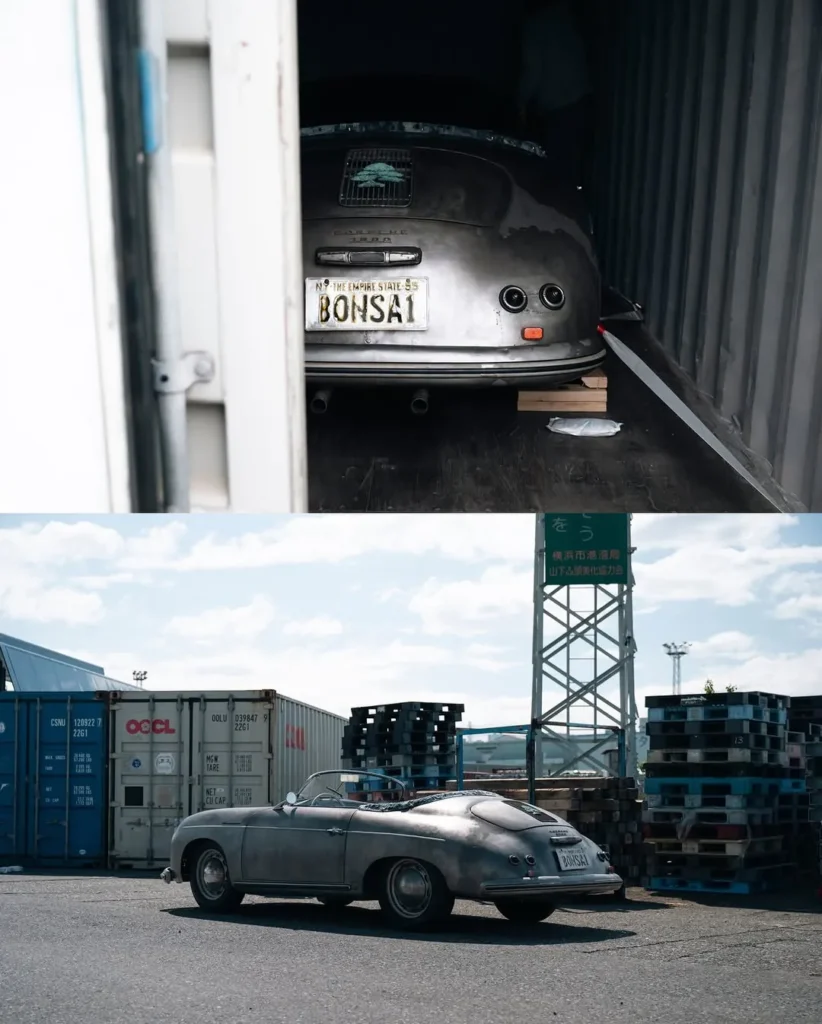
The Porsche 356 Bonsai was shipped to Japan and exhibited in Tokyo by Porsche, where its emphasis on material aging and craft resonated with Japanese traditions of visible repair and long-term use. The vehicle remains drivable and is intended to continue aging through use and environmental exposure, allowing its surfaces and textiles to evolve over time. Since 2024 it is now located full-time in Japan, occasionally exhibited at various art events.
Seen in motion or at rest, the Porsche 356 Bonsai is an inversion of restoration culture, where value is often tied to erasing age. Since nothing is truly perennial, preserving wear, exposing raw material, and allowing surfaces to continue evolving means the creation of beauty is an ongoing process, in line with the traditional Japanese wabi-sabi approaches to art the project was founded on.
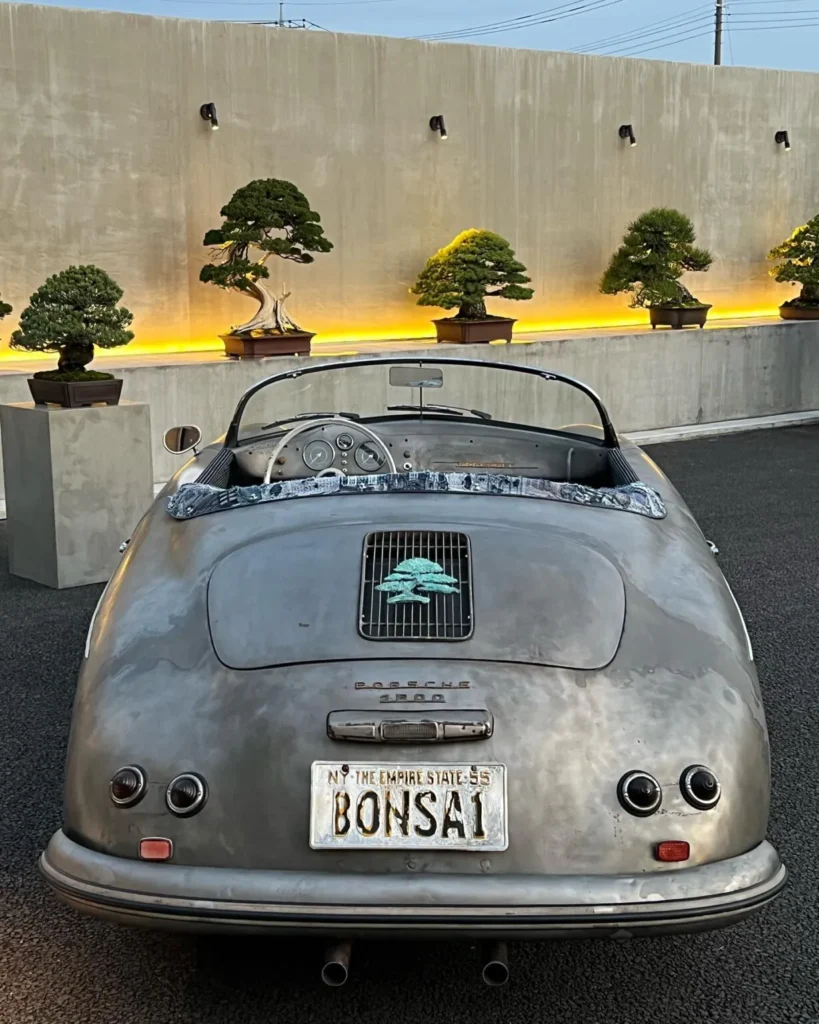
Arsham’s Bonsai Speedster is an object that admits its history remains active rather than complete. As the years go on, the car’s story will continue as its metal will darken, its indigo textiles will fade, and its patina will deepen with use, and that is exactly the plan. Ensuring that the car does not remain fixed in the moment of its creation means we will never truly see the same car twice.
Just as its original owners in the 1950s saw an entirely different vehicle; those who encounter it decades from now may find it transformed again, shaped by time into a new expression of the same enduring form.