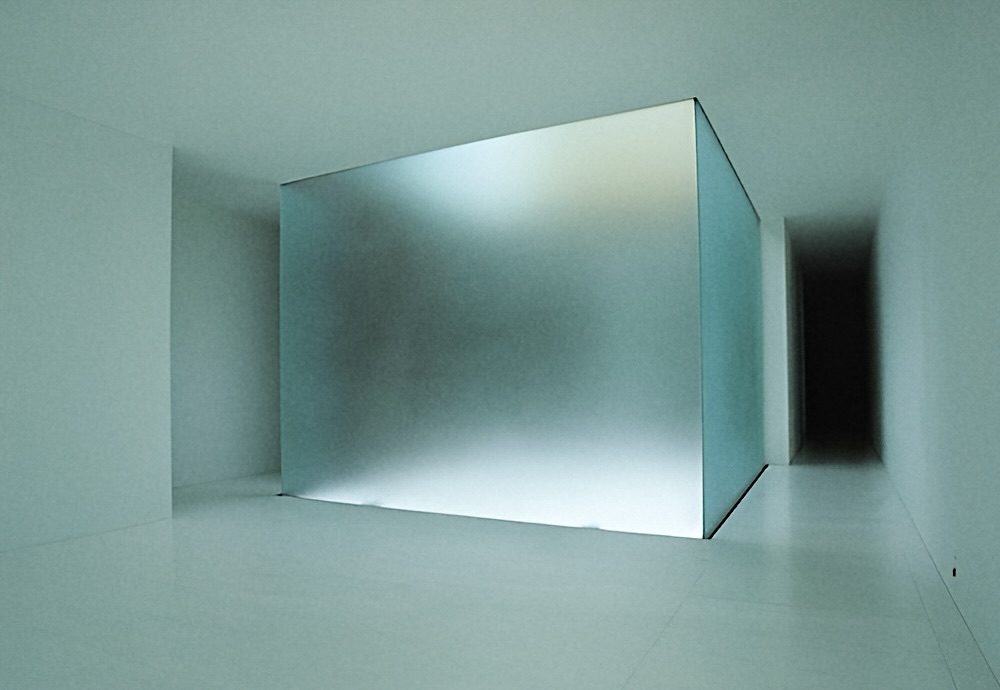
Almost invisible from the surface of a 17th-century imperial temple complex, Kyoto’s Glass Temple hides a stark white chamber beneath a maple garden, an underground experiment in light, minimalism, and the seamless meeting of modern architecture with centuries of ritual space.
Kyoto is famous for temples that look exactly the way most people expect them to: wooden halls, tiled roofs, incense smoke, and centuries of accumulated tradition. But tucked into a quiet temple complex in the Nishigamo district in the northwest of the city is something that looks as if it belongs to an entirely different era: the future. Built in 1998 by Japanese architect Takashi Yamaguchi and his firm, the so-called Glass Temple is one of the most unusual contemporary religious structures in the city, an almost completely underground meditation space defined not by ornament or structure, but by light itself.
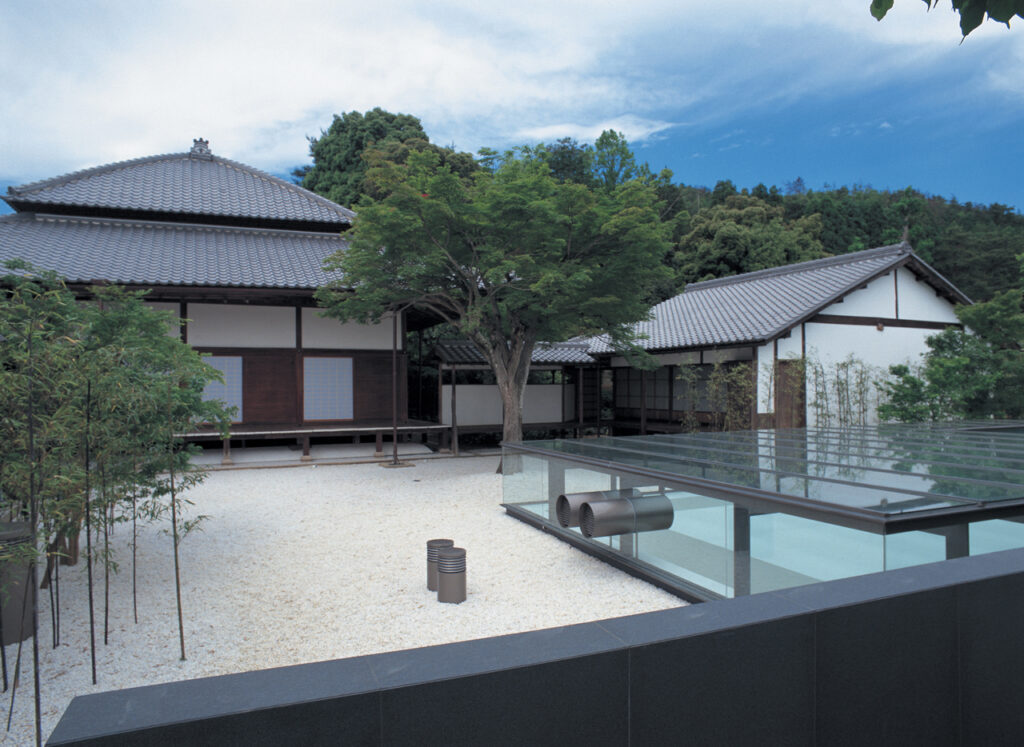

The building sits at the foot of Mount Funayama, one of the five northern hills associated with Kyoto’s annual Gozan no Okuribi bonfires. Every August, enormous fires are lit on these mountainsides to symbolically guide the spirits of the dead back to the afterlife. The temple complex surrounding the site is far older than the modern structure inserted into it. It belongs to Reigenkō-ji, an imperial temple founded in 1638 by the retired emperor Go-Mizunoo.
Perhaps best known for creating the Shugakuin Imperial Villa, Go-Mizunoo built Reigenkō-ji for the priest Isshibunshu. After the priest’s death in 1671, the emperor ordered the Seiryō-den, his former residential quarters at the Imperial Palace, to be relocated and reconstructed here as a Butsuden (Main Hall), honoring the place where Isshibunshu had lived and taught. To this day, Reigenkō-ji remains a temple associated with imperial prayer rites. Yamaguchi’s intervention was conceived not as a disruption, but as a contemporary layer within this historically charged setting.
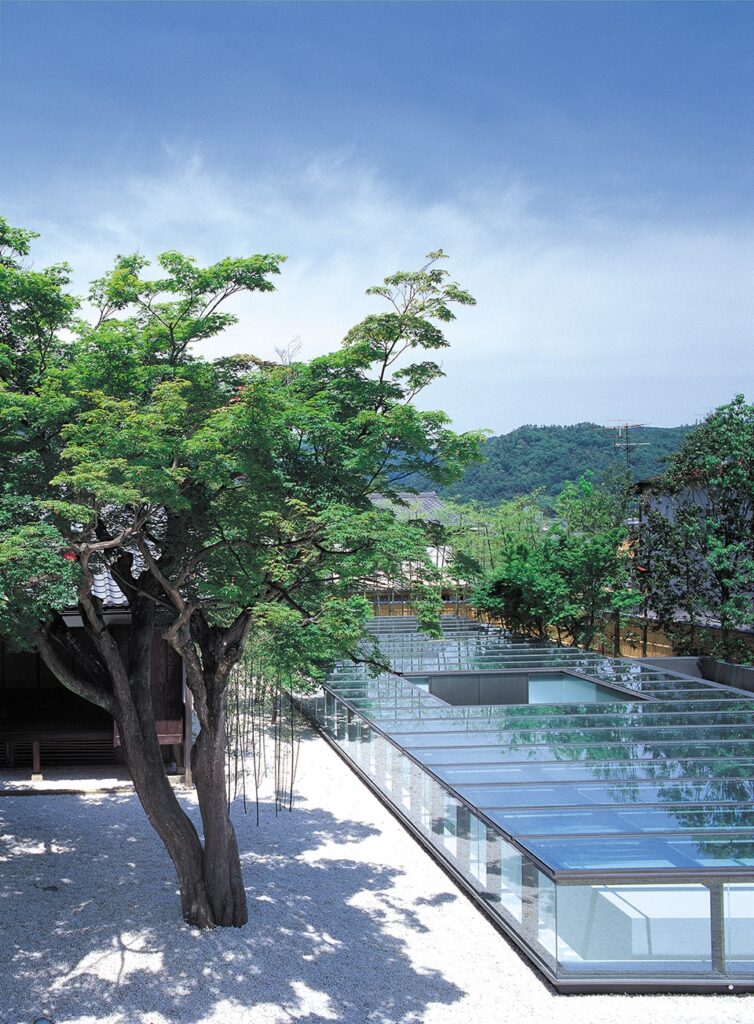

“When I first visited the temple compound, I felt that my mission would be to respect its long and dignified history and, at the same time, to convey to the future the transparent teachings and pure white spirit of the priest Isshibunshu.” The architect explained, “Later, when evidence of that shingle roof was discovered during restoration work on the building, I saw clearly how this building had lived and “breathed” within the flow of time from past to present, and I wanted to ensure the continuance of its life into the future. Working, thus, within the flow of time, I sought to overlay our own time on the past in a way that would render it distinct. This was a necessary courtesy, I felt, in intervening in this place of our ancestors, and a matter of proper form in addressing history.”
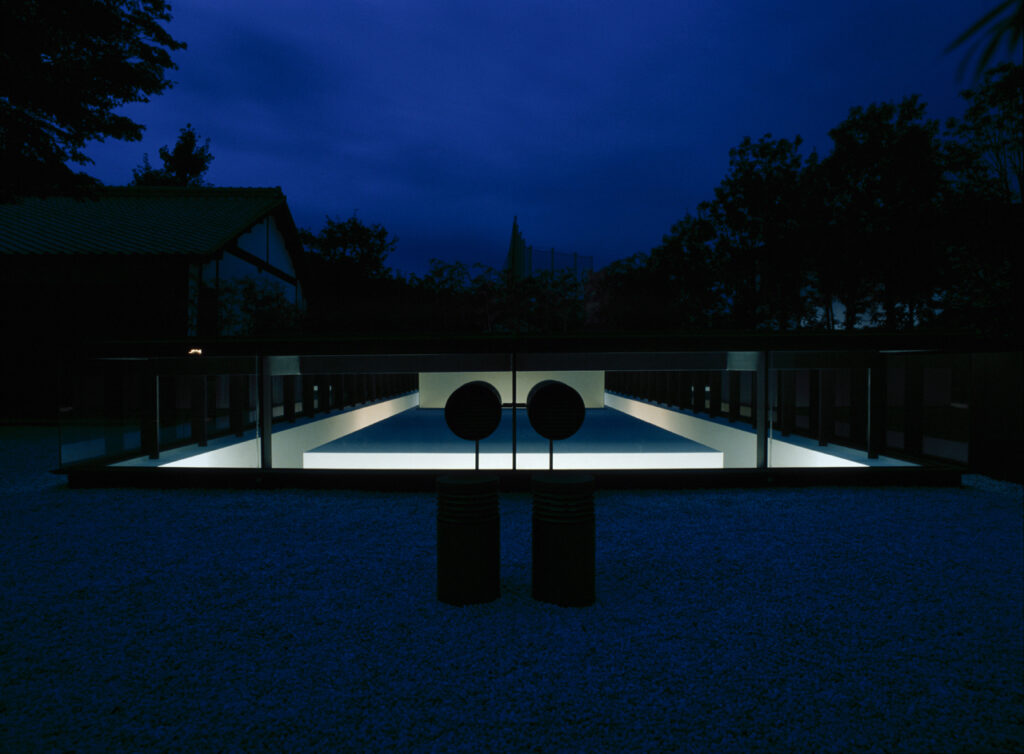
From the surface, the building barely announces itself. The temple sits inside one of the complex’s gardens, specifically a maple garden covered in white gravel and surrounded by dense greenery typical of Kyoto’s northern hills. Only a glass form emerging from the ground hints that anything is hidden beneath the landscape.


Descending into the temple reveals a stark contrast with the surrounding buildings. The interior chamber is almost entirely white, stripped of decorative detail and lit primarily by daylight. The space itself sits within a carefully carved underground void, roughly 6 by 22 meters in plan and about 6 meters deep, set at a slight five-degree angle to the temple’s existing Main Hall and Study and centered on a maple tree in the garden above, owing to the fact that it stood as prominently within the complex as the main hall itself, according to Yamaguchi.
Inside this excavation, architect Takashi Yamaguchi inserted a white rectangular volume measuring approximately 15 by 3.6 meters and rising the full height of the space. The transparent glass box that acts as a skylight, allowing daylight to pour into the subterranean chamber while artificial lighting remains minimal. As the sun shifts throughout the day, the interior subtly changes in tone and intensity, transforming the space without any mechanical intervention.
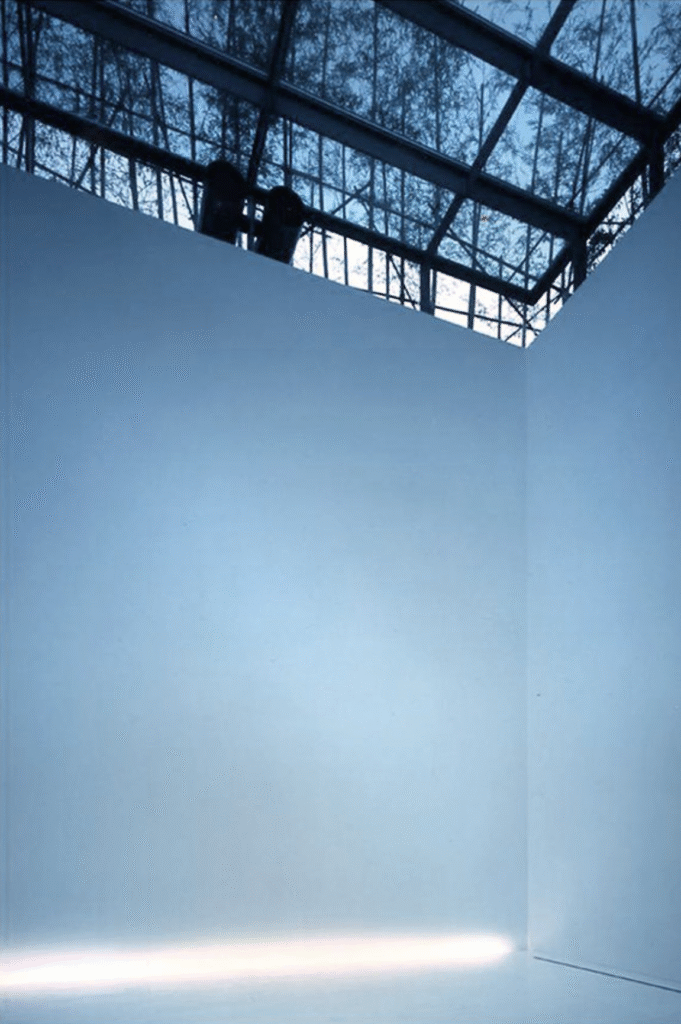
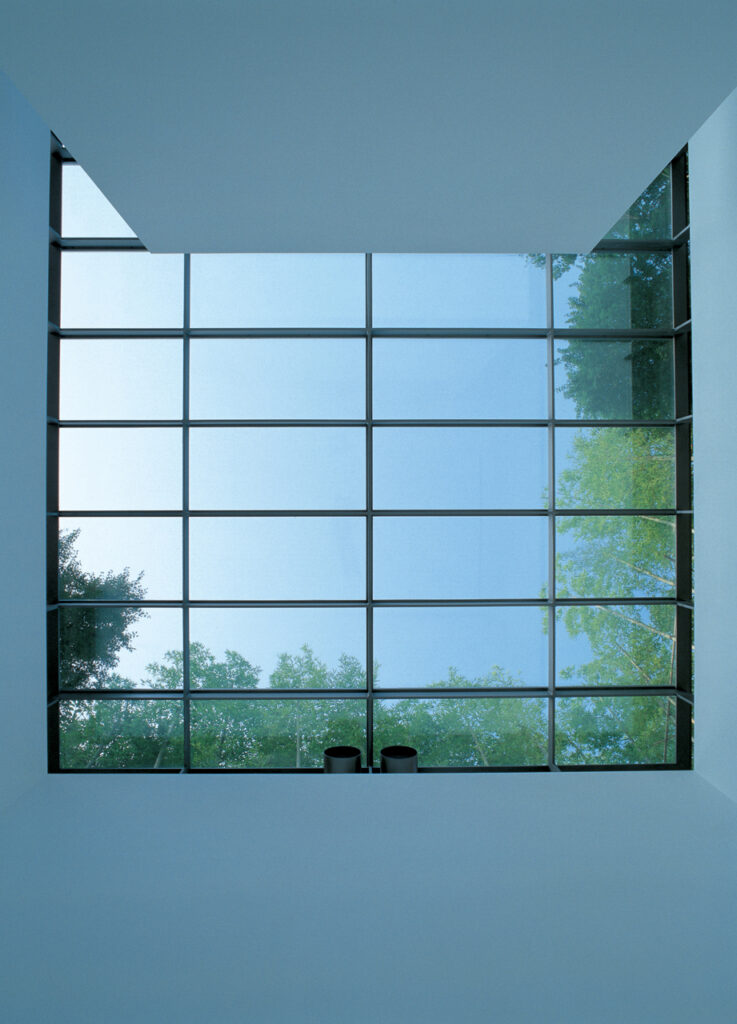
At the center of the room stands the building’s defining element: a vertical light court made of frosted glass that penetrates the structure from above. From the outside it appears as little more than an abstract glass form, but within the chamber it becomes the core spatial experience, filling the room with a soft, balanced glow. Yamaguchi described this inversion directly: “This court is a void, in terms of the exterior, but within the building it is perceived as a volume of light. Thus, the relationship of void to volume in this building reverses as one travels between its interior and exterior spaces.” Sunlight entering through the transparent skylight above produces a second, sharper light source, creating a subtle contrast between diffused illumination and direct daylight. The white surfaces of the interior amplify the effect. “All light that enters the building is amplified in the space of the white interior, so that it erases all form and contour.” Yamaguchi said.
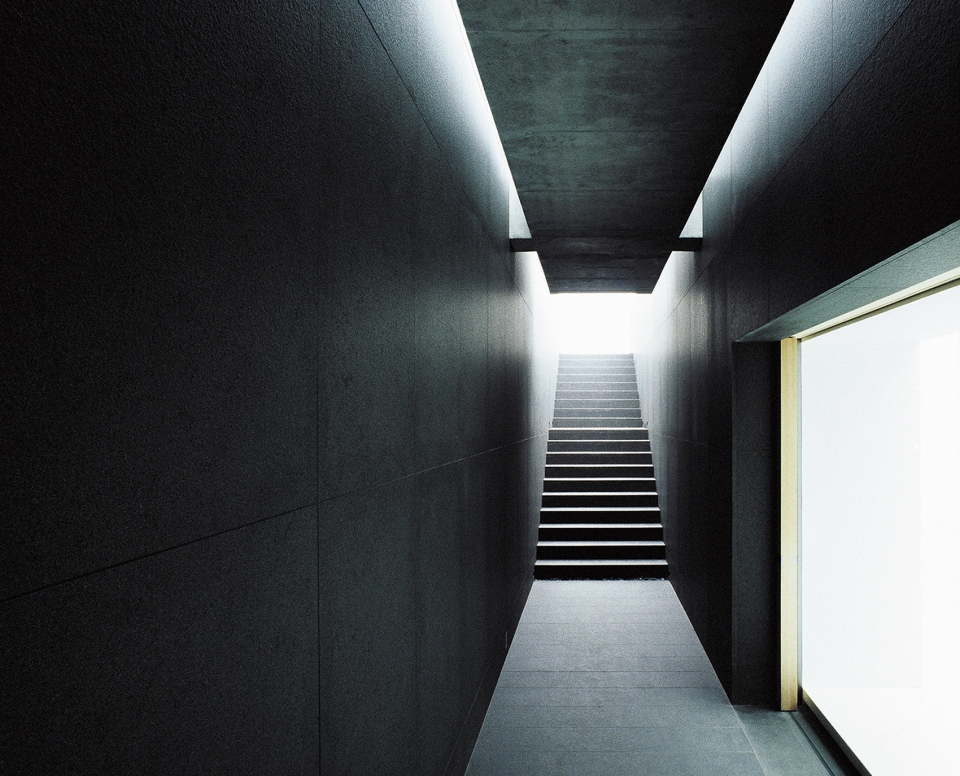
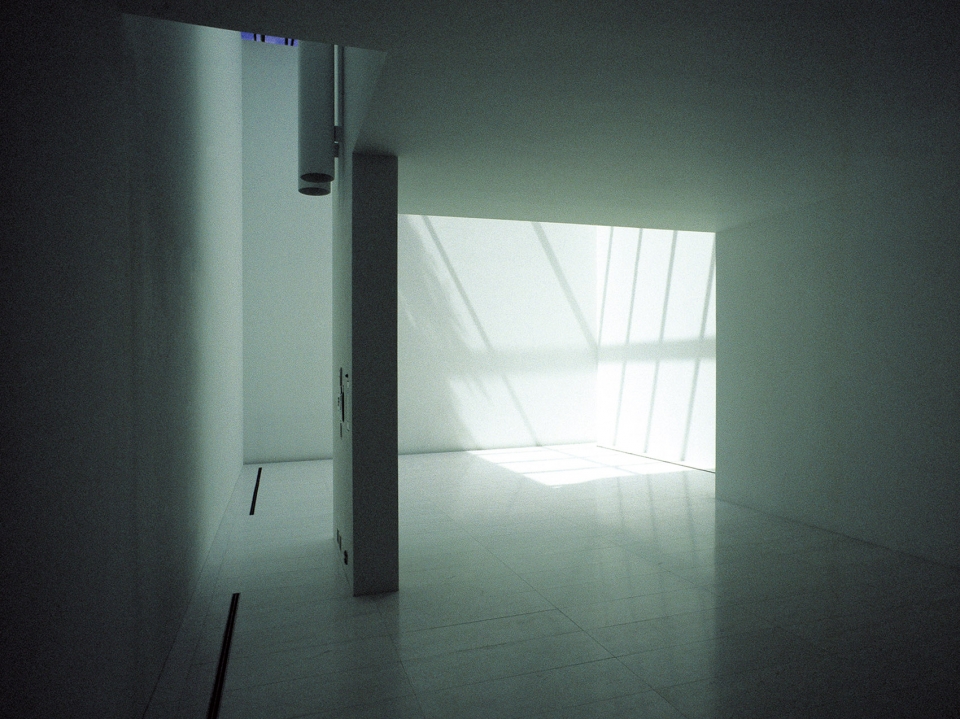

The architecture avoids the ornamental language normally associated with temples, there are no carvings, no historical motifs, no symbolic imagery, reducing the environment instead to proportion, light, and emptiness. Above ground, the surrounding garden of white gravel connects the new structure to the existing temple buildings, while the greenery of Kyoto’s Nishi-Kamo hills frames the site, thus, as the architect describes, “the new building and the old buildings from the ancient past stand mutually independent, yet joined in a relationship of harmony for their journey to the future.”
While Kyoto is often defined by its preservation of historical architecture, the Glass Temple quietly demonstrates another tradition: the willingness to insert modern ideas into ancient landscapes without imitating the past. The result is a structure that feels both futuristic and deeply respectful of its surroundings, an understated experiment in how contemporary architecture can coexist with centuries of Japanese religious history.